
In Johannes Vermeer’s A Maid Asleep, a young maid is dozing at the table after drinking too much wine. One glass of wine in front of her is empty whereas another vine vessel has fallen on the rumpled table carpet. It is the trace evidence that the young woman has been naughty. This “misbehavior” of unsupervised maidservants was a common subject for 17th cen. Dutch painters.
Here is Vermeer’s initial exploration of domestic interior themes that were becoming popular in the Netherlands at the time. And to create the right mood, Vermeer had a collection of props he used for his paintings. Many of the objects such as the table carpet, the chair with studs, and the fruit bowl in A Maid Asleep can be seen in other Vermeer paintings.
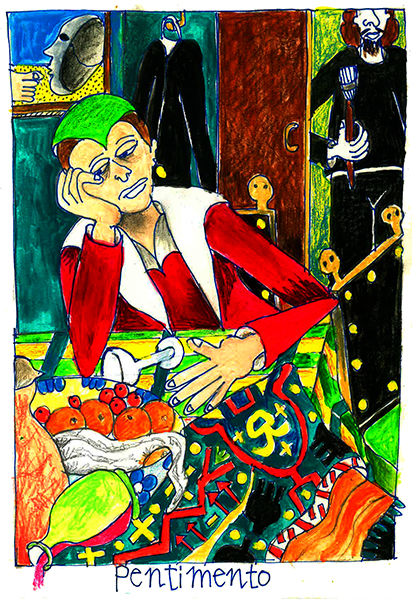
X-rays show a figure of a man holding a brush and a dog looking at him were once painted in near the doorway then painted out. It’s believed the obliterated man was probably a self-portrait of Vermeer.
Artists often change their mind about the composition of their paintings and try to obliterate the now unwanted part by overpainting it away. This change of mind by the artist is known as “pentimento” from the Italian verb “pentirsi” meaning “to repent”.
In Vermeer’s Girl Reading a Letter at an Open Window, there’s evidence of another pentimento. This time it’s a painting of Cupid with his bows and arrows. Often Cupid was depicted trampling a mask with his foot. As a mask represents duplicity, throwing a mask on the ground signifies Cupid’s contempt for deception in love.

Related: The Met’s Vermeer may contain a hidden self-portrait of the artist at work + The Mysterious Cupid and Johannes Vermeer’s Paintings + Vermeer’s ‘hidden’ Cupid is the enigmatic artist’s latest mystery + Five hidden symbols in Vermeer’s paintings +


 The Narrative Within