
for Paola and Anna Rita
When a friend you haven’t seen in years is in town and wants to meet you at Piazza Barberini, you say “Of course!”
It was a cold but sunny day and I took Bus 63 that went directly to the piazza. In my anxiety to arrive on time, I got there 30 minutes “in anticipo”. But that was great as there were things in the neighborhood I needed to see.
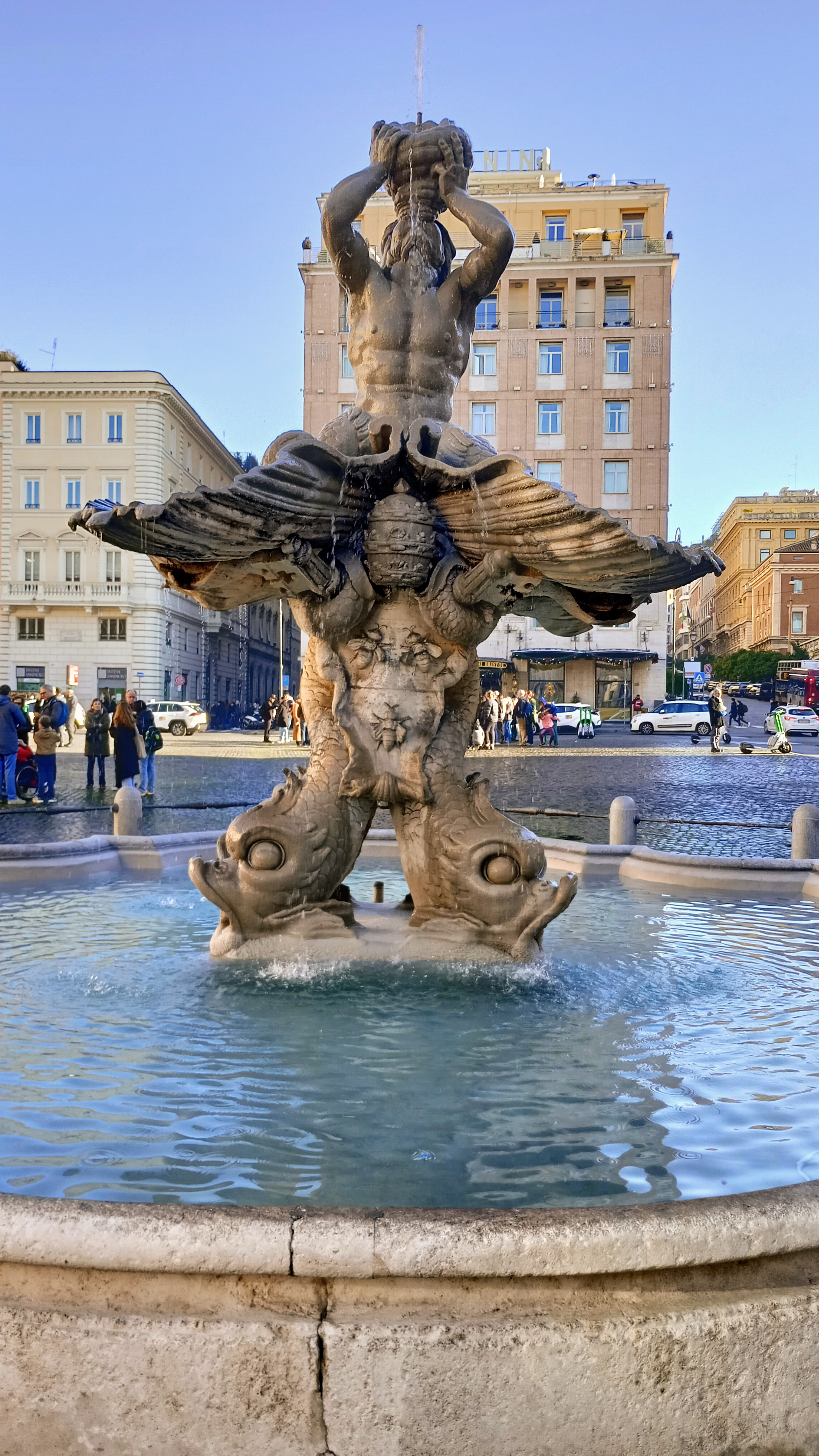
The focal point of Piazza Barberini is the Triton Fountain aka Fontana del Tritone. Commissioned by Pope Urban VII, the fountain was designed by Bernini.
In the center of the fountain is a statue of Triton, a minor sea god. He is presented as a merman kneeling on a huge shell. The Triton’s head is thrown back so he can drink water from a conch and then spit it out creating squirts of water shooting towards the sky.

The Triton and his shell are sustained by four dolphins’ tails. Created in travertine around 1642, the statue includes the classic heraldic three bees of the Barberini family. All over Rome, these bees can be seen indicating just how powerful the Barberini family was.
Pope Urban, who commissioned the fountain, was from the Barberini family, Rome’s nobility that gained much power in the 17th century. The Barberini, originally from Tuscany, were patrons of the arts and commissioned much to ensure that their presence was felt. They understood the importance of cultural hegemony.
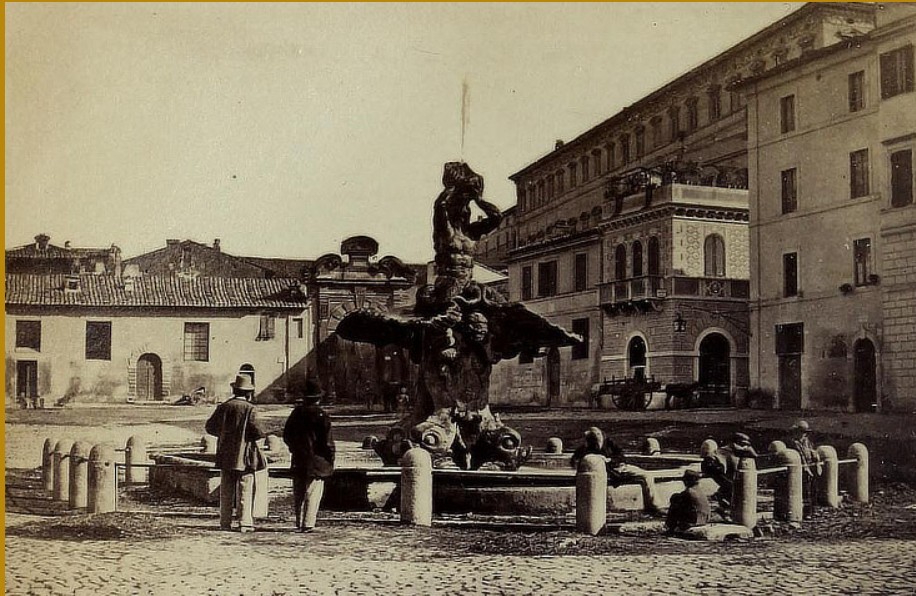
A photo of the Fontana dei Tritone at Piazza Barberini in the 1800s —source—
Hans Christian Andersen lived right around the corner from the fountain (at via Sistina 104). Andersen was from Sweden where folklore was full of mermen, dangerous creatures that abducted women and forced them into marriage. Andersen walked passed this kneeling merman daily. He was very intrigued by it and, once back in Sweden, wrote “The Little Mermaid” (1837), a story about a mermaid princess who sacrificed her voice and legs for love.
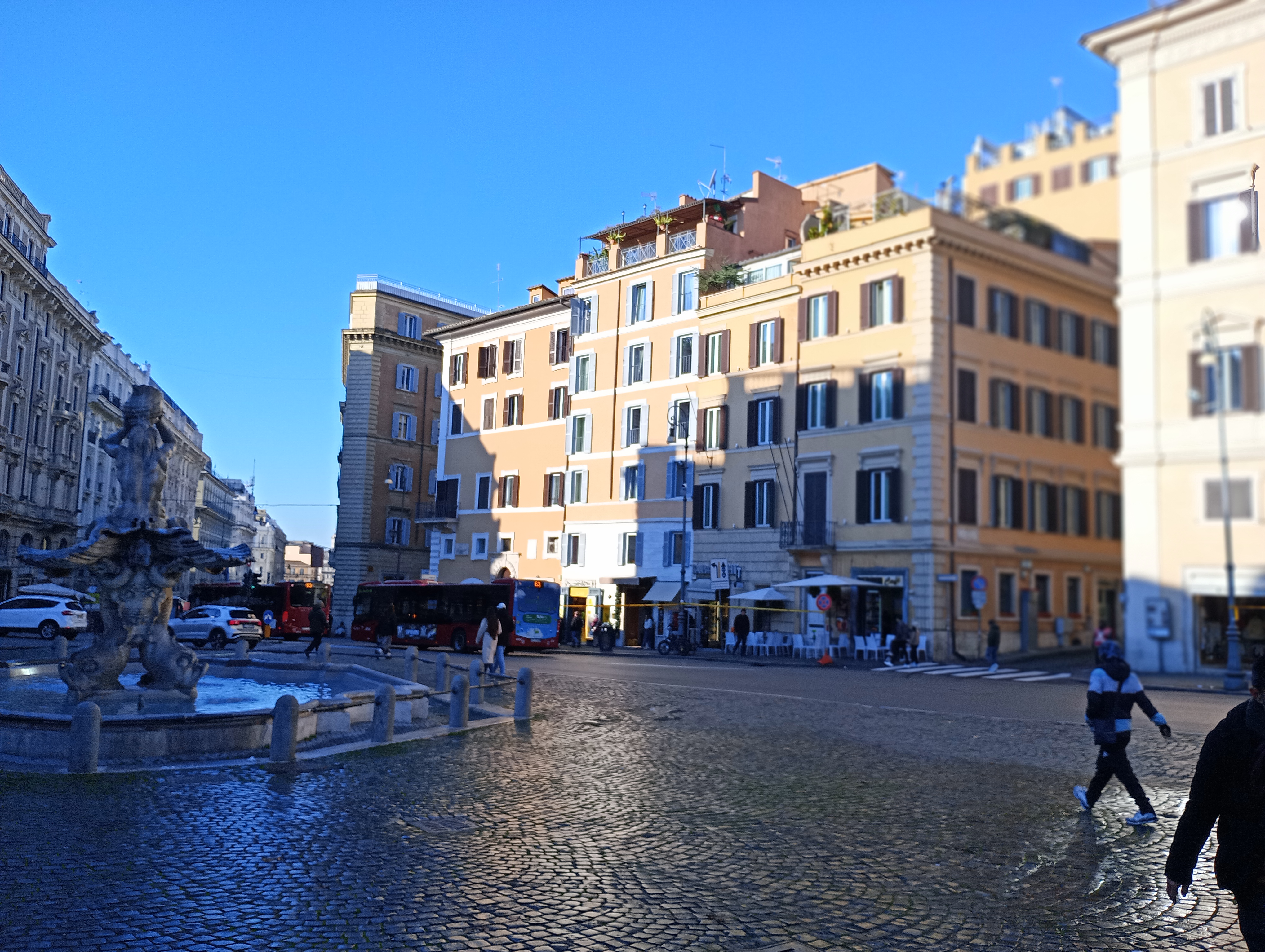
A rear view of the fountain that faces via Tritoni, an important street in the center of Rome that connects via del Corso to Piazza Barberini. Past the piazza, the street seems to morph into via Barberini whereas via Sistina past the piazza is via delle Quattro Fontane. At no. 13 is Palazzo Barberini.
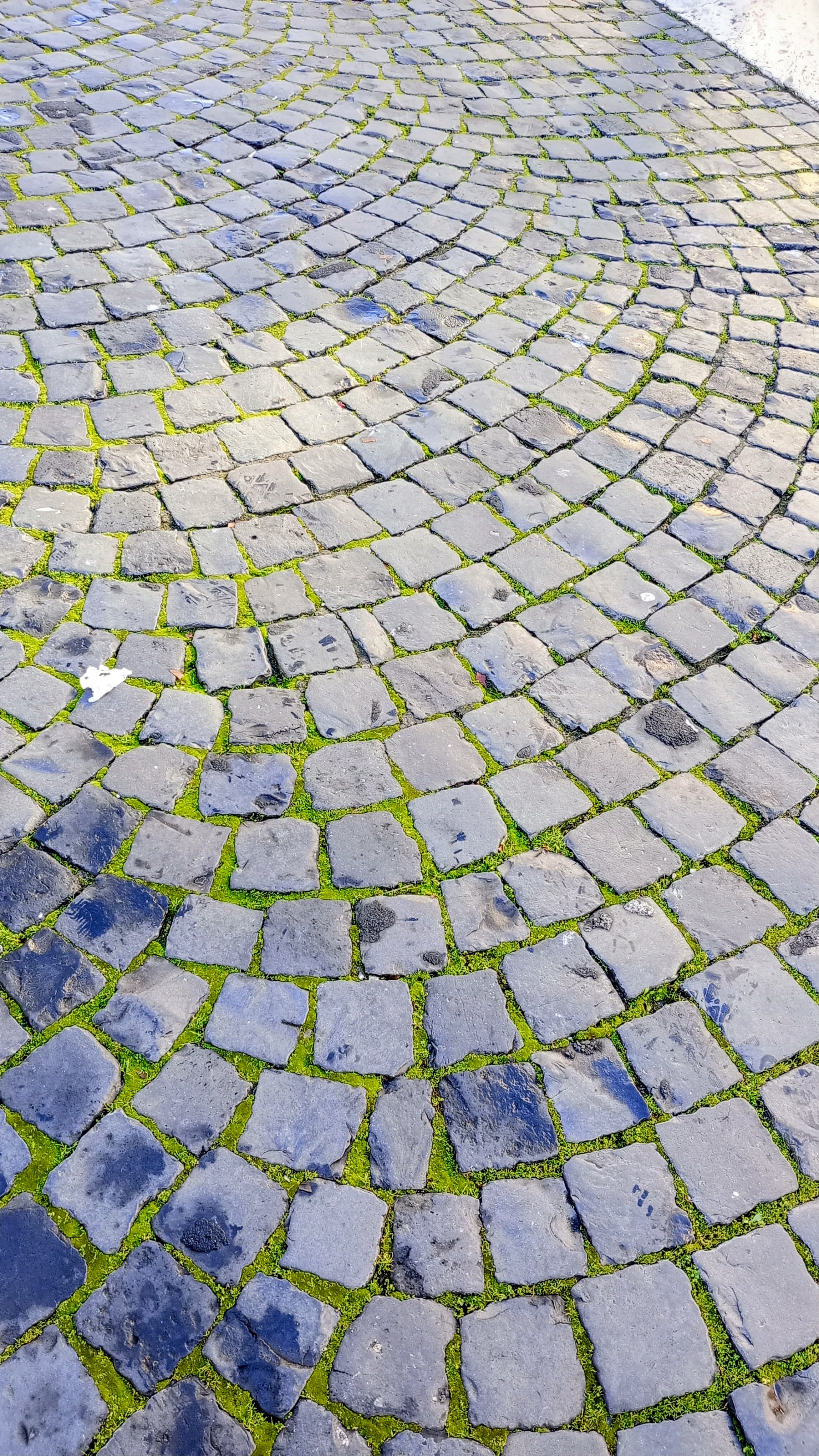
Sampietrini is the name given for Rome’s cobblestone pavements. Here they completely cover the piazza.
Margaret Fuller (1810-1850) was the first American female war correspondent. She was sent to Italy to report on the progress of the unification of Italy. Before Europe, Margaret was heavily involved with the American transcendentalism movement.
While in Italy, Margaret, as a journalist, moved around a lot. But for awhile she was based in Rome. One address for her was Piazza Barberini 2.
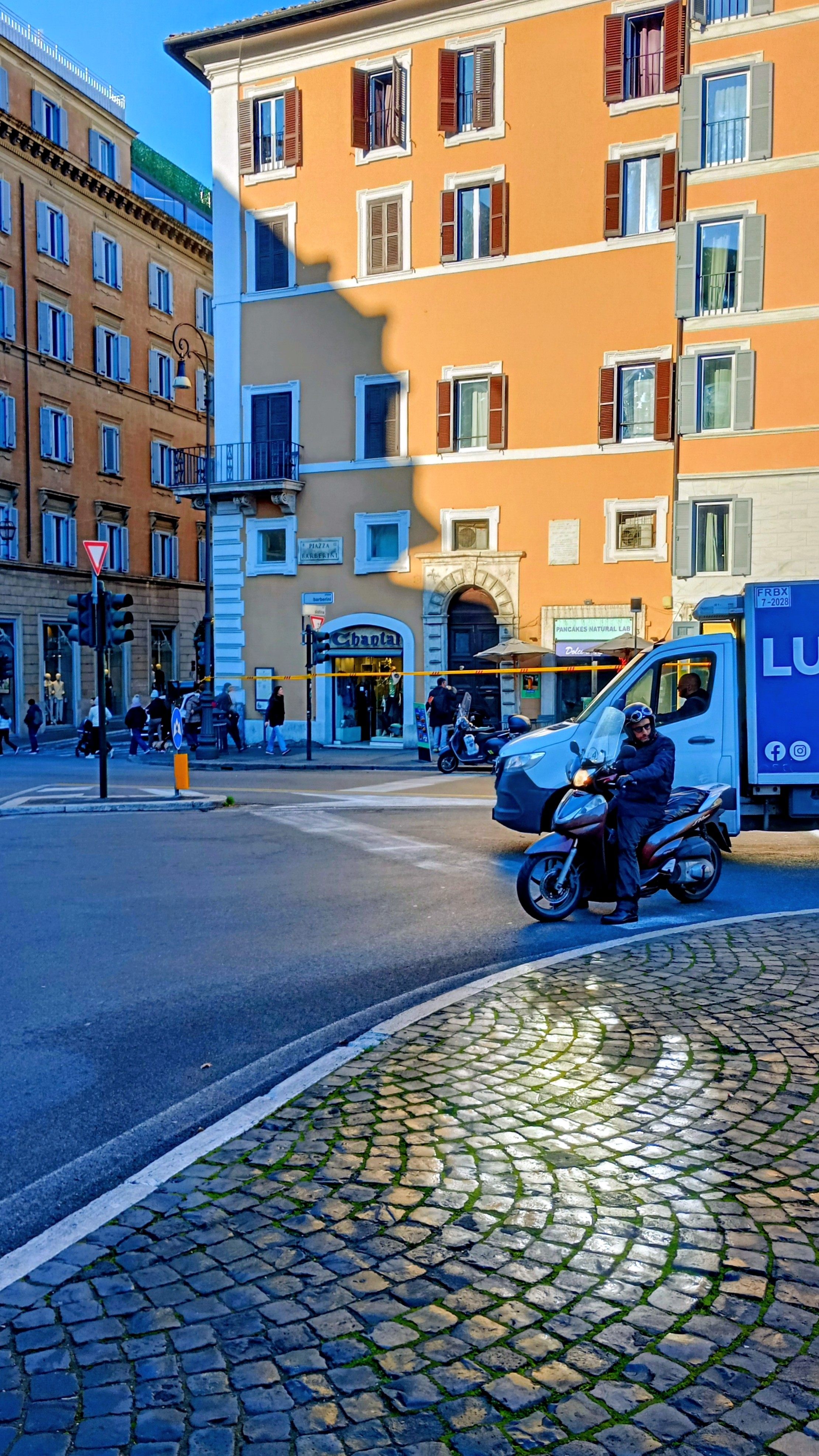
Piazza Barberini 2
In this photo, the commemorative plaque for Margaret Fuller is easier to see. Margaret collaborated with Cristina di Belgioso, a woman active in the move towards the Risorgimento, the unification of Italy. Margaret was also friends with Florence Nightingale who, at the age of 28, was in Rome accompanying Mr and Mrs Bracebridge.
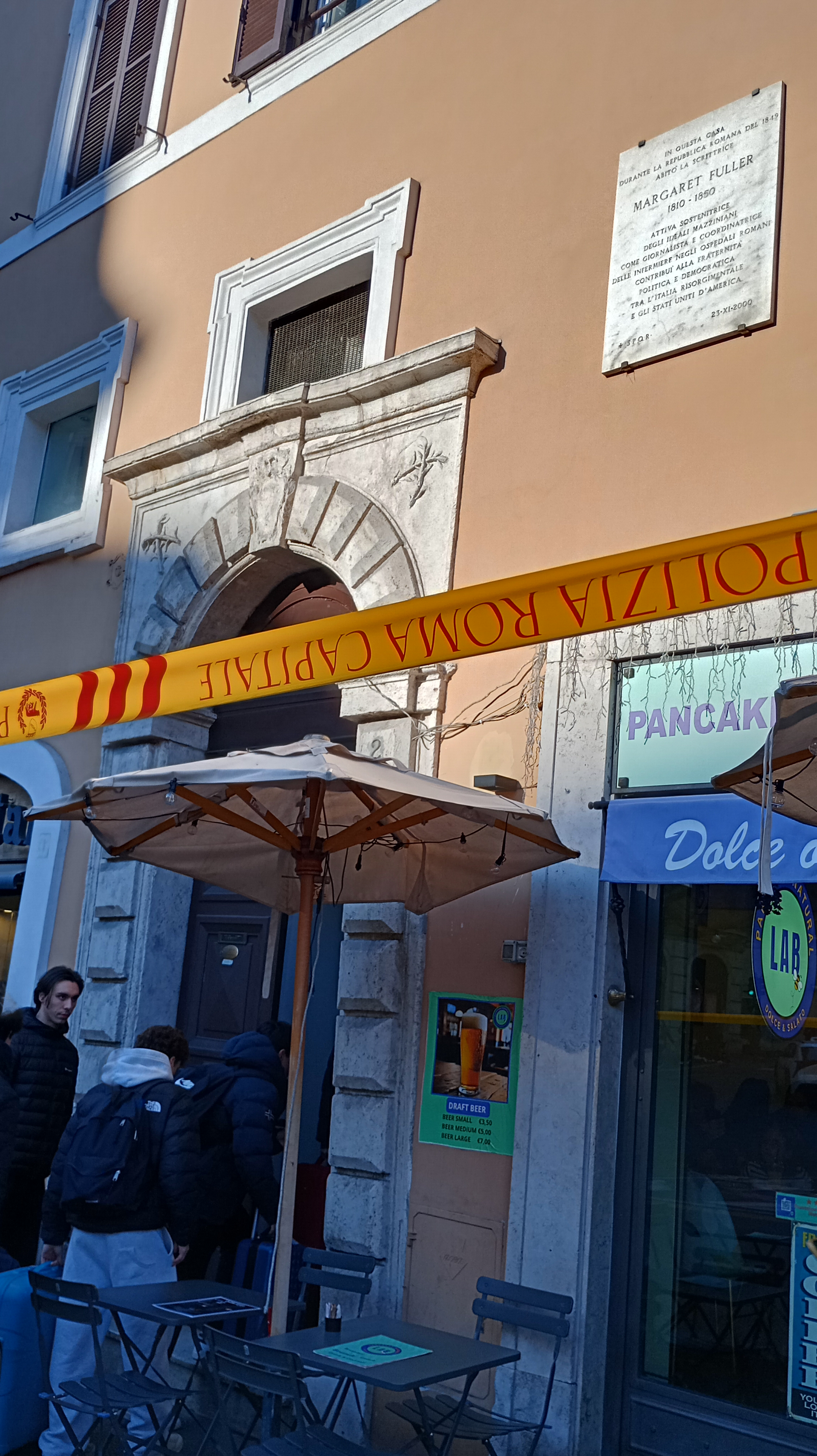
Years later, in 1871, Louisa May Alcott and her sister, May, lived in this same building. In “Little Women”, Louisa writes “Rome took all the vanity out of me, for after seeing the sonders there, I felt too insignificant to live, and gave up all my foolish hopes and despair.”
No doubt the young men entering the building (probably going to a RB&B) have no idea as to its history. It was here that Alcott wrote “Little Men”.

The red arrow indicates Margaret Fuller’s building. And, turning right on the corner, you immediately find yourself on via Sistina, once called via Felice (Happy Street). Via Sistina, tahat goes from the Spanish Steps to Piazza Baberini, was a popular street and many foreign artists and writers lived there.
Galleria Obelisco, via Sistina 146
Luigi Rossini, via Sistina 138
Nikola Gogol, via Sistina 126
Hans Christian Andersen, via Sistina 104
Franz Liszt, via Sistina 113
Amelia Curran, via Sistina 64
Bertel Thorvalsen, via Sistina 48
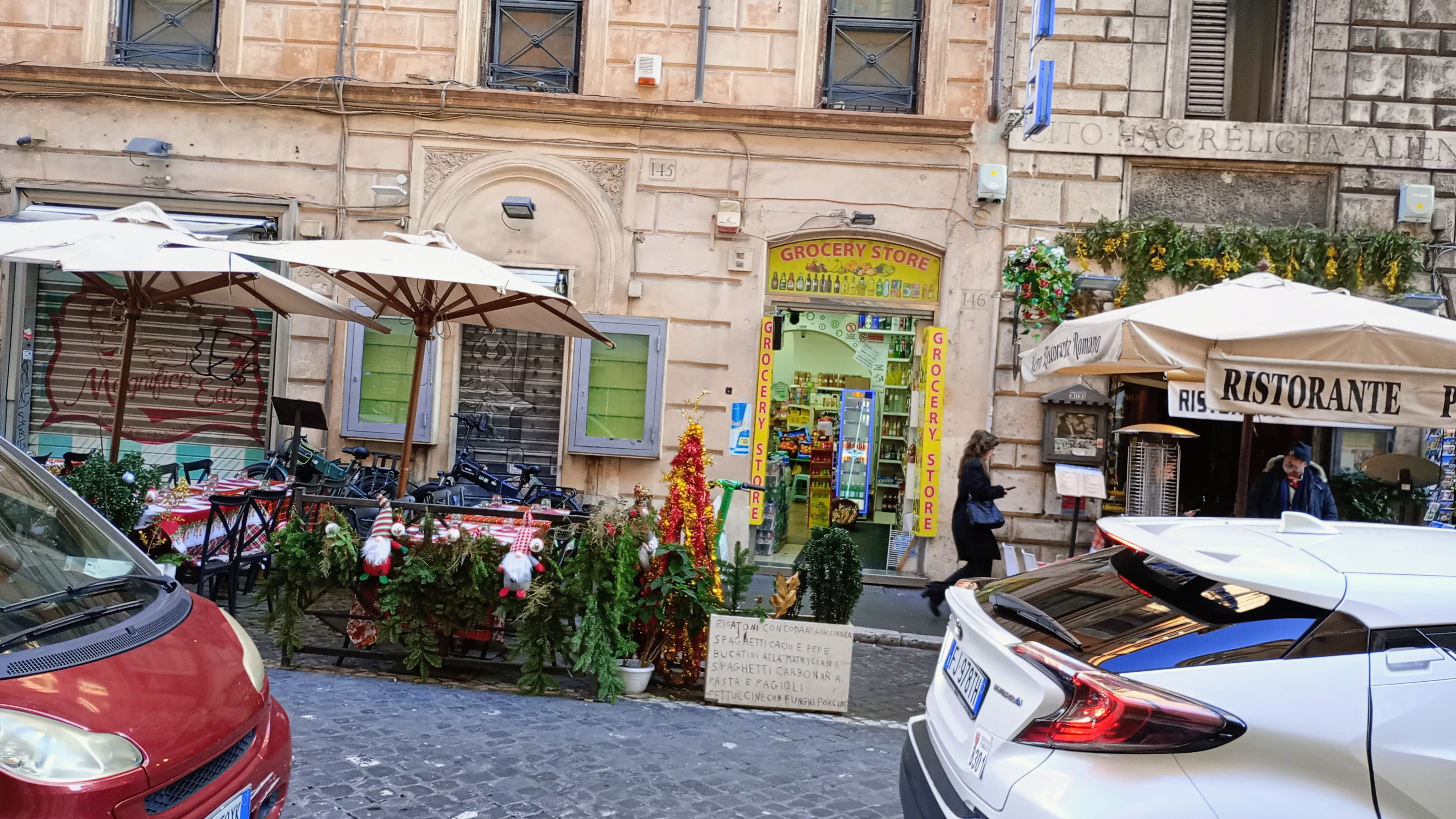
This is via Sistina 146 where the gallery L’Obelisco once existed. It’s difficult for me to understand how such an important gallery has been so easily forgotten. At least a commemorative plaque could be placed on the building.
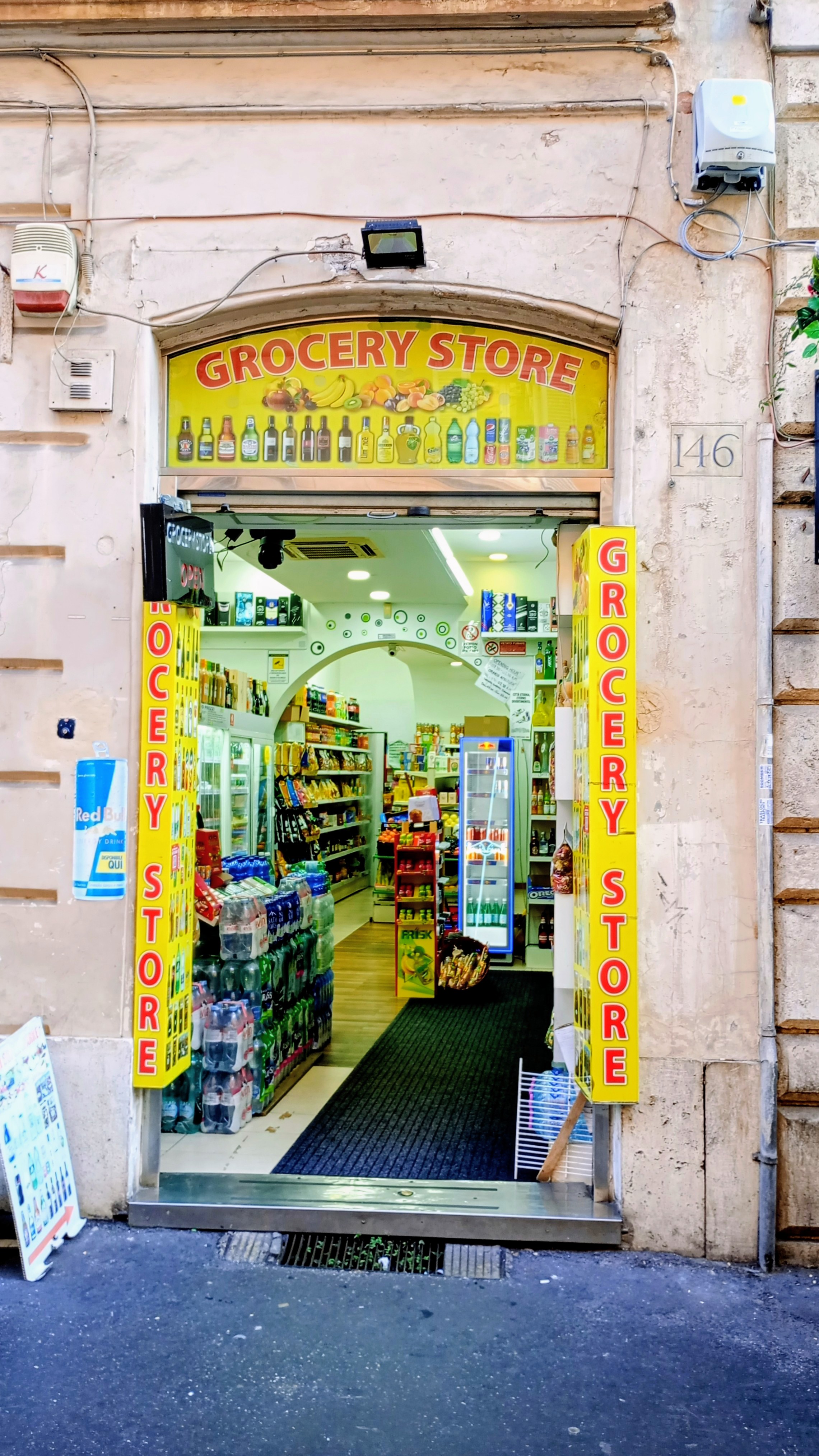
This is how the space that was home to L’Obelisco gallery looks today with its Andy Warhol vibe. However, L’Obelisco, established in 1946 was an important trendsetter for modern art and for promoting contemporary artistic activity. It helped in the much needed modernization of Italy after the war.
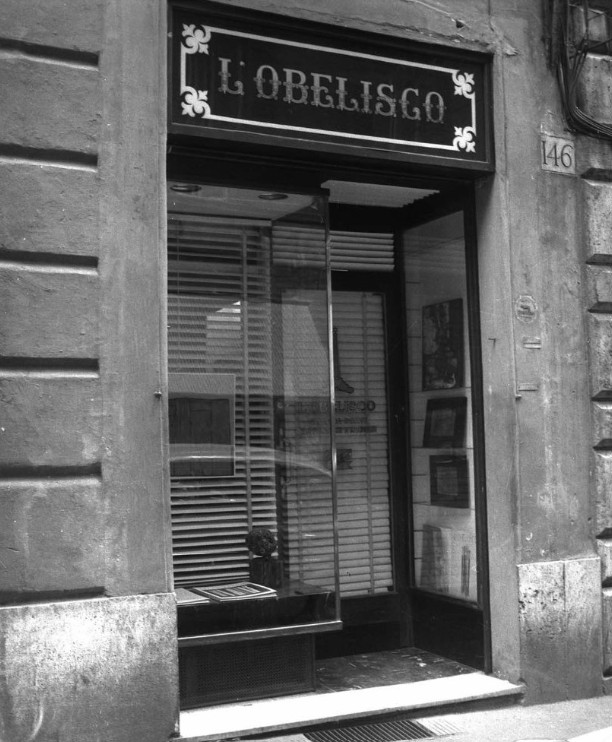
The above photo of the gallery facade was taken in the mid40s or 50s and is in the collection of GNAM. Source: Irene Brin, Gaspero del Corso e la Galleria L’Obelisco, Drago, Roma 2018, pp. 204 – 2015 found HERE.
The quantity and quality of artists who exhibited at L’Obelisco is astounding. Giuseppe Capogrossi, Alberto Burri, Giorgio de Chirico, Afro, Salvador Dalí, Wassily Kandinski, René Magritte, Alexander Calder, Mario Sironi, Giacomo Balla, and Gino Severini are just some of the artists who exhibited at the Obelisco during its beginning years.
Furthermore, owner Irene Brin was good friends with Palma Bucarelli, directore of GNAM for 30 years. Bucarelli aquired various paintings from L’Obelisco for the Galleria Nazional di Arte Moderna.

Above is a photo of the artist Alexander Calder in 1956 at L’Obelisco where he had a personal exhibition. (foto via Instituto Luce)
Rome is like a giant Matryoshka doll with one discovery hidden inside another.

At via Sistina 138, there is a commemorative plaque for Luigi Rossini (1790-1857), an architect known for his etchings of ancient Roman architecture. He began his antiquities series in 1819.
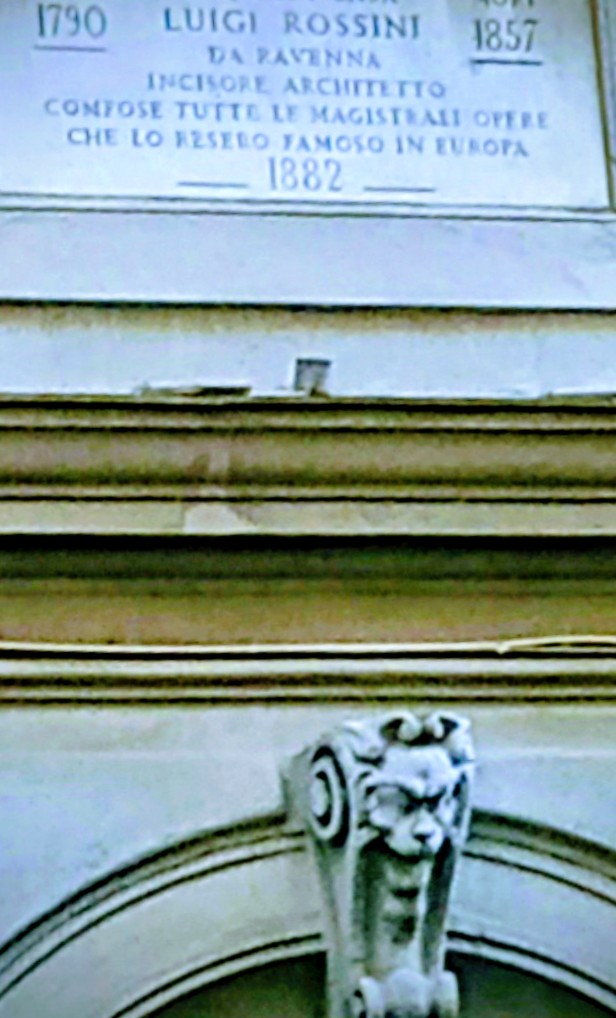
Above is the plaque commemorating Luigi Rossini .
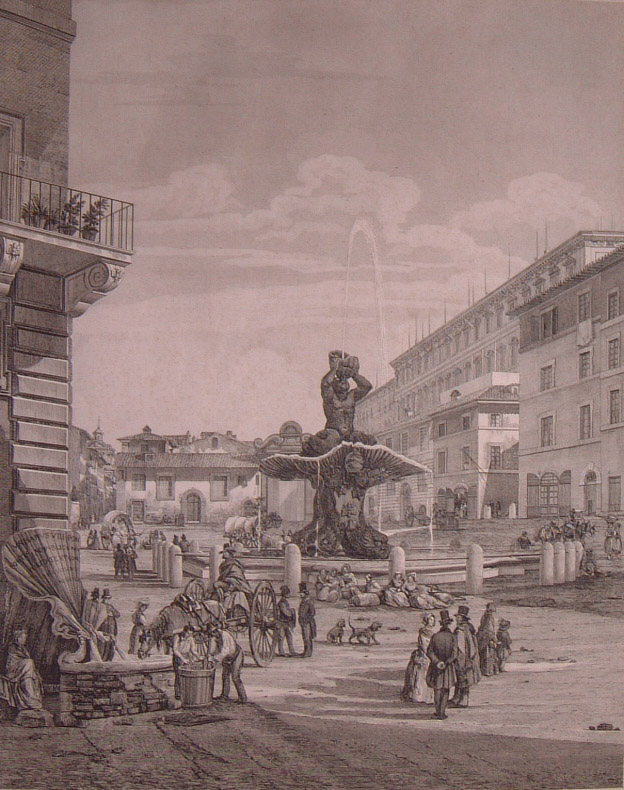
Luigi Rossini’s etching of the Tritone Fountain dated 1848. Foto from Wikipedia
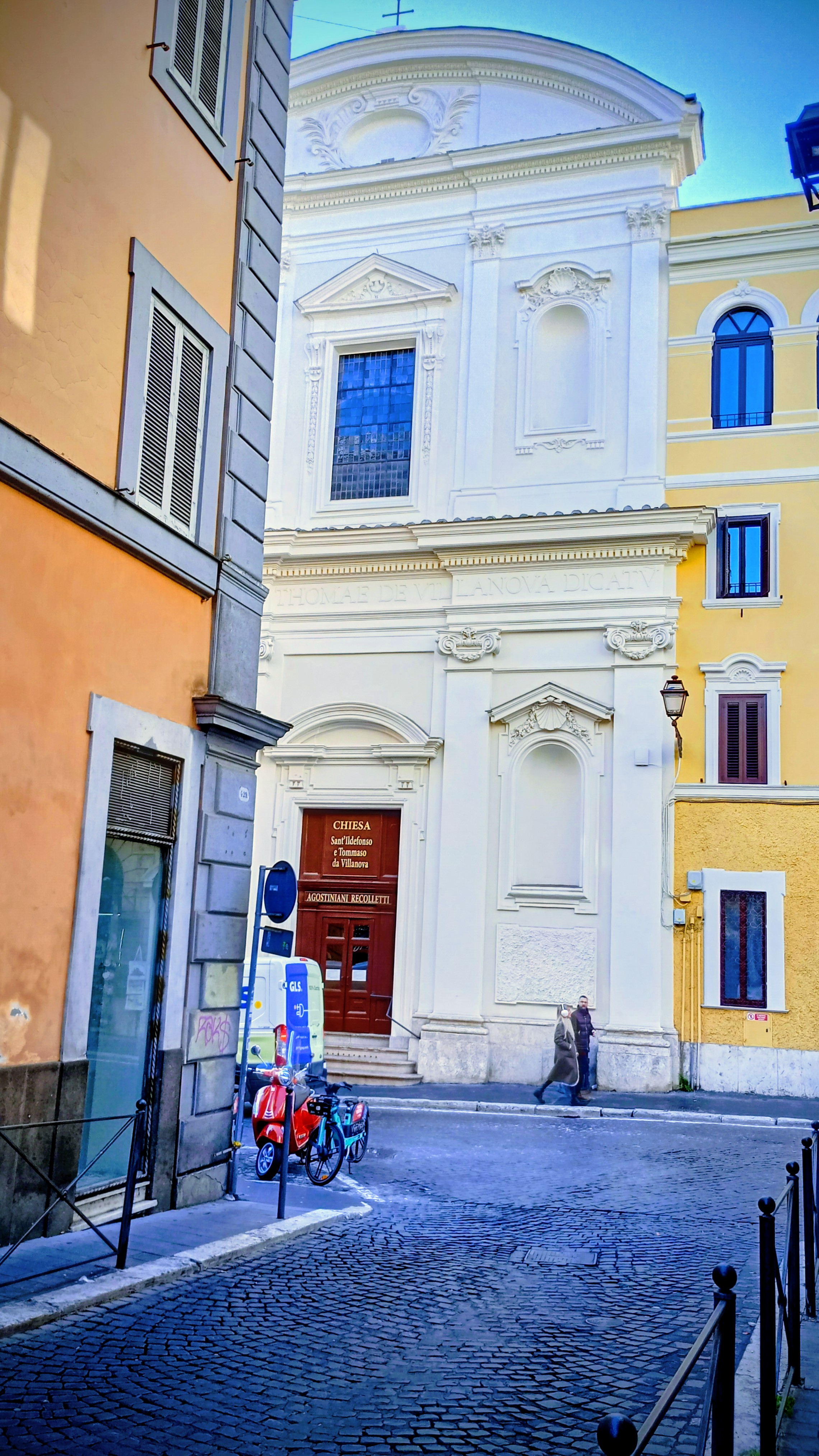
Chiesa Sant’Ildefonso e Tommaso da Villanova, via Sistina 11. More Baroque. The church was constructed in the 1600s under the supervision of the Order of Augustinian Recollects, the mendicant friars. What’s incredible for me, having grown up surrounded by the Mexican culture, was that the oldest image of the Virgin of Guadalupe arrived in Rome some 350 years ago. It was painted in 1667 in Mexico by Juan de Murcia.
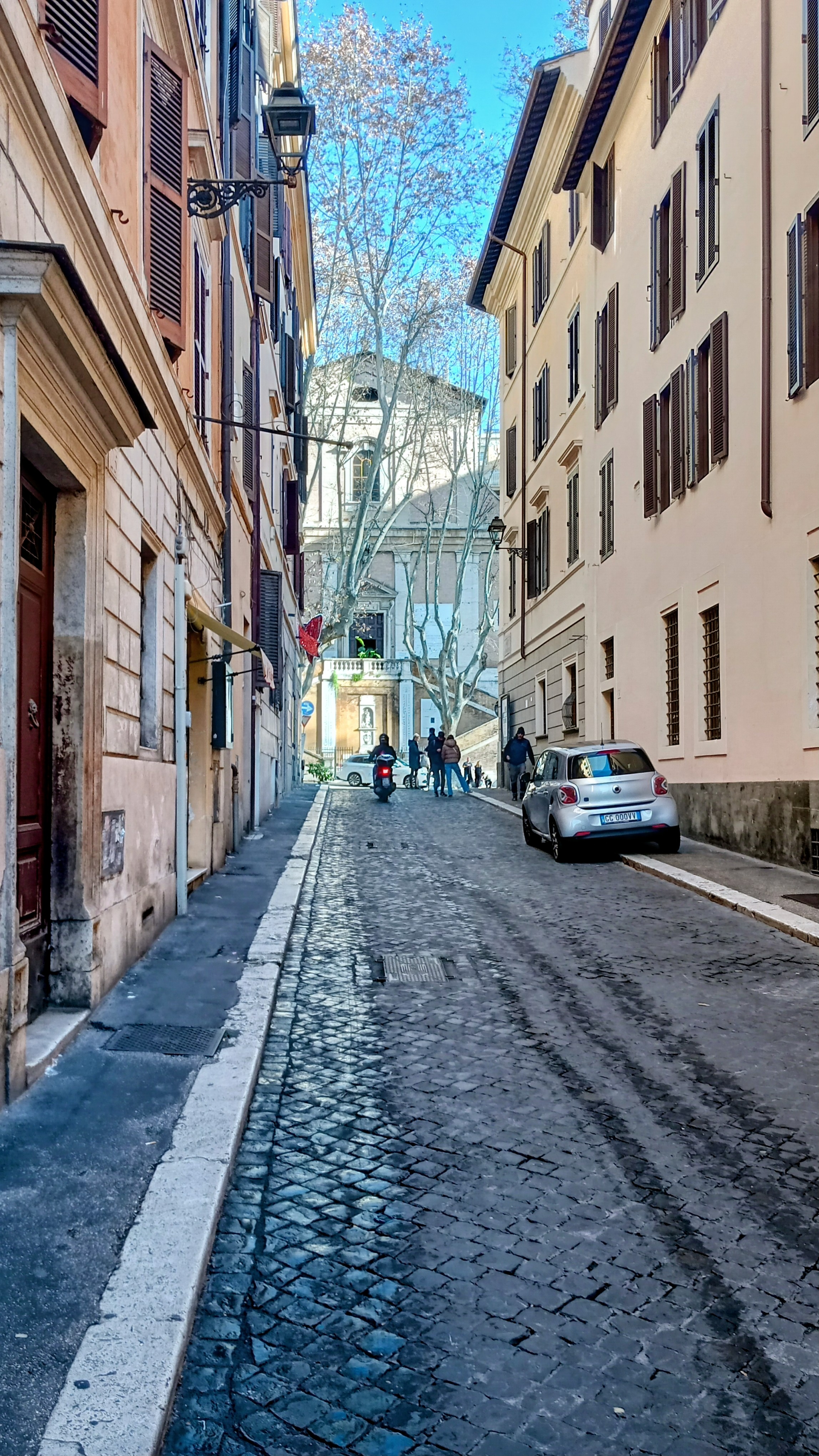
The street leads to Santa Maria della Concezione dei Cappuccini church and its Capuchin Crypt at via Veneto 27.
When, in the 1600s, the friars had to move from their old monastery, they brought along the remains of their deceased friars as well. Three hundred cartloads of bones were then arranged on the walls in a decorative fashion.
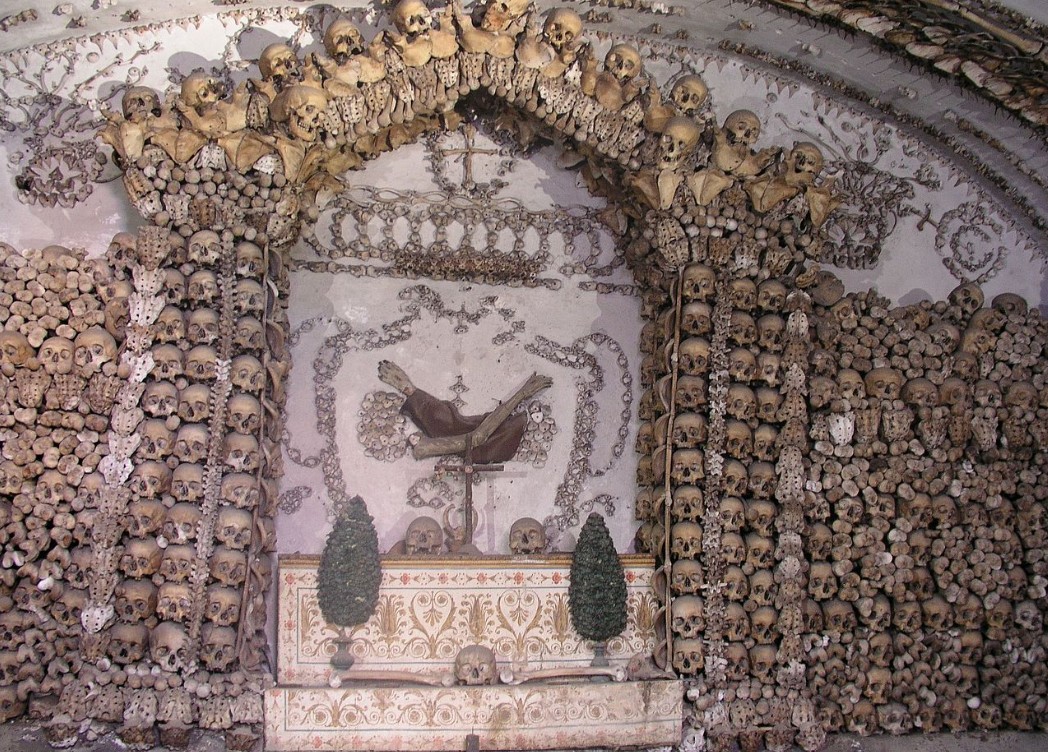
Bones arranged in a decorative fashion at the crypta. Image via Wiki
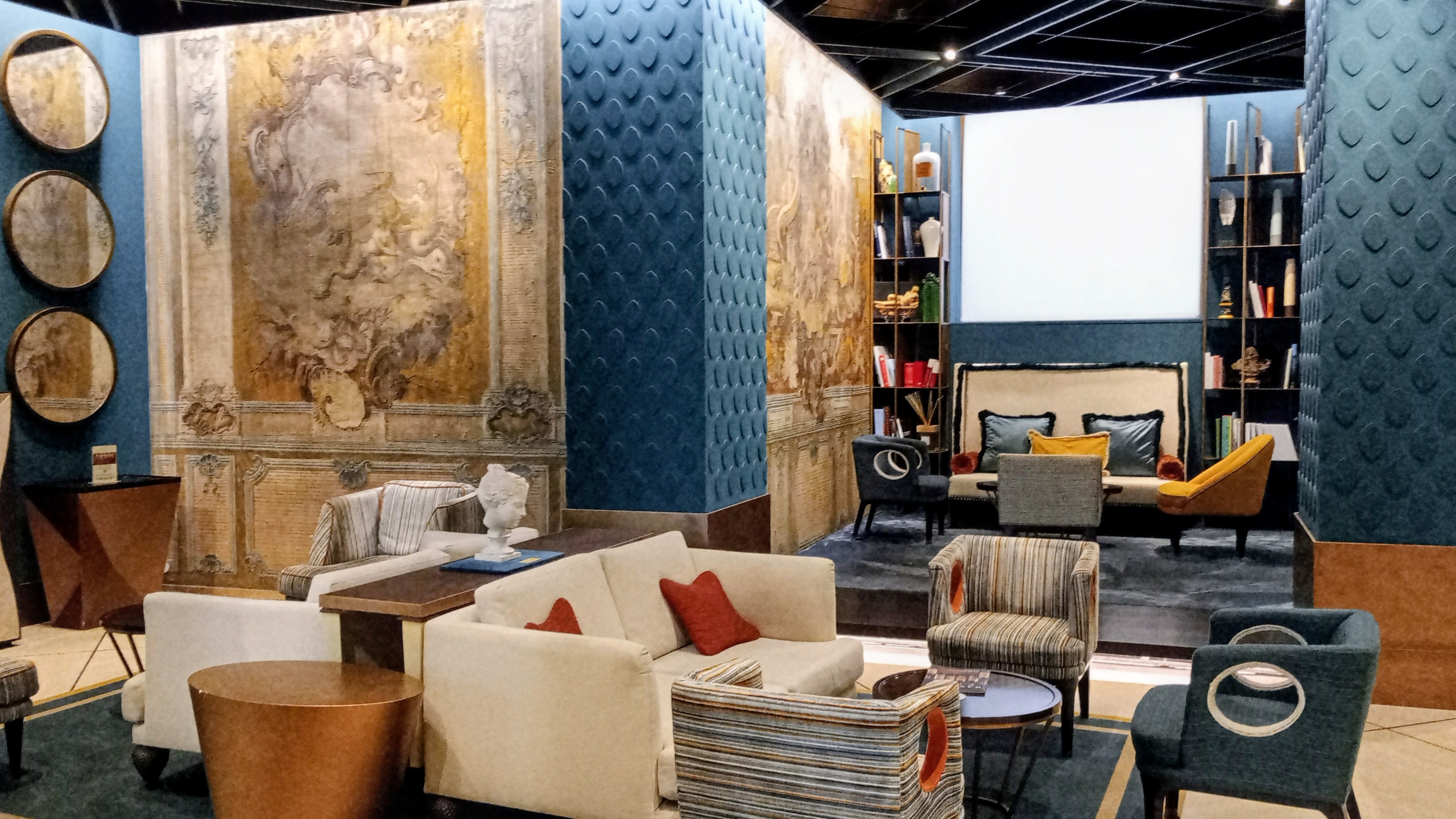
This is the interior of Hotel Bernini where we had coffee. The hotel faces Piazza Barberini and their coffee shop is a nice change from the sidewalk cafes full of tourists. The decor is great but the cappucino is not.
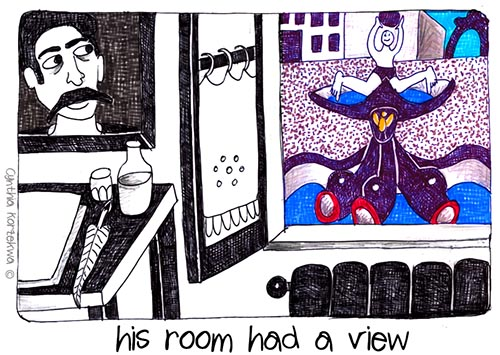
Nietzche, Paul Rée, and Lou Andres-Salomè began an “intellectual” ménage à trois. But, after the initial thrill, Nietzche wanted Lou all for himself and proposed marriage. She said No Way. Crushed, Nietzche locked himself in his room facing Piazza Barberini. Here, with a full view of Bernini’s fountain, Nietzsche began writing “Thus Spoke Zarathustra”. via Freud’s Cat
-30-

Appropriations for AI will be jinxed.
Related:
Mermans and Mermaids + Brio and Bon Ton
Sampietrini The Story of Rome’s Famous Cobblestone Roads + Via del Tritone, Rome +
What Hans Christian Andersen Saw in Rome in 1834 + Tracing the footsteps of Rome’s foreign writers and artists + photo via Sistina 1945 +
Roman Plaques “Roman emperors and popes had a fancy for celebrating their achievements by placing lengthy inscriptions on the monuments of Rome. The longest one was dictated by Emperor Augustus to detail with the preciseness of an accountant his many achievements.
The Italian government which took control of Rome in 1870 introduced the first plaques; they were placed on the walls of buildings where eminent citizens were born or had lived.” +
L’ Obelisco, anni 40 + Irene Brin’s garden + Storia della Galleria Obelisco (1946 – 1981) with catalogues ‘+
This is the oldest image of the Virgin of Guadalupe kept in the Vatican + Museo Crypta dei Cappuccini +


 The Narrative Within