
After days and days of rain, when the sun finally comes out again, it’s time to play. Our playground today was Villa Caffarelli and its current exhibition, “La Grecia a Roma” (Greece in Rome).
I got there early and when I’m early, I take pictures.
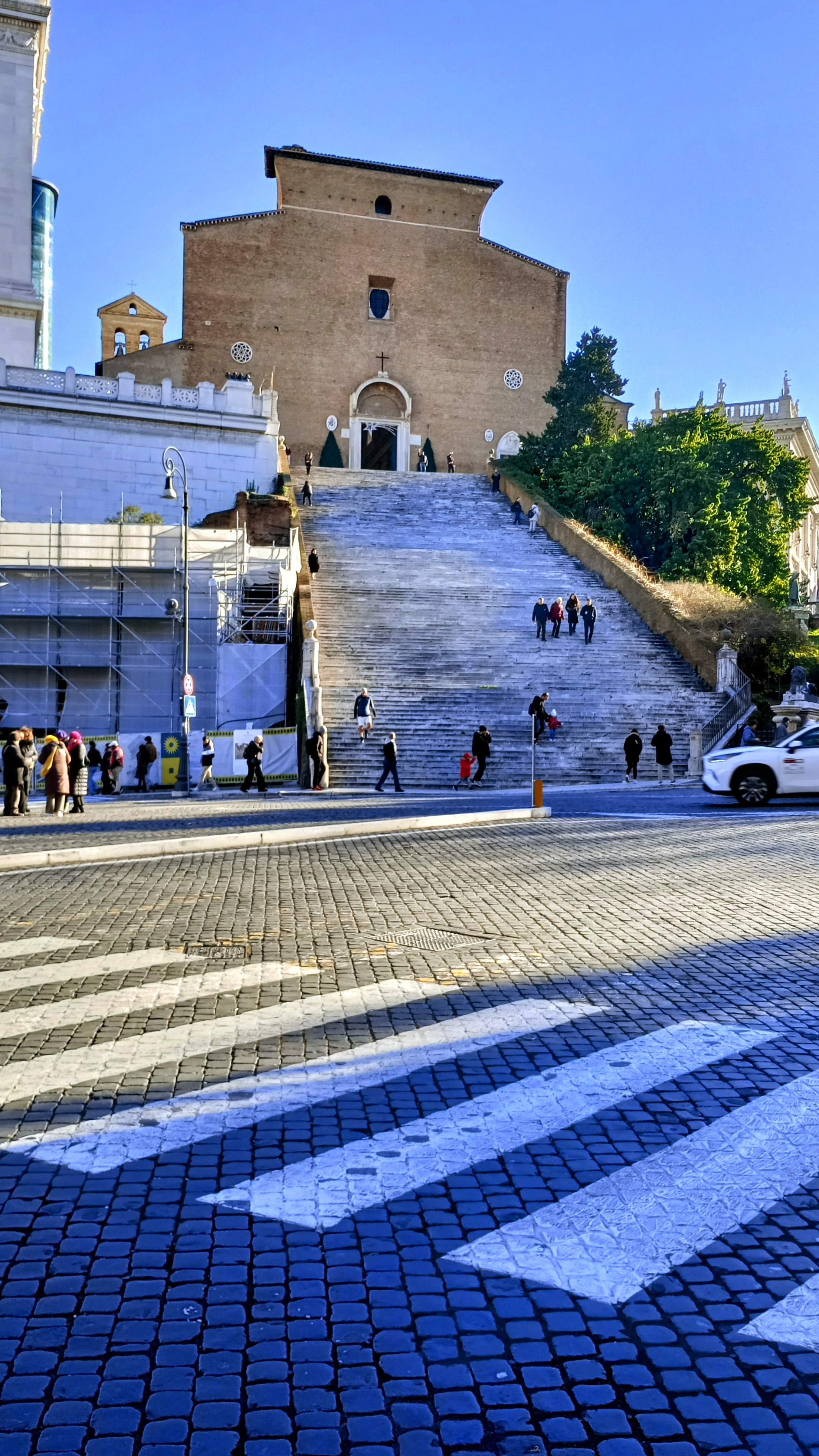
The church at the top of this demanding flight of stairs is Santa Maria in Aracoeli aka St. Mary of the Altar in Heaven. It’s a Franciscan church and sits on the highest part of the Capitoline Hill.
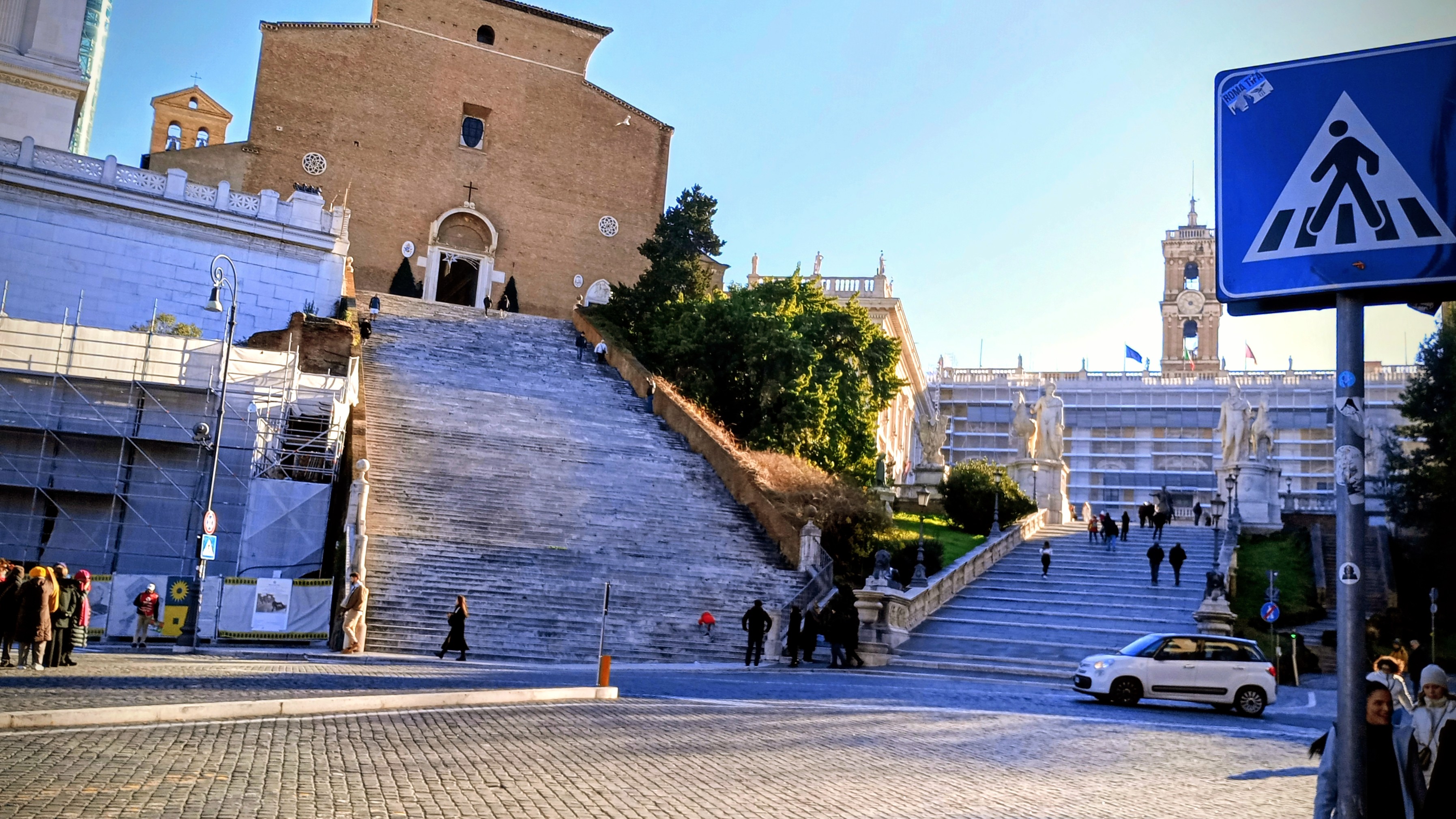
2025 was the year of the Jubilee. Also known as the Holy Year, it is celebrated every 25 years. As many tourists were expected to come, major maintenance projects were started. Some were completed on time, some were not.
In the foto above, a bit of the Vittoriano (Altare della Patria) can be seen with the scaffolding still up.
To the right is the ramp of stairs leading to Piazza del Campidoglio, a public square designed by Michelangelo. Facing the square are the Capitoline Museums founded by Pope Sixtus in 1471.
In the back is a building that looks like a Christo installation because it wears the protective covering used during remodeling. The building is the Palazzo Senatorio with its double stairway.
The monumental stairs leading up to the church and to the piazza are known as cordonata. A cordonata is a sloping road interrupted at regular distances by low steps in the form of transversal stripes made of stone or bricks.
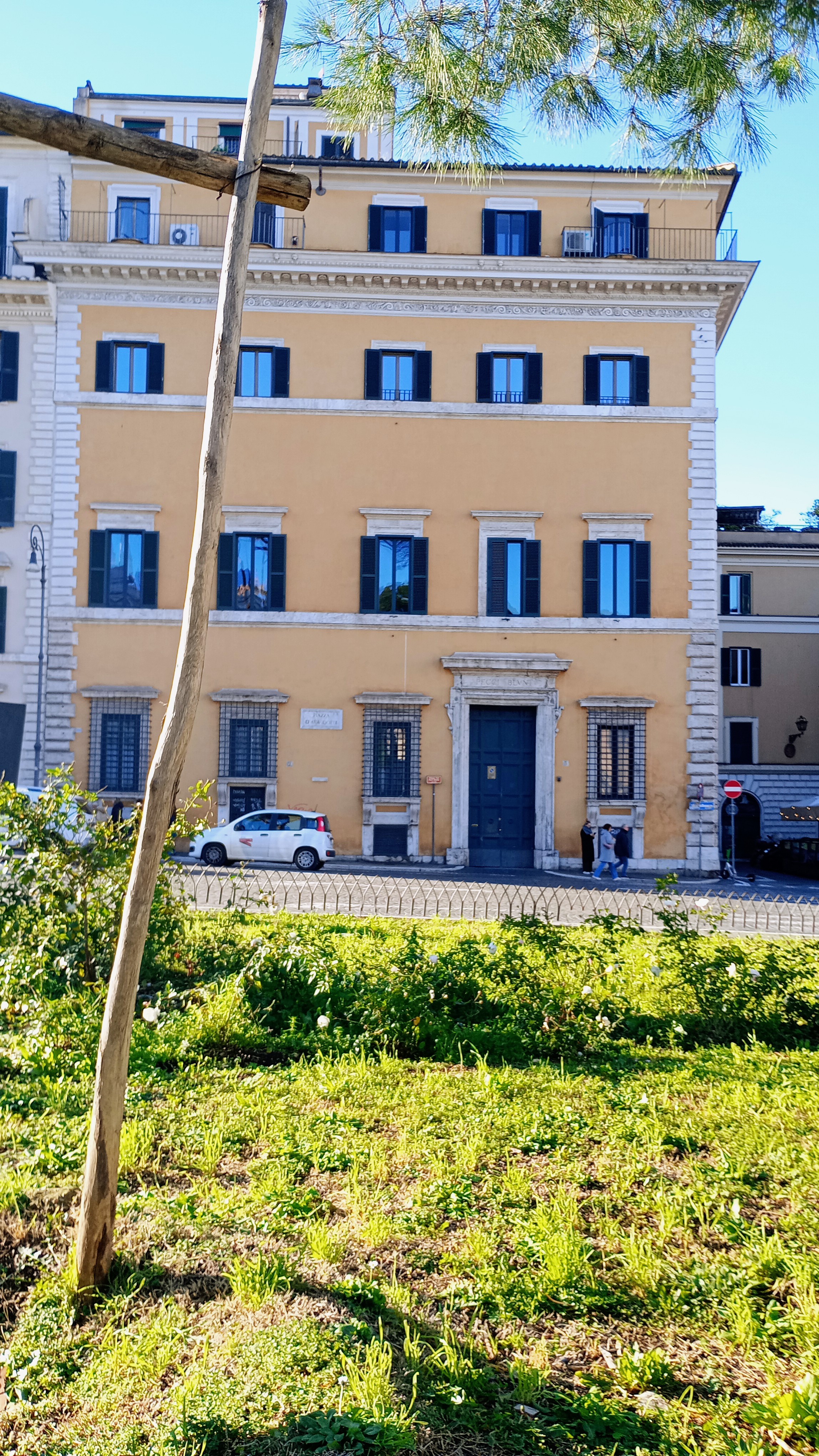
Here we are at Piazza d’Aracoeli. The building in the background was once the home of Contessa Anna Laetitia Pecci Blunt aka Mimì.
In 1929, the Pecci-Blunts decided to spend more time in Rome and bought the palazzo at Piazza Aracoeli 3. It became a cultural hub for intellectuals, musicians, and artists. Mimì also hosted a series of concerts inviting musicians such as Stravinsky and Rubinstein to perform.
Mimì was a major art patron in Rome. That is, until she and her family were forced into an awkward situation because of the racial laws imposed by the fascist regime.
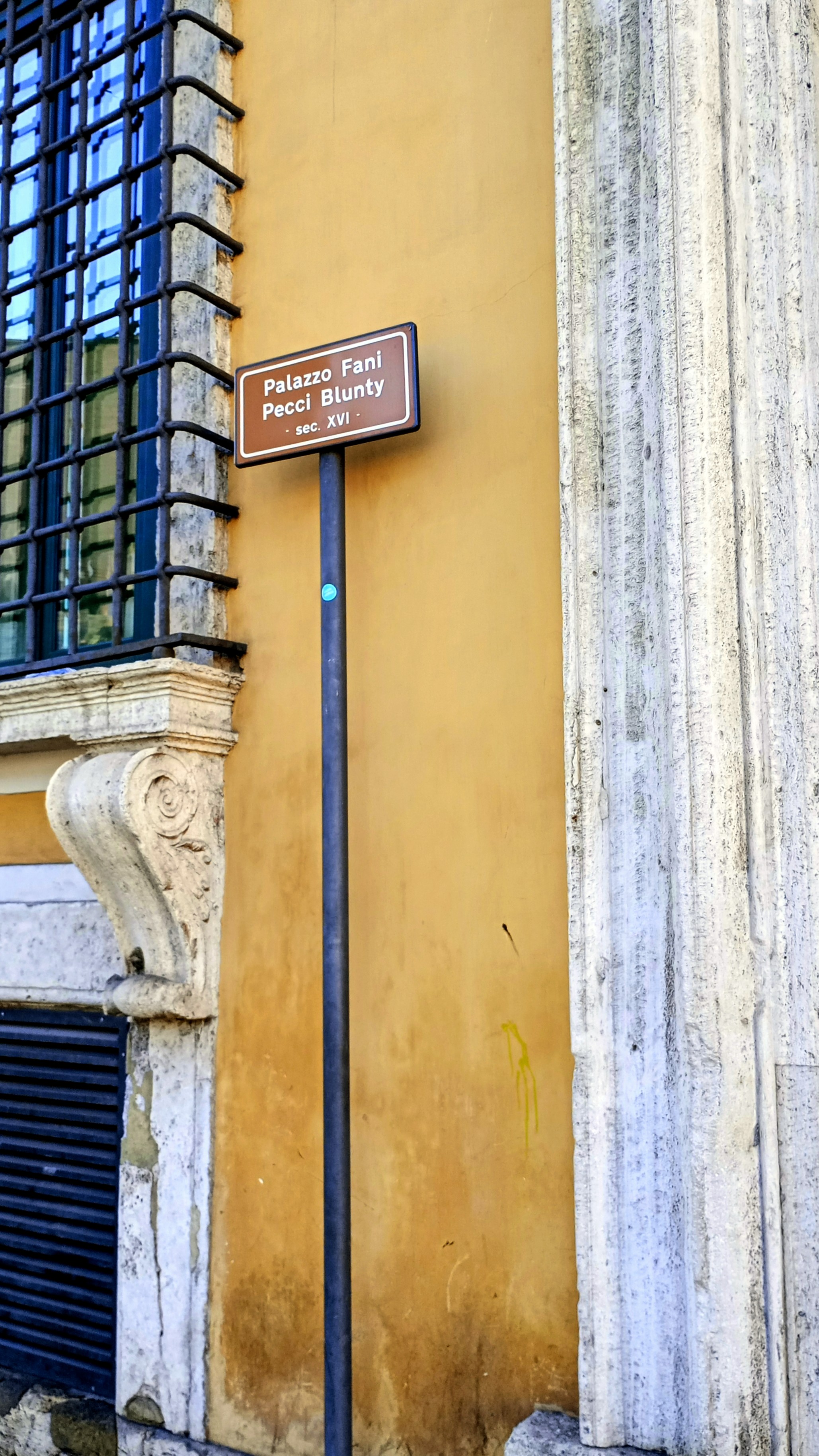
However, before leaving Rome, Mimì accomplished quite a bit. In 1935 she opened the avant-garde Galleria della Cometa.
Back in Rome in 1958, Mimì also initiated the Teatro della Cometa located nearby on via Teatro di Marcello. The theater has recently been resusitated by Maria Grazia Chiuri, ex creative designer for Dior.
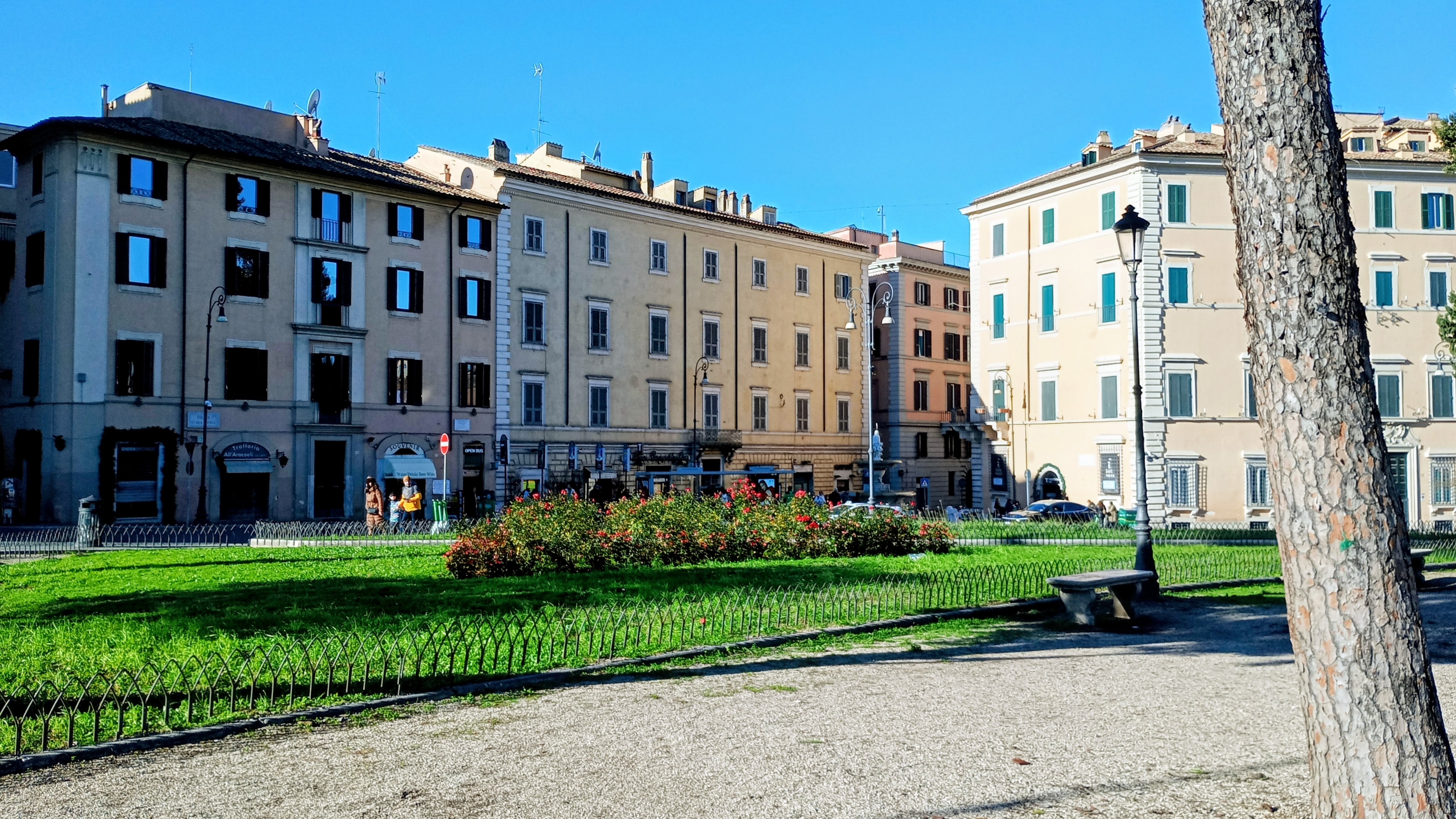
Piazza d’Aracoeli
Shadow Selfie
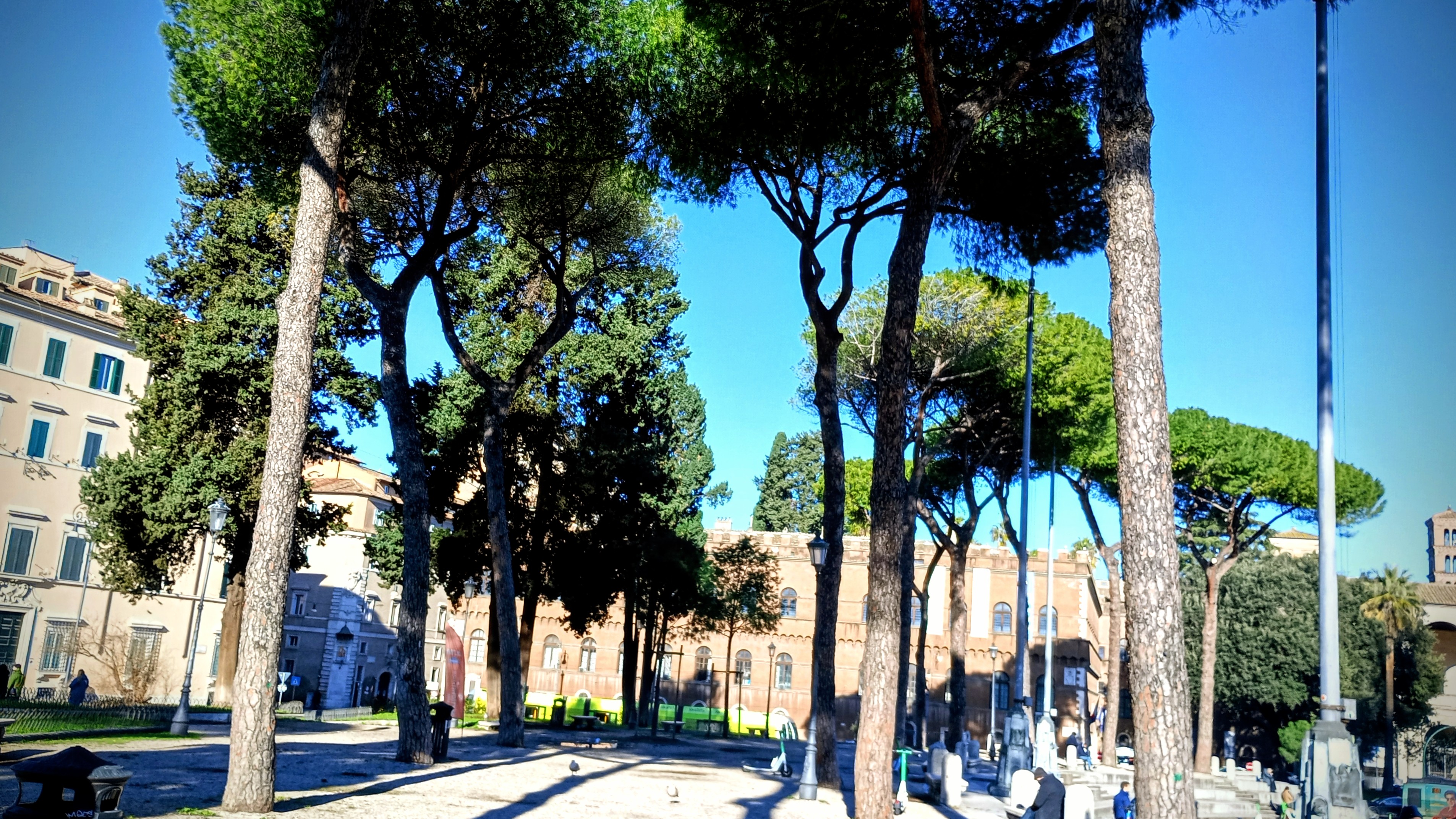
Piazza d’Aracoeli
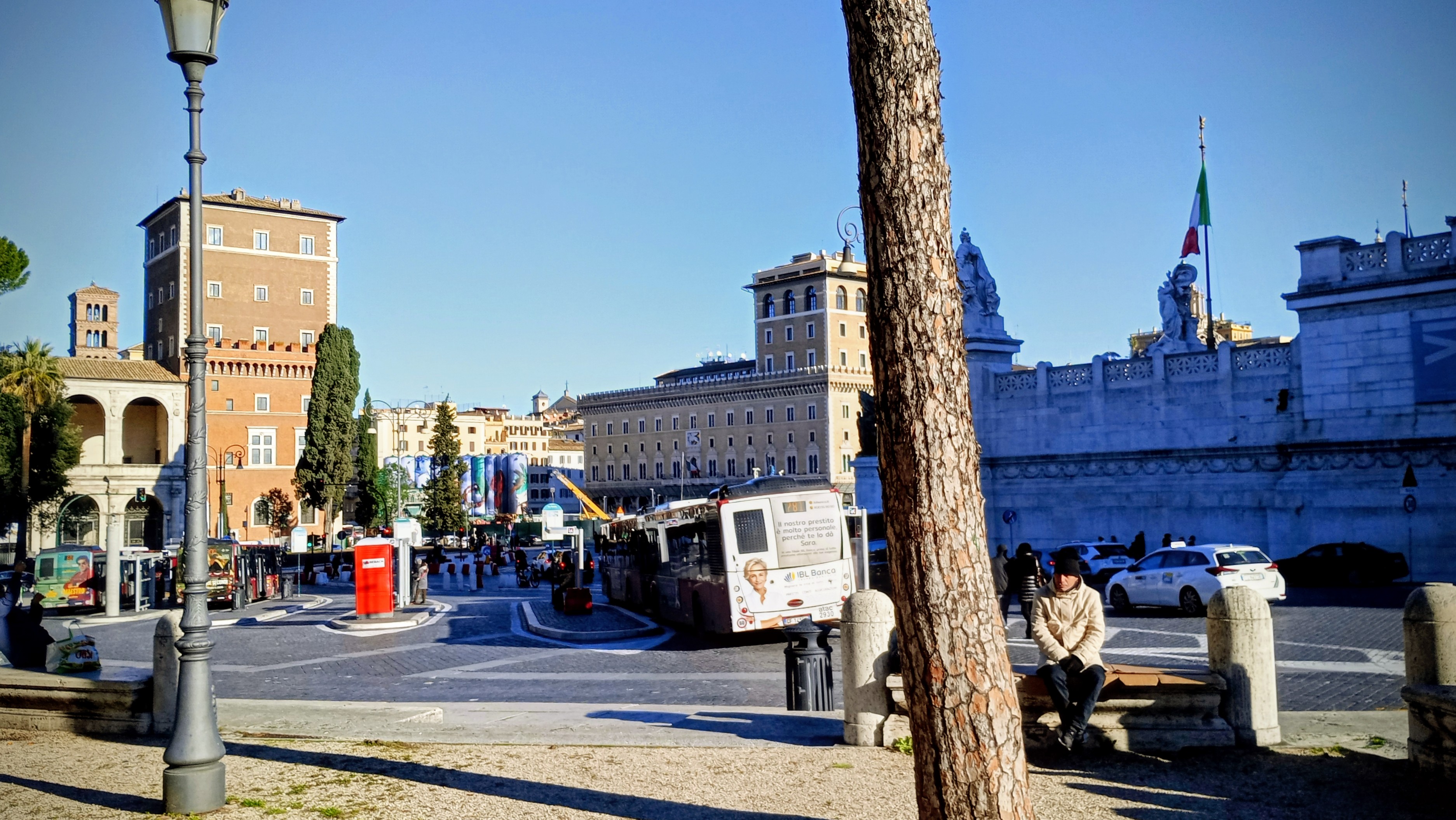
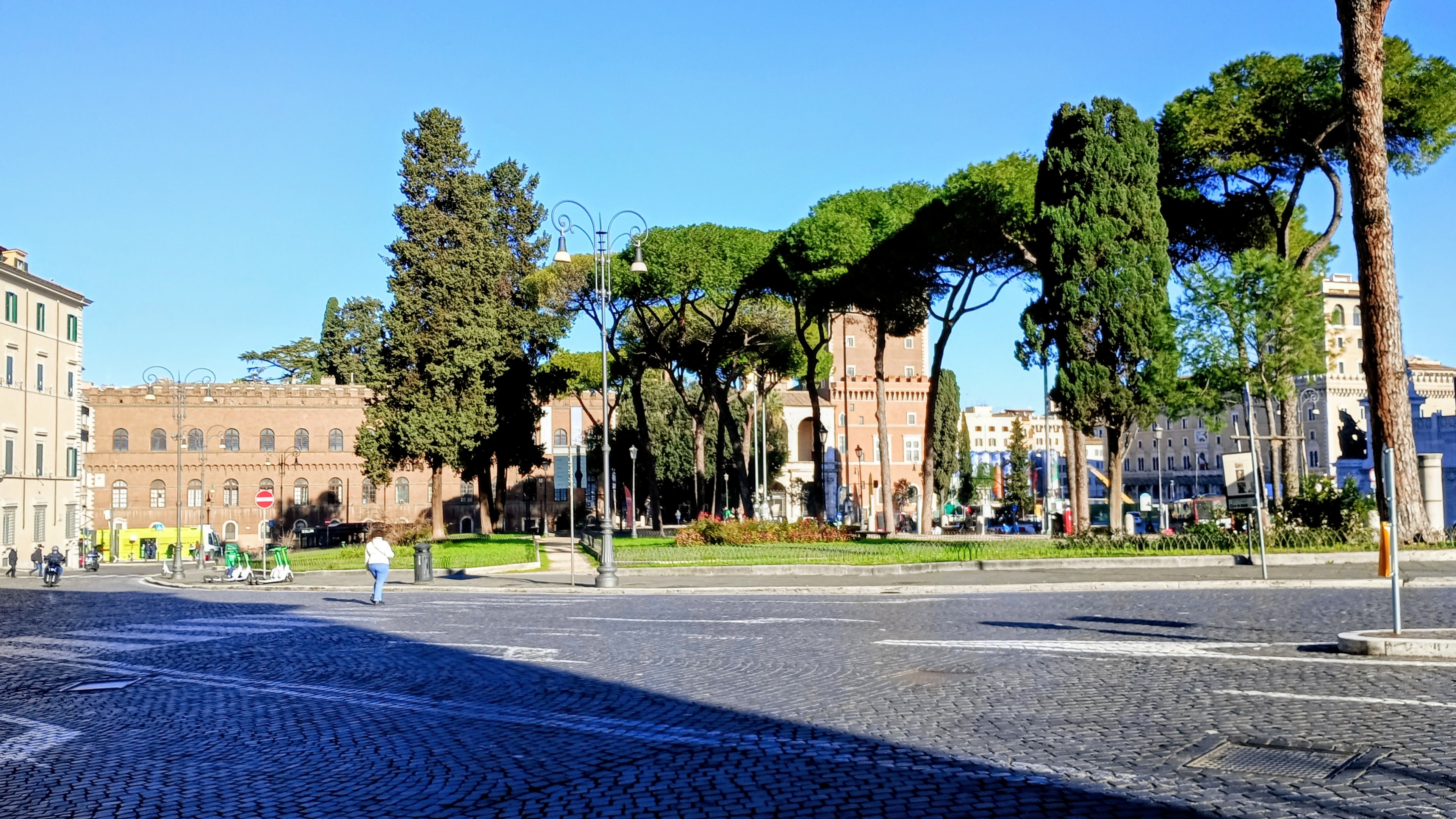
Piazza d’Aracoeli looking towards Piazza Venezia. Here is an important bus terminus aka capolinea. The new Metro line C is under construction with a stop here, Venezia.

This building has various names. It’s known as the “Altare della Patria” (altar of the homeland), the monument to Victor Emmanuel II, and as the Vittoriano.
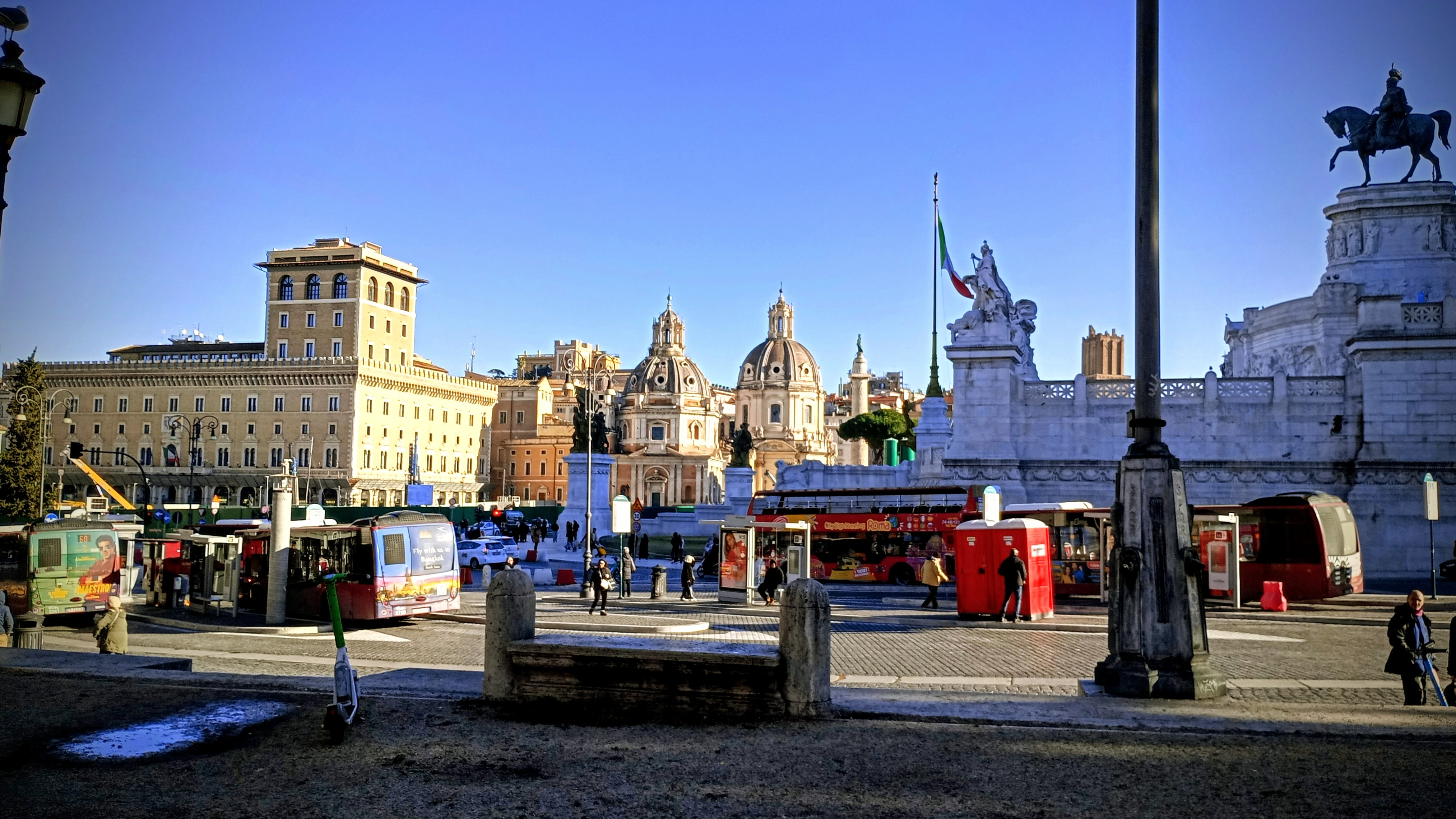
In the background are two cupolas as well as the top of the Trojan Column. One cupola is that of Santa Maria di Loreto al Foro Traiano (1585). And I believe the other cupola to be that of Santissimo Nome di Maria al Foro Traiano (1751).

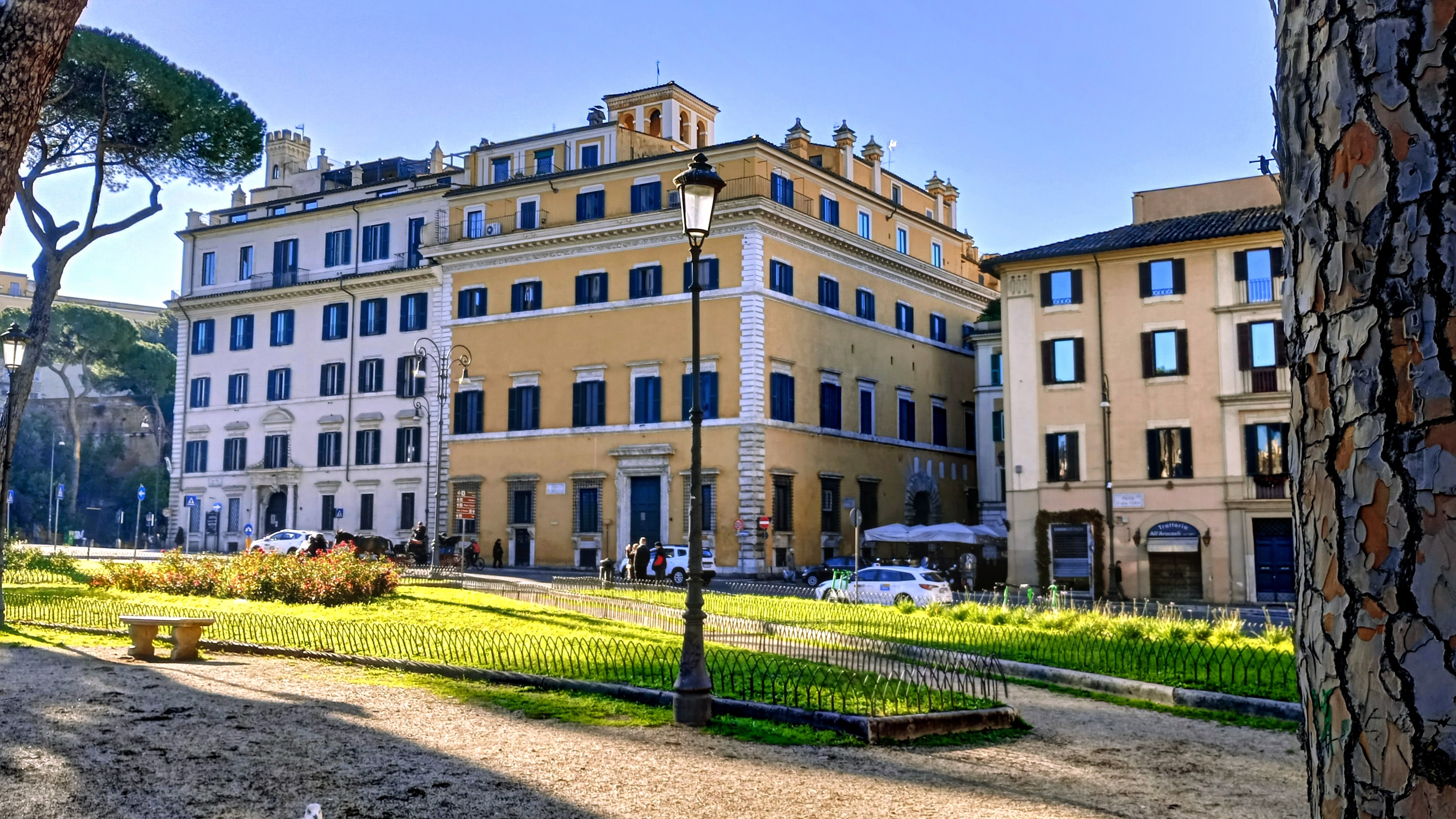
In the distance, the Pecci-Blunt Palazzo.

The road connecting Villa Caffarelli to the main street, via del Teatro di Marcello, is much easier than taking all those stairs.
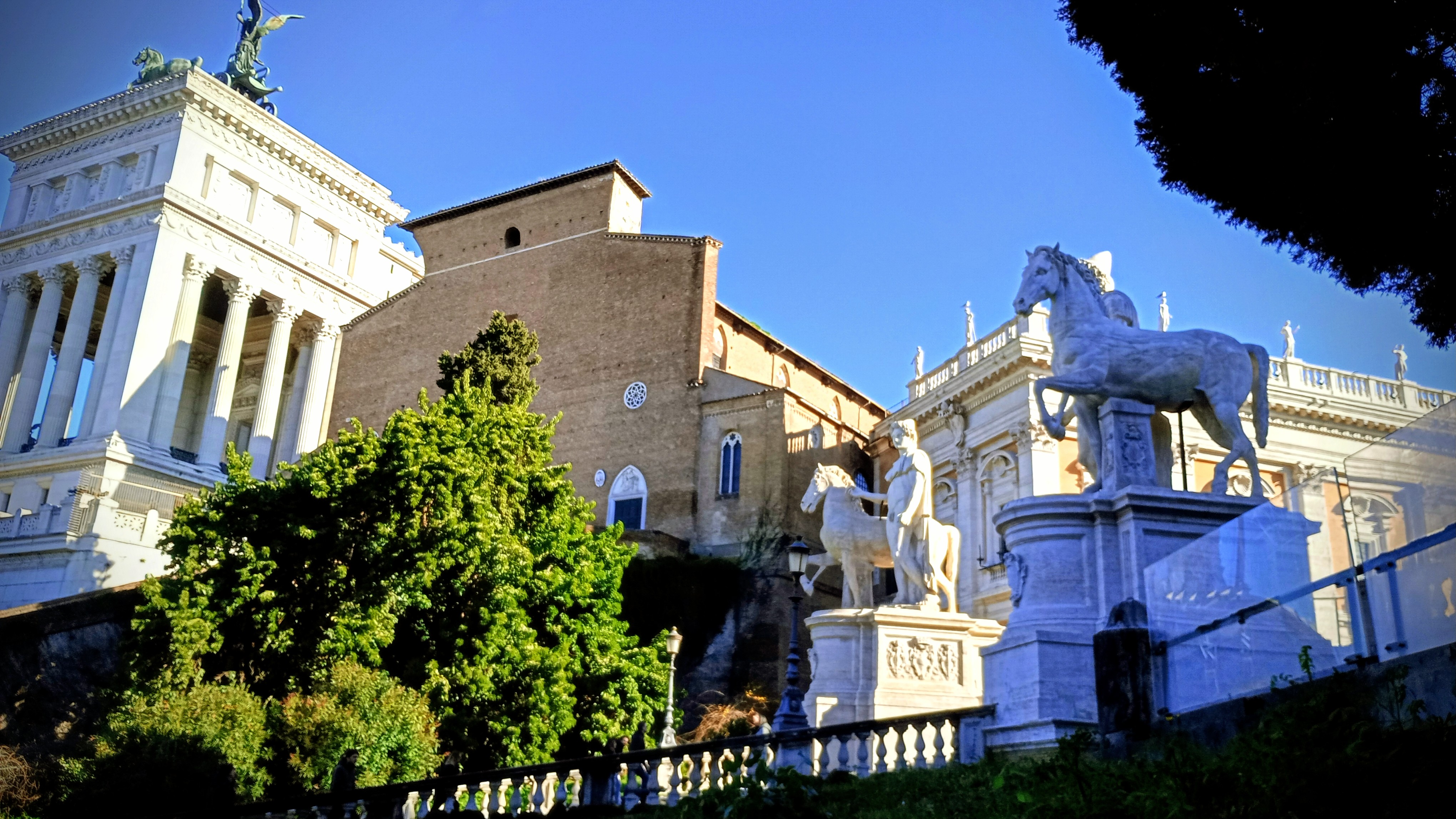
A collage of architectuaral stiles and times.
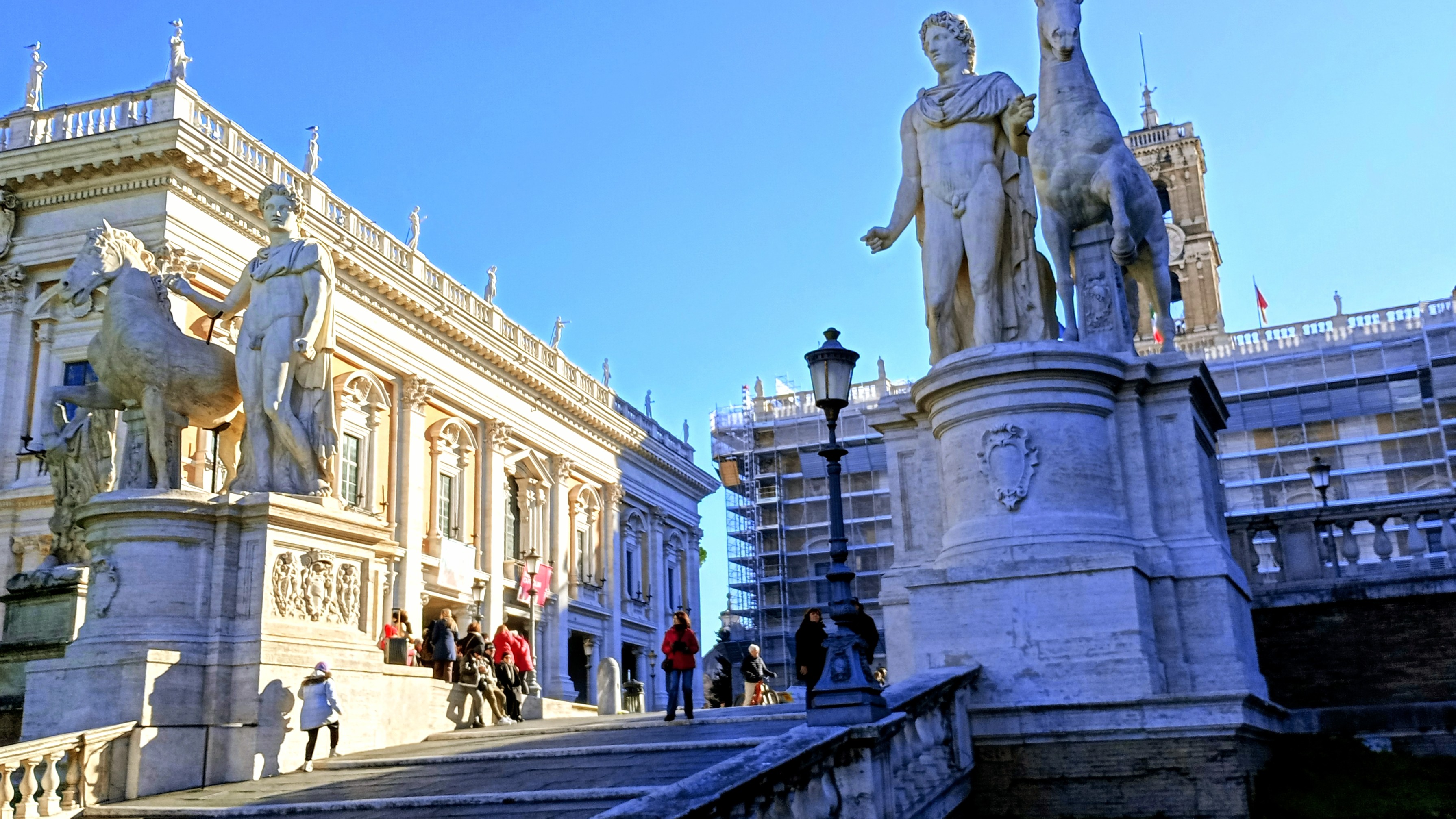
The cordonata that leads directly to Piazza del Campidoglio.
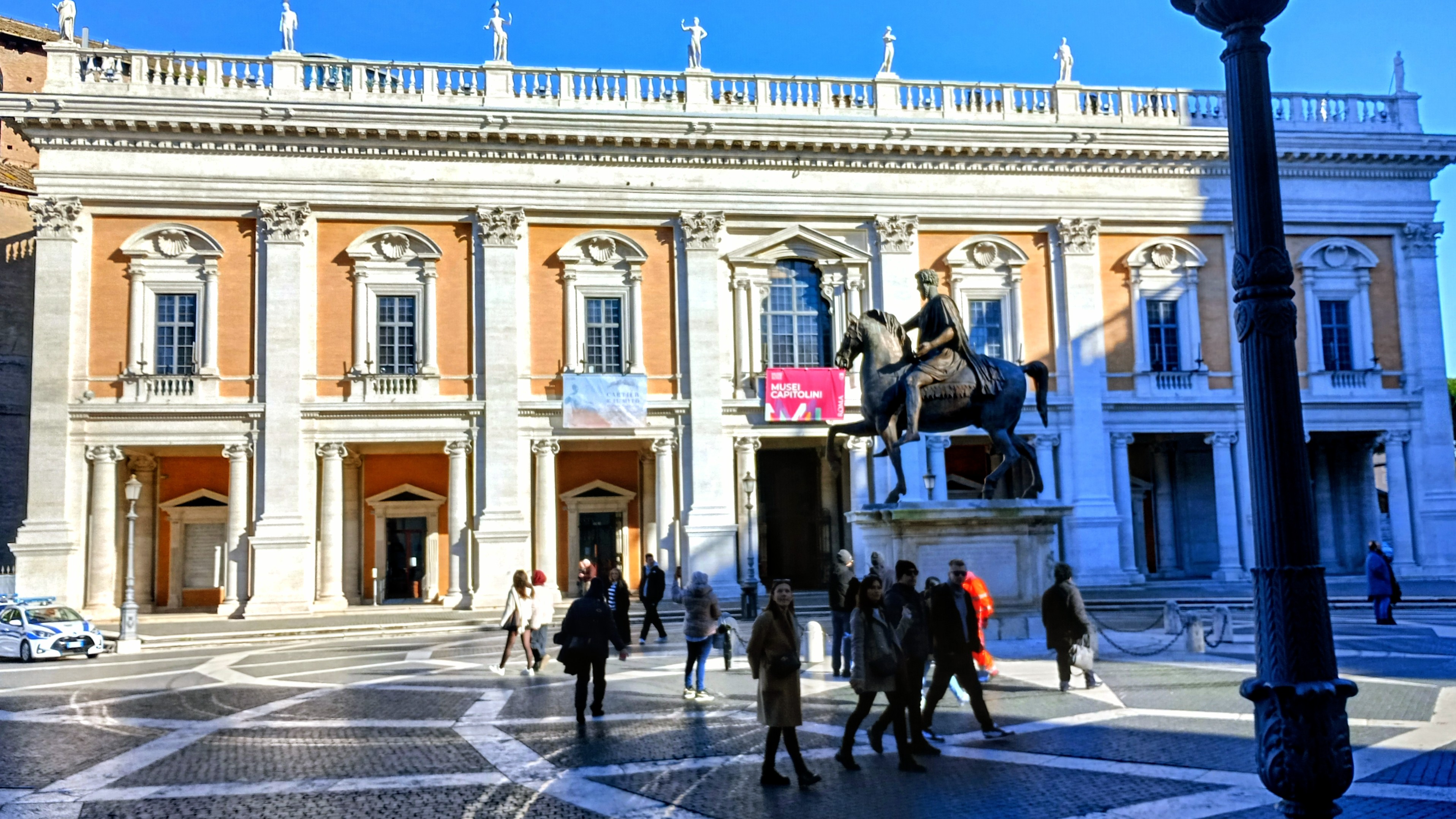
A view of one of the Capitoline museums. In the center is an equestrian statue of Marcus Aurelius.
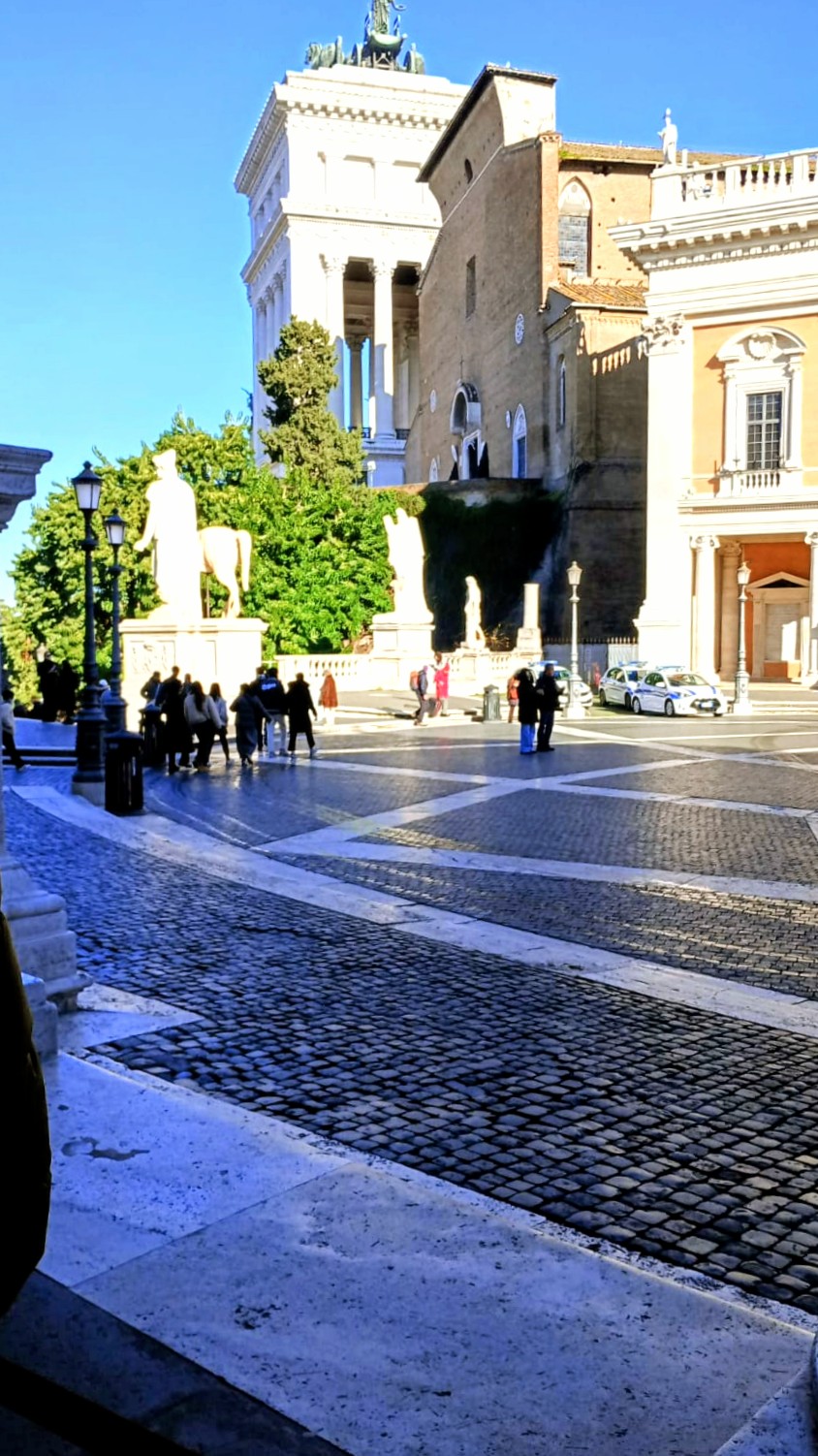
Entrace to Piazza del Campidoglio.
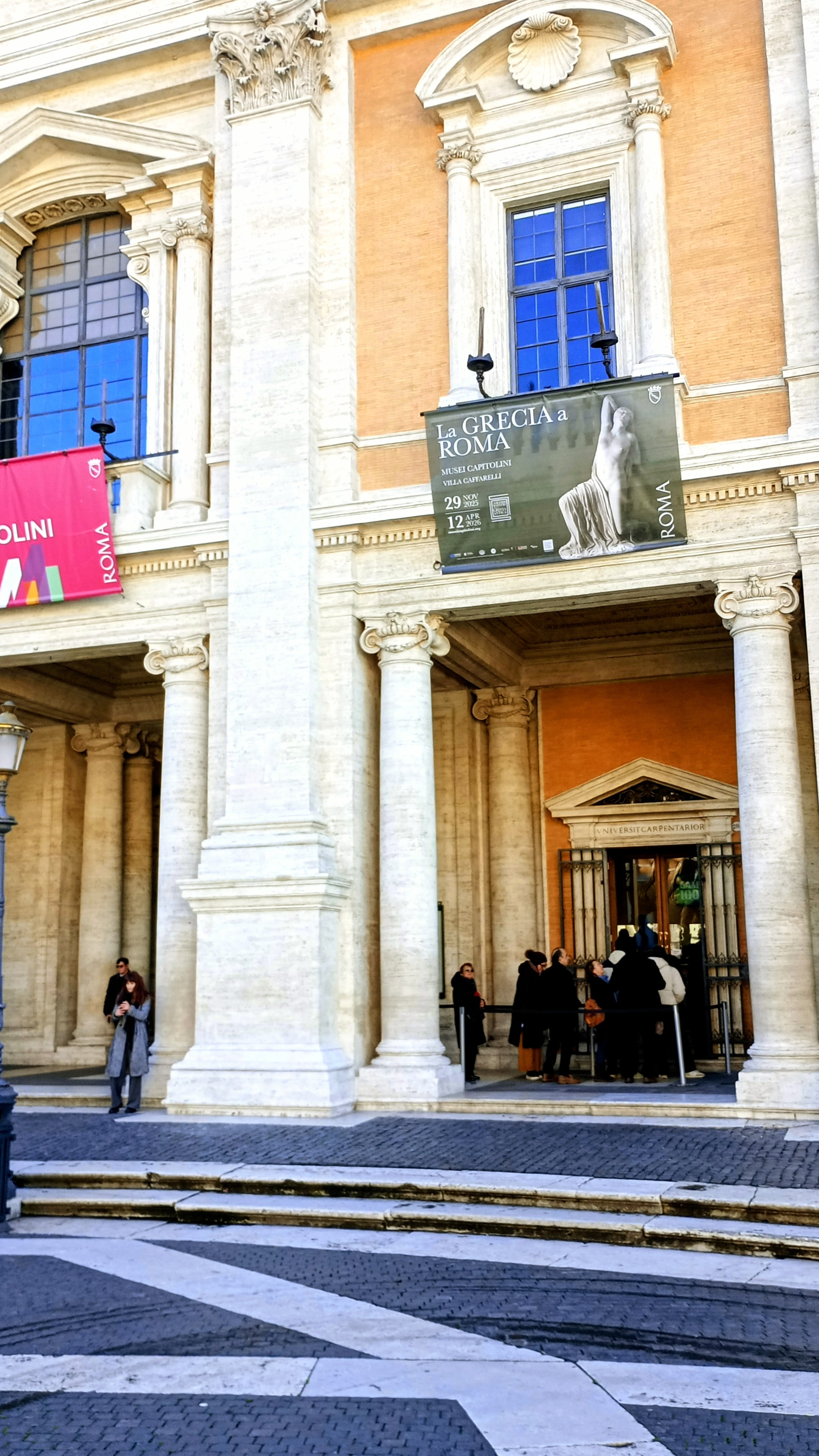
The Ticket Booth
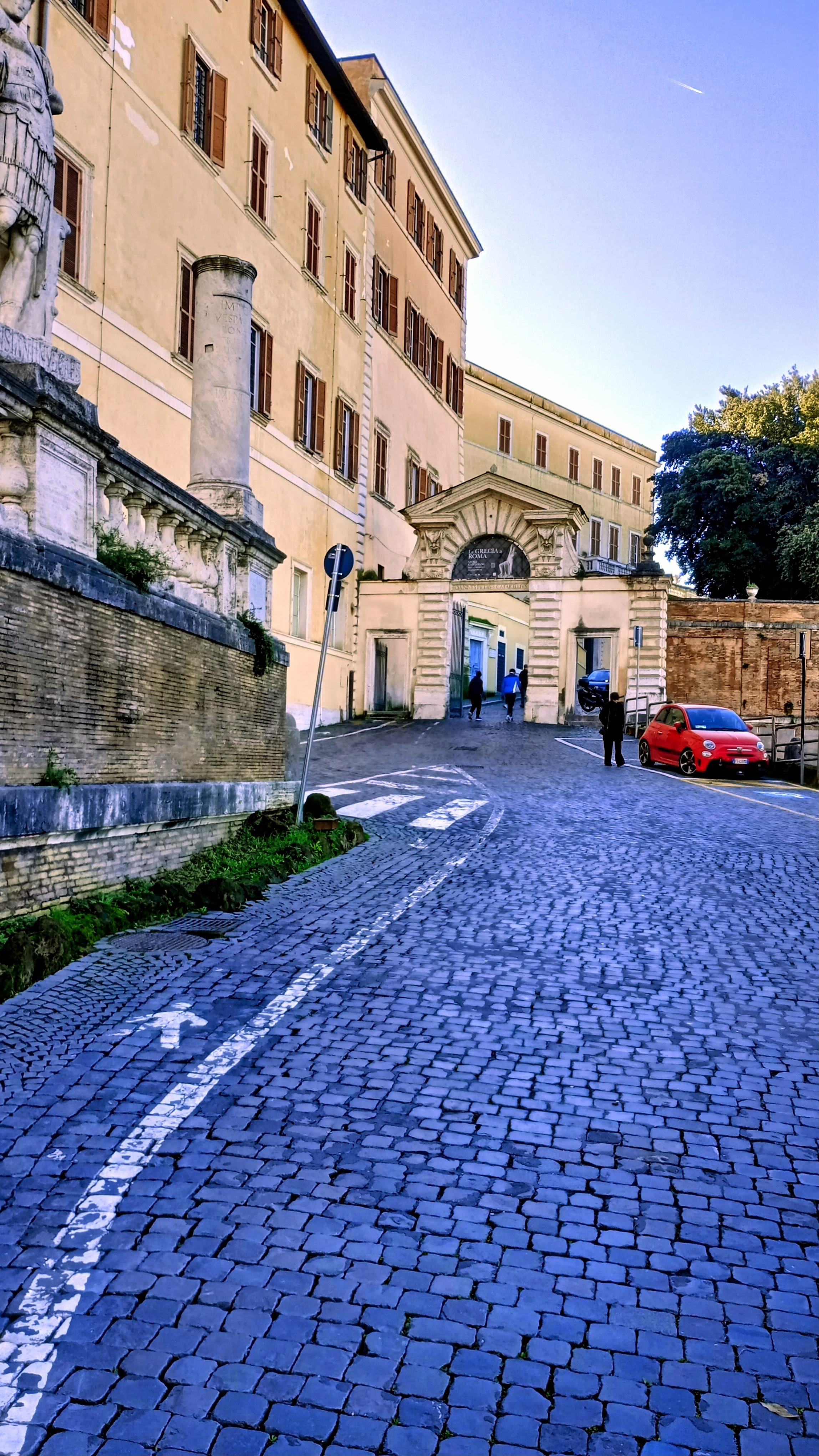
The arch indicates the entrance to Villa Caffarelli.
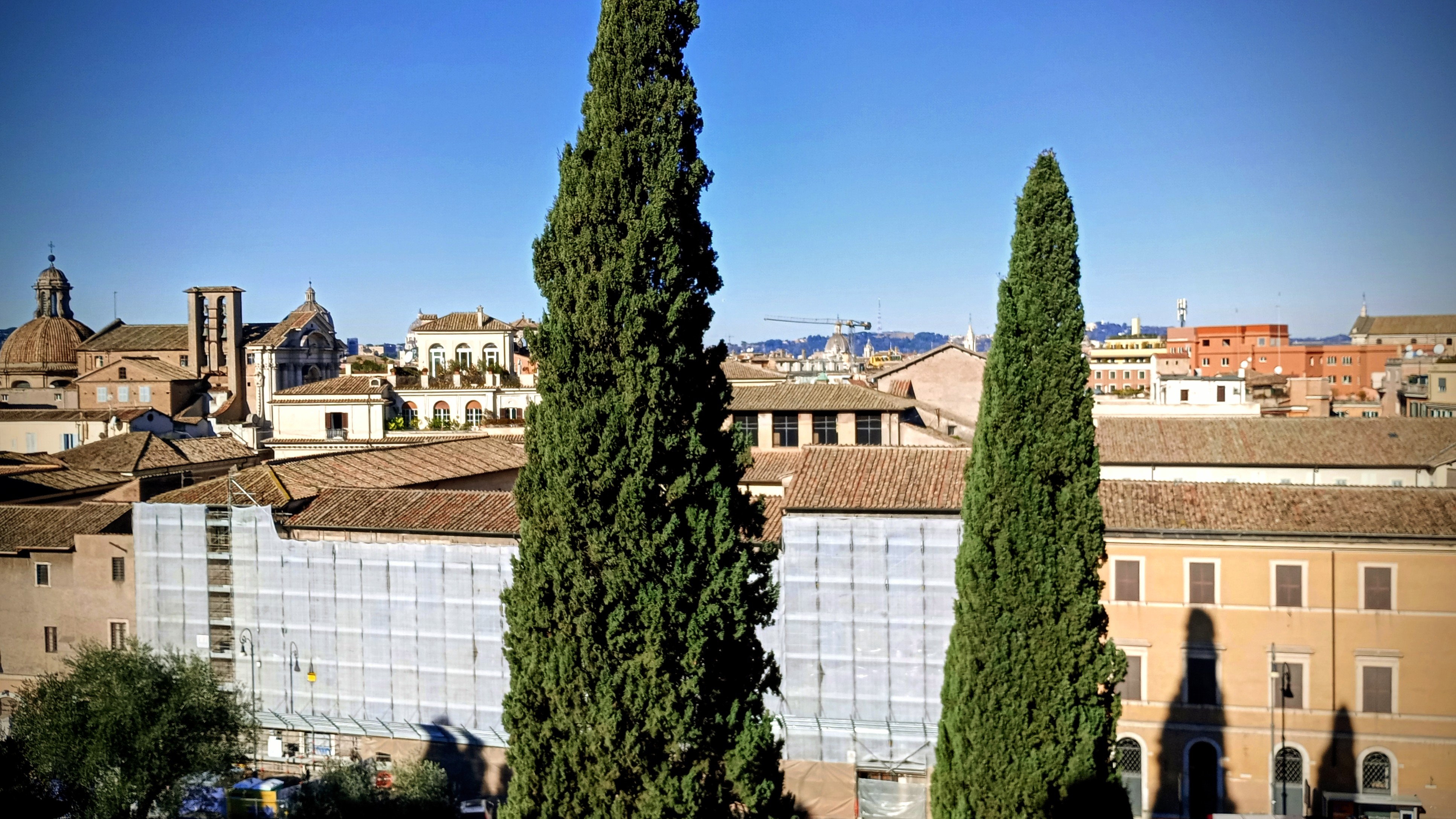
From the ramp there is so much to see. Like the cypress shadows on the wall. It was near noon and the shadows were aggressive.
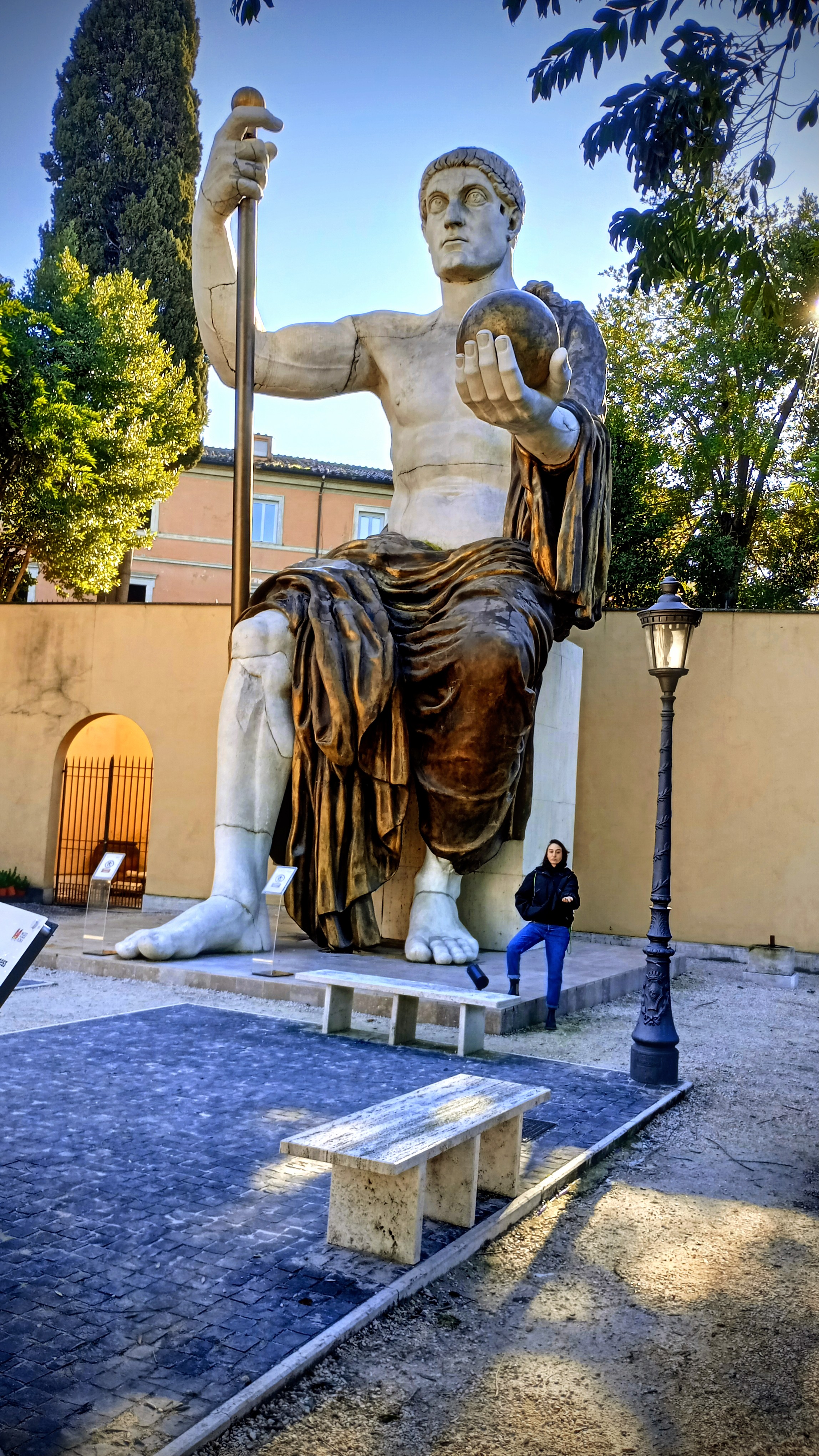
The Colosssus at Villa Caffarelli.
In the garden of Villa Caffarelli is a full-scale reconstruction of the Colossus of Constantine. The project was sponsored by the Prada Foundation.

info
Villa Caffarelli dates back to the 16th cen when the emperor gave Ascanio Caffarelli a piece of land on the Capitoline Hill. Here Caffarelli levelled the land so he could build a home.
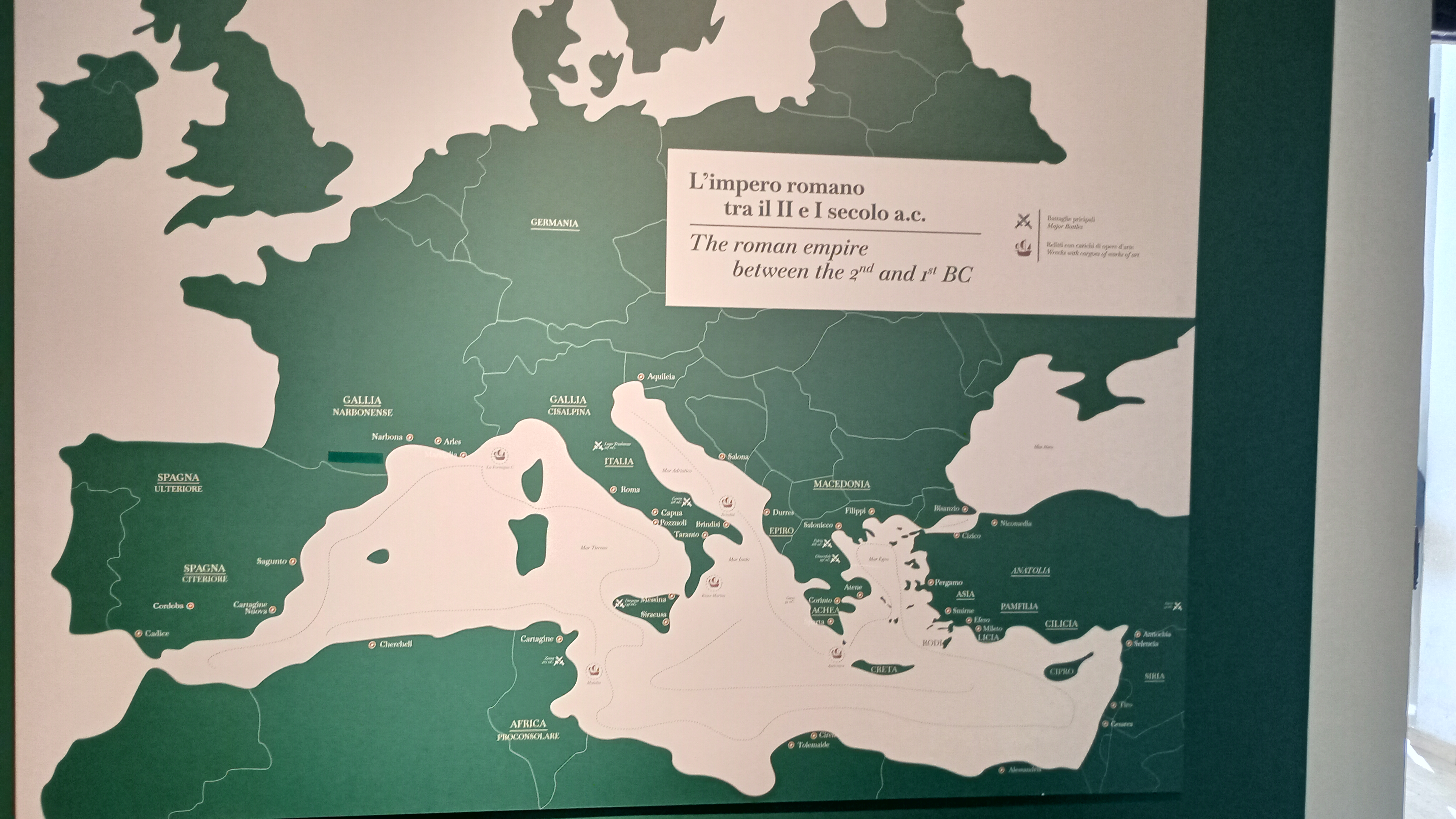
The exhibit “Greece in Rome” retraces the encounter between two major civilizations. This encountered helped shape Western tastes and aesthetics.
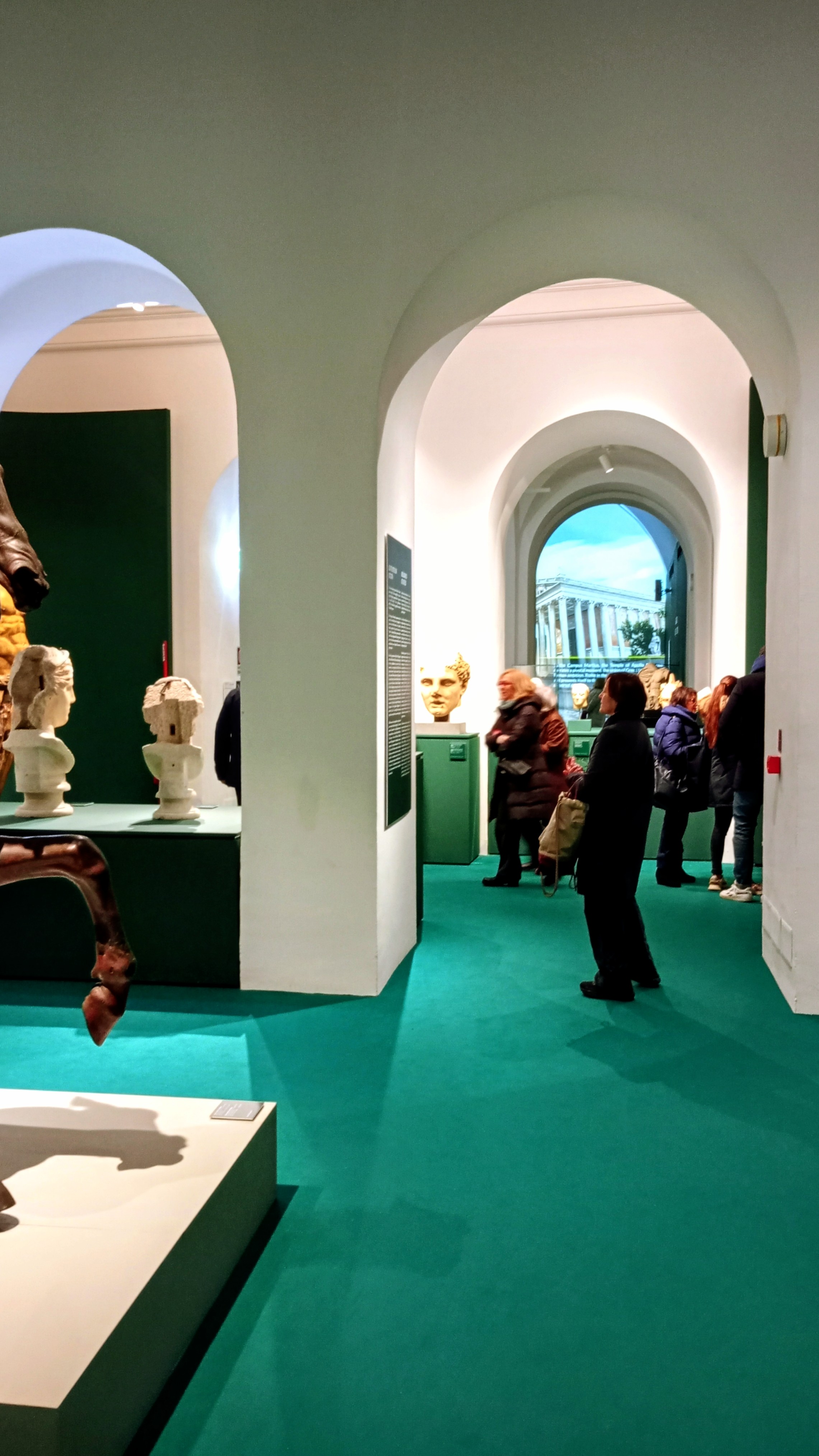
You enter here….
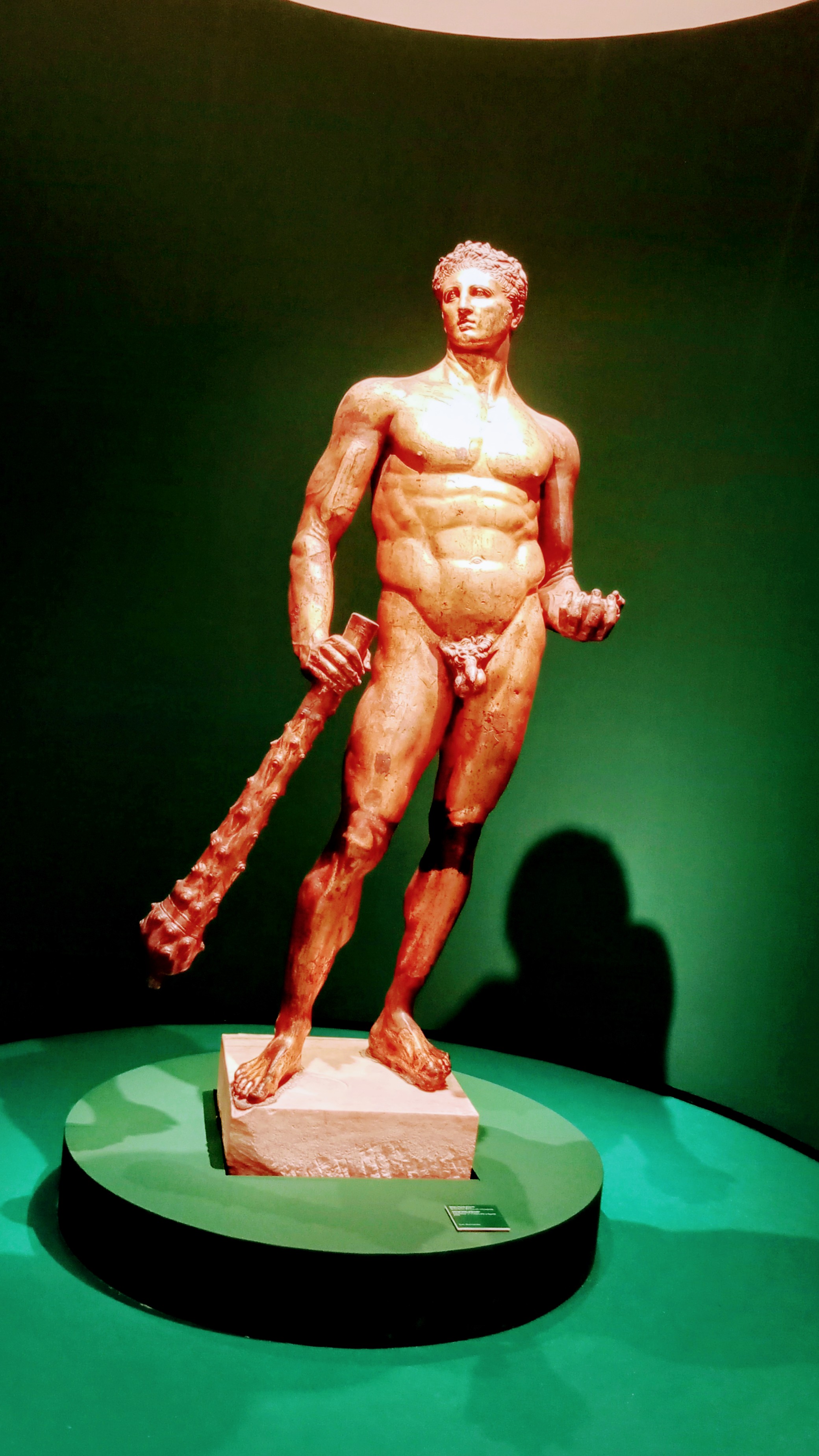
A statue of Hercules. It’s not difficult to recognize Hercules in art as he generally carries a club and wears a lion’s skin.
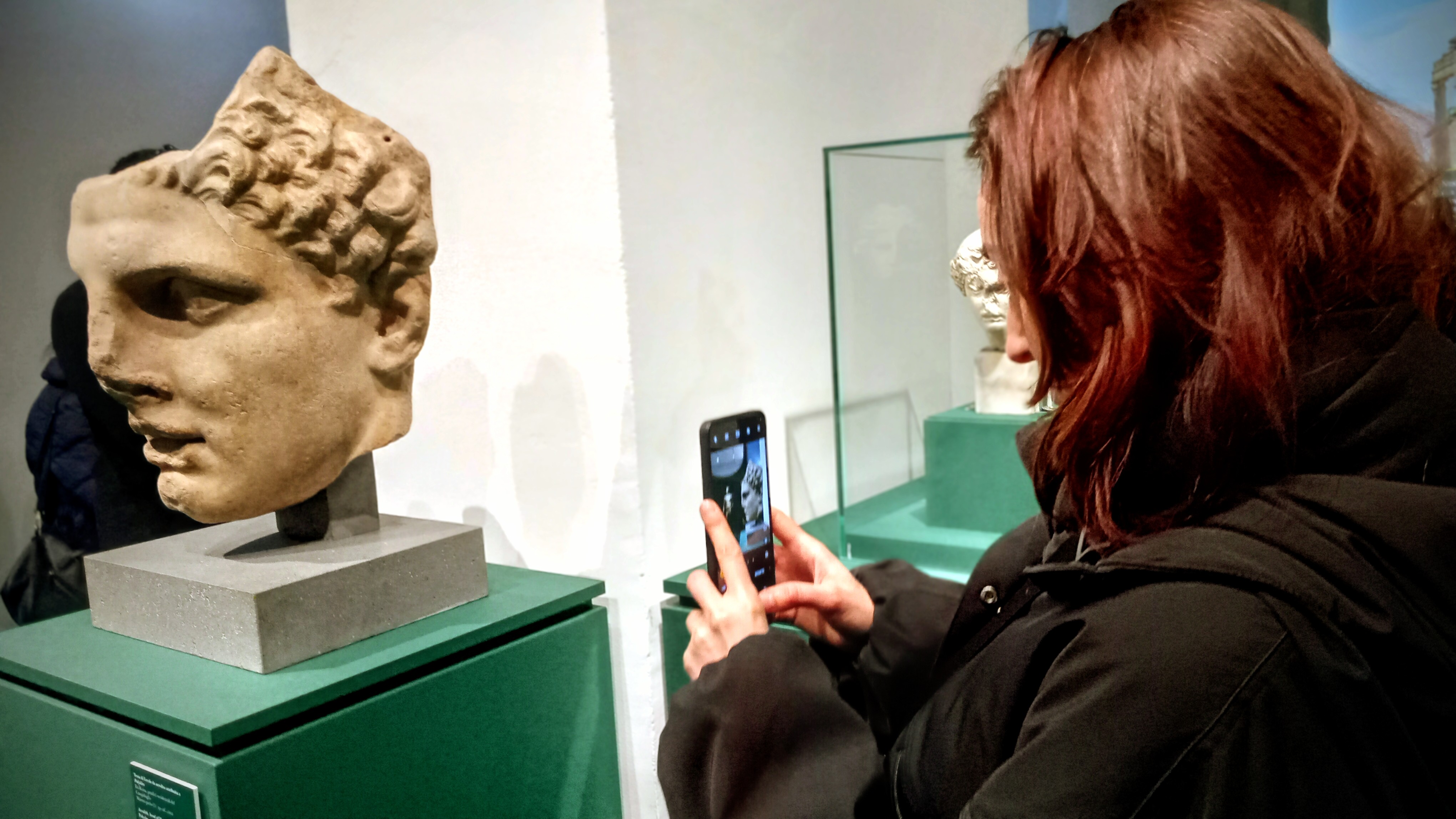
Image appropriation.
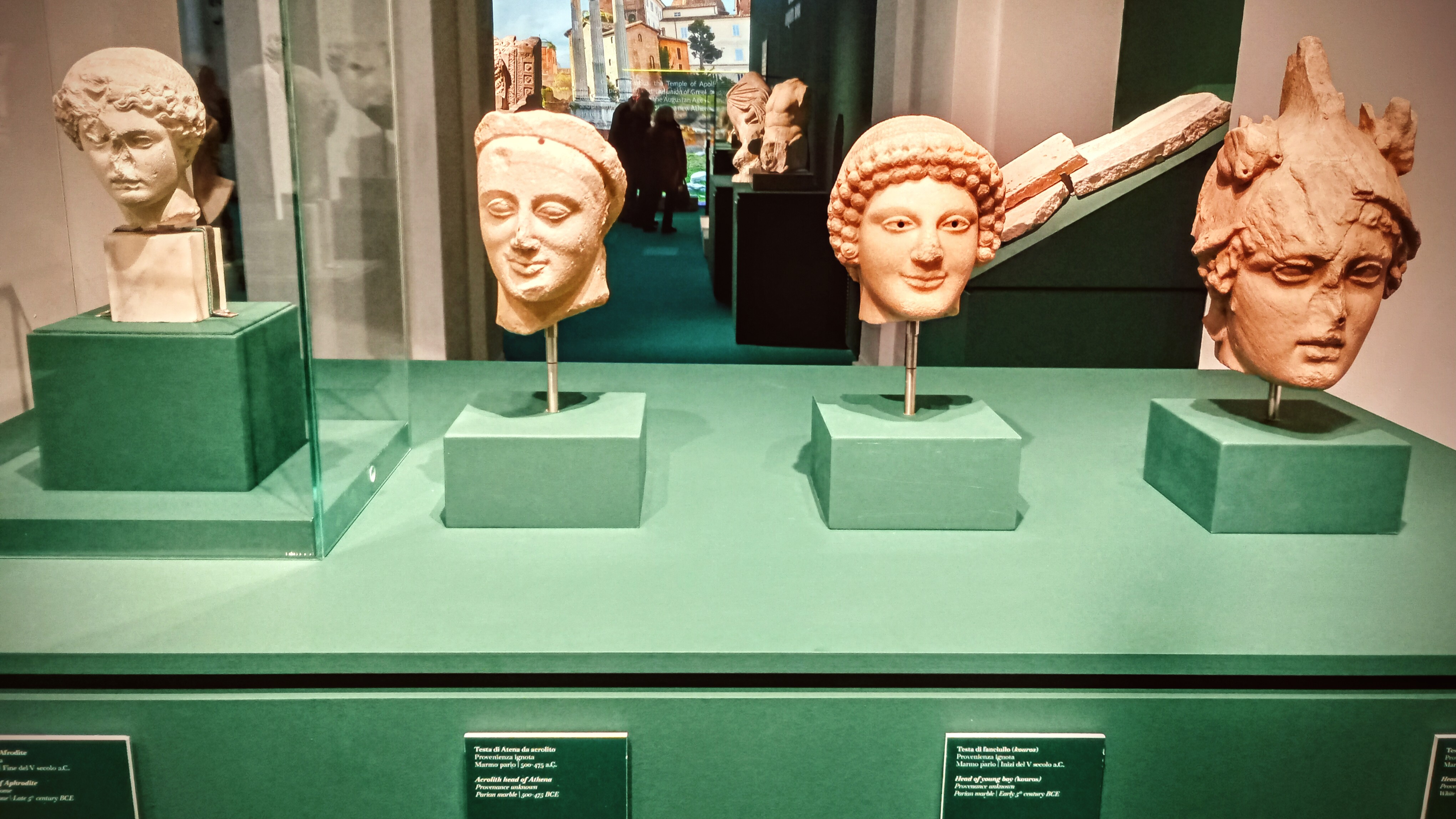
Some heads resist time better than others.
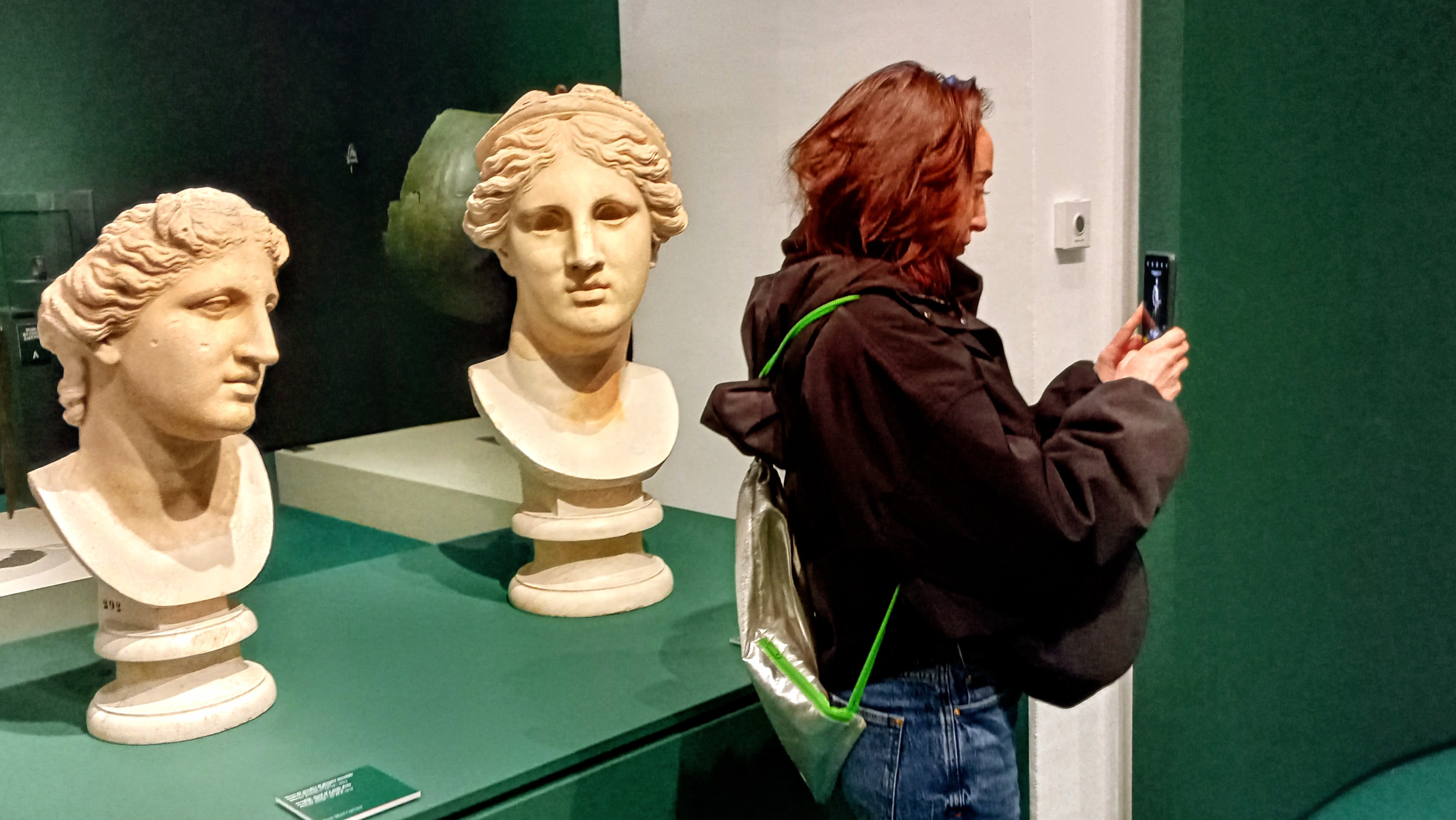
They were gossiping about her.
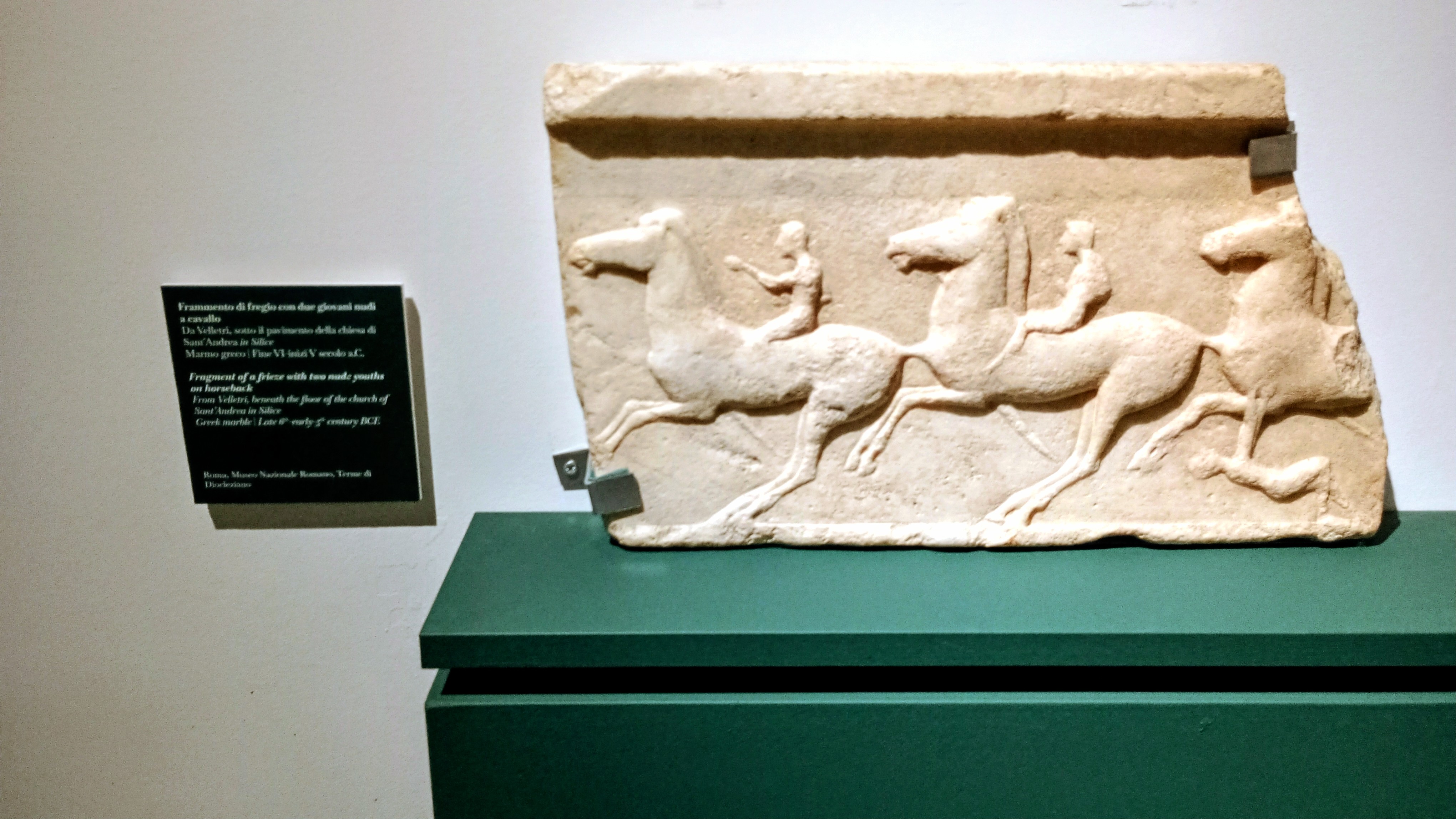
Fragment of a Frieze
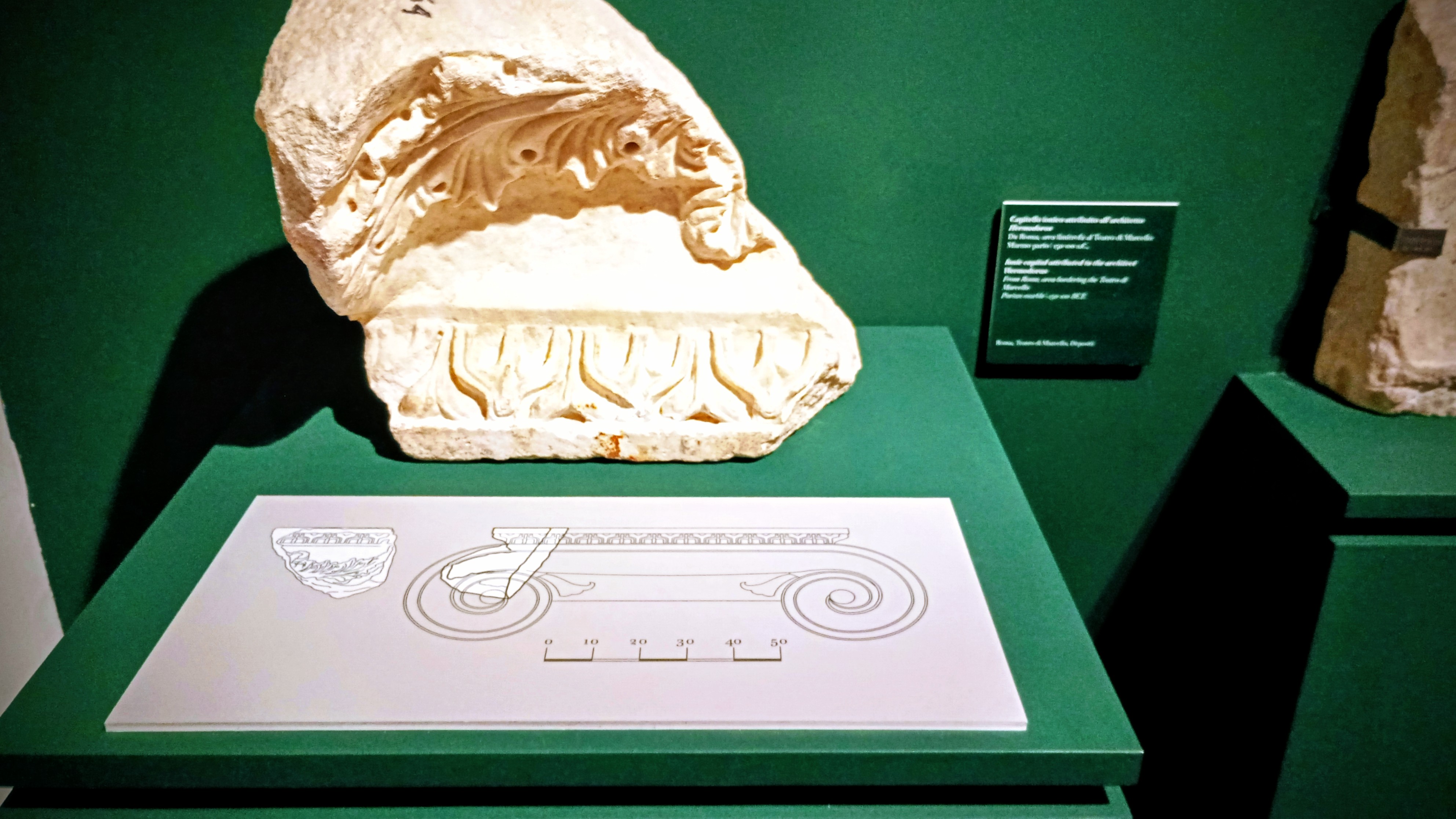
Didactic Drawing…what kind of column is this?
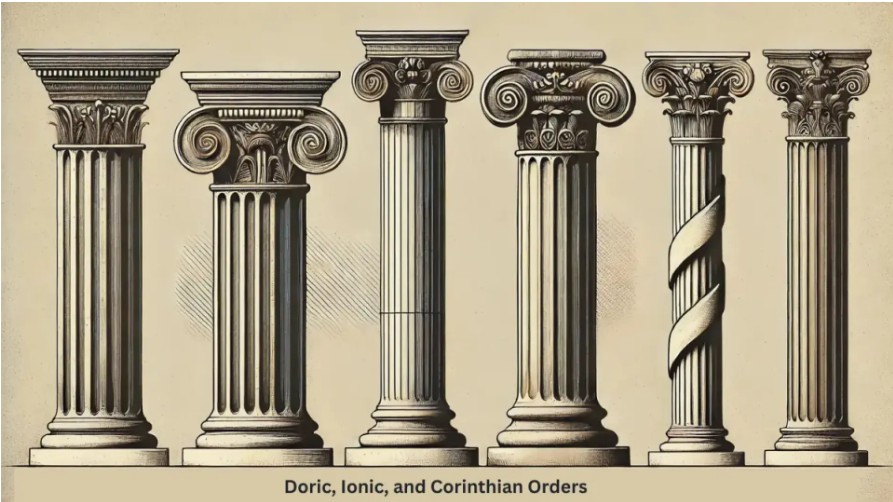
Characteristics of Roman Architecture: Arches, Columns, and Innovation
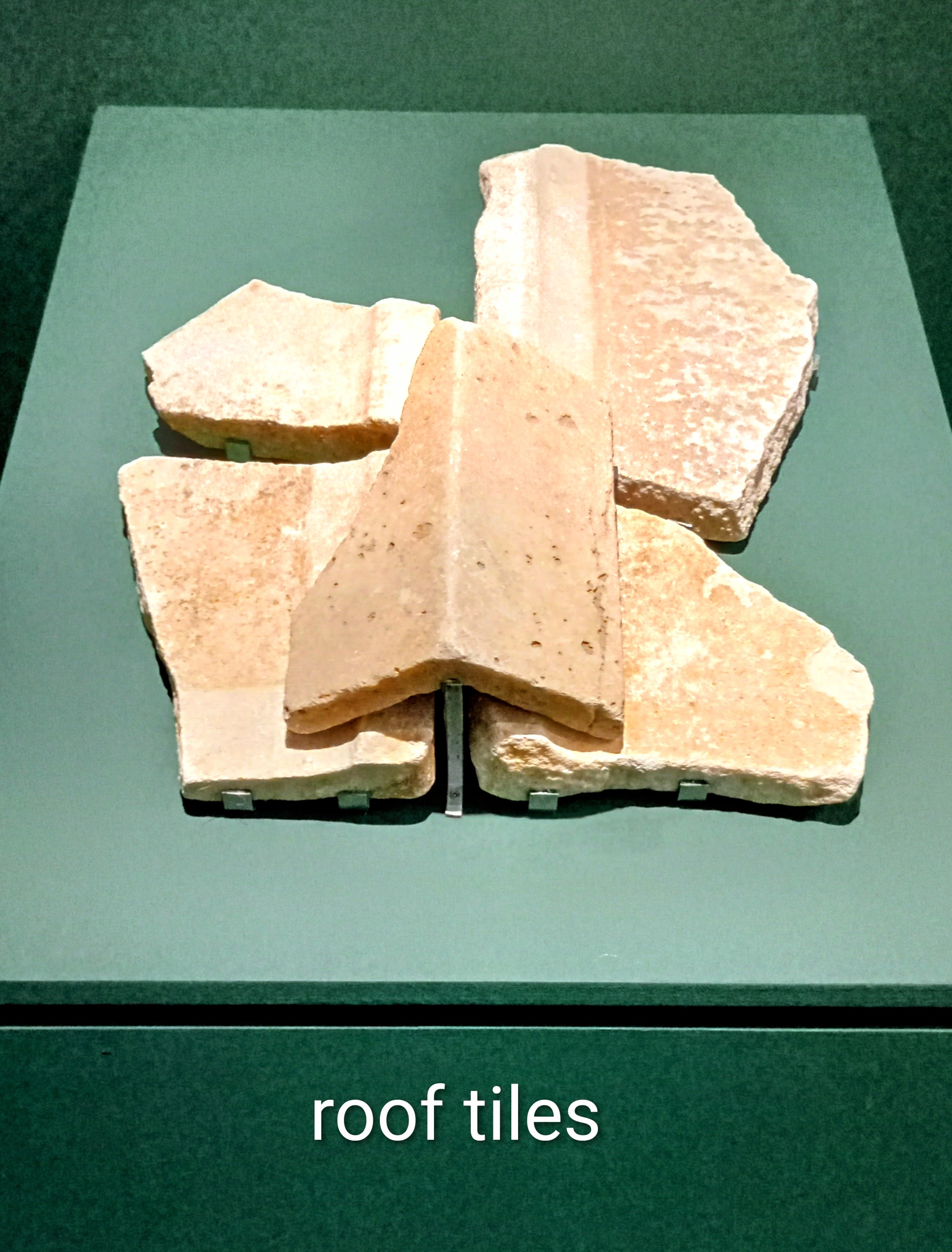
Roman Roof Tiles
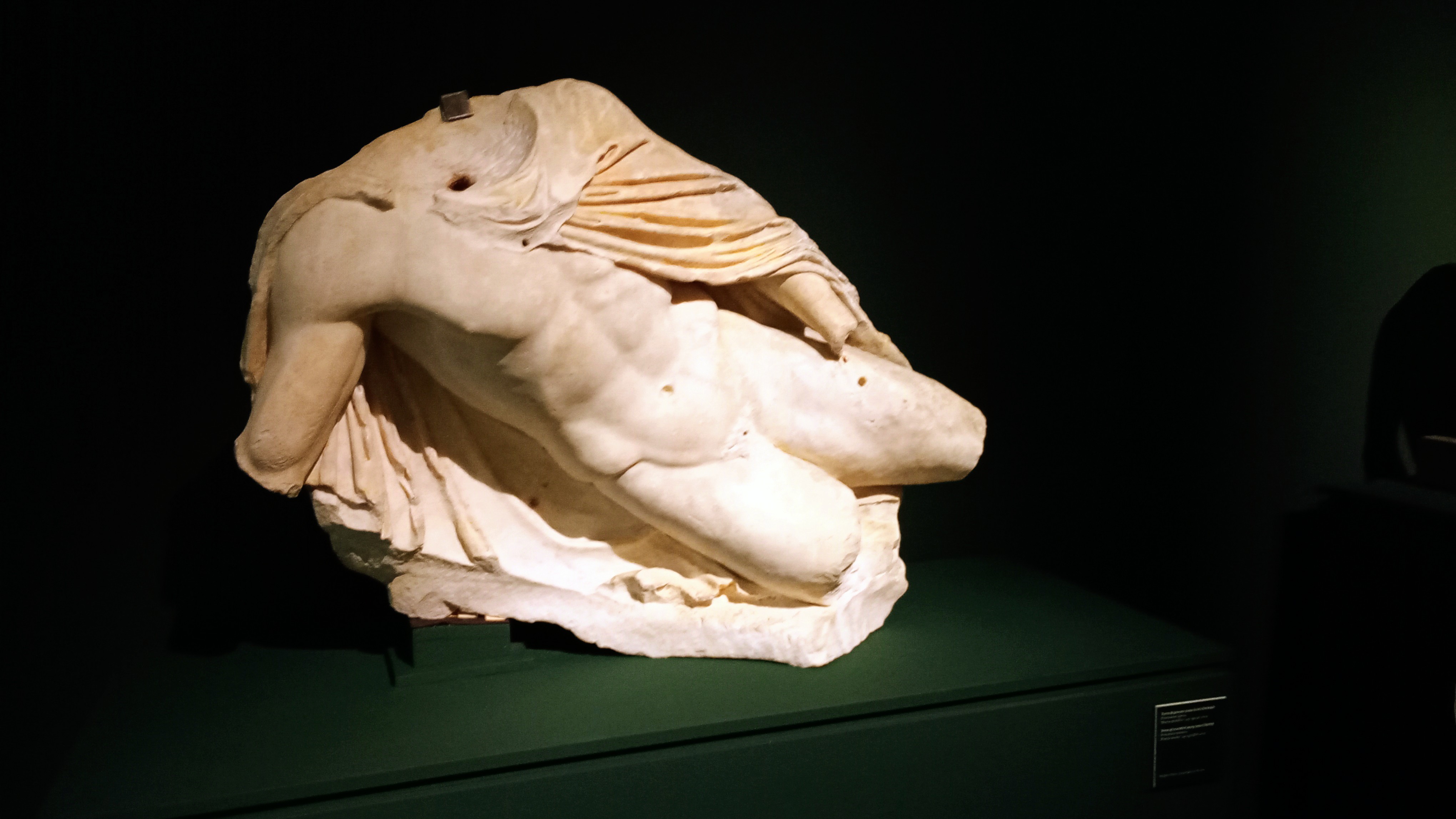
Niobide
Niobids were Niobe’s children who were slain because Niobe had a big mouth and bragged about all the children she had compared to Leto. Leto’s sons, Apollo and Artemis, were not happy about Niobe dissing their mom. So, to punish her, they killed her kids. All 14 of them.
This is a story about hubris…Niobe’s because she felt the need to brag and Leto’s boys who felt they were so important that they had the right to kill someone simply for an unconsiderate thought.
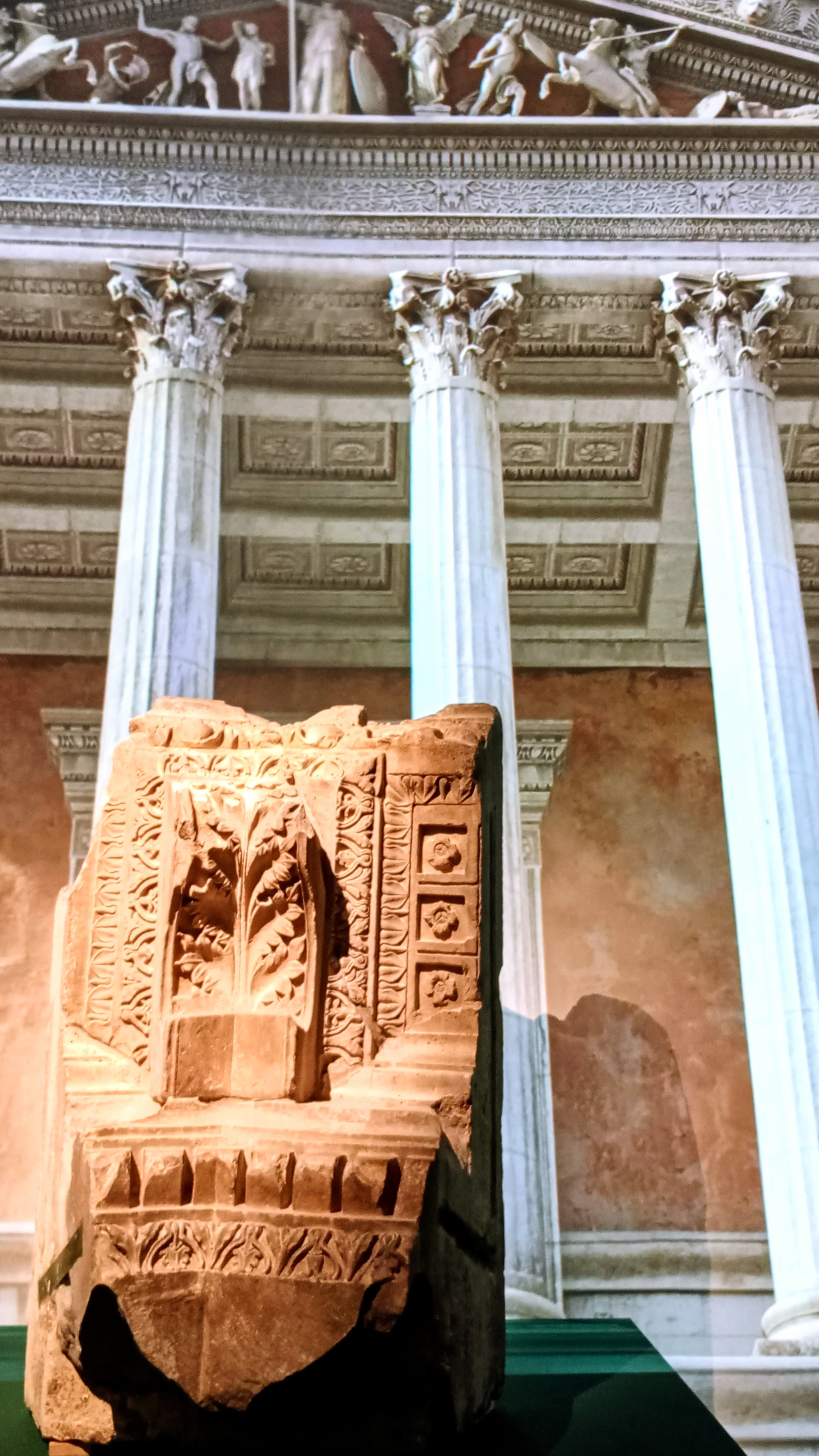
Greek Architectural Terra Cotta
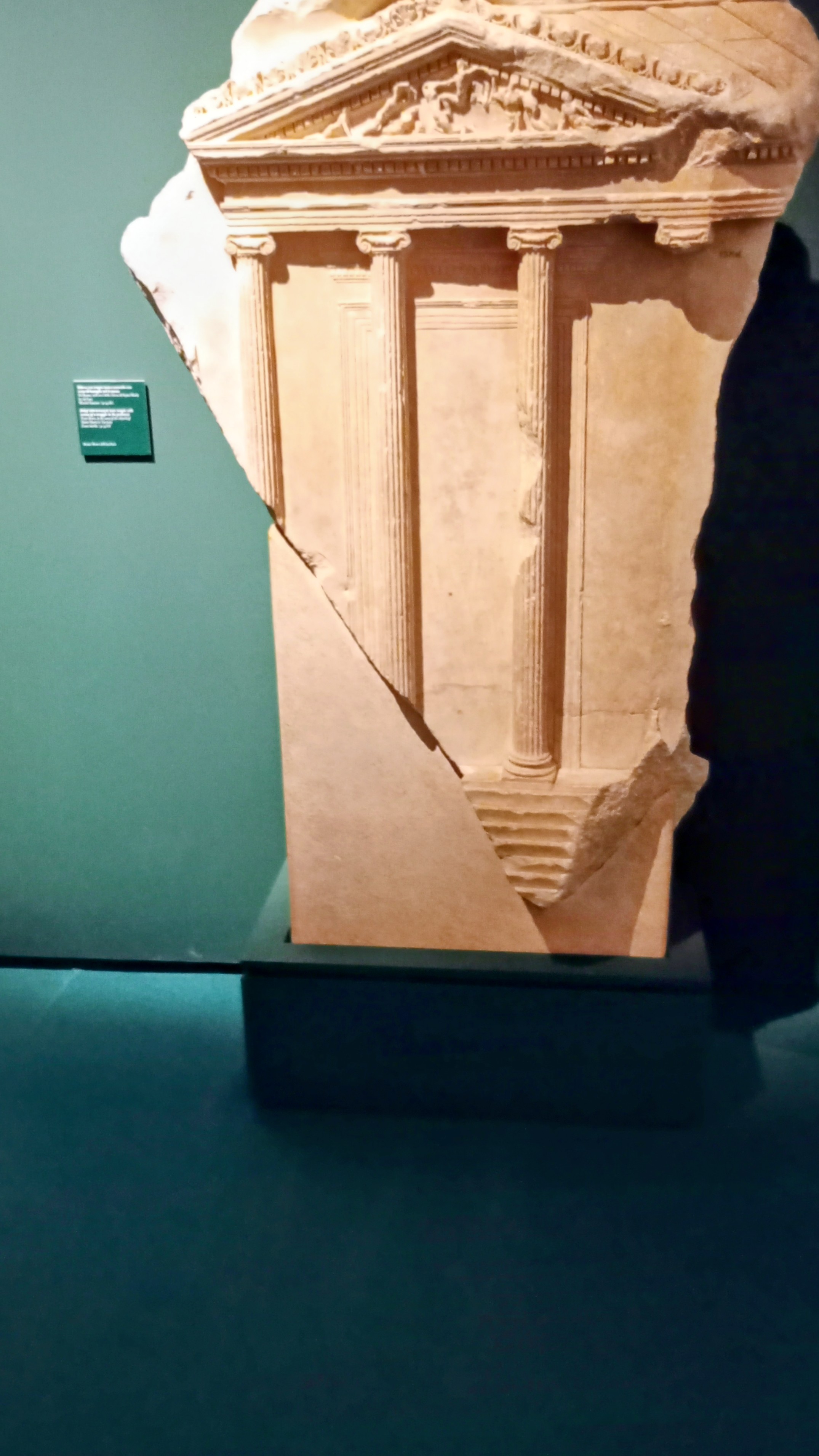
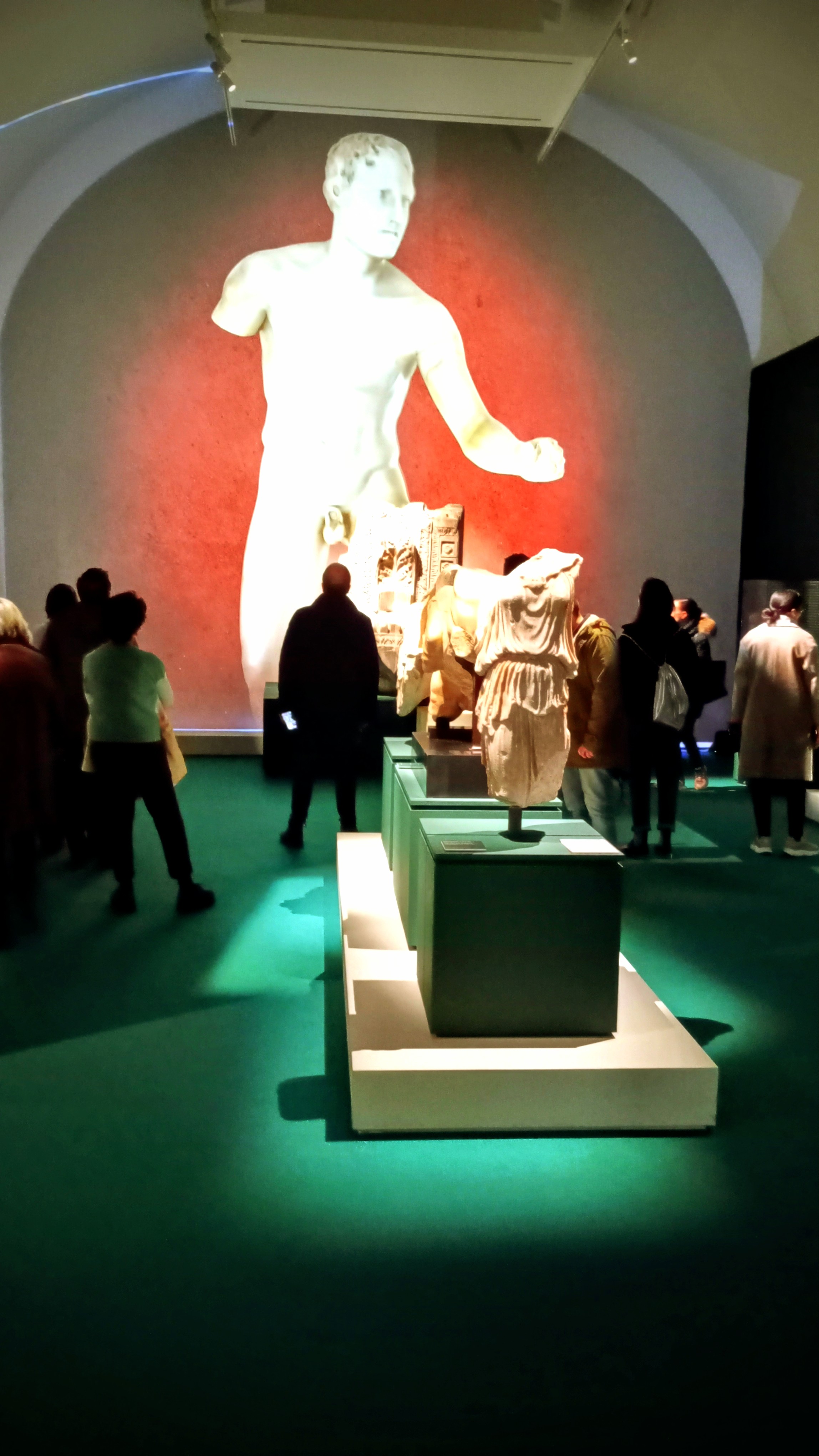
In the main room, there were various displays but they were embellished by a multimedia show projected on the back wall. The projection was big and animated and got people’s attention.
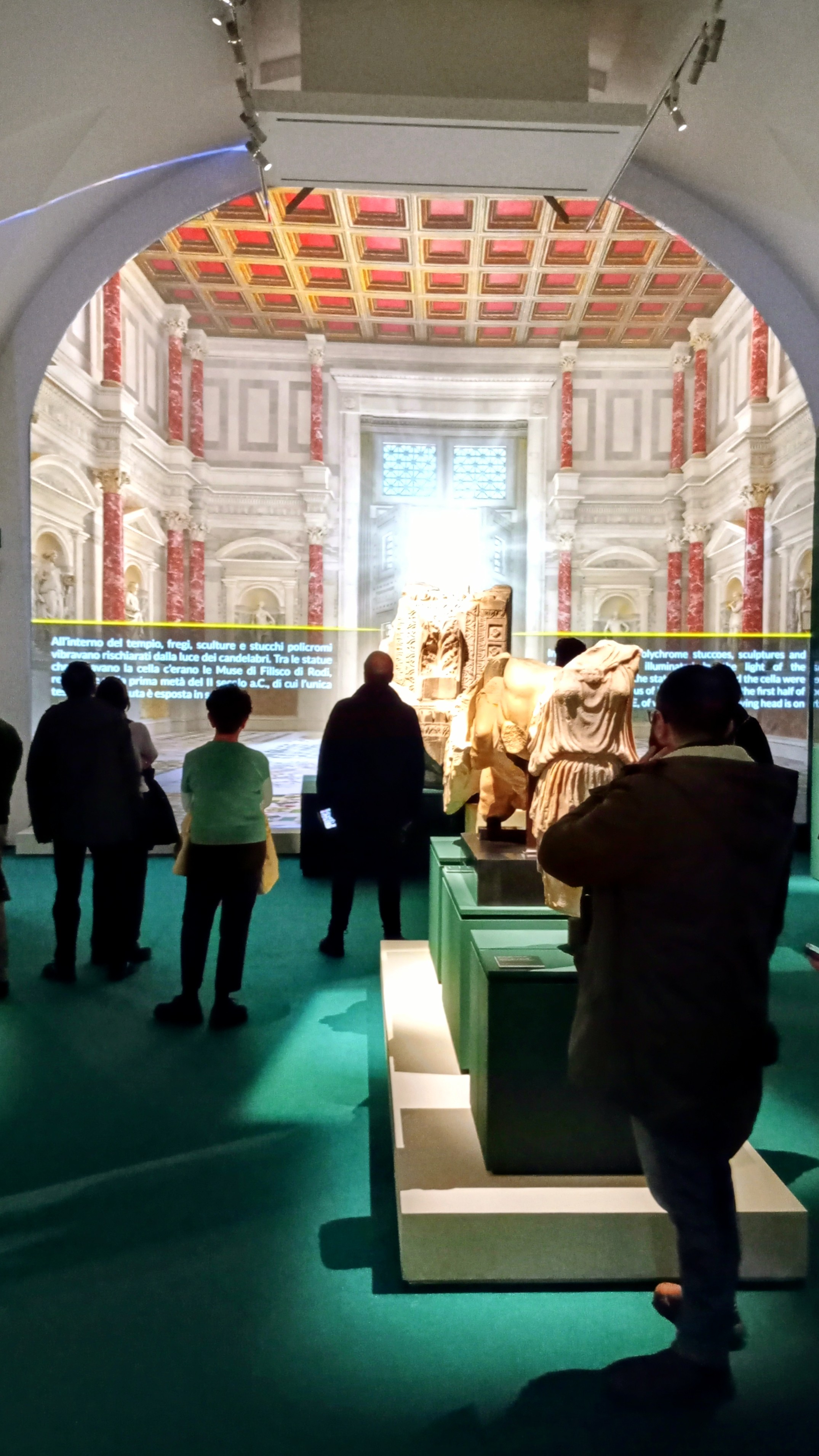
See how all the people seem interested? I get easily bored with multimedia projections mainly because I don’t like standing in one place for an extended period of time.
Notice the ceiling’s “soffitto a cassettoni” known as coffers in English.
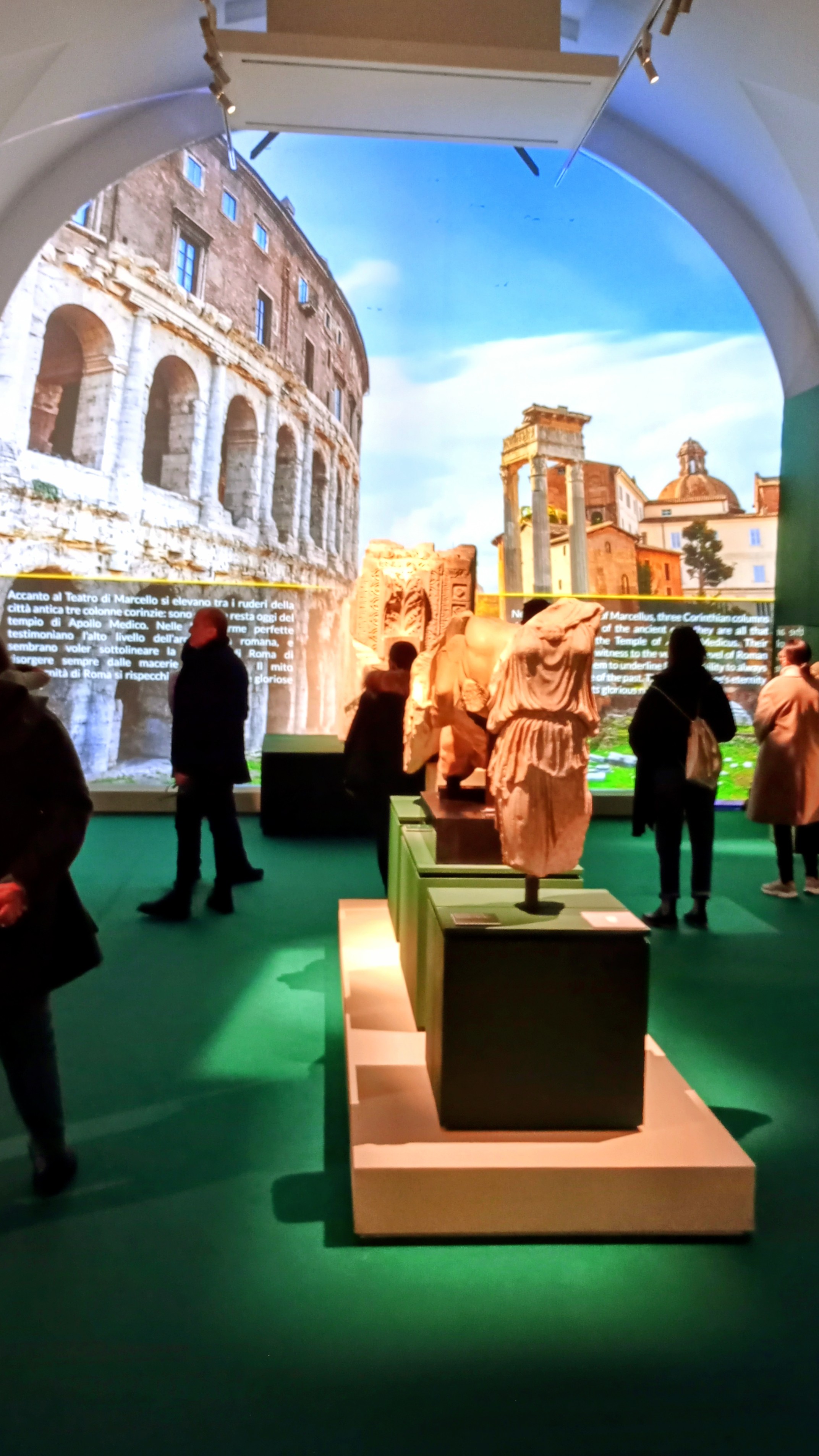
The image projected represents Teatro Marcello and shows columns of the Porticato d’Ottaviana as well.
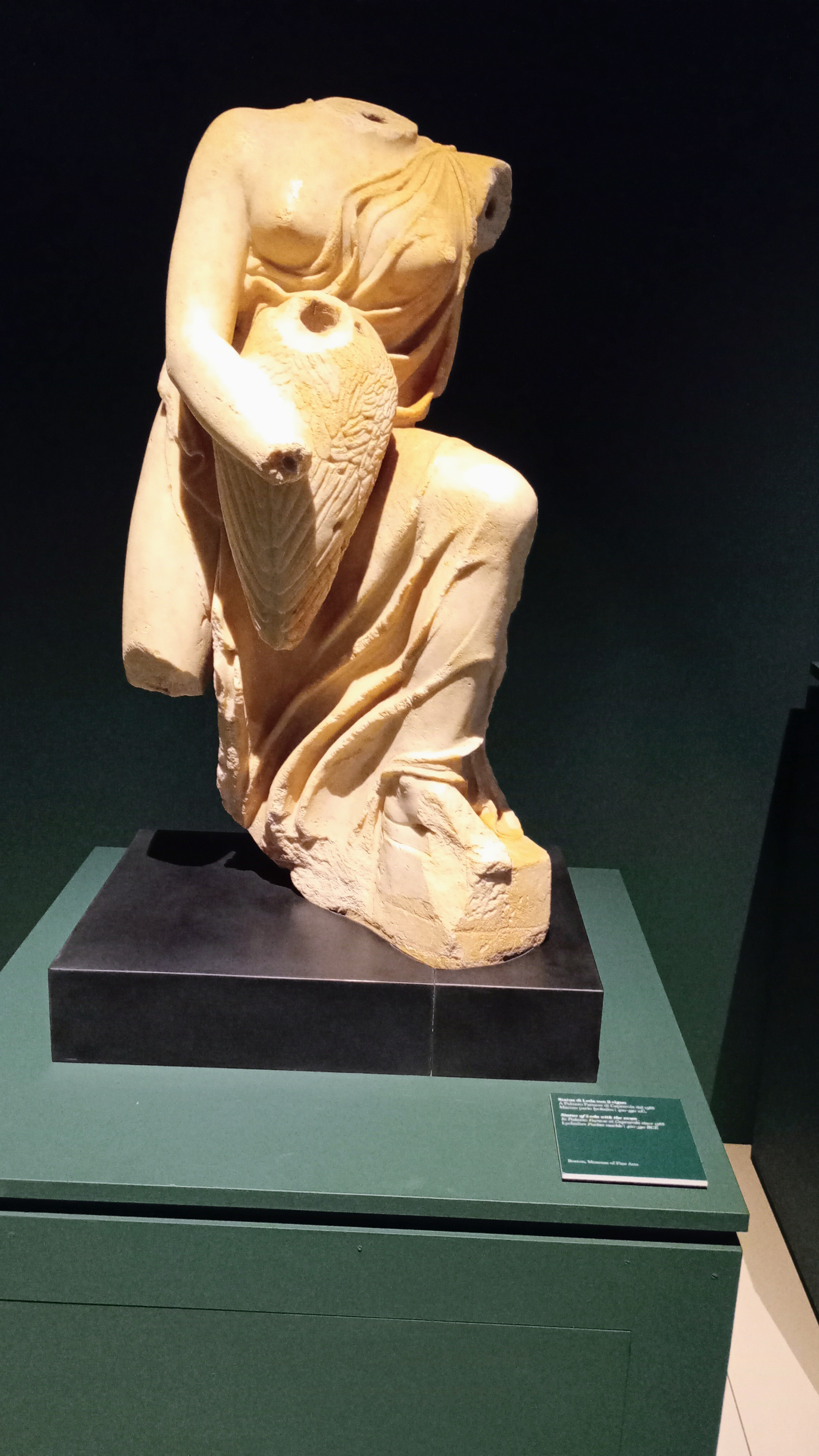
Holes.
So why are there so many statues with holes?
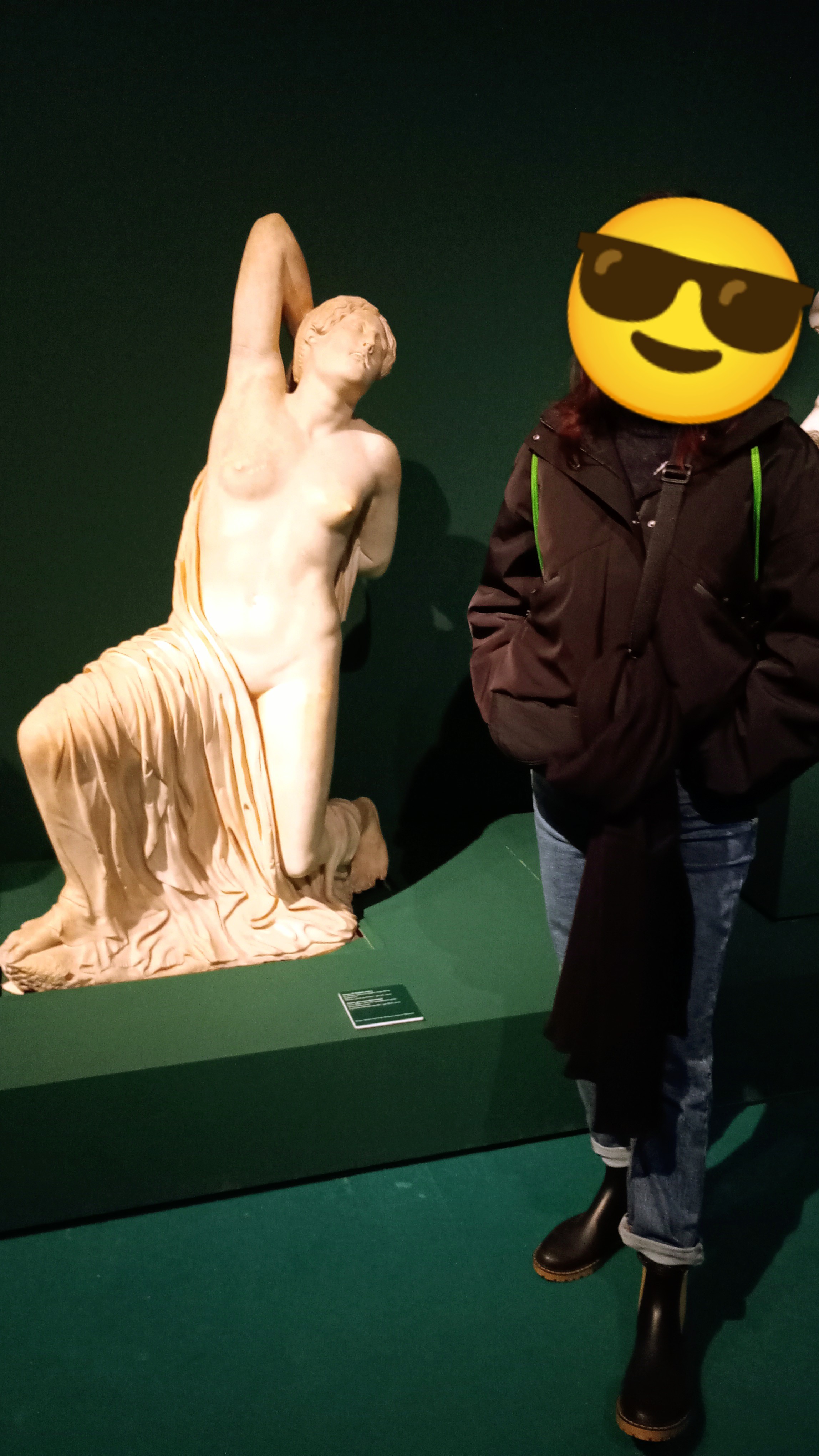
“Dying Niobe” statue and young woman hiding a smile
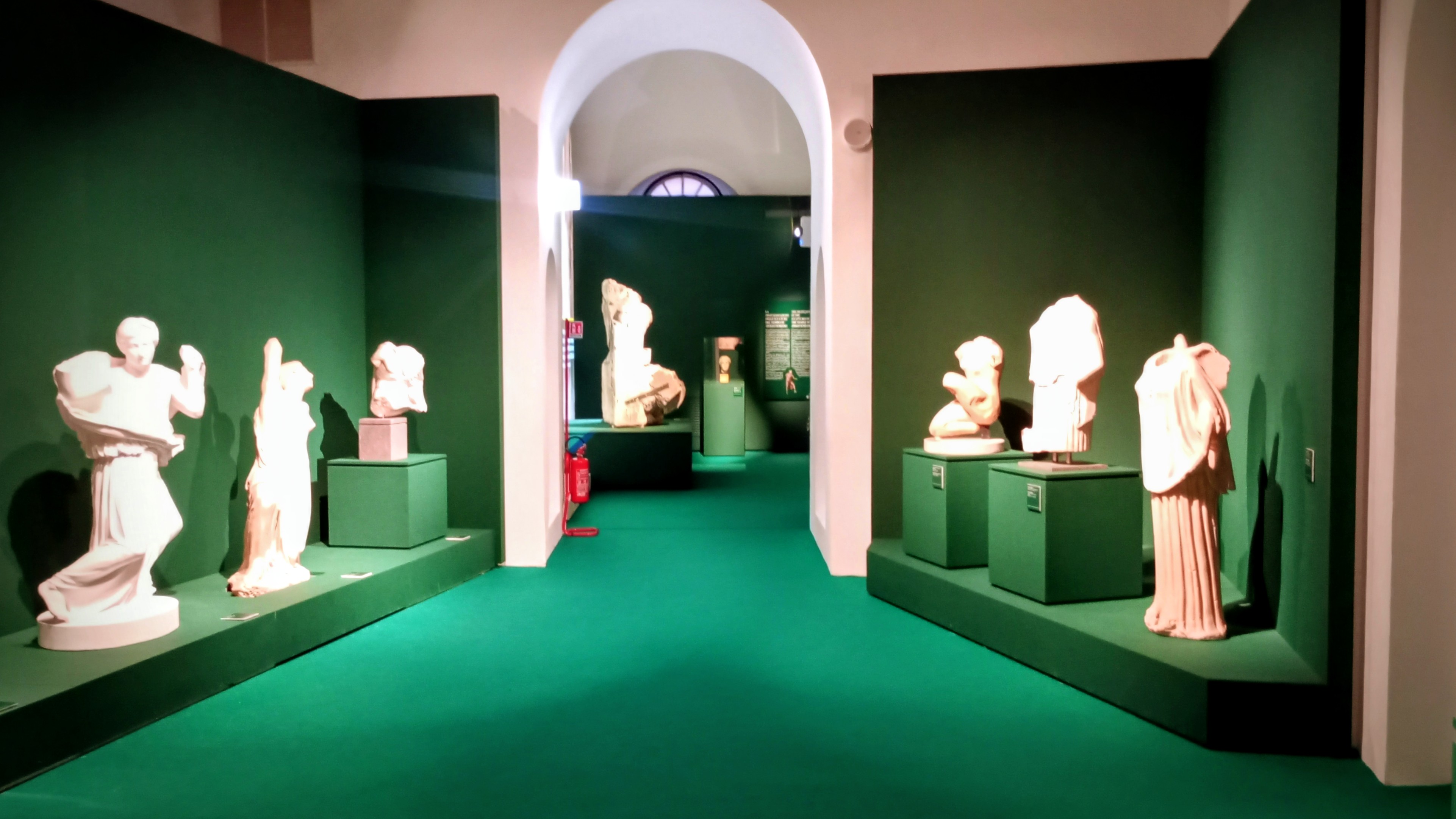
So many goddesses missing their heads.
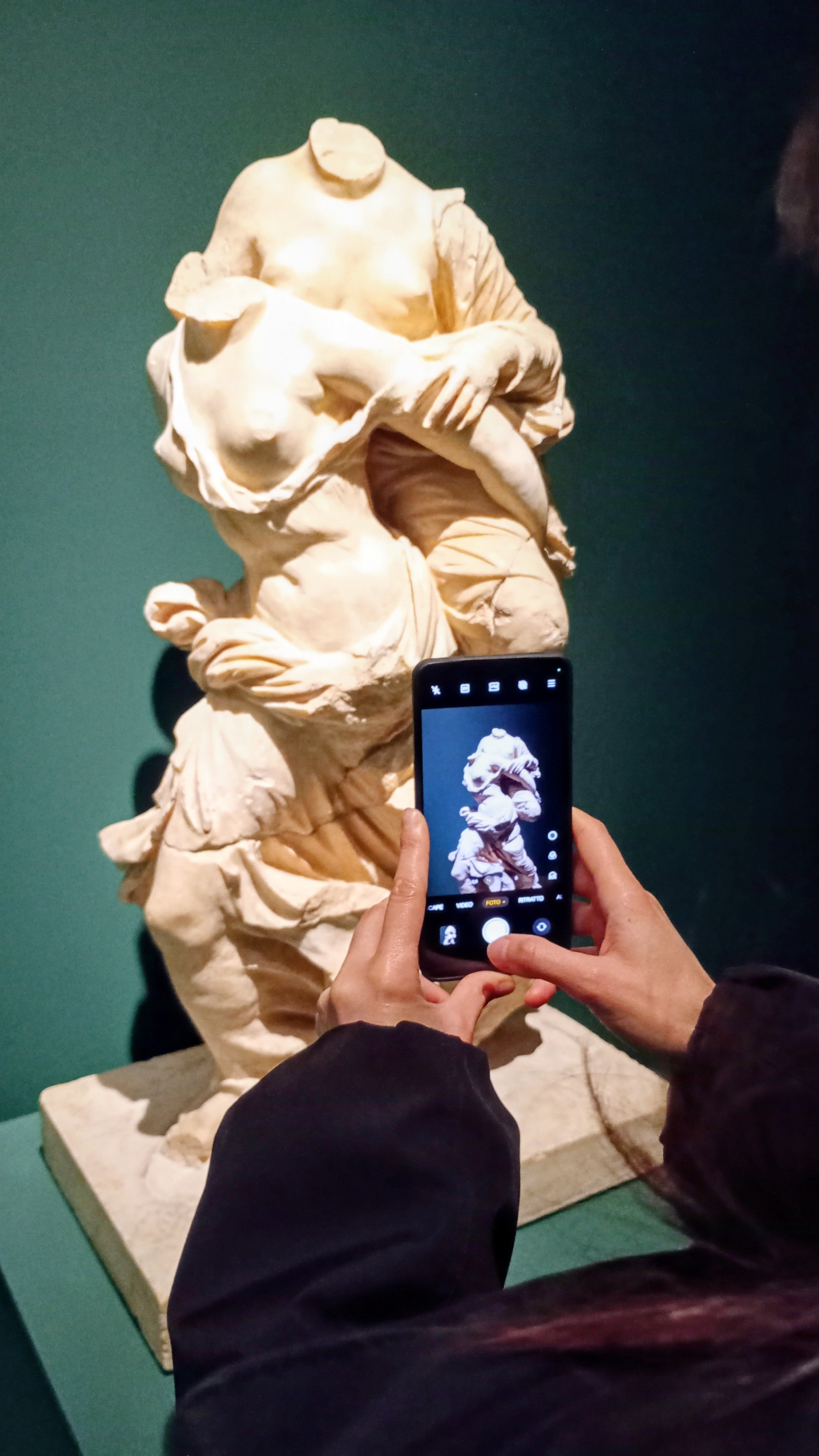
Gioco dell Ephedrismos
The Game of Ephedrismos. An ancient Greek game, it had two parts. In the first, a stone was placed on the ground then players threw stones at it to see who get closer. Like darts with rocks. Who had more hits won. The loser had to have his eyes covered then piggy back the winner until they arrived at the original stone.
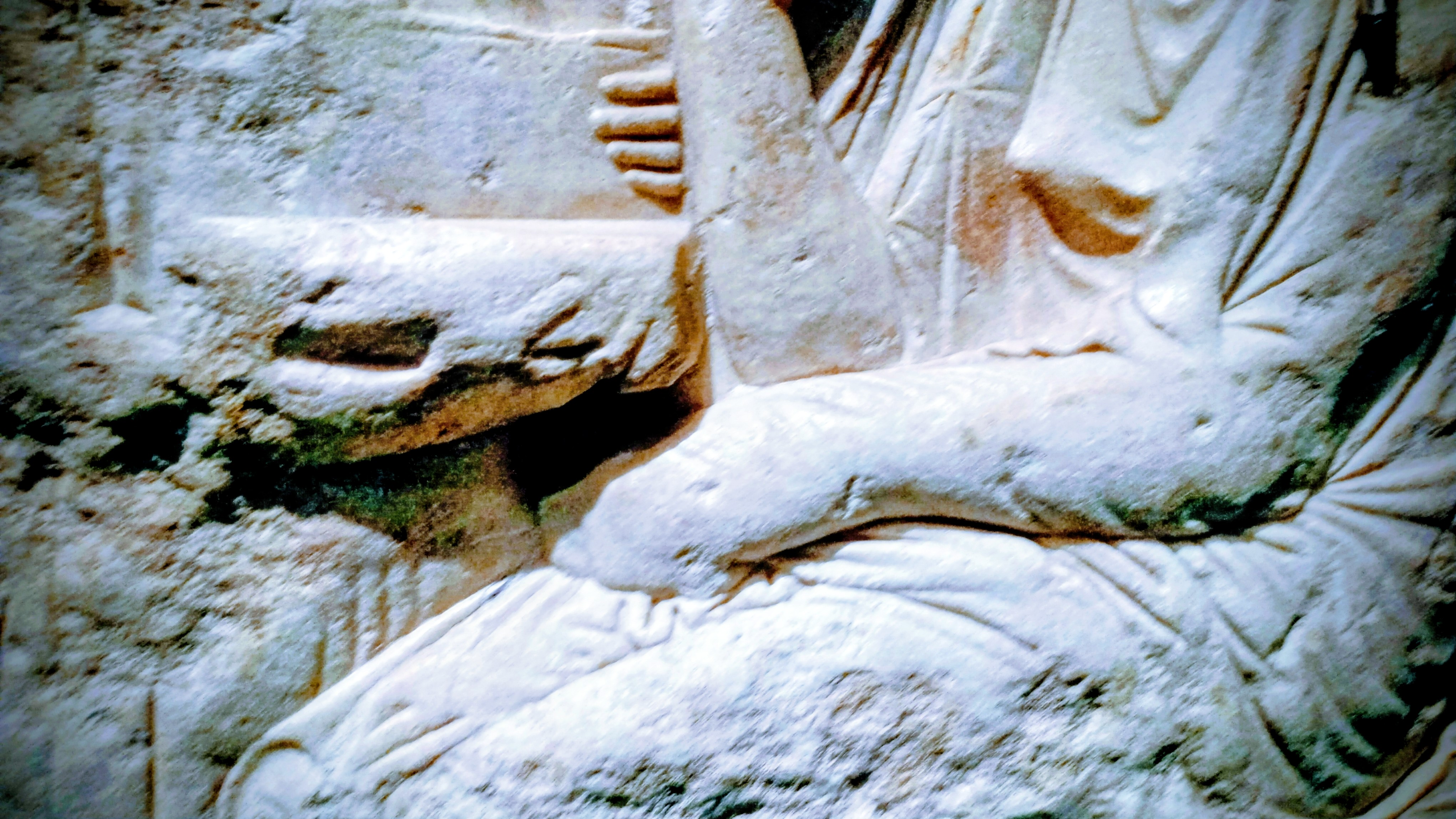
Detail from a funerary stele.
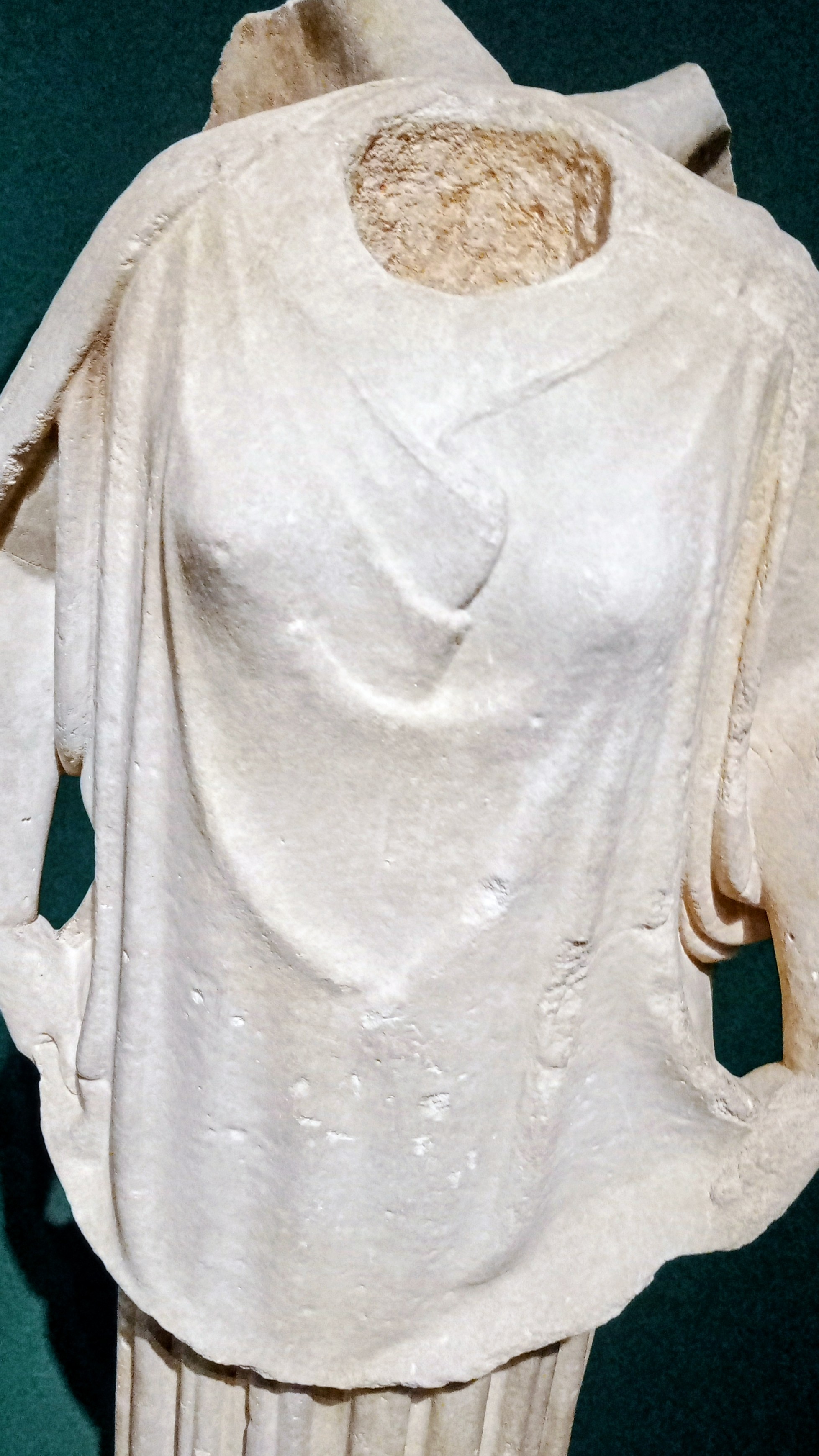
Headless.
Romans Cleverly Used Interchangeable Heads on Their Statues…In ancient Rome, it was possible that a statue was deliberately defaced to obliterate that person’s presence. so some sculptors designed statues with interchangeable heads.
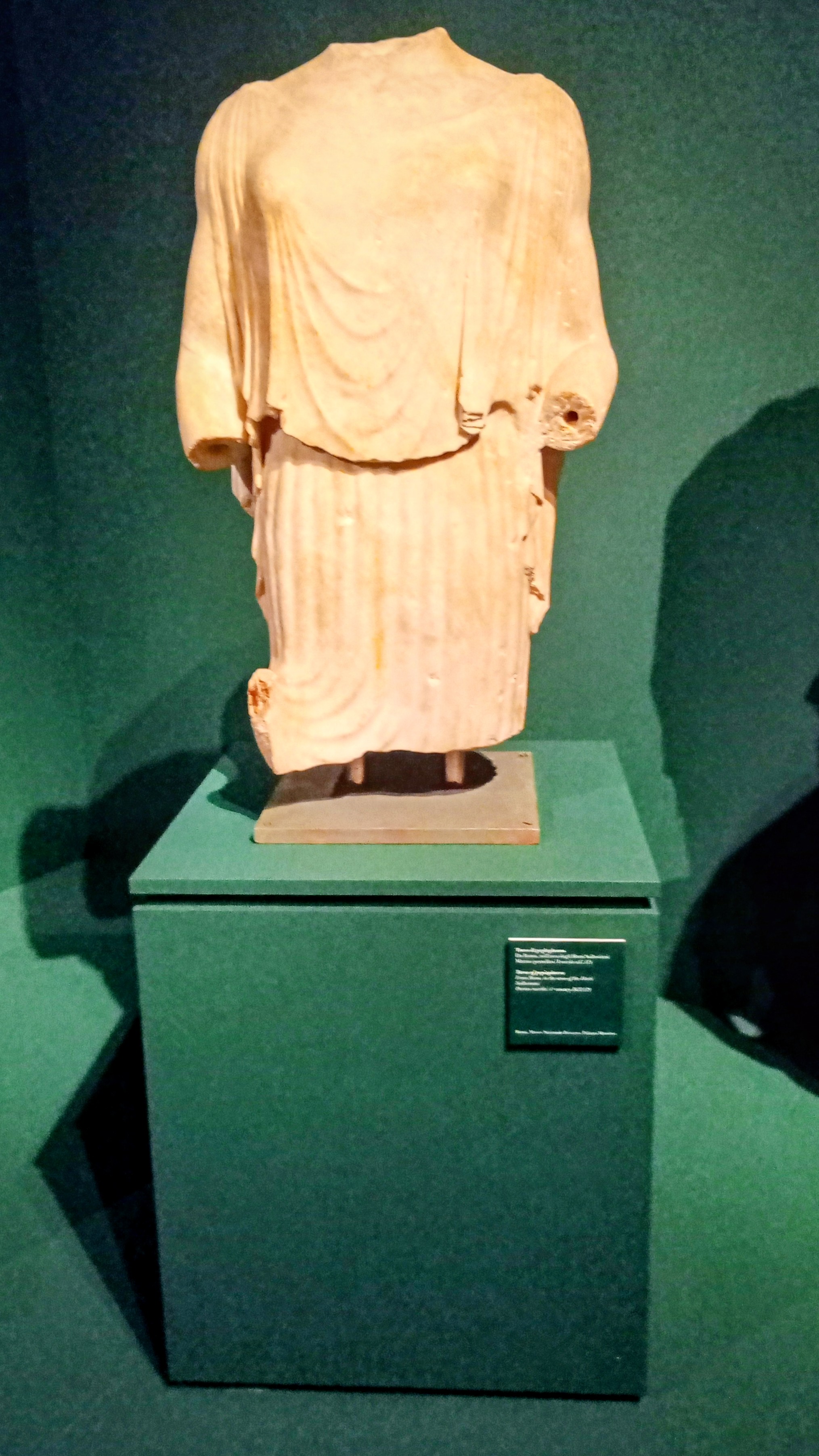
Handless
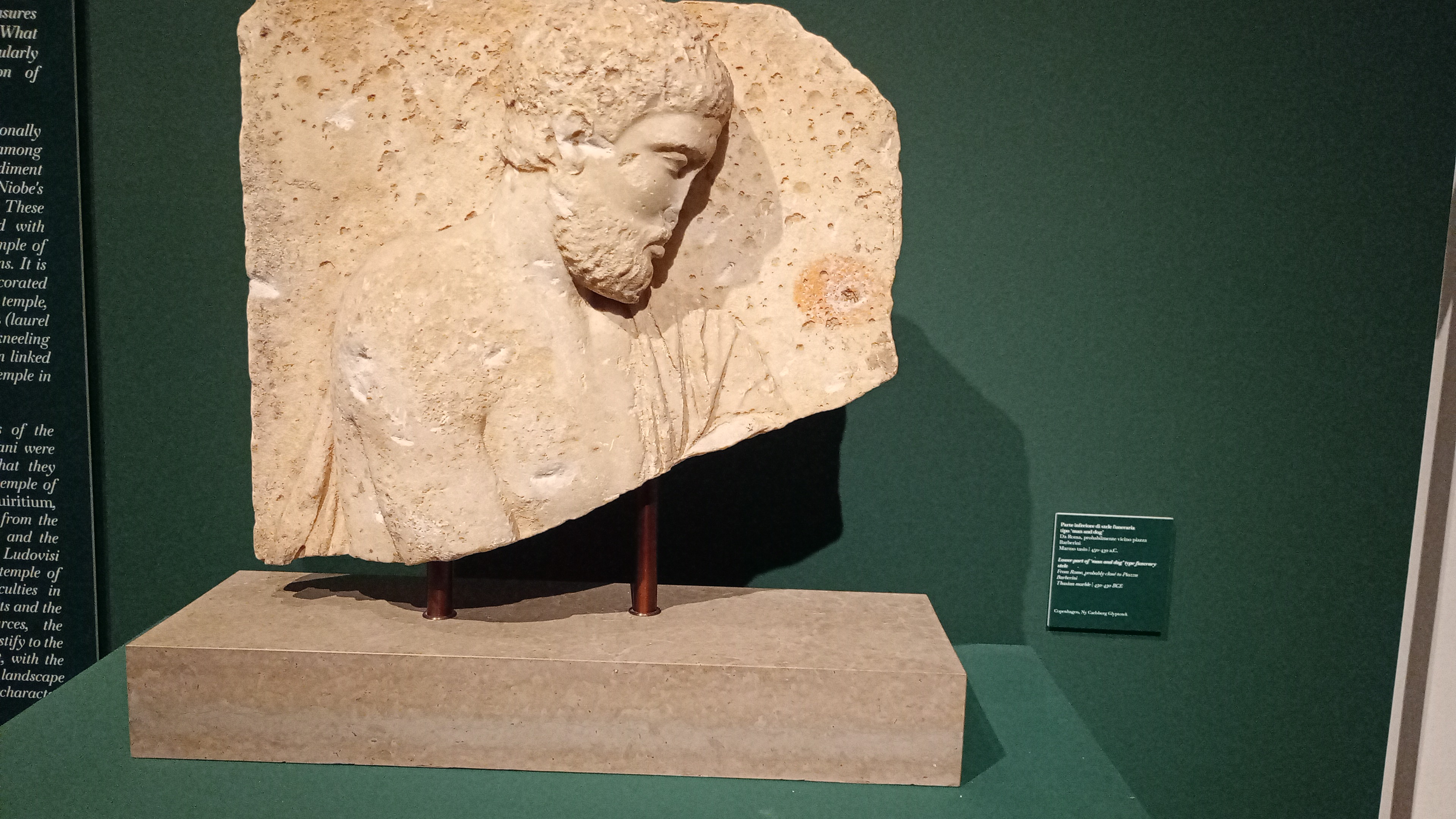
Fragment of a funerary stele found in the area of Piazza Barberini.
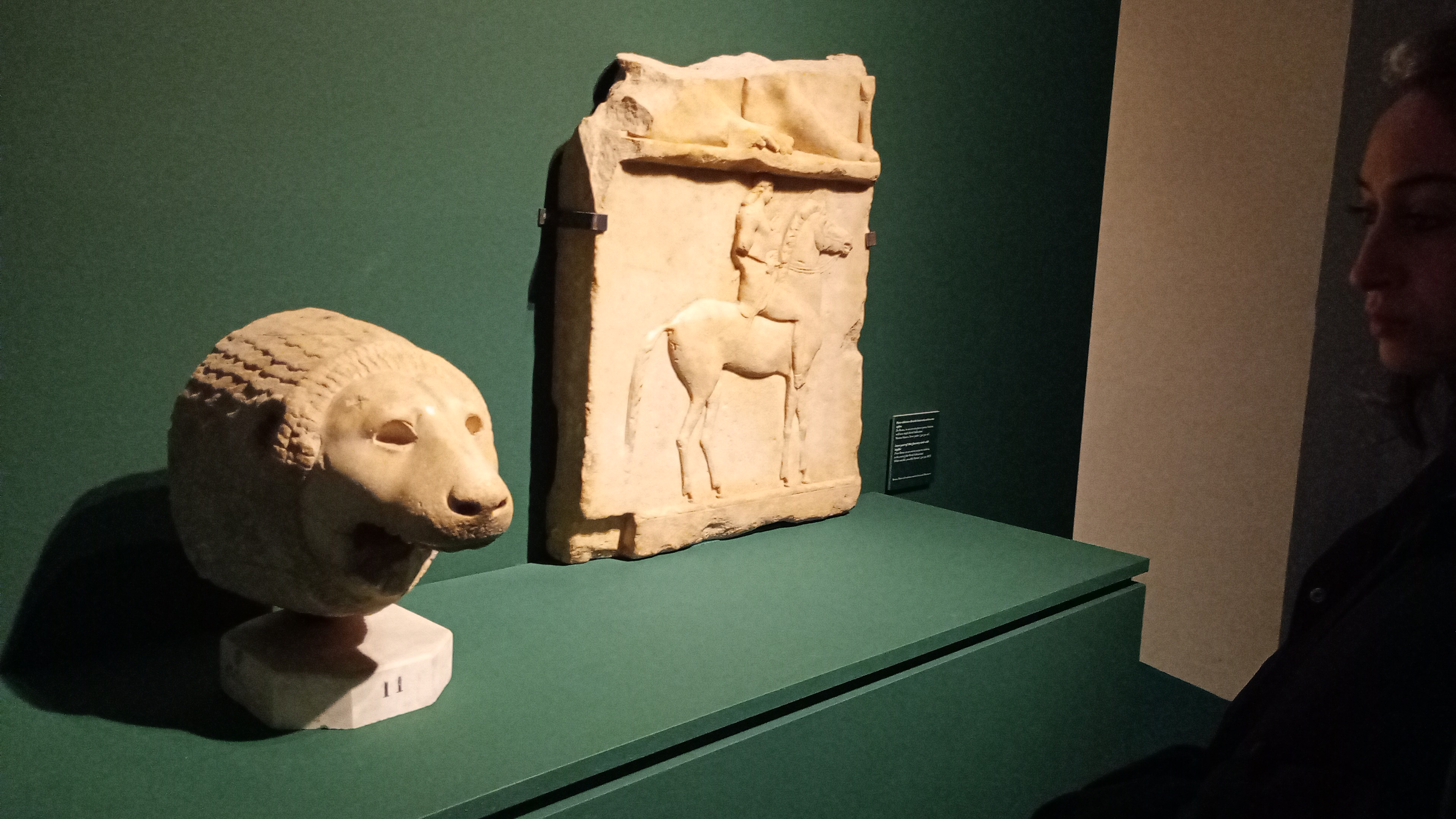
Lion’s head
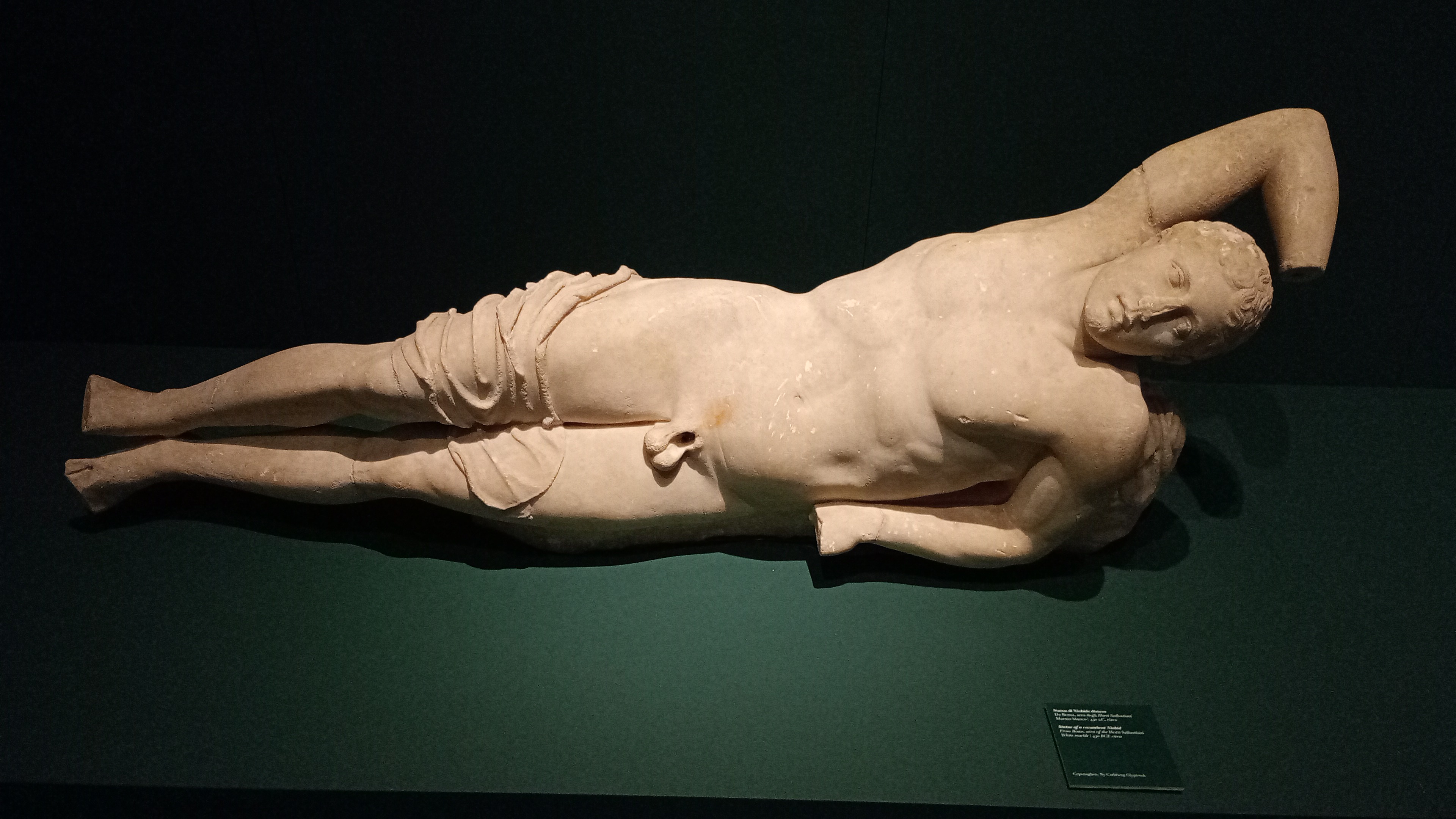
Another Dying Niobide

The wall paintings are actually wallpaper.
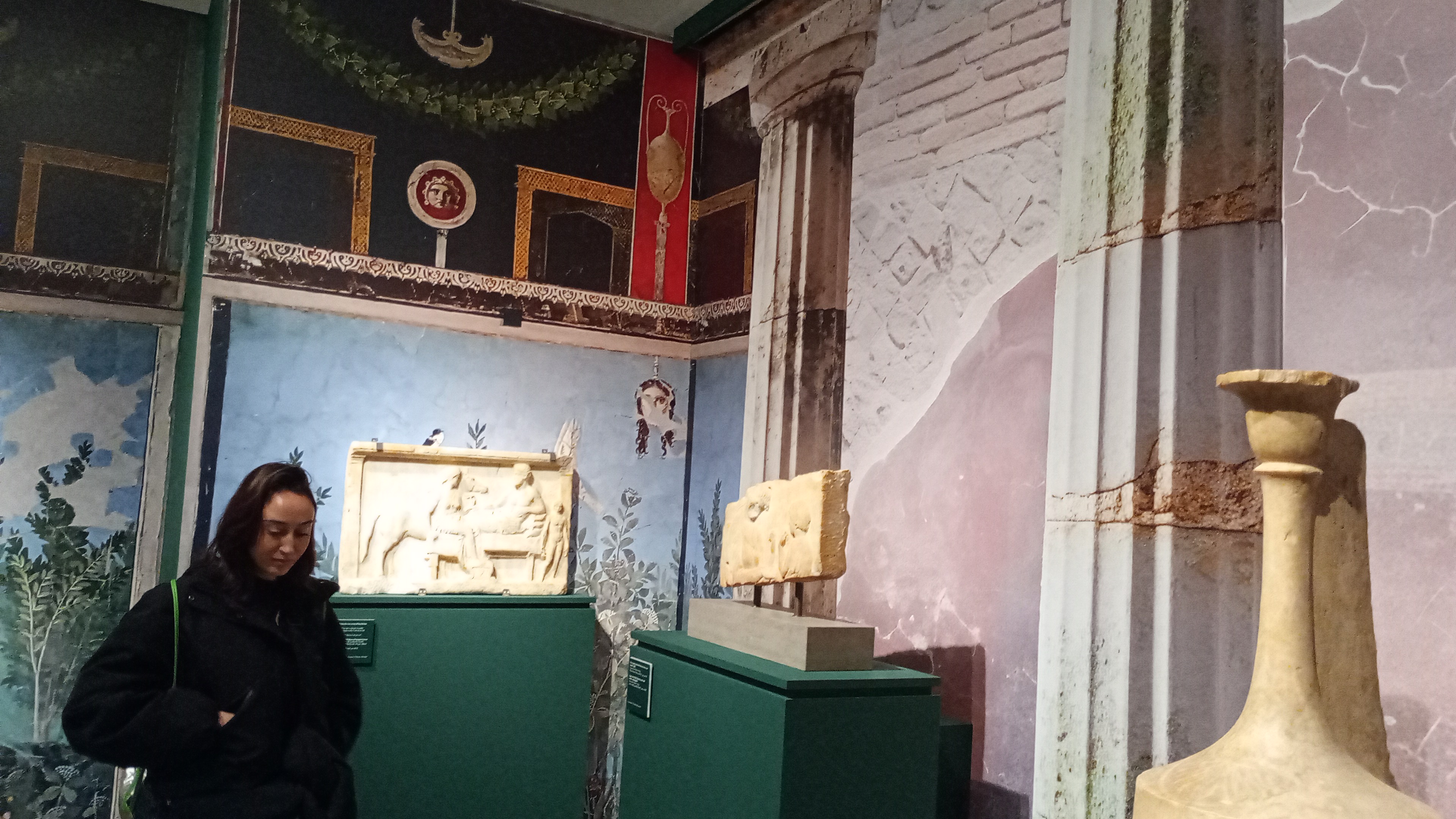
Fake frescoes but real stelae and vase
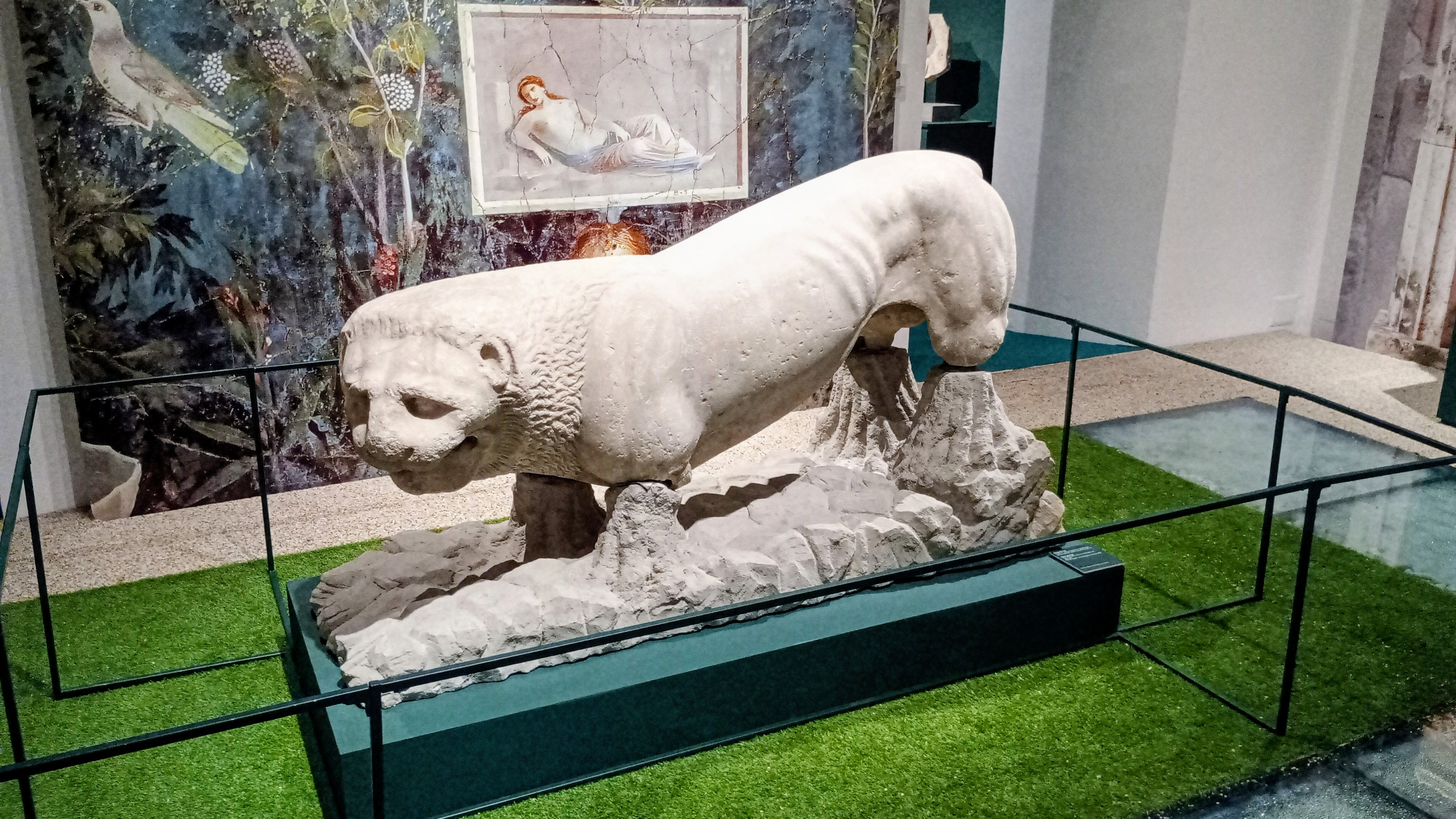
The Lion
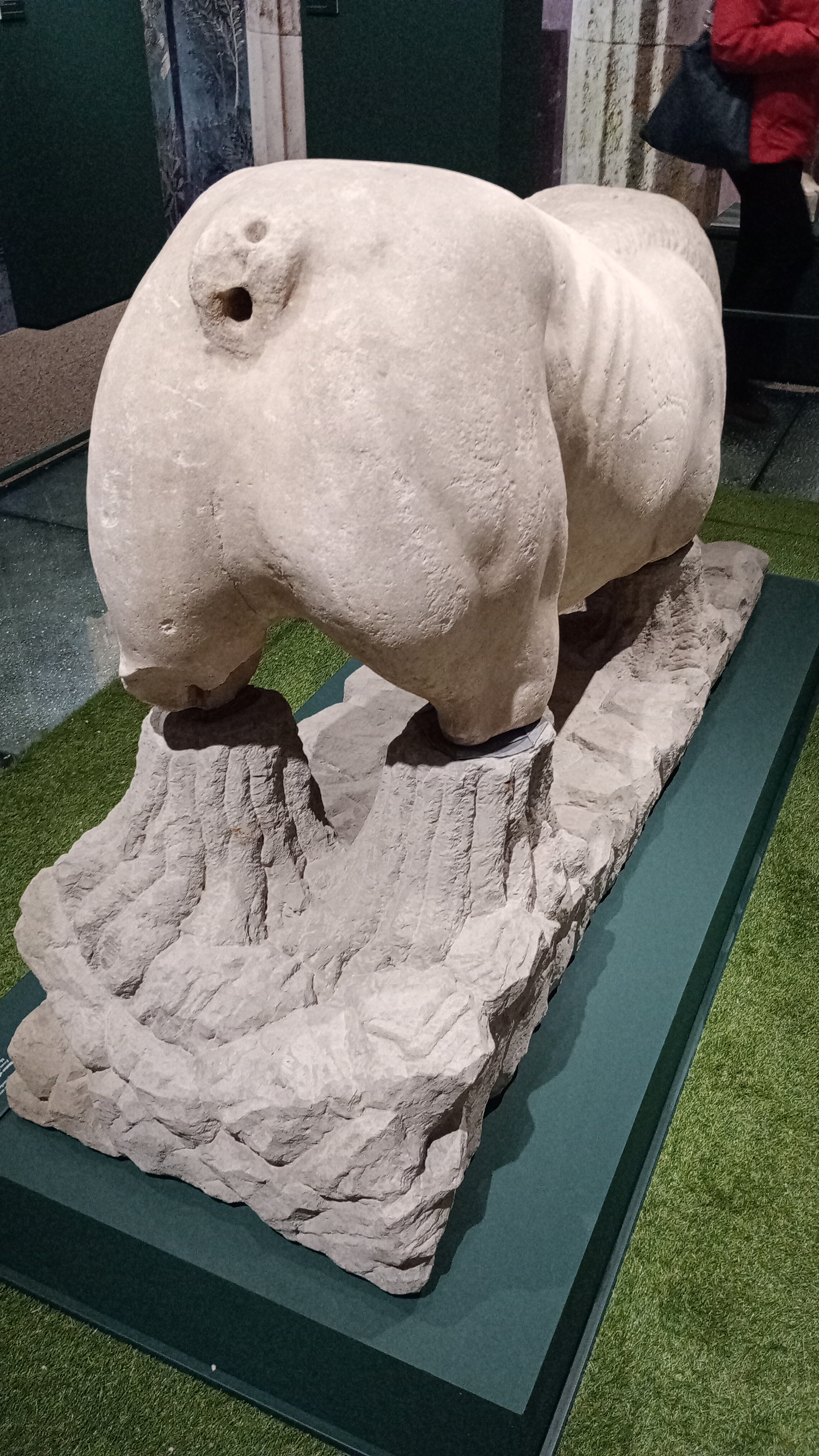
And the lion lost his tail.
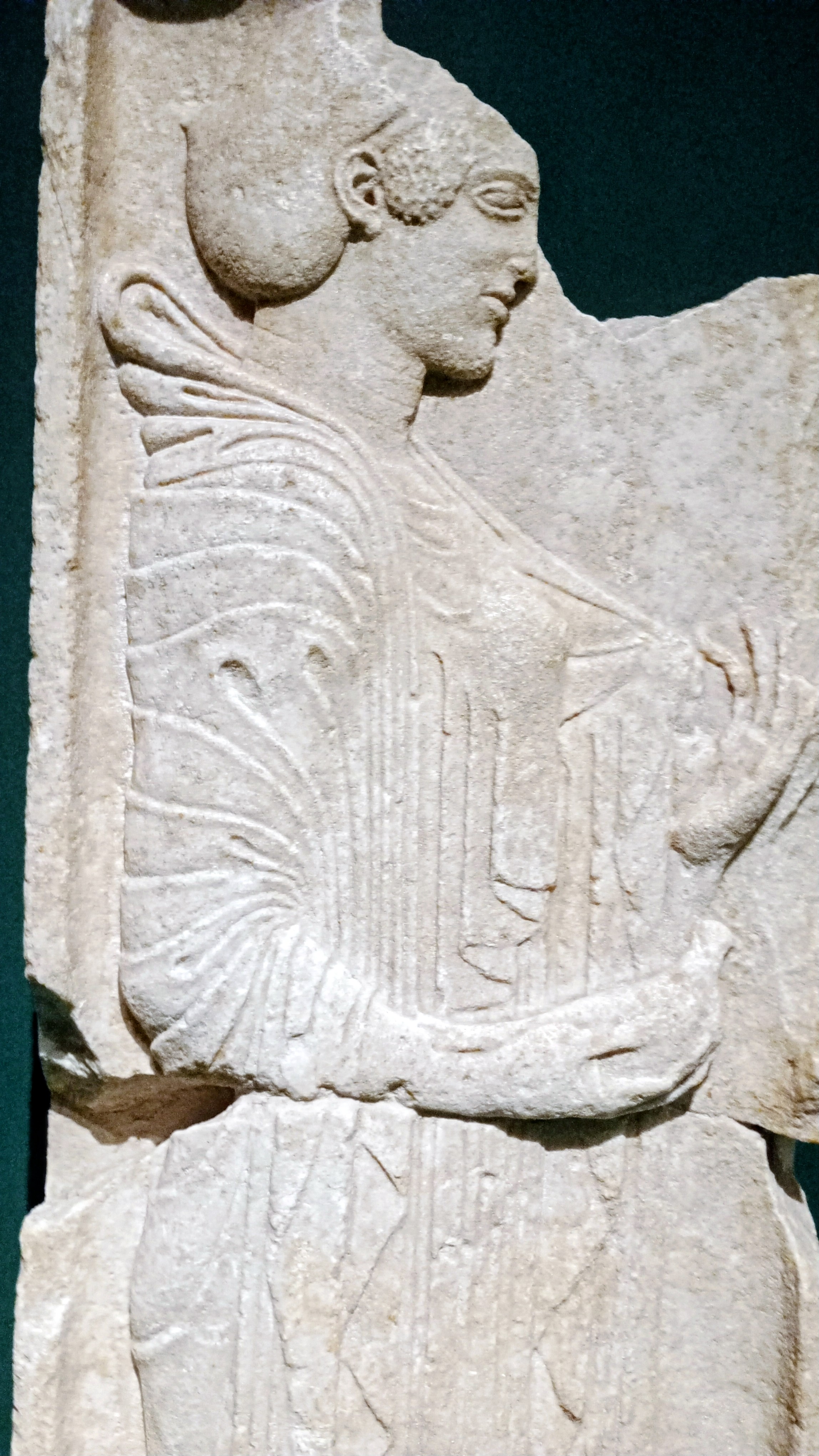
Funerary stele indicating a woman holding a dove.
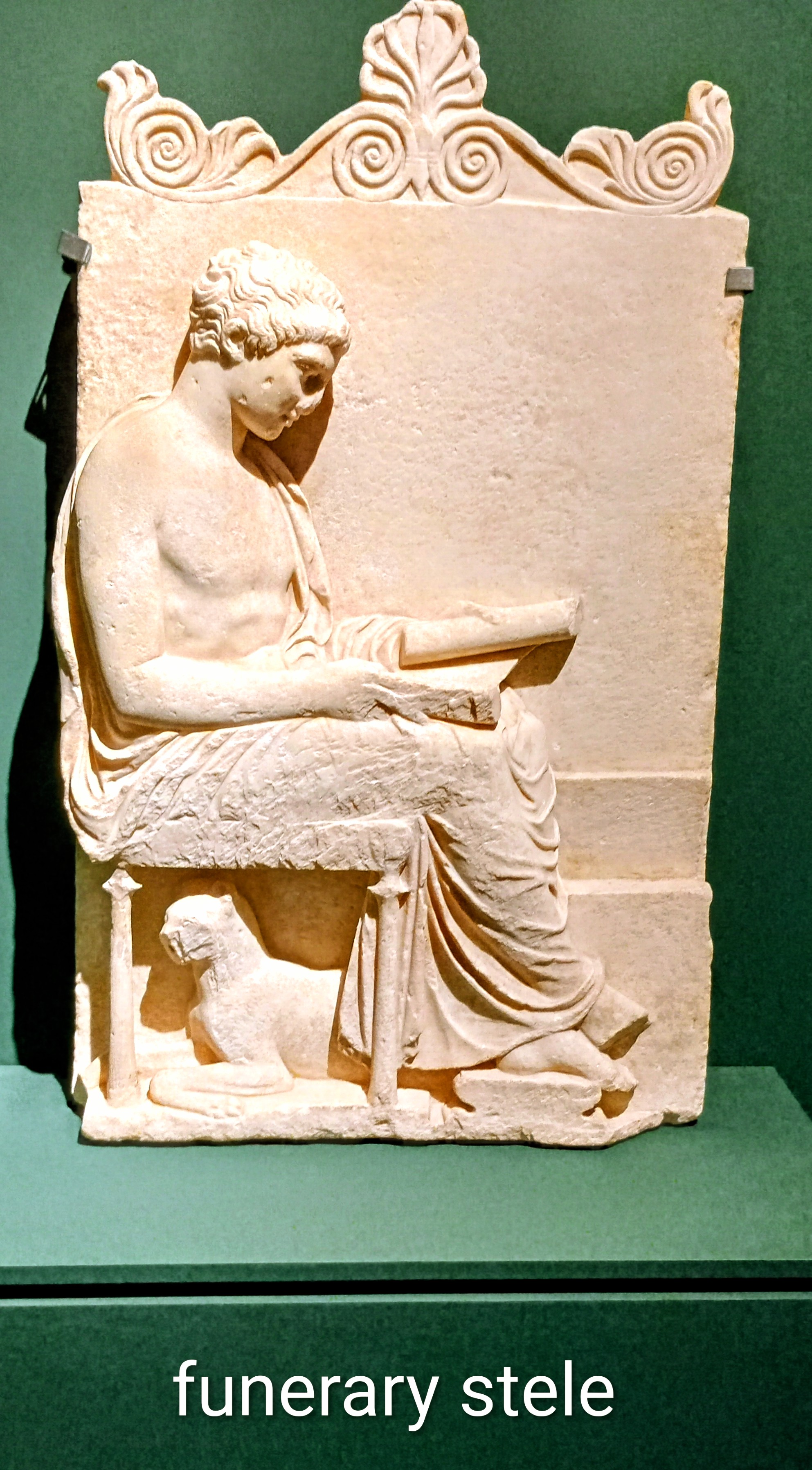
Woman reading s book with her pet under the chair
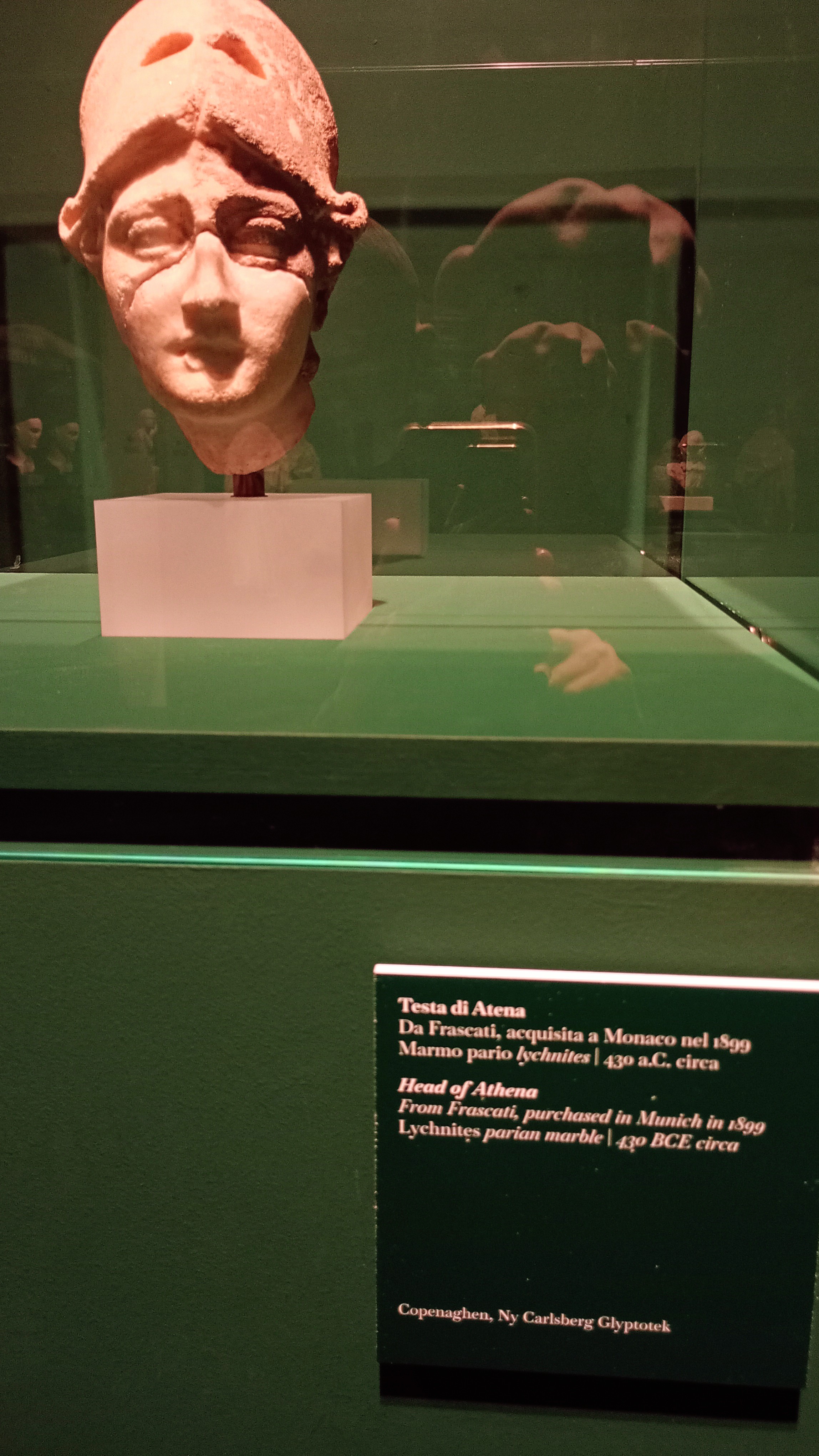
Athena’s head found at Frascati. It’s made from Parian marble.
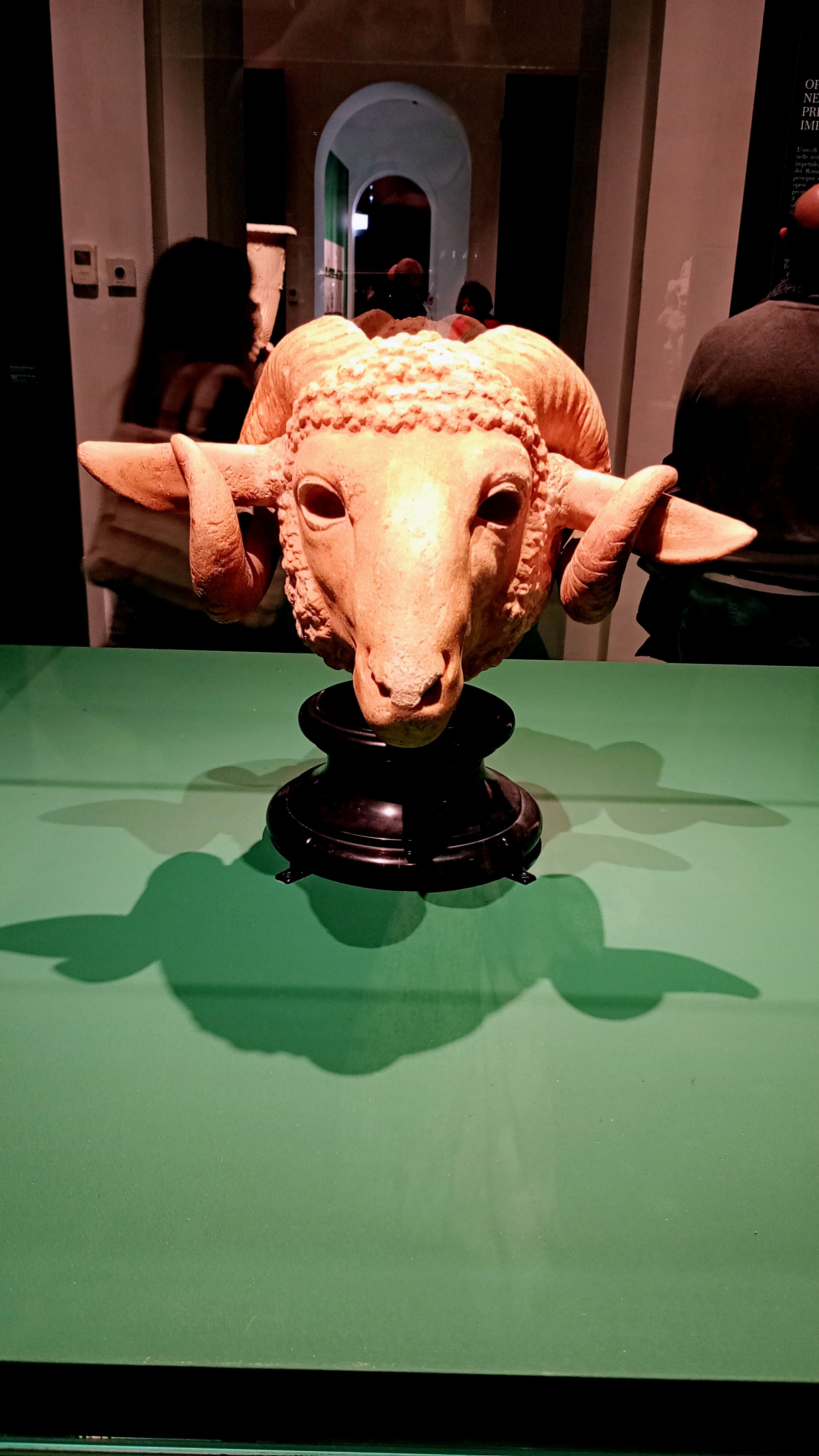
Ram’s head
The ram was a symbol of strength.
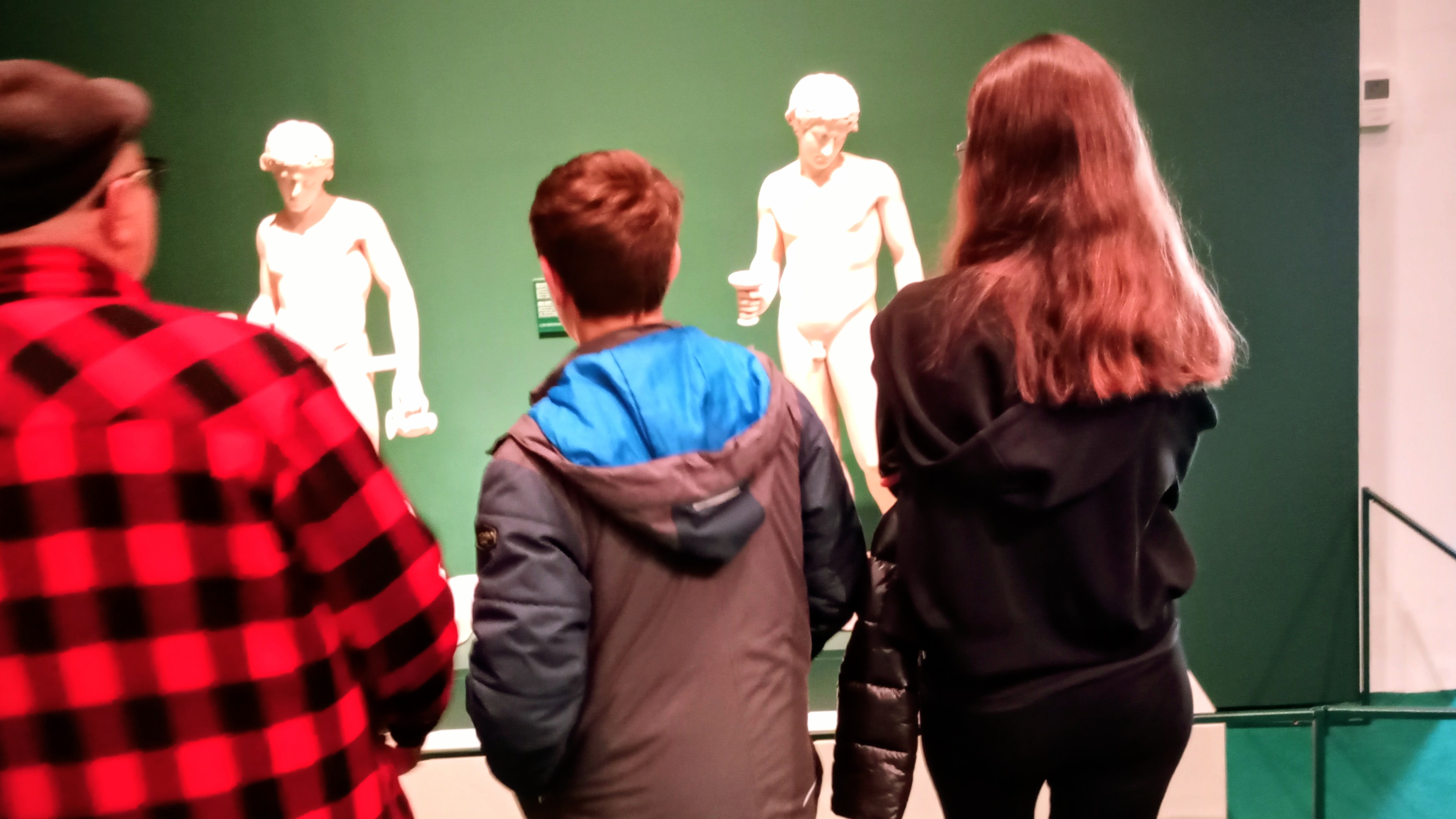
The observers.
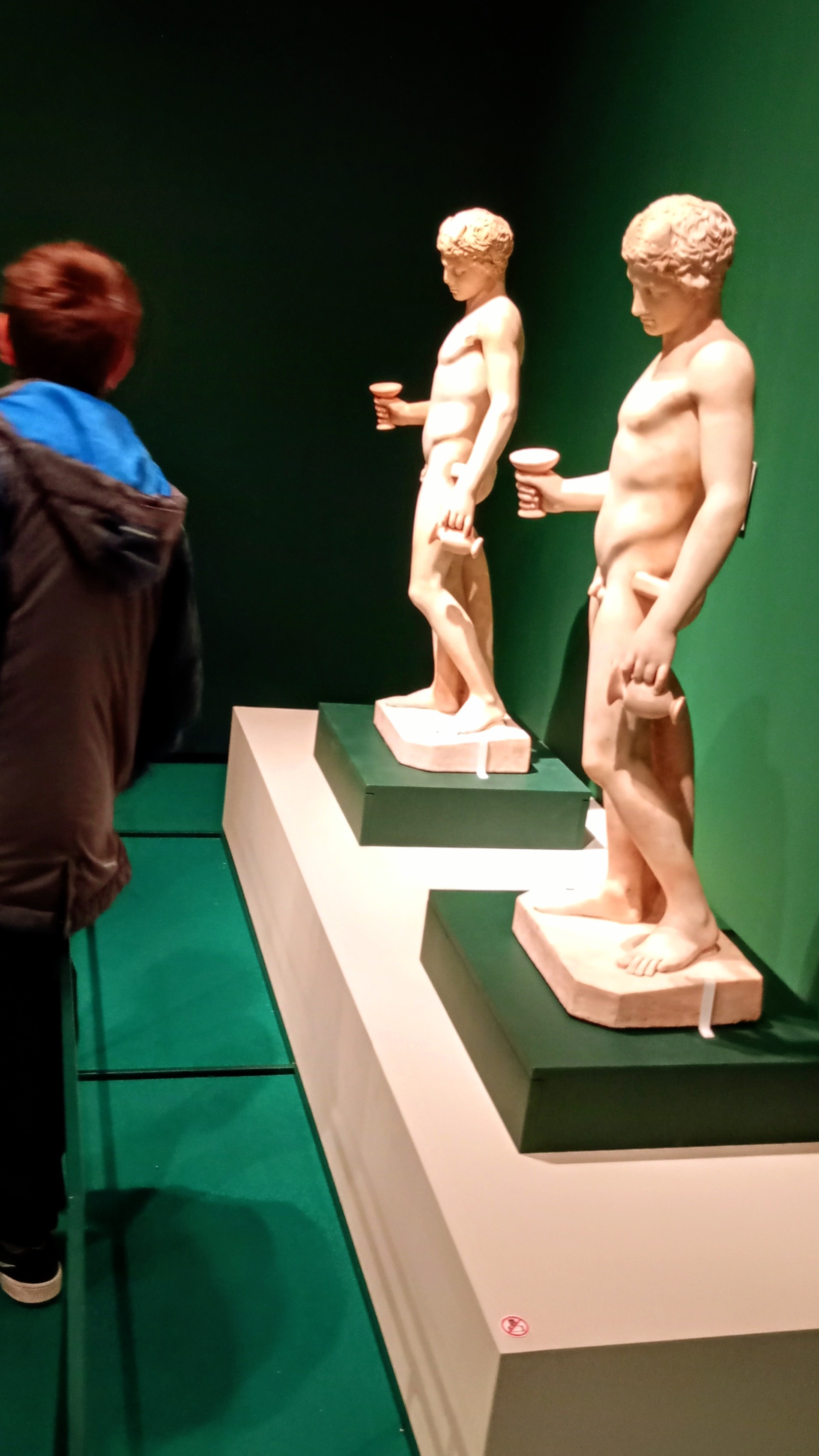
Prohibited.
I was trying to take a foto of the two statues above when one of the guards came over to me and, in a very nice way, told me that it was prohibited to photograph those two statues. Why? I asked since there seemed no problem in photographing everything else. Because, he replied, they were on loan from a collector and the collector didn’t want their fotos to be taken.
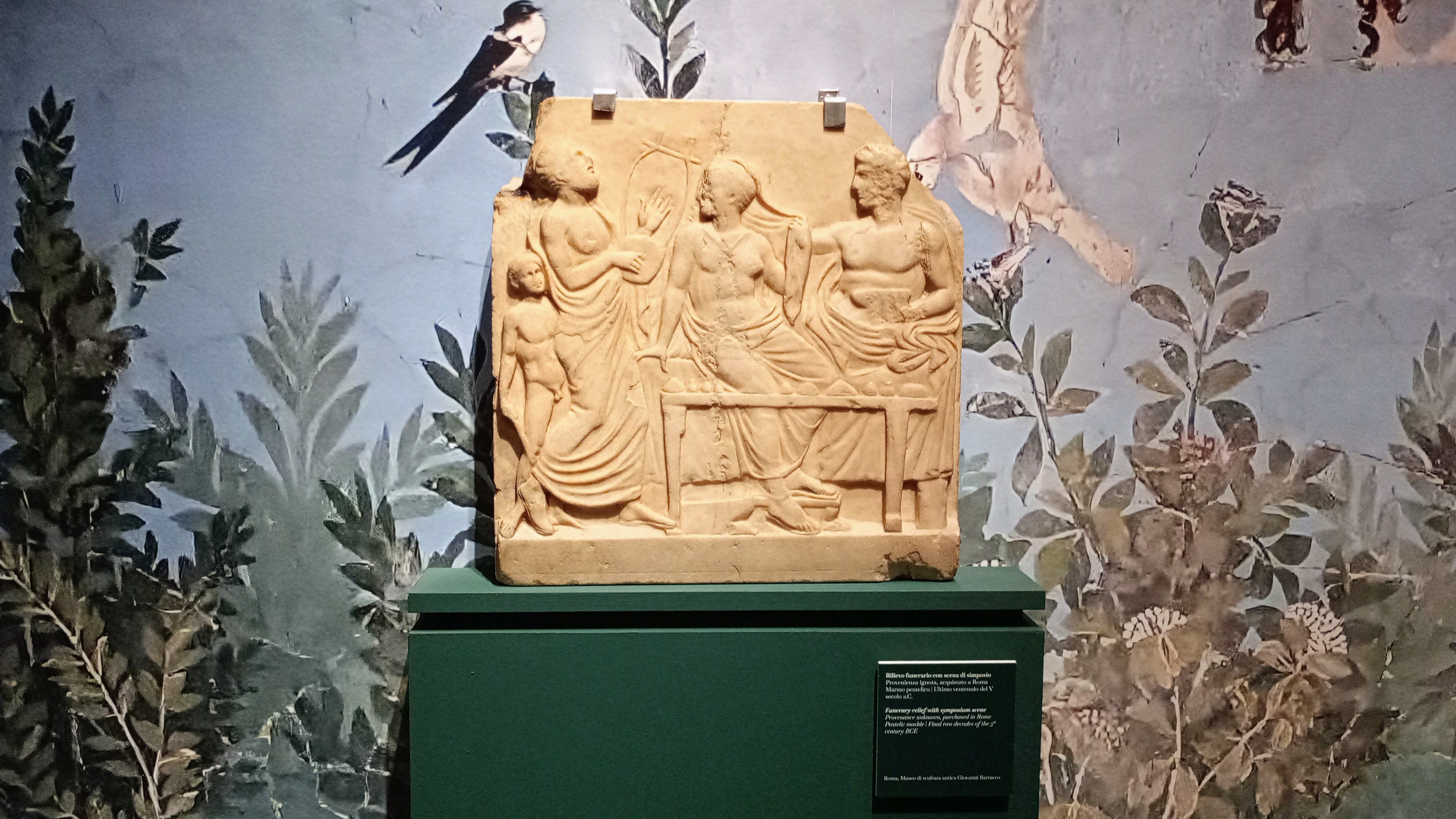
Another funerary stele…because, you know, everyone dies.
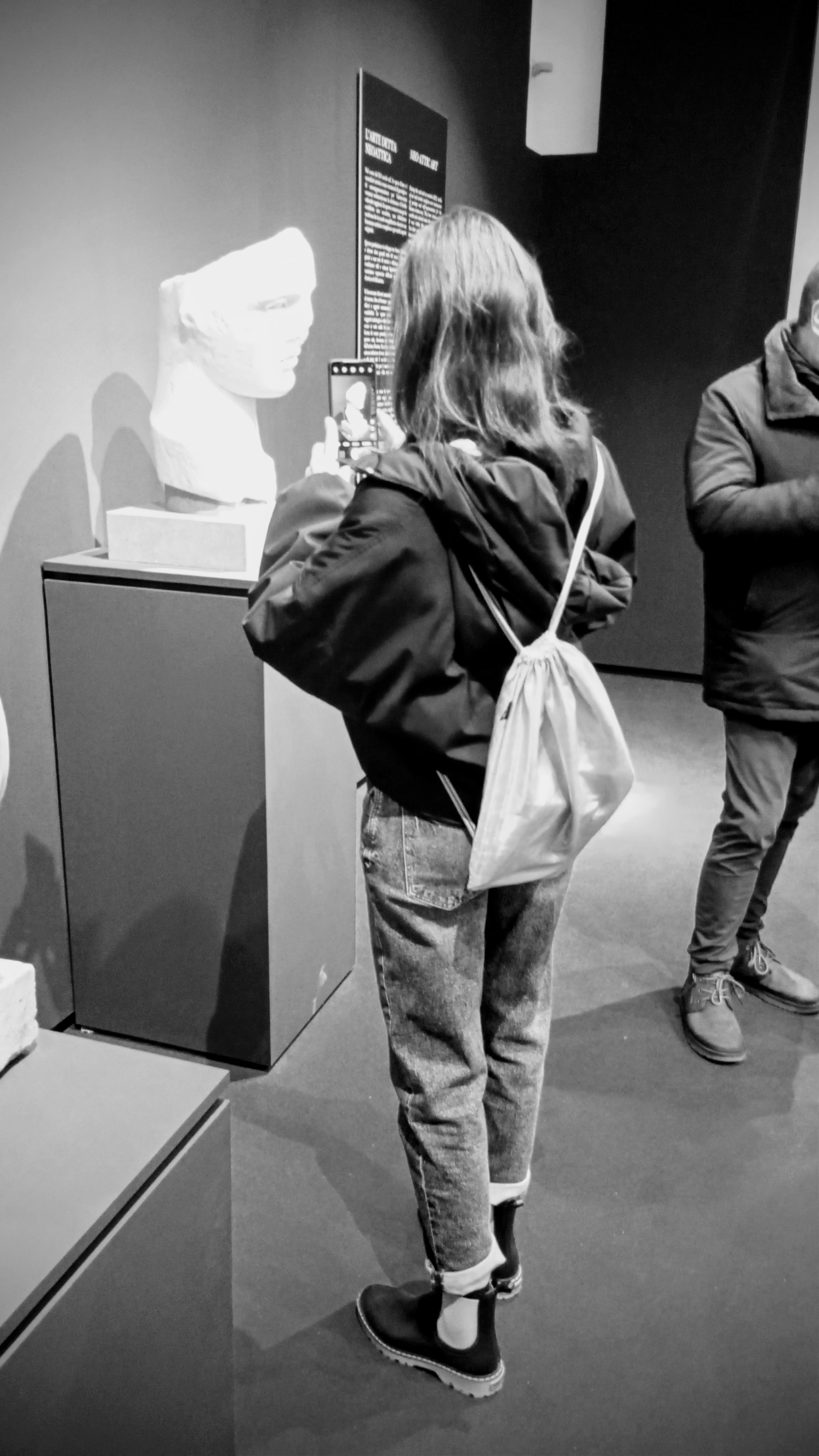
Effigy.
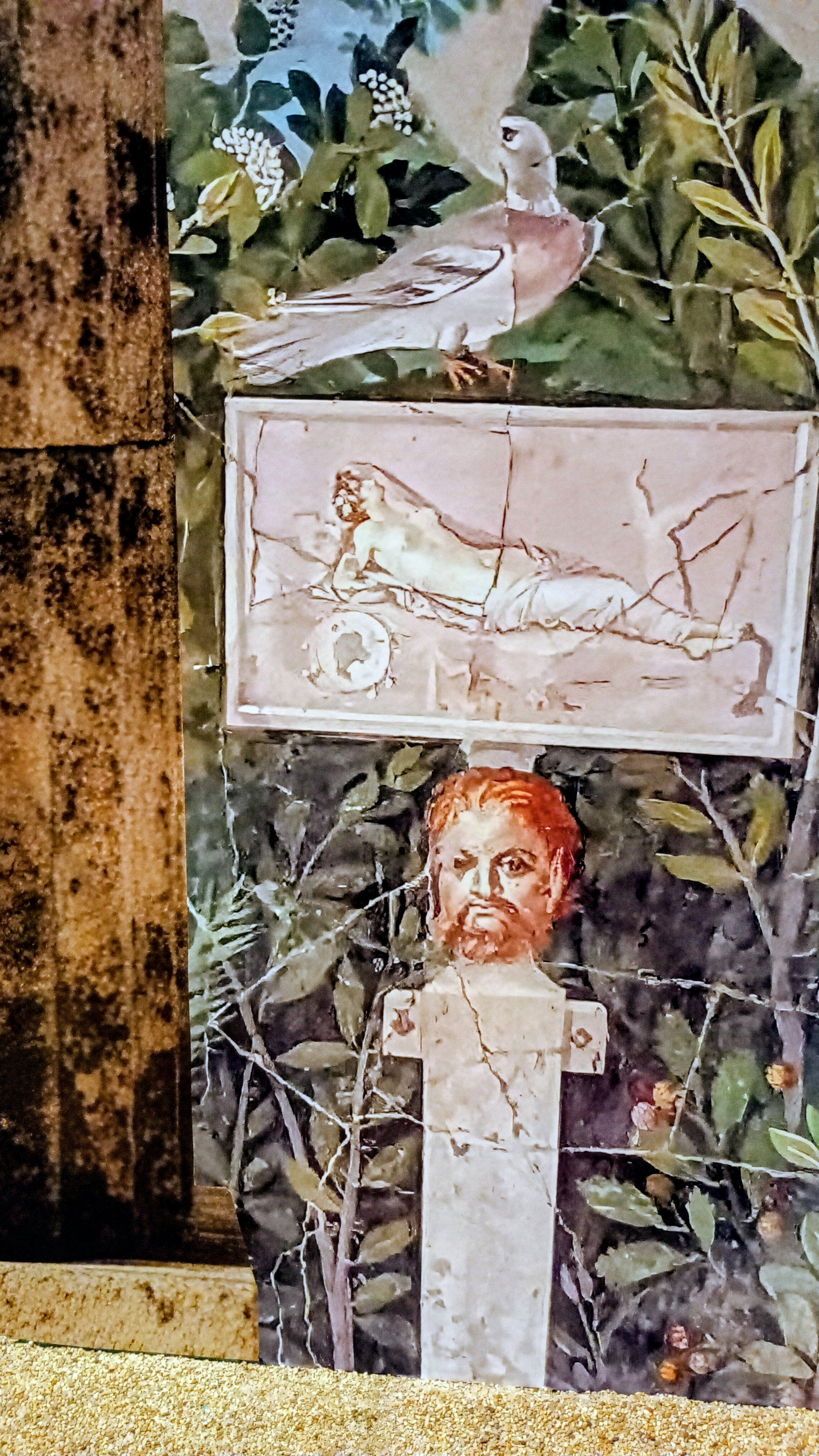
He was just part of the wallpaper.
I had to squat really low (risking not being able to come up again) to take this foto because it was at ground level. But it was just too curious to resist.
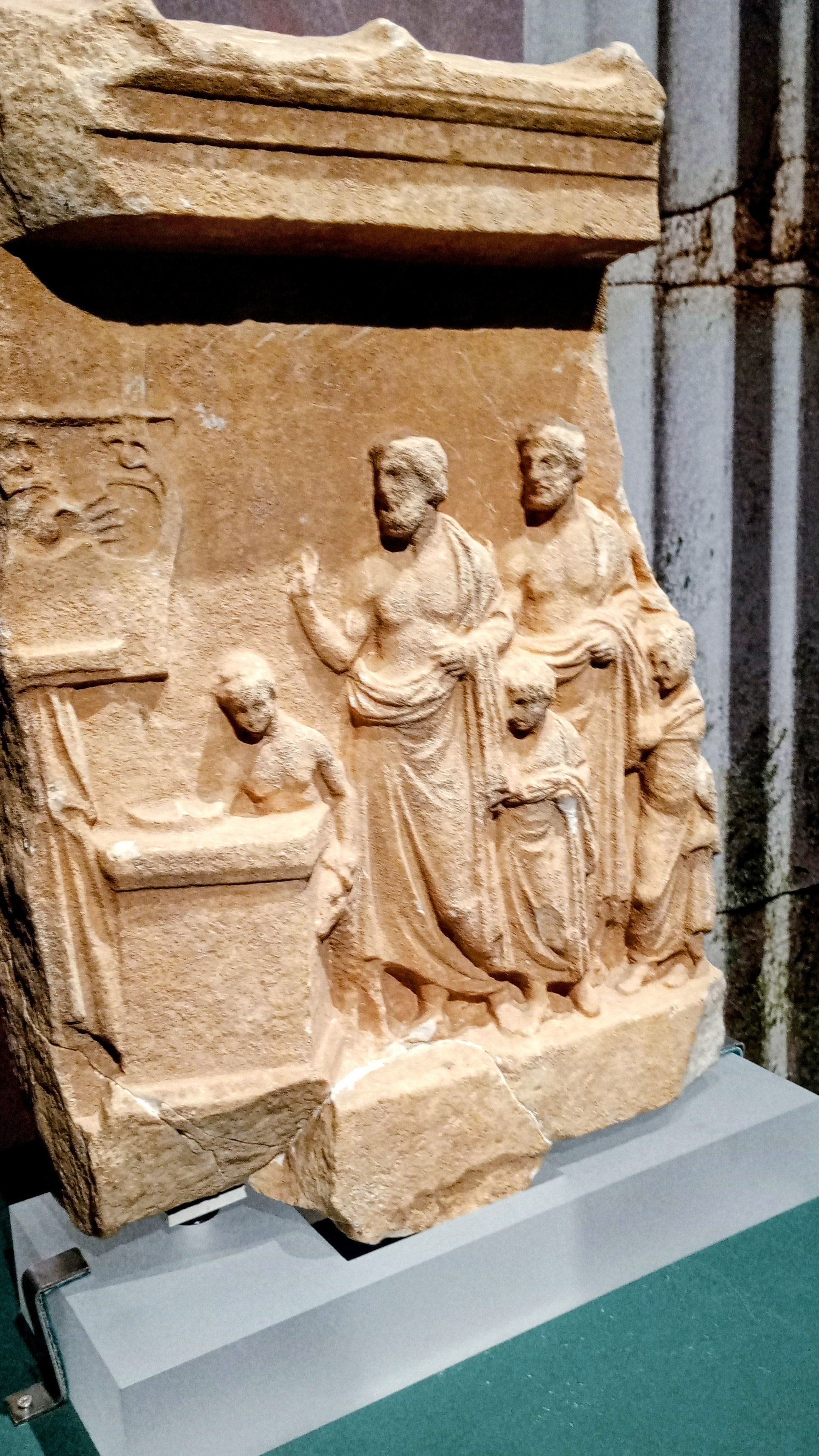
Funarary Stele
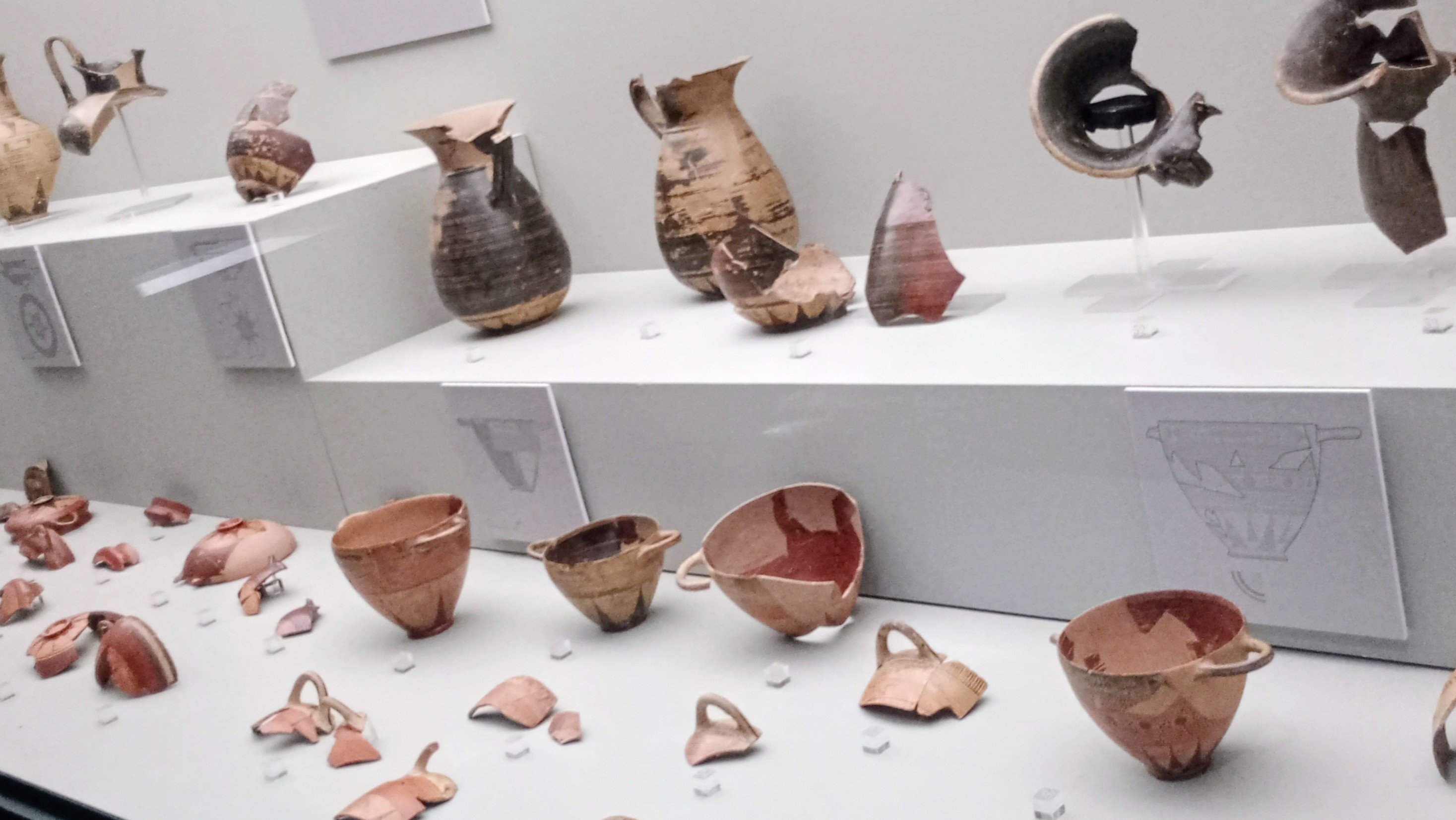
Broken pots and their pieces.
Also exhibited were pottery fragments coupled with drawings mimicking the pottery paintings. This made me think of Marija Gimbutas’ book “The Language of the Goddess: Unearthing the Hidden Symbols of Western Civilization”. Archive offers the possiblity of reading the book online HERE.
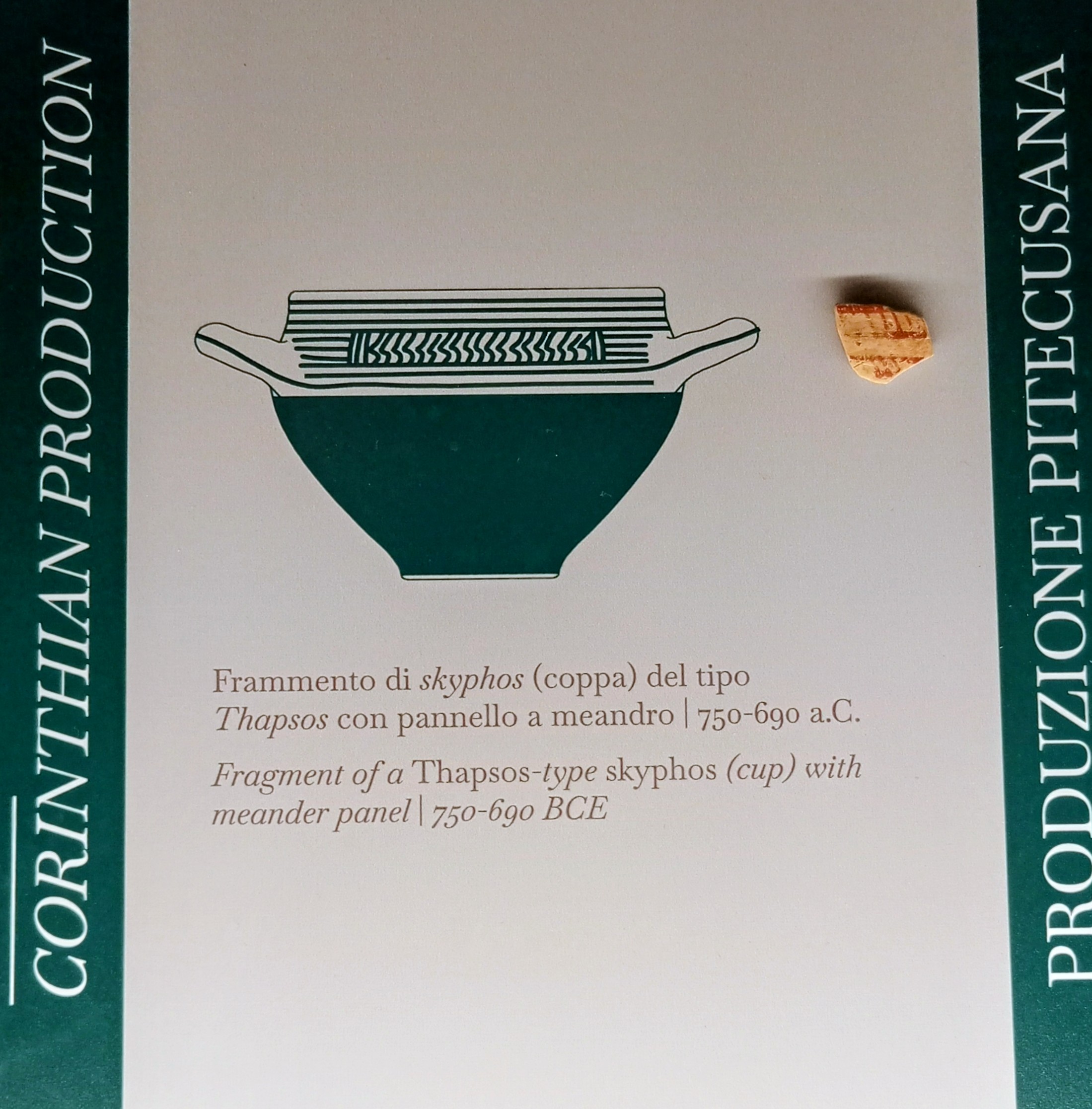
skyphos with meandro
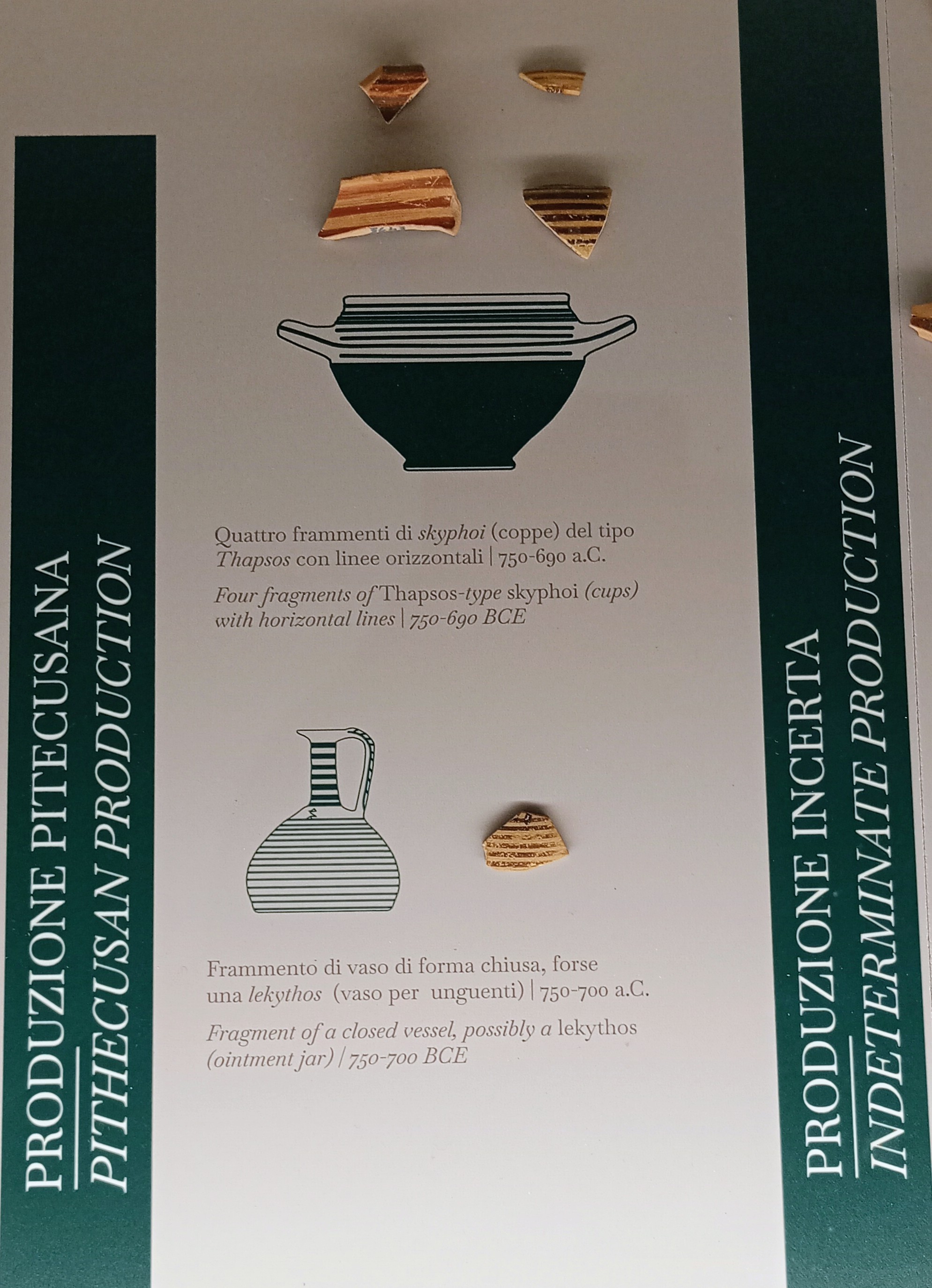
lekythos with lines
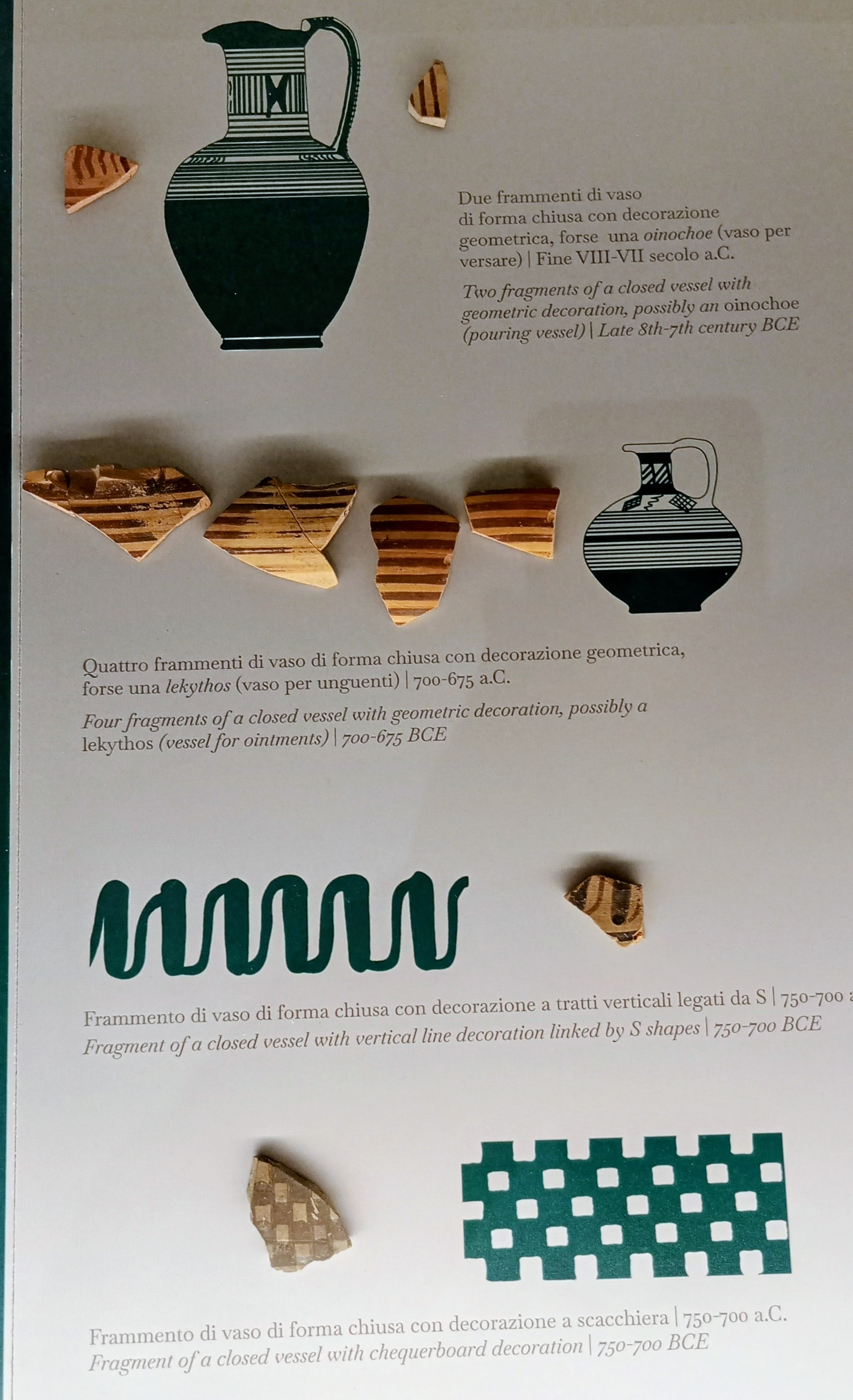
more vase fragments with designs such as the chequeboard motif
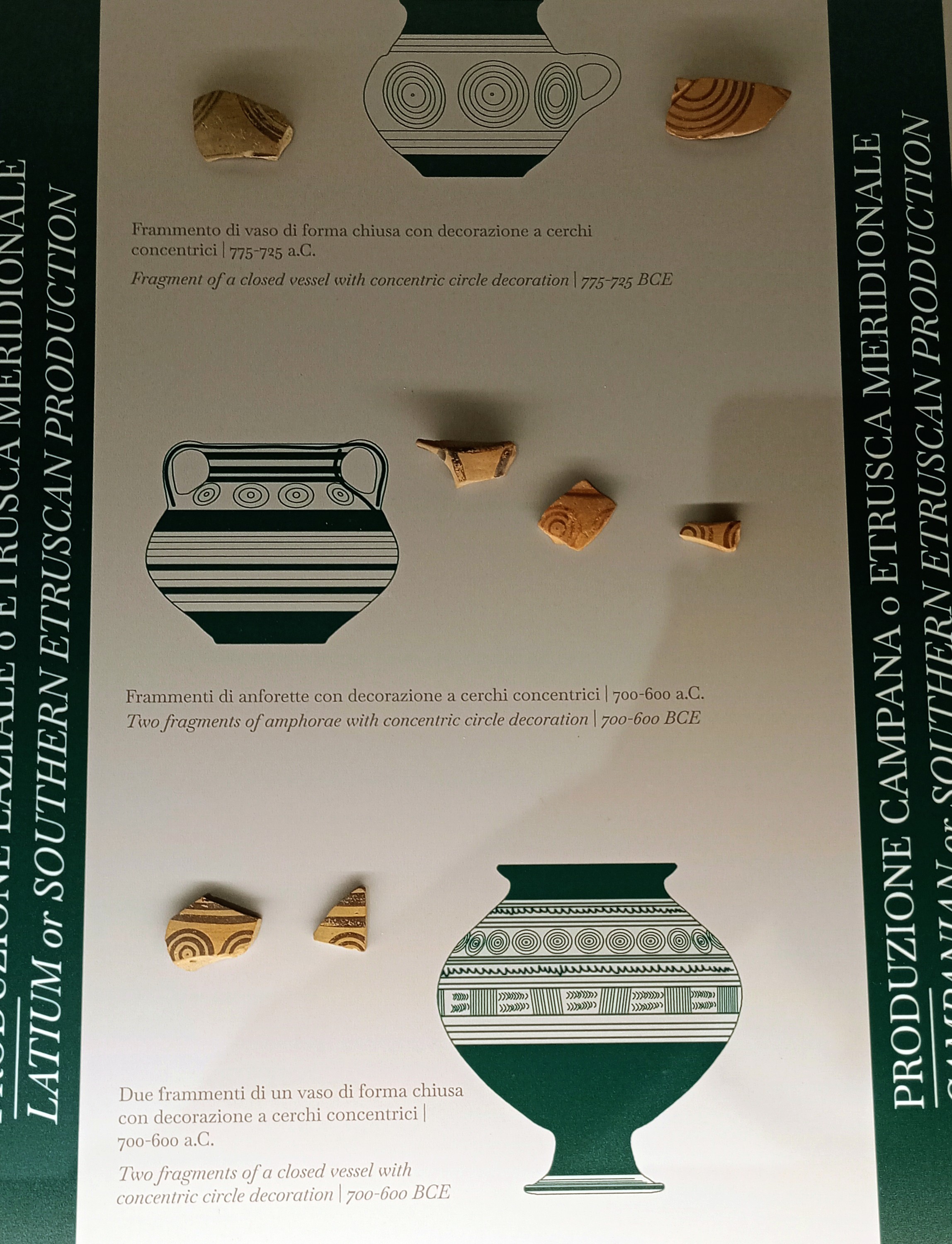
concentric circles
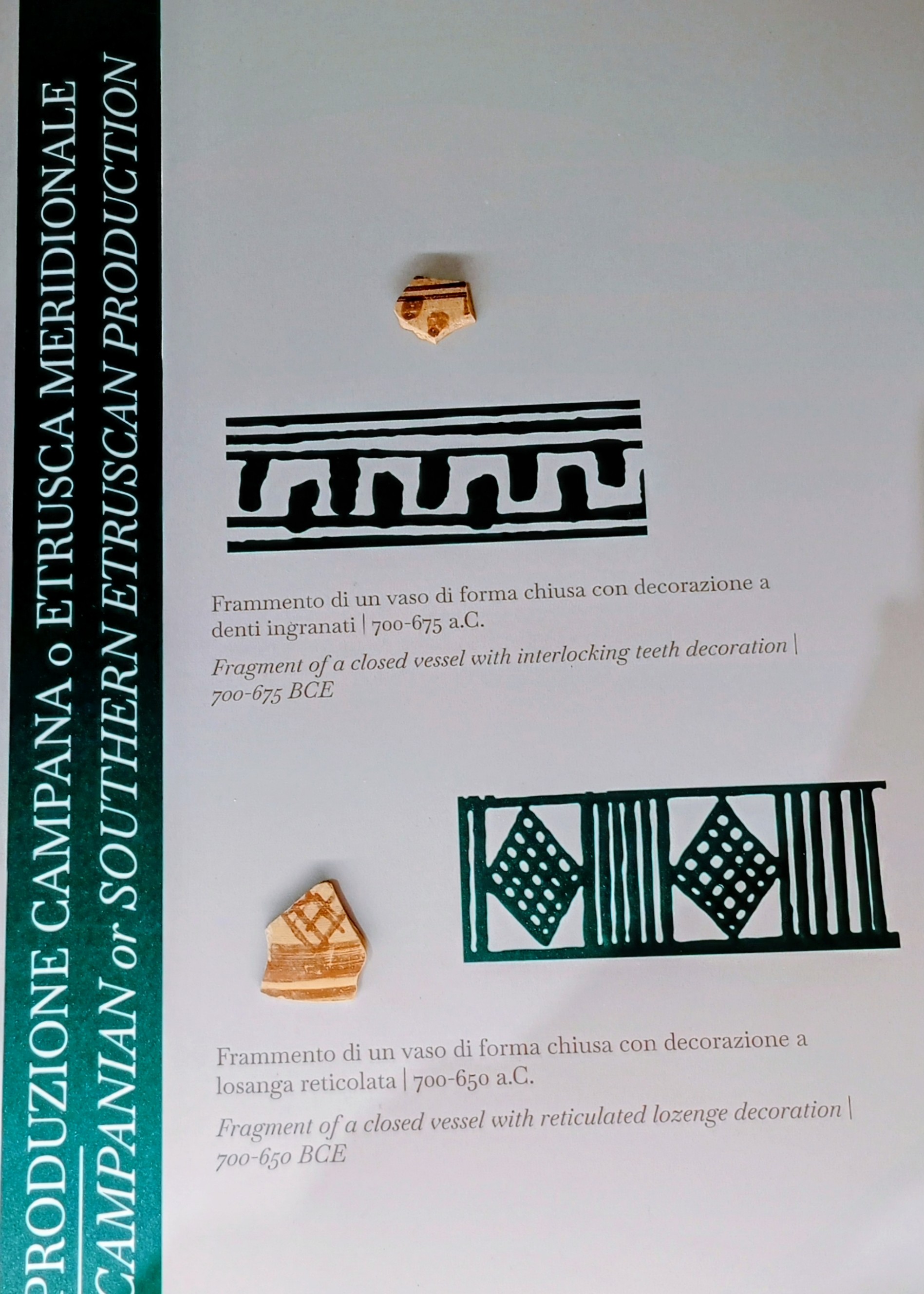
fragment with reticulated lozenge decoration
To be continued here: Towards the Octopus and the Giraffes

-30-

Appropriations for AI will be jinxed.
Related: The Torlonia Marbles +
Campidoglio map + map of the area + When in Rome: an artistic obsession with the ancient city + Piazza del Campidoglio +
Fontana di Piazza d’Aracoeli + Piazza d’Aracoeli +
Anna Laetitia Pecci aka Mimì + Anna Laetitia Pecci Blunt ha lasciato a Marlia un archivio creato da lei stessa + GALLERIA DELLA COMETA + Abbiamo visitato in anteprima il rinnovato Teatro della Cometa di Roma rilanciato da Maria Grazia Chiuri +
Recreation of the Colossus of Constantine installed in Rome + Colossal head of Constantine +
The Caffarelli Palace and Terrace + Palazzo Caffarelli, Rome +
The Language of the Goddess by Marija Gimbutas on Archive, read for free.
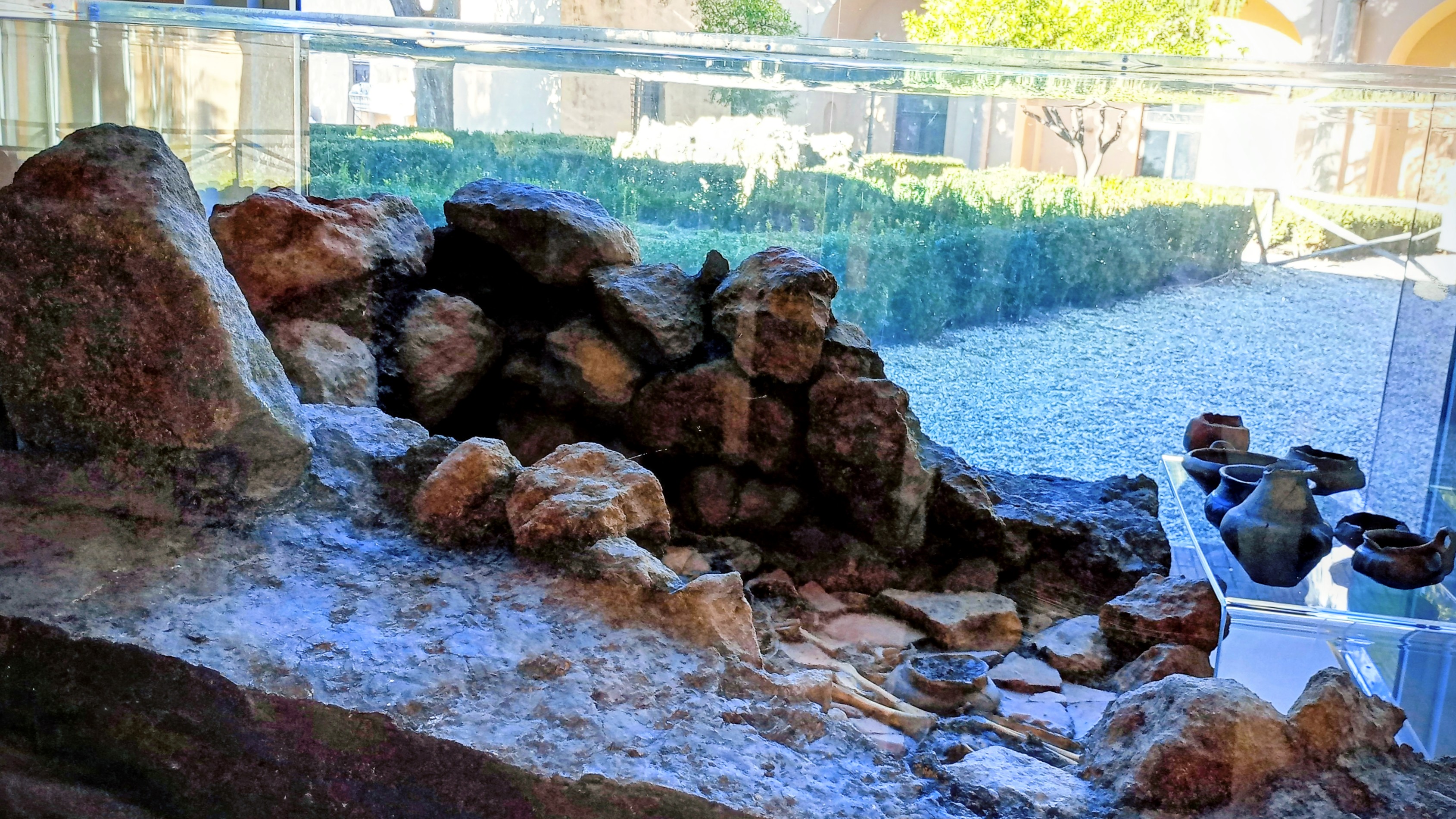
Excavation in block with skeleton near the bathroom.
P.S. Unfortunately, I am having problems with WordPress. It keeps changing my settings and my layout without my permission.


 The Narrative Within
My gosh, so much to absorb in this offering! The Vittoriano is one of my faavourite buildings in Rome, for sentimental reasons.
Well, that’s the problem with cell phones… it’s easy to exaggerate 😃
Pingback: Towards the Octopus and the Giraffes | The Narrative Within
Pingback: The Torlonia Marbles | The Narrative Within