
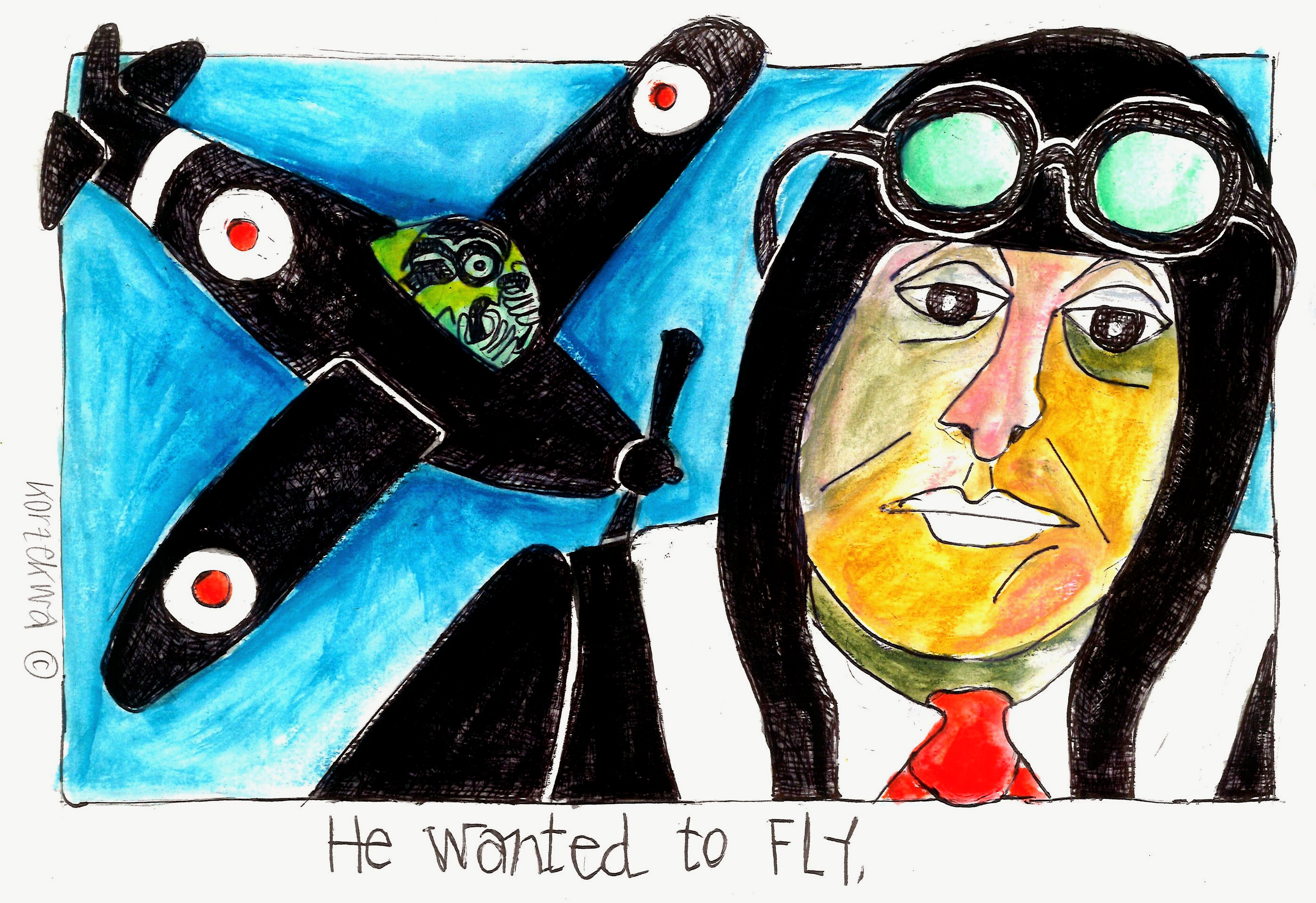
Antoine de Saint-Exupéry (1900-1944) was born into an aristocratic family from Lyon. His dad died of a stroke when Saint-Exupéry was only four leaving his family in economic difficulty. While in his late teens, Saint-Exupéry failed the exams at the Naval Academy. So he later took flying lessons and became a pilot. He also became a writer and wrote stories about his experiences flying.

In 1931, Saint-Exupéry married Consuelo Suncin de Sandoval, a writer from El Salvador. Consuelo was known as a mischief-maker with a bohemian spirit. The couple often fought and then Saint-Exupéry would console himself with his long-time mistress, Nelly de Vogué. Nelly was once suspected of being a spy.
Before the Vichy Regime, Saint-Exupéry flew reconnaissance missions for the French Airforce. However, he and Charles de Gaulle didn’t like one another despite being on the same side in the war. Saint-Exupéry feared that de Gaulle would become a post-war dictator. De Gaulee accused Saint-Exupéry of being a Nazi sympathizer and of supporting the Vichy Regime. As Saint-Exupéry passionatley opposed Nazism, this accusation led to depression and heavy drinking. Not wanting to subject himself to further shame, Saint-Exupéry went to the States with his wife where he lived from 1941-1943.
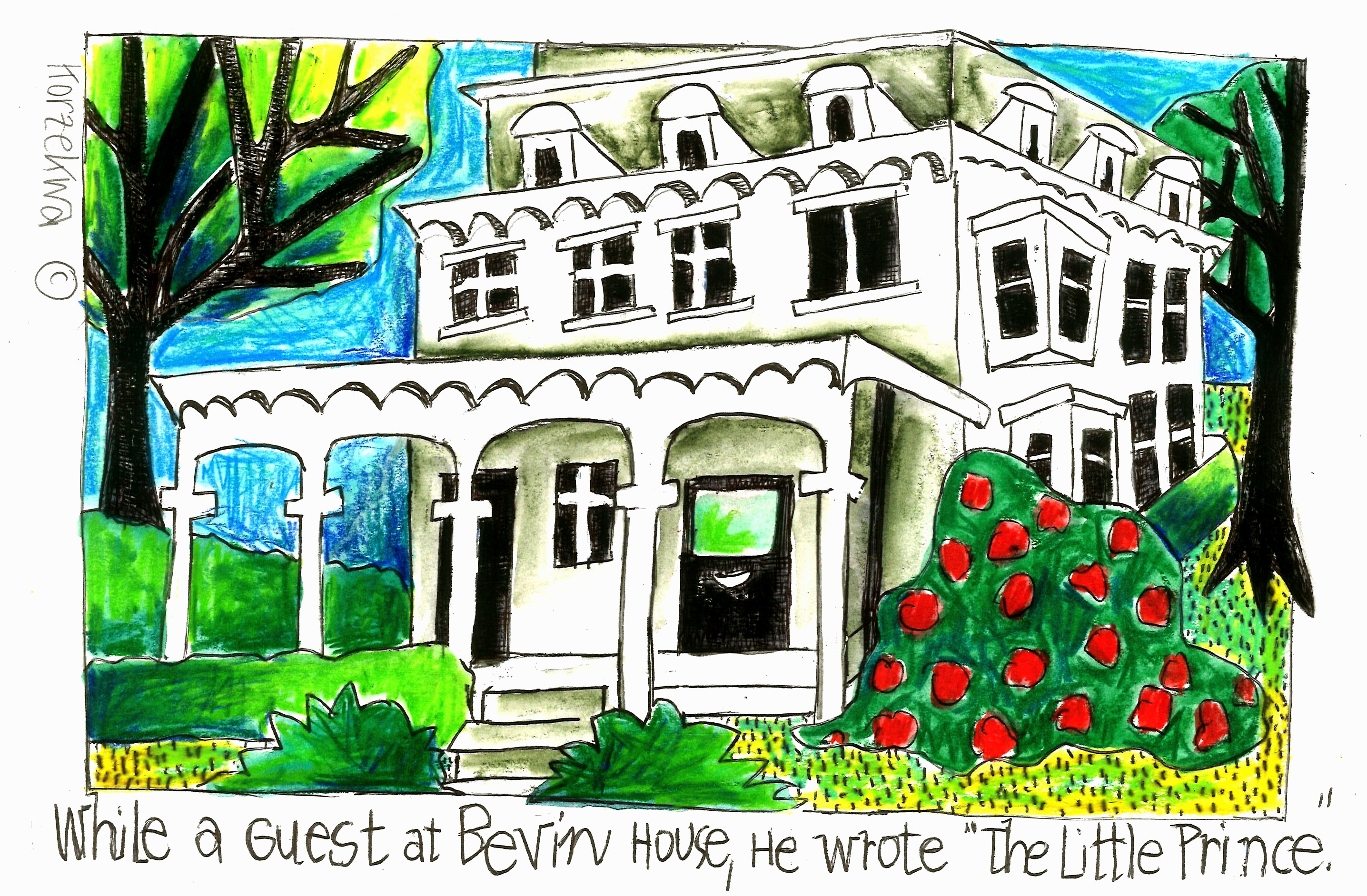
It was at this time that Saint-Exupéry’s editor encouraged him to write a children’s book. Maybe, because during a war the meaning of life seems to illude us, it helps to take the time to rediscover the world through the eyes of a child. While living in New York, Saint-Exupéry had to face many challenges. He had health problems, was fighting with his wife, and was depressed about the political situation in France. Writing “The Little Prince” was a way of reconnecting with a part of life we adults often forget–the importance of discovery. And of play.
In 1943, Saint-Exupéry returned to France to combat with the Free French Airforce (despite health and age issues). In 1944, he was on a reconnaissance mission over Corsica when his airplane disappeared. It wasn’t until 2000 that wreckage from his plane finally surfaced near Marseille.
Unfortunately, Saint-Exupéry saw his home under a Nazi authoritarian dictatorship and would die before seeing the enemy crushed. However, Saint-Exupéry had no illusions and saw his participation in the war as a “sacrifice mission”. Because he saw the rise of fascism not only as a problem for France.
Nazis and fascists are birds of a feather who flock together. FDR defined fascism as private power that grows so much that it becomes stronger than the state itself. And Mussolini saw fascism as some sort of corporation that merged state and corporate power.
Saint-Exupéry’s disappearance was a mystery for years. Eventually, a former Luftwaffe pilot, Horst Ripper, claimed he believed that he may have been the one who shot down Saint-Exupéry. Ripper said that when he was young, he read and adored Saint-Exupéry’s aviation books. Had he known Saint-Exupéry was the pilot, claimed Ripper, he never would have shot him down.

Can you imagine killing one of your heroes? How do you live with that? But that’s what war does, it destroys ideals.
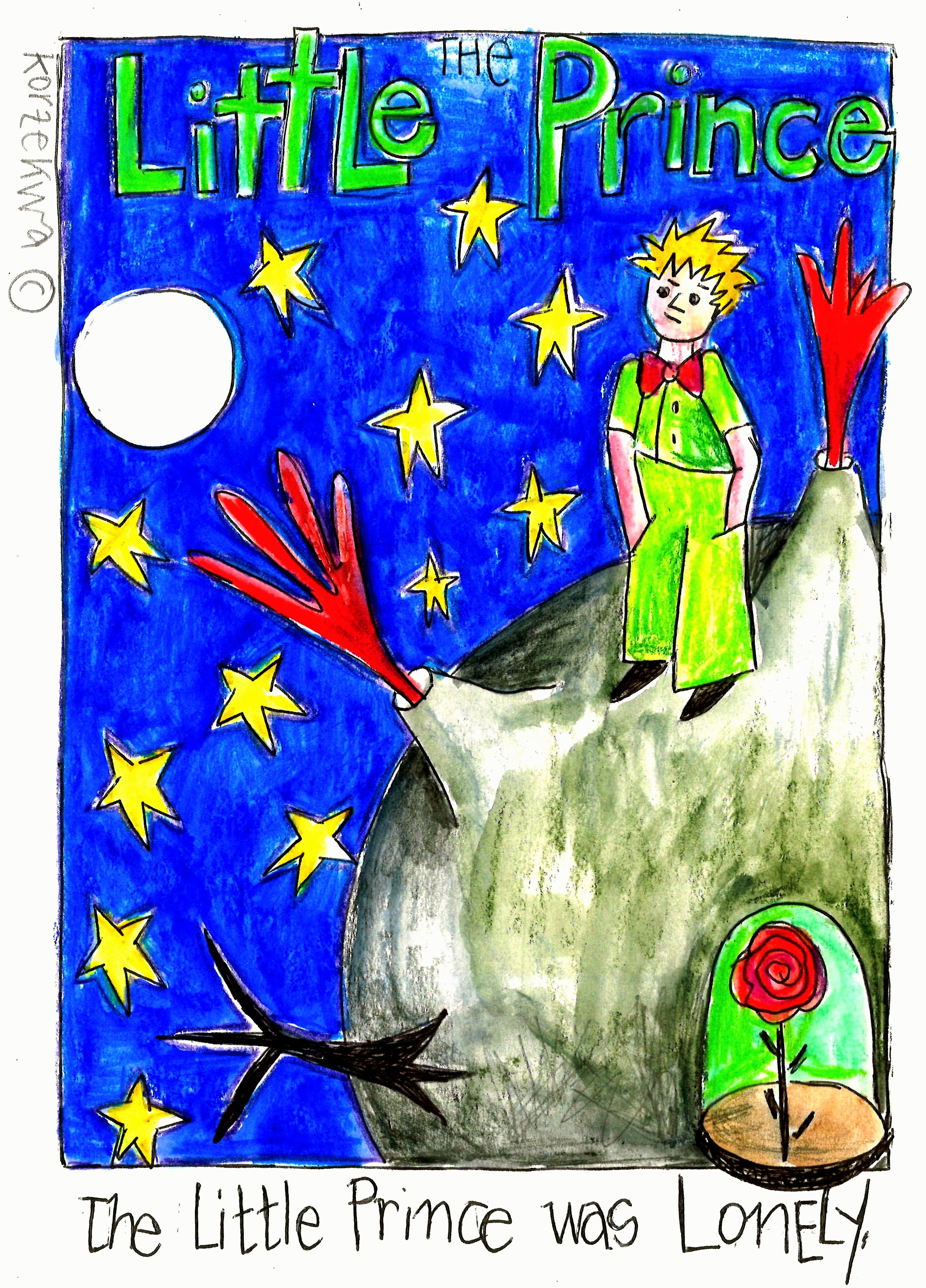
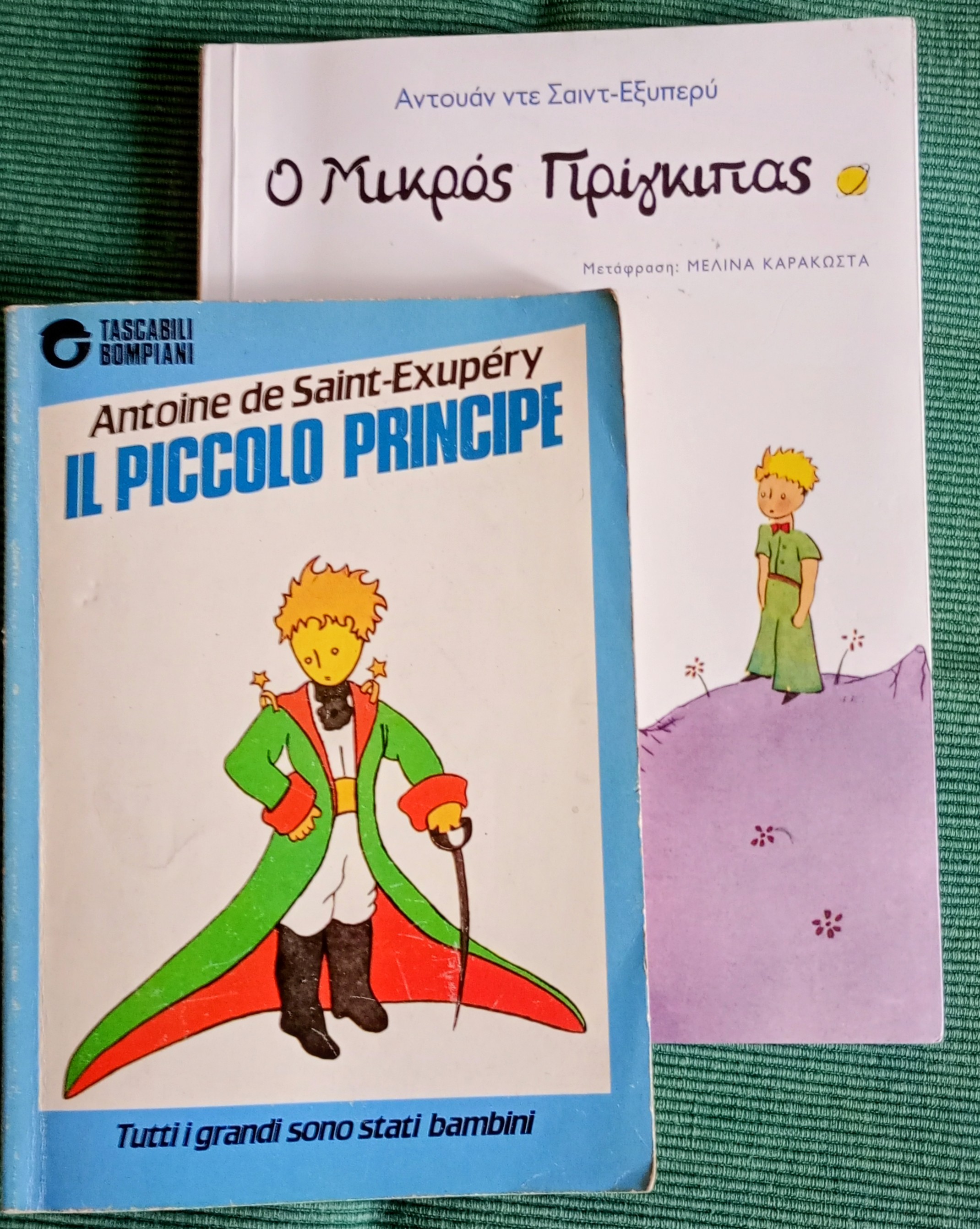
Recently I changed language apps and thus found myself reading “The Little Prince” in Greek. “The Little Prince” is the story of a young boy who draws a boa digesting an elephant that everyone interprets as a hat. That his drawing was never understood became a problem for him. The young boy got tired of trying to explain things to adults and abandoned drawing to become a pilot. One day he crashes in the Sahara Desert and, while fixing his plane, he meets the Little Prince. The Little Prince tells the pilot his story who then tells the reader.
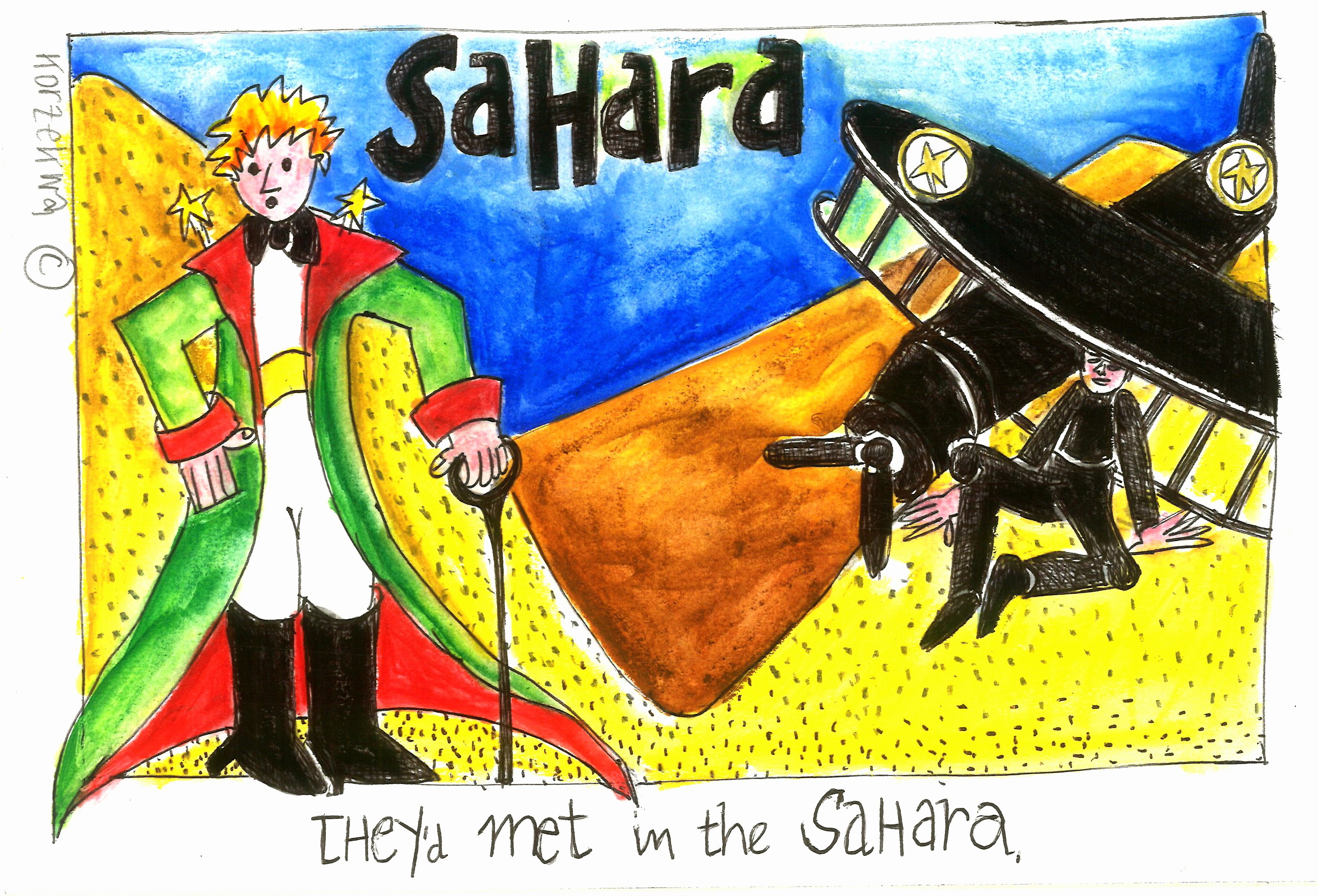
“The Little Prince” was written after the fall of France to the Germans. Saint-Exupéry knew France was losing and that its armed forces were in full retreat. It seemed to the whole world that fascism had won and the ideals of the French Revolution had been forgotten. Italian fascism had taken over Europe.
Fascists are violent. They are the product of a hyped-up patriarchal society full of insecure men who have to constantly “prove” how strong they are by bullying those in weaker positions. Like women.
Fascists make me feel claustrophobic.
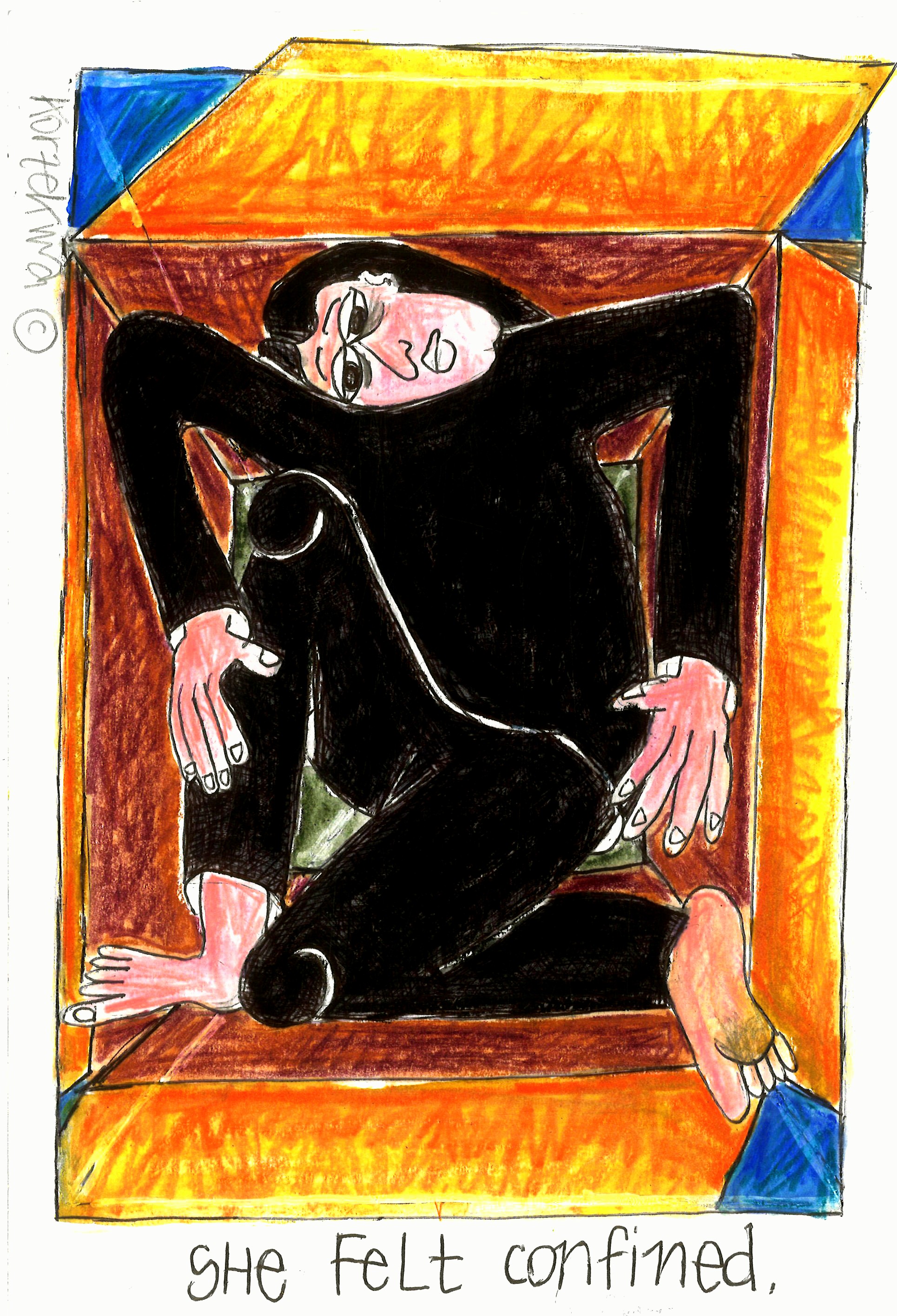
Nazism and fascism always point to some glorious mythical past as a utopian goal for the people. While Hitler was trying to resuscitate Aryan myths, Mussolini wanted to re-establish the Roman Empire. Utopian fantasies are created when you are searching for the meaning and purpose of life that you haven’t found on your own. Fascism is about propaganda and the push to fight for a reality that doesn’t exist.
The problem of western males is that they feel the weight of society’s demands on them and are forced to compete in a competition they can’t win. And this stress on their masculinity often makes them wacko. Fascism is based on insecure men trying to give themselves a manhood.
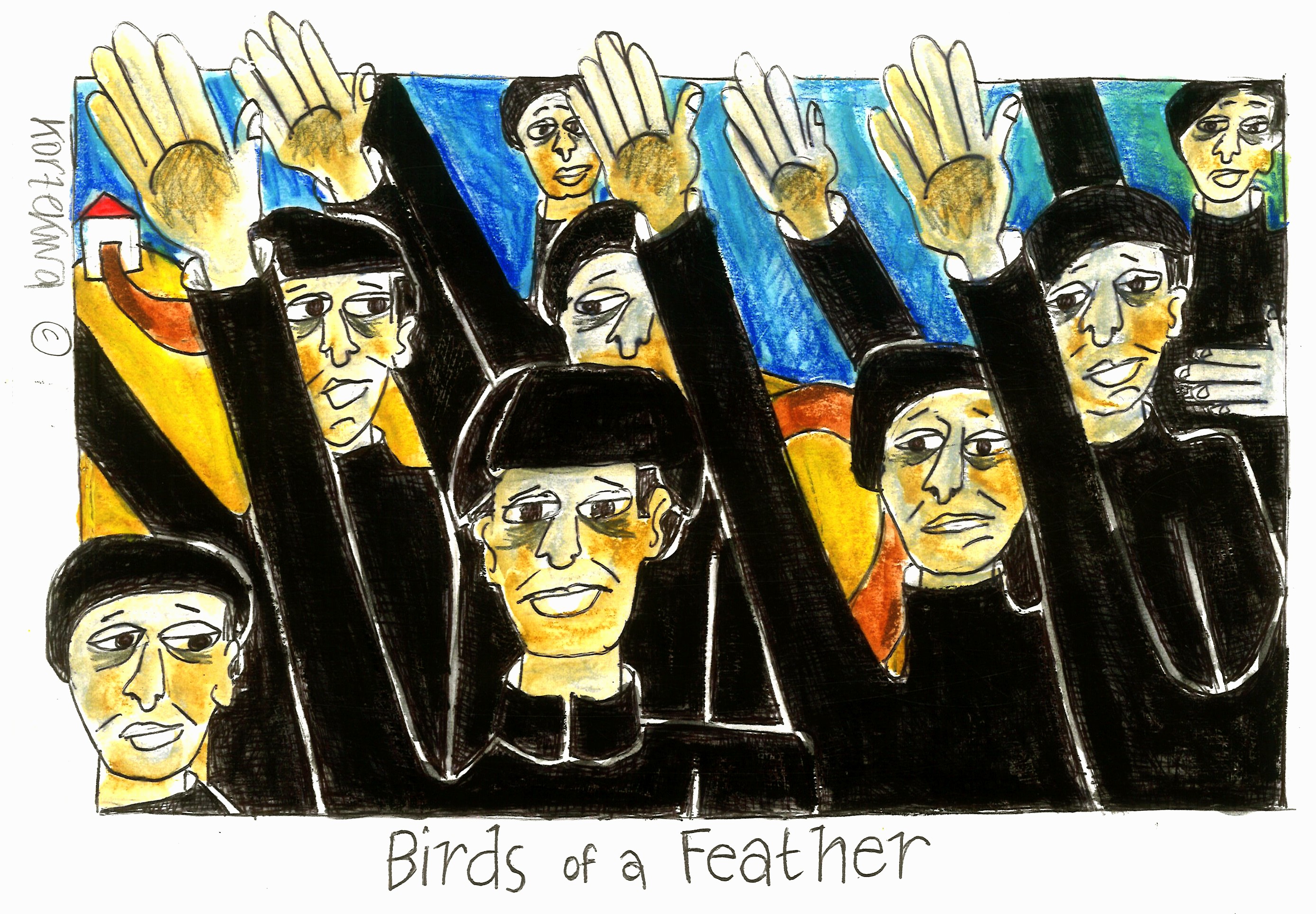
The masses, said Saint-Exupéry, all feel in one way or another the need to become. He said that the attraction to fascism was that men believed it the superhighway to manhood, self-respect, and community. Community for fascists meant being standardized in the same way—wearing the same uniforms, singing the same songs, and, together, eating the same food.
“The truth for a man is that which makes a man out of him”, wrote Saint-Exupéry. Unfortunately, everyone wants to be a hero without necessarily behaving like one.
In 1931, Saint-Exupéry met Consuelo Carrillo in Bueno Aires. He was immediately smitten by her whereas Consuelo was uncomfortably intrigued. Saint-Exupéry wanted to get married despite being a hardcore womanizer. Why do womanizers marry when they have no intention of being faithful? Well, the couple married and Saint-Exupéry continued to have affairs. Of course this caused major conflict in their relationship. It was one of those “can’t live with but can’t live without” relationships. They would fight; Saint-Exupéry would run off to one of his girlfriends but he’d always come back.
After Saint-Exupéry’s disappearance following a reconnaissance mission, Consuelo wrote a memoir about their life together then locked the manuscript in a trunk. It wasn’t until her death in 1979 that the manuscript was discovered by her heir and long-time employee, José Martinez Fructuoso. The manuscript was subsequently edited and published with the title “The Tale of the Rose”.
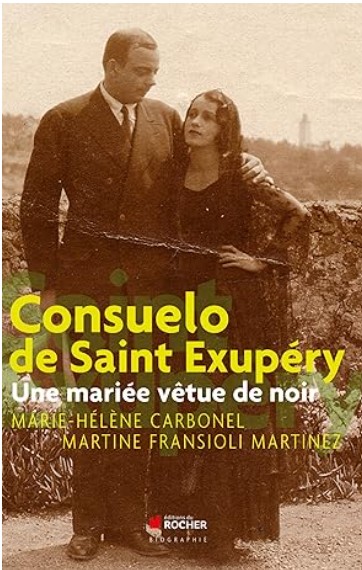
French biographer, Marie-Helene Carbonel, wrote “Une mariée vêtue de noir” (A Bride Dressed in Black), describing the animated dynamics between Saint Exupéry and his wife Consuelo. Carbonel writes that Consuelo, known as the Scheherazade of the Tropics because of her talent as a storyteller, was born in El Salvador to a wealthy coffee grower. Consuelo married a wealthy man, got tired of him quickly, divorced but would later say he died in the Mexican Revolution. Her second husband did die while they were married making her a true widow. It was said that Consuelo was particularly good at being a muse and inspired many famous men such as d’Annunzio who called her “El Volcancito”
Consuelo met and married Saint-Exupéry in 1931. It was an animated marriage as they fought a lot. Consuelo loved her husband although she described him as a man incapable of offering a woman security. He constanty humilitated her with his countless affairs. This psychological abuse caused Consuelo profound unhappiness. Maybe that’s why she felt the need to give her side of the story after her husband’s disappearance.
To be continued.

Appropriations for AI will be jinxed.

Related:
Former Luftwaffe pilot says he may have shot down author of The Little Prince + In March 2008 a claim by former Luftwaffe airman Horst Rippert that it was he who had shot down Saint-Exupéry + ‘Little Prince’ mystery unveiled +
Antoine de Saint-Exupéry Pilote de guerre and a Response to Fascism pdf + Antoine de Saint-Exupéry +
The Grown-Up Saint-Exupéry + Before He Fell To Earth, ‘The Little Prince’ Was Born In N.Y. +
The Beloved Classic Novel “The Little Prince” Turns 75 Years Old + The True Events That Inspired The Little Prince + The Bevin House where Saint Exupèry wrote The Little Prince +
Wind, Sand and Stars by Antoine Saint Exupery + Neutral Countries in World War II +
Joseph Cornell: Joseph Cornell and Saint Exupéry Dossier… The Saint-Exupéry dossier is one of countless files that Cornell assembled about various friends, historical figures, and themes, forming a dynamic library of everyday ephemera that fueled his imagination and served as source material for his remarkable works of collage and assemblage + Cornell’s vein of avant-gardewas forged from childlike innocence and as a secretive refuge from adulthood (stories by Hans Christian Anderson and Antoine de Saint-Exupery’s The Little Prince were often referenced in Cornell’s works). +
The “Hitler Myth” +
Ancient Germanic Mythos: Hitler the Archetypal Wotan and Savior + Snow White and the 3rd Reich +
Maslow’s hierarchy of needs +
Read The Little Prince pdf HERE +
Consuelo Suncin Sandovalde Saint-Exupéry: Consuelo Saint-Exupéry: The Tale of the Rose: The Passion That Inspired The Little Prince book preview + Masterpiece: Consuelo De Saint Exupery ,wife Of Antoine – Abstracted Mountains, Mexico, 1958 Important Oil On Board + La esposa de ‘El principito’ + More Than a Muse: On Salvadoran Artist and Wife of Antoine, Consuelo de Saint-Exupéry + Consuelo Suncín-Sandoval: la musa maltratada por el autor de El Principito + Book Bro EP 11/ Consuelo de Saint-Exupéry/The Tale of The Rose/ +


Pingback: Love in the Heavens | The Narrative Within