Imprinting

My daughter’s selfie of us taken at the hospital. Not even pain can silence the aesthete within her.

ο εστέτ μέσα δεν κοιμάται ποτέ

(foto by Chiara Pilar © )

Posted in Beauty | 5 Comments

Christmas

The Tree

Se Was Being Followed

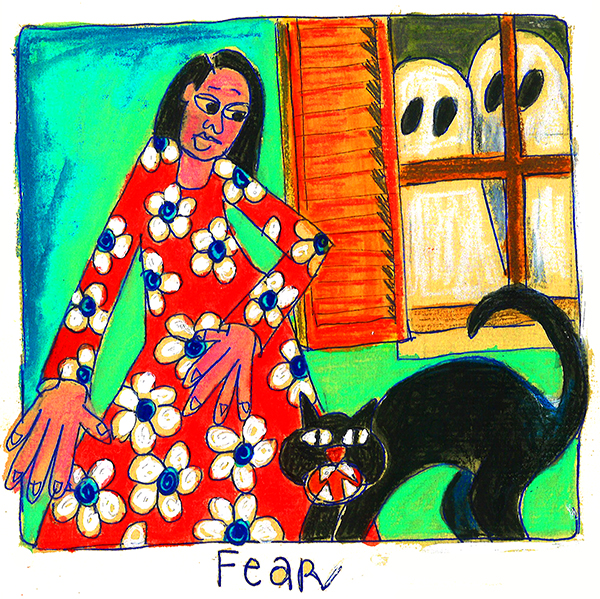
They’re coming to get us.

-30-

Posted in Uncategorized | 2 Comments

Tell Me Everything

For Madeleine who asked

We all have stories to tell. It’s just that some of us are better than others at telling them.


Lucy Barton and Olive Kitteridge have something in common. They both like to collect stories from “unrecorded lives”. Lucy and Olive know that we’re all surrounded by stories just waiting to be told and they’re anxious to tell them.


Olive’s story: before Sara, Olive’s mother, married Olive’s dad, she’d been in love with Stephen. Stephen had been in love with Sara, too. But Stephen’s mom, who owned the resort where Sara worked, didn’t think Sara was good enough for her son and forced the young couple to break up. Three months after the split, Sara met Olive’s dad and two months later they married. The Rebound.


After her mom died, Olive went through her mom’s belongings and found a tattered old newspaper clipping hidden in a handbag pocket. The clipping showed a photo of Stephen and his wife as well as their two daughters. The girls’ names were Olive and Isa. What was so remarkable about this was that Stephen had given his daughters the same names as Sara had given her own daughters. How was it possible that the teenage sweethearts, years after their split, would give identical names to their children.


After Olive finished telling her story, Lucy cried. It’s a sad story, she said, because Sara and Stephen must have been so in love that, at the time, they even talked about the names for the babies that they wanted to have together. Despite the mom instigated break-up, Sara and Stephen never forgot one another.

Stories exist to be told because, says Maya Angelou, “there is no greater agony than bearing an untold story inside of you.”


Olive, 90 years old, thought about the unrecorded lives all around her. “Everywhere in the world people led their lives unrecorded, and this struck her now.” Humans need to feel connected, and their stories help them do so. Sometimes we even invent stories about ourselves to help us from feeling inconsequential.


The stories Lucy and Olive share with one another are about people they know. Some could say that they were just gossiping. But what is gossip if not a form of storytelling.


Cultural psychologist Michele Gelfand says, “Gossip is a ubiquitous feature of human communication.” Homo sapiens are social animals and depend upon social cooperation for their survival. In Sapiens, Yuval Noah Harari tells us that language evolved thanks to gossip. Social communication is fundamental for survival and reproduction. Harari also says that gossip is based on judgements and these judgments led to the beginning of sapiens domination.


Gossip evolved into storytelling. Storytelling helped language evolve making it easier to exchange information about ourselves and others.


Every evening people sit in front of their TVs watching stories being told. But when TVs didn’t exist, people themselves were the storytellers.


The Silk Road was a trade route active from the second cen. BC to mid-15th century AD. It was fundamental for the commerce of lucrative commodities and thus constantly travelled. And when the camel caravans stopped to rest, the travelers would sit around the campfire to tell each other stories.


Storytelling was a social event where people could spend time together and pleasantly pass the time. As the travelers were of various origins, the stories offered a chance to learn new things. It was the sharing of stories that helped man to evolve.


Scheherazade’s One Thousand and One Nights is a collection of stories told on the Silk Road. The stories were collected over the centuries but when they became One Thousand and One Nights is not really known.


Elizabeth Strout, in Tell Me Everything, uses storytelling to make the insignificant significant and the ordinary extraordinary. She could transform anybody’s life into a bestseller.

Life can have more meaning if it’s given the proper narrative.

Se Was Being Followed

They’re coming to get us.

-30-

Related: Viola Davis + Saved by Stories (Scheherazade)+

Posted in Age of Reconfiguration, Books, storytelling | Tagged , , , , , , , , | 4 Comments

Feltrinelli’s Zhivago

The Dude & I are book addicts. We periodically raid our favorite bookstore, the Feltrinelli’s near Piazza della Repubblica.

The Dude chauffeurs me on his scooter (the only way to get around Rome) so I just hold on, sit back and pretend to be a tourist on a cheap version of a double decker tour bus.

Rome is a city that keeps the eye in motion.

Not far from Feltrinelli’s is the church of Santa Maria della Vittoria, the residence of Bernini ‘s Ecstasy of St Teresa . And across the street is the Fountain of Moses also known as the Acqua Felice aqueduct. Built in the late 1550s, it’s statue of Moses wears a nice pair of horns.

Just further down the block is the Grand Hotel (the entrance is where the flags are waving). It faces the now defunct Feltrinelli’s International Bookstore.

The big display windows of the now defunct Feltrinelli’s International bookstore are covered with paper to hide the emptiness within. What’s left of Feltrinelli’s is further down the block still on the right where the red signs are.

Right before reaching Piazza della Republic is mainstream Feltrinelli’s with the international books jammed in a little corner. Notice the streets made of sampietrini.

Inside Feltrinelli’s from the little jammed corner.

Every time we ride past the closed international store, it breaks my heart. I can’t help thinking that, had it not been for Giangiacomo Feltrinelli, the world would not have known about Doctor Zhivago and his love for Lara.

(Feltrinelli’s Doctor Zhivago bookcover via Wikipedia)


For years Boris Pasternak (1990-1960) had been working on Doctor Zhivago. But he didn’t finish it until 1956. The Soviets, however, did not consider the book “publishable” because it rejected socialist realism and contained some blatantly anti-Soviet passages.


In 1956, an Italian communist journalist went to work in the Soviet Union. Publisher and fellow communist Giangiacomo Feltrinelli employed the journalist to look for Soviet literature that would be appealing to Western audiences.


The Italian journalist discovered Pasternak and offered to have Doctor Zhivago published but the Soviets had other ideas. They didn’t even want the manuscript to leave the country. Feltrinelli, determined to publish the book, helped smuggle the book out of Russia as if it were top secret military microfilm.


Once out of the country, the book had to be translated and was finally released in 1958. For 26 weeks it was at the top of the New York Times’ bestseller list. To keep from getting big headed about so much success, a friend of Pasternak’s said that it was the Russian people and their suffering who’d created the book, not him.


Now every time we go by the emptied International Feltrinelli’s, I think of Pasternak and how Giangiacomo, with courage and conviction, took major risks to publish a masterpiece that might not have been published otherwise. It makes me sad to see the Feltrinelli vacancy. It makes me sad to know that the vacancy is not just physical. It makes me sad to know that there are more people willing to ban books than to read them. It makes me sad to know that 21% of Americans are functionally illiterate (source).

But buying a bunch of books helps the sadness fade away.

man and woman on scooter smiling


-30-

Related:

The above Feltrinelli’s is located here: Via Vittorio Emanuele Orlando 84, Roma.

Ecstasy of Saint Teresa +

Fontana dell’Acqua Felice, A monumental fountain in Rome features a large statue of Moses that has been criticized for centuries +

The Horns of Moses +

Giangiacomo Feltrinelli +

Boris Paternak (1890 –1960) +

How Serious Is America’s Literacy Problem? +

Posted in art, Books, Conditions of Possibility, Rome/Italy | Tagged , , , , , , , , , , | 5 Comments

Roma Pittrice

Roma Pittrice is an exhibition celebrating the women artists who, between the 16th and 19th centuries, lived and worked in Rome.

Some of the artists include: Artemisia Gentileschi, Lavinia Fontana, Angelika Kaufman, Emma Gaggiotti, Maia Felice Tibaldi Subleyras, Laura Piranesi, Marianna Candidi Dionigi, Louise Seidler, Giovanna Garzoni, Giustiniana Guidotti, Ida Botti, Amalia De Angelis.

The exhibition, which ends March 23, is held at what was once Palazzo Braschi and Mussolini’s headquarters. Today it is the Museo di Roma.


In Rome, setting is often an integral part of the exhibition. The minute you walk in the door, you feel the need to start taking photos. The architecture often competes with the exhibition.

In Rome the eyes are always travelling!

painted garlands above me

People in the Sky like Diamonds

a photo of Emma Gaggiotti‘s studio in Rome at via Gregoriano no. 5

The room with many of the portraits was very dark.

installation Portrait Room

an aternative installation view

photo with Charlotte Bonaparte‘s painted selfie

The painting to the right of the door is that of Bertel Thorvaldsen. Thorvaldsen (1770-1844) was a Danish sculptor who lived most of his life in Rome. His home is now a museum.

The small bust across from the painting is Thorvaldsen’s bust of Maria Sofia Angelica Massani.

“Saggio dell’Anno Primo” by Rosa Mezzera. Rosa was the first female student at the Academy of Fine Arts in Milan (where I taught in the mid-90s).

Two small paintings by Erminia De Sanctis. Above “Studio di frutta” (c. 1890) and below “Una vittima innocente” (an innocent victim) (1870-1890).

Standing in between two ladies painted by Artemisia Gentileschi–Cleopatra on the right and Aurora on the right. They are beautiful but the floor tiles had me intrigued.

“Aurora” by Artemisia Gentileschi

The photos are sad and gloomy. I finally got a smart phone and still have not learned how to properly use it.

a blurred foto of my legs in front of the fireplace because I feel like being silly

(to be continued but I don’t know when)

(Lavagna Ladies 2024)

Frida Had Sculpture In Her Garden

Related:

Bertel Thorvaldsen and the Danish Artists in Rome +

ROSA MEZZERA: La prima pittrice di Brera +

Guglielmo De Sanctis, Ritratto di Erminia De Sanctis, 1860 ca. pdf

Posted in art, Rome/Italy | Leave a comment