Frida and her huipiles

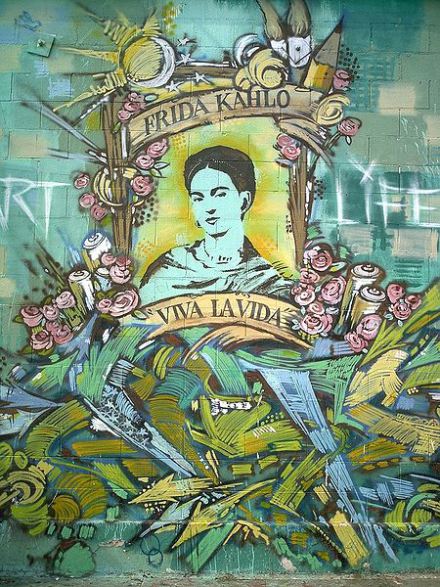
An exhibition dedicated to Frida Kahlo recently opened here in Rome at the Scuderie del Quirinale.  

Frida in Rome

Frida, after her marriage to Diego Riviera, decided to dress in the traditional costumes of the Tehuana women of Tehuantepec. Anyone who reads this blog routinely knows how much I love huipiles!  So for awhile I will join in on the Friadamania so I can do some heavy duty huipiles related posting.

wild moon huipil

A typical Huipil Tehuana at Wild Moon boutique

 zapata se queda

The singer Lila Downs often dresses in Tehuana style.  The foto above is from her video Zapata Se Queda.

Related:  FRIDA Y SUS TRAPITOSTehuana Huipil Oaxaca + the gran huipil

Posted in Muy Marcottage | Tagged , , , , , | 2 Comments

Life Lessons, Writing Lessons: Julia Child Reprised

Angela's avatarPersephone Writes

Julia reprise Some time ago I wrote a post about what Julia Child taught me about writing.  This might be surprising for readers who don’t know Julia’s history, or the fact that she’d always wanted to write novels!

Julia’s long been a role model and mentor for me and in that post I wanted to call attention to the ways in which her skill in the kitchen translates and adapts to the writing life. (To find out how, click on the link above and read the post — the kitchen and the writer’s desk are not as far removed as you might think!) Julia truly had an artist’s heart —  not only was she a splendid chef, but she was a prolific writer and lived life with a contagious joie de vivre which in turn brought joy to others. Living was an art for her.

In addition to reprising my earlier post, I’m…

View original post 410 more words

Posted in Uncategorized | Leave a comment

Irini Gonou and magical writing.

It’s been awhile since I’ve blog due to my daughter’s knee injury and the breakdown of my modem.  Hopefully, my blog will pick up some animation now!

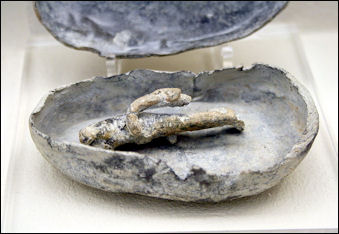
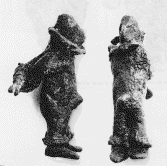
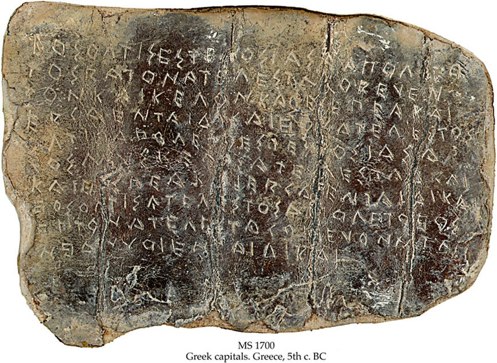
 Last year I had been presented the possibility of teaching a workshop in Senegal (which, unfortunately, I later had to refuse) and that led me to researching gris-gris, amulets worn for protection from evil.  Often the gris-gris is a small cloth or leather pouch containing small objects or written verses.  The idea of wearing writing for magical purposes fascinates me as my Muy Marcottage huipiles and dresses all have words or phrases stitched onto them.

gris gris

gris-gris

gris girs

magical writing 

One link leads to another and that’s how I discovered the work of Irini Gonou. Irini’s work is very poetic and deals a lot with magic scripts and apotropaic texts.  She has a series of work entitled The Sheltering Word representing her exploration of the healing and protective powers of the written word.

irini gonou

“la veuve du vernay” collage by Irini Gonou

irini gonou

Irini Gonou
irini gonou

for more information regarding the writing used by Irini, read this interesting interview:  Irini Gonou’s “A Tale of Two Cultures” | Published under Caspian Arts Foundation

irini gonou writing on Eucalytpus Leaves by Irini Gonou

Apparently Blaise Pascal, the French mathematician and philosopher, was also into magical writing.  Around 1654, he had a mystical vision and then wrote about it.  And if that wasn’t enough, he sewed this “Memorial” onto the lining of his jacket.

pascal

Blaise Pascal

Related links: Broken beauty + Introducing Gonou’s Magic Scripts and Apotropaic Texts to Bergen + pinterest taliman and amulet page + L’exemple des Tanagras (in French)+ Scientists Prove That DNA Can Be Reprogrammed With Words And Frequencies

gummy scribbles

P.S.  Thank you Jo for telling me about this!  Above is a foto of scribbles made by Australian gum moths on the bark of a eucalytus tree. Looks like some kind of stream of consciousness writing, no? Australian writer, Nancy Cato, wrote about this phenomenon in her children’s story  Nin & the Scribblies.


Posted in People | Tagged , , , | 11 Comments

Geta Bratescu’s conceptual scraps and Hari Kuyo’s broken needles

Artist Geta Brătescu is considered one of the most important figures in the Romanian avant-garde of the 1960s and 1970s.  She studied art and literature but was forced to quit her studies. Born in 1926, she made art for years before the international art world even knew of her existence.

In 1989, when the communist regime ended in Romania, Geta’s work began being exhibited beyond her geograhical boundaries.

Geta, initially, focused on drawing but eventually experimented with many art forms. Those which intrigue me the most are from the ‘Vestigii’  (Vestiges) series. She’s taken old clothes and  fabric scraps to make collages. Geta also makes sewing machine drawings.

Geta Bratescu

Geta in her studio

Geta Bratescu Geta Bratescu

Geta Bratescu Geta Brătescu

Geta at the Threaded Stories Exhibition….”A selection of works from Geta Brătescu’s ‘Vestigii’ (Vestiges) series of 1978 feature patches of scrap fabric layered to form a textured collage. Installed on the wall, their tattered edges and patchwork quality appear to hover on the edges of abstraction and figuration. Scraps of bright fabric patterns and hues are mixed and muddled, as their layers often expose the wall behind. A leading figure of Romanian Conceptualism, Brătescu has been the subject of a recent major solo exhibition at MUSAC (Museo de Arte Contemporáneo de Castilla y León) and was recently included in the 2013 Venice Biennale and the 12th Istanbul Biennale in 2011. Brătescu’s work blurs the lines between art and the everyday, enhanced by her focus on the process and production of art and the linking of her upbringing in Communist Romania.”

related links: Interview with Geta Brătescu +  The rise of the OWAs + video interview with Geta Brătescu with English subtitles + Geta Bratescu (Frieze Mag) + 2011 Istanbul Biennial + Fabric collages at pinterest

IN PRAISE OF BROKEN NEEDLES 

February 8th is a Japanese festival, Hari Kuyo, celebrating broken pins, needles, scissors and anything else related to the steamstress.

broken needles

This tradition probably springs from the Eastern system of displaying gratitude towards objects that are a source of livelihood. It also reflects the animist belief that all beings and objects have a soul.

related:  booklet by Audrey Yang + Hari Kuyo – Japan’s Unique Memorial Service for Broken Needles + Japan’s Homage to the Needle video + I was witnessing the annual practice of hari-kuyo, the “memorial service for needles”; a quirky Japanese festival which has been celebrated for about four hundred years. +

many thanks to Jo Quirk for telling me about Hari Kuyo!

Posted in People | Tagged , | 11 Comments

Lee Godie and the need for transformation

This post is dedicated to my friend, Rudy, who, long before Amelie,  recognized the magic of photo booth photos.

Lee GoodieThis is Lee Godie.  Lee was born  in Chicago in 1908. Eventually, she married and had 3 children.  But her marriage failed and two of her children died.  Shattered, she became a homeless in every sense of the word and began living on the streets of Chicago. Around the age of 60, she began sidewalk sales of her paintings in front of the Chicago Institute of Art. Lee said she was a “French Impressionist” and a much better painter than Cezanne.  Thus, she believed, not everyone merited her art so she sold selectively.

Lee liked paint so much she would often paint herself and her clothes. She enjoy experimenting with fashion and often created her attire using items she’d find while rummaging through the trash.

As for her art, Lee drew and painted on whatever materials she could find.  But, in my opinion, her true art came from the altered self-portraits she made using the foto booth at the Trailway’s Bus Station. Before taking the foto, Lee would transform herself using a variety of costumes to change her identity.  And, once the photos were developed, she would continue to change her look by manipulating the fotos with a variety of materials such as ball point pens and tempra. Long before Cindy Sherman, Lee was working with the concept of self-transformation as an art form. And what a transformation.

Lee Goodie

Lee Goodie

 For much of the morning, I’ve been staring at Lee’s self-portraits trying to understand the “Why” behind them.

In general, Lee does not look into the camera. Avoiding eye contact, she poses. But she always poses as someone else.  What is she trying to say? What has the street taught her? What does she know that I will never learn sitting here in my comfortable home with my cat curled up next to me as I type this on my computer?

My initial response to her fotos is: she’s slightly deranged–even though in an intelligent way. But maybe it’s exactly this that makes her an artist. Sometimes art is no more than an effort to give madness meaning and direction. Or to find a home for one’s pain.

Luckily, towards the end of her life, Lee was re-united with her long-lost daughter (who’s created a Lee Godie Memorial Page) and, at the age of 86, did not have to die alone on the streets.

Lee Goodie Lee Goodie

Lee Goodie

related links:  Finding Beauty: The Art of Lee Godie + Lee Godie: The artist not in residence + Carnival Punks, Flannery O’Connor and How To Become a Schizophrenic: 10 Questions for Shannon Lucy + Lee Godie at Hammer Gallery + LEE GODIE 1908 – 1994 + A Beautiful Life Photography, Outsider and Otherwise + Images from the outer limits + Alternative Guide to the Universe explores the work of self-taught artists and architects, fringe physicists and visionary inventors, all of whom offer bracingly unorthodox perspectives on the world we live in + Lee Godie Exhibition

p.s.

Godie pillow painting

pillow painting by Lee Godie 

Godie enjoyed creating her self-invented ‘pillow paintings’ which consisted of two pictures sewed together and stuffed with newspapers.

Posted in People | Tagged , , | 12 Comments