
How the Futurist used his Rope:
Giacomo Balla (1871-1958) was only nine years old when his dad died. His mom now had to fight to survive. Nevertheless, she made her son’s education a priority.
Monuments should be made world wide dedicated to Single Moms. Just think about all the men (and women) who became successful thanks to their mom’s sacrifices.
Once out of secondary school, Balla attended the Albertina, the Academy of Fine Arts in Turin. Here Balla was bombarded with new ideas that gave his mind a new direction. And another new direction presented itself when, in 1895, Balla moved to Rome with his mom. Here he worked for several years as an illustrator, caricaturist, and portrait painter.
In 1909, artist Fillipo Tommaso Marinetti wrote “Manifesto of Futurism” which, he stated, was “aimed to liberate Italy from the weight of its past.” The Futurist movement glorified modernity with an emphasis on dynamism, speed, and technology. Balla became a part of this movement.
In 1904, Balla married Elisa Marcucci. The couple had two daughters: Luce (Light) and Elica (Propeller).
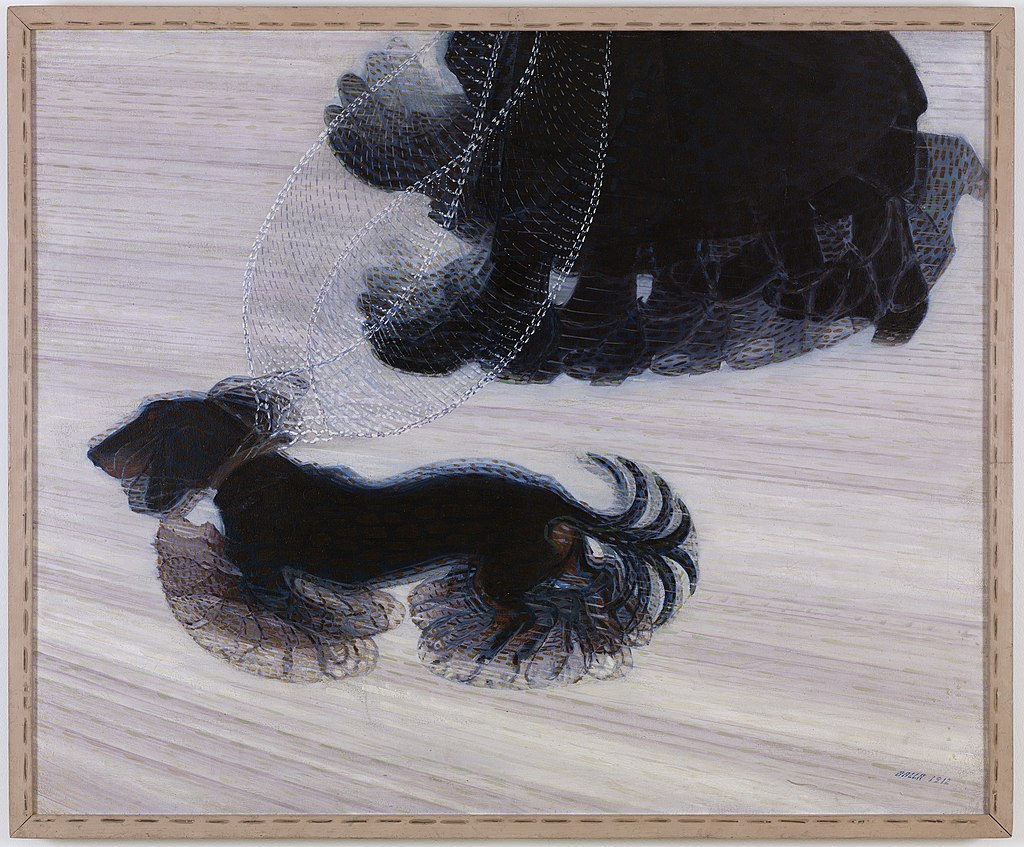
Dynamism of a Dog on a Leash by Giacomo Balla (1912)
Balla, intrigued by Etienne-Jules Marey’s chronophotographs that showed the body in motion, wanted to depict light, movement, and speed in his paintings. In 1912, Balla used his rope for “Dynamism of a Dog on a Leash.” His intention was to show that the world is in constant motion even if we don’t perceive it.
The Futurist movement, identified with Fascism, began to make Balla feel claustophobic. He felt the need to detach himself from it and to return to figurative painting. In Rome, Balla prefered staying at home and creating art with his daughters. See photos of their home here: Motionless Futurists.
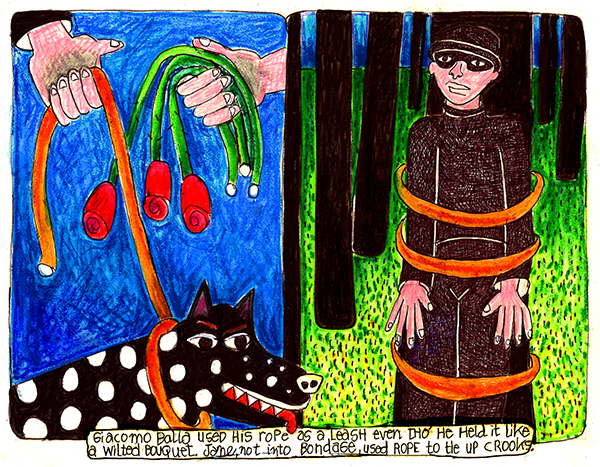
How Rope was used for the Thief:
Some dudes are into bondage. Don’t understand it. If you want to tie someone up, tie up a crook. That’s what Jane says.
-30-
(“Jane’s Rope” to be continued ⓒ 2024)


 The Narrative Within
Pingback: Motionless Futurists. | The Narrative Within