
Beauty is my favorite medicine. And, as I’ve been feeling grated and all zested out, my daughter and I went to see the current exhibition at Rome’s Scuderie del Quirinale. The exhibition, “Napoli Ottocento”, focuses on 19th century Naples and its artistic activity.
From the 17th to the early 19th century, young upper-class men were expected to make the Grand Tour of Europe to complete their education. And while touring, they were expected to collect books and cultural artifacts to be displayed back home. Italy was obviously the prime destination for Grand Tourers because of its abundance of artistic treasures. Travelers would often continue travelling south towards Naples where they could see the archaeological sites of Herculaneum and Pompeii and, if daring enough, they could try climbing Mount Vesuvius.

in front of the Vesuvius
The eruption of the Vesuvius in 79 A.D. caused the thriving city of Pompeii to be totally obliterated by ash and volcanic debris. The subsequent excavation of Pompeii in the mid-1700s helped marked the beginnings of modern archeology. And, as the Vesuvius was such an attraction, it became a favorite theme for artists.

Here’s a painting by the Austrian artist Josef Rebell (1787-1828) showing the Port of Granatello with a puffing Vesuvius in the background.
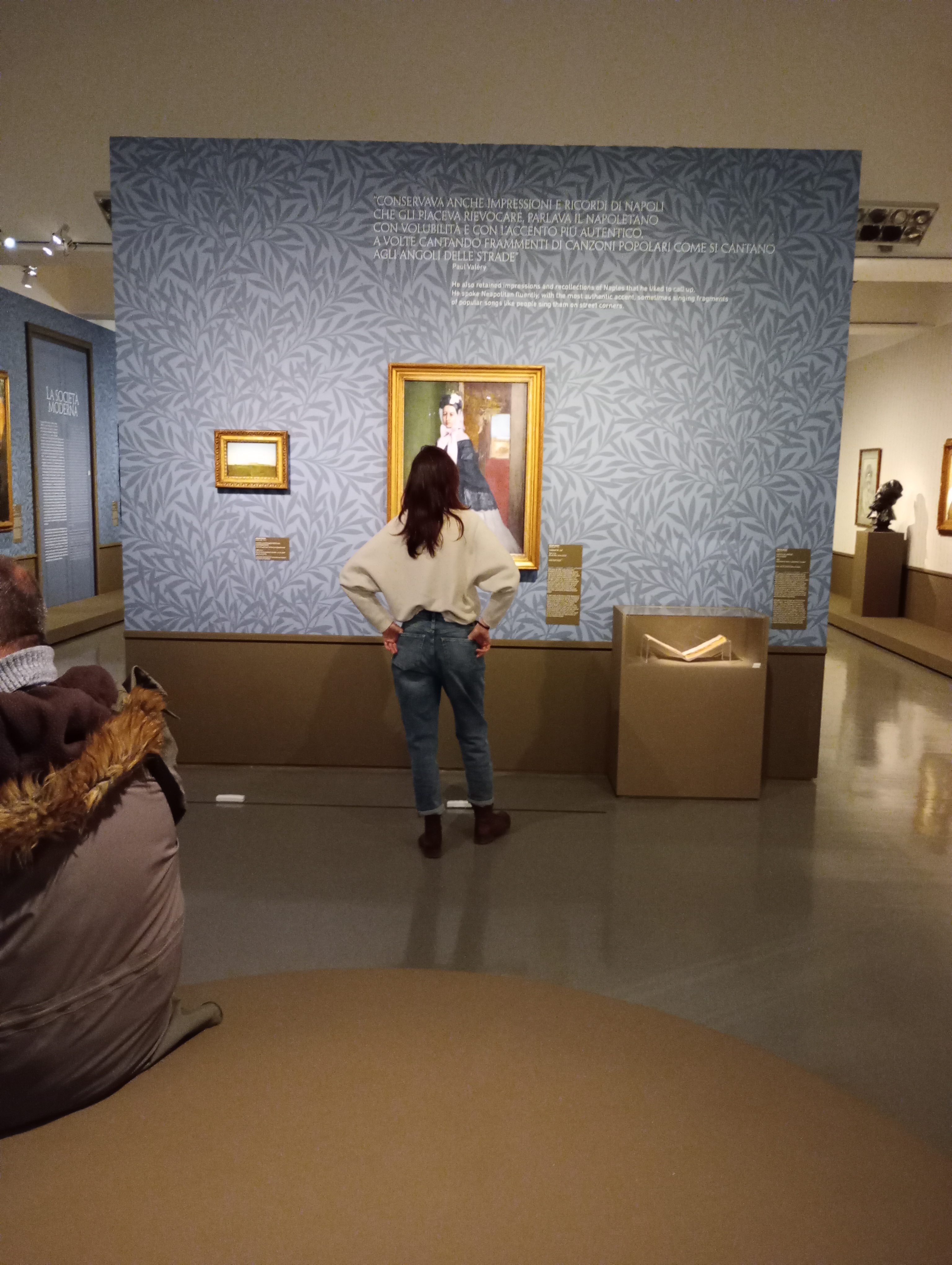
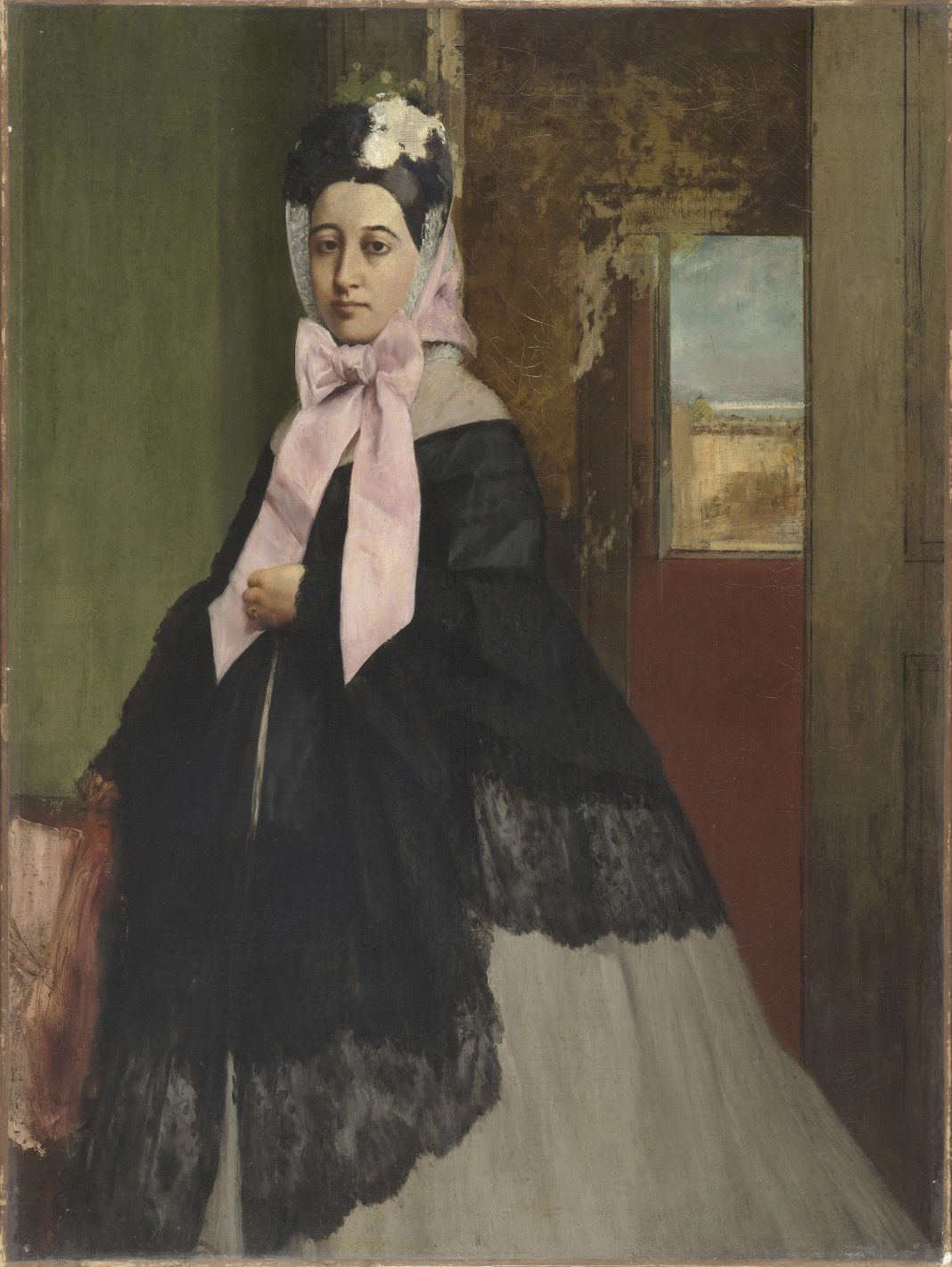
“Thérèse De Gas”, Edgar Degas, Musee d’Orsay, Parigi,
From 1856 to 1859, the young Edgar Degas went to Italy to copy the old masters. His father was from Naples and Degas would often go visit his father’s family and often stay for some months. Degas became very good friends with many local artists. Degas even learned the Neapolitan dialect and Neapolitan songs. His friend, the poet Paul Valery, said that “Degas mimicked Naples where there is no word without a gesture, no person with without a multitude of other characters, always there and always ready.”
Related: EDGAR DEGAS AND NAPLES
Degas was in Naples when the Neapolitan painter, Domenico Morelli (1823-1901), was active. Morelli was both painter and politician. Morelli, as with many painters, often used his canvases as a playground where he could imagine himself elsewhere such as in the Orient and began painted people and places he’d never seen. And he made enough religious paintings to earn him a merit badge in Heaven.

with Domenico Morelli

Some of the other artists in the exhibition include: Antonio Mancini (1852-1930) + Giuseppe De Nittis (1846-1884) + Ercole and Giacinto Gigante + Anton van Pitloo (1790-1837) + Teodoro Duclere (1816-1869) + Salvatore Fergola (1796-1874) + Hans von Marées (1837-1887) who died in Rome and was buried in the Protestant Cemetery + Thomas Jones (1742-1803) a Welsh painter living in Naples + Franz Ludwig Catel (1778-1856) was a German artist who spent time in Naples but actual lived in Rome. He was buried in the Basilica of Santa Maria del Popolo.
Minor works by Degas, John Singer Sargent, William Turner, Mariano Fortuny, Lucio Fontana, Alberto Burri, and Medardo Rosso.
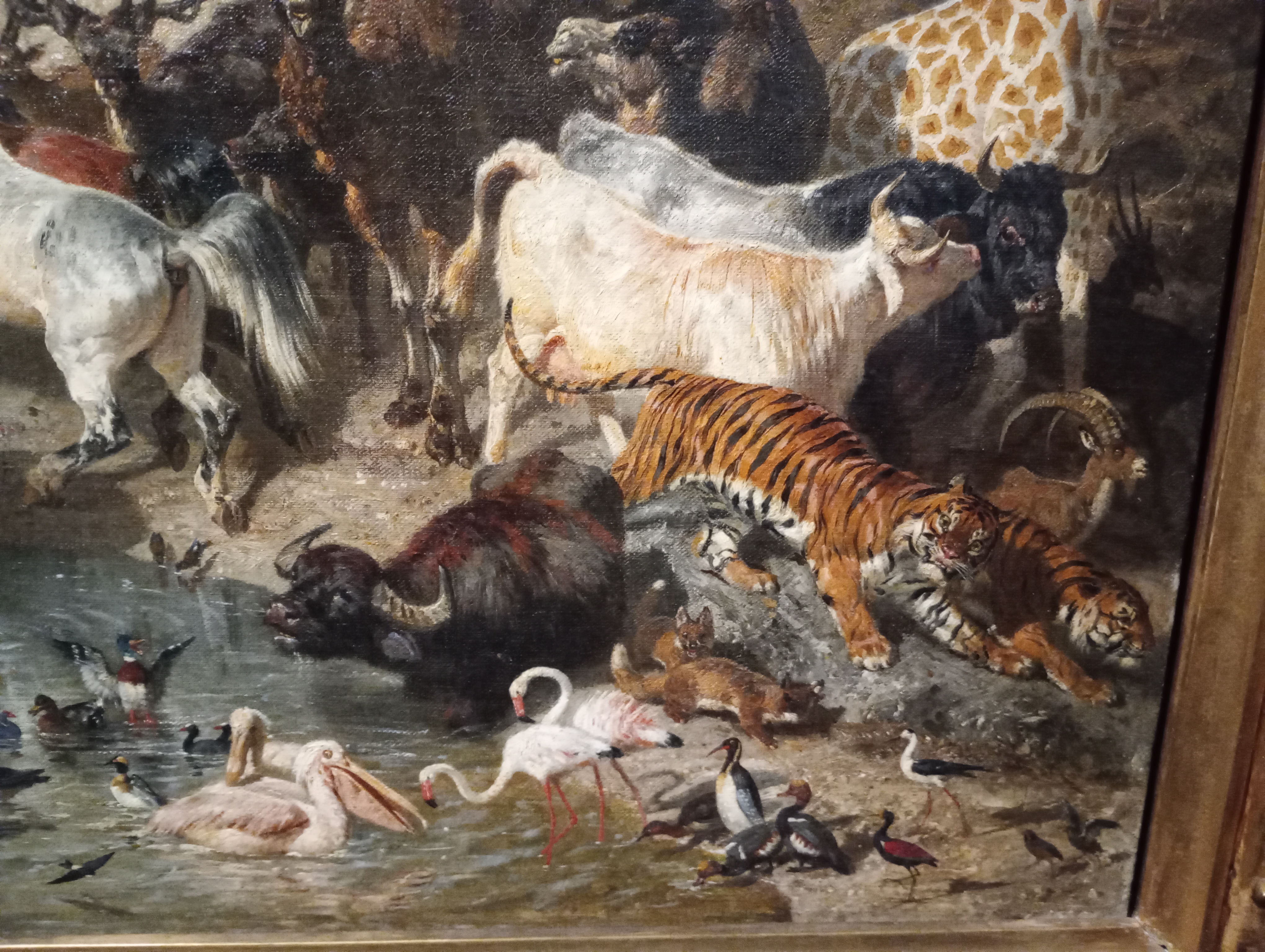
The Scuderie del Quirinale where the exhibition is held is a work of art in itself. And the windowed stairway leading away from the exhibition provides an opportunity to see Rome in a way impossible to see from the street.

Naturally Rome is full of church domes scattered acreoss the city.
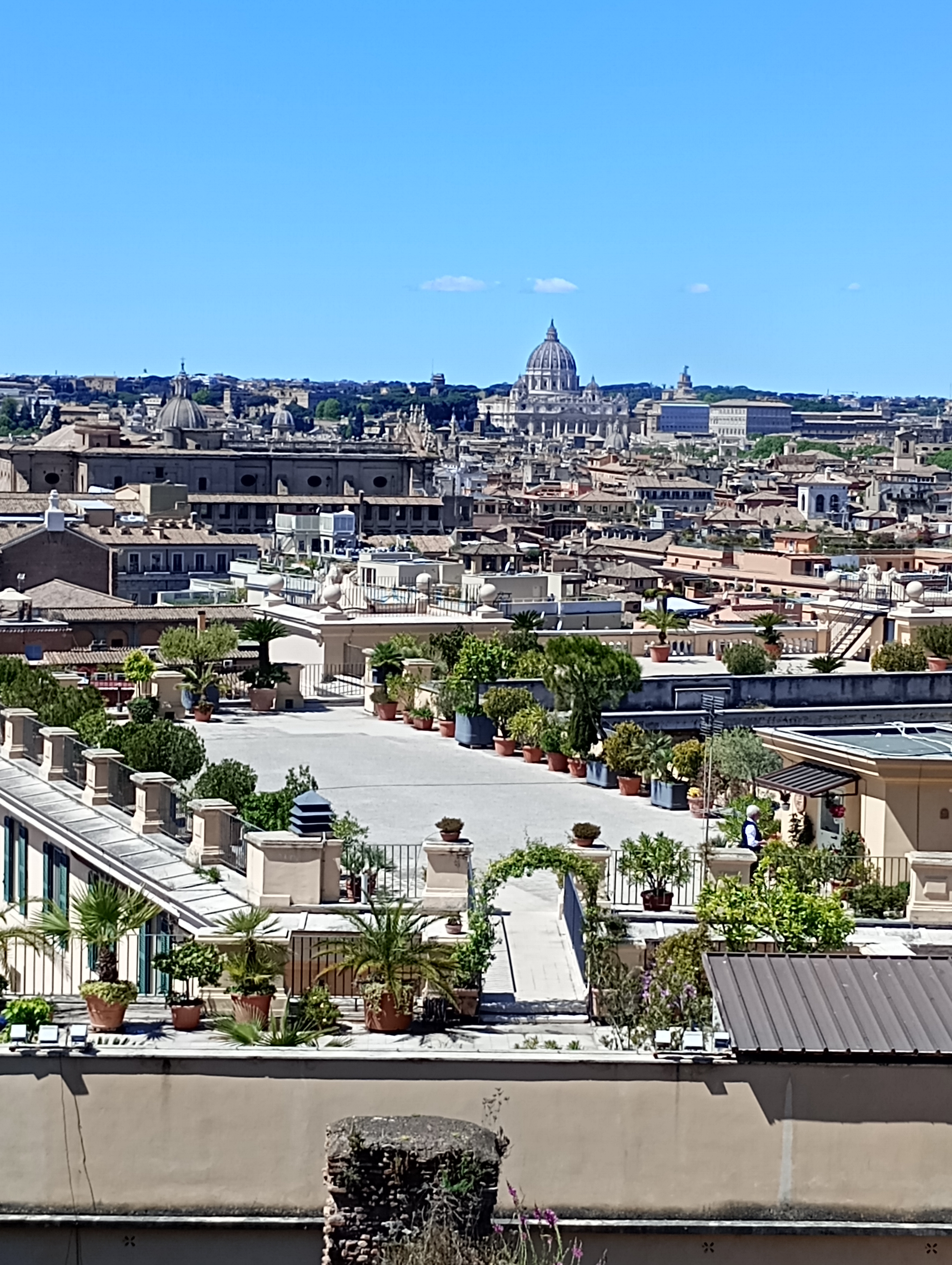
dream terrace
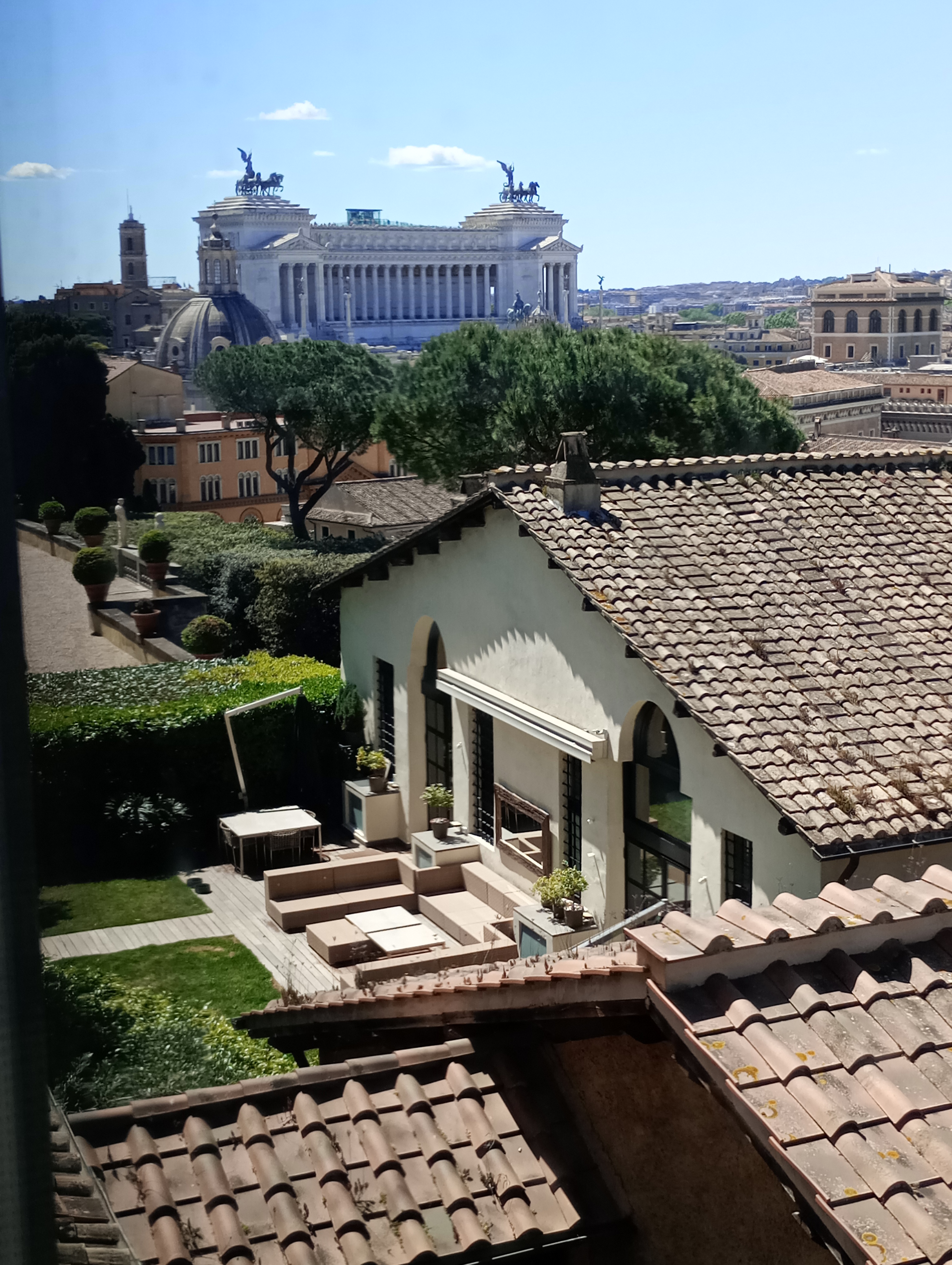
a great view of the Mounument to Victory Emmanuel II

inside looking out
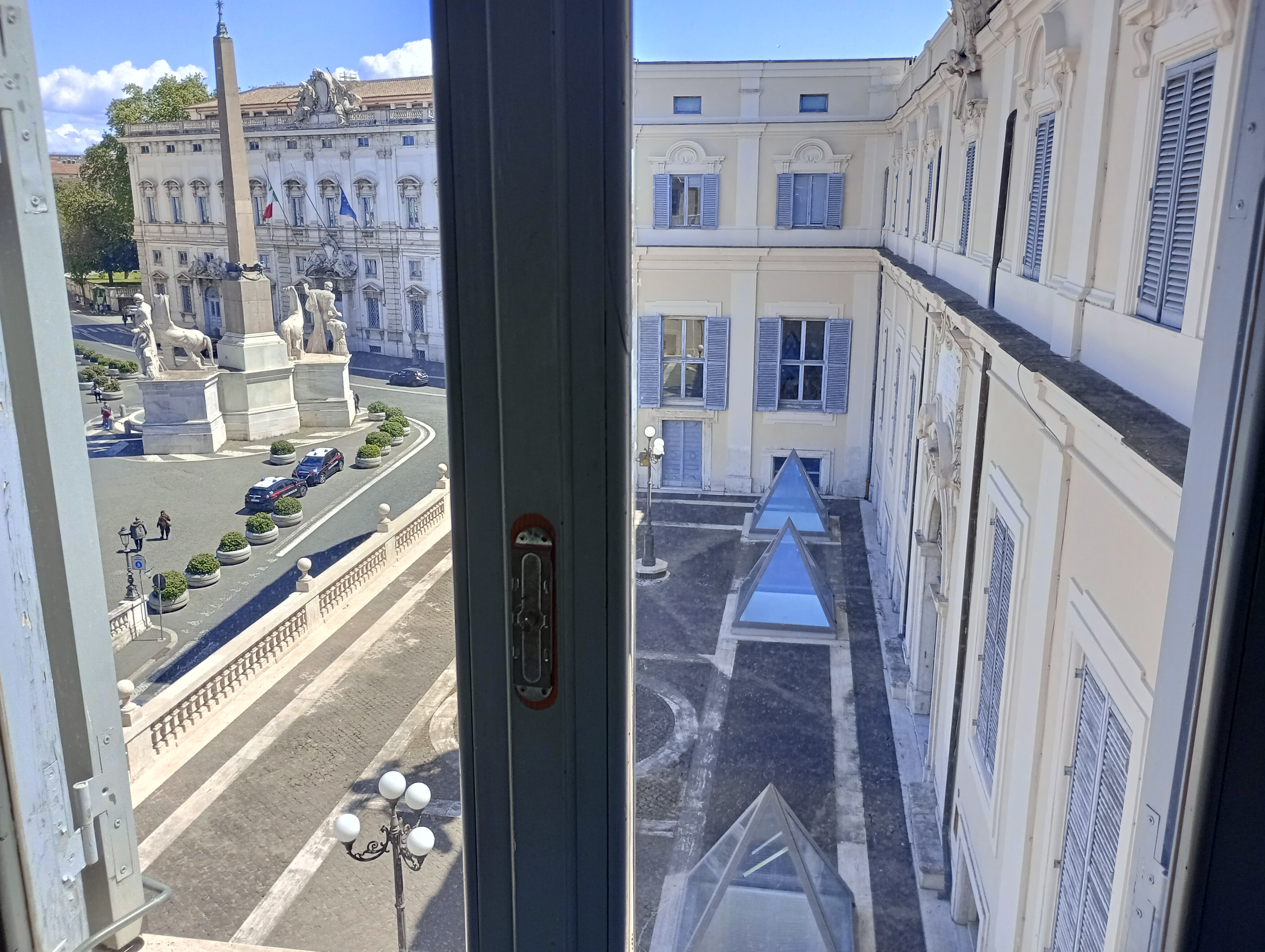
And a view of the Quirinale Obelisk.

-30-


 The Narrative Within