
Not all evolutions are the same.
“Homo” is a genus of great ape (family hominidae) that we’re a part of. This genus, that’s produced several species, began its evolution in Africa about 2.5 million years ago. But our species, the sapiens, began its evolution only 300,000 years ago. Although we sapiens are the only remaining species of the homo genus, our existence and subsequent evolution was possible because of those who came before us. Sapiens walked on their paths to make super highways.
Our evolution was gradual and slow. At a snail’s pace, we evolved from a simpler to a more complex being. We were sapiens, we were smart. But look at us now—what went wrong? We are no longer behaving intelligently. We are no longer evolving. We are, instead, degrading. Why? Why is humanity so carelessly destroying everything that took so long to evolve into existence?
There’s no need for me to give examples of what I’m talking about. All you need do is watch the news or read comments on social media.
This feeling of being surrounded by decadence is overwhelming. Suffocating. Alienating. Debilitating. And I need an explanation as to how we got here so I can take another road.
At present I’m reading Yuval Noah Harari’s Sapiens: A Brief History of Humankind (2011). Harari takes us on an odyssey through human history covering 13.5 billion years of prehistory and history.
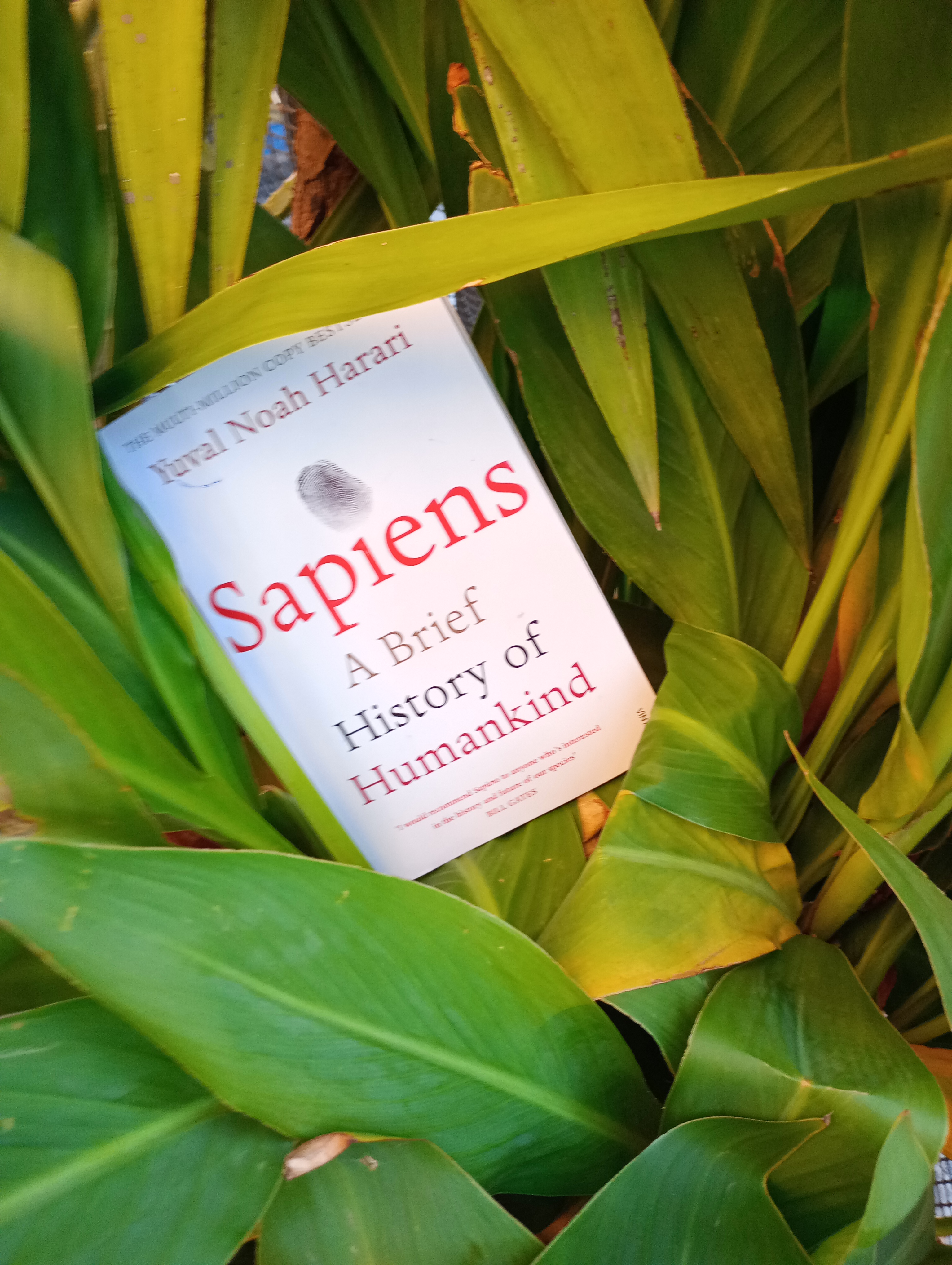
“There were humans long before there was history” says Harari and these prehistoric humans were insignificant animals who had little impact on the environment. But that would all change with their evolution. And that evolution got a booster when different species began interbreeding thus increasing their genetic pool.
Humans evolved from the genus of apes known as Australopithecus aka “Southern Ape”. They evolved according to the environment they were in and how they were able to adapt to it.
When it comes to dating the past, timelines are always changing. Because new discoveries are being made, because new technologies help facilitate these discoveries, because new approaches in interpreting the information occur. Initially it was said that the homo habilis (Handy Man) came before homo erectus (Upright Man) because man likes to have everything easily categorized. But the evolution of man did not follow some kind of precise sequence with one species evolving directly from another. It’s more than likely homo habilis and homo erectus co-existed in in Eastern Africa for almost half a million years.
We are overlapped and juxtaposed.
Regardless as to what species came first, the transition from walking on all fours to walking in an upright position gave a big jump start to our evolution.
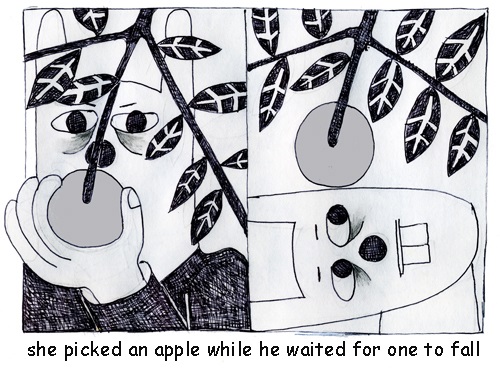
(from Bebina Bunny’s Cabinet of Curiosities)
I’ve written about the importance of hands many times here. Because hands help us accomplish things. They can help create new mental pathways. They make it possible to better observe things because we can bring them closer to our eyes and because we can touch, manipulate, and explore them. Hands help us explore the world in a way that our eyes can’t. Hands help our brains to grow.
However, the body is built on a budget and big brains are heavy and a drain on the body. Having a bigger brain meant, says Harari, that more time was spent searching for food to feed that hungry brain. It also meant that muscles atrophied as humans diverted energy from biceps to neurons.
Big brains need big skulls, and big skulls are a problem during childbirth. So, for humans, natural selection favored earlier births making babies small enough to come out of momma. But this also meant that babies had to have extra care after their birth for a long time. Giraffes, zebras, horses, and pigs are just a few examples of animals whose offspring can stand up and walk the same day that they’re born. Human babies, however, are dependent and needy. Raising children requires constant attention thus, in prehistoric times, “it took a village to raise a child”.
Evolution is not just about bodies.
So for today, Harari’s book can take a rest and I can take a walk.
TO BE CONTINUED…

-30-
Related:
Art for housewives and Hands:
In Praise of Hands + Lying with your Hands + The Case For Working With Your Hands + IN PRAISE OF HANDS: Knit yourself well. + Extend your hands with Needles and Pins and huipiles +
Bibliography:
Harari, Yuval Noah. Sapiens, A Brief History of Humankind. Penguin Random House. London. 2011
Other:
An Evolutionary Timeline of Homo Sapiens + What does it mean to be human? +
The 7 Homo Species Close to Present Humans That Existed on the Earth +
Oldest Known Neanderthal Engravings Were Sealed in a Cave for 57,000 Years, The art was created long before modern humans inhabited France’s Loire Valley +
La Roche-Cotard prehistoric site +
World’s Oldest Cave Art Found—Made by Neanderthals? +
Discovery of cave paintings and decorated shells reveals Neanderthals were artists, Artwork found in Spanish caves suggests ability to think symbolically and creatively was not unique to modern humans +
THE HAND, HOW ITS USE SHAPES THE BRAIN, LANGUAGE, AND HUMAN CULTURE book review +
Related: An Evolutionary Timeline of Homo Sapiens +
The 7 Homo Species Close to Present Humans That Existed on the Earth +
Oldest Known Neanderthal Engravings Were Sealed in a Cave for 57,000 Years, The art was created long before modern humans inhabited France’s Loire Valley +
La Roche-Cotard prehistoric site +
World’s Oldest Cave Art Found—Made by Neanderthals? +
Discovery of cave paintings and decorated shells reveals Neanderthals were artists, Artwork found in Spanish caves suggests ability to think symbolically and creatively was not unique to modern humans +


 The Narrative Within
Pingback: Evolution & Decadence 2 | The Narrative Within