The Dude & I are book addicts. We periodically raid our favorite bookstore, the Feltrinelli’s near Piazza della Repubblica.
The Dude chauffeurs me on his scooter (the only way to get around Rome) so I just hold on, sit back and pretend to be a tourist on a cheap version of a double decker tour bus.
Rome is a city that keeps the eye in motion.
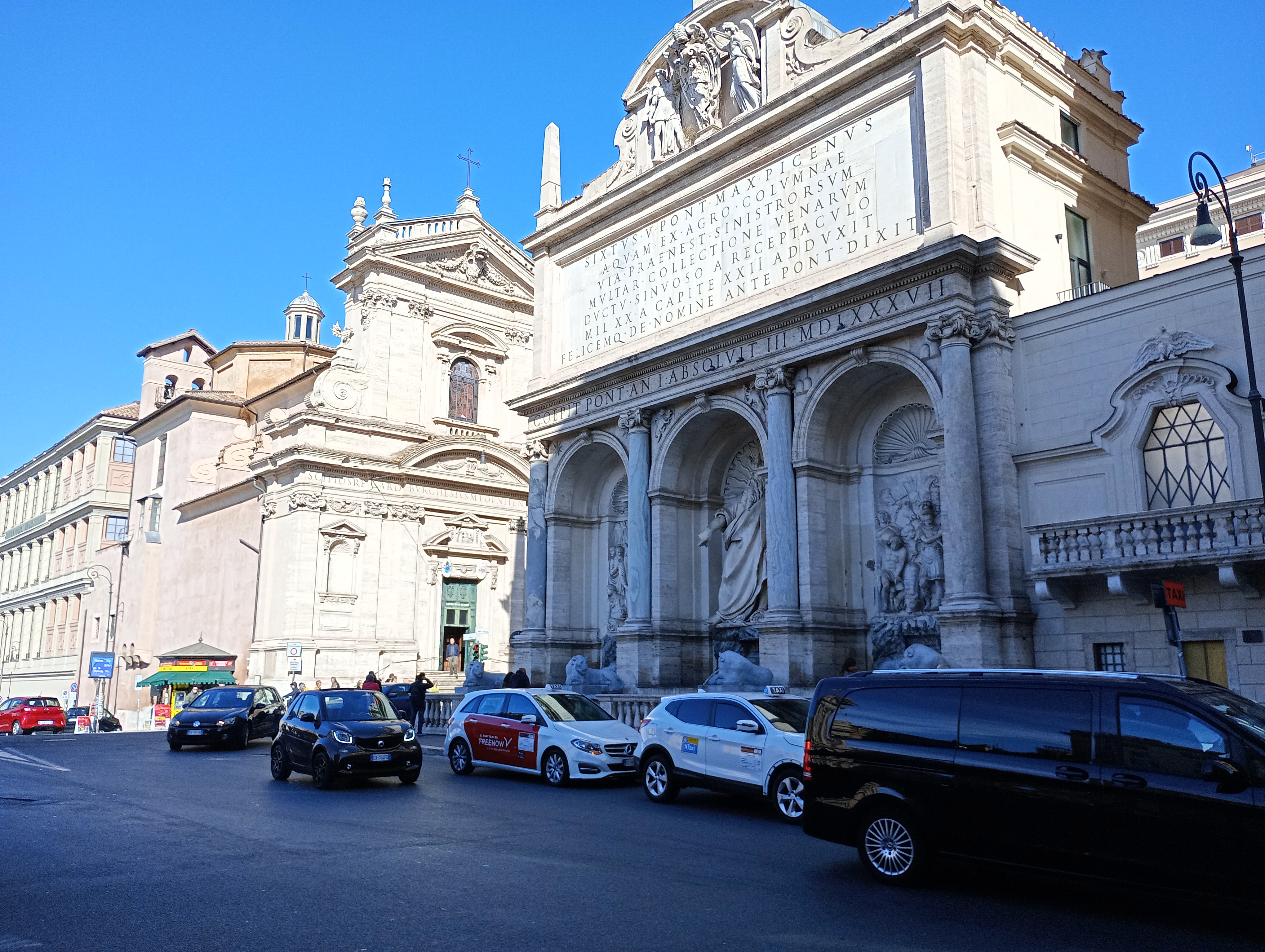
Not far from Feltrinelli’s is the church of Santa Maria della Vittoria, the residence of Bernini ‘s Ecstasy of St Teresa . And across the street is the Fountain of Moses also known as the Acqua Felice aqueduct. Built in the late 1550s, it’s statue of Moses wears a nice pair of horns.
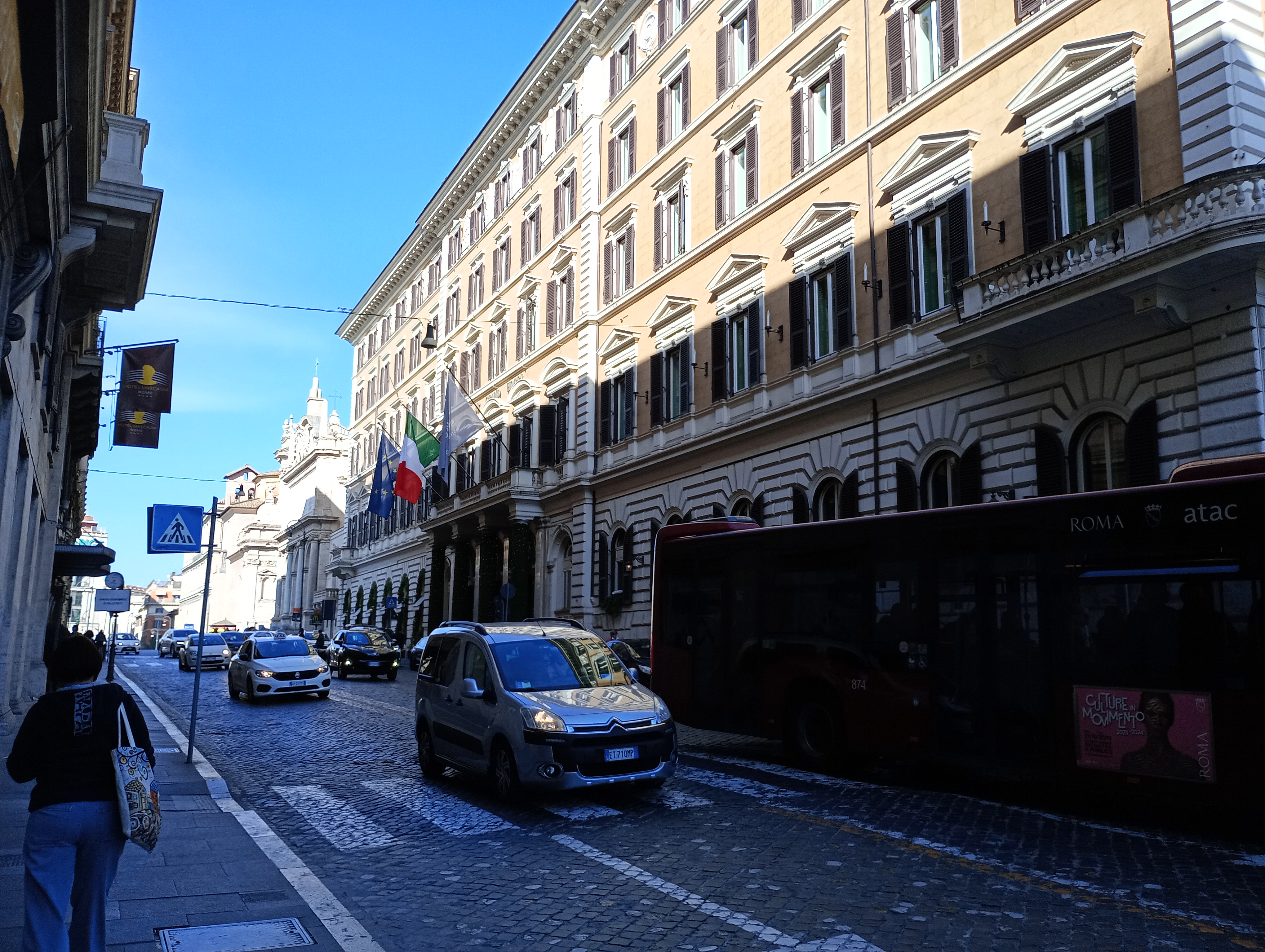
Just further down the block is the Grand Hotel (the entrance is where the flags are waving). It faces the now defunct Feltrinelli’s International Bookstore.
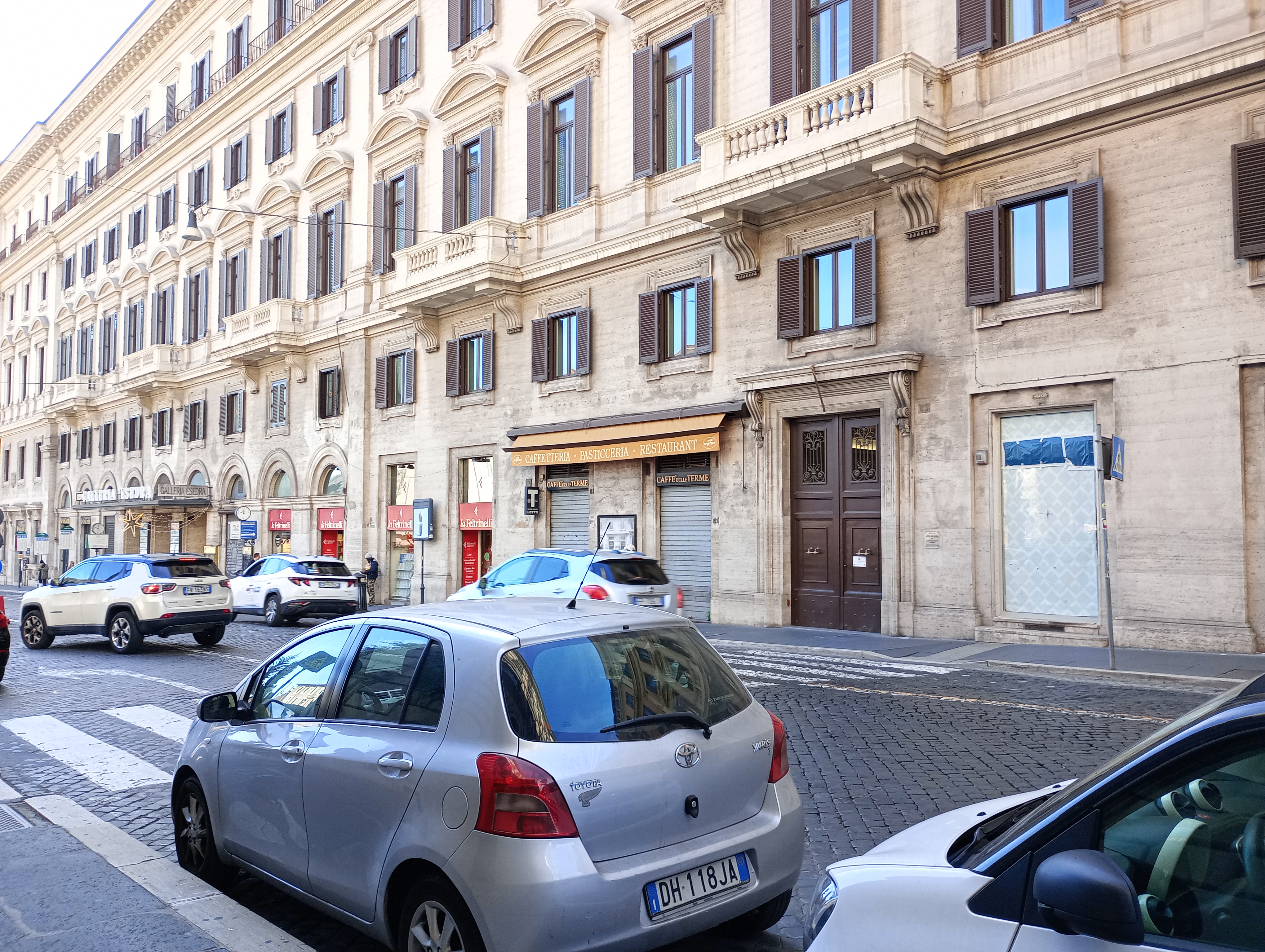
The big display windows of the now defunct Feltrinelli’s International bookstore are covered with paper to hide the emptiness within. What’s left of Feltrinelli’s is further down the block still on the right where the red signs are.
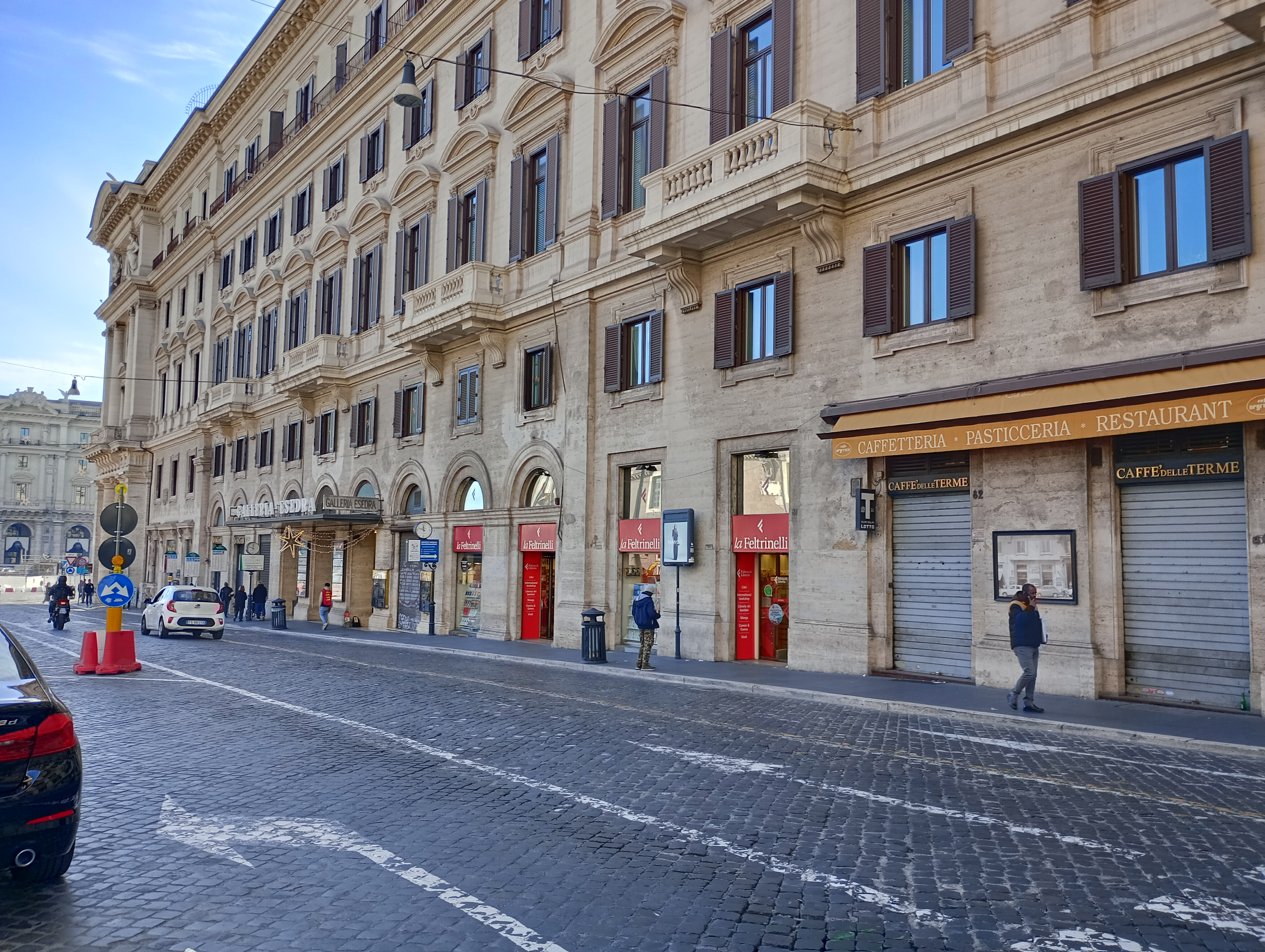
Right before reaching Piazza della Republic is mainstream Feltrinelli’s with the international books jammed in a little corner. Notice the streets made of sampietrini.

Inside Feltrinelli’s from the little jammed corner.
Every time we ride past the closed international store, it breaks my heart. I can’t help thinking that, had it not been for Giangiacomo Feltrinelli, the world would not have known about Doctor Zhivago and his love for Lara.
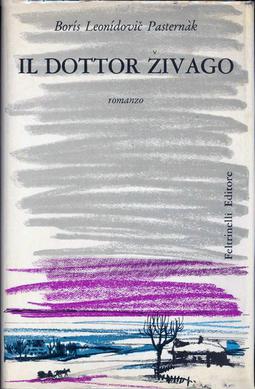
(Feltrinelli’s Doctor Zhivago bookcover via Wikipedia)
For years Boris Pasternak (1990-1960) had been working on Doctor Zhivago. But he didn’t finish it until 1956. The Soviets, however, did not consider the book “publishable” because it rejected socialist realism and contained some blatantly anti-Soviet passages.
In 1956, an Italian communist journalist went to work in the Soviet Union. Publisher and fellow communist Giangiacomo Feltrinelli employed the journalist to look for Soviet literature that would be appealing to Western audiences.
The Italian journalist discovered Pasternak and offered to have Doctor Zhivago published but the Soviets had other ideas. They didn’t even want the manuscript to leave the country. Feltrinelli, determined to publish the book, helped smuggle the book out of Russia as if it were top secret military microfilm.
Once out of the country, the book had to be translated and was finally released in 1958. For 26 weeks it was at the top of the New York Times’ bestseller list. To keep from getting big headed about so much success, a friend of Pasternak’s said that it was the Russian people and their suffering who’d created the book, not him.
Now every time we go by the emptied International Feltrinelli’s, I think of Pasternak and how Giangiacomo, with courage and conviction, took major risks to publish a masterpiece that might not have been published otherwise. It makes me sad to see the Feltrinelli vacancy. It makes me sad to know that the vacancy is not just physical. It makes me sad to know that there are more people willing to ban books than to read them. It makes me sad to know that 21% of Americans are functionally illiterate (source).
But buying a bunch of books helps the sadness fade away.
-30-
Related:
The above Feltrinelli’s is located here: Via Vittorio Emanuele Orlando 84, Roma.
Fontana dell’Acqua Felice, A monumental fountain in Rome features a large statue of Moses that has been criticized for centuries +
Boris Paternak (1890 –1960) +


 The Narrative Within
Interesting and thought-provoking post.
Thanks Mary
Ah! Is THAT (21%) the cause of the crazy in the U.S right now!! I thought it might be something in the water.
Maybe a combination of both ?
Pingback: A DIY Tour of Parioli | The Narrative Within