
For a long time, Italy existed as a cluster of independent states getting in one another’s way. The ideal of a national identity led to the Risorgimento, a social and political movement to unite Italy. After years of conflict, Italy was finally united and, in 1870, Rome was made capital of the new Kingdom of Italy (1861-1946).
This unification created the need for a common culture. So, in 1883, the Galleria Nazionale di Arte Moderna (GNAM) was created with the intent of providing a home for the modern/contemporary art of the newly created kingdom.
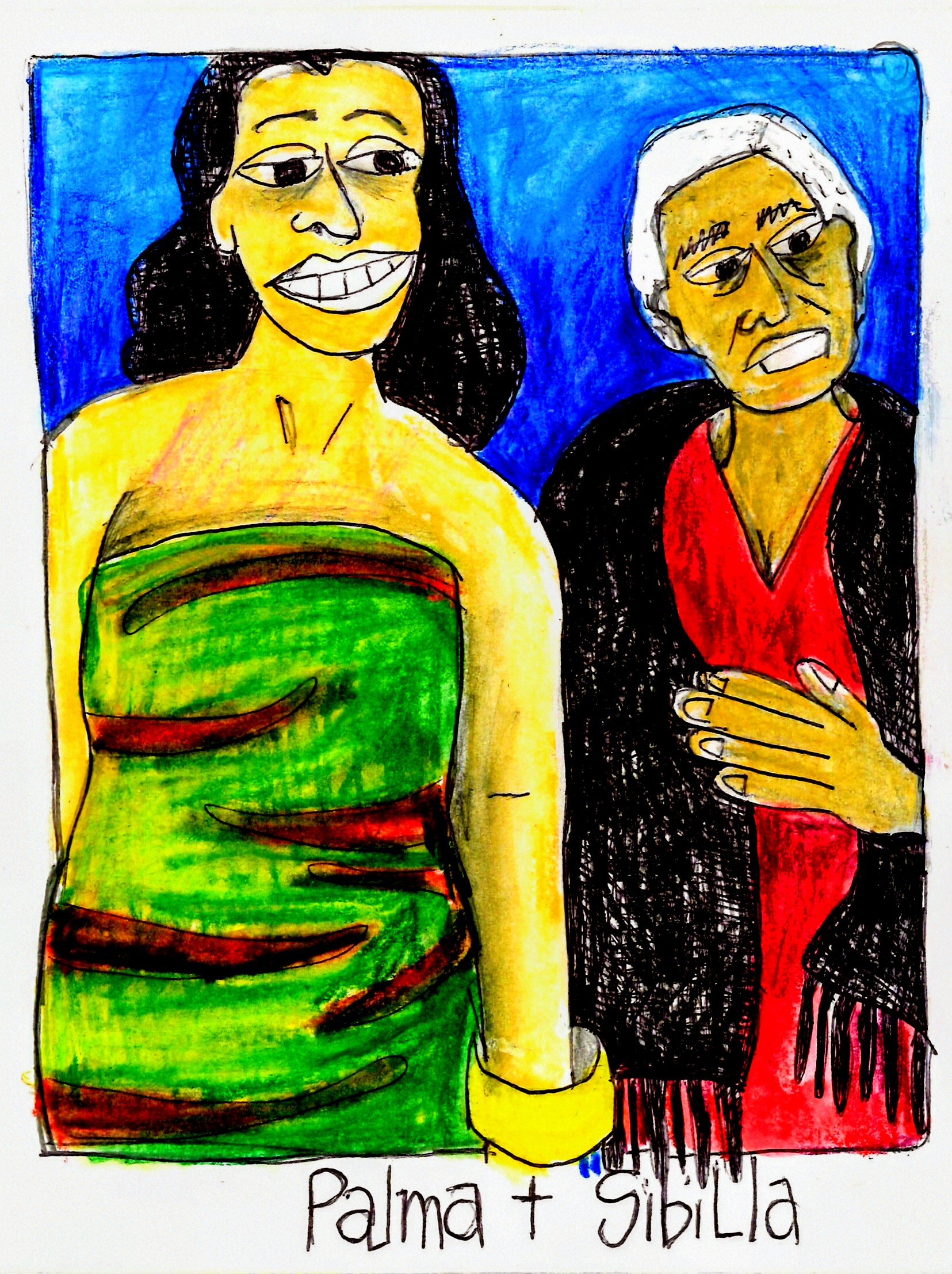
In 1941, Palma Bucarelli (1910-1998) became the director of the Galleria and would be its soul for the next 30 years.
Palma’s parents were born in Calabria, but she was born in Rome. Her mom, Ester Loleta Clori, was a beautiful and refined woman who passed on to her daughter a reverence for aesthetics.
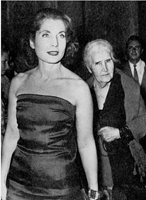
(Palma Bucarelli ad una serata di gala con Sibilla Aleramo, anni Sessanta – © Farabolafoto, Milano)
Palma was very beautiful, too. Ungaretti said that she was as beautiful as a Siamese cat. But more than beauty, Palma had class. Plus, she had brains as well as the intent to use them. Shortly after assuming her position at GNAM, WWII broke out. Because she feared that the Nazis would loot the Galleria or that allied bombs could drop down and destroy important artworks, Palma organized a “raid” and secretly moved artworks from GNAM to Palazzo Farnese at Caprarola. She even managed to hide paintings in the basement of Castel Sant’ Angelo with the Pope’s permission. But the minute the war was over, Palma got the paintings out and organized an exhibition at the GNAM, the first since the outbreak of WWII.
Palma wanted to give a new narrative to Italian art. She took down the décor and went minimal so the focus would be on the art. She wanted GNAM to connect with Europe and beyond. But she also wanted to be a forceful advocate for contemporary Italian artists.
Sibilla Aleramo (1876-1960) published Una Donna (A Woman), her first (and maybe most important) book in 1906, Because of the subject matter, the book initially made a lot of people uncomfortable. However, it is now considered a classic of Italian literature.
Although no real names are given, Una Donna is largely autobiographical. It describes how the protagonist’s mother attempted suicide and was subsequently placed in a mental institution where she remained until her death. Later the protagonist is raped by a co-worker while working in a factory. The rape results in a pregnancy and the protagonist is forced to marry her rapist and to have his child. The marriage is an abusive one. The protagonist is unhappy and yearns for a life of her own.
Up until this point, Una Donna basically describes Sibilla’s life. In real life, Sibilla abandoned her husband and their six-year-old son. She became active in political and artistic activities. She also began having many affairs including with the Futurist painter, Umberto Boccioni, and the poet, Dino Campana, who suffered nervous disturbances.
In 1908, Sibilla attended a suffragette Congress in Rome. Here she met Lina Poletti, feminist writer and declared lesbian. The two began an intense relationship.
Although Palma and Sibilla came from two totally backgrounds, they both had something in common. They were feminists, anti-fascists, and understood the importance of culture.
Women don’t have to be from the same place to value the same things.
-30-
Appropriations for AI will be jinxed.

Related:
Palma Bucarelli, daring icon of Italian art + Palma Bucarelli: The Joan d’Arc of Parisian Modernisms + Bucarelli, Palma +
(Italian) Lo squardo di Palma + Arte al femminile, Palma Bucarelli… Palma Bucarelli è stata la prima direttrice donna di un museo pubblico in Italia + Palma Bucarelli: una vita asservita all’arte, una vita come opera d’arte +

Sibilla Aleramo (1876-1960), Nuovo Reparto, riquadro 61, Verano Monumental Cemetery
Sibilla was once involved with Giulio Parise, also buried at Verano ….Giulio Parise (1902-1969), pitagorico e massone.
More Sibilla:
Sibilla Aleramo and the Peasants of the Agro Romano: A Writer’s Dilemma + Le donne tra analfabetismo ed emancipazione + Fascismo: 906 intellettuali pagati da Mussolini, da Aleramo a Ungaretti + Sibilla Aleramo, Mussolini e Togliatti + Sibilla, Evola e Parise. Un triangolo amoroso nella Roma anni ’20 + Quasimodo-Aleramo, Una passione lariana


 The Narrative Within
Pingback: A DIY Tour of Parioli | The Narrative Within
Pingback: Piazza Barberini | The Narrative Within