Tossed but not Sinking

The collapse of a spire has made me change my plans for this morning. There are tons of chores on my To Do list but Notre Dame has changed all of that.

Life without beauty is merely existence. And even if we don’t share the same criteria for beauty, we know we need it.  That’s why works of art such as Notre Dame are fundamental—to remind us that, despite our differences, we all have something in common.
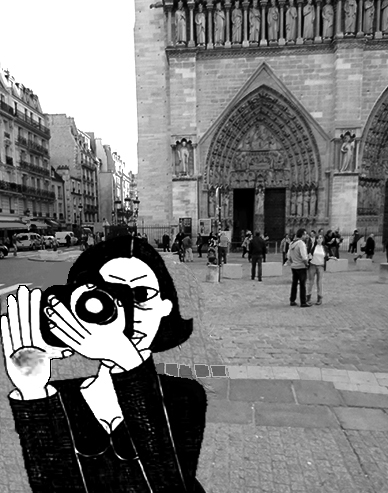
Notre Dame di Paris

Below I’ve posted the last photos I took of Notre Dame in 2015.  They were meant to be a memorandum for a blog post but now they have another value. In the background of one photo, the spire is barely visible but it’s there still upright. The other photos are of the Rose window over the main portal and of a statue of  the Madonna and Child standing on top of Adam & Eve.


All around Paris you can see representations of the city’s coat of arms—a boat with the inscription “Fluctuat nec mergitur” meaning “She is tossed by the waves but does not sink”. And Notre Dame is just like that boat—wounded but not destroyed.

In these times of division where we focus on differences, the sorrow we feel for Our Lady has united us. Maybe that’s why it’s said that God moves in mysterious ways.
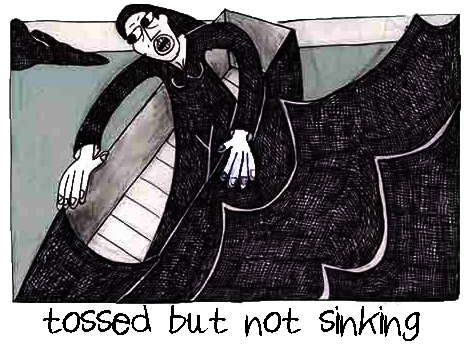
Fluctuat nec mergitur


Related: Stories set in stone +  4 Days in Paris

Posted in Beauty, Paris | Tagged | 9 Comments

Oreste Fernando Nannetti

Oreste Fernando Nannetti

Volterra Psychiatric Hospital c. 1986

Many years ago, while still living in Maremma, a friend of mine took me to visit the abandoned mental hospital at Volterra closed since 1979 thanks to the Basaglia Law. The law recognized the need to change the standards used to treat mental patients.  And that the best way of getting started was to close down the old to make room for the new.

But before the hospital was closed, it was the home of Oreste Fernando Nannetti (1927-1994). Born in Rome, at the age of seven little Nannetti was dumped in a charitable institution. Being abandoned as a child is overwhelming and can distort your perceptions. And, as Yeats said, too much suffering can turn the heart to stone. The emotionally scarred Nannetti started manifesting aggressive behaviour that eventually led to his internment at the hospital in Volterra.

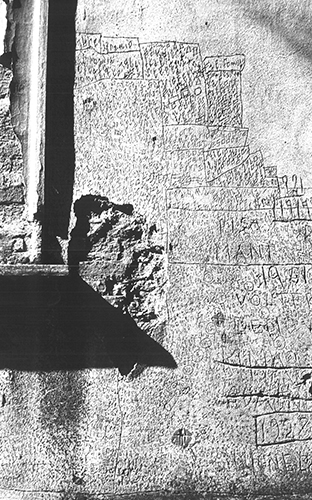
Every day for 9 years, Nannetti would use his belt buckle to engrave symbols and signs on the courtyard walls.  The result—180 meters of graffiti describing his imaginary world full of space ships, telepathic contact with aliens and the magical power of certain metals.  He often wrote postcards to a non-existing family sometimes signing himself as Nanof or N.O.F. 4.  Looking for someone to love, Nannetti tried communicating with aliens via telepathy.

Oreste Fernando Nannetti

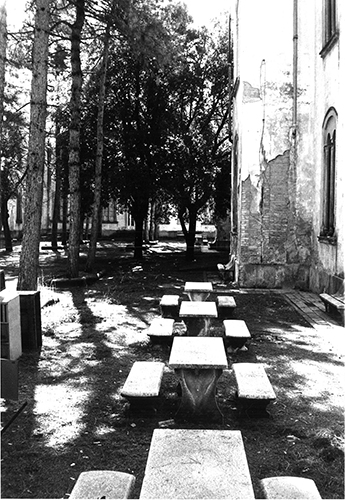
courtyard where Nannetti worked on his murals…you can see the broken plaster in the background

Then the hospital was closed, and Nannetti’s engraved mural abandoned. Luckily, Aldo Trafeli, one of the hospital’s ex-nurses, recognized the intensity and importance of Nannetti’s work and commissioned a photographer to document it.

By the time I saw the walls (c. 1986), the murals had greatly deteriorated. Despite my lack of photographic skills, I took what photos I could and placed them in a box. Recently, while decluttering, I rediscovered them and, before they get abandoned again, have posted them here below.

Oreste Fernando Nannetti

Oreste Fernando Nannetti

Oreste Fernando Nannetti

Oreste Fernando Nannetti

Related:  N.O.F. 4 Il Libro della Vita, a cura di Mino Trafeli, con le trascrizioni di A. Trafeli e le foto di Pier Nello Manoni (book with photos about Nannetti’s murals now difficult to find) + of interest, Inclusione Graffio e Parola Onlus FB page + NOF4

Oreste Fernando Nannetti

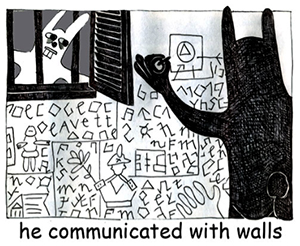
Sometimes you write just to feel in the void. (from Bebina Bunny’s Cabinet of Curiosities)

Posted in People | Tagged , , , , | Leave a comment

Springtime in Rome

Judas Tree

Springtime in Rome means that the Judas trees (albero di Giuda) are in bloom. Pink flower clusters adorn the streets making urban walks a delight. The legend is that Judas Iscariot hanged himself from a tree of this species (Cercis siliquastrum) and thus the name.

Judas Tree

But, as we know, beauty is ephemeral. The petals fall and we heartlessly walk on them. And once again our eyes look for something else to consume.


Posted in Beauty, Rome/Italy | Tagged , | 2 Comments

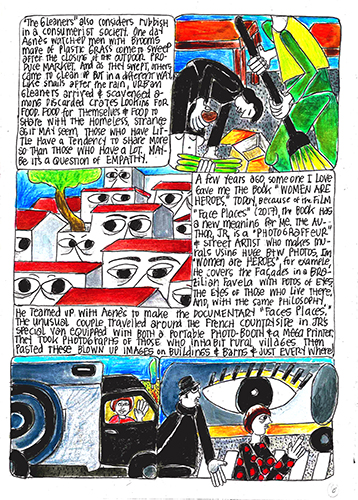
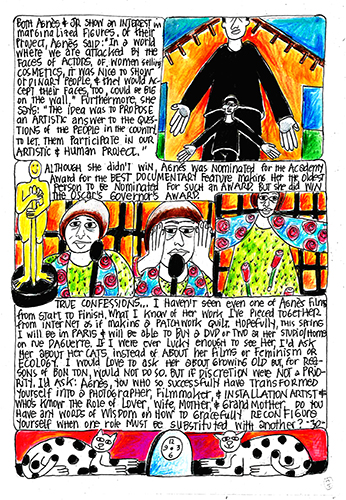
Agnès Varda & her joie de vivre

Agnès Varda

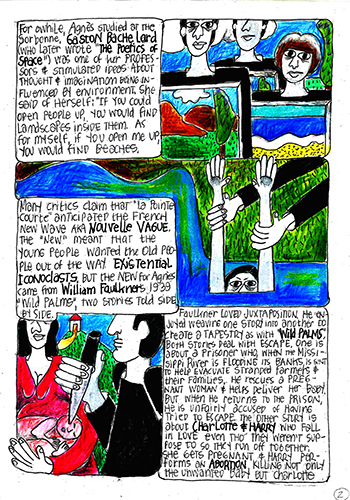
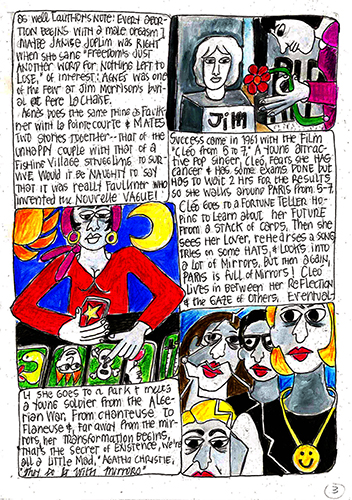
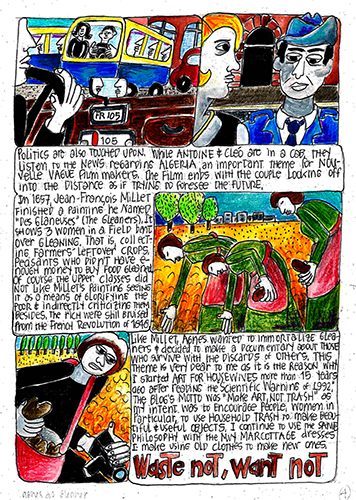
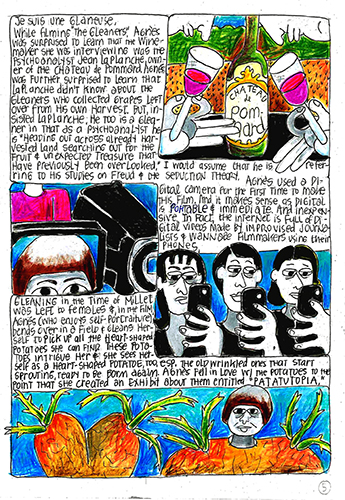
Like Hercules Poirot, she was Belgian. Agnès Varda, film director and installation artist, studied at the Sorbonne with Gaston Bachelard who introduced her to the poetics of space. On her own, Agnès studied William Faulkner and his juxtapositions. Already a photographer, Agnès decided to make a film inspired by Faulkner’s 1939 short story “Wild Palms”. She was only 25 and had no film experience but that didn’t stop her. The result was La Pointe Courte, a film many critics claim anticipated the French New Wave aka Nouvelle Vague. And for the next 65 years, Agnès was an unarrestable energy.

Last year, at the age of 89, Agnès was the oldest nominee in Oscar history for her film Faces Places made with JR, “photograffeur” and street artist. She also gave her solidarity to the #MeToo movement.

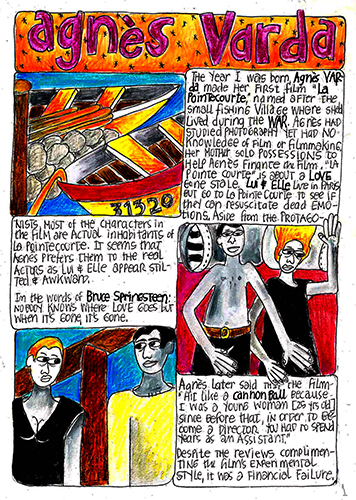
Like an unexpected cool breeze on a summer day, last year I discovered Agnès and immediately fell in love with her joie de vivre and her capacity to squeeze life like a lemon not letting even one drop go to waste.  Her non-stop curiosity kept Agnès joyously alive. She inspired me so much that, while on our lovely island of Paros, I made a graphic essay about her (see below).

Yesterday, Agnès death was announced. Tristesse immense. Au revoir Magical Woman and fais de beaux rêves. Thank you, Agnès, for inspiring women to live a full and joyful life no matter what their age.

“I went from one film to another, just trying to be an artist and I never saw my work as a career.”  Agnès

Agnès Varda

Agnès Varda

Agnès Varda

Agnès Varda

Agnès Varda

Agnès Varda

Agnès Varda


Posted in Age of Reconfiguration, Ecofeminism | Tagged , , , , | 2 Comments

Awake with Pythagoras

Cool Breeze, the age of reconfiguration

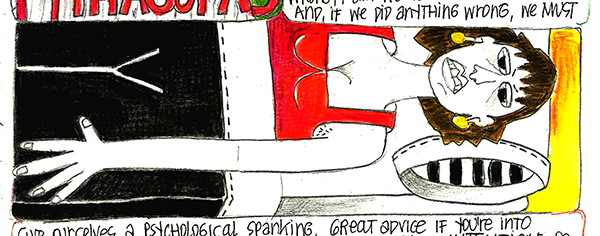
Pythagoras told his devotees: Let sleep not come upon thy languid eyes until the day’s actions have been reviewed. And, if  you’ve done something wrong, you should feel great alarm within. So the other night I got in bed and started thinking about my day. Realizing that I’d made a few mistakes, the Great Alarm went off and I couldn’t fall asleep.

The next day I was tired and made even more mistakes. This led me to create a theorem of my own: Sleep, don’t think because insomnia is not conducive to good behaviour.

I have already posted about remedies for insomnia HERE. However, since posting, I’ve found another means of inducing sleep. It’s quite simple and, for me, works 90% of the time.

Cool Breeze, the age of reconfiguration

While lying down, inhale expanding the diaphragm as much as possible.  Hold your breath for two counts then exhale with your lips pursed. Push out all of the air by pulling in your belly. You should start yawning.  Repeat 5 times then focus on positive and not negative thoughts. It generally takes me c. 5 minutes to fall asleep afterwards.

Related: to fall asleep, it helps to trigger the parasympathetic mode for deep relaxation The Vagus Nerve and Your Breath + A Lot of Nerve: The Antidote To Modern Life, Vagus Nerve Stimulation + intermittent hypoxia


Posted in Age of Reconfiguration, Health & Healing | Tagged , , | Leave a comment