Inspiration or Appropriation?

Paris Day 4

In the past few months I’ve come across various articles where known fashion designers have been accused of “cultural appropriation”.  Below are a few examples:
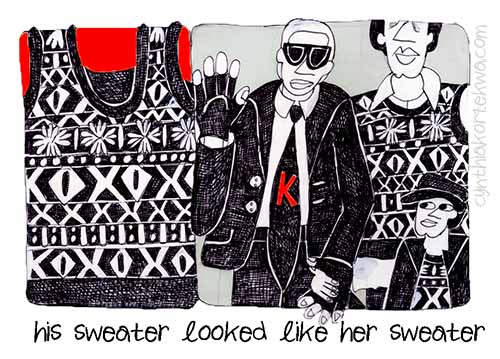
His Sweater Looked Like Her Sweater

Shetland Islanders, known for their Nordic style fishermen’s sweaters,  claim that Chanel stole their knitting patterns.  After representatives of Chanel appeared on the island and bought some of her sweaters,  Mati Ventrillon noticed that black and white designs she created  for the Queen’s Jubilee 2012 appeared on the catwalk of Chanel’s Metiers d’Art a few months ago.
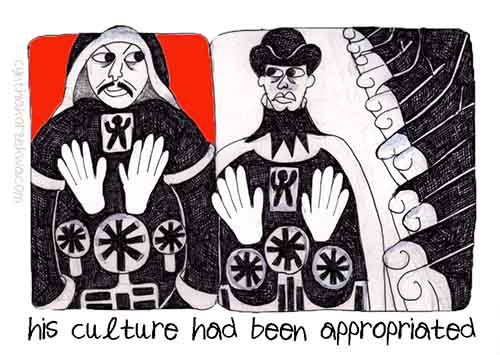
His Culture Had Been Appropriated

The Nunavut family has a similar complaint. Qingailisag, an Inuit shaman, in the 1920s designed a caribou skin parka covered with sacred designs meant to offer spiritual protection to the wearer (Franz Boas even wrote about them). Qingailisag’s descendents are quite upset that these designs have been copied by designer Kokon To Zai for a sweater selling for $840.
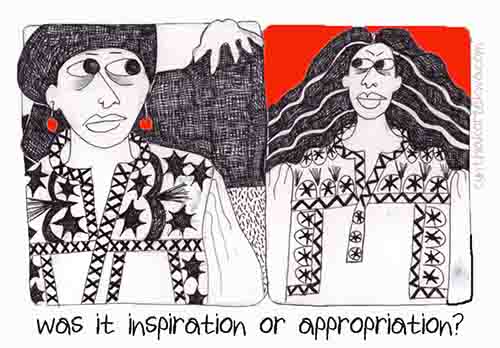
Designs of Santa Maria Tlahuitoltepec Are Everywhere

French Designer Isabel Marant has recently been criticized for having copied the designs of Santa Maria Tlahuitoltepec’s traditional costume that’s been around for over 600 years. What’s even more bizarre is that another designer, Antik Batik, is using the same designs thus claiming that Marant has “copied” her. And even more surrealistic is a recent press release from a Mexican news agency saying that Marant was issued a patent from the French government for these designs.  Thus if the indigenous people of Oaxaca want to use their own designs, they must pay copyright fees to the French designer. Marant, however, denies the existence of this patent.

So what does all of this have to do with Paris? Because today I went to the Musée Quai Branly, the anthropological museum featuring the indigenous art of Africa, Asia, Oceania and the Americas.

French presidents have the tradition of sponsoring some museum or monument while in office and this was the project of Jacques Chirac. The museum, which faces the Seine and is next to the Eiffel Tower, was actualized using collections of previous museums (including the Trocadéro Ethnographic Museum).

Many of these objects were accumulated during French colonization (including that of North America).

The museum is beautiful and sometimes overwhelming.  It took me a couple of hours to slide through it all making an effort not to be a victim of a Syndrome of Stendhal attack. And when I left the museum, I said to myself: Cubism exists thanks to African art.
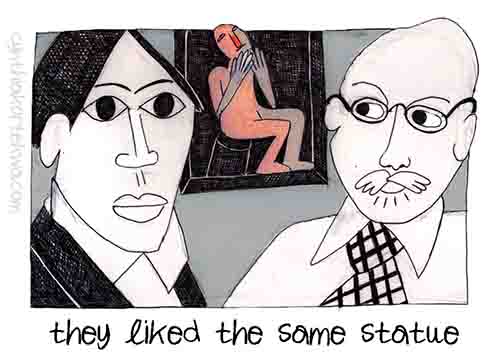
They Both Liked The Same Statue

One day in 1906 while on his way to visit Gertrude Stein, Matisse stopped in a little curio shop and bought a small Vili figure from Congo.  He showed the figure to Gertrude as well as to Picasso who was also there.  Picasso pretended not to be interested but later made frequent visits to the Trocadéro. And, not long afterwards, painted Les Demoiselles d’Avignon (1907) which many historians believe  gave birth to Cubism. “Avignone” does not refer to the French town but to the name of a street in Barcelona famous for its prostitutes.
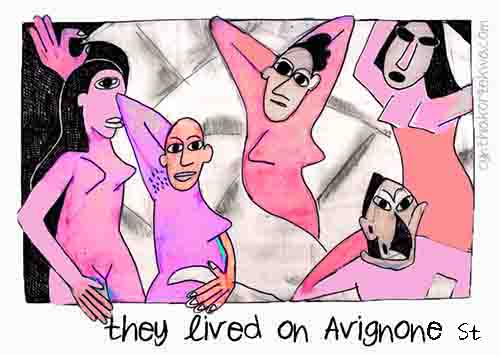
They Lived On Avignone Street

Picasso said “good artists copy, great artists steal” which is exactly what he did.

Kiki With African Mask

Man Ray was another artist who fell in love with African art.  One of his most famous photos, Noire et Blanche, shows Kiki of Montparnasse holding a small African mask.
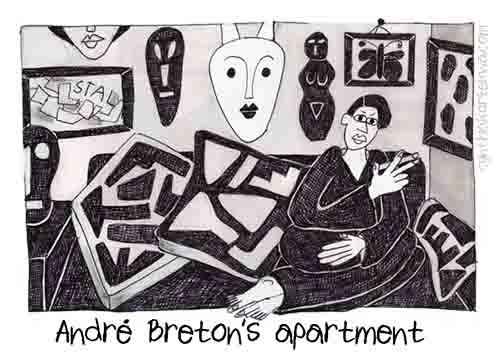
Andre Breton's Apartment

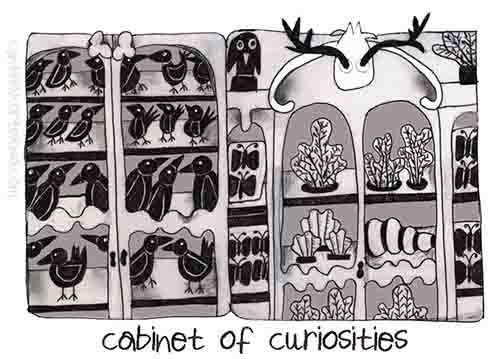
André Breton, known as the father of Surrealism, began living in an apartment on rue Fontaine 42 (Pigalle district) in 1921.  His whole house was a Cabinet of Curiosities—more than 5,300 objects of interest. Breton died in 1966 but his wife continued to live there until her death.  Rue Fontaine contained the largest known collection of the Surrealist movement but the government was unwilling to buy it.  So Breton’s daughter, Aube, was forced to break up the collection and sale it piece by piece.  All that’s left is a “look alike” wall at Centre Pompidou, “Le Mur de l’Atelier”,  which includes a number of African masks.
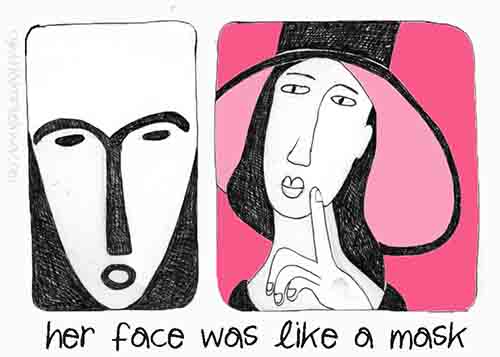
Her Face Was Like A Mask

Modigliani, like Picasso, often visited the Trocadéro finding much inspiration from the Ivory Coast’s  Baule masks with their elongated faces, arched eyebrows and lazily opened eyes.

With the aid of a wheelbarrow, Modigliani scavenged stones from Parisian construction sites then sculpted heads resembling those of African goddesses.
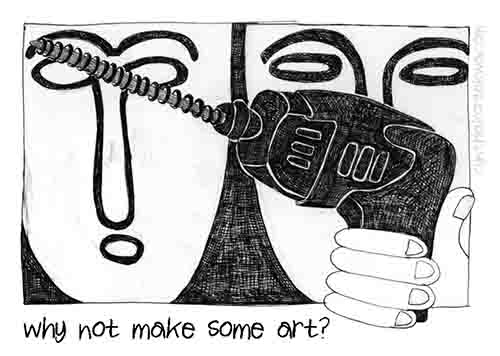
Why Not Make Some Art?

In 1984, the art world went into a spin because of three carved heads found in a canal in Livorno, Modigliani’s hometown. Many experts claimed that they were works by Modigliani who, in 1909 after receiving negative reviews, dumped them in the Fosso Reale. Instead, with the help of a Black & Decker drill, they were made by three pranksters and local artist and activist, Angelo Froglia.

An appropriation is an appropriation is an appropriation.
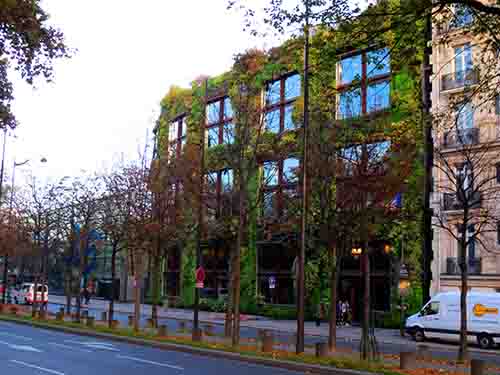
vertical garden

Next door to Musée Quai Branly is a Vertical Garden by Patrick Blanc.

Related link: Native Appropriations is a forum for discussing representations of Native peoples, including stereotypes, cultural appropriation, news, activism, and more.

.

.

Posted in Drawings & Paintings | Tagged , , , , , , , , , , , | 5 Comments

Stories set in stone

Paris Day 3

The Leaves Were Falling

Paris is lovely in November.  I love walking on the fallen leaves especially when the sun is shining so I decided to walk along the Seine listening to “Les Feuilles Mortes”  (known in English as “Autumn Leaves”).  The lyrics of this song were written by Surrealist poet and screenwriter, Jacques Prévert: The falling leaves drift by the window…Since you went away the days grow long And soon I’ll hear old winter’s song.

Maigret at Canal St. Martin

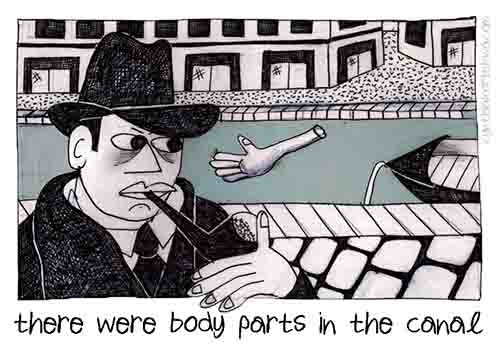
My plan for the day was to head towards Canal Saint-Martin and see the area that had inspired so many of Alfred Sisley’s paintings. The canal also appears in the film Amélie (where she’s skipping stones at the locks) and in Simenon’s Maigret and the Headless Corpse (Maigret et le corps sans tête) where a chopped up corpse is found in the canal.

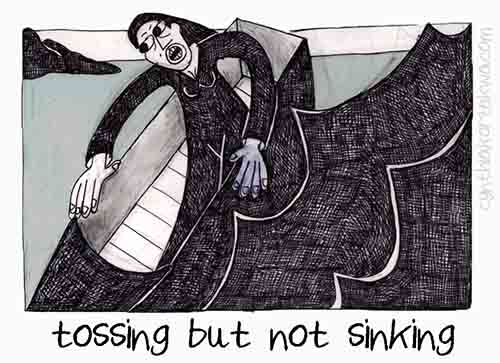
Somehow I got distracted and, instead, took a long walk along the Seine and then back towards Notre Dame. Two things I noted with interest: one,  many architects have carved their names on the building they’ve constructed just as a painter signs a painting. Two, all around Paris you can see the city’s coat of arms, a ship floating on a rough sea, with the inscription Fluctuat nec mergitur which basically means “tossed but not sunk”.

Fluctuat nec mergitur

NOTRE DAME

Victor Hugo was only 29 years old when, in 1831, The Hunchback of Notre-Dame was published. The tragic story is that of the gypsy dancer, Esméralda, and the hunchback, Quasimodo. Esméralda falls obsessively in love with the wrong guy, Captain Phoebus (much like the story of Hugo’s daughter, Adele, and her fixation with Lieutenant Pinson that led to her complete mental breakdown).  Because of her beauty, men wanted Esméralda’s body not her being.  All except Quasimodo.

Esméralda is accused of crimes she didn’t commit and hung in public for the crowds to see.  Quasimodo, seeing her hanging and knowing his step-father, Frollo is responsible, decides to vindicate Esméralda and pushes Frollo off the roof of Notre-Dame.

frollo and quasimodo

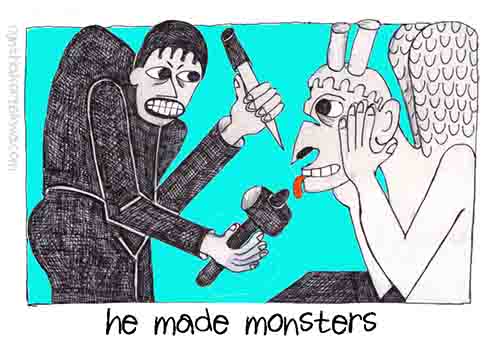
A major theme in Hugo’s story is the contrast between the grotesque and the sublime. Hugo wrote The Hunchback while Notre Dame was being restored (1843–1864) under the direction of Violette-le-Duc, an architect fixated with the grotesque. In fact, the gargoyles (which are really chimera) were added at this time and not during the period of the original construction of the cathedral. Working for Violette-le-Duc during the restoration was a hunchback sculptor who, some speculate, inspired Hugo’s Quasimodo. He was known as Mon Le Bossu, the hunchback.

Can you imagine Le Bossu sculpting a gargoyle?

He Made Monsters

I tried reading some of Notre Dame’s narrative relief sculptures. Of particular interest was that of the Virgin’s portal (first portal of the façade) with its ménage à trios—Adam, Eve and Lilith. Here Lilith is represented as a melusine, snake-woman.

Lilith is a Jewish mythological figure whose name roughly translates as “night creature” and, according to some folklore, was considered Adam’s first wife. Apparently, Lilith left Adam because she didn’t like his domineering attitude in and out of the bedroom.  So she started an affair with archangel turned demon, Samael.

Not wanting Adam to be left alone, God then created Eve.

Adam, Eve, & Lilith. ménage à trois

Towards A Photogenic Lifestyle Observation: I’ve never been attracted to the grotesque.  However, turning fears into picture postcards is a real talent. So how do I learn to make something spooky in my life photogenic?

.

.

related links:  Iggy Pop, Les Feuilles MortesJacques Prévert was a French poet and screenwriter + Maigret and the hotel Majestic full video + The Hunchback of Notre-DameThe Lilith Myth + Amelie skipping stones 0:13 + Real-life Quasimodo uncovered in Tate archives+ The Story of Adele H. (1975) Trailer +  The Virgin Mary portal
Posted in Drawings & Paintings | Tagged , , , , , , , , , , | 2 Comments

Paris as a Cabinet of Curiosities

Paris Day 2

Mindfulness is important if you want to have a photogenic lifestyle because it means being present in the here and now.  Once we eliminate our dependence on cognitive clichés, the world around us pulsates with vigor and energy.

Curiosity automatically leads to mindfulness.

Cabinet of Curiosities

Because of Bebina Bunny, I wanted to see what remains of Joseph Bonnier de la Mosson’s  Cabinet of Curiosities. Once upon a time, aristocrats did not manifest their wealth by wearing a Rolex or by driving a Ferrari.  Instead, they created Cabinets of Curiosities.  Thus Joseph Bonnier de la Mosson used most of his incredible inheritance to create his own wunderkammer full of objects relating to natural history, anatomy, science, fine arts and souvenirs from his world travels. When Bonnier de la Mosson died in 1744, he was penniless so his widow had to sell pieces from the collection for her own survival.  Luckily, some parts were saved and are now hidden away in the modern library of Jardin des Plantes’ Natural History Museum.

Jarden des Plantes

Adjacent to Jardin des Plantes’ main entrance is the Grand Mosque of Paris. The mosque was built in 1926 to honor the Muslim soldiers from the French colonies who’d lost their lives fighting for the French against the Germans in WWI. And during WWII, the mosque was used as a refuge for Jews to protect them from German persecution.

Mosque Tearoom

Today the mosque is well-known for its hamman, indoor garden and tearoom straight out of Casablanca.  It would have been delightful to have had some tea and pastries but it was crowded and people were lined up waiting for a table.

Patria Stood In The Middle

Our touristic pilgrimage continued towards the Panthéon (from the Greek Πάνθεον meaning “every god”) which was originally built as a church dedicated to St. Genevieve (the patron saint of Paris). The Panthéon’s pediment shows Patria distributing crowns.  She’s flanked by Liberty and History as well as by other figures, including Napoleon, who contributed to the development of the Nation.

Subsequently the Panthéon became a mausoleum for famous French citizens. Revolutionary leader Jean-Paul Marat, today best known for his presence in Jacques-Louis David’s painting, is buried here.

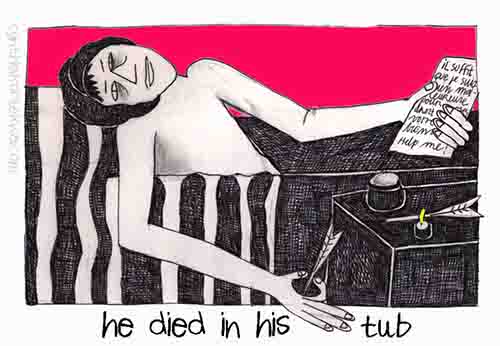
Marat in the Tub

Because of a skin condition he’d developed while hiding in sewers, Marat was forced to bathe a lot.  So he transformed his tub into a kind of desk where he’d soak for hours while writing down his political theories. One day while he was bathing, 24 year old Charlotte Corday sneaked into his bathroom and stabbed him to death.

Charlotte was just beginning to blossom as a woman when the French Revolution broke out.  She saw nothing liberating about the aftermath of the Revolution and its atrocities.  Believing Marat to be a blood thirsty monster who sent innocent people to their graves, she felt that by murdering him  she could save 100,000s of lives.

A young German living in Paris, Adam Lux, was so impressed by the actions of Charlotte that he fell in love with her.  He followed her trial and was present when she was beheaded. Adam saw Charlotte as a martyr and wrote a pamphlet in her defense which led to his arrest for treason. Tried, he was told he could save his life if he would retract what he’d written but he just smiled and thanked the judges because he was honored to be sacrificed on the same guillotine where Charlotte had met her death.

Charlotte and Adam

Charlotte was from Normandy and so were the cheeses we had in our fondue that evening at a little bistrot near Beaubourg– fondue Normandie made with Camembert and Pont-l’Évêque.  Fondue is very photogenic as well as very easy to do. Since good health is also photogenic, it’s best to eat cheese with discretion. Fondue is basically just a kind of hot dip so why not try making it using cashews, potatoes or chickpeas instead of cheese?

They Had Fondue For Dinner

Related:  Al Stewart song for Charlotte on album on “Famous Last Words” + book Beware Madame la Guillotine by Sarah Towle + Mindfulness by Ellen J. Langer + Object Lesson / Transitional Object + Cashew Cheese Fondue

.

.

Posted in Drawings & Paintings | Tagged , , , , , , , , | 6 Comments

Yin Yang Paris

Paris Day 1

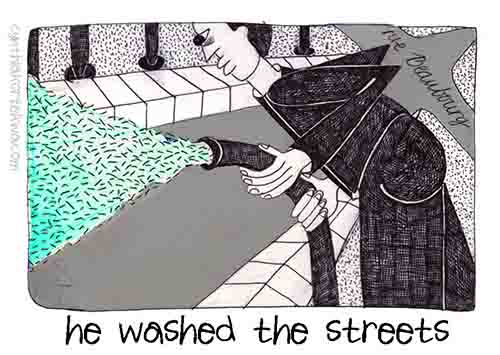
He Washed The Streets

I was lucky to be staying near the Beaubourg—well-kept, washed and painted.  Looking out my window this morning, I saw the maintenance going on and the streets being scrubbed down…cleanliness is a form of aesthetics and helps keep Paris one of the most tourist visited cities in the world.

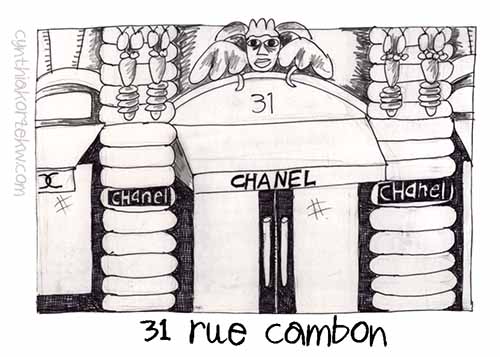
The day got off to a slow start but eventually we headed towards the 1st arrondissement. Because of her photogenic lifestyle, Coco Chanel’s house on 31 Rue Cambon  was on my list of things to see.

31 rue Cambon

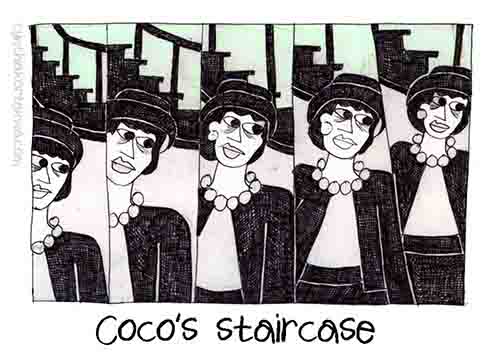
Here she opened her first boutique in 1910 and sold hats before designing dresses. Coco actually lived at the Ritz Hotel but worked and entertained at Rue Cambon where she sprayed the place with Chanel No. 5 everytime she entered. The famous faceted mirrored staircase designed by Coco connected all four levels of the building.  It was said she conceived the staircase so that while standing on one floor she could see what was happening on the others.

Coco's Staircase

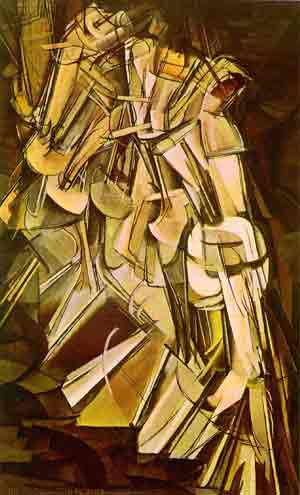
I wonder if Coco had been inspired by Duchamp’s 1912 Nude Descending a Staircase, No. 2  (inspired by Muybridge’s photo sequence Woman Walking Downstairs).

MarcelDuchamp-Nudedescendingastaircaseno21912

Not Far From Rue Cambon 31

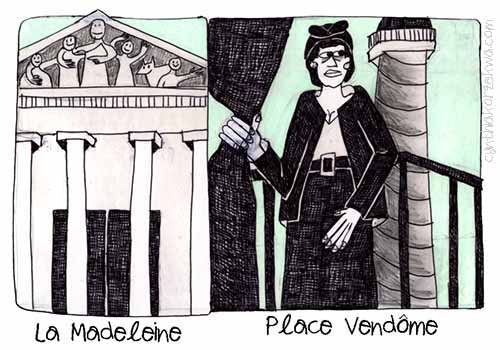
We then went to another Chanel location in between La Madeleine and Place Vendôme where a very désagréable doorman provoked our desire to change location.  There was nothing elegant about his behavior. Furthermore, Coco’s 1st arrondissement is majestic but condescending.  So we went towards Belleville.

Napoleon III, Napoleon’s nephew and the first President of France to be elected by popular vote, wanted a modern and imperial Paris. So, with the help of Baron Haussmann, instigated an urban revolution.  The tearing down of the old to construct the new meant that many of the poorer classes had to leave Paris and find new lodgings on the city’s outskirts. Thus many headed towards Belleville.

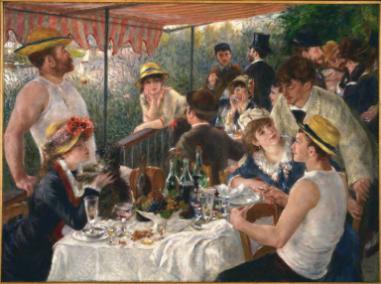
Belleville and Ménilmontant were once independent wine-making villages where Parisians would spend Sundays at the guinguettes dancing and drinking tax-free wine. Renoir captured the spirit of these guinguettes in his “Luncheon of the Boating Party” (1880).

renoir

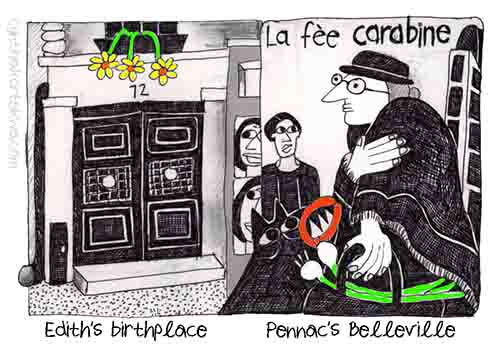
Famous French singer Edith Piaf was born, legend has it,  in a doorway at Ménilmontant (72 rue de Belleville).  Edith’s mother was a street singer and part-time prostitute whereas her father was a Moroccan acrobat. Edith spent much of her childhood singing in the streets with her father.  It was their only source of income. And the way Edith learned to sing.

When Edith was about 5 years old, she went blind but the prostitutes who worked for her grandmother collected money to sent her on a pilgrimage honoring St. Térèse of Lisieux.  Edith regained her sight and became a devotee of St. Térèse for the rest of her life.

In 1935 Edith was discovered in Pigalle by the owner of a nightclub, Louis Leplée. It was because of him that Edith became famous.

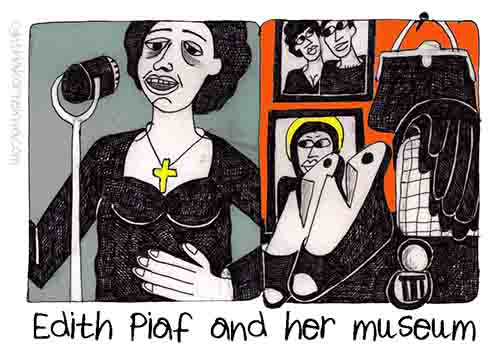
Editha Piaf and Her Museum

Not far from the Lachaise cemetery where she’s buried is the privately owned Edith Piaf Museum ( 5, rue Crespin du Gast) full of memorabilia—clothing, shoes, letters, photos, and even an image of St. Térèse of Lisieux.

Menilmontant and Belleville

Daniel Pennac’s books based in Belleville made the neighborhood seem magical and full of intrigue and pathos.  As opposed to the Latin Quartier and Saint Germain where you can buy only clothes and shoes, says Pennac, “Belleville remains a living district, not fossilized by commerce.”

Towards A Photogenic Lifestyle Observation: for years Belleville was shunned and avoided by the mainstream. Then Pennac‘s books transformed Belleville into a watercolor.  Shabby became chic and the dreary became dynamic.

I would like to write about my daily life with the same spirit Pennac wrote about Belleville.  Better yet, I would like to give my diary to a talented writer to see if, using description and editing, he could turn my life into a bestseller. Better yet, I would like to learn how to do it myself.

.

.

Posted in Drawings & Paintings | Tagged , , , , , | 3 Comments

4 Days in Paris

“If your vision of the world is of a certain kind, you will put poetry in everything necessarily.”    Georges Simenon

ck

I thought  my trip to France, the birthplace of photography, had provided me with the perfect setting for the debut of A Photogenic Lifestyle and wrote posts related to my Parisian excursions.  But a day after my return home, Paris was attacked by terrorists, and, obviously, there was nothing photogenic about that save for manifestations of solidarity such as that of taxi drivers who gave free rides home to those on the streets, people who opened their doors to offer shelter to stranded strangers, and men & women who stood in long lines to donate blood to the victims.

So I postponed writing about Paris. Until now.

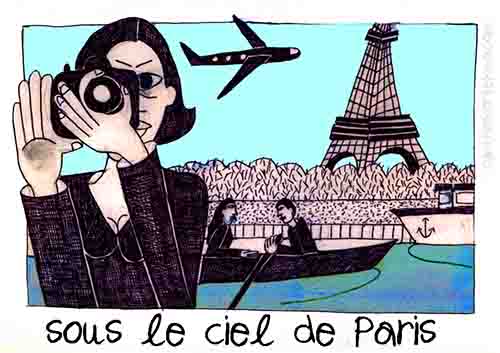
sous le ciel de paris

Mood influences the way we perceive experience.  So, the better the mood, the better the experience.  That’s why I began my trip with a Live Mood Board: French songs uploaded on my iPod, a few memorized phrases (including Je suis désolé, je ne parle pas français) and  a romantic dinner of camembert cheese and French wine.

In The Mood For Paris

Having a Low Cost flight, packing light was fundamental. Checked luggage is now an expense and there are major limitations regarding carry-on bags  A fisherman vest would be practical in these situations as would a coat with beaucoup pockets so you can stash stuff that won’t fit into your trolley.

Pocket Packing

Towards A Photogenic Lifestyle Observation: Eliminating extras is a good idea not just for travelling but for daily life as well.  Decluttering can make daily life more photogenic.   The more you have, the more you have to organize.   And organization takes time and energy. Things take up space and space is necessary for energy to flow. So the less time and space I have to dedicate to things, the more I can dedicate to myself.

.

.

Posted in Drawings & Paintings | Tagged , , , , | 6 Comments