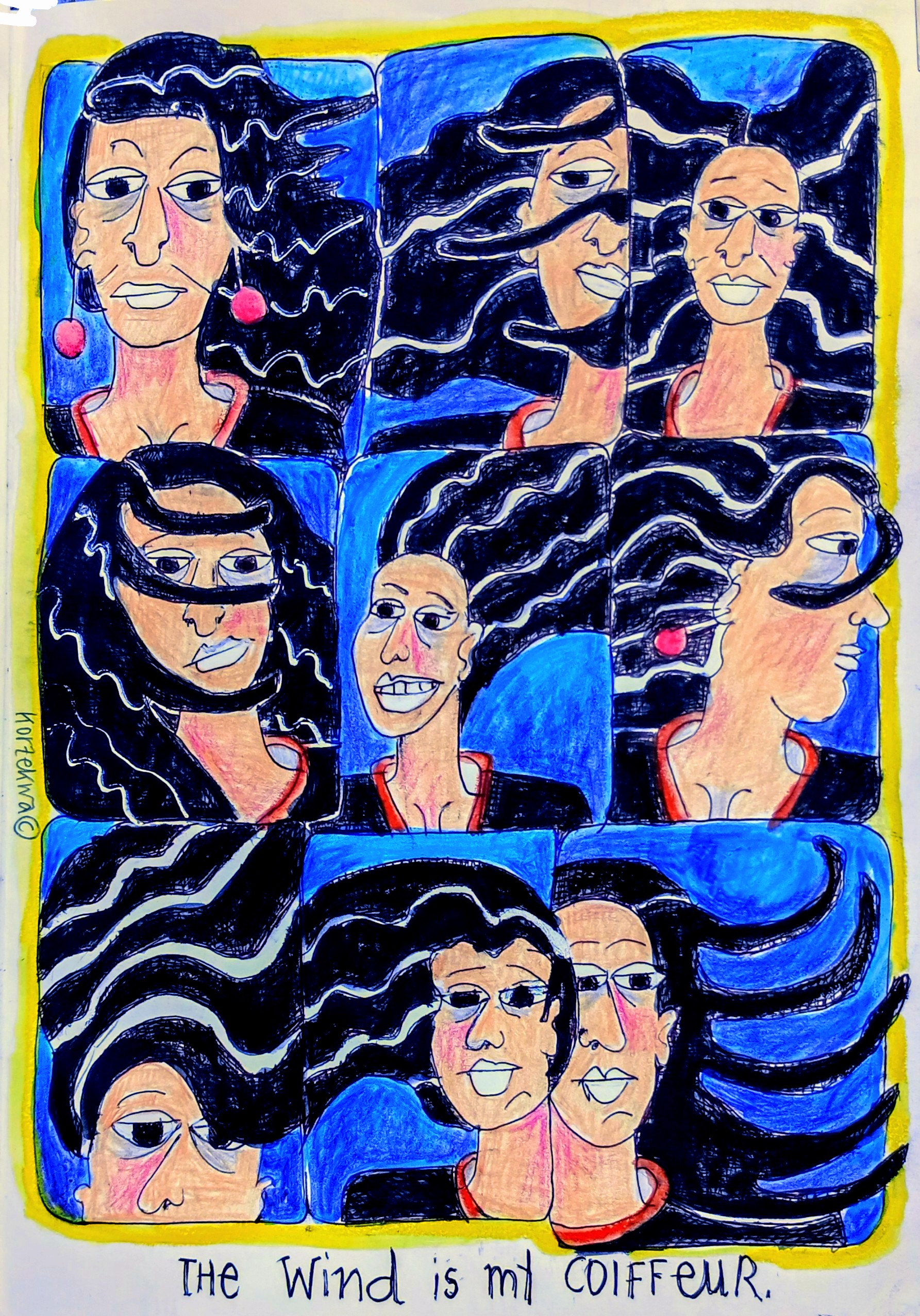
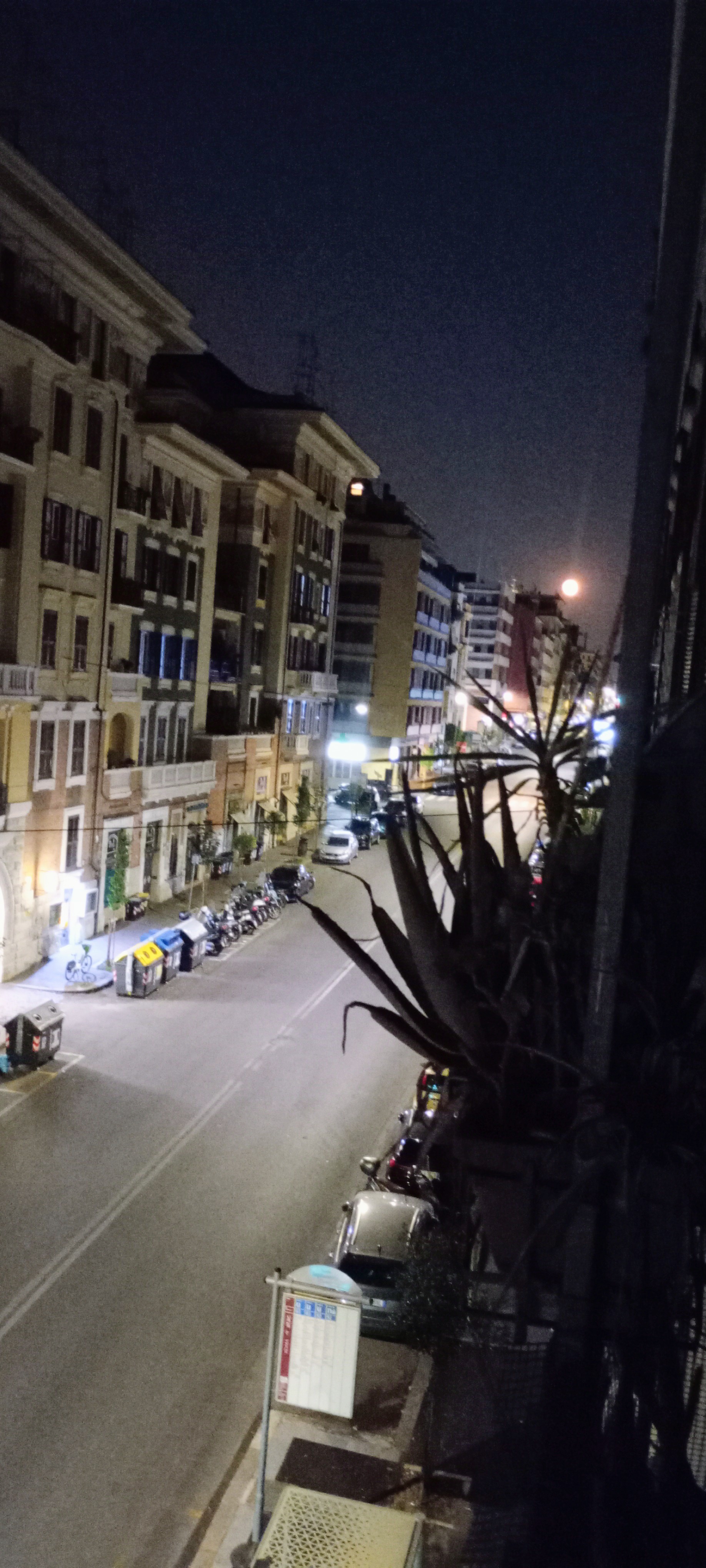
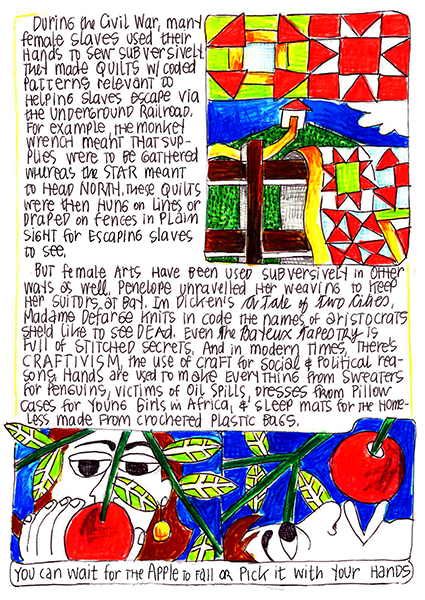
The wind not only changes my mood, it also changes my look. Breezes are fine because they’re like sweet caresses. But the wind is something else. It creates a sensory overload and makes me feel I’ve no control over what’s around me.
Some theorize that the wind mixes up the ions in the air. And this provokes a drop in serotonin. So it’s best if I just stay inside.
Mr. Wolf calls me a magical thinker. Because magical thinkers believe that thoughts can influence external events. But maybe I’m really a stoic like Marcus Aurelius who said that you are your thoughts. And this I truly believe. I also believe that memories can also be magical depending on how they’re remembered. Because the way something is remembered is what that something will become.
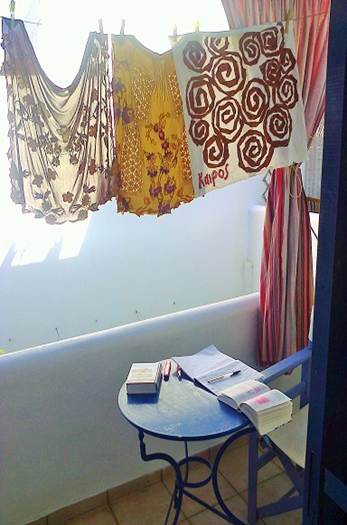
Many years ago, I put up balcony curtains to create intimacy and protection from curious neighbors. They were not particularly pretty—orange, brown, and beige stripes—but they did their job. Eventually we replaced the curtains with a trellis. The curtains were then recycled as part of the awning for the terrace pergola. But then the pergola came down and so did the awning. And the curtains became part of my fabric stash. A couple of years ago I came across the old curtains. I remembered how they looked hanging on the balcony and the vision filled me with a pleasant sensation. So, I thought, why not repurpose them and keep that pleasant sensation alive. Magical thinking?
Magical implies a relationship with magic which, according to the dictionary, is “the use of supernatural powers over natural forces”. And that’s what hand sewing is for me. Because, when I start working with my hands, the repetition of movement changes the rhythm of my heartbeat and the frequency of my brainwaves. And I start to flow. Focusing my attention on stitching helps distance me from the world around me. Sewing is magical as it gives me the power to reconnect with myself.
Current events have thrown my biorhythms out of whack and are imposing themselves on my psyche. It can be very debilitating. To return to my core, I sew.
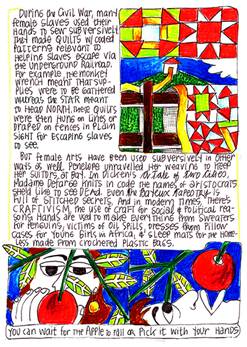
Right before the Civil War, captives from Africa were brought to Alabama despite the ban on trans-Atlantic slave trade. These Africans were not only brutally deprived of their home and of their freedom, but their culture and traditions were mutilated by colonization and enslavement as well.
Southwest of Selma, Alabama, there’s an African-American community known as Gee’s Bend where, following the Civil War and emancipation, sharecropping was initiated. Landowners allowed previously enslaved farmers to continue to cultivate the land but the farmers only received a portion of the crops they harvested. This arrangement was disadvantageous for the farmers but they really had no other options.
Gee’s Bend was in Wilcox County that was c. 80% African American and c. 60% of these citizens were living below the poverty level. Although Gee’s Bend was isolated and economically depressed, there was a very strong community sustained by the local Baptist church. The church provided the opportunity to gather together and unite in spirit. Making music and singing was important for these gatherings as it’s a form of self-affirmation.
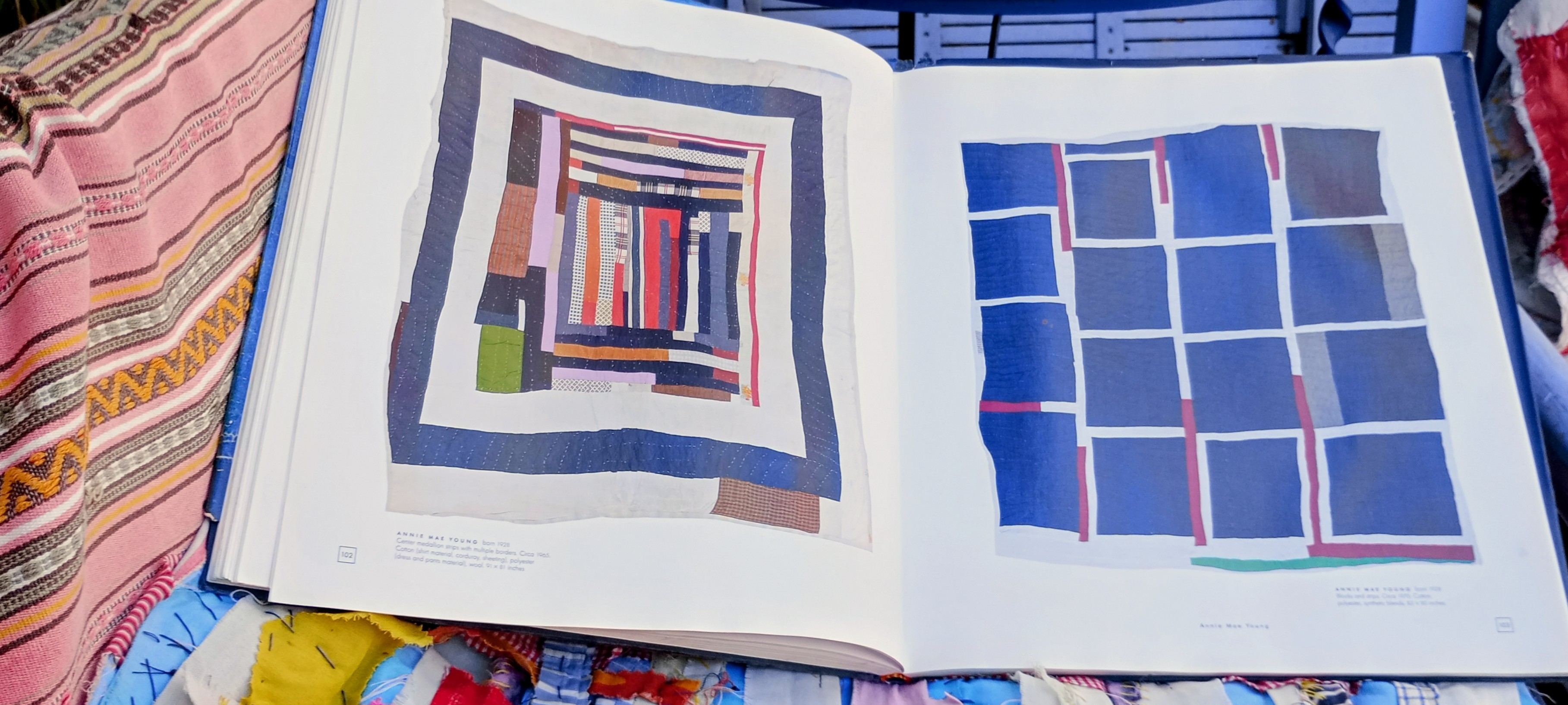
Quilt making is also a form of self-affirmation. And African-American women had a tradition of quilt making. But in the 1960s, quilt making had another importance for Gee’s Bend. In 1966, the ladies of Gee’s Bend created the “Freedom Quilting Bee” intended to help sustain local blacks who’d lost their jobs simply because they’d registered to vote during the 1960s civil rights struggle.
In 1967, Lee Krasner, abstract artist and wife of Jackson Pollock, was visiting Alabama where she was told about the magnificent quilts of Gee’s Bend that were part of the Freedom Quilting Bee. After seeing them, Lee was amazed by their beauty and their simple sophistication. Not only did she buy a few quilts, but, once back in NYC, she actively promoted them. Diana Vreeland was enthusiastic as well and saw them as high art as did designer Ray Eames.
For the ladies of Gee’s Bend, making quilts was a means of keeping their family warm at night and of earning an income. But, by working with their hands, making quilts was also a means of creating an inner sanctuary.
“When humans began walking upright, everything changed. It freed the hands so humans could now reach out and grab something and hold it. The capacity to pick something up increased our ability to closely observe the world around us. Hands helped the brain to evolve.
Hands permitted humans to touch one another and create intimacy. This helped emotions to evolve.
Hands help us accomplish things. They can help create new mental pathways because making things requires sequential thought and logic. Thus, hands help connect the mind with the body.
Making is a form of meditation because focused attention and repeated motion send our brainwave frequencies into theta, just like meditation. So why not make something?” Via In Praise of Hands
Creating something from nothing is the world’s primary survival strategy. “Learning to make a quilt for a girl meant becoming a woman as the quilt symbolized practicality and survival, an acquirred knowledge of recycling and reuse.”
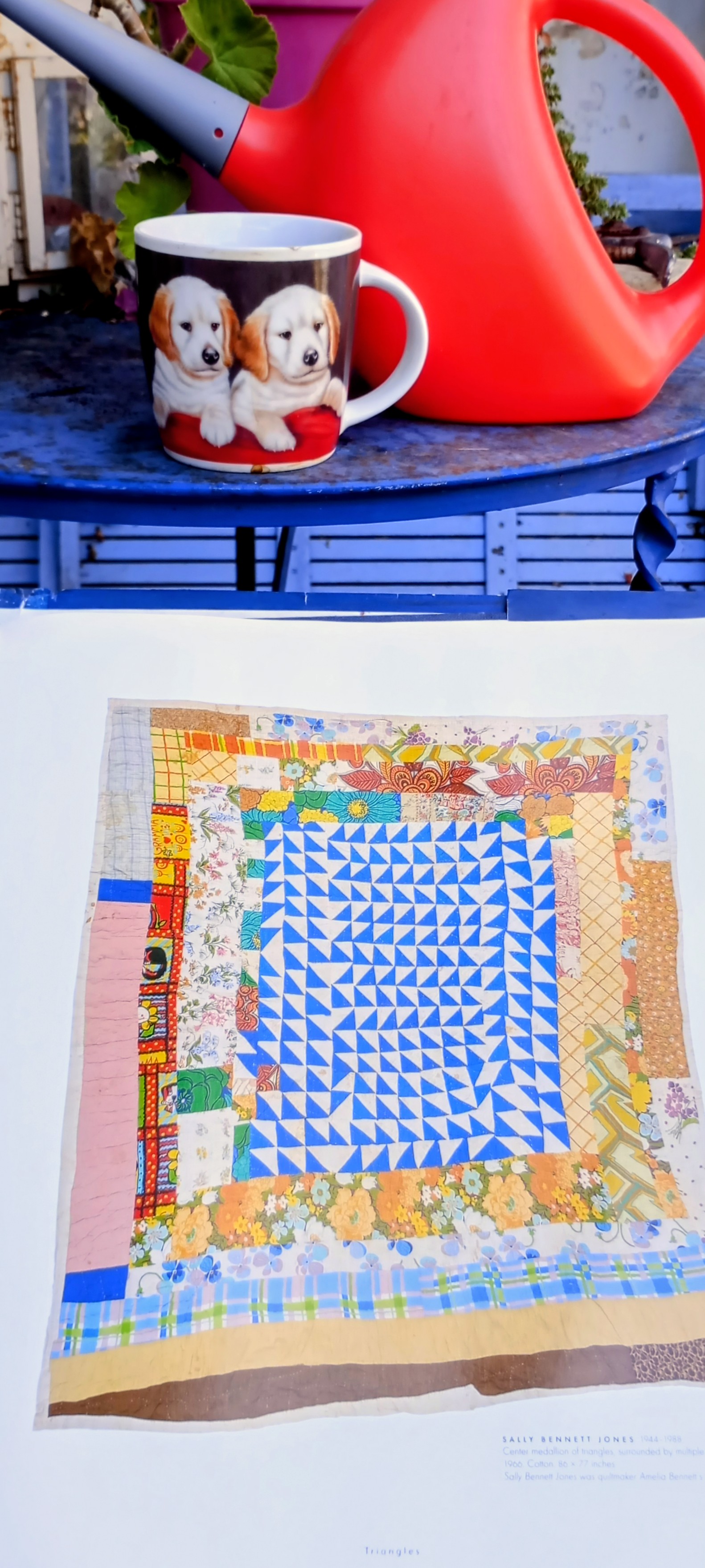
The ladies of Gee’s Bend created in isolation and were not worried about an outsider’s opinion. Maybe that’s why their quilts are so beautiful and audacious. In an oppressive society, these women found freedom in their quilt making.
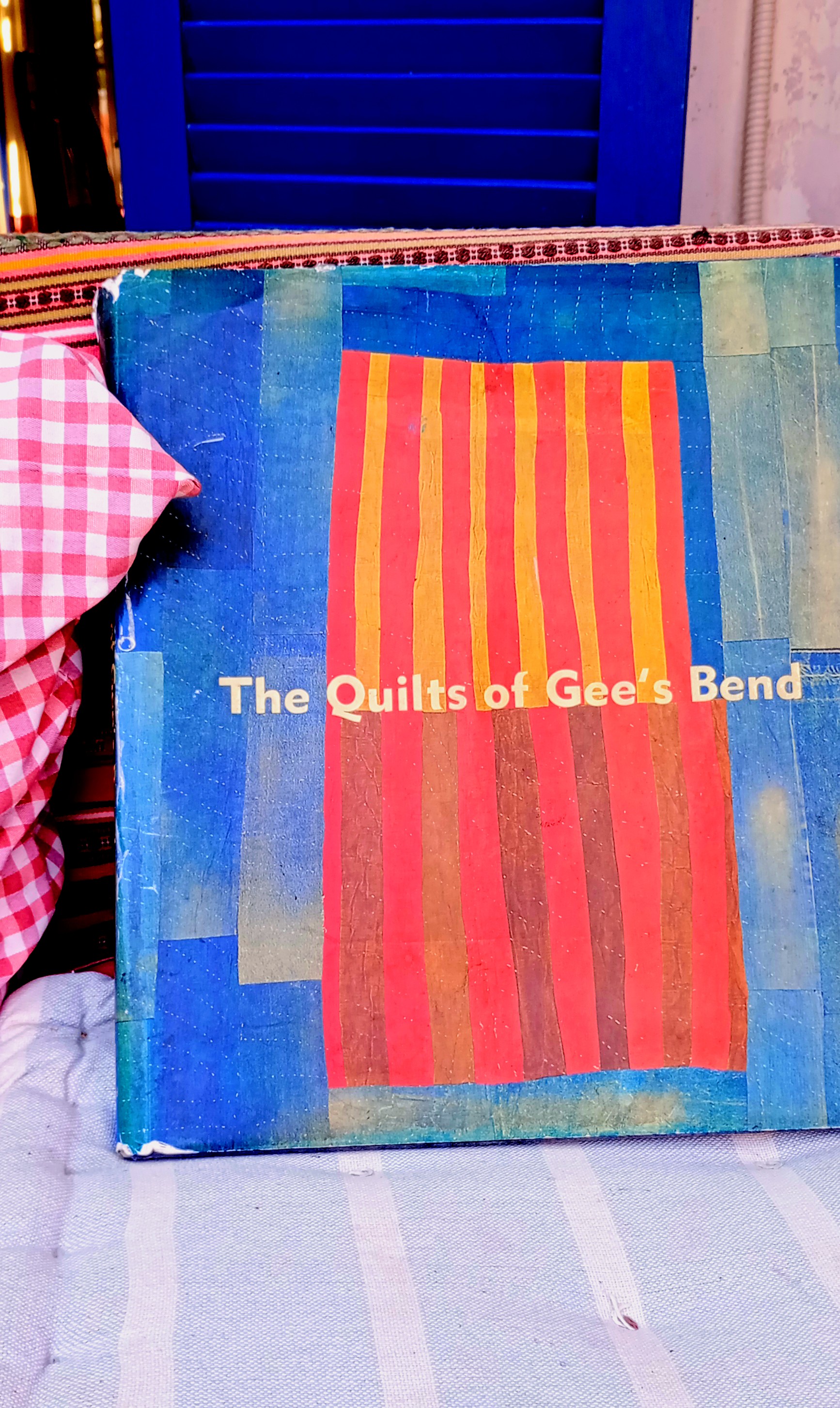
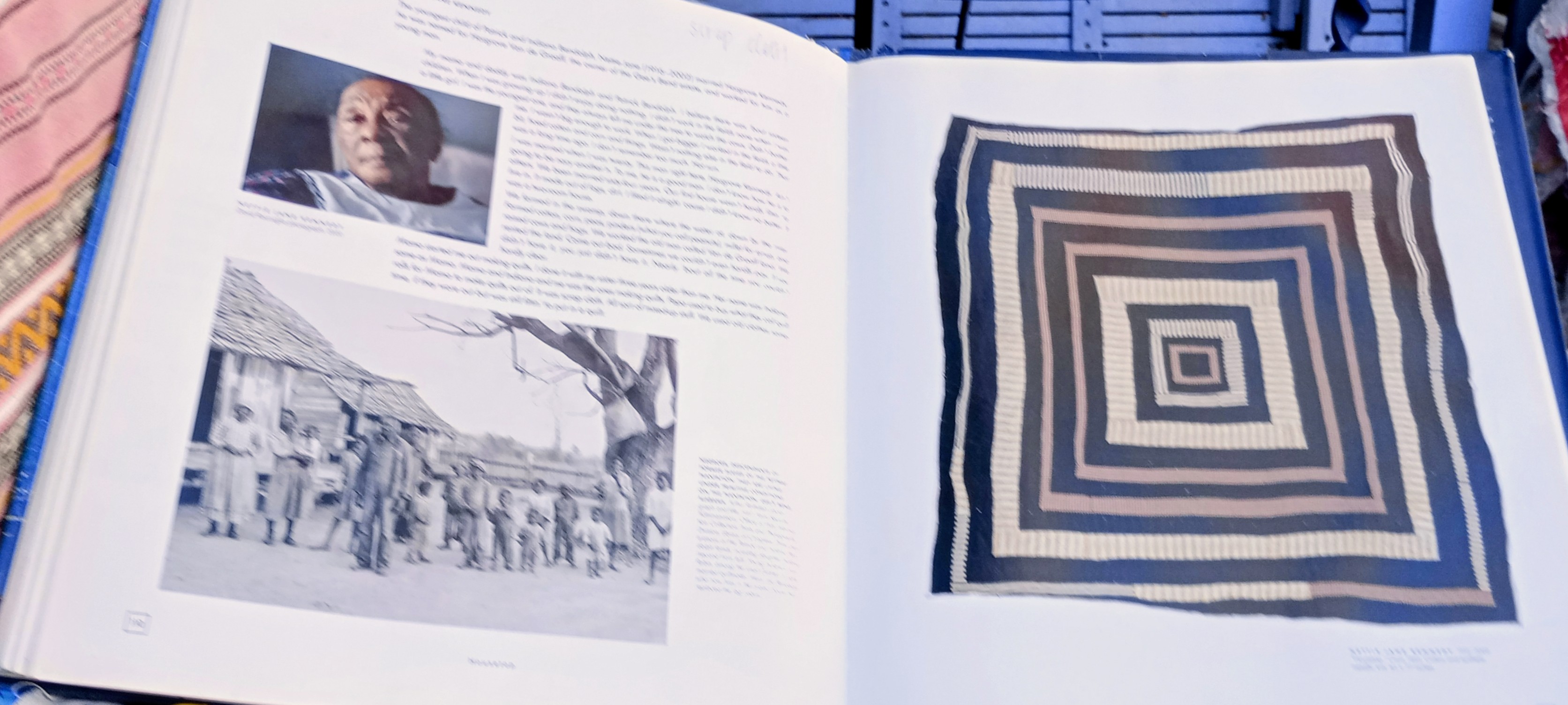
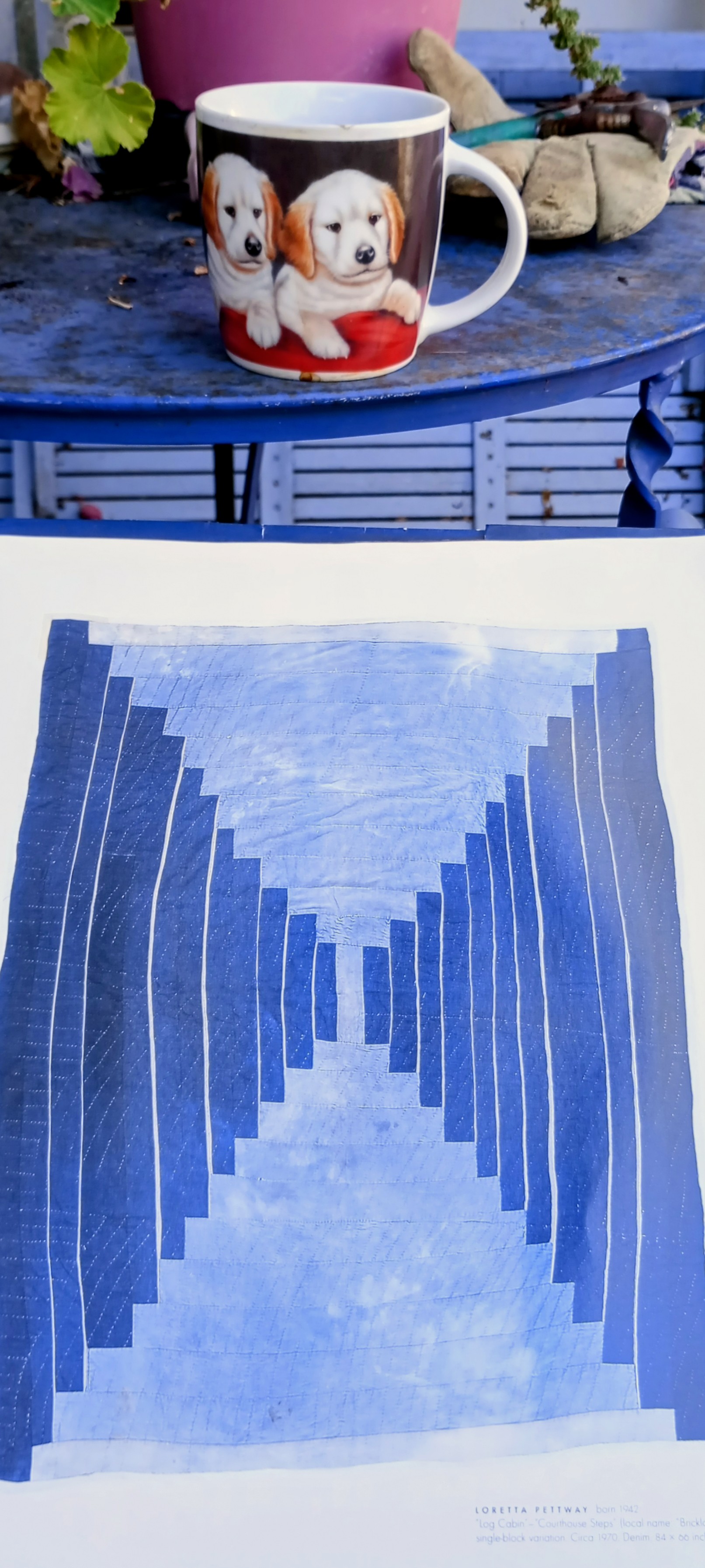
These photos are from the book “The Quilts of Gee’s Bend” listed in the bibliography below.
Within us all is the need for individual expression. We need it for our spiritual survival. Piecing the quilt was a quiltmaker’s only private time. One quilter said, “sewing at home gave me peace of mind and a challenge”. Another quilter said that sewing was a means of keeping the mind together. Many of the quilters worked in the fields and were worn out at the end of the day. But on the walk home, they had something to give them energy—thinking about new patterns for their quilts.
The trading and sharing of fabrics and patterns created even more synergy between the women. But the need to maintain a sense of self was important. The motto was “Piece by yourself. Quilt together.”
”In the quilting bee time, I started using patterns but I shouldn’t have. It broke the ideas I had in my head. I should have stayed with my own ideas.” Nettie Young
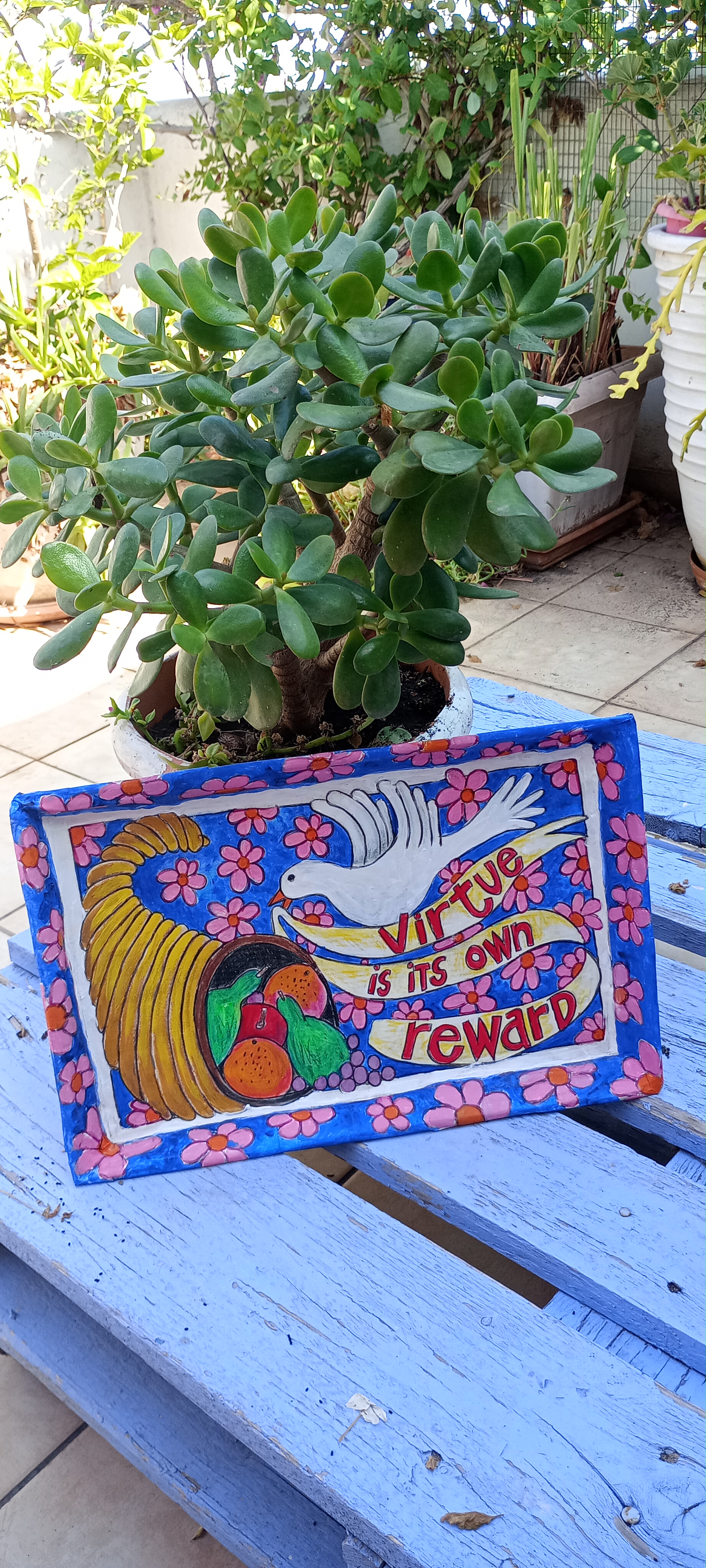
In my mom’s cluttered kitchen, was a decorative sign she probably got with S&H Green Stamps. It showed a cornucopia with fruit and a dove overhead with a ribbon in its mouth. Written on this ribbon was the phrase “Virtue is its own reward.” Although the sign had been hanging for several years, I didn’t take much notice of it. I understood the words but didn’t have a real grasp on their meaning. One day, many years later while I was living on the other side of the Atlantic, out of the blue I started thinking about this sign. Suddenly, it had a significance for me it hadn’t had before.
The quote has been attributed to Cicero (106 BC-43 BC), Roman statesman and orator. With this Cicero wanted to say that the value of virtuous behavior exists within the act itself. Because righteousness carries its own intrinsic satisfaction, you shouldn’t expect a reward for it.
After the assassination of Julius Caesar in 44 BC, Cicero led an attack against Mark Antony. Unfortunately, this led to Cicero’s execution. His hands and head were severed and then displayed to show everyone what the consequences were for going against Mark Antony. Nevertheless, Cicero’s body may have been destroyed but his ideas survived via his writings.
Not only is virtue its own reward but so is artmaking. As stated previously, the true value of Gee’s Bend quilts was the feeling the ladies had while making them. Although the quilts helped keep the family warm and their sales put food on the table, the real value of these quilts was how they helped their makers stay close to their core by giving them that private space they needed.
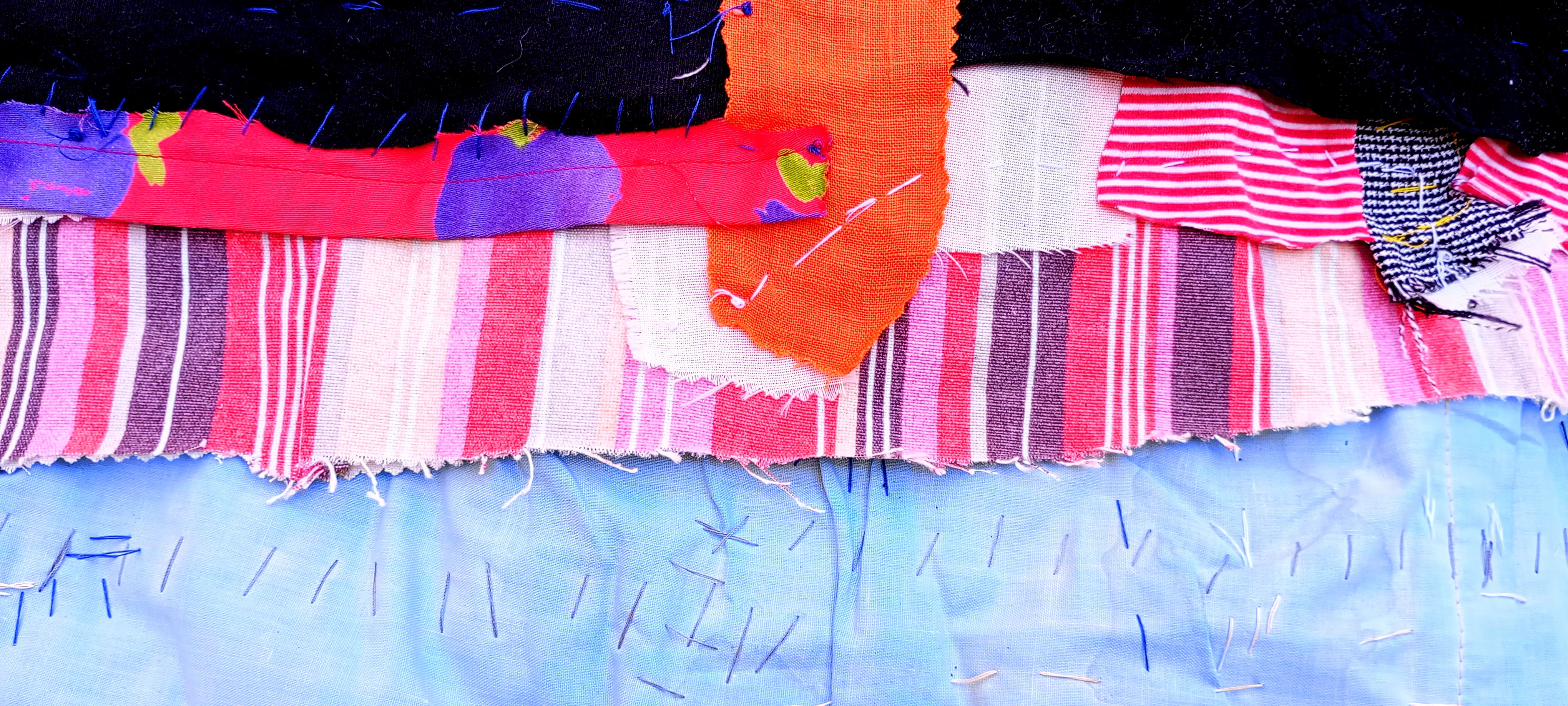
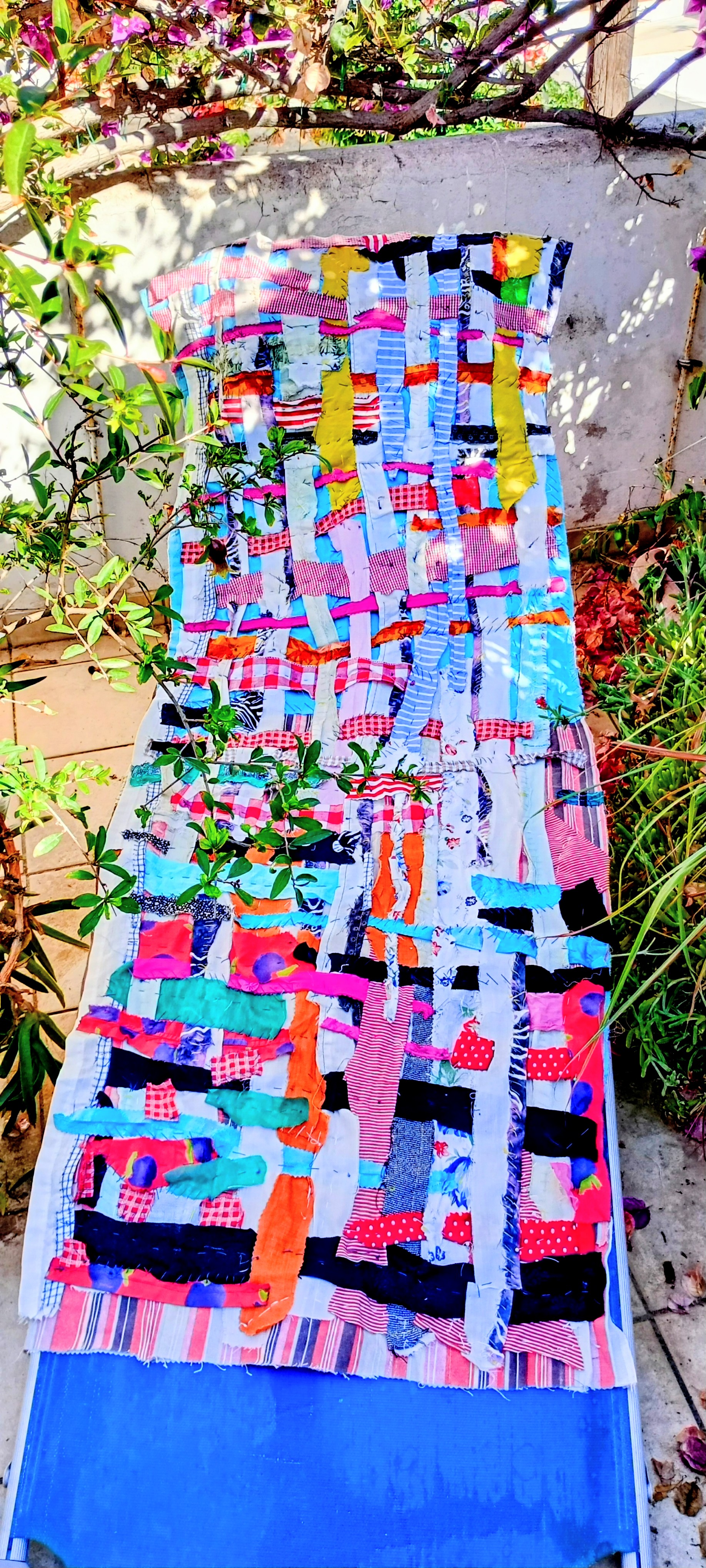
So inspired by these ladies, I tried transforming my old balcony curtain into what I will call A Memory Cloth as each scrap of cloth has its own story to tell.
view of balcony curtain leftover
Memory Cloth made from woven scraps pieced on an old curtain
Bibliography: Beardsley, John; Arnett, William; Arnett, Paul; Livingston, Jane; “The Quilt’s of Gee’s Bend”; Tinwood Books, Atlanta; 2002.
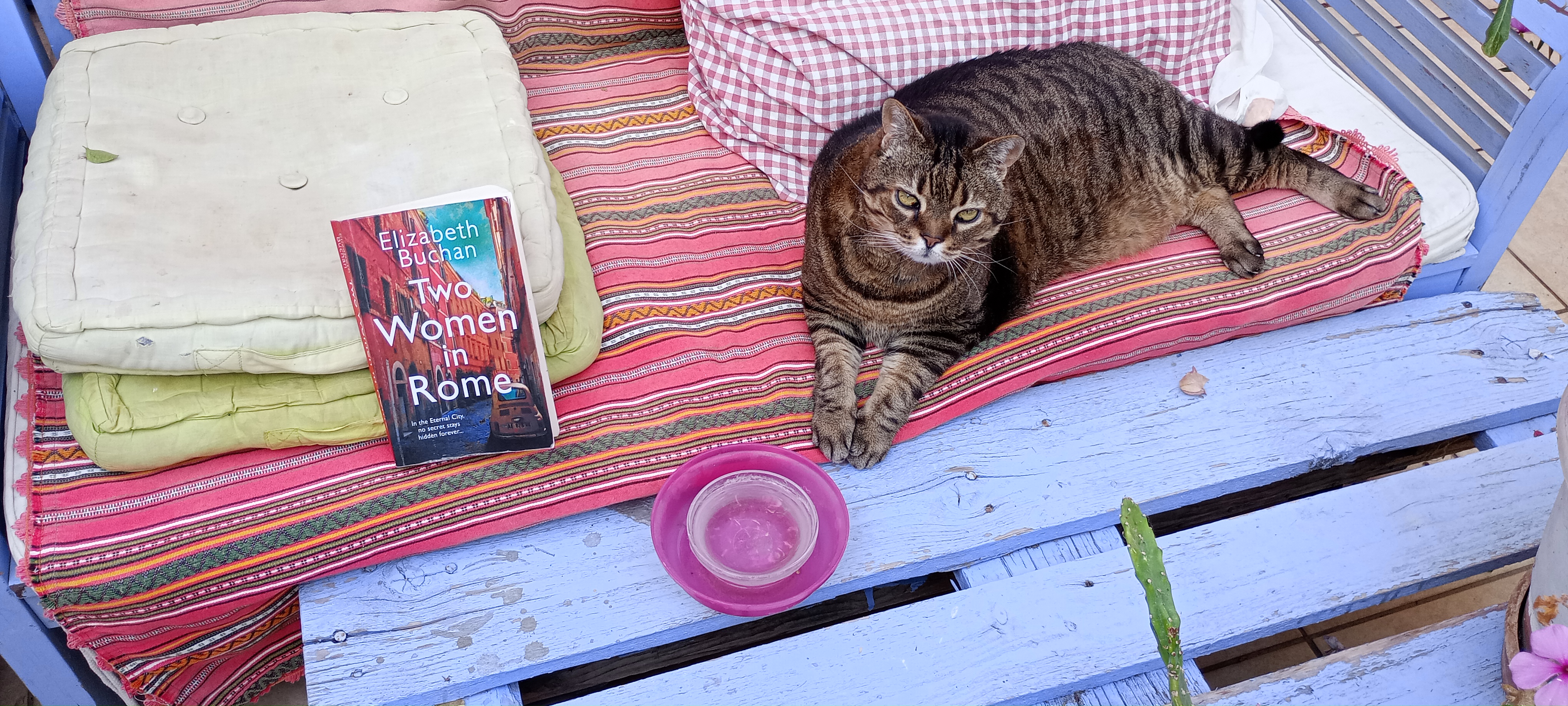
The Feltrinelli’s at Piazza della Repubblica has an international section promoting Rome-related literature. That’s where I found Elizabeth Buchan’s “Two Women in Rome”. At the time, I was reading about fascism and Italian writers and felt the need to escape the heaviness this genre was making me feel. The book that really broke me was Alberto Moravia’s “La Ciociara”. In English, its title is “Two Women”. Was Buchan making a reference to Moravia’s book?
Buchan’s two women are Lottie and Nina. Newlywed Lottie moves to Rome, where her husband is already living, to work as an archivist. Her job is to find out who murdered Nina Lawrence. Although Nina presented herself as a professional gardener, she was actually a spy for the Brits who wanted to know more about Aldo Moro’s kidnapping. Moro (1916-1978), ex-premier of Italy, was in the hands of home-grown terrorists, the Red Brigade (Brigate Rosse). The Italian right and certain foreign powers (like USA) feared that the post WWII situation had given the Communists a political advantage in Italy and it needed to be stopped. There was a major tug of war between left and right creating an abundance of political turbulence. In Italy, this period is known as the “Years of Lead” (Anni di Piombo).
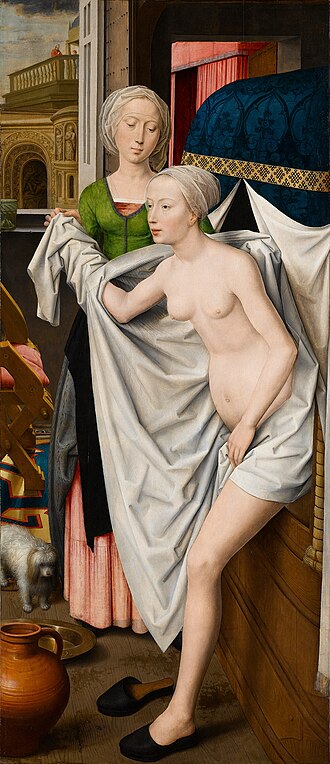
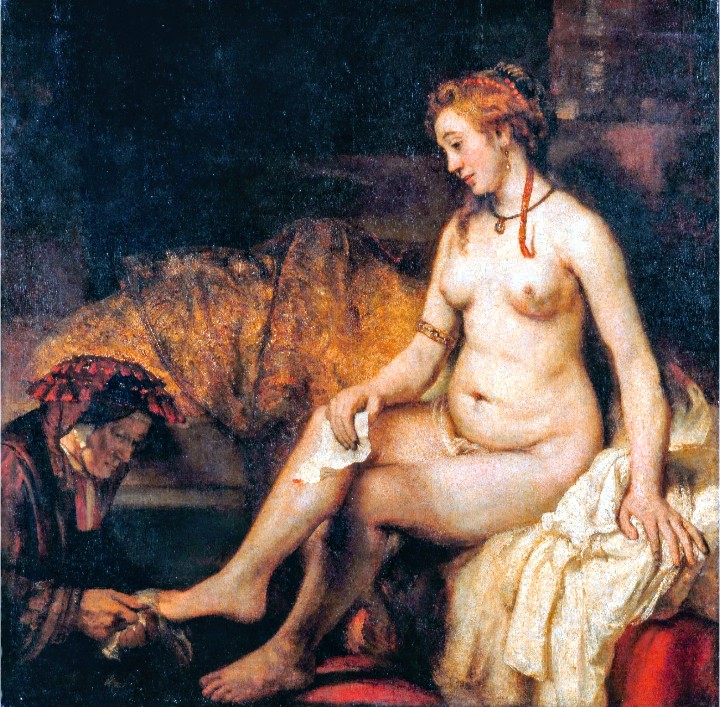
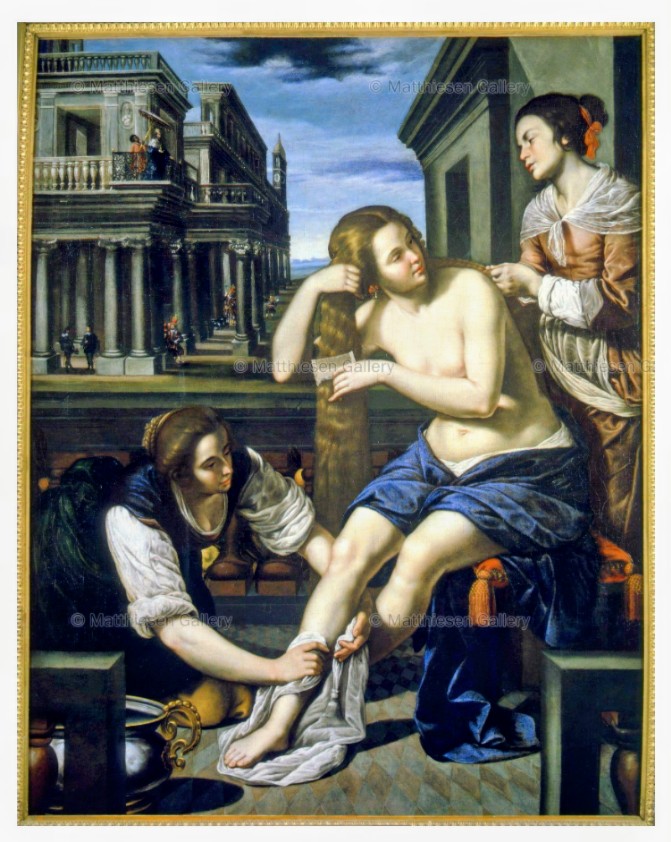
“Two Women in Rome” is a pleasant but not a revolutionary read. However, there are many references to Rome, its people and places that are of interest. In particular, there are various references to paintings because Rome is full of them. Influenced by the Catholic Church, these paintings were meant to tell a story. One favorite theme was that of David and Bathsheba.
The story of Bathsheba and King David can be found in the Bible, (2 Samuel 11). One night in Jerusalem, King David was on his roof looking at the other roofs. That’s when he first saw Bathsheba. She was taking a bath and she was beautiful. She was so beautiful that David wanted to possess her. The problem was that Bathsheba was married to Uriah the Hittite, one of David’s most loyal soldiers. Unfortunately, although David was a king, he was not a noble one.
King David had Bathsheba summoned to his palace so she could spend the night with him. Later, when Bathsheba learned that she was pregnant, David freaked out. As Bathsheba had not been sleeping with her husband, her unfaithfulness would be discovered as would that of the king’s. To hide his sin, the king had Uriah sent to the front lines where he was intentionally exposed to enemy attack. With Uriah dead, David thought his crime had been permanently hidden. But God had seen everything and decided to punish David and Bathsheba by killing their baby. Adultery and murder—a tantalizing subject that artists picked up on.
“Bathsheba at her Bath” by Hans Memling c. 1485 via
“Bathsheba at her Bath” by Rembrandt, 1654
“Bathsheba” by Artemisa Gentileschi, c. 1638
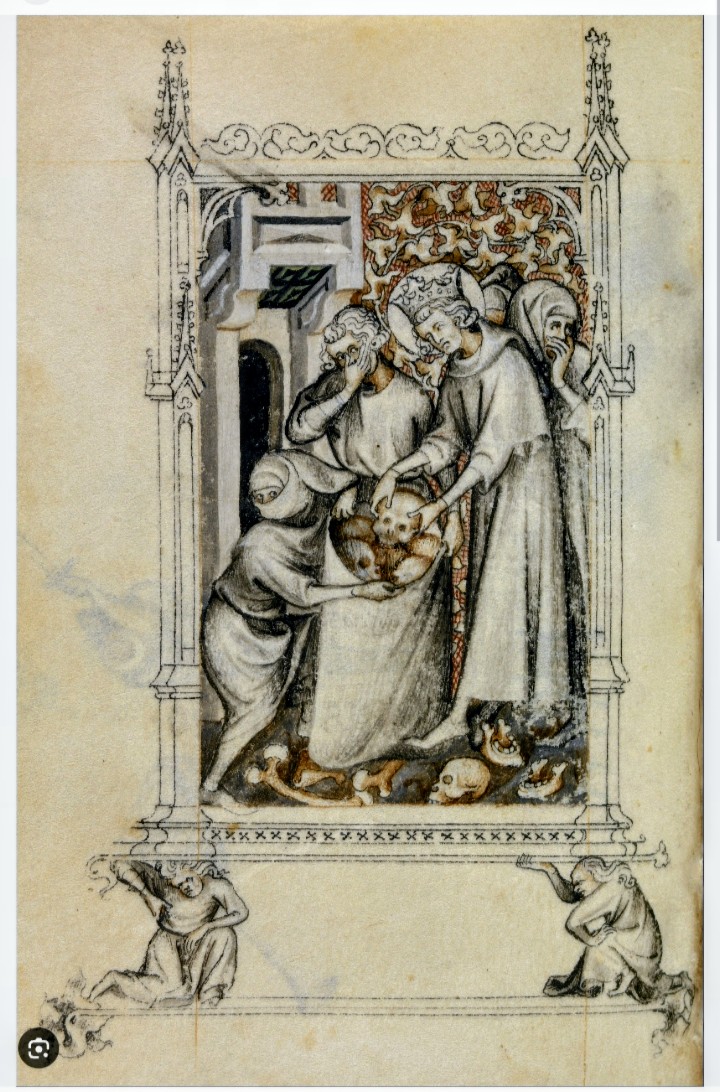
Another well used subject in painting was that of the Annunciation. Buchan gives special attention to Jean Pucelle’s “Annunciation”, and the exquisite tiny manuscript illumination from the “Hours of Jeanne d’Evreux”. It was made in the mid-1320s and is best known for its use of grisaille, a painting technique done in shades of grey.
“The Hours of Jeanne d’Evreux is an illuminated book of hours in the Gothic style. According to the usual account, it was created between 1324 and 1328 by Jean Pucelle for Jeanne d’Evreux, the third wife of Charles IV of France. It was sold in 1954 to the Metropolitan Museum of Art in New York where it is now part of the collection held at The Cloisters (accession number 54.1.2), and usually on display.” VIA
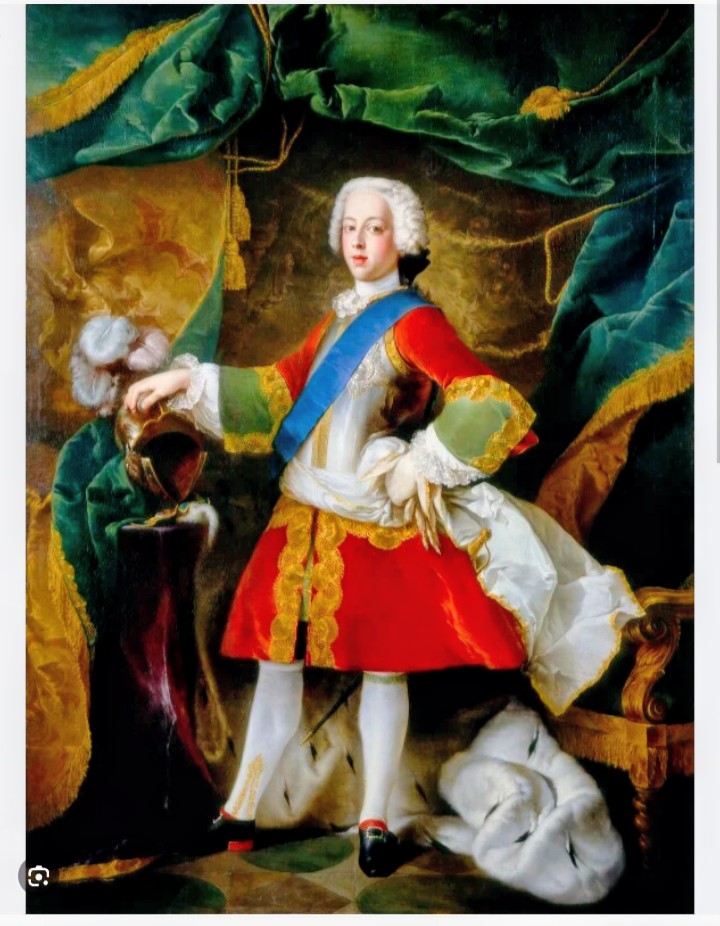
Buchan also mentions Charlotte Stuart, Duchess of Albany. She was the illegitimate daughter of Charles Edward Stuart who, in 1745, tried to take back the English crown. Charles, also known as “Bonnie Prince Charles”, was born in Rome at Palazzo Muti, home of the exiled Stuarts. In 1744, Charles decided to invade England and to restore the Stuart Monarchy. But that didn’t go well and Charles was subsequently forced to spend the rest of his life in exile. He had a number of mistresses and one wife. With his Scottish mistress, Clementina Walkinshaw, he had a daughter, Charlotte. But Charles had become a belligerent alcoholic so mother and daughter had to find a home elsewhere.
After his father’s death, Charles moved into his dad’s house, Palazzo Muti in Rome, where he led an animated social life and often visited the Pope. But his irregular lifestyle had gutted his health. His excessive drinking forced his wife to leave him. No one cared about Charles except for his daughter, Charlotte, who moved to Rome to take care of her ungrateful father. In 1788 at the age of 67, Charles died of a stroke. He’s buried in the Vatican crypt. Charlotte died a couple of years later.
Painting of “Bonnie Prince Charlie” aka Prince Charles Edward Stuart (1720-1788), oil on canvas by Louis Gabriel Blanchet, 1738
In Buchan’s book, Nina as a gardener, is writing an article on the narcissus (aka daffodil). The flower gets its name from the Greek “narkosi” meaning “numbness” or “stupor”.
Before Homer, these flowers were used by the Egyptians for their tombs. Whereas the Greek Furies wore narcissi in their matted hair, a look intended to stupefy their victims.
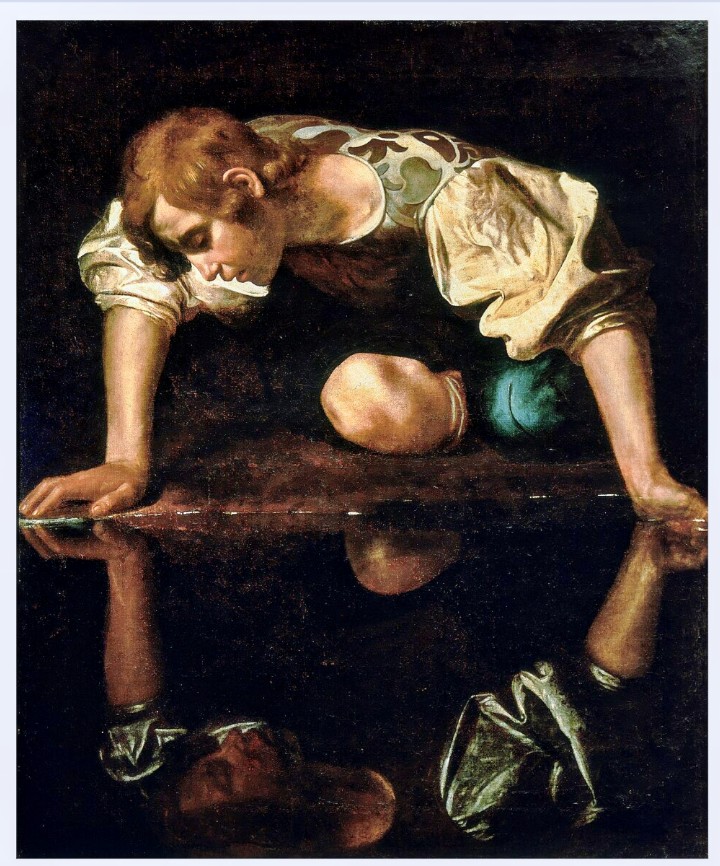
Even Caravaggio was mesmerized by Narcissus, the beautiful Greek youth who, according to Ovid in “Metamorphoses” fell in love with his own reflection and was subsequently turned into a flower bearing his name. His painting “Narcissus” (1590s) is on display at Rome’s Galleria Nazionale d’Arte Antica.
“Narcissus” by Caravaggio (1590s) at the Galleria Nazionale d’Arte Antica
Every morning, I open the balcony doors to change the air. The first thing I do is look at the sky. And that’s how I saw the Strawberry Moon. It’s known as the Strawberry Moon because it comes in June and June is traditionally the month for picking strawberries. Every year in Texas, for example, they have the Poteet, Texas Strawberry Festival.
In Italy, the Strawberry Moon will reach its exact peak of fullness on June 30th at 1:56 AM but the moon has already started to puff up. It’s the first full moon after the summer soltice and will hang low while travelling the sky.
I keep reading that, although the moon is called strawberry, it doesn’t turn pink. But who wrote this hasn’t seen the moon I saw this morning from my balcony. The moon I saw looked like a faded strawberry full of light. And, as it wasn’t fully round, it rather looked like a strawberry, too!