
It’s 9 a.m. and the cicadas are having a loud and lively jam session. It is understandable. They spend the first 17 years of their life underground then come out to mate. It’s the males that make all the noise hoping to attract a female. The hotter the day, the louder the sound. If the female likes the noise being made, she will make clicking sounds with her wings indicating that she’s available. Once an attraction is established, the cicadas mate, lay their eggs, then die.
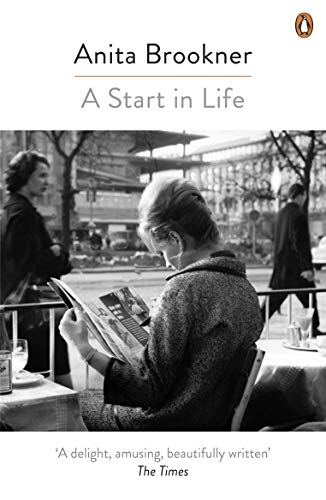
I’m sitting on the terrace where I’ve just finished reading Anita Brookner’s A Start in Life. I wanted to reflect on the book but the sound of the cicadas distracted me. So my thoughts about the book and about the cicadas got jumbled together.
Anita Brookner (1928-2016) was born in London but her father was a Polish-Jew immigrant whose family name “Bruckner” was changed to “Brookner” because of Britain’s anti-German sentiments. Her mother was a concert singer who gave up her career to marry and was never happy again. Her parents were always busy orbiting around themselves having no time for their daughter. So Anita grew up feeling that her parents were always in another room.
As fiction gives you the chance to inhabit a life not your own, Anita read books to keep her company. Nevertheless, Anita would later say that she was one of the loneliest women in London.
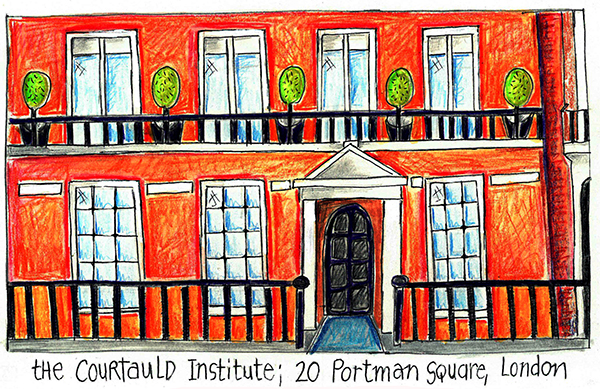
Anita studied art history. And while working on her doctorate at Courtauld Institute of Art, she studied under the guidance of art historian and spy, Anthony Blunt. Her career progressed and she wrote several books on art. Thanks to Blunt, she eventually began teaching at the Courtauld. Anita was very grateful to Blunt and often had cocktails with him at his apartment at the Institute. But this was obviously not enough to make her feel complete.
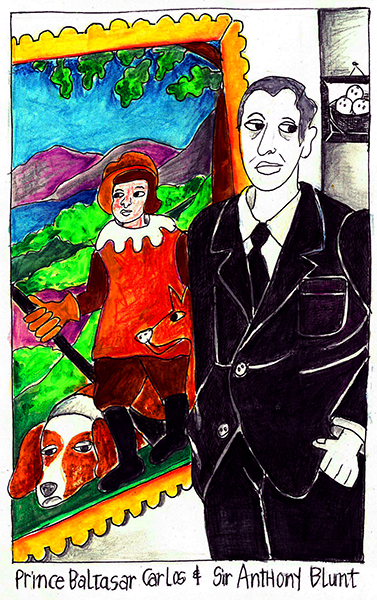
In 1979, Blunt was publicly exposed as a Soviet spy by Margaret Thatcher. So Queen Elizabeth stripped him of his knighthood. Who knows how this affected Anita but shortly afterwards, she stopped writing about art history and began writing fiction. Her first novel, A Start in Life (1981), autobiographical, was written when she was 53.
In an autobiographical novel, you can write about yourself as if you’re someone else. Anita says she started writing because of a terrible feeling of helplessness. Writing about her life made her feel as if she had more control over it.
A Start in Life gets its title from an obscure novel by Balzac, Un Début dans la vie (1842), a study on vanity and its consequences. Anita wrote her book in a moment of sadness and desperation. She felt she was losing control and thought maybe by writing her story, by giving her life the proper narrative, she could get a feeling of control. Anita said writing the novel was an exercise in self-analysis. Although writing is a very lonely activity, it can make you more observant.
The protagonist, Ruth Weiss, “at 40 knew that her life had been ruined by literature.” She lived much of her life in books and not in the outside world.
Ruth’s life is basically a description of Anita’s—parents who had no business having children as they themselves refused to grow up. Her DIY childhood led to much insecurity. Ruth studies, gets a scholarship to study in France but cannot complete her studies there as her parents have crumbled and want her home to care for them. Ruth is thus forced to leave Paris and go back to the life that she wanted to escape. Back in London, she molds her life around the needs of her parents trying to patch up the holes in her beige and boring life by writing and teaching.
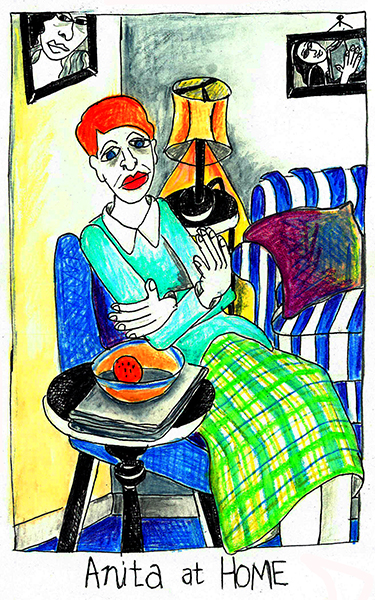
After the publication of A Start in Life, Anita continued to write novels publishing one every year. She’s been criticized as being too repetitive, that all her novels seem to focus on unhappy spinsters who are lonely and have the knack of falling for unsuitable men. Because what had started out as an autobiographical novel became a universal theme—how we displace ourselves just hoping to fit in somewhere.
Why is it that some people feel more comfortable with their lives than others? Why is it that some people are better at conforming than others? Why is it that some people have difficulty being the protagonist of their own life? Because in A Start in Life, we are given the impression that some people’s lives are determined for them as opposed to by them.
Like Ruth, Anita cared for her parents until their death. She never married to create a family of her own. Anita died at the age of 87. Childless, she didn’t ha someone to help her as she had helped her parents.

Related: Anita Brookner Interview with Maggie Gee 1984 + Why and How to Read: Anita Brookner + Anita Brookner obituary + Julian Barnes remembers his friend Anita Brookner: ‘There was no one remotely like her’ + Anita Brookner, The Art of Fiction No. 98 + In Praise of Anita Brookner + Anita Brookner’s Undue Influence + The Brooknerian Blog about Anita Brookner +
Anthony Blunt, Spy who came in from the Courtauld + A KGB Spy Worked in Buckingham Palace For Decades. The Crown Only Tells Part of the Story +
Robert Adam and N. 20 Portman House (original home of the Courtauld)
A START IN LIFE on Archive HERE
Billions and Billions of Periodical Cicadas +
Bibliography:
Malcolm, Cheryl Alexander. Understanding Anita Brookner. University of South Carolina Press. Columbia, South Carolina. 2002.
Sadler, Lynn Veach. Anita Brookner. Twayne Publisher. Boston. 1990.




 The Narrative Within