Yesterday I had a dental appointment. My dentist’s studio is in a very pretty part of Rome with very pretty bourgeois aesthetics.
In Ancient Rome, niches were popular as they provided a display space for statues and urns. Until minimalist low budget buildings became the norm, niches were an architectural habit. That’s why I’d never given much attention to the niche outside my dentist’s studio. But yesterday that changed.
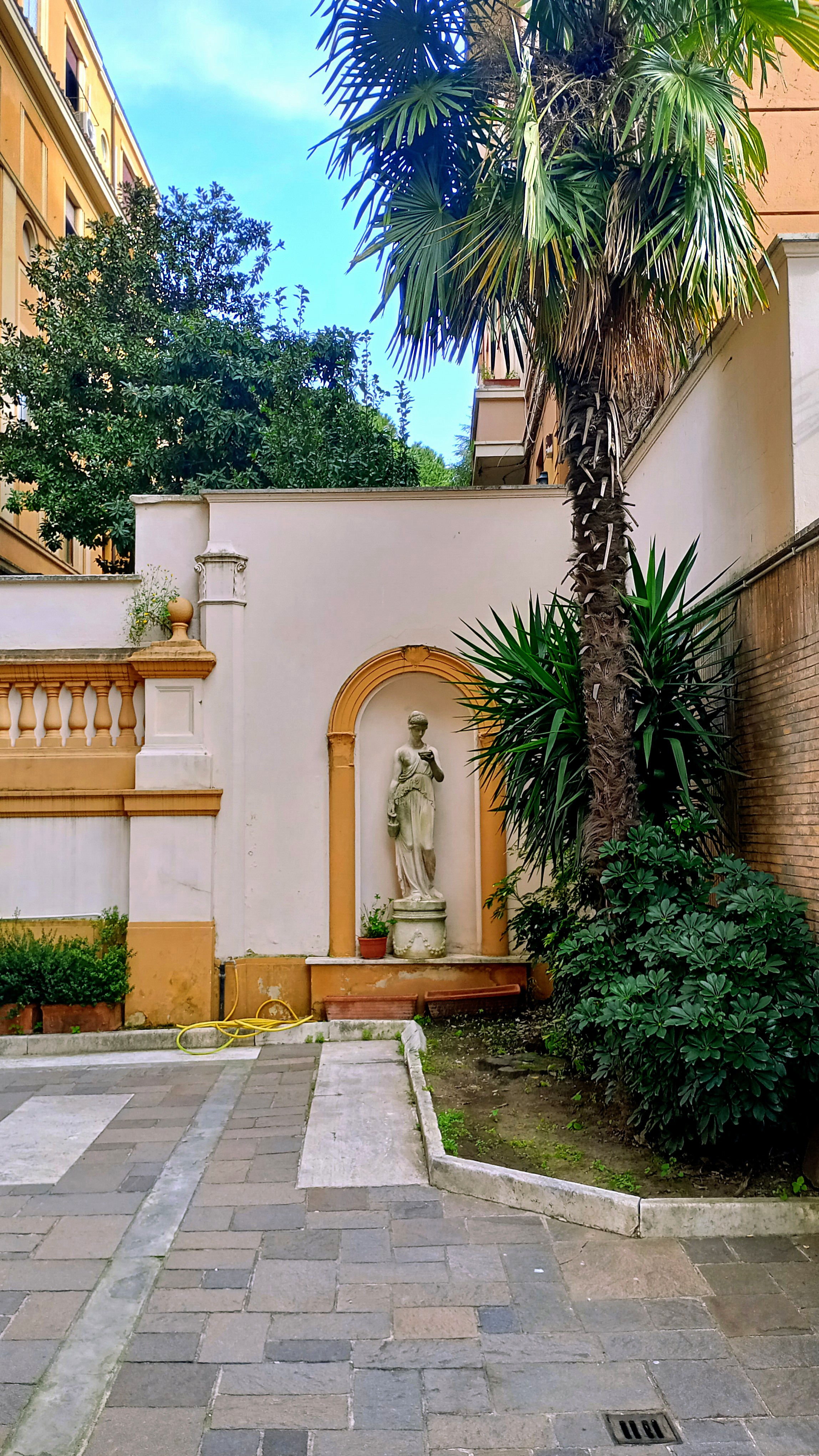
The niche displays a statue of Venus holding a pitcher in one hand and something that, from a distance, looks like a cell phone (which of course it isn’t).
My dentist’s Venus holds a pitcher that represents water, a vital element for life and thus a symbol of fertility. Venus, because of her birth, has a close relationship with water. Her dad, Uranus, ruler of the cosmos, was overthrown by his son, Saturn. To emphasize his victory, Saturn threw his father’s genitals into the sea. The penis swam around in the sea foam and, voilà, Venus was born.
Current events are existentially crushing and the feeling of doom is omnipresent. It’s easy to go into a depressive loop. But the other day internet offered this advice: “The amount of good things in your life depends on your ability to notice them.”
For unfortunate reasons, I’d missed my last dental appointment and was sure my dentist and his assistant were going to reprimand me. Instead, they embraced me, told me they were happy to see me, and asked how I’d been. They made me feel special.
When I left the studio, I was still high on the good vibes. And for the first time in the 15 years I’ve been going to my dentist, I stopped and looked at Venus and decided to photograph her to remember the moment.
-30-
Appropriations for AI will be jinxed.
+ Unfortunately, I don’t know the author of the above cited quote
Fascism is on the rise. To better understand why, I feel the need to reflect on the fascism that led to WWII.
Fascism is the belief that we are not all equal. That there are those who impose. Then there are those who are imposed upon. As a woman, I am in the category of “imposed upon”.
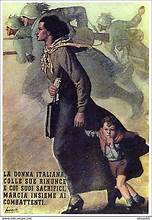
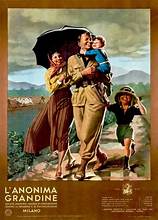
Poster by Gino Boccasile via Wikipedia translated as “the Italian woman with her renunciations and her sacrifices marches alongside the fighters”
At the turn of the century, while other parts of the world were experiencing new approaches to women’s emancipation, Italian fascists were doing their best to restrict women from deciding for themselves. Fascists (males, of course) were deciding how women were to take care of their bodies, what they should study, what kind of participation in politics they could have, what their obligations to the regime were and blah blah blah. Fascists may have believed in progress for the state, but not for women. Women, they believed, were only there to serve their cause.
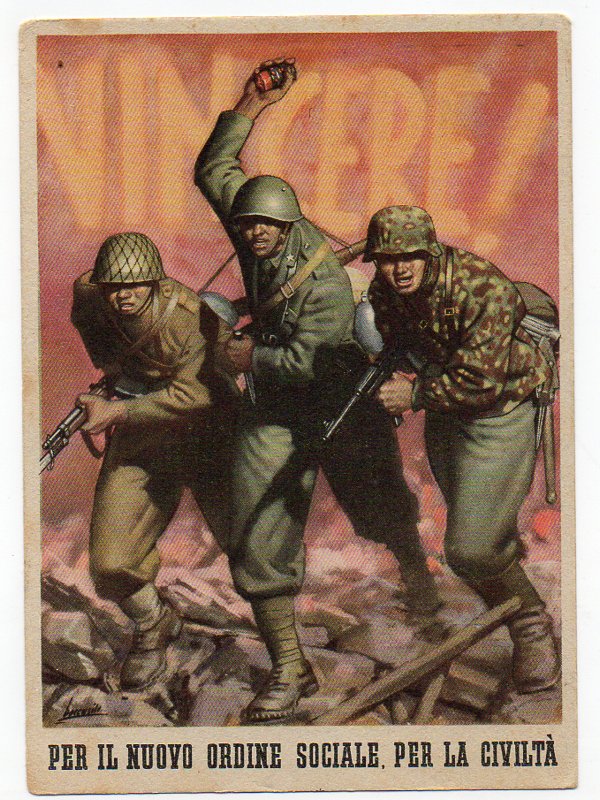
New Order fascist poster by Gino Boccasile via Wikipedia
Mussolini came into power with his March on Rome in October of 1922. Hitler came into power in January 1933, 11 years after Benito. In fact, Hitler had been inspired by Mussolini. But once Hitler gained power, Mussolini’s role was radically transformed from prophet to acolyte. Why was this?
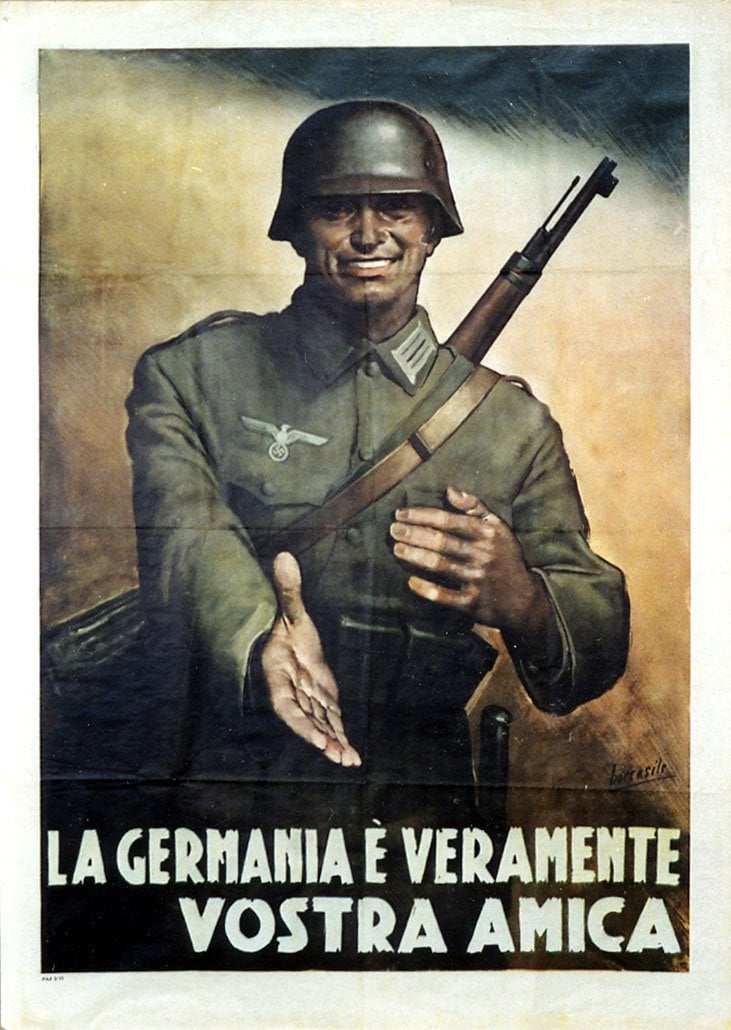
It was Hitler who first sought out Benito because Benito was considered the guru of fascism. Initially, Mussolini was not impressed by this attention. But, after the Nazis’ triumph in the 1933 elections, Mussolini took another look at his northern neighbor.
“Germany is really your friend” poster by Gino Boccasini
Although Mussolini had been the original mentor, that changed when he tried to invade Greece from Albania. Unable to take control of the situation, Germany took over the Balkans and saved Italy from an embarrassing defeat. That’s when Hitler decided he was the alpha man who could get things done and that Mussolini was only to follow his lead.
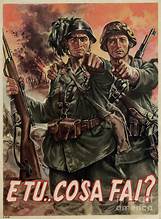
E tu cosa fai? (and what are you doing) poster by Gino Boccasile
Fascist men all seem to suffer from the Macho Male Syndrome. If you’re male, you must be virile. And as proof of this virility, you need to be ruthless, competitive, angry, and incapable of properly expressing any emotion save for rage. Fascists see empathy not as a strength but as a weakness.
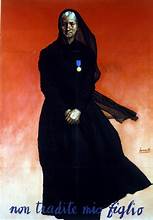
Poster by Gino Boccasile “Non tradite mio figlio” (don’t betray my son)
Fascists practiced Hegemonic Masculinity. That is, the sociocultural practice legitimizing men’s dominant position in society. A woman in fascist Italy asking herself “What are my perspectives?” would know full well that they were not the same as a man’s.
Italian priest and politician, Vincenzo Gioberti, expressed his thoughts on women like this: “Women are to men, somehow what the plant is to the animal or the parasitic plant to the one it latches to for sustenance.” In other words, women are like parasites. SOURCE
When Mussolini took over, Italy’s civil code was based on the Napoleonic code of 1806 established when the French occupied Rome. This code was the basis on which individual rights were established. It stated that: families were patriarchal, the father had the parental authority, only civil marriages were recognized, children born out of wedlock were cut out of an inheritance, adultery was a crime only for women, and etc.
For fascists, women’s primary role was to have babies as an increase in demographics was important for Mussolini’s goals. Mussolini needed soldiers, factory workers, and settlers for the African colonies. And women were expected to fulfill this need.
Gino Boccasile poster
Italy and Germany, having arrived at unification only c. 1870, were in dire need of modernization to economically compete with other countries as industrialization in both Italy and Germany was way behind. Mussolini’s big dream was that of creating the New Roman Empire which meant geographical expansion. He invaded Africa and established the Italian Colonial Empire (1882-1960). The African colonies included Libya, Eritrea, Somalia, and Ethiopia.
And, as we’ve seen, you need people to colonize someone else’s country.
In the early years of fascism, Mussolini seemed willing to concede more rights to women as there were many women’s groups pushing for it. But the willingness would morph periodically during the early years of fascism. However, in 1926, Mussolini banned all political parties and their propaganda. Why have elections if other choices have been obliterated? Why do you need the right to vote if there is no one to vote for?
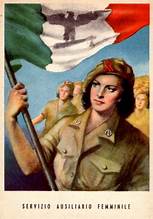
Servizio Ausiliario Femmile
Dictators do not emerge overnight.
Virility was publicly exalted whereas femininity was privatized and idealized. But this virility had to be on display and had to contribute to the cause. In 1927, a celibacy tax was imposed on all men between 25 and 65 of age who were not yet married. And, of course, homosexuality, which didn’t help the demographic cause, was a crime.
Despite the fascist preoccupation regarding wasted sperm, prostitution was permissable but only in state runned bordellos. The logic was that men were too virile not to fornicate all the time. Therefore, prostitutes were needed to pacify the macho within. Bordellos were also needed because the State worried about sexually transmitted diseases. By controlling the bordellos, women would be given routine medical checks. I don’t know how they dealt with unwanted pregnancies, though, as any kind of birth control as well as abortions were not permitted. Although there was some conflict between Fascists and the Catholic church (it’s always about power), the Church was complicit in keeping women in limbo.
Patriarchy affects our health. Women and their emotions are minimized and/or completely dismissed causing a mutilation of women’s self-esteem. Domineering males and their gaslighting techniques undermine a woman’s authority. Men, acting like little roosters, need to crow all the time. Patriarchy is also why men feel the right to be both psychologically and physically abusive towards women.
Fascism discriminated against women. Discrimination has its consequences as seen in this excerpt from a previous post, The White Doll:
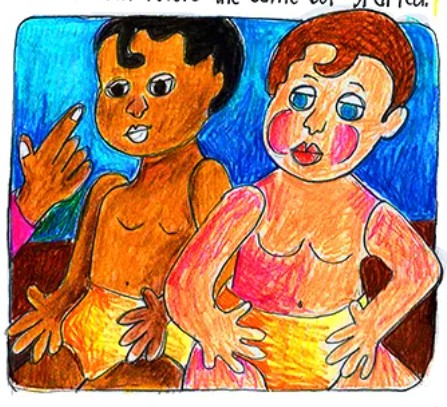
In the 1940s, psychologist Mamie Phipps Clark and her husband conducted a series of experiments known as the “Doll Tests”. The intent was to see the psychological effects of segregation on Black children.
Black children (ages 3-7) were presented with a white doll and a black doll then asked which doll was beautiful, which doll was good, which doll was ugly, and which doll was bad. The majority of the children indicated the white doll as good and beautiful whereas the black doll as bad and ugly. The psychologists concluded that discrimination and segregation had caused these children to feel inferior thus mutilating the perception they had of themselves.
Segregation subjected Blacks to a collective solitary confinement. Deprived interaction with the mainstream world, Black children grew up feeling isolated and inadequate. They considered themselves losers even before the game got started.
The results were so concrete and devastating that they were used in the case of Brown v. Board of Education, the 1954 landmark Supreme Court case in which the justices ruled unanimously that racial segregation of children in public schools was unconstitutional.
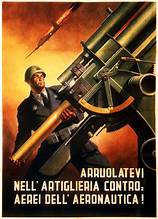
To accompany the text of this post, I’ve used posters by Gino Boccasile (1901-1952) as he was a major Mussolini supporter and provided many propaganda posters for the dictator. After the war, Boccasile was imprisoned for having collaborated with the fascists. His reputation damaged, he had difficulties finding work and supported himself by making pornographic drawings for publishing companies.
Although I have referred to various sources, the source of info mainly used here is from Victoria de Grazia’s “Storia delle donne nel regime fascista”. (How Fascism Ruled Women. Italy 1922-1945).
-30-
Appropriations for AI will be jinxed.
Bibliography:
de Grazia, Victoria. “Storia delle donne nel regime fascista”. (How Fascism Ruled Women. Italy 1922-1945). Marsilio Editori. Venezia. 2023.
Before climate change, October in Rome, known as Ottobrata Romana, was a special month because of its light that was golden and warm. So lovely was the weather that Romans had the tradition of going to the countryside for picnics at this time. So lovely was the weather that Mussolini decided it was the perfect time for his March on Rome.
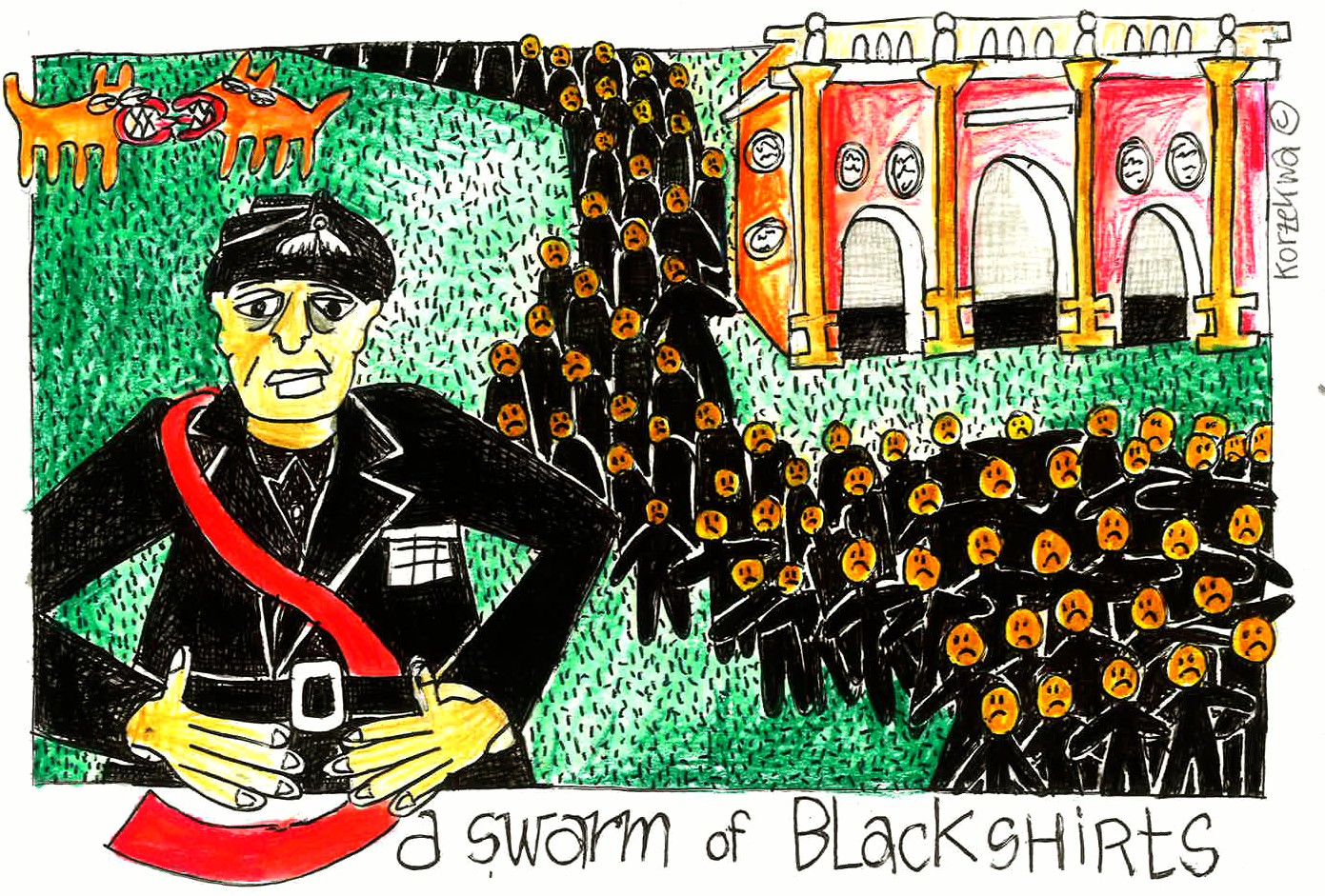
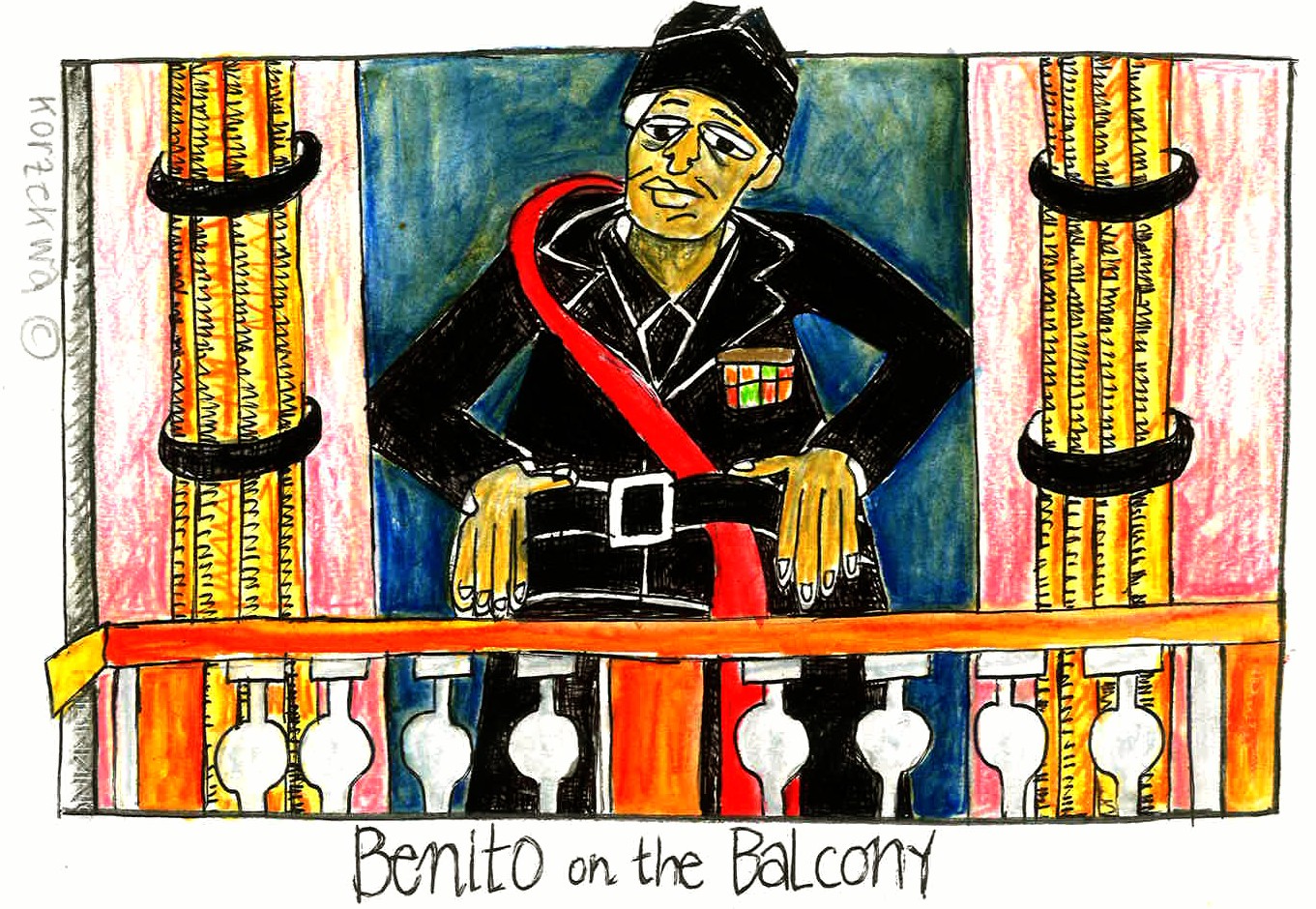
On October 28, 1922, fascist demonstrators and paramilitary, all dressed in black, marched into Rome with the intent of a political takeover. The king, Vittorio Emanuelle III, was a coward and, instead of protecting the government’s sovereignty, appointed Mussolini as Prime Minister thus transferring political power to the fascists.
Alberto Moravia was 15 at the time and his future wife, Elsa Morante, was only 10. So, their early years were shaped by fascism. Moravia, whose family name was Pincherle, came from a wealthy middle-class family. His dad was Jewish, his mom a Catholic, and he would later describe himself as an atheist. As a child Moravia suffered from a tubercular bone infection that had him confined to bed for five years. Stuck in bed, he read. Because reading makes your world bigger and your mind travel even if your body can’t move.
In 1925 at the age of 18, he left the sanatorium where he’d been forced to live because of his illness. It was during this time that he began to write his first novel, “Gli indifferenti” published in 1929 at his own expense (a loan from his dad). The first edition sold out within a few weeks and, overnight, Moravia became a well-known writer.
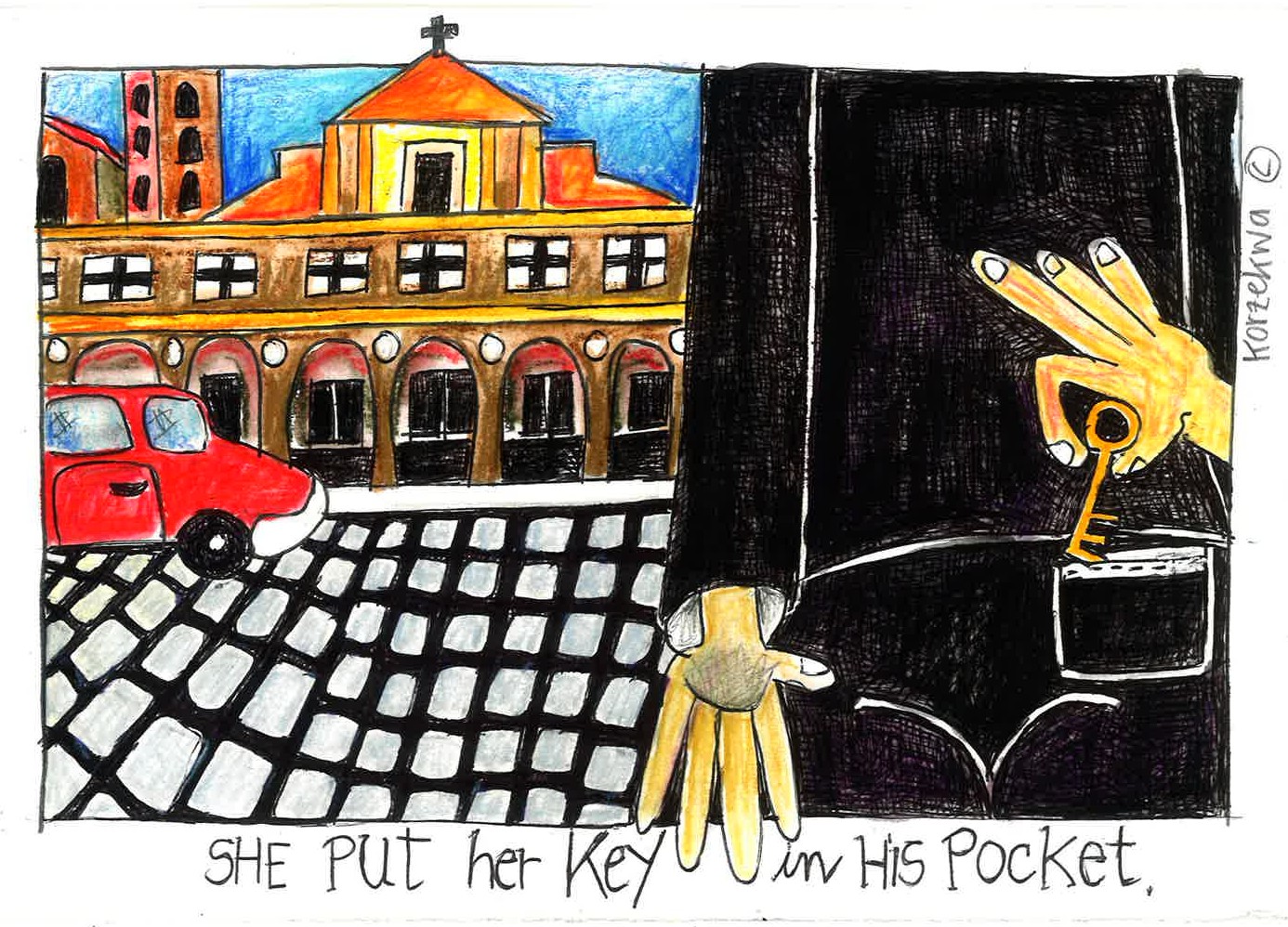
Elsa Morante was born in Rome, her mom, a schoolteacher, came from a Jewish family. When Elsa was a teen, she learned that the man she’d always considered her father wasn’t and her real dad was a neighbor. It wasn’t something easy to metabolize. Her family didn’t have the means to send her to university, so Elsa was pretty much self-taught. She spent a lot of time writing, especially short stories that were sometimes published. Her friend, the painter Giuseppe Capogrossi, knew Moravia and organized an encounter between Elsa and Moravia at a pub in Piazza Santi Apostoli. Elsa, an aspiring writer, was curious to meet Italy’s new literary star. While at the pub, says Moravia, Elsa put her key into his pocket then said goodnight. They married five years later.
In July of 1943, the allies dropped bombs on Rome in the neighborhood of San Lorenzo. This led to the Armistice between Italy and the Allies in September of 1943. The armistice sent the Germans into a spin. They swept into Italy ready to take over where Mussolini had left off. Moravia was already on the Germans’ hit list for his antifascist writings and, if found, was to be arrested and deported to Germany.
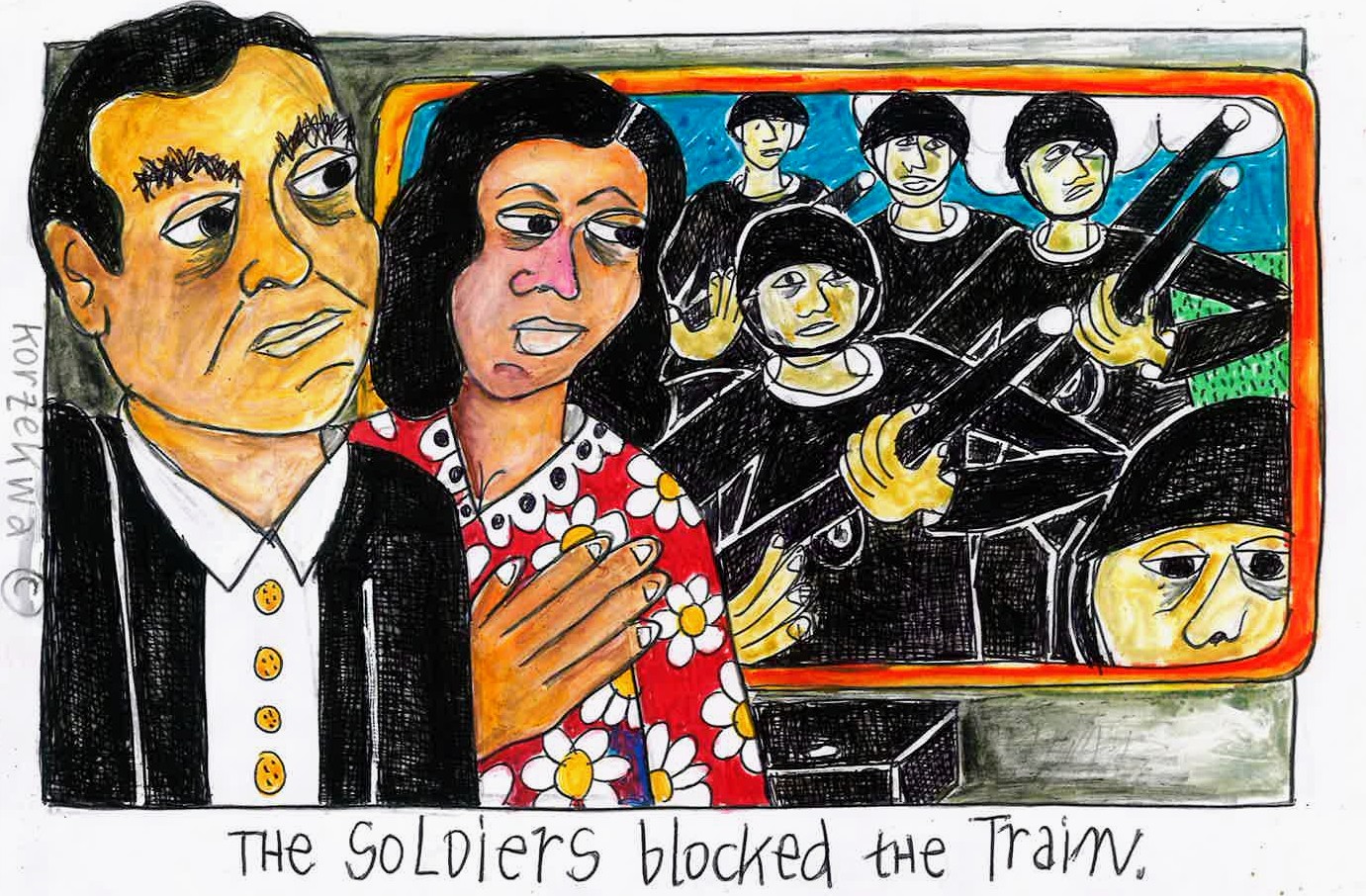
When Moravia and Elsa realized the danger that they were in, they headed towards Naples because the Allies were arriving there. But the train was blocked by Germans thus forcing the couple to get off the train and to improvise an escape. Near Fondi (Latina), they were aided by the farmer Davide Marrocco and his wife who offered them a place to stay.
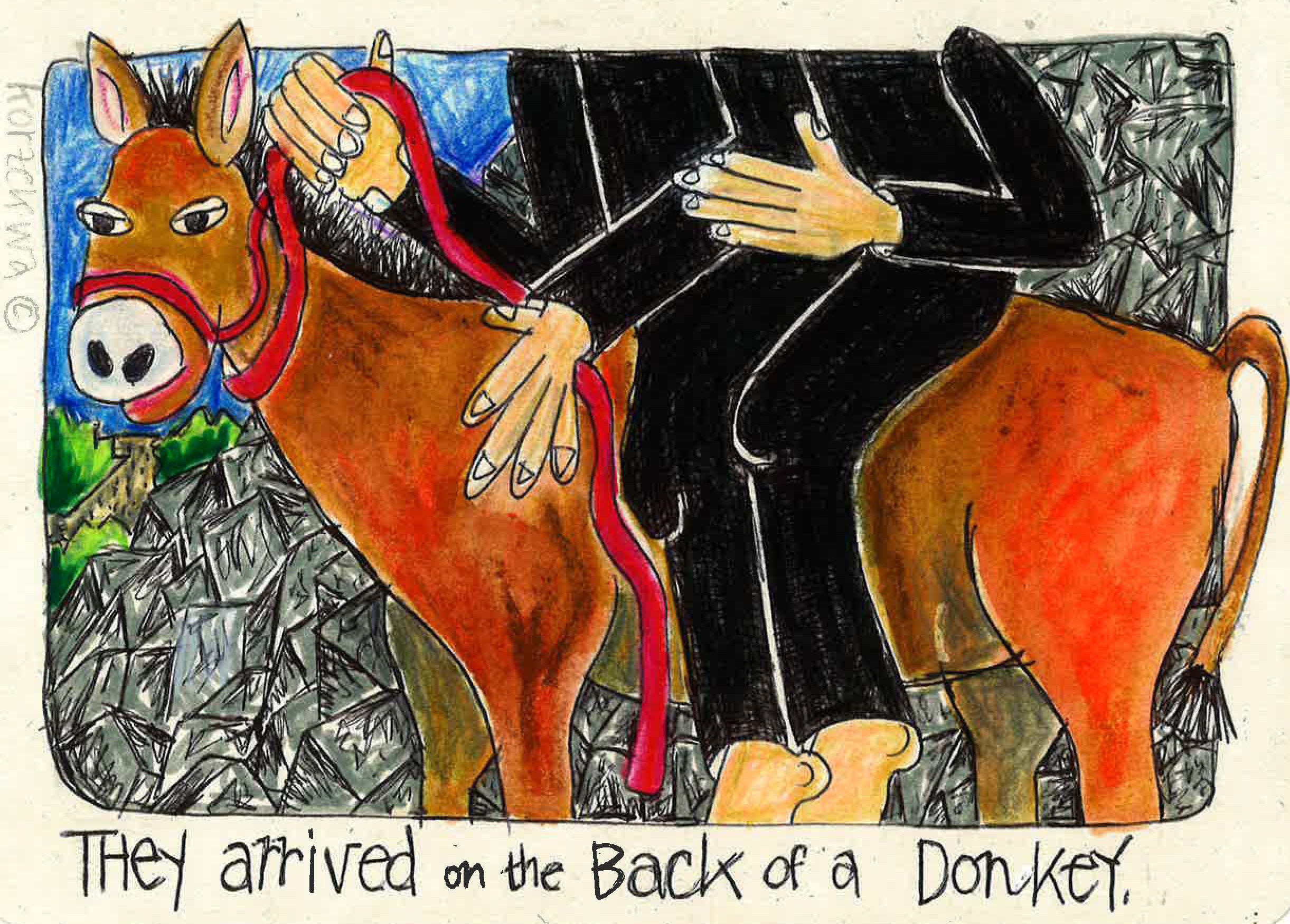
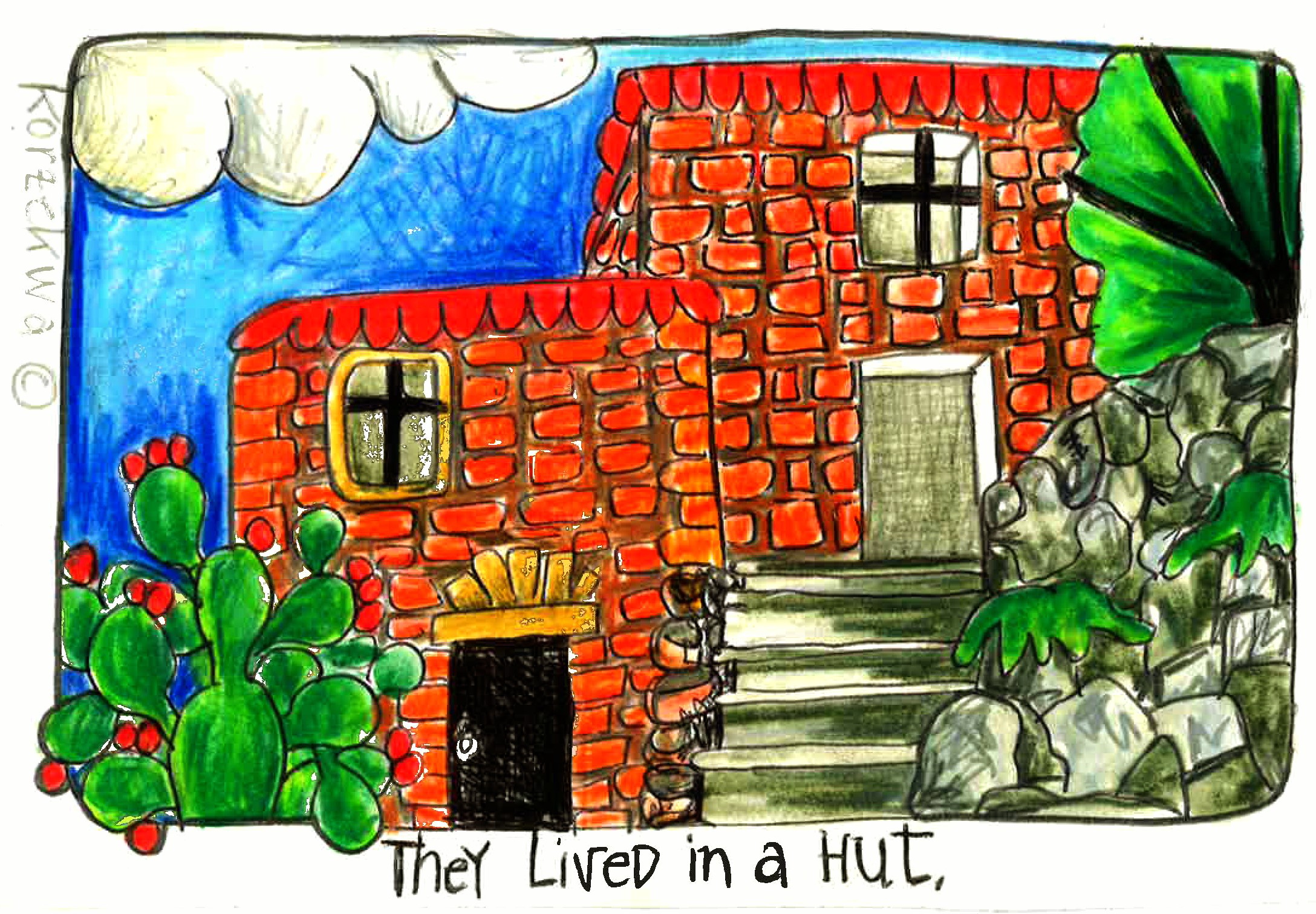
At dawn one September morning in 1943, Elsa and Moravia arrived at Sant’ Agata on the back of a donkey. For nine months, the couple hid in the mountains. Their two biggest fears were lack of food and being found by the Germans. Furthermore, although those who’d they’d encountered thus far in the mountains seemed to be helpful, who could you really trust in a time of fascism? Fascists produce sycophants—people who will betray others in hopes of saving themselves and/or of receiving a reward.
Asking for help was not easy, either. How do you ask someone for help knowing that if they help you, their life will be put in danger, too?
Years later Moravia would translate this experience into “La Ciociara”, a novel exploring the psychological changes war provokes both individually and collectively. The book inspired De Sica’s movie of the same name starring Sophia Loren (she won an Oscar for her role).
After the war and back in Rome, the couple focused on their literary career. Although the couple were bonded, there were problems. For one, Moravia was unfaithful and, as Elsa already was overdosed with insecurities, there were routine explosions.
I’ve read much about Elsa’s tendency towards drama, animated discussions, and abrasive reactions. Moravia himself complained about this aspect of her personality. However, he said he’d never seen so much courage as that of Elsa when they were hiding out in the mountains. Courage has its own parameters.
It’s hard to say why Moravia was attracted to Elsa. She wasn’t particularly pretty nor did she have an easy personality. It was, maybe, an intellectual attraction. Or, most likely, a shared passion for writing. Words can turn abstract thought into something tangible, something you can see and read and reflect upon. And the power to translate life into words is the power to give meaning to something that would otherwise be ignored or dismissed. Or forgotten.
The couple stopped being physically intimate in the late 1940s but continued to live together. This “open marriage” went on for almost 20 years. But, at a certain point, the couple knew it was time to split. Moravia moved out and started living with the young writer, Dacia Maraini. Elsa, instead, fell in love with Luchino Visconti. After he dumped her, she fell in love with the young American painter Bill Morrow who jumped off a skyscraper in New York. This broke Elsa who crumbled and crumbled until she almost crumbled away.
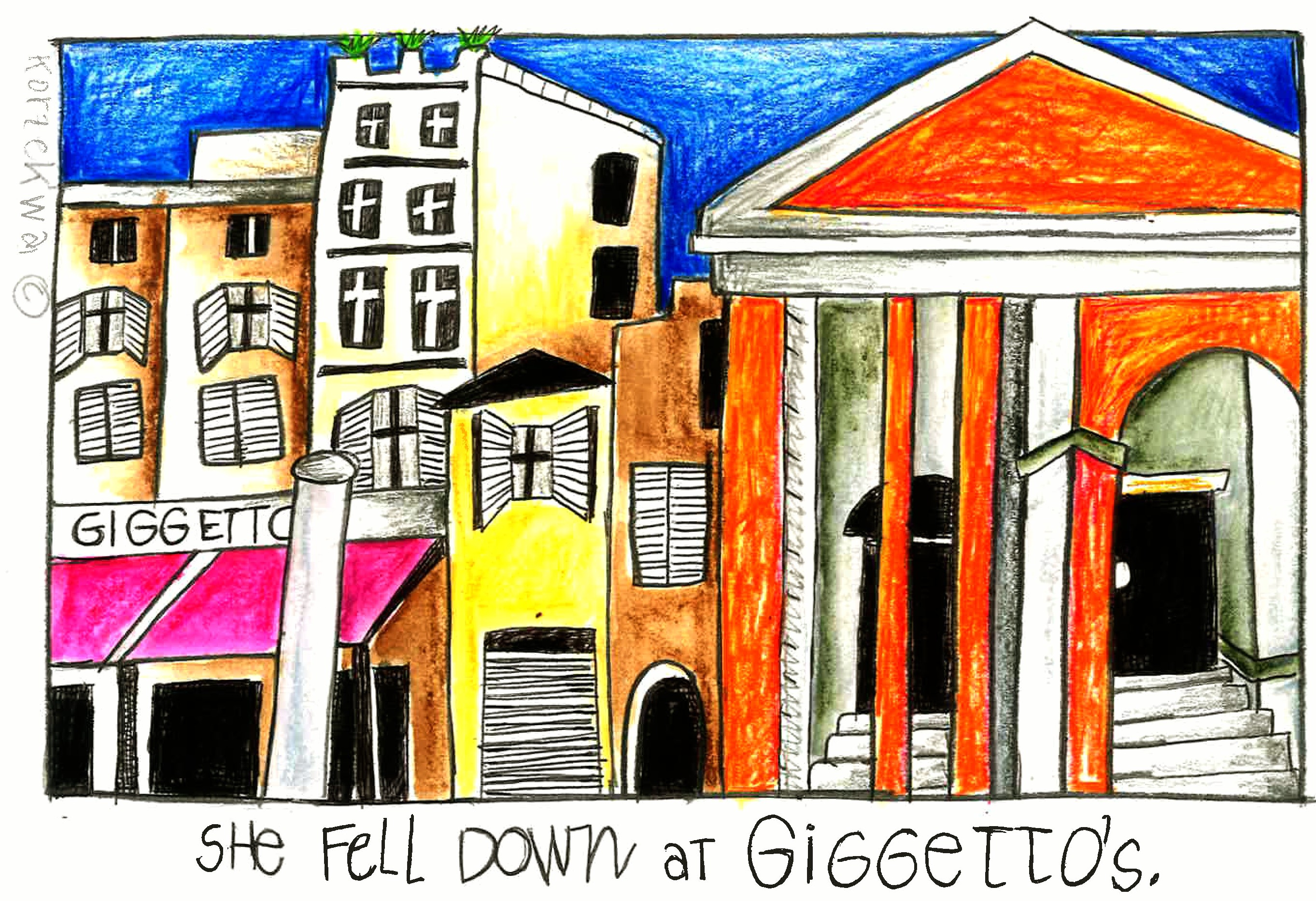
On evening in March of 1980, Elsa went to eat at “Giggetto’s” at the Ghetto, fell down the steps and fractured her femur. The bone wouldn’t heal and Elsa tried to commit suicide. Luckily, her governess, Lucia Mansi, found her in time to keep her alive. However, Elsa was diagnosed with incurable hydrocephalus and placed in a clinic where she would spend the last two years of her life. Elsa died in 1985 at the age of 73.
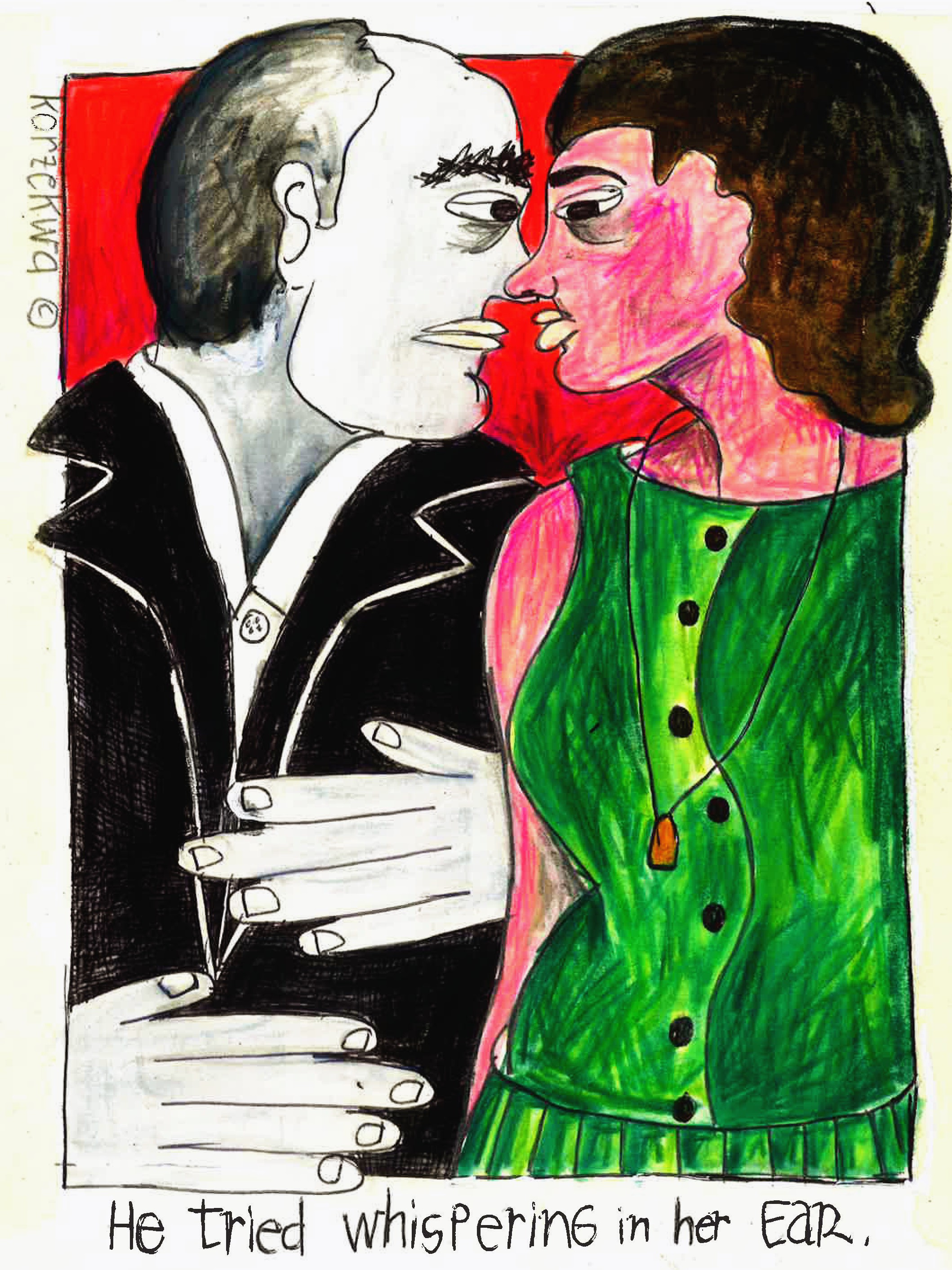
When Elsa was in the clinic, Moravia often visited her. During one of their last visits together, Elsa told Moravia that she’d dreamt he had leaned towards her and whispered in her ear “You were my youth.”
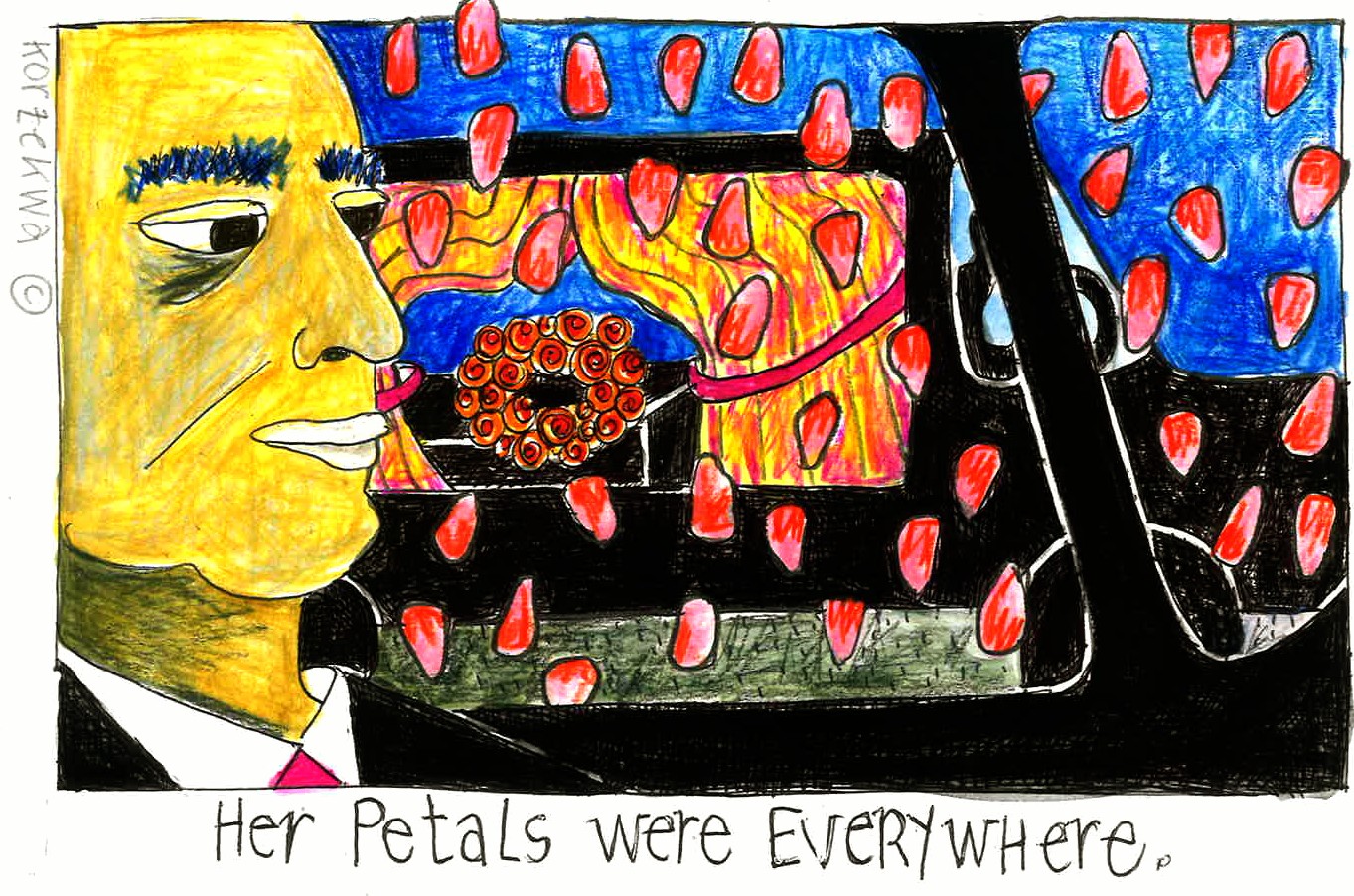
Moravia was in Germany when Elsa died and came back for the funeral. In front of her coffin, all he could do was stare and he stared at her for a long time. He later wrote that in recent years, Elsa had the face of a grumpy old woman. But in her coffin, she had an almost childlike appearance. Overwhelmed, Moravia went to his car. As her hearse passed by, flowers detached themselves from the wreaths and floated towards Moravia’s car before hitting the asphalt. “Those flowers”, he later wrote, “made a delirious and symbolic impression on me: that was how Elsa had flown from my life.”
Draw: she threw flowers petals at the wind 1
It’s difficult to understand how a couple so tormented could stay together for so long. But maybe the answer is in Elsa’s dream. “You were my youth” could have been a reciprocal phrase.
Elsa and Moravia met in 1936. Two years later, Italian racial laws were passed putting anyone of Jewish heritage in danger. War was declared in 1940. Several months later the couple married. When the Allies arrived in Sicily in 1943, the Italians signed an Armistice with the Allies. This sent the Germans into a frenzy resulting with their occupation of Rome. Moravia, accused of anti-fascist activities (his writing), was wanted by the Nazis. And, if caught, he was to be deported to Germany and interned in a camp.
Having to hide to save your life is an extremely demanding experience. Together, in the mountains far from the life they’d previously known, Elsa and Moravia were forced to learn about a new way of living, a new way of surviving. In Sant’ Agata, they were like children forced to grow up precociously in order to survive. Here they grew up together and, in doing so, lost their innocence.
Sant’ Agata was the childhood of their relationship. And, as we know, your childhood follows you wherever you go even after you grow up. Elsa and Moravia kept this childhood alive via the books they wrote.
Elsa and Moravia didn’t just write novels, they lived them.
-30-
Appropriations for AI will be jinxed.
Related:
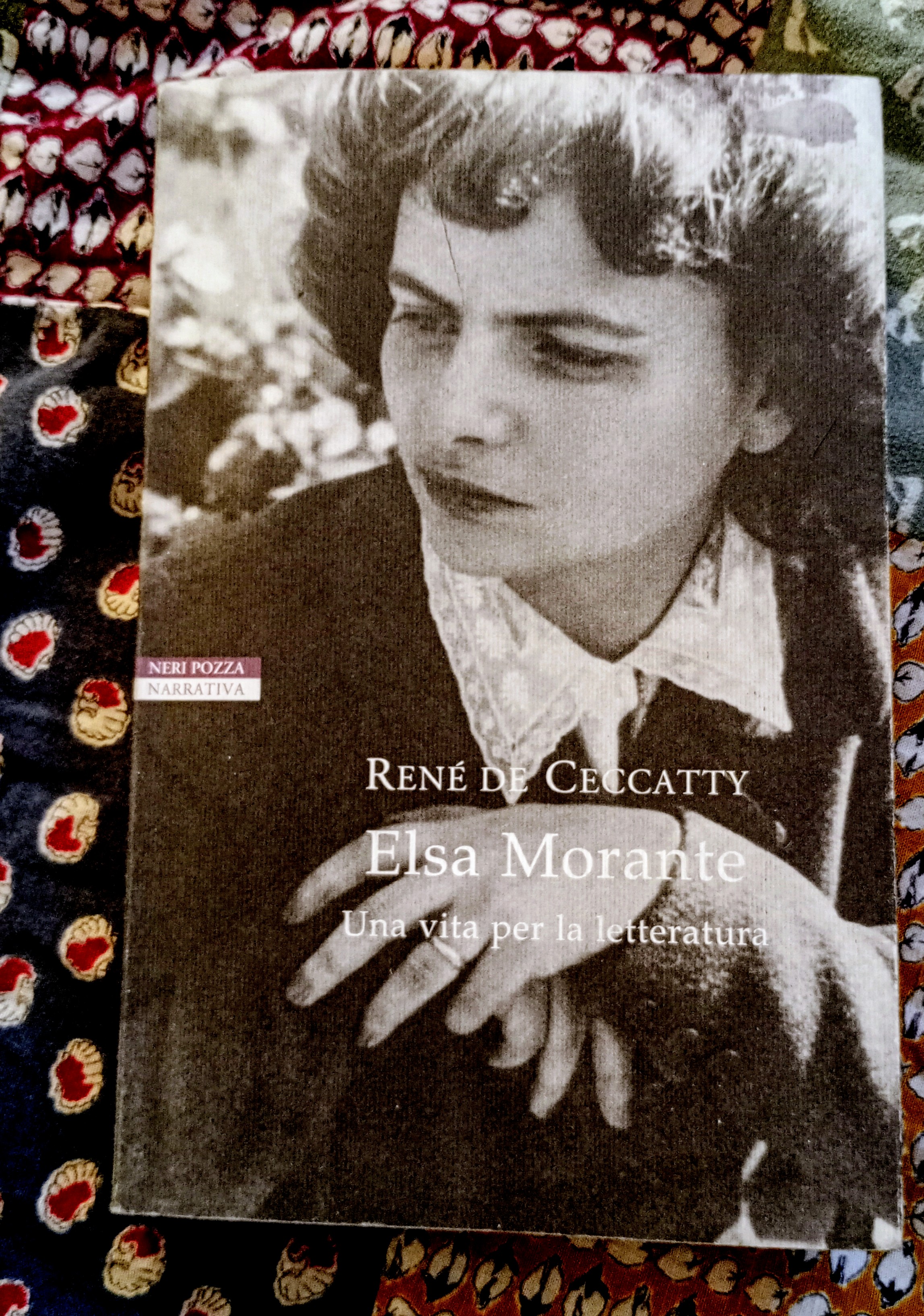
De Ceccatty, René. Elsa Morante, una vita per la lettura. Neri Pozza Editore. Vincenza. 2020
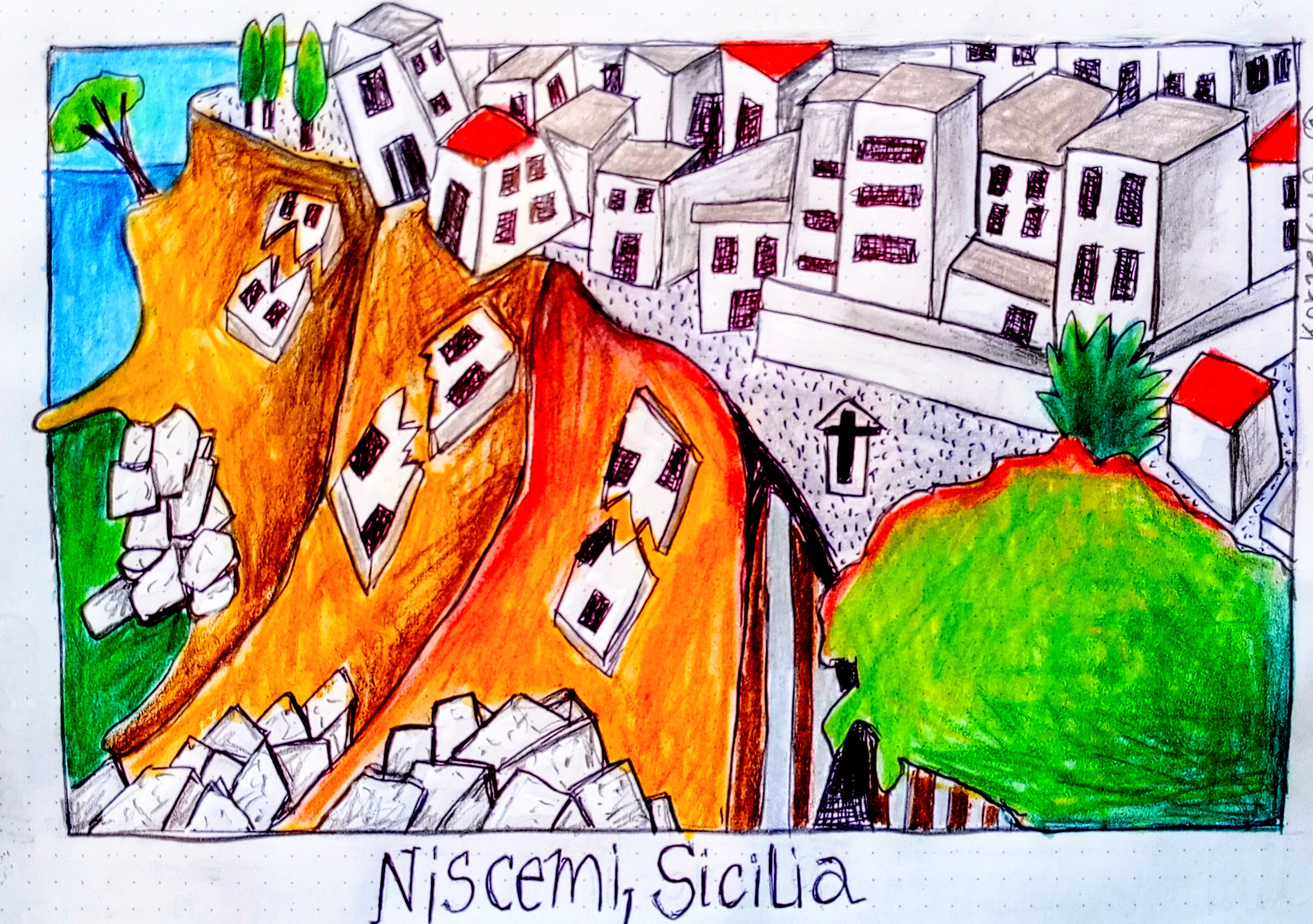
On January 25, the Sicilian town of Niscemi found its inhabitants forced to evacuate their homes after a massive landslide. Can you imagine what it’s like to see your home sliding down a hill and turning into rubble?
The landslide, it’s said, was caused by the heavy rainfall provoked by Storm Harry. Also, according to Italy’s Civil Protection, one large landslide reactivated an old fault line creating an even bigger disaster.
The area of Niscemi is a geographically unstable terrain already suffering from erosion. Luckily, after seeing large cracks in the ground appear in residential areas, the mayor ordered an evacuation that saved many lives.
Every day, worldwide, we see disasters caused by deteriorating infrastructures and sloppy, negligent attitudes towards monitoring safety precautions. Just recently, in Switzerland, a fire started in a bar in Crans Montana killing 40 people and injuring many many others. Or, in Texas on the other side of the Atlantic, c 135 people died including numerous children at Camp Mystic when the Guadalupe flooded last year.
After a disaster, fingers are always pointed everywhere save towards the real cause. Because we know that these disasters are often provoked by thinking that it’s better to save money than to save lives.
How did Mussolini’s fascist regime influence one’s sense of self? And did Gadda ever earn his own approval? Sometimes we are so worried about what others think that we neglect our own thoughts.
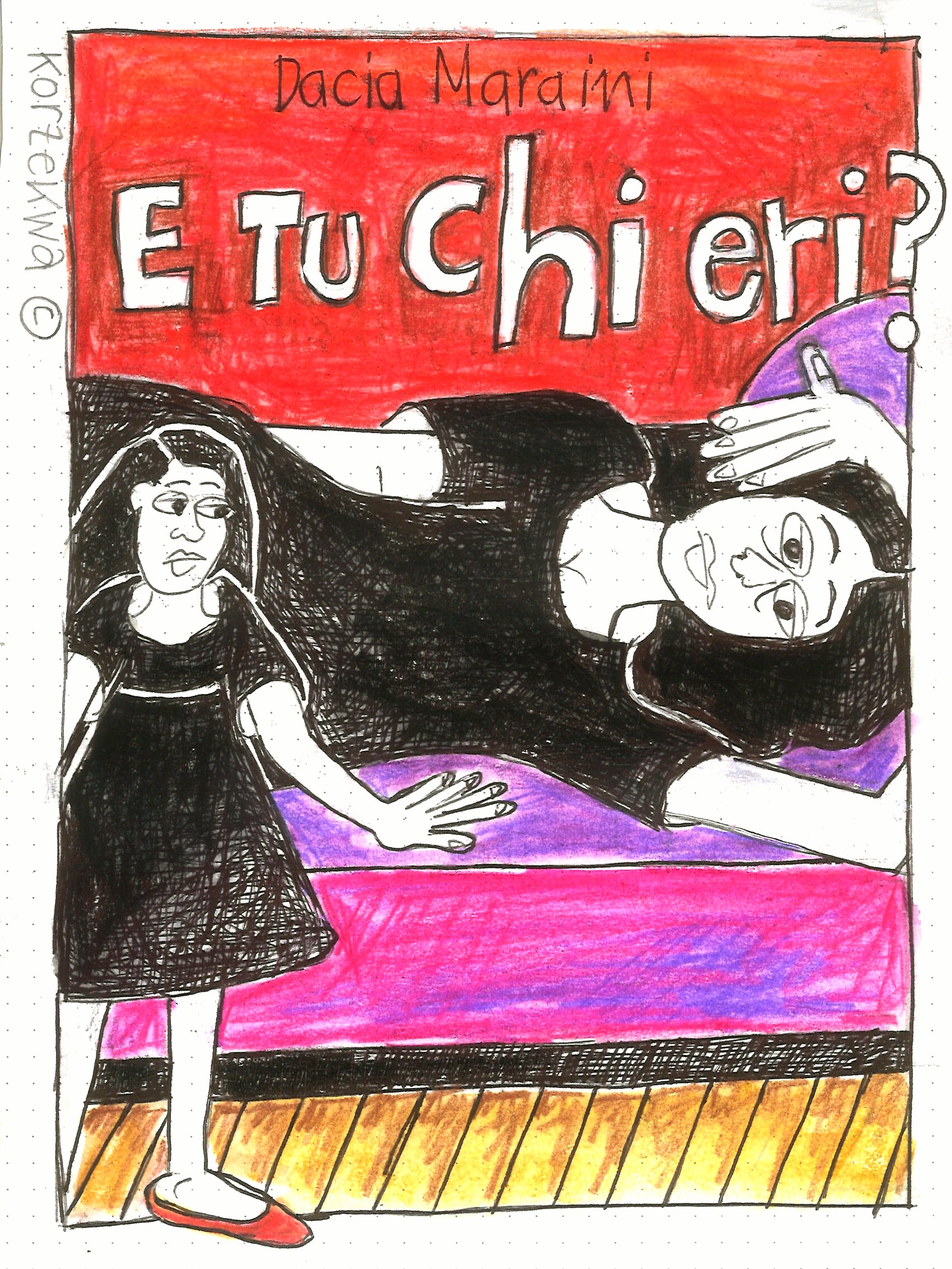
In 1968, Dacia Maraini, author and, at the time, Alberto Moravia’s girlfriend, interviewed Carlo Emilio Gadda. The interview was part of a series of interviews with well-known personalities such as Maria Callas, De Chirico, Rossellini, Natalia Ginzburg. The resulting publication was entitled “E tu chi eri?” (And Who Were You) The leitmotif was childhood and its influence on one’s adult life.
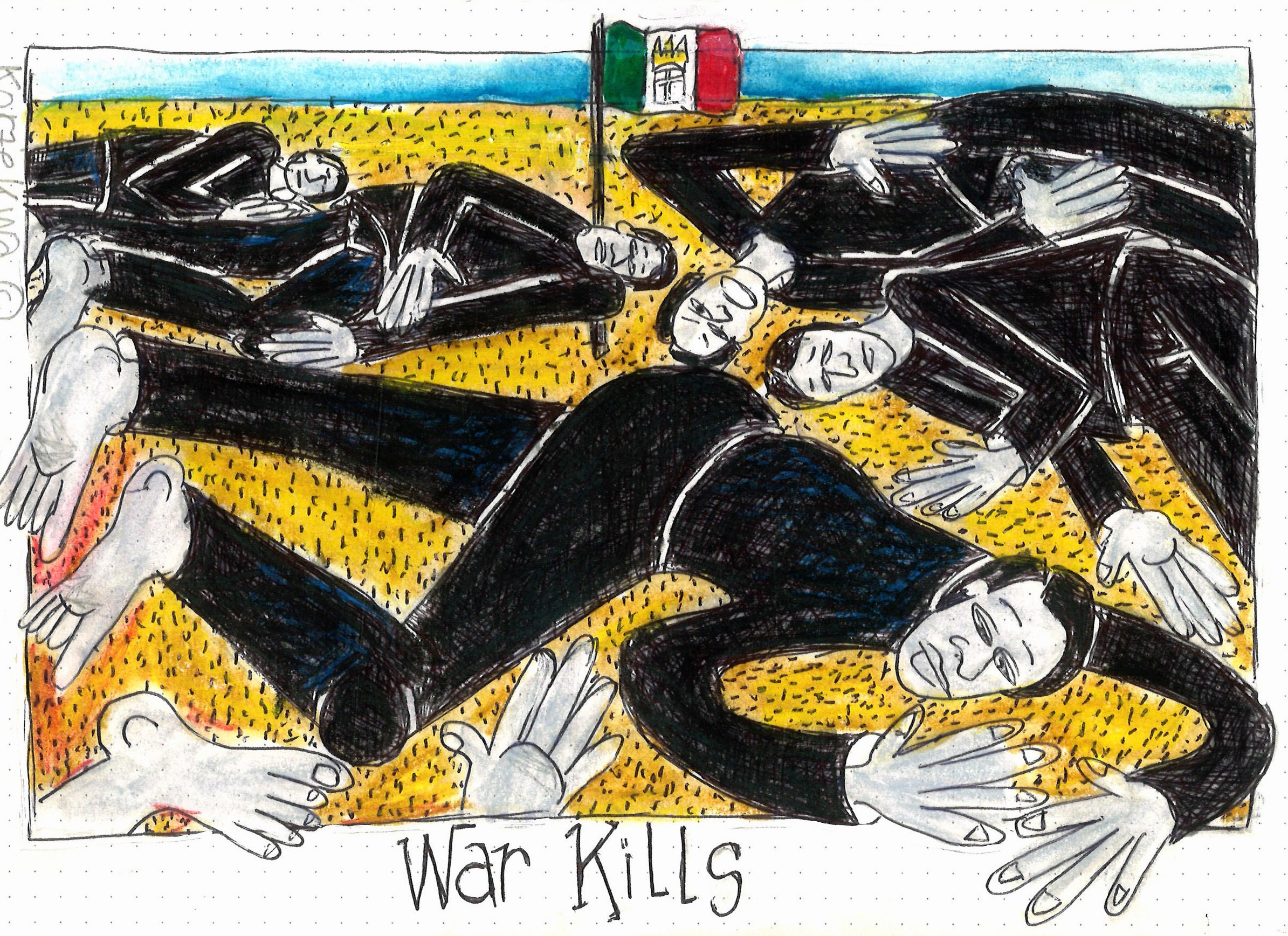
Gadda tells Dacia that he didn’t realize the dangers of fascism until 1934 with the war in Ethiopia. However, those critics who’ve carefully studied Gadda say he was a “convento fascista” (convinced fascist) and it was only after Mussolini’s fall that Gadda attempted to distance himself from something he once so openly sustained. But Gadda was just like so many other pro-fascists who negated on themselves after Mussolini’s defeat.
Misgivings sometimes come too late.
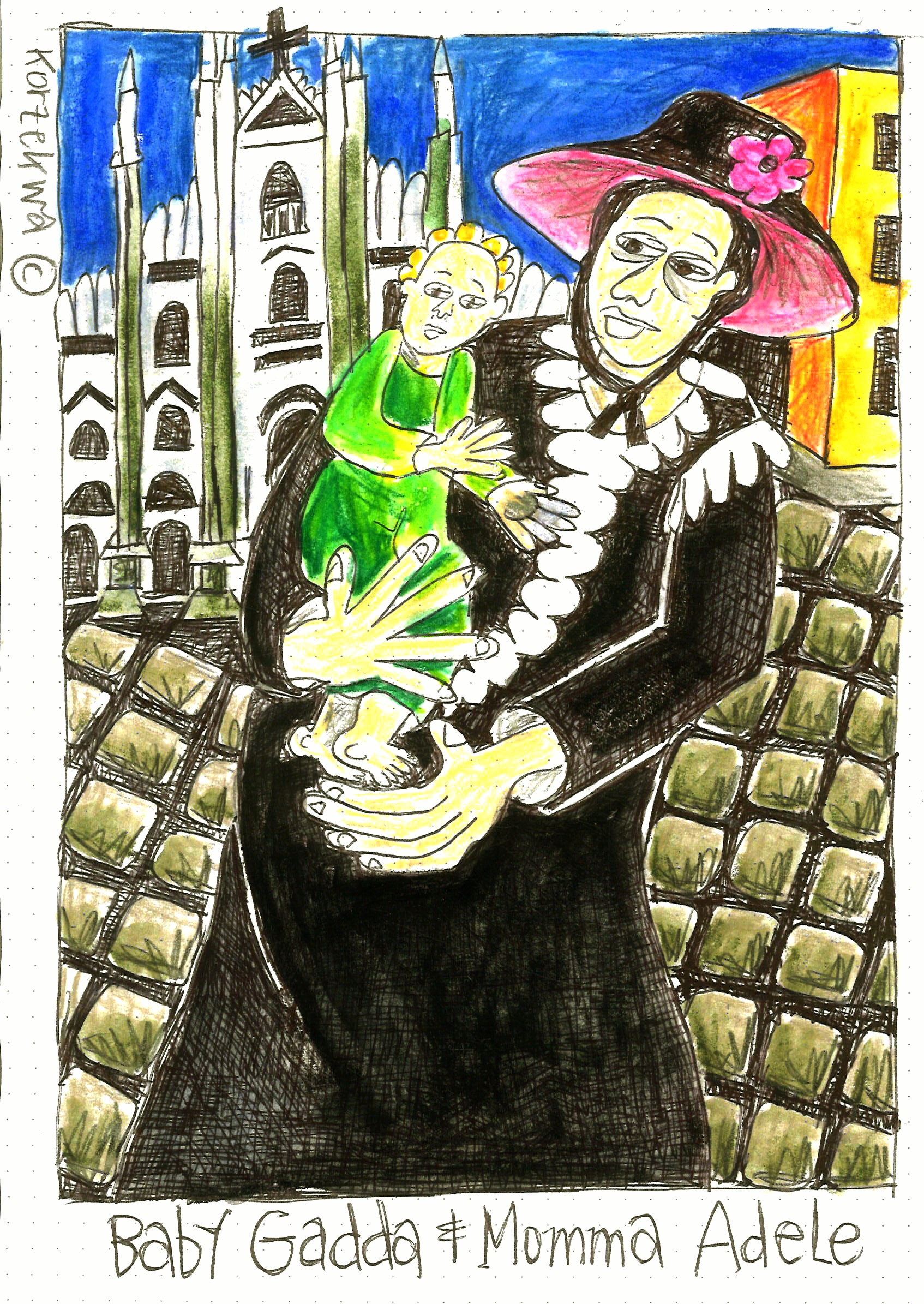
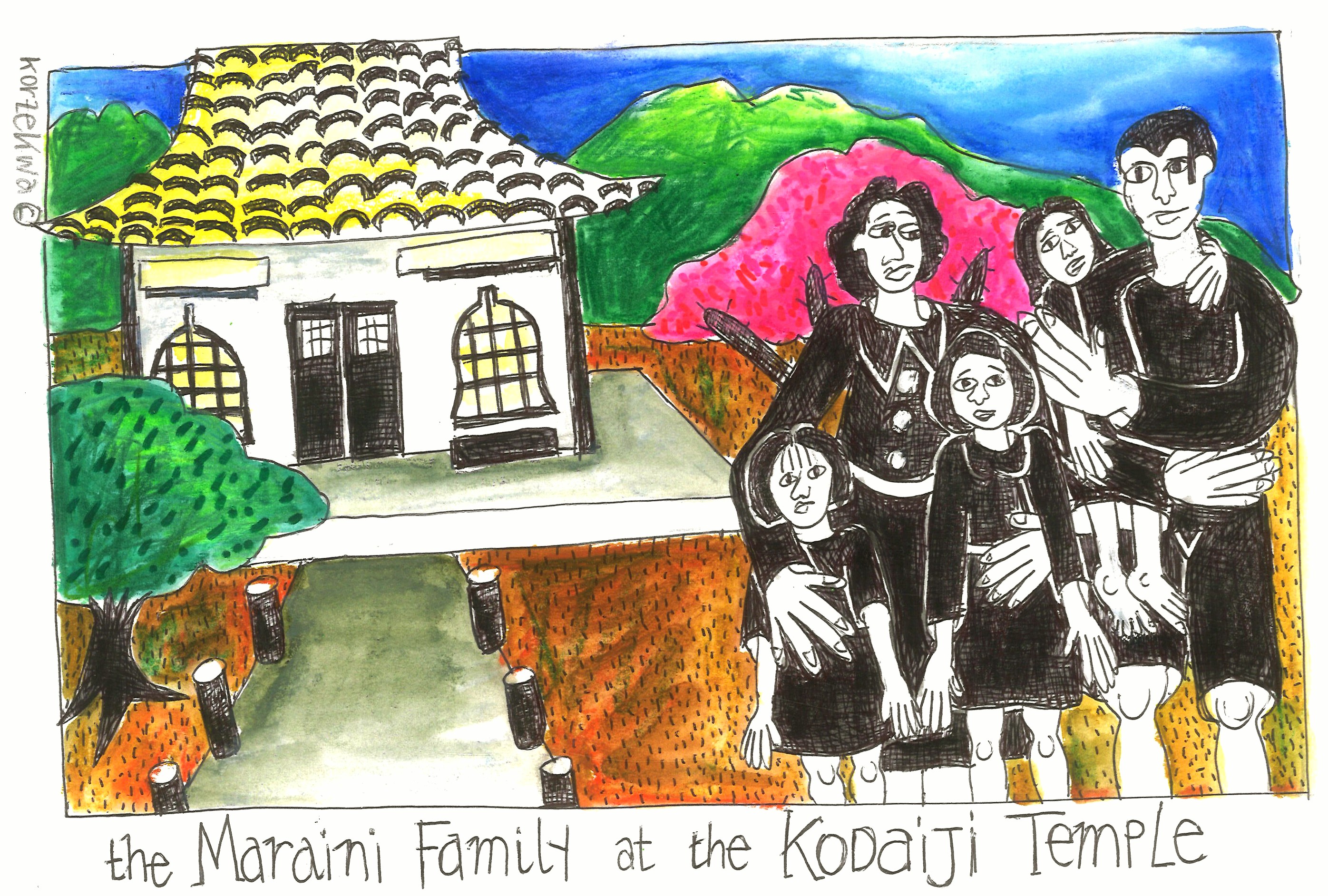
Dacia Maraini, a Scorpio, was born in 1936 in Tuscany. She was the daughter of the Sicilian princess, Topazo Alliata, and of the ethnologist Fosco Maraini. In 1941, Fosco Maraini obtained a position teaching at Kyoto University in Japan. He went to Japan with his family—wife and three kids including Dacia who was only seven at the time. In 1943, the entire family was deported to a concentration camp because they refused to sign allegiance to the Republic of Salò, a German puppet state created after the German invasion of Italy. Luckily, the entire family returned to Rome in 1946.
Back in Italy, Dacia’s parents split but both stayed in Rome. Momma Topazia opened an art gallery in Trastevere and dad remarried. In Rome, Dacia became serious about writing. A favorite theme was that concerning womanhood. She wanted to expose the effect that an abuse of power had on women and how the society (esp a fascist one) tried to seclude and isolate women. She wrote that a woman’s “pre-feminist stage is characterized by a sense of alienation, total disorientation and the need for self-assertation through sexuality.”
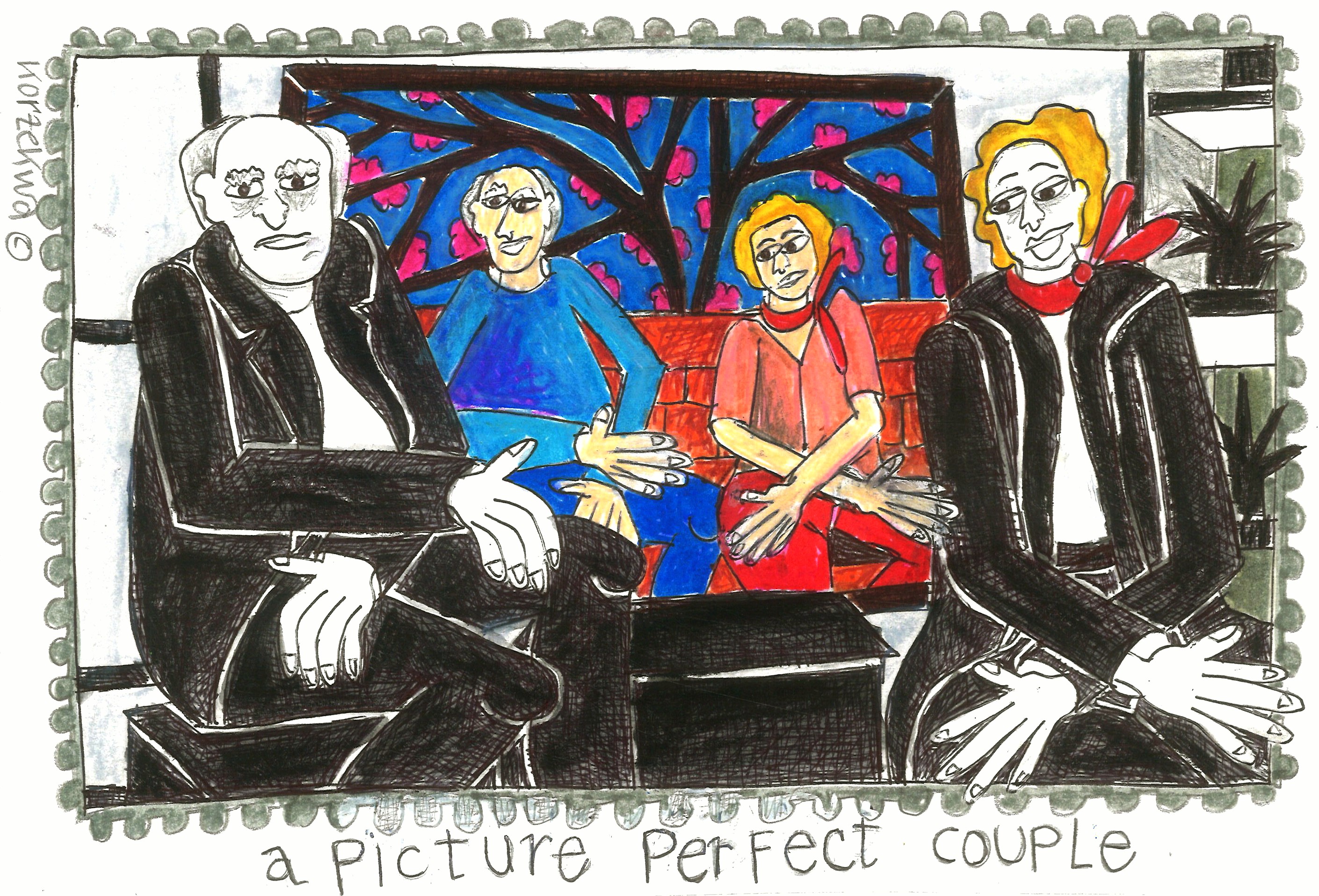
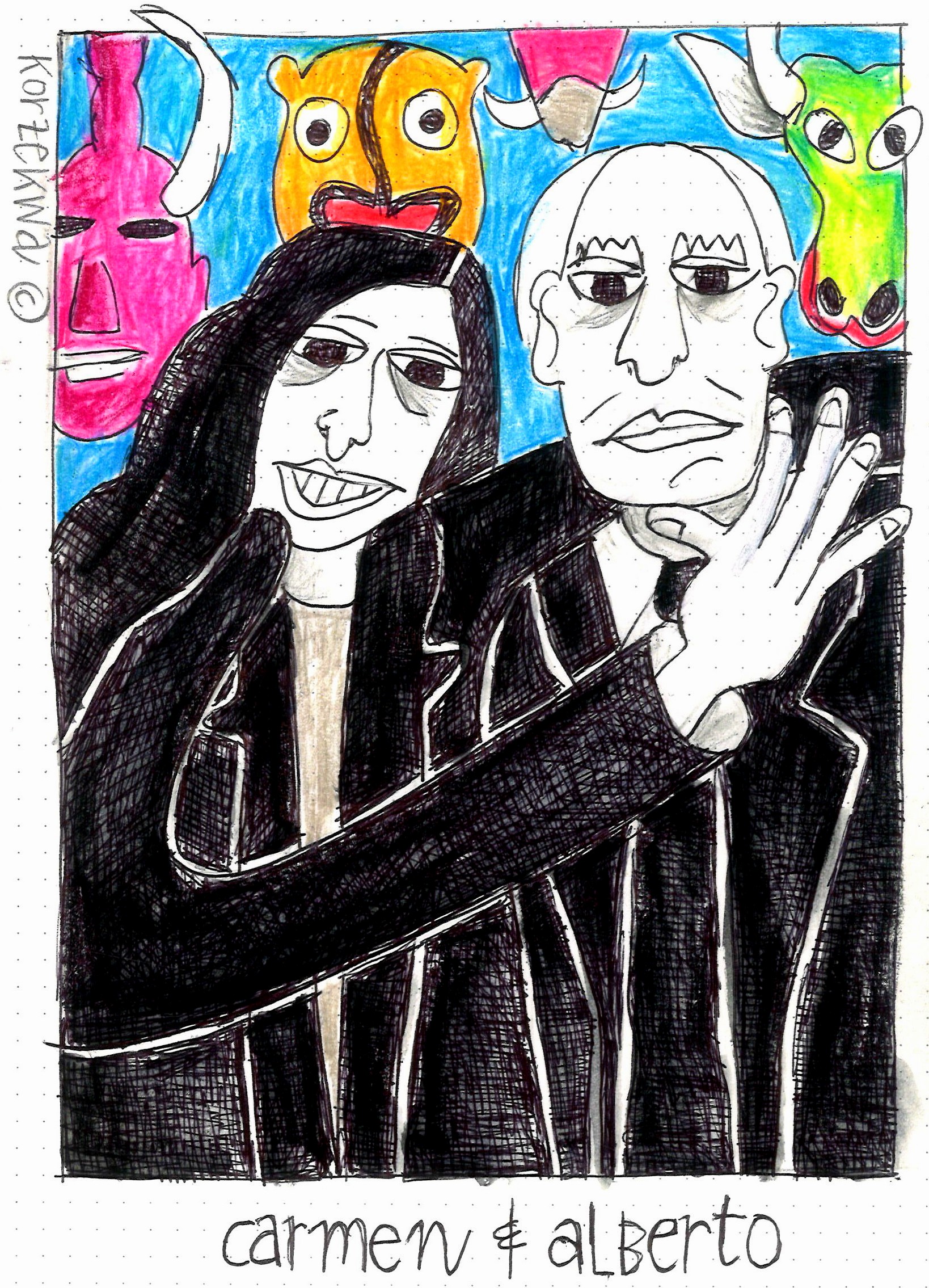
In 1962, 26-year-old Dacia met Alberto Moravia, 29 years her senior. She had written her first novel and needed a well-known author to write the preface. Although Moravia was still legally married to Elsa Morante, the couple had split years before and, at that time, Elsa was involved in a strange relationship with film director Luchino Visconti. Dacia and Moravia were together for almost 20 years but now had exhausted their enthusiasm for one another. After Elsa Morante’s death, Moravia was free to marry again. And he did. He married Carmen Llera, 46 years younger than him. They married in 1986, the year following Elsa’s death. Moravia died four years later.
In one interview, Dacia refers to Moravia as the first “esistenzialista europeo” and that he knew how to look at reality without any ideological explanation.
Dacia said that despite Moravia’ grumpy face, he really had a sunny personality. And, as a writer, Dacia learned from Moravia the importance of intellectual honesty.
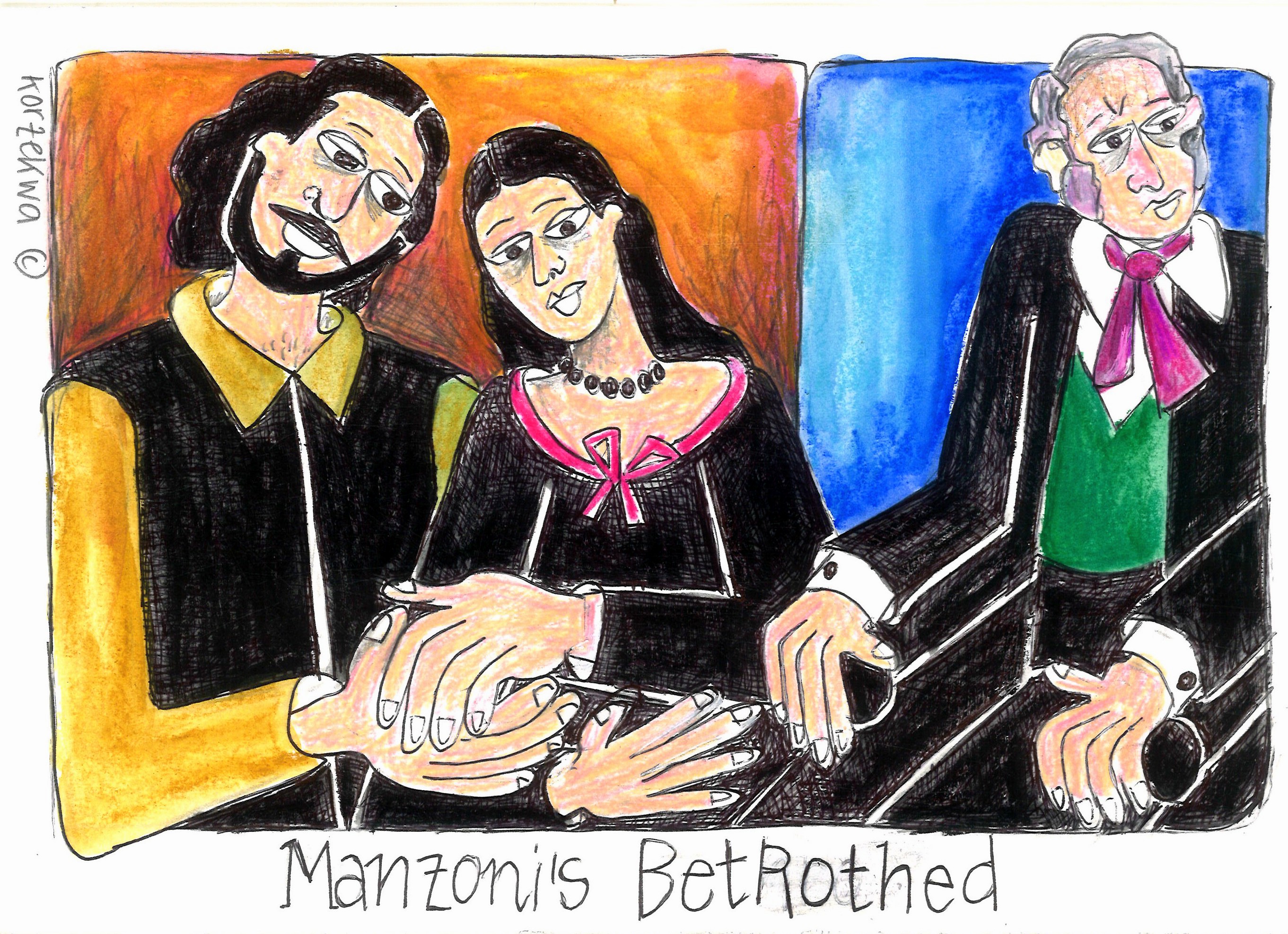
Moravia and Gadda, two literary heavyweights in Italy, got into a big dispute over Alessandro Manzoni (1785-1873) and the interpretation of Manzoni’s “I promessi sposi” (The Betrothed).
Because every defense of humanism is a defense of literature, says Moravia, literature has a profoundly humanistic nature. But Gadda saw Manzoni in a different way. Manzoni, for him, was a way of interpreting the world. As there exists a kind of rivalry between Milano and Rome, maybe part of this dispute was really all about that. About the difference in the ways of thinking. As Gadda, like Manzoni, was from Lombardy, it was only obvious to him that he could understand Manzoni better than Moravia, a Roman, could.
Many literary critics have referred to Gadda as the Italian James Joyce because both turned language into a playground. Both saw themselves as philosophers who explored literary methods to reveal a character’s thoughts. Both used their writing to put their knowledge on display. Gadda is known for his use of pastiche, a hodgepodge of literary styles. “Pastiche” comes from the Italian “pasticcio” once meaning pie. But today the word is used to signify a mess. Thus, the original title “Quer pasticciaccio brutto de via Merulana” is translated as “That Awful Mess on via Merluana”.
One problem with pastiche is that it can be awkward at times as the writer depends on the reader’s familiarity with the original source for comprehension. Maybe that’s why Nora Joyce asked her husband, James, why he couldn’t write books that people could understand.
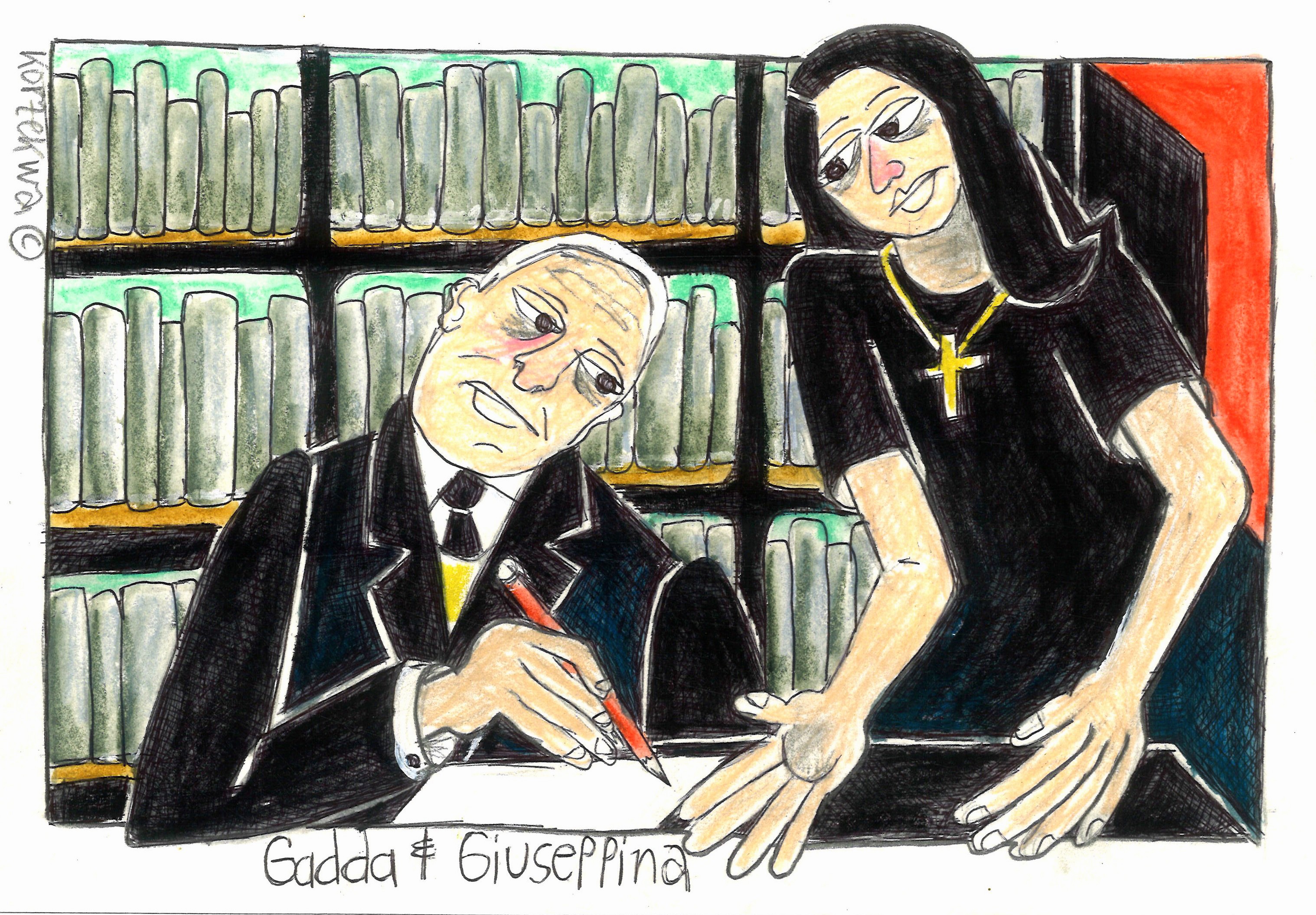
In the final years of his life, Gadda lived in Rome at via Blumenstihl 19 and was assisted by Giuseppina Liberati, his governess. In his will, Gadda named Giuseppina his universal heir. Giuseppina was instrumental in conserving Gadda’s papers for his Archive.
After Gadda’s death, the city of Milano insisted on Gadda being brought “home” to be buried in the city’s monumental cemetery. Milano accused Rome of having “kidnapped” Gadda by burying him at the Acattolica/Protestant Cemetery in Rome. But Gadda, himself, wanted to be buried in the city where he’d been living for the last 20 years of his life.
Princess Topazia Alliata Italian aristocrat who was imprisoned in Japan with her children and later ran a gallery in Rome + in 1958 Topazia moves to Rome and opens an art gallery at Piazza in Piscinula 13 + Topazia Alliata Una vita per l’arte + Topazia Alliata + A Roma Samonà aveva ritrovato Topazia Alliata +
In 1966, Maraini, Moravia and Enzo Siciliano founded the del Porcospino (“Porcupine”) theatrical company which had as its mission the production of new Italian plays. They included her own La famiglia normale, Moravia’s L’intervista, Siciliano’s Tazza, and works by Carlo Emilio Gadda, Goffredo Parise, J. Rodolfo Wilcock and Tornabuoni.
Sui Manzoni di Daniela Brogi e Silvano Nigro / I Promessi Sposi: un libro parallelo + Carlo Emilio Gadda writer and novelist +
It Can’t Happen Here by Sinclair Lewis + “When fascism comes to America, it will be wrapped in the flag and carrying a cross.” Via + (from advanced alcoholism, Nobel Prize-winning American author Sinclair Lewis died in Rome in a clinic on the outskirts of Rome of a heart attack caused by advanced alcoholism. Bedridden at the Clinica Electra on Monte Mario since December 31, his doctor initially diagnosed Lewis with acute delirium tremens.) +
I libri di Carlo Emilio Gadda sono pieni di riferimenti all’arte, Il nuovo saggio di Eloisa Morra indaga lo stretto legame tra l’autore novecentesco e l’arte visiva, dalla pittura alle illustrazioni satiriche del ventennio, e la sua influenza su decine di racconti e romanzi +






 The Narrative Within