Dodie Smiths’ Incipit

Carmel-by-the-Sea is a small town on the Pacific Coast about 300 miles north of L.A. It was initially inhabited by the Esselens, a 4,000 year old culture that lived in caves and covered their walls with hand prints. Caves, said Hugh, have had an important role in the development of the human consciousness and in ancient times they were a place for divine revelations. So, curious to see the cave paintings and maybe even to have a divine revelation, Hugh and I organized a trip to the Tassajara Valley.

Darkness changes our sense of perception. As we entered the cave and my eyes tried adjusting to the blackness, I started seeing things that weren’t there. Like bogey men. Obviously they don’t exist but my mind insisted on seeing something even in the dark. The atmosphere was creepy and I was relieved when Hugh’s flashlight focused on the pictographs. Hands, hands, hands. Everywhere you looked, the walls were covered with painted hands. As might be expected, academics blabber that they were painted by men. But I knew they’d been made by women. Because womanhood is about hands—hands that hold and caress as well as forage, cook, sew, mend, clean, etc. Hands that are automatically in motion when there’s something to be done.

Being in the dark with those hands had left me feeling overwhelmed and on the verge of a Stendhal Syndrome meltdown. Hugh understood so we drove towards Carmel looking for some place to eat and stopped at the Tuck Box, a tea room that looks like a hobbit house. Halfway through our meal, a slightly weathered couple came in looking for an empty table but the place was full. Really, I can’t tell you why but we invited them to sit with us.

Dodie & Alex were British but living in the U.S. thanks to the war. Alex was a conscientious objector so, in 1939 when WWII started creeping into Europe, the couple moved to California. The first impression I had of Dodie & Alex was that Brits are always going to feel superior to Americans. Maybe I got this impression because Dodie had snickered at my scones as she sat down. Without a doubt, of the two Dodie was the protagonist. She supported them by rewriting screenplays for Hollywood studios. But Alex did everything else.

I don’t know what kind of impression we gave Dodie & Alex but they invited us to lunch the following weekend. They lived on Seventeen Mile Drive—very picturesque but spiked with curves.

Lunch flowed and we lingered on until evening. The table was a pool of candlelight and was so bright that the rest of the room seemed black with our faces floating in the darkness.  It was almost like being back in the cave again. Dodie was talking about her past, about how she had aspired to be an actress but didn’t have the necessary looks or talent. To stay close to the stage she began writing plays and did so with great success. It had all been quite easy until the move to the States. Now writing had become difficult because her novels were set in England but, surrounded by Americans, character construction had become difficult. That’s why, said Dodie, she’d rather be in England.  Or in a Jane Austin novel.

It came as no surprise when, a few years later, Dodie and Alex returned to England. Dodie loved to write letters to express her theories because, she said, “contemplation seems to be about the only luxury that costs nothing.” She finally finished her “coming of age” novel I Capture the Castle but her real success came a few years later thanks to their dogs. Dodie and Alex had a passion for Dalmatians. When their Pongo was a puppy, Dodie’s friend Joyce said that he’d make a nice fur coat. Obviously the remark bothered Dodie but it also stimulated her imagination. So she wrote about a wicked woman who stole Dalmatian puppies for her fur farm.  The woman’s name was Cruella de Vil and the book was entitled 101 Dalmatians. 

Lesson learned.

A first impression has only one chance. That’s why authors struggle to make the opening line of their books intriguing. The first line of I Capture the Castle is “I write this sitting in the kitchen sink.” 

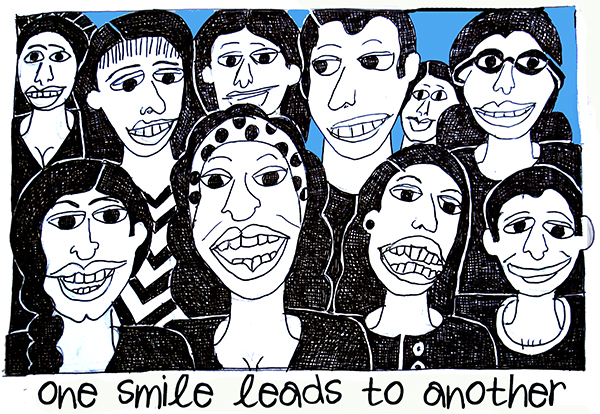
The older we get, the less impact our presence has on others. But there’s one thing that always will leave a good first impression—a big fat smile.

-30-

(from Cool Breeze, aka The Age of Reconfiguration ©)

Bibliography:

Grove, Valerie. Dear Dodie: The Life of Dodie Smith. Random House. London. 1996.

Smith, Dodie. I Capture the Castle. Vintage. London. 2012.

Posted in Age of Reconfiguration, Books | Tagged , , , , , , , , , , , , , , | 3 Comments

Dorothy B. Hughes’ Noir

From my bedroom window I could see her standing in the moonlight.  Alone, once again. It had become somewhat of a ritual and I wondered why.

Dorothy B. Hughes and I were friends since our days at the University of New Mexico. I was in Santa Fe to be part of the artists’ colony whereas Dorothy was there to become a poet. But the war had changed all of that.

By the beginning of the war, Dorothy was married to a wealthy businessman, had three children, and was still in Santa Fe. Dorothy hated Santa Fe–its flatness, its dust, its bad martinis. Sometimes we’d get together for coffee to have a chat but it was the bad martinis that could really get her talking. One night Dorothy babbled something about the two kinds of aliens. First there were those hovering over Alamogordo fearful that nuclear testing could disrupt the Earth’s orbit putting the stability of the entire solar system at risk. But the real aliens, she said, were misogynists who did their best to abduct your spirit and obliterate your sense of self. At the time I thought it was just the alcohol but, well, now I’m not so sure anymore.

New Mexico had become a smorgasbord of war related construction sites. It was splattered with prisoner of war and internment camps as well as military bases. New Mexicans had the highest number of volunteers into the military service as well as the highest number of casualties. The presence of war was too overwhelming for me so I decided to leave Santa Fe and headed for a beach.

I was soaking up some sun in Veracruz drinking margaritas when I read about the spaceship crash at Roswell and immediately thought of Dorothy. It doesn’t matter if UFOs really exist. Because what I liked about Dorothy was her alternative way of thinking. In fact, Dorothy was no longer in Santa Fe but in Hollywood working as a screenwriter and had just published a book, In a Lonely Place. It was about Dix Steele, a wartime fighter pilot who, in the name of war, kills thousands of people without even wrinkling his shirt. The war over, Dix is existentially lost.  No longer in the role of a macho man, he can’t find anything to take the place of “flying wild” and of the extermination of lives that had made him a hero. Now in L.A., Dix is just one more jobless and aimless vet. To camouflage his nothingness, Dix claims to be a crime writer working on a new novel.  Instead he is living off his talent for exploiting others and with loans from his uncle.

At night Dix roams the streets of L.A. looking for something to placate the rage and the impotence within. His solution: becoming a psychopathic serial killer. Dix’s friendship with Brub, the LAPD detective working on the case, gives him the chance to deviate suspicions from him. Brub never suspects Dix and, in the end, it’s two women who prove to be the real detectives: Laurel, Dix’s girlfriend, and Syliva, Brub’s wife. Thanks to observation and intuition, they expose Dix for what he really is. Because these two women had no intention of being abducted.

WWII had sent men to the front leaving women to replace them in the job industry. No longer segregated at home but out earning a living, these women now experienced an independence they’d never known before. Then the soldiers came home and found themselves with no work and no money. Women now occupied roles men once considered to be their own leaving men feeling impotent and busting with misogynist rage.

At this time pulp fiction provided escapist literature to entertain the masses. One of the most popular forms was the noir, a crime genre focused on the dark underbelly of the American dream. In a typical noir, women with their penetrating gaze and provocative bodies were not to be trusted as they were liars, cheats, and whores. In order for men to regain control, these women must be obliterated.

But In a Lonely Place is actually a feminist book disguised as a noir. As readers, we’re given a sneak peek into the killer’s contorted, claustrophobic mind. Dorothy exposes misogyny for what it is and how trauma and a fragile masculinity can explode into violence and a breakdown in perception. In a typical noir, the protagonist is always a man and it is always the man who is able to arrive at a solution. Dorothy lets a man be the protagonist but only to expose him for the chauvinist he really is. In the end, men are outsmarted by women.

War modifies women, too.

During WWI, the need for British soldiers required women to replace men in the factories. Women thus discovered that they were as qualified as men.

In 1914, the same year Agatha married Archie Christie, she also volunteered as a nurse for the Red Cross. It was her job to clean up after amputations and throw the severed limbs into the furnace. This could explain why there is little blood in Agatha’s novels.

At this time, Agatha also began writing crime novels. She became more successful as a writer than as a wife. In 1926, after learning of her husband’s betrayal, she disappeared for 11 days making front page headlines (Sir Arthur Conan Doyle hired a medium to search for her). Unable to identify with the male mentality, the following year she created Miss Jane Marple, an elderly spinster living in the small village of St. Mary Mead. Instead of minimizing Miss Marple’s spinster stereotype, Agatha enhances it. Because no one, especially a man, takes a spinster seriously. Ignored and unnoticed, Miss Marple tranquilly observes the others. She likes to observe how the villagers interrelate one with the other and how these interrelations can lead to murder. In fact, it’s because of her spinster qualities of being nosey and gossipy that permit her to observe up close. Miss Marple herself says that human nature is much the same everywhere but living in a village is like looking at people with a magnifying glass.

Observation refines her intuition permitting her, and not the male detectives, to solve a crime. Miss Marple is not interested in the act of killing per se. She simply sees murder as an expedient to explore the human psychology. And being elderly is also a plus because, says Miss Marple, “Clever young men know so little of life.”

Lesson learned.

Dorothy used an encrypted feminism. In a typically male genre, that of the noir, Dorothy has women and not men come up with the solution.

Miss Marple used a red herring feminism. She let people believe that she’s old and muddle headed because their misinterpretation of her gives her power.

A feminist is simply someone who believes that one sex should not dominate the other and that the roles of the sexes should be complimentary, equal even if not the same.

There is biodiversity even among feminists. To be a feminist doesn’t necessarily mean shaking your fist in the air and yelling Down with Patriarchy! Like Miss Marple, one can nudge but not push.

-30-

(from Cool Breeze, aka The Age of Reconfiguration ©)

Bibliography: Marynia F. Farnham and Ferdinand Lundberg, Modern Woman: The Lost Sex (1947)

Posted in Age of Reconfiguration, Art Narratives, Books | Tagged , , , , , , | 1 Comment

Marija and the Goddesses

It was bumper to bumper traffic on the L.A. freeway and I was listening to Neil Diamond singing how “L.A.’s fine, the sun shines most the time and the feeling is laid back.” Well the sun was shining but I wasn’t feeling at all laid back. My only thought was to get off the freeway so I took the next exit without thinking. I wound up on Hollywood Blvd and decided to stop in at Pickwick’s Bookshop. I was browsing around the archeology section looking at Max Mallowan’s Memoirs when a dowdy looking woman in her mid-fifties said to me: “You don’t want to waste your time with that.  Trying reading this.” And from the shelves she whipped out The Gate of Horn by Gertrude Rachel Levy. “So just what is this gate of horn that’s so interesting?” I asked. “In Greek times,” she responded, “there were two kinds of dreams, those that come through gates made of horn which were true dreams and those that come through gates made of ivory that were deceptive. Socrates, for example, took his dreams very seriously and always asked himself which gate they’d come through.”

An hour later I found myself in a coffee shop completely mesmerized by this woman. Her name was Marija Gimbutas and she was an archeologist from Lithuania now teaching at UCLA.

One night, after the Soviet invasion of 1940, many of Marija’s family members and friends were deported to Siberia. The 19 year old Marija and her mother went into hiding and Marija joined the Underground Resistance Movement before marrying and starting a family. But that didn’t keep her from pursuing her studies. In 1944 the Soviets forced them to escape and live as refugees. Finally Marija and her family immigrated to the U.S. where eventually she got a job at Harvard translating Eastern European archeological texts for American professors.

As a young girl, Marija spent her summers in the country where she watched with joy the old women who sang as they used their sickles. Marija began documenting these songs as well as other Lithuanian folklore. She was determined to preserve the folk traditions of her country that were being destroyed by foreign occupation.

Her studies led to the idea that civilization is based on the creation and not the destruction of what’s valuable. And who better represents the concept of creation than the Goddess. “The Goddess”, said Marija,” in all her manifestations was a symbol of the unity of all life in Nature. Her power was in water and stone, in tomb and cave, in animals and birds, snakes and fish, hill, trees, and flowers.” 

Unfortunately, not everyone had respect for goddesses. Old Europeans, she said, were matrilinear, peaceful, and practiced equality. The Indo-Europeans from the Russian steppes, instead, were patriarchal, warlike, and imposed hierarchical rule. Coming from north of the Black Sea, by 5000 B.C., these nomadic pastoralists had domesticated horses thus increasing their mobility. And they used this mobility to pillage and plunder. And destroy.

Daughters of Eve.

Once women were worshipped because lives were created inside their bodies. In reverence of this power of regeneration, little female votive statues were made in abundance. One of the best known is that of Willendorf dating c. 25,000 B.C.

Then the Judeo-Christian Bible story with its story of creation changed everything. Genesis, written in c. 250 B.C., blames Eve for all the evils in the world. Eve, as with all the women to come, must be eternally punished. This is the beginning of female criminalization and the role of the goddess who had ruled spirituality for c. 24,750 years had come to an end.

Adam and Eve lived in the Garden of Eden where living was easy. There was only one rule—they couldn’t eat from the fig tree. But a snake convinced Eve to eat a fig because it would make her all-knowing. She shared her figs with Adam. Then God arrived and said they had to be punished for their disobedience and kicked them out of the garden.

Knowledge has its price.  

In Neolithic Europe, snakes were worshipped. A snake hibernates during the winter, sheds its skin then starts all over again. The snake thus symbolized the life continuum.

Demeter was the goddess of agriculture. One day Hades kidnapped her daughter, Persephone. In her despair, Demeter neglected her duties as a goddess and the seasons stopped causing the crops to die. Preoccupied, Zeus sent Hermes to the underworld to make a deal with Hades to get Persephone back. A compromise was made—Persephone was to spend part of the year above ground and part of the year below.  Just like a snake.

Women, not men, dominated the Minoan culture. At Knossos, there were no fortifications, walled citadels, or temples dedicated to gods. There was no indication of a hierarchical society. But there was evidence that snakes were revered as seen by the Minoan Snake Goddess statues.

Asclepius was the Greek god of medicine and often used snake venom to heal people. Thus a snake wrapped around a rod is his symbol. The Staff of Asclepius continues to be used today in association with medicine and health care.

Asclepius’ wife Epione as well as his daughters, Hygeia and Panacea, also lived by the Hippocratic Oath. Over 300 Asclepeion temples were built where patients sometimes were put to sleep using snake venom to provoke “incubation” sleep. Gods and goddesses were more likely to appear if the patient was in an altered state of consciousness.

The hallucinogenic properties of snake venom were also known to Pythia (from “python”), the high priestess at Delphi. She was the oracle everyone sought when illumination was needed.

It’s no wonder then that once there was an abundance of snake imagery.

-30-

(from Cool Breeze, aka The Age of Reconfiguration ©)

Related: The World of the Goddess, Marija Gimbutas video + Signs out of time, the story of archeologist Marija Gimbutas video + Hollywood Boulevard Bookstore Follies Part 3 + Joseph Campbell & Marija Gimbutas Library

Posted in Uncategorized | 1 Comment

Lessons Learned

One month after Marie Antoinette’s head was chopped off, the Louvre Royal Palace became a museum. Artists then started going there not only to see works by the Old Masters but to copy them as well. Because imitation is a form of learning. Even artists such as Degas, Picasso, Chagall, and Dalì continued the tradition because, as Cézanne once said, “The Louvre is the book from which we learn to read.”

Having goals doesn’t necessarily mean that we know how to actualize them. There is the trial and error method that can teach us much but role models also offer important learning experiences. Like the Louvre’s Old Masters, they give us something to copy.

Having a role model doesn’t mean being cloned as someone else. It simply means that we can learn from the successes of others just as we can learn from their mistakes, too. Potentially everyone has a lesson to share. All we have to do is look for it.

Ideals give you a direction.

-30-

(from Cool Breeze, aka The Age of Reconfiguration ©)

Posted in Age of Reconfiguration, Art Narratives | Tagged , , , , | 1 Comment

Ecofeminism

That morning the sky was bigger than usual and made me feel like exploring Tucson, the flattest town I’d ever seen. It certainly wasn’t the Tucson that Jack Kerouac wrote about. Huge asphalt parking lots and cheaply constructed buildings all so far away one from the other. I was staying in a motel while my car was being repaired after a breakdown on Interstate 10. Hungry, I left my room to go get something to eat. Standing next to a stop sign was a woman panhandling.  She must have been in her mid-fifties and looked weathered and worn. It broke my heart so I blatantly went up to her and offered her a meal. There was a Taco Bell not far away and that’s how Barbara Mor and I wound up eating a fluorescent lit Burrito Combo #3 together.

Barbara was the co-author of The Great Cosmic Mother, a book that explores the history of women and their relationship with the earth. After years spent struggling to write it, the book finally got published. But so far she hadn’t seen any of the royalties and was having a tough time economically. Barbara had moved to Tucson in hopes that the publication might get her a lectureship at the University of Arizona. But it hadn’t. The University wouldn’t even hire her as a cleaning lady. Unable to get a job, she wound up “broke and living in back-yards and nefarious drug-dens.” She was 51.

So I had Barbara come stay with me at the motel where we spent a lot of time talking. She grew up born in California “before the freeway, before plastic & fast food franchises”. At the age of 17 she married some dude from Las Vegas just to get away from home. Obviously the marriage didn’t last. She bounced around boyfriends even had a couple of dates with James Dean who, claimed Barbara, told her that it was important to him that she continued to write. Six days later he died in a wreck. Some years later, Barbara started studying at San Diego State College. Here she discovered ancient matriarchies and Neolithic cultures. And that was the beginning of The Great Cosmic Mother. There was an element of rage in Barbara’s voice when she discussed her book because, she explained, she feared that the female consciousness risked being obliterated by the patriarchs.

My car fix, I left Tucson. Of course I got a copy of The Great Cosmic Mother and read it. Or rather devoured it as it gave me a whole new insight to myself as a woman. Years later I learned that Barbara had gotten herself off the streets and was living in Portland. She’d written another book, The Blue Rental, based on her years as a “bag lady” trying to survive in a culture particularly hostile to women who are poor. It reminded me of an abridged female version of Finnegan’s Wake, a cryptic narrative. Barbara died in 2015.

The Great Cosmic Mother led me to ask myself: what’s the difference between men and women?

One hot afternoon, researcher Giacomo Rizzolatti and team, were working with monkeys when they decided it was time for a gelato break. In the lab, joyfully eating their ice-cream, they totally forgot about the monkeys. The monkeys, still hooked-up to brain activity monitors, registered pleasure as they observed the pleasure of the ice-cream eating researchers. And that’s how, serendipitously, mirror neurons were discovered.

Mirror neurons are brain cells that respond, with mimicry, to the actions of others. This reaction is known commonly as empathy.

Empathy is the capacity to recognize and understand the feelings of another.

The female brain is wired for empathy whereas the male brain is not. And for one simple reason: women, and not men, have babies.

Empathy permits women to better care and protect their offspring. For example, how could a mother and a non-speaking baby communicate otherwise? Thus empathy and maternal instinct have much in common.

Maternal instinct is not limited to one’s own children. Anyone who has nursed a baby knows that whenever you hear a baby cry, yours or not, the breasts automatically leak milk. And maternal instinct is not limited to humans. Think of all those tender Facebook posts showing animals of one species nourishing animals of another animal altruism.

Empathy, a means of inter-relating, is fundamental for our survival and evolution. It is an awareness that we are all dependent one upon the other. Empathy is the basis of a sense of community, of a healthy society. Without it, there is nothing civil about civilization.

A chain is a chain because its links are united…the links alone serve nothing.

The Earth is a Mother. And we are her children. Unfortunately, many of us are ungrateful and bite the hand that feeds us. But it hasn’t always been this way. Many ancient cultures worshipped the Great Cosmic Mother. Because adoring a mother meant adoring life itself.

But, around the fourth millennium B.C., everything changed. With monotheism, the goddess cultures were destroyed and patriarchs obliterated the maternal values within the community.

Elsewhere warriors from the north began to invade peaceful cultures. These Indo-Europeans were violent and on horseback. Their aim was to invade, pillage, plunder and annihilate existing customs and beliefs. Male gods began to appear. These gods were angry, vindictive, jealous and punitive. And, above all, they hated women.

With force, these invaders dominated and sought to obliterate nature’s plan of having males and females exist in synergy and solidarity. Our complementary roles were lost. With the concept of ownership, the world was “materialized” and spiritual needs were substituted with dogma. The priorities of these invaders were not the priorities of women. Or of nature. As a result, our planet now is in great difficulty.

In the past 100 years, the world population has quadrupled.  This means more people and fewer natural resources to go around. Alarmed, in 1992, the Union of Concerned Scientists wrote the “World Scientists’ Warning to Humanity” which starts off with “Human beings and the natural world are on a collision course.” It was signed by about 1,700 scientists including many Nobel Prize laureates. Despite the warning, things are getting worse. Our greed and lack of respect for nature is going to kill us all. Monotheism continues and the god’s name is Money.

Ecofeminism is a response, an attempt to repair the damage done. It is an expression of empathy for the environment. Ecofeminism is a mother nursing her child.

Even though the situation is desperate, we need to maintain a female consciousness. And to do so, we can contribute with daily acts of awareness that nature must be respected.

Here are a few examples of what we can do:

Follow the three R’s of reduce, reuse, and recycle and limit the amount of natural resources that we use.

Honor water as it keeps us alive. To help conserve water: keep a bucket in your shower to collect water and use it for your plants,  turn off the tap while brushing your teeth, fix leaks, don’t flush the toilet at night, use less electricity as power plants use water to cool off.

Make your own cosmetics. Clean your skin with olive oil. Use aloe vera gel as it is antibacterial and has skin healing properties.  That’s why Cleopatra rubbed it on her face every day. The gel can be used as a shampoo as well as a toothpaste. And put some of the gel in your smoothies if you have any kind of stomach disturbance (including ulcers).

You can also mix baking soda with water to use as a shampoo. You may want to rinse with vinegar afterwards. Baking soda mixed with salt can help whiten teeth.

-30-

(from Cool Breeze, aka The Age of Reconfiguration ©)

Related: Barbara Mor’s “The Blue Rental:” Rooms Outside Hollywood, Hell, USA By Edgar Garcia + Barbara Mor reads from “The Great Cosmic Mother” + READINGS  from   THE  GREAT  COSMIC  MOTHER    (1987)   + An Introduction: Barbara Mor +

Posted in Age of Reconfiguration, Beauty | Tagged , , , , , , , , , , , , | 2 Comments