Walking

Before that summer, I often had romantic visions of myself as a flaneuse, elegantly dressed walking the streets of Paris as if I were the female version of Baudelaire. Smoothly sashaying in my Coco Chanel as I twirled my long strand of pearls, I’d act nonchalant as people would walk by and smile at me so intense was my allure.

But I lived in Maine and with my limited funds knew it just wasn’t going to happen. So I decided to pacify my dreams with a hike on the Appalachian Trail thinking it would be easy to pretend it was Haussmann Boulevard. Unfortunately my imagination was not prepared for all the mosquitoes and ticks and squirrels and snakes not to mention the rocks in my shoes.  I was starting to really feel sorry for myself when out of the blue this huge bear showed up. I started screaming hysterically and thought I was going to die when a wiener flew by me and got the bear’s attention giving me the chance to run away.

I was huffing and puffing when this elderly woman walked up to me and said: “ Honey, you need to watch where you’re going. If it hadn’t been for my wiener, you’d be dead.” The woman had to be at least in her late sixties.  She was wearing dungarees, some kind of zip up sweater, Keds snickers, and had a denim sack resting on her shoulder. She introduced herself as Emma aka Grandma Gatewood.

That’s how Emma and I became friends. We started walking the trail together and shared secrets as we women do.  She told me she had 11 kids and had been married to a jerk who use to brutally beat her. Finally she found a way to kick him out, take over their farm and raise the kids herself. But then a few years ago she’d read an article in National Geographic about the Appalachian Trail. That no woman had ever walked it seemed like a divine provocation so one day she got a few things together and headed east. Without saying a word to anyone.

Emma showed me how to forage for food (oh the rampions are so good), sleep on a pile of leaves, and ask people for a meal. Maybe because of her age, she enjoyed “trail magic”, unexpected acts of kindness that she in turn would share with me.

When we finally arrived at Mount Katahdin.  I was so tired I fell to the ground but Emma, instead, raised her shoulders and started singing “America the Beautiful”. In that moment I understood that walking was a spiritual practice.

Walking is good for us both spiritually and physically. Walking changes our chemistry because it pumps blood and sends oxygen to the body and brain.  This animation helps create new brain cell connections as well as stimulate the growth of neurons. It also increases the size of the hippocampus, an area of the brain that’s fundamental for memory.

Walking is also good for the knees because it helps to get joint fluids flowing.  It also helps take pressure off the knees as it builds leg muscles.

Earthing is the act of walking barefoot in nature. Since the earth is a conductor, walking barefoot permits free electrons to be absorbed by the body thus promoting wellbeing. It also helps us reconnect with the earth. The soles of the feet have more nerve endings than any other part of the body per square centimeter. Walking barefoot stimulate the soles so walking on sand gives the soles a real tingle (and also gets rid of dead skin).

Walking is also about inter-relating with your surroundings.  Driving, instead, reduces your visuals to little more than a blur (even though blurs can be beautiful like Arthur Dove’s painting “Fields of Grain as Seen from a Train Window”). Focusing on the road, you concentrate on where you’re going and not where you are.  Walking, instead, gives you the possibility to observe the world around you.  Walking gives you details.

The way we move our body influences the way we move our thoughts. Walking at our own pace helps us regain our personal rhythm. A good stroll is a means of resynchronizing ourselves with ourselves. As many women walkers know, solitary walks give you a chance to be alone and intimate with yourself.

George Sand (1804-1876) was born in Paris but spent much of her childhood in the countryside where she created a personal rapport with nature.  She enjoyed walking but walking is a physical activity and, way before Coco Chanel, George understood how men’s clothing made moving around so much easier. She also understood that “There is only one happiness in life, to love and be loved.” When her lover Chopin was at Nohant, he would often shut himself in his room to play the same bar over and over again for days. No wonder George like taking walks.

Virginia Woolf (1882-1941) After writing about Mrs. Dalloway’s walks around London, Virginia wrote “Street Haunting”, an essay exploring the voyeuristic aspects of walking around town. But the narrator needs a destination to justify the walk so she creates the need to buy a lead pencil. As she passes strangers on the street, she imagines their lives.  “What greater delight and wonder can there be than to leave the straight lines of personality.  To feel ‘that one is not tethered to a single mind, but can put on briefly for a few minutes the bodies and minds of others.” Walking is a means of connecting with others even if indirectly.

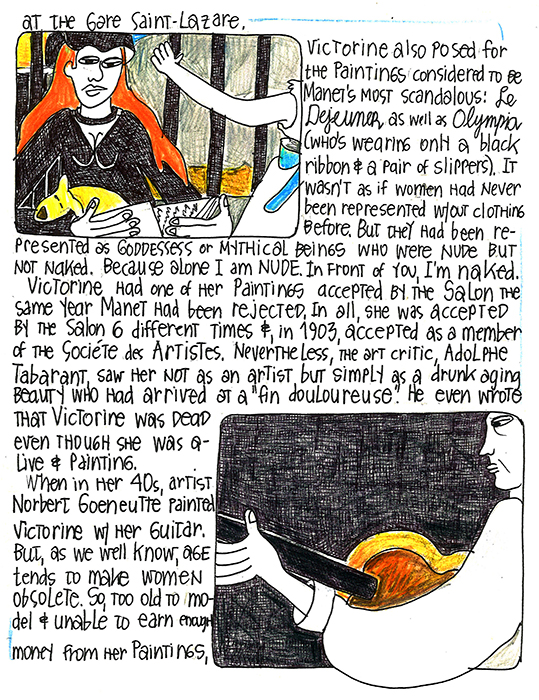
Sophie Calle (b. 1953) More than a walker, Sophie is a stalker. At a party, this French photographer met a man, Henri B., who, without his knowledge, she decided to follow to Venice. With camera in hand, she walked around Venice looking for him and published her efforts in the book Suite Vénitienne. The idea of following others came to her because she was bored and needed a social life. More than a photographer, Sophie is a performance artist.

Martha Gellhorn (1908-1998) was a war correspondent during WWII. This meant she had to do a lot of walking even alongside military tanks. For a few years she was married to Ernest Hemingway (he dedicated For Whom the Bell Tolls to her) but the couple was too big for one another’s breeches. In her seventies she liked strolling the Wye Valley Walk in Wales.  That is, before she swallowed a cyanide pill after a long battle with cancer.

Jean Rhys (1890-1979) moved to London where she was snubbed because of her Creole origins. Social prejudice transformed her. Then she went to Paris where her origins were better accepted. Nevertheless, a woman walking the streets was a magnet for the male gaze. And the gazers not only scrutinized but moralized as well ready to take advantage of a woman’s desperation. Rhys was in dire straits and wrote “poverty is the cause of many compromises”. And that pretty much sums up her life.

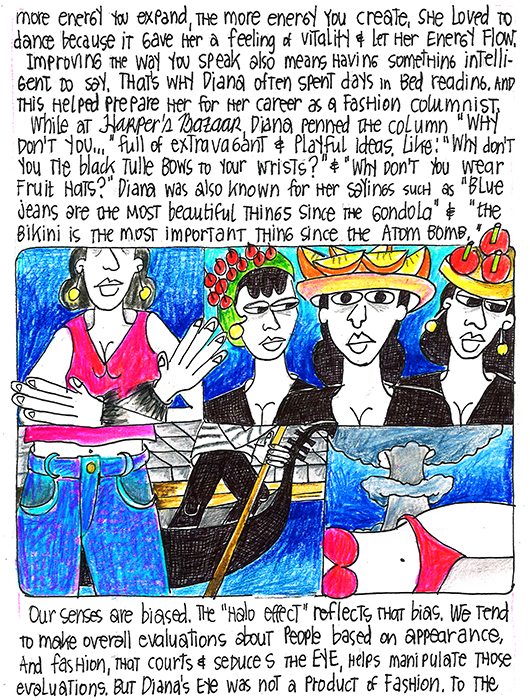
Freya Stark (1893-1989) was a Brit Italian. A wild and wonderful aunt gave her a copy of One Thousand and One Nights for her birthday. It was the beginning of her love story with the Orient. She became the Poet of Travel hungry to know the Middle East. In Baghdad Sketches she wrote that “personally I would rather feel wrong with everybody else than right all by myself.” Freya liked riding camels but she liked walking, too.

When in doubt, go take a walk!

-30-

(from Cool Breeze, aka The Age of Reconfiguration ©)

Posted in Age of Reconfiguration, Art Narratives | Tagged , , , , | Leave a comment

Let’s Get Physical (part 2)

My home starts with my body.

Our first home is our mother’s womb. Then we enter the external world and our residence changes. But wherever we are, home always starts with our body.

As we age, our rapport with our body changes. Sometimes we look in the mirror and feel disorientated. We look for a person who no longer exists. But all it takes is some reconfiguration to feel at home again.

To prepare for old age, we need to get our bodies in shape. Keep it simple.  If you start off with a hardcore regime, you may quickly burn yourself out.

Flexibility deteriorates with age.  Poor flexibility affects our muscles as it stiffens and shortens them making even simple activities (such as bending to pick something up off the ground) more difficult. Lack of flexibility can also lead to cervical degeneration, chronic back pain, and difficulties in keeping our balance.

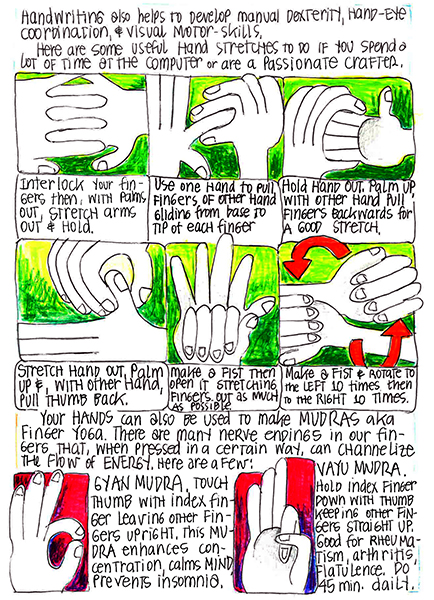
Regular stretching helps to loosen us up and not look like zombies. And for those who spend hours at the computer or doing handwork, stretching can straighten us so we don’t look like the Hunchback of Notre Dame. DESCLAIMER: this is a routine that I’ve invented for myself.  It’s great for me but I have no qualifications other than my own experience.

-30-

(from Cool Breeze, aka The Age of Reconfiguration ©)

Posted in Age of Reconfiguration | 4 Comments

Let’s Get Physical (part 1)

Marily and I were sitting on her balcony listening to the cicadas because, she said, it was a form of Zen. I was trying to translate the cicadas’ sound into onomatopoeia when I saw this striking woman walk by.  She was tall, very thin and elegantly dressed.  Who is that? I asked Marily. Sissi of Baveria, she replied. Sissi has a home here on Corfu known as the Achilleion designed with the Greek hero Achilles in mind. The Empress not only had much admiration for the Greek culture, she adored Achilles because he despised all mortals and had no fear of the gods. Just like her.

For a while I continued to think about those Zen cicadas.  Their sound comes from the males who rub themselves trying to get the females’ attention. If a female likes the sound, she’ll snap her wings giving the male permission to put the move on her. But there was nothing about these stridulating cicadas that could grab my attention as Sissi had.

The next day I went for a walk near the Achilleion and saw Sissi ride past me on horseback. I tried to get as close as possible for a good look at her but she quickly whipped out a fan and hid her face only to provoke my curiosity even more.

So when I got back into town, I immediately began to torment Marily for information.  There is no one on the island who knows about local happenings as much as she does. So, obviously, Marily had much info to share.

Sissi, aka Empress Elisabeth of Austria, was a Capricorn like me. At the age of 16, she was given in marriage to Emperor Franz Joseph I of Austria. He hadn’t fallen in love with her because they had anything in common but because of her beauty. Life at court was totally alien to Sissi’s Bavarian upbringing. Unable to control much of anything on the home front, she became maniacal about the only thing she could control—her body.

To keep in shape, there was a gymnasium in every one of Sissi’s homes that included weights, exercise bars, and gymnastic rings. She also walked obsessively for hours with her dog and spent hours horseback riding. Sissi’s diet consisted mainly of raw veal juice, fruit, milk, and, for a thrill, violet bon-bons.

The Empress’ hair was so long (down to her knees) that it often gave her headaches. Daily care took time and effort. First gloved attendants placed a white sheet on the floor to catch any fallen hairs which were then presented to Sissi in a silver dish and catalogued. The brushing and massaging took three hours (Sissi would read and study languages during the process) and every two weeks, her hair was washed in egg yolk and cognac.

Sissi’s beauty routine included body wraps made from seaweed and hay, olive oil baths, and facial masks of strawberries, honey, and raw veal. She also used creams made from slugs and never went anywhere without a face mist. Her favorite was made from violets, vinegar, and distilled water. The violets were infused with the vinegar for a couple of days then strained, mixed with the water, and placed in a spray bottle.
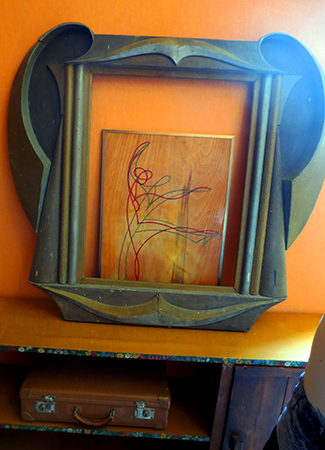
Afraid of being immortalized as an aging beauty, in her early 30s Sissi no longer allowed photographs to be taken of her.

On the morning of September 10, 1898, Sissi and her lady-in- walked the short distance from the hotel in Geneva and to the docks to catch a steamship. On the way Luigi Lucheni, an Italian anarchist, stabbed her with a sharp file.  The two ladies thought it was a robbery attempted and hurried to board the ship.  Here Sissi lost consciousness. Once lying down, her tightly laced corset was cut open and she immediately bleed to death.  For it had been the corset that had kept her from bleeding to death immediately. She was not yet 60 years old.

-30-

(from Cool Breeze, aka The Age of Reconfiguration ©)

Posted in Age of Reconfiguration, Art Narratives | Tagged , , , , , , | 6 Comments

The Face

It was noon on Wednesday, right smack in the middle of the week, right in between here and there when I boarded the train towards Kent. My compartment was full, mainly middle aged women wearing tweed and reading books.  But there was a man sitting across from me who would occasionally stare at the passengers faces then start scribbling in a little black notebook he awkwardly held on his lap. At Canterbury many people got off the train and when we started off again, I found myself alone in the compartment with the scribbler who now focused his stares on me before scribbling away. Well I’m a woman and a direct descendent of Pandora, the one with the Box.  So I looked him straight in the eye and said: Sir, just what in the world are you writing about and what does it have to do with me?  The man seemed quite startled by my question but then took a deep breath and started to explain.

Let me introduce myself, he began. My name is Charles Darwin and I’m a naturalist researching the relationship between facial expressions and emotions. I laughed to myself and thought, Well, I must be a naturalist, too, because I’m always reading faces (especially Hugh’s) to see what people are thinking.

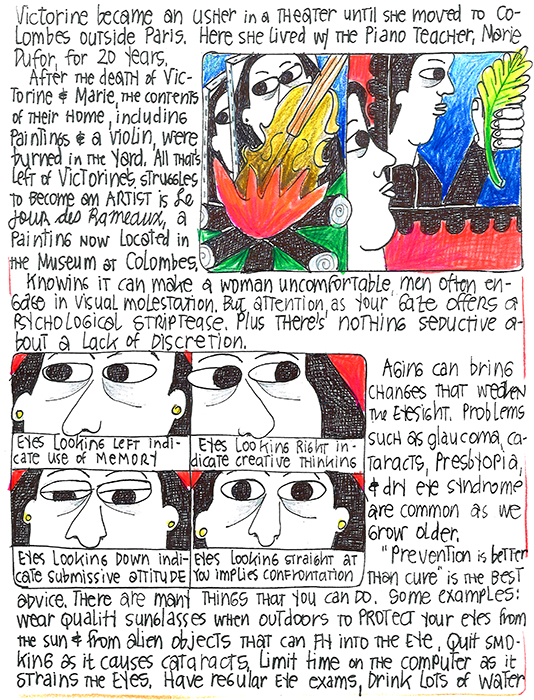
But then he proceeded to explain how the face is full of involuntary muscles, muscles that move without our conscious control. In other words, our face speaks without thinking. Intrigued, I asked Darwin if certain emotions made involuntary muscles move in a certain way, what would happen if one would purposely move an involuntary muscle (as actors do all the time)? Would one automatically feel the emotion that went with it? I mean, if I smile, will I automatically be happy? If I frown, will I automatically be unhappy? Ha, it didn’t take an expert in involuntary muscles to know that I’d put Darwin on the spot. He was stumbling around with words when we arrived in the station and, with great relief, Darwin tipped his hat and said good-bye.

Fascinated by these mimetic muscles, I decided to experiment with learning to suppress bad emotions simply by controlling my facial expressions. Because if your face follows your emotions, why can’t you make your emotions follow your face?

The facial expressions most often used reflect happiness, sadness, fear, disgust, anger, and surprise. And here are the muscles moved:

When you smile, one of the main muscles you use is the zygomaticus muscle which pulls the corners of the mouth upward and outward.

Sadness stresses the brows and thus moves the corrugator muscles as well as the procerus…

Fear moves th platysm, a muscles that goes from th neck to the mandibola.

Disgust makes you sneer and move the levator labii nose muscles.

Anger make you glare activating the orbicularis oculi muscles

When we reach a certain age, our face is like a map showing the paths our emotions have travelled the most. To mellow out the signs of time and negative feelings, we can do facial exercises. The exercises will increase blood and oxygen flow back into the skin and reduce muscle tension.

Start off by relaxing the face with massaging the temples, the eyeball, and the eyebrows. Place your index finger in the space between the brows and, in a clockwise direction, gently rotate your finger. Massage. This point sometimes known as the Yingtang corresponds to the third eye position.  This exercise can activate the brain and ease tension.  For 30 seconds.

Being grumpy makes the mouth droop so stick your tongue out and move it left to right and back for several count to uplift your expression.

Thinking too much? To smooth forehead, use your fingertips to massage in a circular motion.

For sagging cheeks massage and gently chop cheeks with both hands for about 2 minutes. Loss of collagen makes us droop.

For a drooping chin, lay on bed, head hanging over edge and do chin ups by lifting and lowering head. Repeat 5 times.

For a double chin, tilt your head back, chin tilted up. Push lover jaw out, lower lip over upper lip. Hold. Repeat 5 times.

-30-

(from Cool Breeze, aka The Age of Reconfiguration ©)

Posted in Age of Reconfiguration, Books | Tagged , , , | 8 Comments

Breathing

Text:

Have you ever seen a West Coast Sunset? Well Hugh and I never had so we decided to make a road trip to California.  I got in touch with my friend Beatrice Wood and asked if she knew of a good place to stay. But she said: You will stay with me, of course! Beatrice live in Ojai (only a 30 min drive to the sea), a town largely inhabited by those seeking an alternative lifestyle. And alternative was definitely a good way to describe Beatrice. During her extravagant life, she’d been an actress, Mama of Dada, Duchamp’s lover, and much much more before deciding to focus on pottery. When asked how she maintained her good looks, she’d reply: I owe it all to chocolate and young men.

In the late 1940s, Beatrice moved to Ojai to be near the Indian philosopher, Jiddu Krishnamurti. Krishnamurti, who as a boy had been known as “vague and dreamy” (or, according to others, dim-witted) had been discovered in India by a high-ranking Theosophist who saw him on the beach and said “Hey, that kid’s got aura!”.  So the Theosophists took him under their wings and subjected him to a kind of Hollywood Makeover. They were hoping to transform the ugly duckling into a swan who one day would become their new World Teacher.

Text:

Things went well until Krishnamurti and his brother went to California.  Well I guess California has changed the lives of many people and Krishnamurti turned out to be one of them. Here, not long after a “mystical” experience, he left the Theosophists. Krishnamurti said his only concern now was to set man free. And to be free, men had to be released from their cages including those of organized belief.  Boy, weren’t the Theosophists livid.  Their major investment had dumped them.

With his friend and fellow ex-Theosophists, Deskiacharya Rajagopal, Krishnamurti organized speaking tours and publications. He attracted many fans including the physicist, David Bohm.  Spiritual quantum.

Beatrice had organized a little garden party in our honor and that’s how I met Krishnamurti. Well let me be perfectly honest, I am not into those guru types with big cow eyes who speak in a low voice and ask questions like: Does god exist? Where does time go? Do you want to talk about death? I wanted to say: No I don’t want to talk about death. I want to dance the cumbia! But, instead, I asked him questions about himself and how he spent his days. Krisnamurti said he liked to walk, was a vegetarian, did two hours of yoga every day, and regularly practiced pranayama breathing exercises.

Well the pranayama breathing interested me and I asked him to elaborate.  Everyone knows that breathing keeps us alive but few of us know that controlled breathing can help us fall asleep, inhibit pain, control blood flow, lower blood pressure, and so much more. I was quite enthralled by the idea of changing my life simply by using my lungs so when he invited to teach me a few techniques, I eagerly accepted. The next morning I showed up wearing a saree Beatrice had lent me. When I got there Rosalind, Rajagopal’s wife, opened the door and led me to the garden. Here we sat cross legged under an orange tree and started inhaling away.  All that fresh air inside of me kinda made me dizzy.  But I did feel really full of myself afterwards and decided to continue doing the exercises from then on.

Text:

When we breathe, we interrelated with our environment. What’s outside goes inside. That’s why the quality of air is so important. Because breathing in sicken air sickens us.

So in The Age of Reconfiguration, attentions needs to be given to breathing properly. And I’m starting off with these three exercises:

Diaphram breathing…many of us practice shallow breathing and/or breathe through our mouths. Breathing is bad for us as the nose warms and filters the air we breathe. Breathing with the mouth lets in more toxins and can give us a sore throat.   Inhale for 5 seconds then exhale for 5 seconds.

As you breathe in, your diaphragm expands. Breathe out thru pursed lips and gently press your belly to help push air out of your diaphragm.

Sometimes emotions can disrupt our breathing pattern. When we are nervous we tend to hold our breath whereas when we are down, we sigh.

Rhythmic Breathing… Many of us have irregular breathing patterns and don’t even know it. Practicing rhythmic breathing techniques can help. It’s all about giving our breathing a fixed rhythm. For beginners such as myself it can be broken down into four parts:

inhale 1-2-3-4

pause after inhaling 5-6

exhale 1-2-3-4

pause after exhaling 5-6

Alternative Nostril Breathing…. Alternate Nostril Breathing can help synchronize the two brain hemispheres. It can also give us energy, wake up the brain, clear the lungs, and calm our nerves.

Alternate Nostril Breathing,

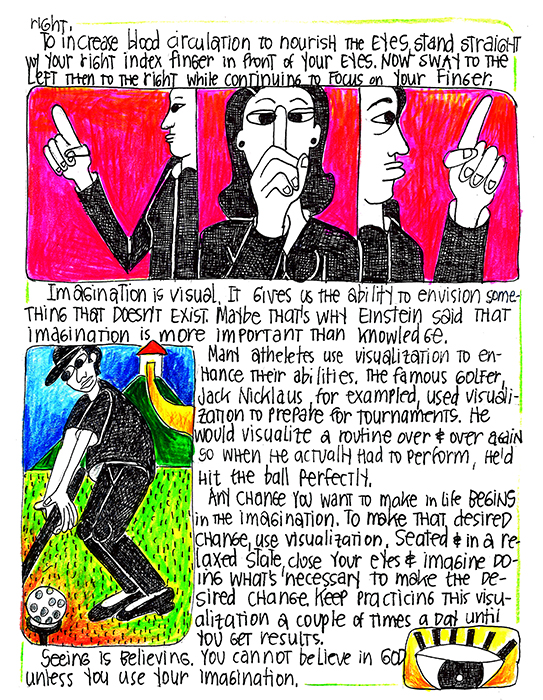
Sit comfortably then, using the right thumb, softly close the right nostril, and inhale as slowly as you can through the left nostril, then close it with your ring finger. Pause. Open and exhale slowly through the right nostril.

With the right nostril open, inhale slowly, then close it with the thumb. Pause. Exhale through the left nostril. Once your exhalation is complete, inhale through the left. Pause before moving to the right.

Repeat this pattern five to ten times, and then release the right hand to the right knee. Ease back into normal breathing.

Try practicing to arrive at 15 minutes a day.

The quickest way to achieve mental clarity is via controlled breathing. We cannot live without oxygen for more than 20 minutes otherwise the brain dies.

Inspired literally means “breathe in”. The breath unites the inner and outer realm. The brain’s oxygen level is directly related to serotonin. Serotonin helps us be awake and alert. You can regulate your level of serotonoin by controlling your breath. Too much serotonin in the brain causes irritation, tension and stress. Thus lowering its level can relax us.

Apnea…Holding your breath can be beneficial because it raises the level of carbon dioxide in the body and the brain and, for a short period of time, can refresh the brain and help clarity thought. The kind of air that your breath is also important. The electrical quality of air you breathe also has an effect on serototin. The number of positive or negative ions present measures electric air quality. Negative ions are displaced electrons, which attach themselves to nearby molecules. These molecules become negatively charged. We are most influenced by the negative ion. For example, the normal ion count in fresh country air is c. 3,000 ions per cubic centimeters. Whereas a typical ion count on a big city freeway is below 100 x cubic centimetres. The highest count comes from standing near a waterfall. The more ions we can breathe in, the better. The higher the ion count, the better it is for the brain.

Deep breathing promotes alpha brain waves and thus relaxation.

-30-

Related: this most used this book as reference “Science of Breath, A Complete Manual of The Oriental Breathing Philosophy” by Yogi Ramacharaka + internet article Rhythmic Breathing Ideal Breathing Practice For Beginners + The Shadow Side of Krishnamurti +

Bibliography:

Ramacharaka, Yogi. Science of Breath. The Book Tree. San Diego. 2007.

Sloss, Radha Rajagopal. Lives in the Shadow with J. Krishnamurti. Bloomsbury. London. 1991 

It is No Measure of Health to Be Well Adjusted to a Profoundly Sick Society”   Jiddu Krishnamurti 

Years later I came across a review about a book written by Rajagopal’s daughter, Radha. Polemics upon polemics.  Some complimented Radha and others said the book was a pack of lies. Basically, what’s created the controversy is that Radha claims her mother and Krishnamurta had been lovers for over 25 years. But Krishnamurta claimed to be celibate…..

https://artforhousewives.blog/wp-content/uploads/2022/03/retablo.jpg?w=193

(from Cool Breeze, aka The Age of Reconfiguration ©)

Posted in Age of Reconfiguration | Tagged , , , , , , , , | Leave a comment