Balconies have something very romantic about them. Maybe because of Romeo and Juliet. But despite its fame, Shakespeare never mentioned any balcony in Romeo and Juliet.
In Rome, there are many balconies. But so many of them are neglected. The most famous balcony in Rome is that of Piazza Venezia where Mussolini loved to speak. Because there’s something about being high above the others that gives you a feeling of superiority.
Our balcony faces a busy street so there’s much noise. But not on Sunday because everything is closed and people are going to the beach. So, I said to myself, why not have a Balcony Brunch on Sunday mornings?
Life is every day and so should be our sense of aesthetics. So I tried to imagine myself in a Caillebotte painting sitting on my balcony drinking wine and eating cheese while looking down on the world below. It was quite a sensational feeling and before the sun was directly overhead, I had a great time.
The dude, however, is not into aesthetics. He was just there for the cheese.
Although I don’t speak Greek, I’ve been studying it off and on for years. That’s why, when at the neighborhood bookstore, I saw a book entitled “Greek Lessons”, I felted provoked and bought it.
The book, by South Korean writer Han Kang, is about a woman who’s lost her speech and a Greek teacher who is losing his sight. It’s a sad story and one I’d prefer not to think about. But I don’t mind thinking about Greek.
The Greek language has Indo-European roots. The earliest known Greek writing comes from Mycenaean tablets dating to the 14-13th century BC. The Greeks at this time were rapidly evolving and making new discoveries which reflected in the language. There was an increase in demographics and people travelling around that also had an impact on the language.
And imagine how philosophers and mathematicians were adding to the language as new ideas were created and these ideas needed new words to describe them. The language kept growing. And over the centuries, the language became bulky and awkward and too complicated for the common person.
Like an overgrown garden, the Greek language was out of control. The language had become too complex to be functional. So it had to be pruned.
After the Greek War of Independence in 1821, the modern Greek state emerged. And with it the desire to declutter the language to make it more accessible to the people.
In 1829, with the modern Greek state established, the Greek language was now in question. What should be the prevailing language? Should it be the cultivated literary language, Katharevousa, or the vernacular of the masses? It was quite a controversial topic in Greece for some time. Then, in 1976, a resolution passed declaring Demotic Greek, “language of the people”, the country’s official language.
Sometimes it is the too much that leaves us with so little. In Meditations, Marcus Aurelius quotes Democritus: “If you want to be happy, do little.“ We should, continues Marcus himself, do only what is necessary because “most of what we say and do is unnecessary: remove the superfluity, and you will have more time and less bother.” (Meditations, book 4, verse 24).
In Greece, “Kalo Mina” is the greeting given on the first day of the month. It means “Good Month”.
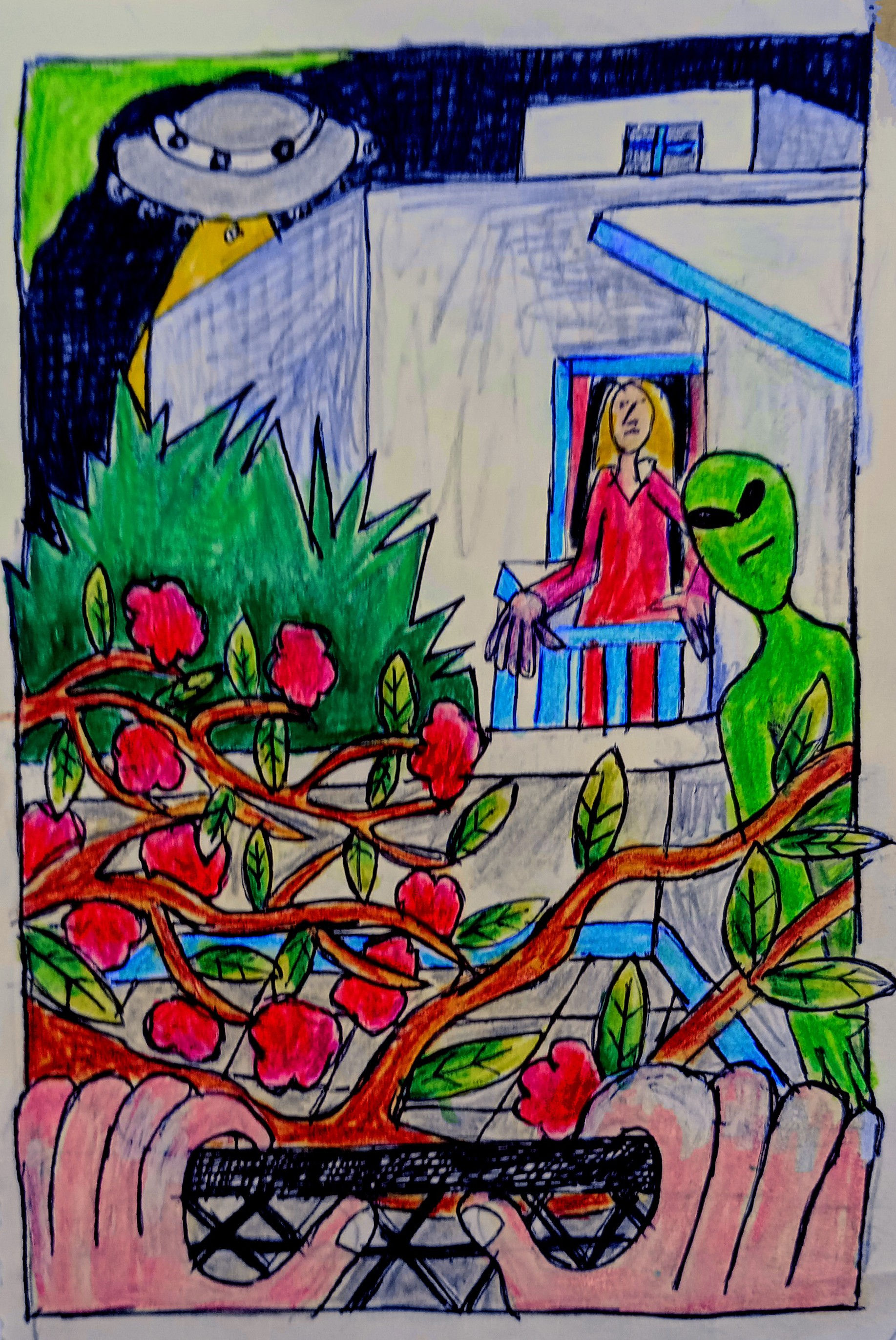
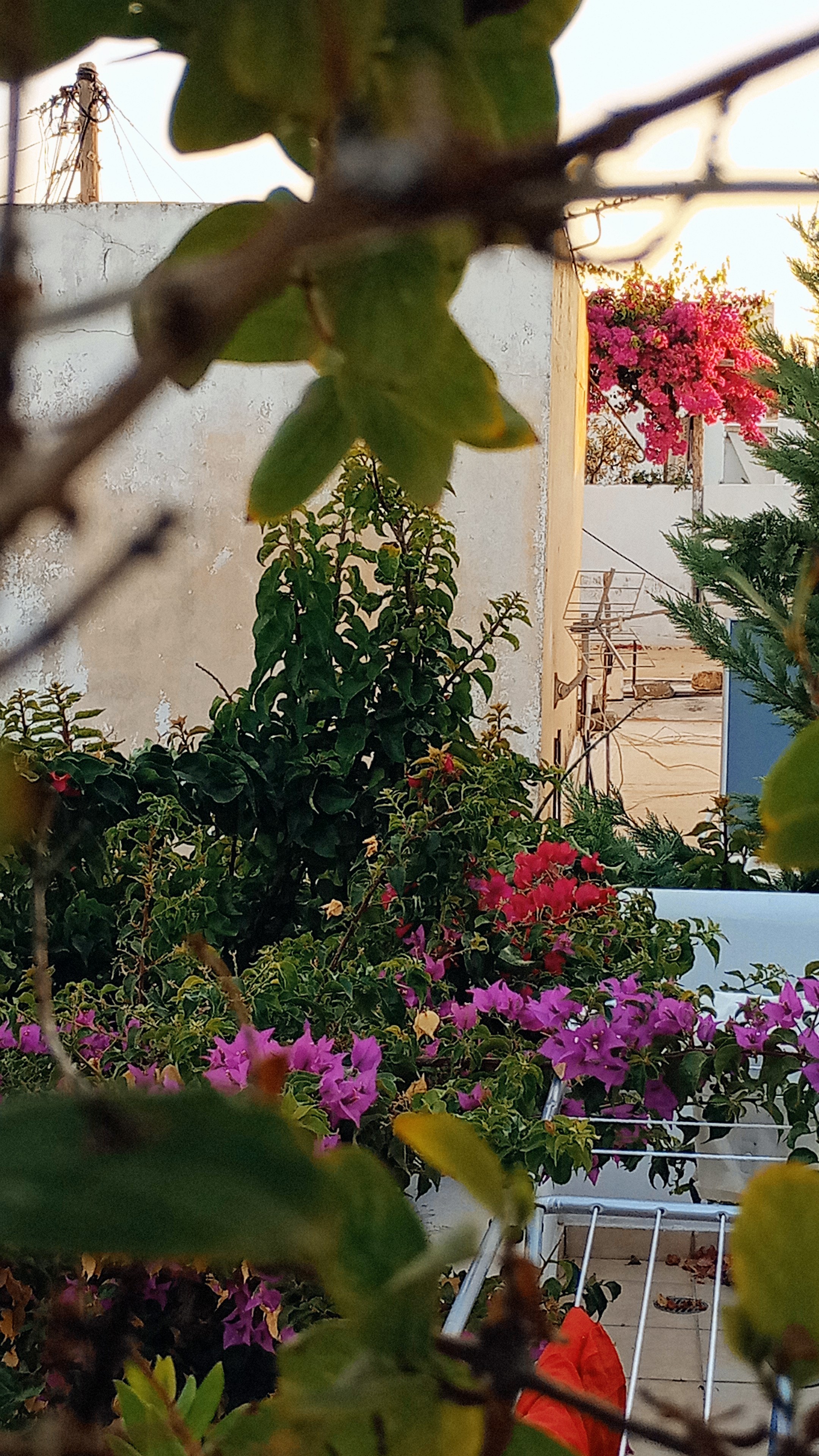
Summer in the city can be fatiguing and, for me, claustrophobic. For my psychological survival, I have created a secret place on our long and narrow balcony. Here I can blend in with the plants as I spy on the world below.
The sun provides great light but the glare can be blinding. A forgotten hammock was rediscovered and given a new identity as awning. It’s all so cool! However, I have this overwhelming desire to throw water balloons at the cars with undisciplined drivers who honk too much. And that wouldn’t be cool at all. Or would it?
Burkina Faso, like many African countries, was once a French colony. Although the country eventually gained its independence, it was still largely controlled by France. Corrupt leaders made deals with the French permitting the latter to exploit the country’s national resources. Example: Burkina Faso has productive gold mines. These mines were once controlled by the French who took 95% of the profit leaving Burkina Faso only 5%. And this was pretty much the story for all their other resources. No wonder the country was poor and, to survive, many of the Burkinabè people were forced to migrate.
In 2022, the military seized control of Burkina Faso and made Captain Ibrahim Traoré its leader. Thirty-six years old and a military officer, Traoré studied geology at the University of Ouagadougou before becoming part of a UN peacekeeping force in Mali. But once back home, Traoré became disillusioned and angered by politicians who, thanks to bribes, became rich while regular citizens continued to lacked the very basics. He was also unhappy about the country’s inability to contain the Jihadist insurgency.
Traoré’s main objective became that of providing sovereignty for his people. He started by kicking out the ex-colonists so the country could reappropriate its natural resources and begin creating fiscal independence. Because Burkina Faso wants to be debt free and independent.
The Chinese have also been instrumental in helping the Burkinabè produce their own EV. Maybe Tesla should be afraid as Burkina Faso joins Africa’s electric vehicle market with launch of new EV brand. And Burkina Faso doesn’t need to invade other countries for transitional minerals as they have their own.
China seems to be very interested in helping Africa progress as a continient. They are using soft power to become a part of it all.
Sovereignty also means being able to feed yourself. One problem many African countries have is that of desertification. So now Africa is creating a Great Green Wall to combat desertification in the Sahel region by planting a wall of trees. China is a leader in the regreening of deserts and an innovator in agriculture. The Chinese have shared their knowledge with the Burkinabè enabling them to produce a record harvest. So much so that Traoré told the US that they didn’t need their aid. Furthermore, Traoré said he was going to help feed other Africans.
So what will the western world do when African nations become sovereign?
When France had control over Burkina Faso and other ex-colonies, the only airline permitted to fly from Europe to that part of Africa was Air France. Then Traoré kicked the airlines out and the airline’s profits plummeted.
With all their natural resources, there is no reason for the people of Burkina Faso to live in poverty. Much of the African immigration so many western countries complain about can be blamed directly on colonists whose greed deprived the Africans of their natural resources.
If the Western world doesn’t want immigrants, then they should stop ripping off the countries these immigrants come from. If the west would stop depriving people of their natural resources, maybe people could stay at home to earn a living.
There is so much going on in Burkina Faso. Why have I not heard about what they’re doing on mainstream news?
One thing to look out for when reading the news now is any reference to rare earth minerals. It used to be that macho countries would find a pretext to invade another country for the oil. But oil is becoming demodè whereas rare earth metals are trending because of their techno importance.
The Japanese introduced the “Do-nu” technology to the Burkinabè to help facilitate the construction of rural roads. Gunny bags filled with soil or gravel are laid down as bricks to construct roads. See: DO-NOU TECHNOLOGY +