Standing in the wind with a charm bracelet

Anna Akhmatova was a Russian modernist poetHer work was condemned by Stalin but, nevertheless, she remained in Russia.  This meant living in the shadows, experiencing the execution of her husband and grieving for her son forced to live years in a gulag.

But isn’t that what poetry is all about—transforming sorrow into art?

It is said that Anna, like Socrates, didn’t believe in writing her thoughts down (mainly out of fear because her poetry had been banned). So her poems, instead of being written, were memorized. But, luckily, someone took notes and wrote them down otherwise we wouldn’t know aboutUnder Her Dark Veil”, a poem that speaks of a love that’s lost its way. She calls out to him “if you leave, I’ll die” and he responds “Don’t stand here in the wind.”
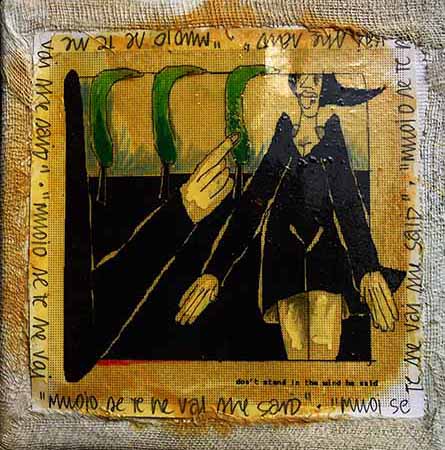
don't stand in the wind

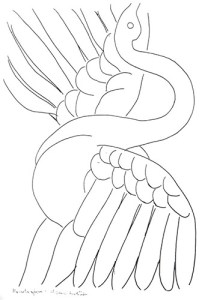
“Don’t stand in the wind” (computer drawing by korzekwa)

The wind cannot be seen but can be felt. It’s a noun that likes to be a verb.
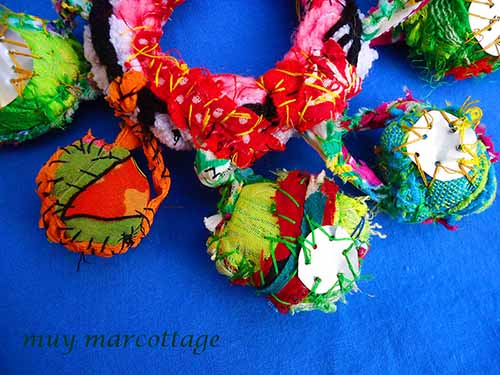
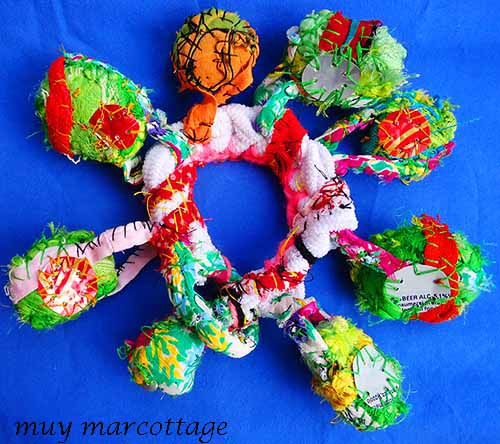
psithurism bracelet

“Psithurism”, a word now obsolete,  means “the sound of rustling leaves”.  It comes from the Greek word ψιθυρίζω (psithurizō) meaning “I whisper”.
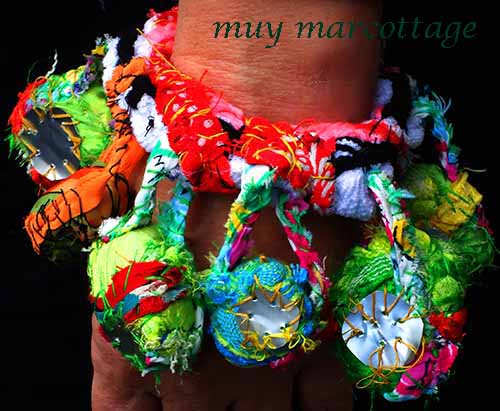
psithurism bracelet

Muy Marcottage bracelet “Psithurism”

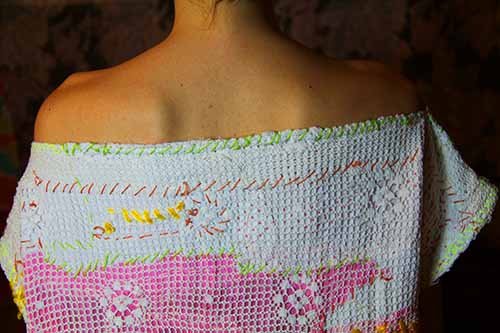
This bracelet does not make noise but it does whisper.  It is made from many materials exiled together to create a community:  strips of an old t-shirt crochet into a band, scraps of fabric covered by scraps of fabric to create beads, seams from ripped clothing to created links and soda cans cut into small disks to create paillette sequins.

Like the wind, this bracelet is a noun that wants to be a verb.
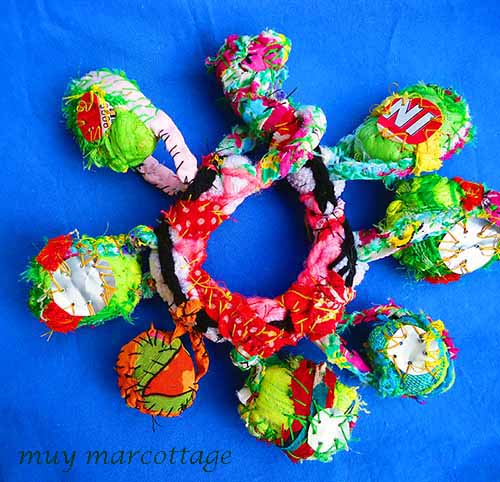
psithurism bracelet

psithurism bracelet

psithurism bracelet

psithurism bracelet

drawing

Posted in Muy Marcottage | Tagged , , , , , , | 6 Comments

Just another shoe in the wall

When Cinderella lost a shoe, the psychologists said: Ah, you know what that means! Because Freud claimed that the shoe is a symbol for female genitals (the foot that penetrates the shoe kind of thing). That’s why, when a couple marries, shoes are tied to their car representing the sexual union.

The shoe covers the foot and the foot is what we use to make contact with the earth. So shoes can also represent our standpoint and approach towards life. Maybe that’s why there are many shoe related sayings such as: Never criticize a man until you’ve walked a mile in his moccasins + If the shoe fits, wear it + comfortable as an old shoe + the shoe is on the other foot.

And, because of this symbolism, shoes have often been concealed in walls.

shoe hidden in wall

just another shoe in the wall….Keeping evil at bay: Concealed garments


shoe-and-buckle

concealment shoeat Hammond-Harwood House

During the restoration of old houses, often shoes hidden in the walls have been found. The practice of concealing shoes was once common in Britain–people believed that hiding a shoe, especially that of a child or a woman, would help ward off evil spirits.

Why would shoes be deliberately built into a home or public building? Some have speculated that the  tradition stems from the prehistoric custom of killing a person and placing the  body in the foundation to insure that the building holds together. Later shoes  were used as a substitute for a human sacrifice. Shoes may have been chosen, because over time they take on and keep the shape of the wearer’s foot. Shoes  were hidden near openings in the home–doors, windows, chimneys–the perceived  weak places in the building that were thus protected from evil by the shoe  owner’s spirit.

Finding Concealed Objects In Den + Smith said shoes have always had a lot of significance. They were prevalent in children’s nursery rhymes and classic storylines such as “The Wizard of Oz” and “Cinderella.”

Concealed shoes: Australian settlers and an old superstition + Mystery of the shoe in the wall + Medieval Mondays: A shoe hidden away keeps the witches at bay + 300-year-old shoes found in castle wall during restoration + Ancient shoe-filled jar found in Luxor temple

drawing

Posted in Health & Healing | Tagged , , , | Leave a comment

Matisse, Haiku and Muy Marcottage Etsy

swan3

Matisse sat in a boat and drew swans. He drew every detail of their forms just to carve them down into contour lines. That’s what I want to do– to get to the second swan. I sometimes overdose myself with myself hoping to eventually streamline. Too much just to get to just enough. Like Matisee, I want to turn excess into essence.

Matisse swan

before

swan by Matisseafter

For me, Matisse’s drawings are like haiku poetry…less says more.

Basho (1644-1694) is one of the most famous Haiku poets. His name means banana tree. A name he self-imposed after moving to a hut with a banana tree beside it.

a cuckoo cries
and through a thicket of bamboo
the late moon shines 

muy Marcottage

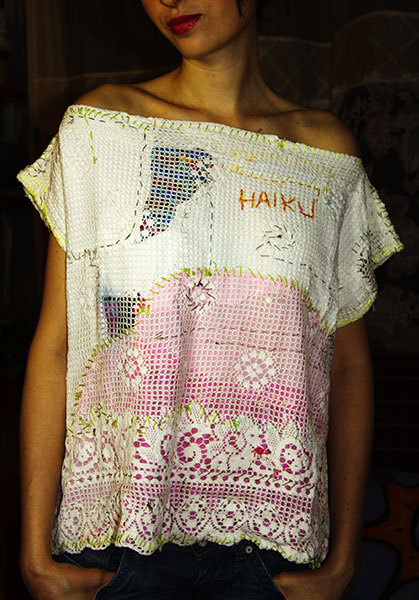
“Haiku” Huipil

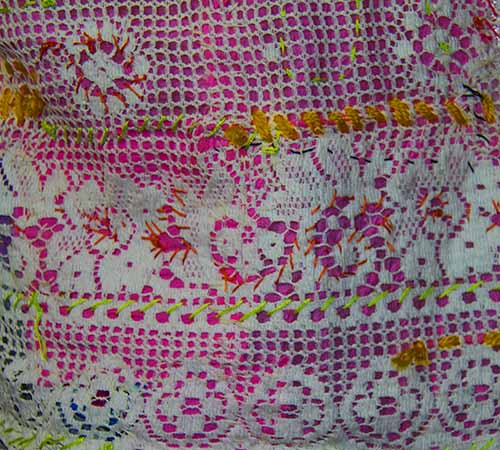
I have opened an ETSY shop, Muy Marcottage, where I hope to sell my many handmade huipiles. Pictured is the huipile “Haiku” made from an old curtain found at the outdoor market near by studio in Rome. It would make me happy if you were to take the timeout to visit my shop.  I’m a real beginner with Etsy and would appreciate constructive observations as well.

Muy Marcottage

Muy Marcottage

drawing


Posted in Muy Marcottage | Tagged , , , , | 1 Comment

Broken beauty.

Vigilant Things

above: broom straw and chili to keep the thieves away

Via my stats, I came across a post entitled “Is There an Aesthetics of Broken Things?” written by Tom Leddy, author of The Extraordinary in the Ordinary: The Aesthetics of Everyday Life .

Years ago, I became fixated with the idea of Daily Aesthetics .  Beauty comes everyday not just on special occasions and thus was happy to find out about Leddy.  But, thanks to Leddy, I was even happier to discover David Doris and his book Vigilant Things: On Thieves, Yoruba Anti-Aesthetics, and the Strange Fates of Ordinary Objects in Nigeria.

Doris use to play in a band called Raunch Hands but gave up playing when he discovered African Art.   Mesmerized by aale, objects made of found materials that act as talismans to protect one’s property, Doris even learned the Yoruba language of Nigeria just to study this phenomena in depth.

David Doris

David Doris, Rocker turned African art expert

vigilant things

In Vigilant Things, David T. Doris argues that aale are keys to understanding how images function in Yoruba social and cultural life. The humble, often degraded objects that comprise aale reveal as eloquently as any canonical artwork the channels of power that underlie the surfaces of the visible. Aale are warnings, intended to trigger the work of conscience. Aale objects symbolically threaten suffering as the consequence of transgression–the suffering of disease, loss, barrenness, paralysis, accident, madness, fruitless labor, or death–and as such are often the useless residues of things that were once positively valued: empty snail shells, shards of pottery, fragments of rusted iron, and the like. If these objects share “suffering” and “uselessness” as constitutive elements, it is because they already have been made to suffer and become useless. Aale offer thieves, regarded as “useless” people, an opportunity to recognize themselves in advance of their actions, to see what they will become.

I want this book!

More Yoruba Culture related info:

yoruba talisman vest

YORUBA VEST 1, Nigeria (this vest is so exciting!)

another yoruba vesttalisman foto + amulets, talismans, symbols on pinterest + irini gonou, “talismans”

yoruba art

In this “divination container,” notice the emphasis placed on the head, which, in Yoruba culture, contains an individual’s life force. Courtesy High Museum of Art

Yoruba Egungun Costume

Yoruba Egungun Costume  (This reminds me in a way of  Sarah Rahbar’s FLAGS)

African Yoruba beaded dance ceremony cape + West African Gbo “fetish priest” in batakari jacket adorned with “gris-gris” amulets/talismans, in Hoodoo + Talismanic Shirt + West African Hunter’s Shirt with amulets, Mali

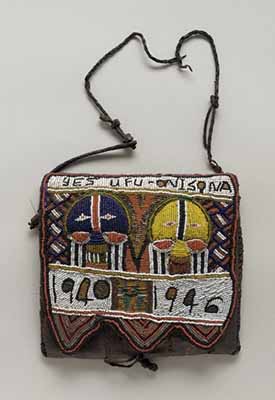
yoruba pouch

Ifa Pouch

Diviner’s Bag (apo Ifa) + Yoruba Ifa Beaded Bag + YORUBA DIVINER’S BAG 18, NIGERIA + YORUBA DIVINER’S BAG 17, NIGERIA + YORUBA DIVINER’S BAG 27, NIGERIA + Yoruba Beaded Leather Diviner’s Bag + Some Old Bags! +

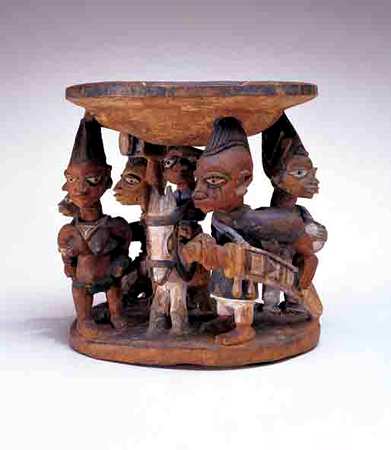
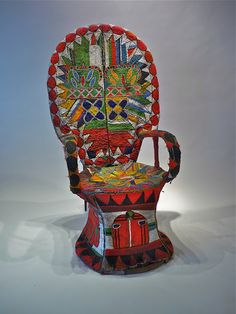
tribal chair

tribal chair (more great fotos here)

yoruba beaded chair + and yet another beaded chair +

drawingp.s.   Anthropology and Aesthetics reference to aale + pdf on African studies, scroll down to page 138 to read more about Doris and aale

Posted in People | Tagged , , , , , , , , | 8 Comments

Mending one’s faith in their fellowman

drawing by Korzekwa

We are living in a time of great transition which often is very spOOKy. Watching TV news has become a source of anxiety because it’s an overdose of the Wierd and the Wicked. Being surrounded by so much negative energy is fatiguing and depleting.  Luckily, little bursts of joy can occur when we realize that there are many people out there who can make us hope again.  The other day I came across the site FAITH RESTORING and sighed with relief–it’s nice to know that kindness is not dead.

michael swaine

Michael Swaine

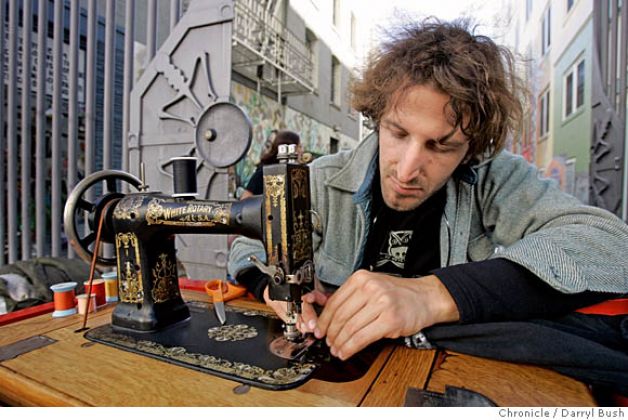
Michael Swaine is another Faith Restorer.  He has a treadle sewing machine mounted on a cart  (“sewmobile”)  so that he can take it to an alley in San Francisco where, once a month, he repairs clothes free of charge.  Michael is a ceramics and performance artist who extended his creativity to create a project called Reap What You Sew thus creating a collaboration between the artist and those whose clothes he repaired and an opportunity to create social interaction where there would otherwise be none.

more Michael: Michael Swaine’s Free “Mending Library” Repairs Clothes, Community +  In the episode “Street Art,” Spark visits the artist in action as he makes his monthly rounds + Door to Door Darning: Michael Swaine + Michael Swaine is currently building the Free Mending Library in the Tenderloin area of San Francisco

woman_mending_clothes

more mending:  Living Well: 4 Secrets to a Well-Mended Wardrobe + Creative mendingBasic Mending suggestions + 11 Cool Ways to Reuse Old Jeans in comic form by 

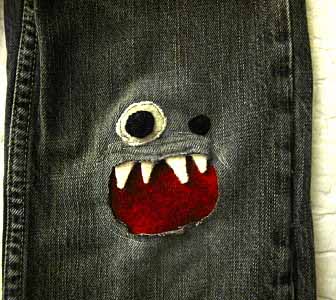
jean patch

jean patch, fix for a hole in the knee of jeans

hem jeans

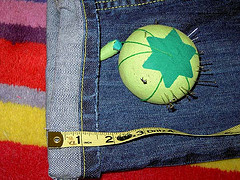
hem your jeans tutorial (easiest way ever!)

she-who-becomes-between-awake-and-dreaming-unruly-cloth-canvas-milliande-art-

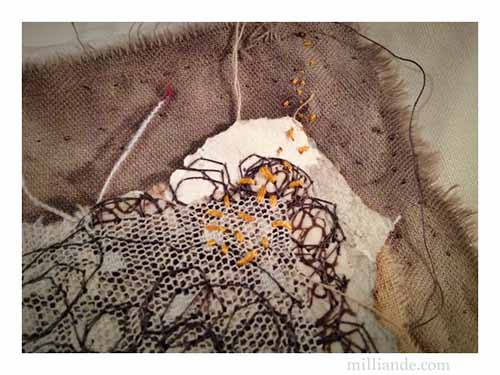
mending techniques as a form of art —” She Who Becomes Between Awake and Dreaming” by Milliande Demetriou

a poem about mending, kinda: Mending Wall BY ROBERT FROST

drawingp.s.  REPAIR | THE HAND-DARN via + mended pants + more mended pants +quick and messy hand darning +

Posted in Mend & Repair | Tagged , , , | 2 Comments