Craving for kisses and a fabric charm bracelet

kissing

petroglyph of a kissing couple

Philematology is the study of kissing. And the reasons why we kiss. The first known written reference of kissing is that found in the Bible’s Song of Songs: “Kiss me again and again, for your love is sweeter than wine.”

 The Romans had names for various kinds of kisses. Baseum (a kiss on the hand) , osculum (a kiss on the mouth with the lips closed) and saveum (a kiss of passion).

 There are different ways of kissing: Italians kiss by touching cheeks, cats kiss by blinking, Eskimos by rubbing noses.

 Basorexia is the overwhelming craving for a kiss.  But why do we kiss?  There are many theories.  Some anthropologists believe that it’s instinctual, others believe that it’s a product of kiss feeding, a means of feeding infants by first chewing their food then passing it into the baby’s mouth.

 Kissing is often a neurological experience.

Basorexia fabric charm bracelet

The name of this bracelet is “Basorexia”.  It’s made  from fabric scraps.  The base  was made by crocheting a shredded t-shirt whereas the “charms” were made by fabric scraps sewn together to create giant beads. The beads are embellished with stitching and paillettes/sequins made from soda cans.

Basorexia2 b Basorexia3 b Basorexia4 b Basorexia5 b Basorexia6 b Basorexia

Pucker up: The art of kissing

drawing


Posted in Muy Marcottage | Tagged , , , | Leave a comment

Why not wear a bunny around your neck?

bunnies in the studio

Bunnies in the Studio by Chiara Pilar

A few years ago the world became cartoonish. Women were buying expensive purses with kitty faces on them and pajamas with Minnie Mouse on the front. There was a manga mania and crafters worldwide were making animal softies. People were no longer taken into consideration and what was real was démodé. My drawings have always been fairly aggressive so, to mellow them out a bit, I took advantage of the new animal trend and  started replacing people with bunniesAnd I didn’t stop with the drawings. I also painted and embroidered them. And made tons of sock bunnies.

bunny neck purse

Sock Bunny Neck Purse via Etsy    

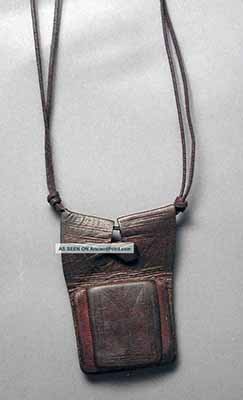
Recently I’ve been thinking about the practicality of neck purses—small purses that can be worn around the neck and used, for example, when travelling so you can easily have your tickets and passport available.  But neck  purses are also nice for walking.  They are big enough for the essentials like keys and coin purse.  This bunny was made for carrying sketch materials.  There is room for a small sketchbook and space for  pencils in the legs.

bunny neck purse


bunny neck purse bunny neck purse

bunny neck purse bunny neck purse

drawing

Posted in Muy Marcottage | Tagged , , , , , | Leave a comment

Standing in the wind with a charm bracelet

Anna Akhmatova was a Russian modernist poetHer work was condemned by Stalin but, nevertheless, she remained in Russia.  This meant living in the shadows, experiencing the execution of her husband and grieving for her son forced to live years in a gulag.

But isn’t that what poetry is all about—transforming sorrow into art?

It is said that Anna, like Socrates, didn’t believe in writing her thoughts down (mainly out of fear because her poetry had been banned). So her poems, instead of being written, were memorized. But, luckily, someone took notes and wrote them down otherwise we wouldn’t know aboutUnder Her Dark Veil”, a poem that speaks of a love that’s lost its way. She calls out to him “if you leave, I’ll die” and he responds “Don’t stand here in the wind.”

don't stand in the wind

“Don’t stand in the wind” (computer drawing by korzekwa)

The wind cannot be seen but can be felt. It’s a noun that likes to be a verb.

psithurism bracelet

“Psithurism”, a word now obsolete,  means “the sound of rustling leaves”.  It comes from the Greek word ψιθυρίζω (psithurizō) meaning “I whisper”.

psithurism bracelet

Muy Marcottage bracelet “Psithurism”

This bracelet does not make noise but it does whisper.  It is made from many materials exiled together to create a community:  strips of an old t-shirt crochet into a band, scraps of fabric covered by scraps of fabric to create beads, seams from ripped clothing to created links and soda cans cut into small disks to create paillette sequins.

Like the wind, this bracelet is a noun that wants to be a verb.

psithurism bracelet

psithurism bracelet

psithurism bracelet

psithurism bracelet

drawing

Posted in Muy Marcottage | Tagged , , , , , , | 6 Comments

Just another shoe in the wall

When Cinderella lost a shoe, the psychologists said: Ah, you know what that means! Because Freud claimed that the shoe is a symbol for female genitals (the foot that penetrates the shoe kind of thing). That’s why, when a couple marries, shoes are tied to their car representing the sexual union.

The shoe covers the foot and the foot is what we use to make contact with the earth. So shoes can also represent our standpoint and approach towards life. Maybe that’s why there are many shoe related sayings such as: Never criticize a man until you’ve walked a mile in his moccasins + If the shoe fits, wear it + comfortable as an old shoe + the shoe is on the other foot.

And, because of this symbolism, shoes have often been concealed in walls.

shoe hidden in wall

just another shoe in the wall….Keeping evil at bay: Concealed garments


shoe-and-buckle

concealment shoeat Hammond-Harwood House

During the restoration of old houses, often shoes hidden in the walls have been found. The practice of concealing shoes was once common in Britain–people believed that hiding a shoe, especially that of a child or a woman, would help ward off evil spirits.

Why would shoes be deliberately built into a home or public building? Some have speculated that the  tradition stems from the prehistoric custom of killing a person and placing the  body in the foundation to insure that the building holds together. Later shoes  were used as a substitute for a human sacrifice. Shoes may have been chosen, because over time they take on and keep the shape of the wearer’s foot. Shoes  were hidden near openings in the home–doors, windows, chimneys–the perceived  weak places in the building that were thus protected from evil by the shoe  owner’s spirit.

Finding Concealed Objects In Den + Smith said shoes have always had a lot of significance. They were prevalent in children’s nursery rhymes and classic storylines such as “The Wizard of Oz” and “Cinderella.”

Concealed shoes: Australian settlers and an old superstition + Mystery of the shoe in the wall + Medieval Mondays: A shoe hidden away keeps the witches at bay + 300-year-old shoes found in castle wall during restoration + Ancient shoe-filled jar found in Luxor temple

drawing

Posted in Health & Healing | Tagged , , , | Leave a comment

Matisse, Haiku and Muy Marcottage Etsy

swan3

Matisse sat in a boat and drew swans. He drew every detail of their forms just to carve them down into contour lines. That’s what I want to do– to get to the second swan. I sometimes overdose myself with myself hoping to eventually streamline. Too much just to get to just enough. Like Matisee, I want to turn excess into essence.

Matisse swan

before

swan by Matisseafter

For me, Matisse’s drawings are like haiku poetry…less says more.

Basho (1644-1694) is one of the most famous Haiku poets. His name means banana tree. A name he self-imposed after moving to a hut with a banana tree beside it.

a cuckoo cries
and through a thicket of bamboo
the late moon shines 

muy Marcottage

“Haiku” Huipil

I have opened an ETSY shop, Muy Marcottage, where I hope to sell my many handmade huipiles. Pictured is the huipile “Haiku” made from an old curtain found at the outdoor market near by studio in Rome. It would make me happy if you were to take the timeout to visit my shop.  I’m a real beginner with Etsy and would appreciate constructive observations as well.

Muy Marcottage

Muy Marcottage

drawing


Posted in Muy Marcottage | Tagged , , , , | 1 Comment