Pruning a lifestyle

One of my favorite places on Paros is my terrace.  Since it faces west, I garden there only in the morning because it’s just too hot afterwards. Volver, our cat, likes to “help” but can’t understand when I yell at him if he tries to kill a bee.  Kill the flies, not the bees, I tell him hoping he will understand.

VolverVolver on the terrace

My terrace is somewhat of an exerimental lab.  Not knowing much about gardening, I often look up info on internet and, if I have patience, watch an instructional video on youtube. But most of the time I just go by instinct.  Gardening is very philosophical.  And pragmatic.  Take pruning for example.

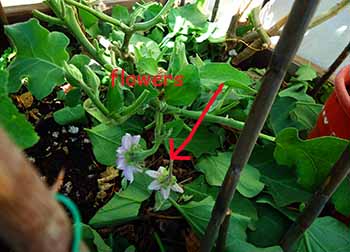
When we got back to Paros, I found an eggplant plant from last year big and bushy.  It looked wonderful.  But it had no flowers which meant no eggplants.  So it had to be pruned.  And, once pruned, flowers began to appear.

terrace eggplantPruning is not about just wacking away.  It’s about knowing where you want to go and then cutting away anything that keeps you from going in that direction. Pruning is a form of logic. And about making the right choices.
terrace

Decluttering is a form of pruning. It’s beneficial not just on an individual level but on a collective one as well.  For example, the Broken Windows Theory shows how crime rates go down in neighborhoods once they are cleaned up and decluttered. Being surrounded by chaos confuses our innate sense of order sending bad signals to the brain.

But there’s another kind of decluttering I’m trying to do—that of my “To Do” list.  Every year, before coming back, I make a long list of things to do while on Paros.  It’s always a very long list and I’m lucky if I can accomplish 5% of what’s on it.  In other words, I set myself up for failure.

So obviously, I feel guilty because, according to my list, I don’t get much accomplished.  And guilt consumes energy.  That’s why this year I’m trying something new—I’m decluttering my “To Do” list and pruning it like my eggplant. Hopefully, I will get it down to no more than 5 To Do’s.  All the rest will be transferred to A Dream List.

Too much distracts and disperses.


For related links go HERE
Posted in Paros | Tagged , , , | 10 Comments

Sunscreens


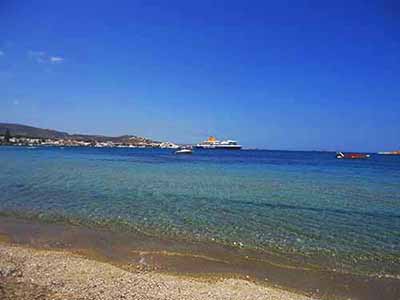
Livadia Beach

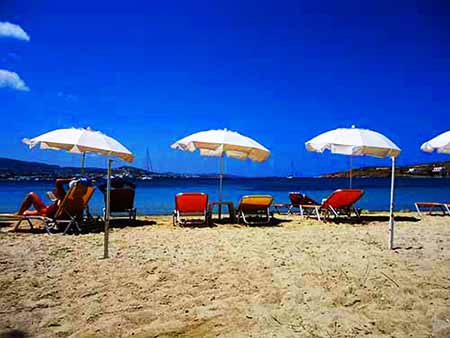
Livadia Beach, Paros

Going to the beach  means, obviously, the need for some kind of protection from the sun.  I use to think all I had to do was spread on some commercial sunscreen and everything would be ok.  However, lately I’ve been reading alot about the negative aspects of using sunscreens. First of all, sunscreens block vitamin D production. Furthermore, they are toxic and, some say, can even cause cancer.

So what are some possible alternatives? Alot of websites offering homemade remedies suggest using coconut oil. However, one site says that olive oil has an even higher spf factor. As for myself, living in a Mediterranean country means olive oil is much easier to find and cheaper to use.

suntan

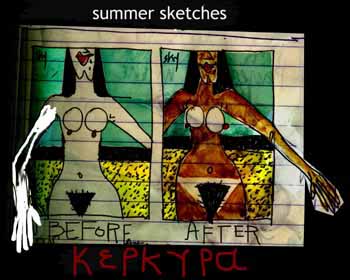
From SUMMER SKETCHES

Diet can also help prevent sunburn and protect the skin. So, eating foods that are red (indicating the presence of licopene) such as tomatoes and red bell peppers and foods that are orange (indicating the presence of carotene) such as carrots, cantalopes and sweet potatoes, will help alot.

Eating Omega-3 rich foods such as walnuts and chia seeds will  inhibit sunburn.

And you just can’t dump your skin’s security on sunscreens.Protective clothing and shade are fundamental.  I always go to the beach wearing a long sleeve, loose fitting white dress and a bandana around my forehead. And once on the beach, I sit in the shade of a tamarisk. Many years ago, I did alot of sunbathing but not anymore. Suntans and I are existentially incompatibile – all that effort just for something that fades away.

Livadia

For more related, links go HERE.

P.S. Great info from Deborah of Alamodeus:    Natural ingredients with SPF protection properties: Raspberry Seed Oil (SPF 30-50); Carrot Seed Oil (SPF 30); Wheat Germ Oil (SPF 20); Sesame, Coconut, Hemp, Avocado, Soybean and Peanut oils contain SPF levels between 4-10. Add any or all of these to Shea Butter (SPF 6-10), add a drop or two of Vitamin E oil and you have natural sun protection.

Posted in Paros | Tagged , , , , | Leave a comment

Buying cheese at the farmers’ market

Often, on my way back from the beach at Livadia, I stop at the farmer’s market.  Well, more than a market, it’s a row of produce stands behind the chapel near the port.  Local farmers sit there in the shade displaying their produce—tomatoes, eggplant, zucchini, onions, potatoes, horta and whatever else is in season. Some sell salted capers, basil plants, wine and souma. Only local products.  Last year we would often buy from a woman who would come twice a week from Naxos to sell cheese made by her family.  Since we rarely felt like buying a whole wheel, she would cut off a piece then wrap it in waxed paper—never wrap cheese in plastic, she said.  So I bought a big piece of gauze, washed it and bleached it in the sun and now use only that  to  wrap our cheese.  It’s ecological, economical and projects a sense of aesthetics.

  farmers' market

This year there’s one elderly farmer I like to buy from because of  his attitude.  Plus he always gives me something extra like a cucumber or a head of garlic.  The other day he gave me a lemon but insisted that first I smell it which I did. Wow, what a perfume! My nose was instantly addicted. He sells cheese, too.  Before letting me buy, he took out his pocket knife and cut off a piece so I could taste it then asked: “kalo?” (“good?”). The whole gesture was very poetic. And the cheese was definitely “kalo.”
Obviously, the first thing I did when I got home was put the cheese in its cloth.

farmers' marketfarmers' market

Related links: cheesecloth +Bread and Cheese on a Parian Farm videoCheese Making on Paros + Tastes of Paros’ Cuisine

Posted in Recipes & Food | Tagged , , , | 7 Comments

A Book of Errors

On Market Street in Parikia, there’s a tiny little shop, PAWS,  that raises money to feed stray animals by selling donated items.  That’s where I bought “The Unknown Errors of Our Lives” by Chitra Banerjee Divakaruni. (Divakaruni is better known for  “The Mistress of Spices”.)

The Unknown Errors of Our Lives” is a collection of 9 short stories evolving around Indians transplanted in the States—the inbetween of East meets West.  Divakaruni is, undoubtedly, a good writer and easy to read.  However, there is a sadness in her stories that, for my own reasons, I would like to avoid.  Phrases like, when speaking of old people, “… their smiles took a long time to form, and then strayed on their faces forever, until the children couldn’t tell them apart from their wrinkles” are poetic but incompatible with the direction I’ve taken this summer.  However, as I said, it’s easy reading and I  finished it quickly.

The story that shares the book’s title, “The Unknown Errors of Our Lives,” talks about Ruchira and her upcoming marriage.  While packing, she comes across one of her old notebooks, her “Book of Errors” where, as a teen, she’d write down the errors made.  More specifically, the mistakes one makes without realizing it.  And maybe it was this early realization as to how many and how easy errors can be made that permits her to accept  an uncomfortable truth regarding her fiance’s past.

The “Book of Errors” made me think  of Slam Books that were so popular when I was in middle school.

A Slam Book was basically a looseleaf notebook filled with pages proposing various questions about various subjects meant to collect a variety of opinions from a variety of people—a primitive form of Facebook. Unfortunately, it often turned out to be a collection of “slams” thus  prohibited by our teachers and confiscated if found. The need to make them, maybe, had alot to do with the age. Middle school is a transitional period where hormones are pushing you from childhood into adulthood. It is a time when we are forming our new identity and often do so based on peer pressure and the status quo.

Adolescence is a time when dendrites become a jungle and, trapped inside, you struggle to find your way out.

Other notebooks of interest:

nick cave

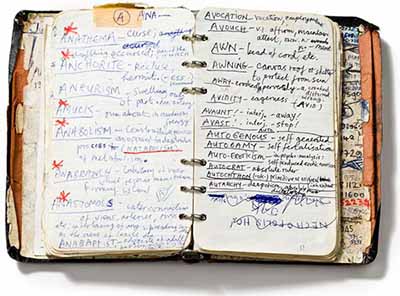
Nick Cave’s handwritten dictionary via A Peek Inside the Notebooks of Famous Authors, Artists and Visionaries

Found in a Junk Shop: Secrets of an Undiscovered Visionary Artist

sharon etgar

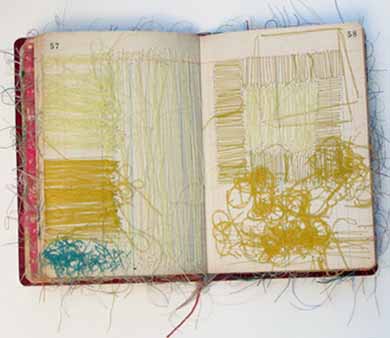
Sharon Etgar’s thread drawings

boro book

Stitched Boro Book

Louise Bourgeois

The Textile Books of Louise Bourgeois

EXCERPTSExcerpts. From Diary Pages 1994-1995

Related links: Excerpt from The Unknown Errors + Grown Up Slam Book? + The Notebook Project

More notebooks:  Katrien de Blauwer—if you have alot of time, check out Cinoh’s Tumblr for many notebooks such as Lunch Poems + THIS.

Yummy altered books.

Posted in Books, Drawings & Paintings | Tagged , , , , , , , | Leave a comment

Bob Marley and the Tamarisk Tree

On my way to the beach at Livadia, Bob Marley was singing to me “Could you be loved?” and I was bouncing my head up and down like a dancing Topo Gigio.  Of course I could be loved! But the minute I answered Bob  and said “Yes,” my iPod lost its charge.  Was this some kind of omen?  Then I remembered the insistent ringing of the church bells that morning and how all the cafes along the seafront were full and realized  it must be a holiday which meant that the beaches would be crowded which meant that it would be difficult to find an unoccupied tamarisk tree and enjoy the shelter of its shade. But luck was loving and had a tree waiting there just for me.

 tamarisk1

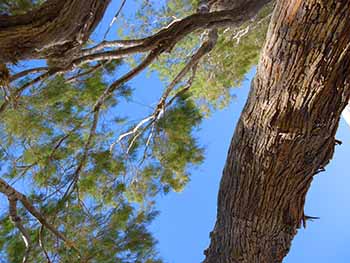
Tamarisks have exceeding long tap roots allowing them to go way down into the ground and exploit natural water resources. And this is probably the reason they are able to live so close to the salty sea. They are also able to absorb the night’s moisture. If you’re underneath a tamarisk during the morning, you will feel how extremely cool its shade is and, looking up, you will see shiny droplets of water on its skinny branches. By noon, the droplets will have evaporated away.

tamarisk2

Tamarisks not only offer shade but they serve as windreakers, too. Unfortunately, they have the drawback of increasing the soil’s salinity and are invasive. But China is taking this latter negative characteristic and making it positive by using the tamarisk in their anti-desertificaton programs.

tamarisk3

Tamarisks are mentioned in the Bible. For example, in Genesis 21:33, Abraham planted one in Beersheba and there he called upon the name of the LORD, the Eternal God. Some scholars believe that the sap from the tamarisk could be considered a kind of manna in that it’s waxy, sweet, aromatic  and yellowishy like the manna described in the Bible. Manna or not, its sap is used to make nougat candies called gaz.

carrotsB

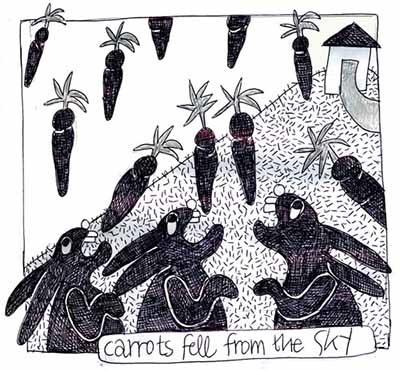
Bunny Manna, from BEBINA BUNNY future publication

More links related to Paros HERE + Sunset at Livadia foto + More fotos.

Posted in Plants & Gardening | Tagged , , , , | 5 Comments