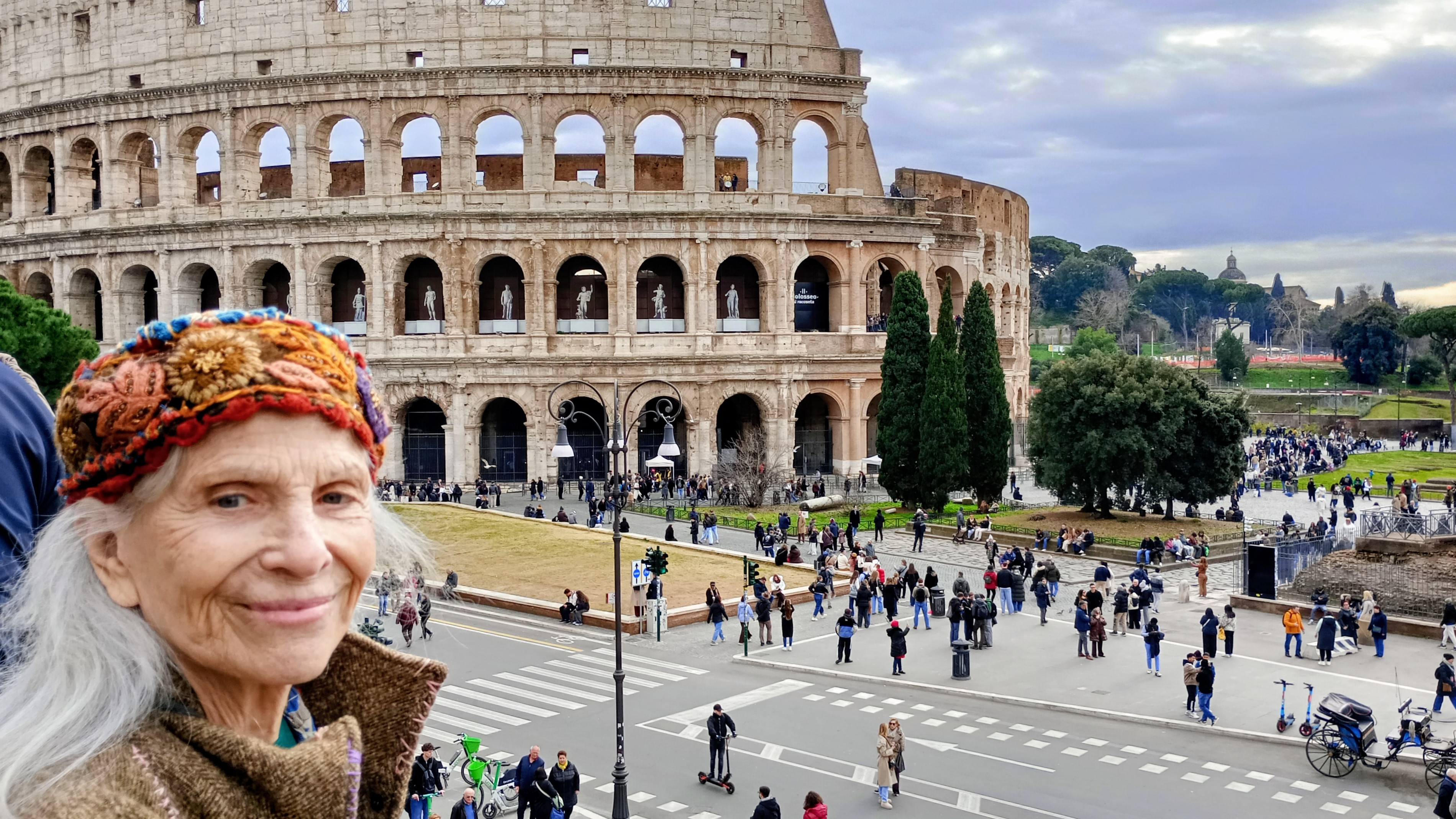
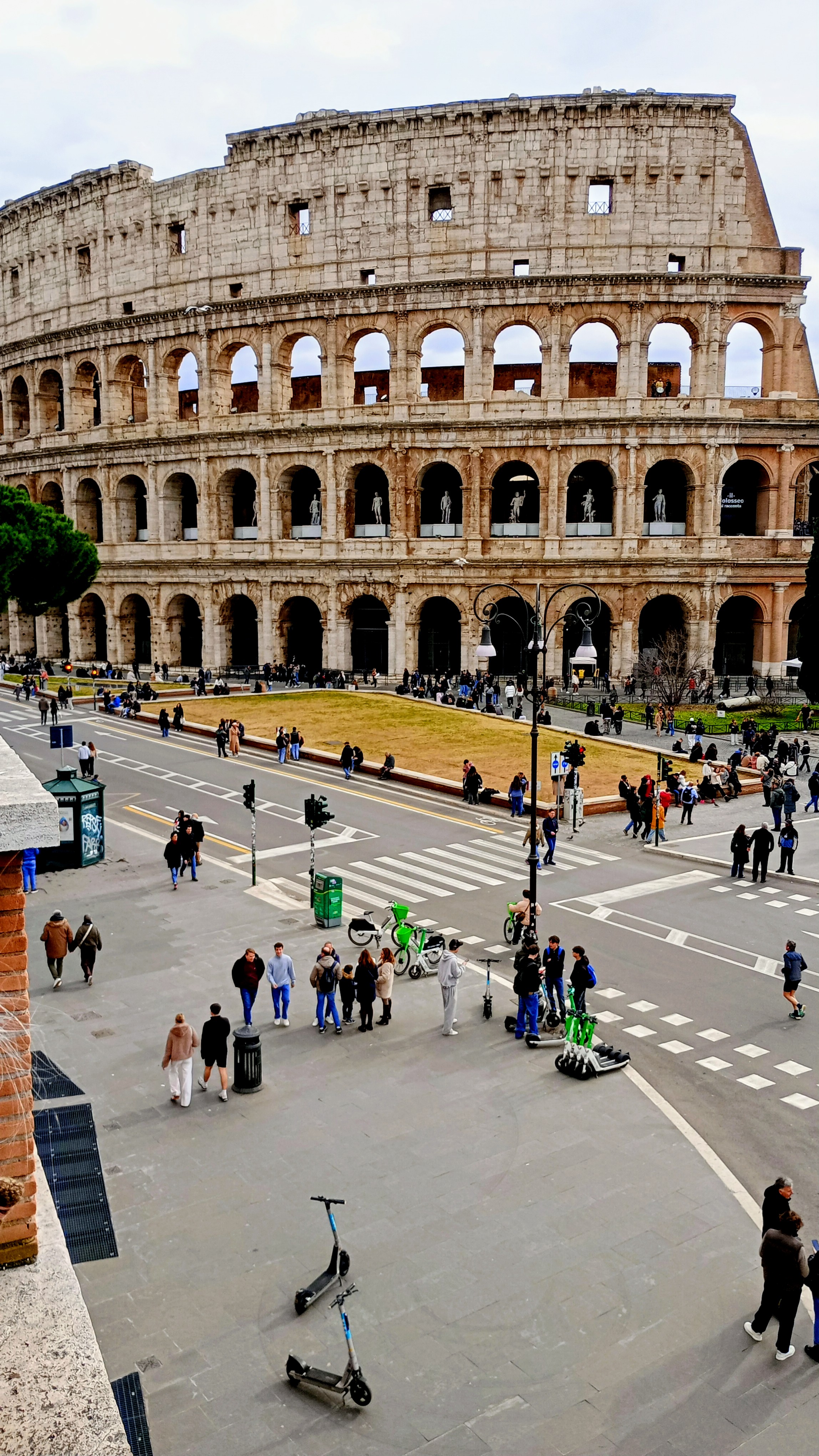
My friend, Janet Cooper, was in Rome this past weekend. We made an appointment for Sunday morning and, as she was staying near the Colosseum, we headed towards the Fori Imperiali.
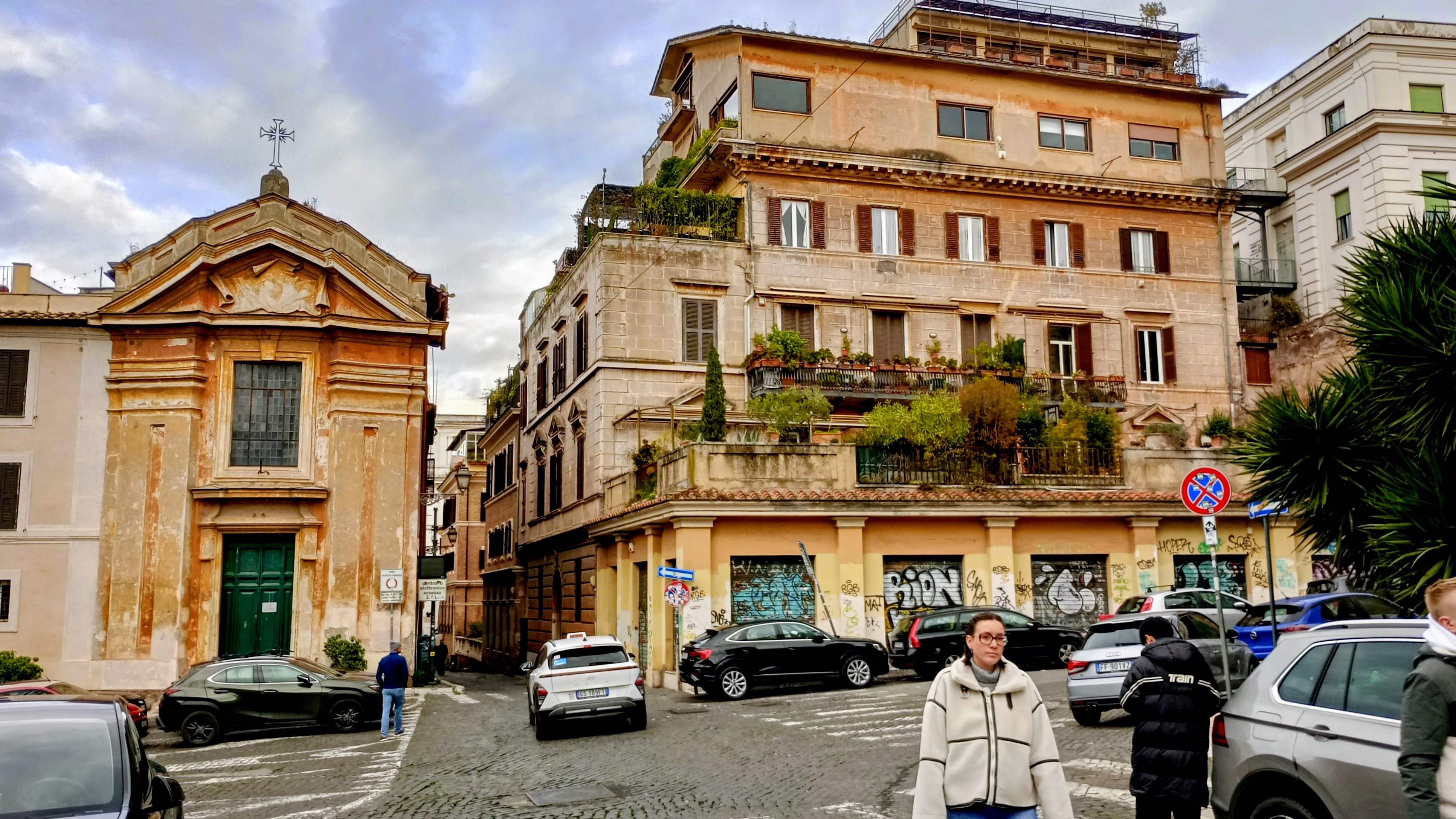
Looking away from the Colosseum and towards via delle Carine, you can see the church of Santa Maria della Neve al Colosseo on the left, on the corner with via del Cardello. Turn around and you see this:
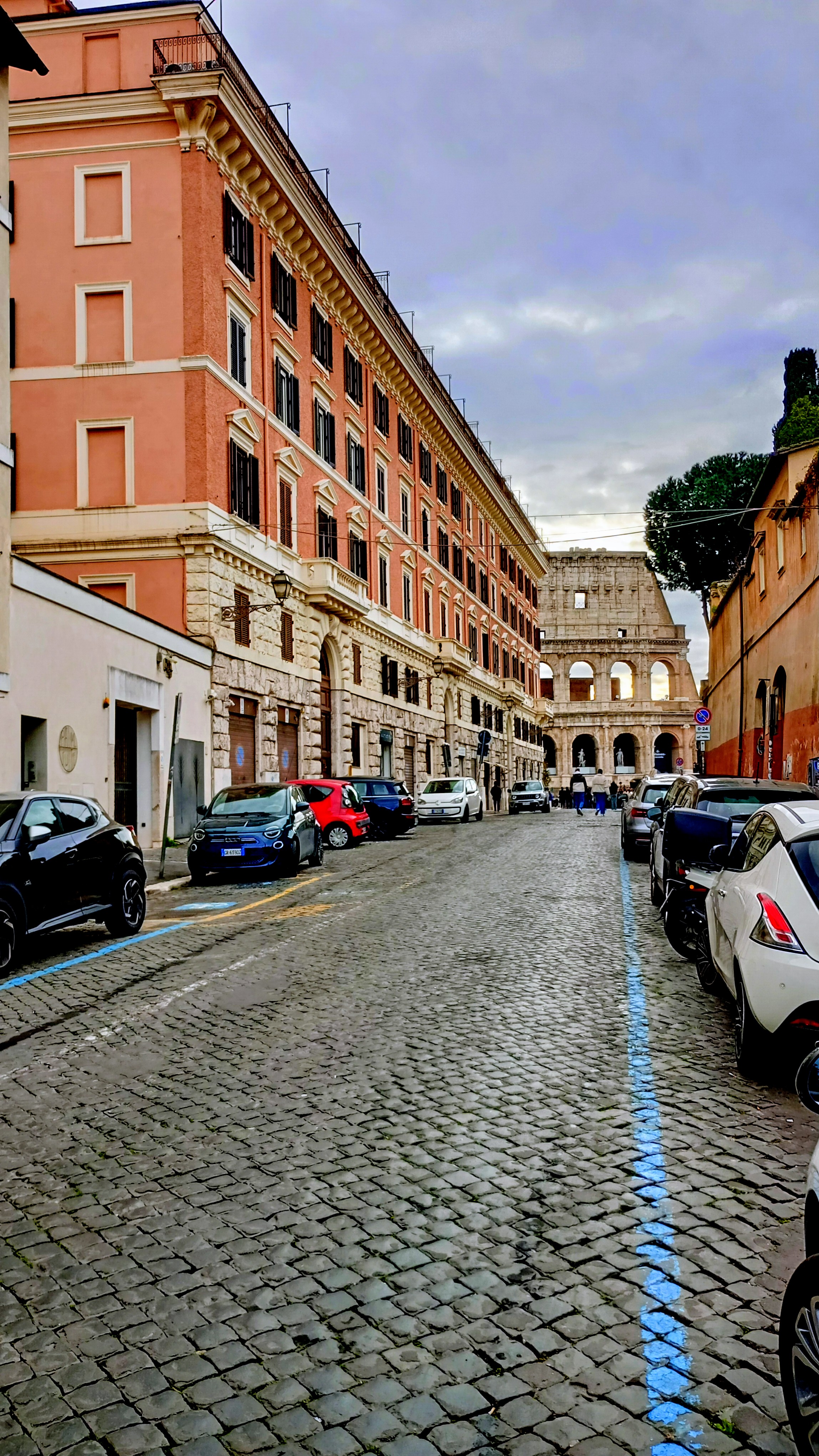
Peek-a-Boo Colosseo
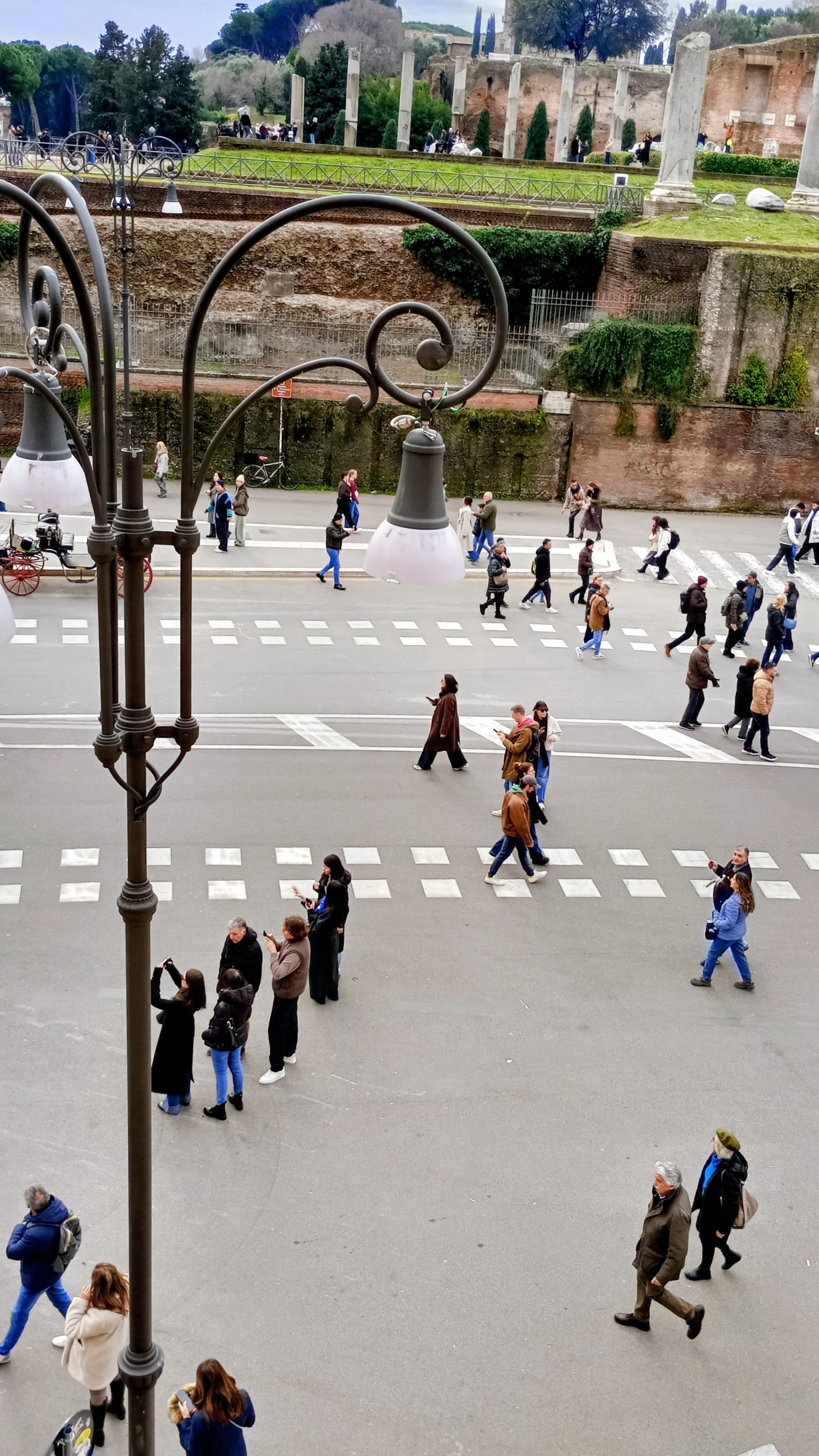
The last weekend of the month, via dei Fori Imperiali is closed to traffic making it a great place for walking with friends and family. In fact, despite the grey weather, there was much animation.
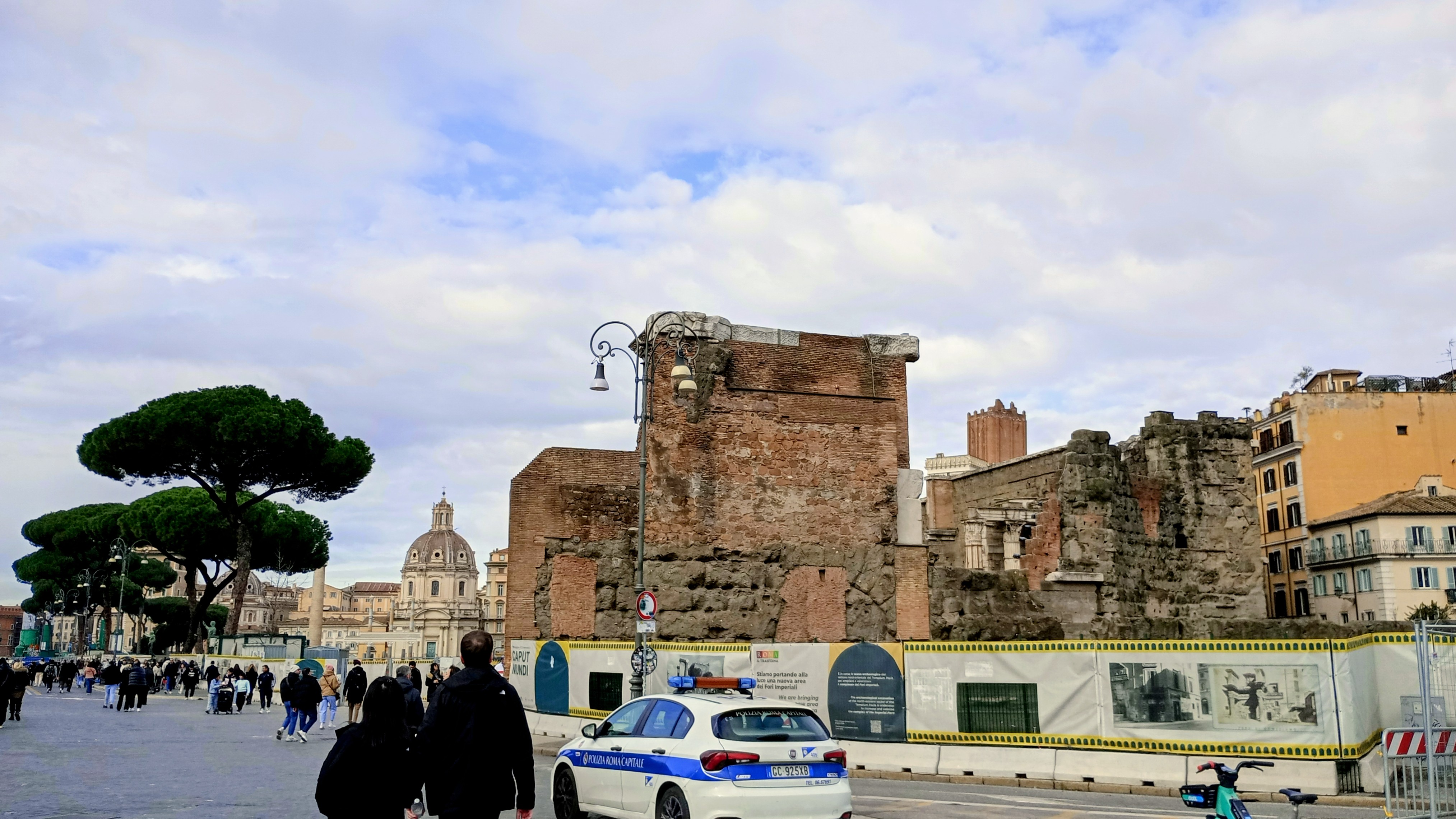
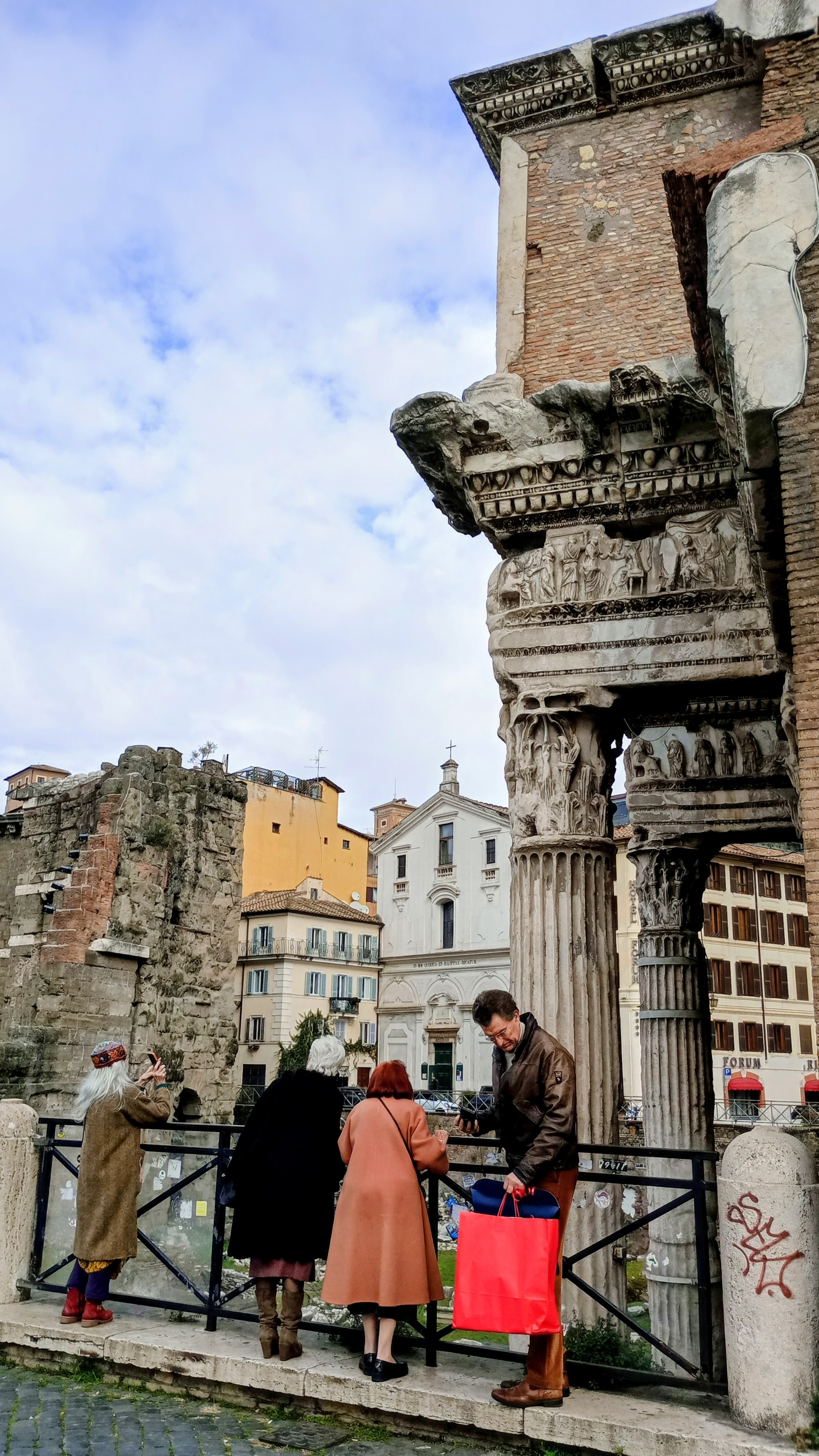
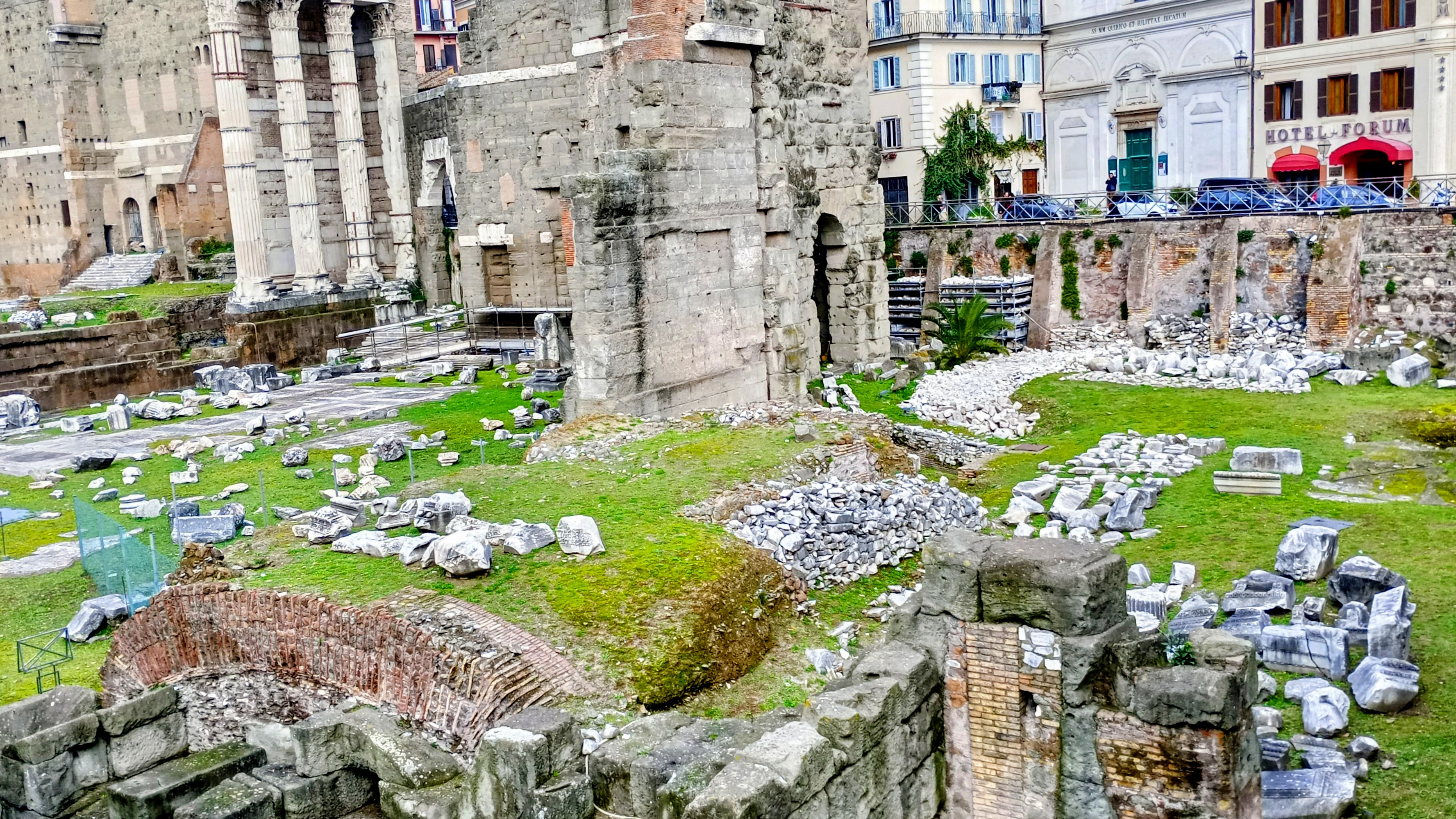
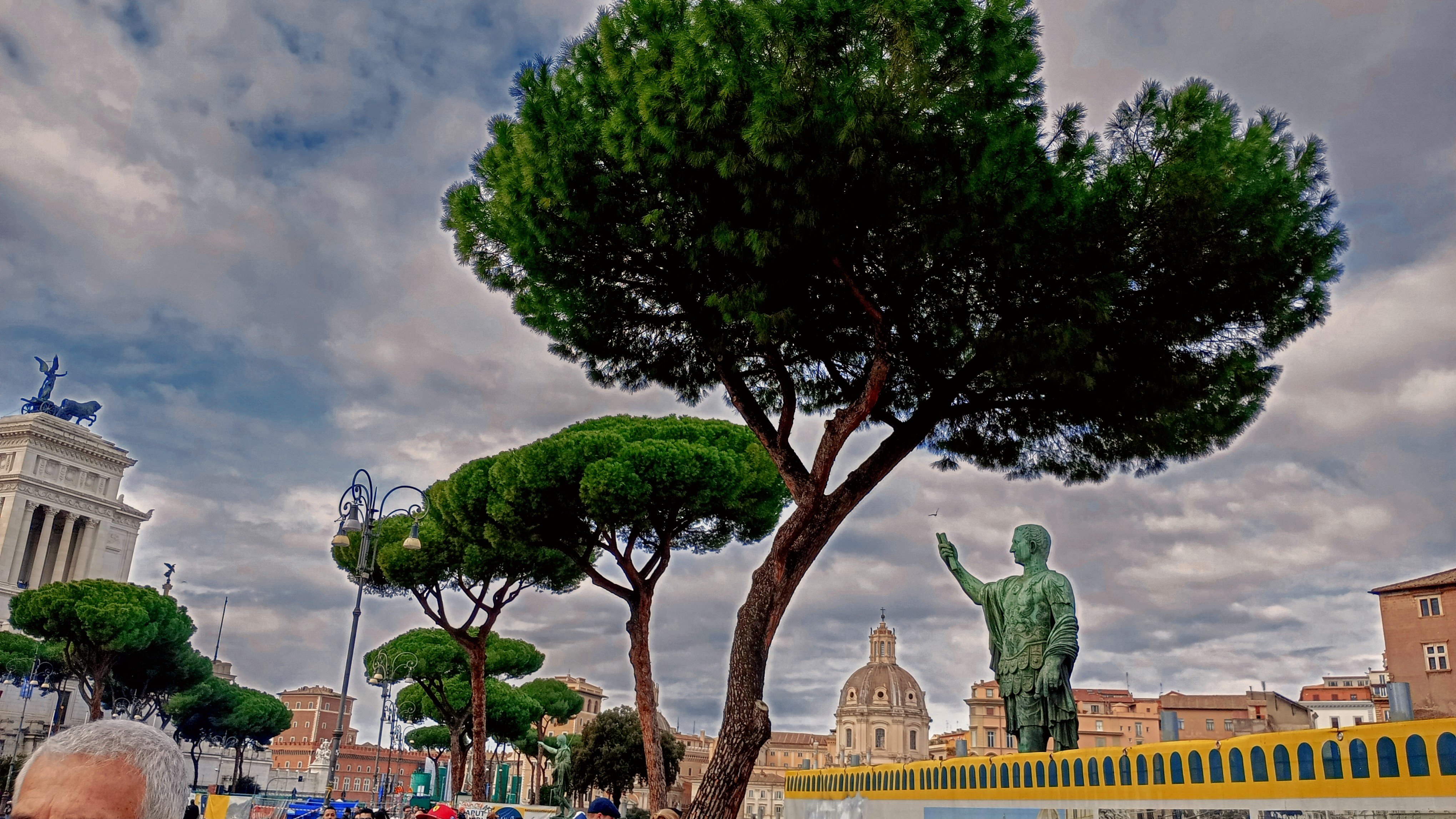
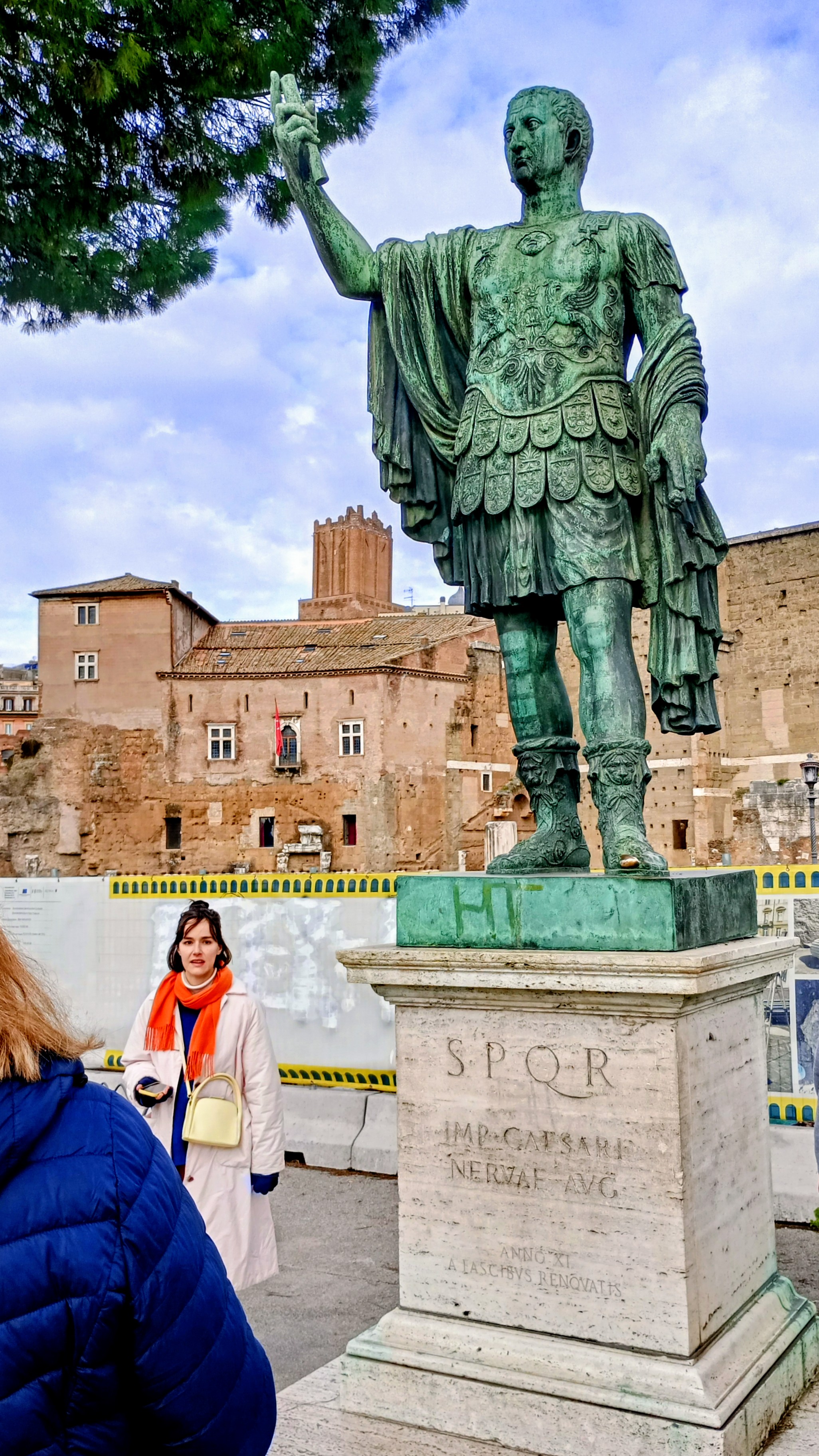
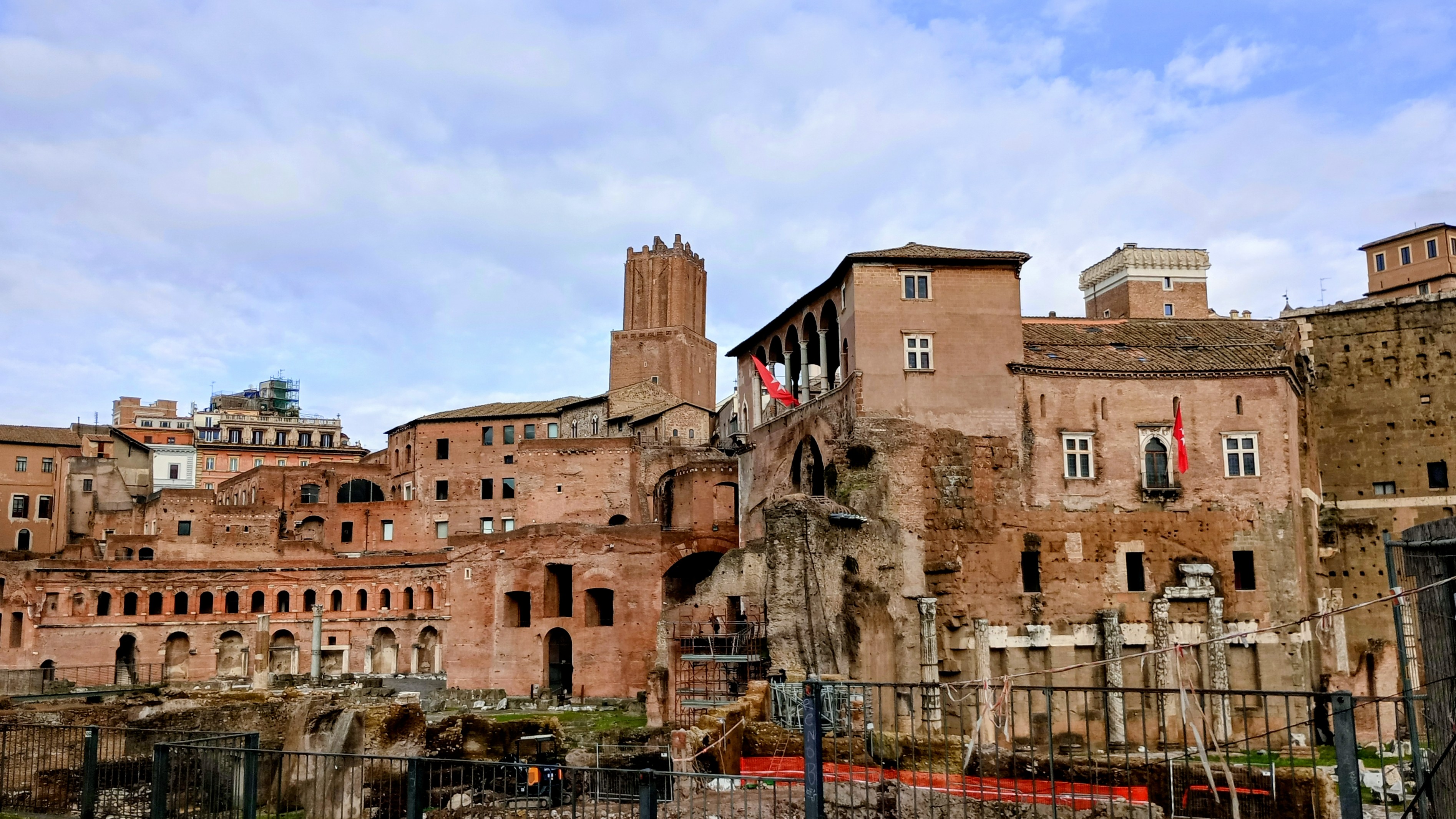
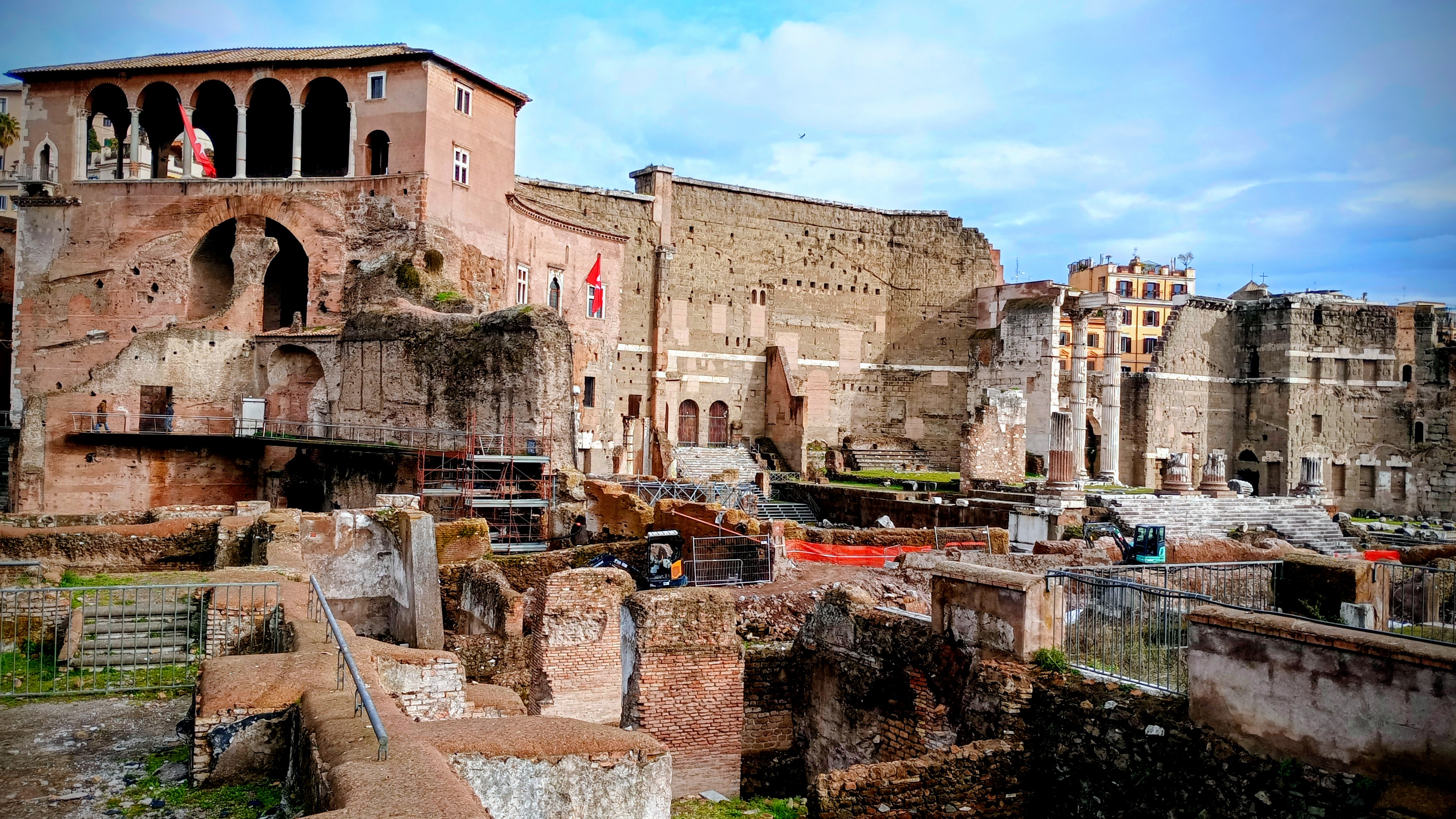
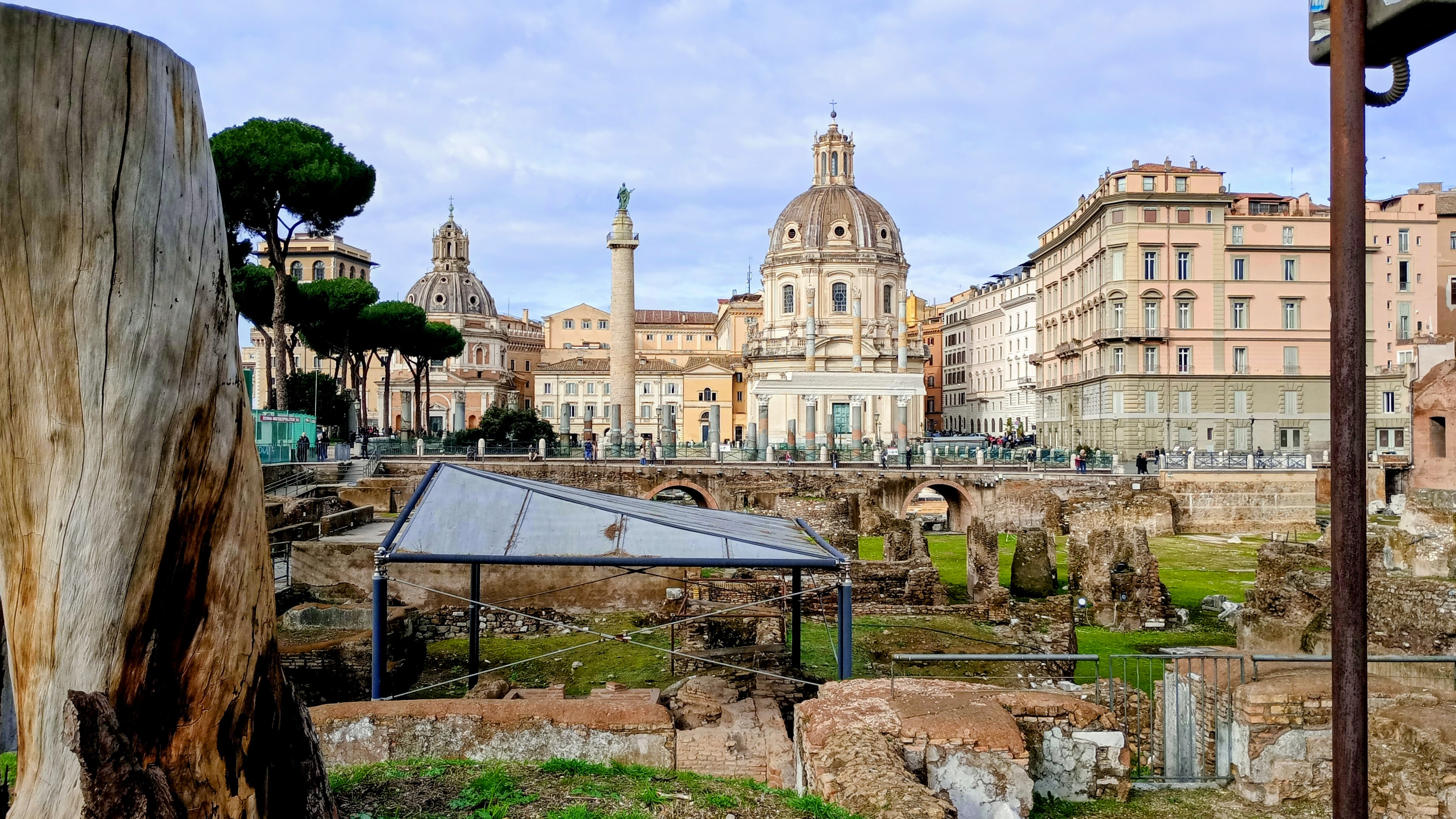
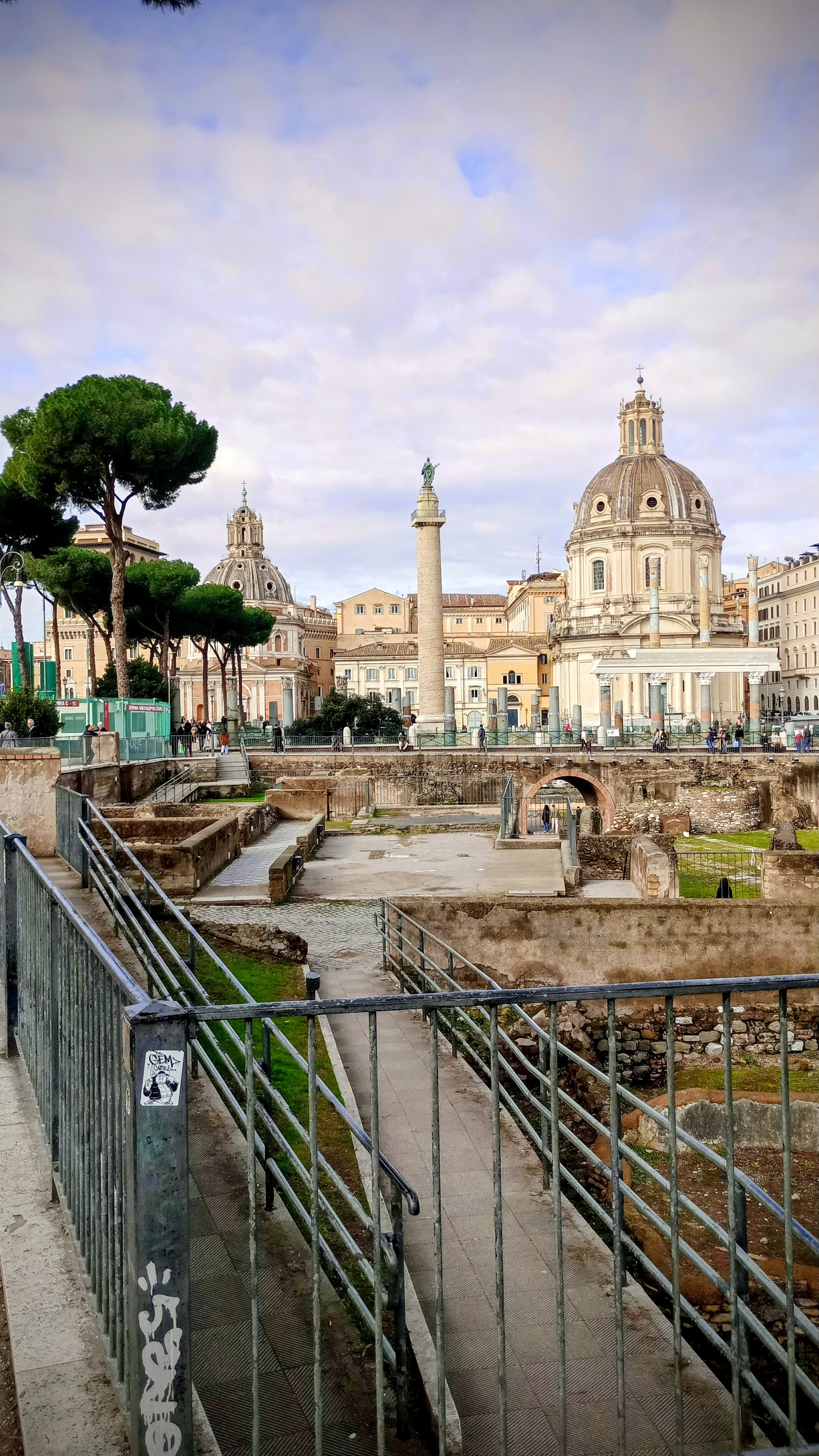
Beneath the wall is via dei Fori Imperiali (Imperial Fora). The fori are a series of monumental squares and their buildings. They are all in the same area facing via dei Fori Imperiali. The forums are: Forum of Caesar (46 BC), Forum of Augustus (2 BC), Forum of the Peace (75 AD), Forum of Nerva (81-96 AD), and Forum of Trajan (113 AD), the latter built using the spoils from Dacia.
The Forum aka Foro, was the center of public life. It offered Romans a place to congregate and exchange social and business activities.
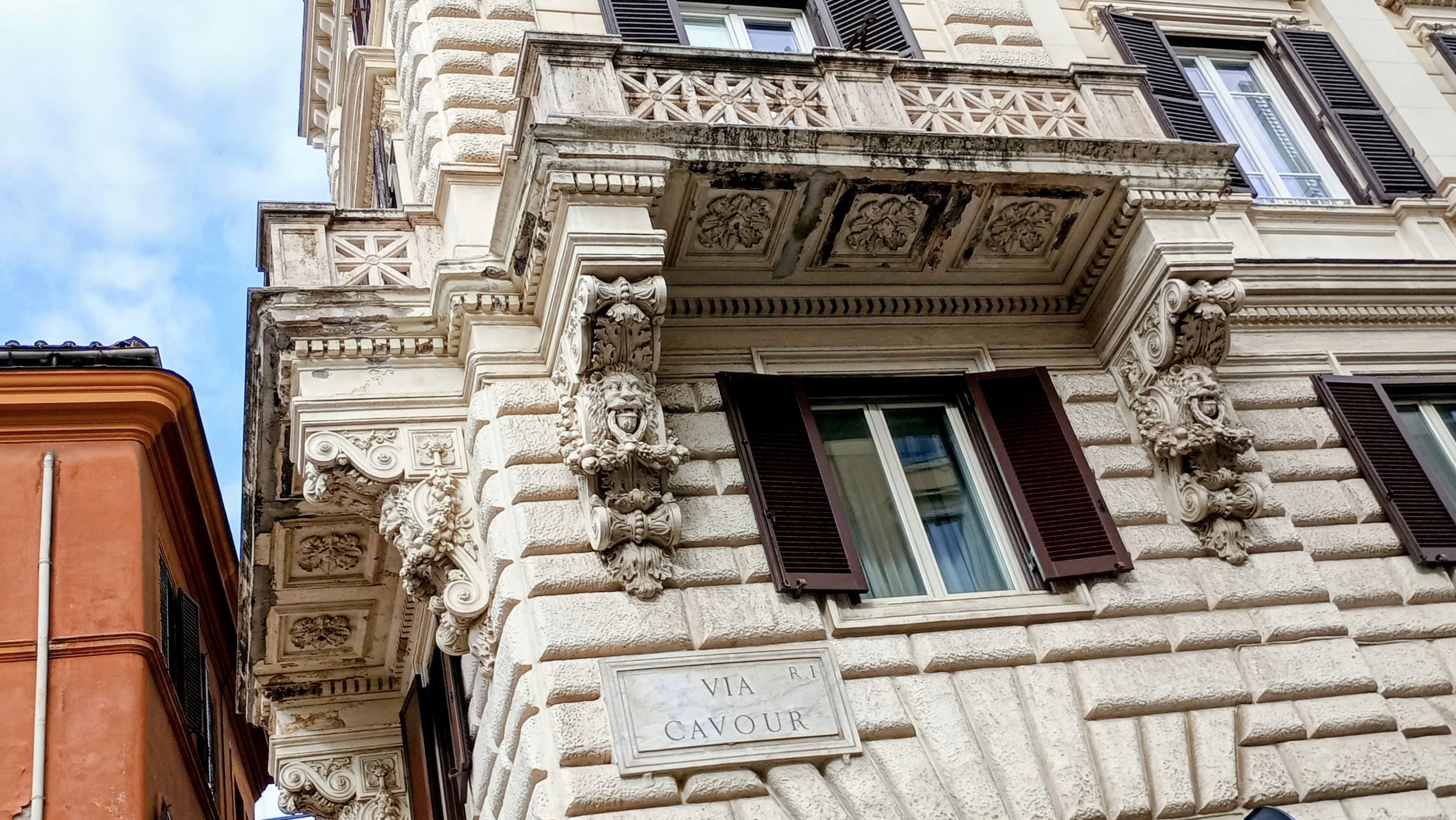
Because of the ongoing metro construction in the area, part of via Cavour was closed. But it gave us a chance to admire the corbels aka lions holding up the balconies.
A corbel, in architecture, is a support to help bear the weight of the balcony.
“The Imperial Fora are a monumental architectural complex, formed by a series of buildings and monumental squares, the centre of the political activity of ancient Rome, built in a period of about 150 years, between 46 BC and 113 AD.”
After visiting the exhibition at Villa Caffarelli, La Grecia a Roma, we were ready for lunch at the Ghetto. But first, one last look at our surroundings.
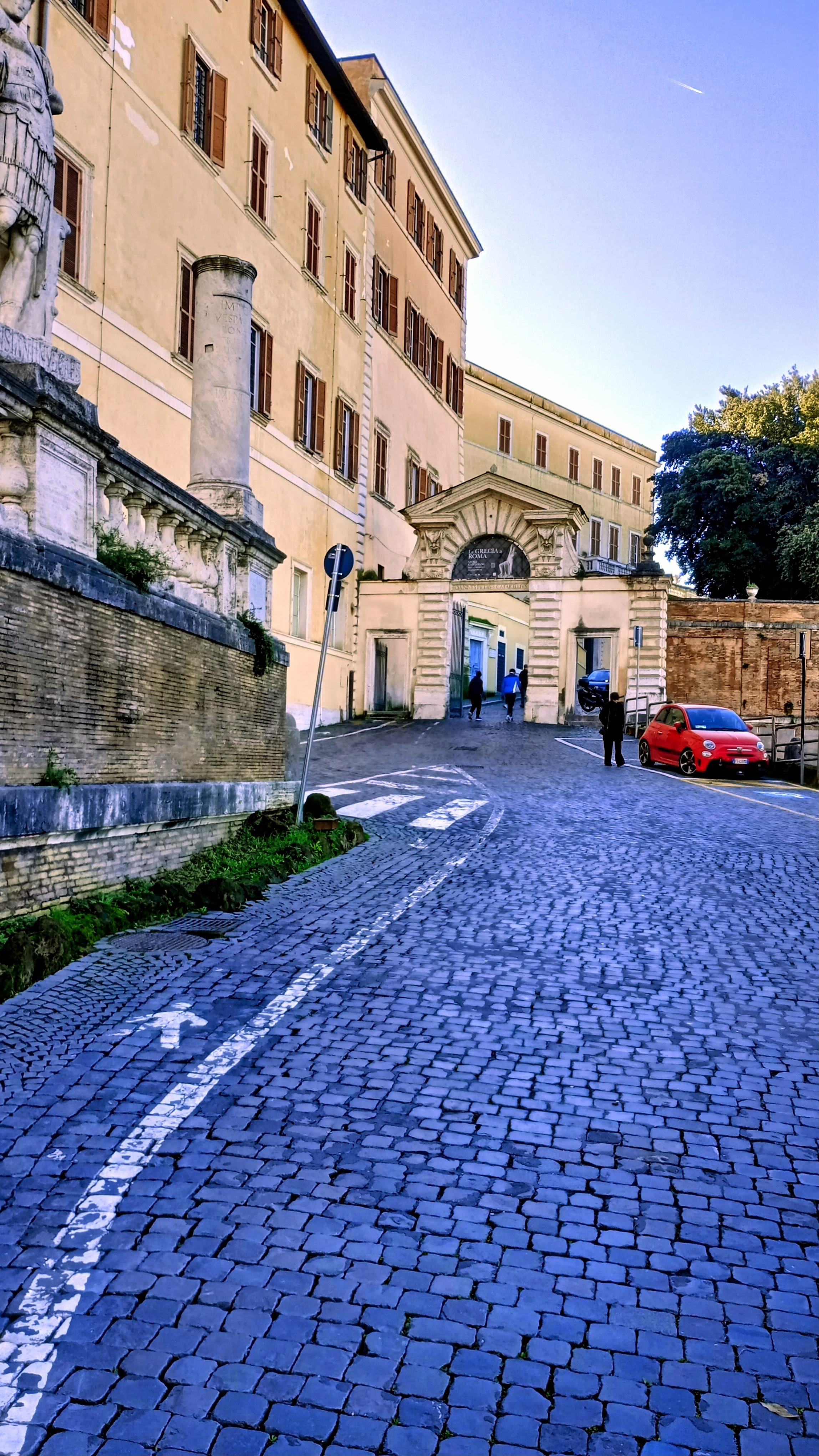
Villa Caffarella sits up high on Capitoline Hill, one of the seven hills of Rome. To get there, you must go up. To leave, you must go down.
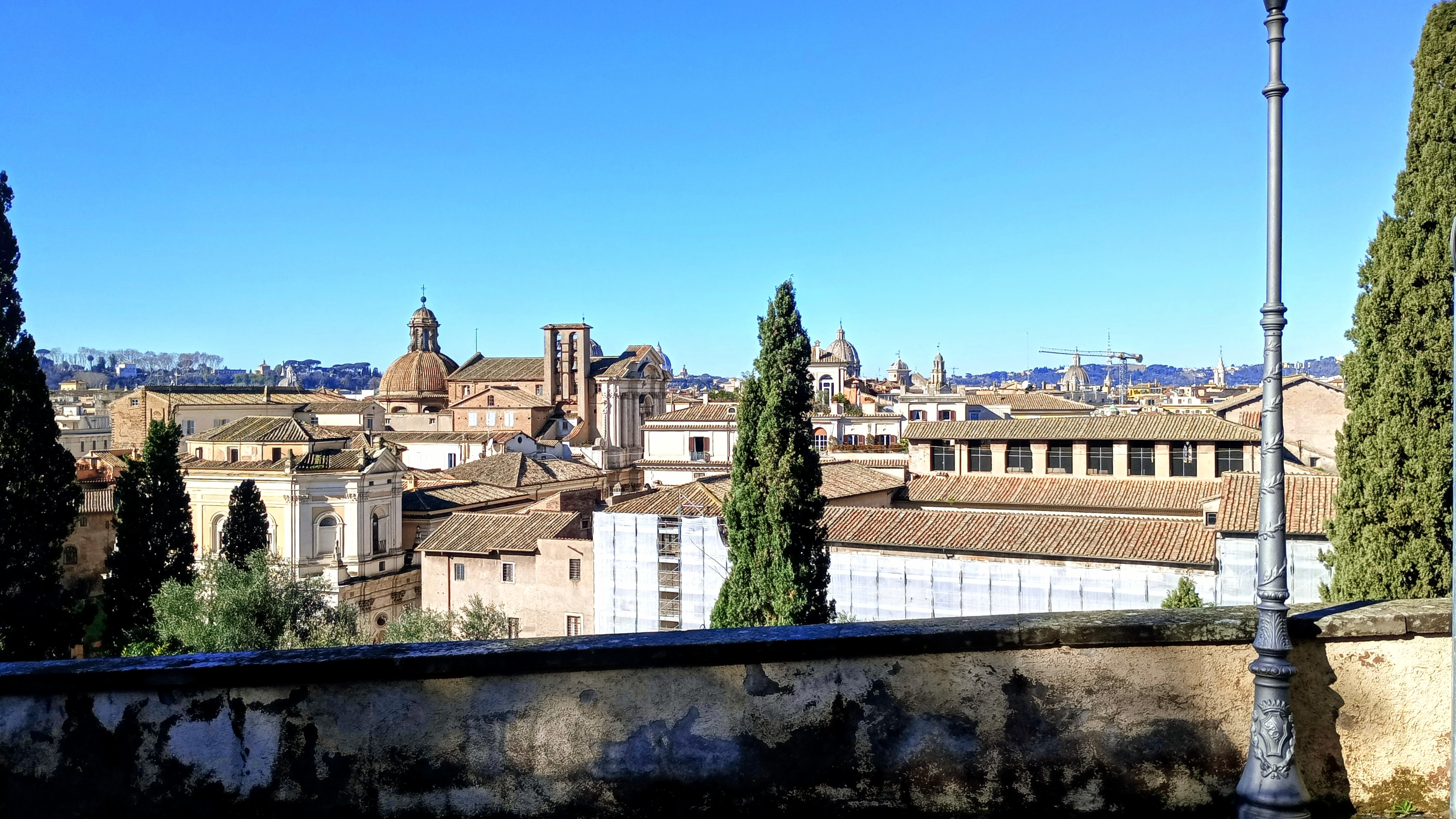
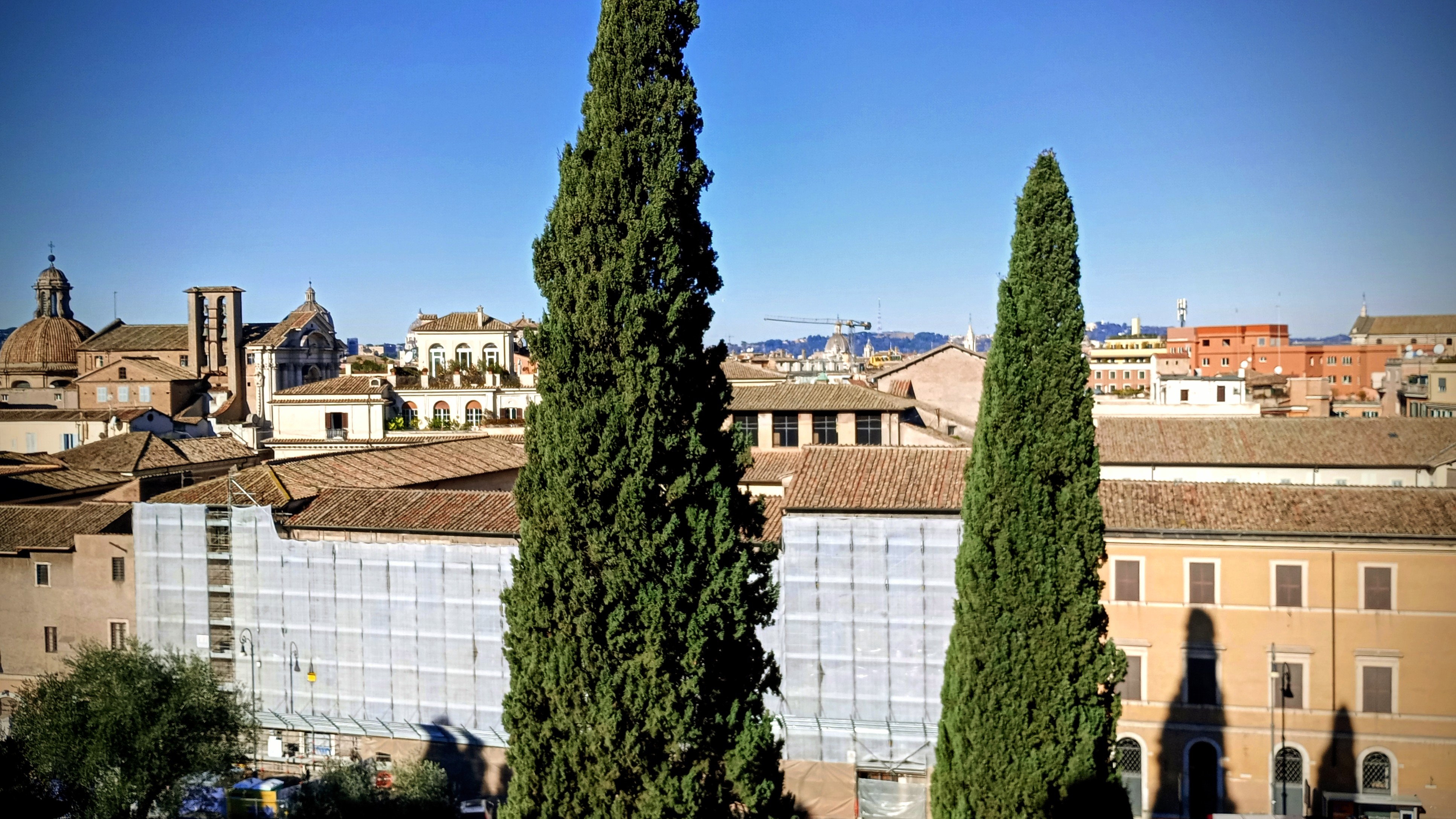
Instead of leaving by the steep front stairs, the cordonata, we took the road going down that led to Via Del Teatro Di Marcello. It gave us a chance to see the roof tops and the cypress trees that are part of the Roman urban decor. But you can also see another Christo-type wrapping –more Jubilee restyling.
Via del Teatro di Marcello was a street created by Mussolini after tearing down other structures. Mussolini, with dreams of recreating an Imperial Rome, wanted a road that went directly from Piazza Venezia (where he made all his speeches) to seaside Ostia.
Once the descent is made, to get to the Ghetto you turn right. It’s not far and you pass near the Tarpeian Rock (but you must look up to see it).
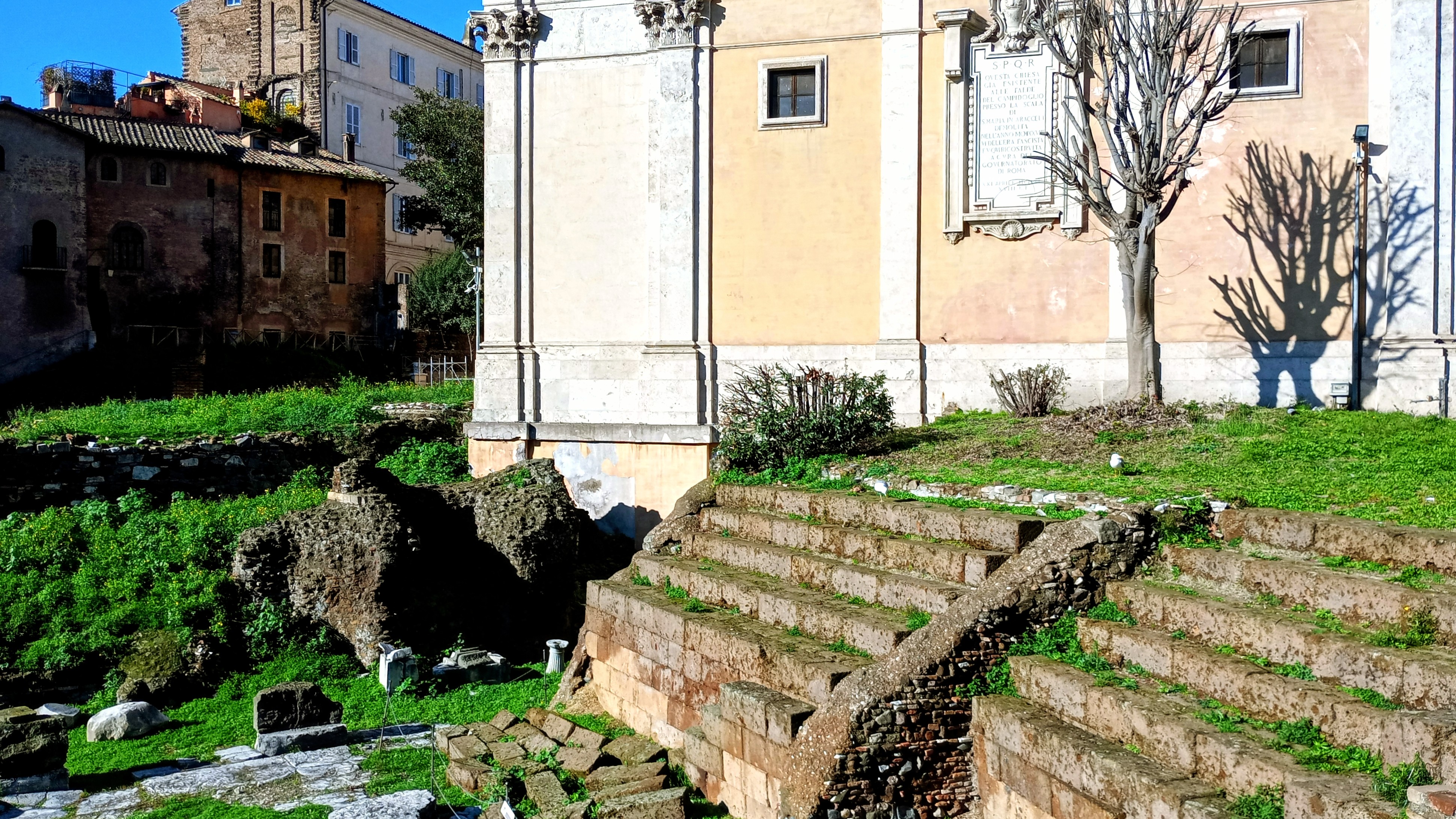
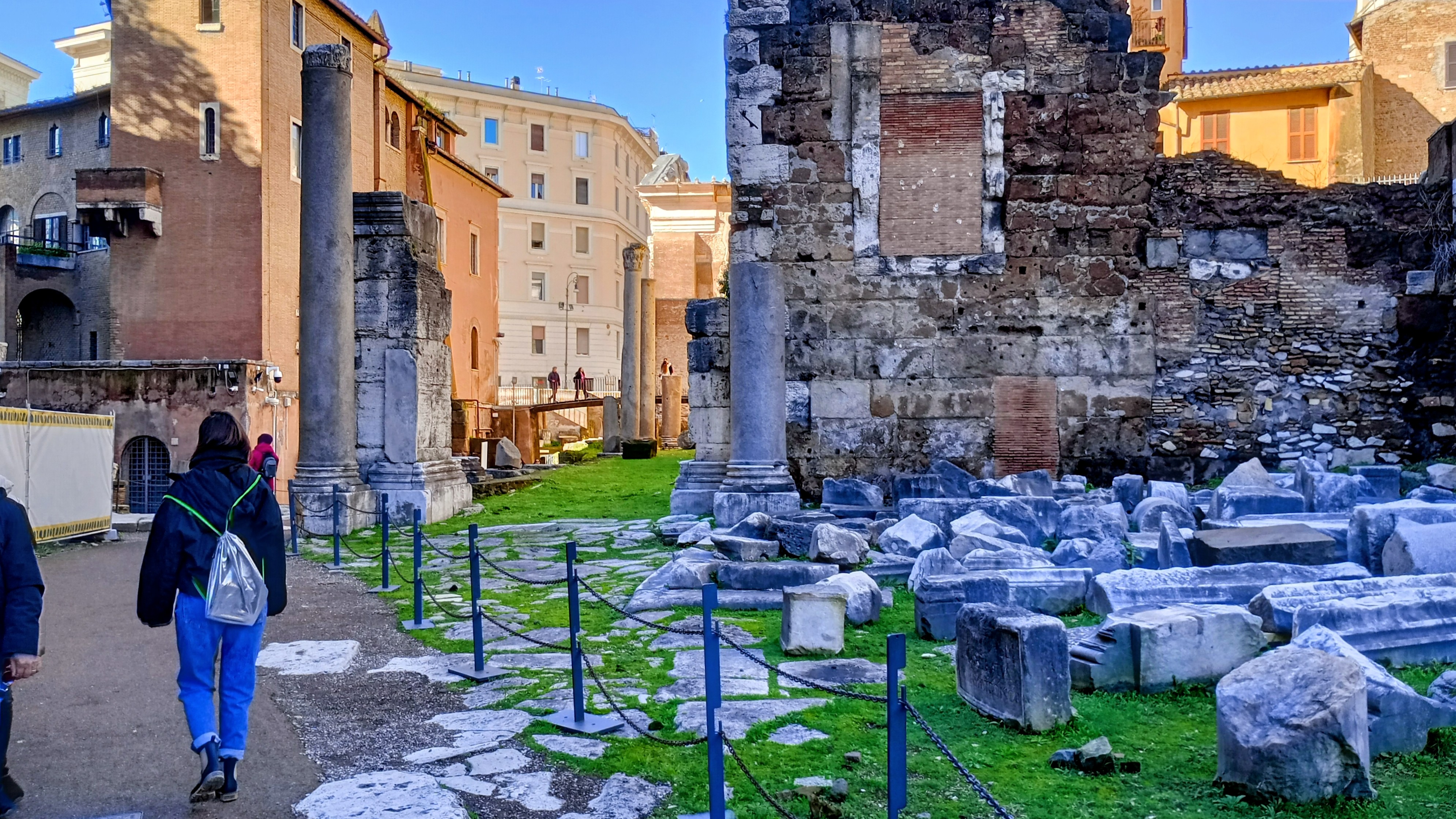
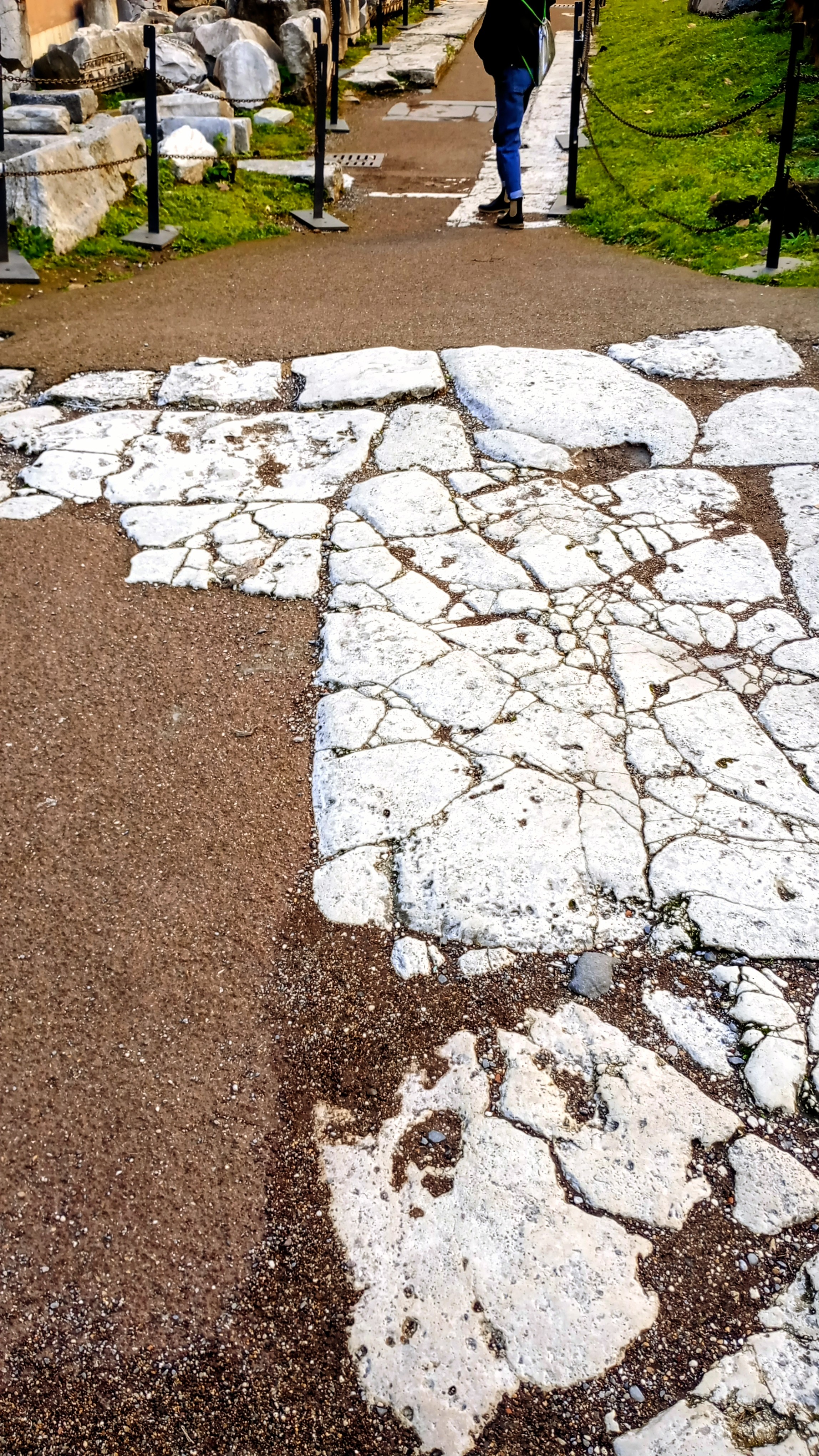
Here we see some of the reconstructed archeological rubble made by Mussolini’s dream of grandeur. The short walk towards the Ghetto is a patchwork of architectural times and styles.
As usually happened with Mussolini induced excavations, people were displaced as homes and shops were destroyed to make room for someone else’s dream. See more of Mussolini touring the excavations of the Theater of Marcellus in 1927 and the archeological finds HERE and HERE.
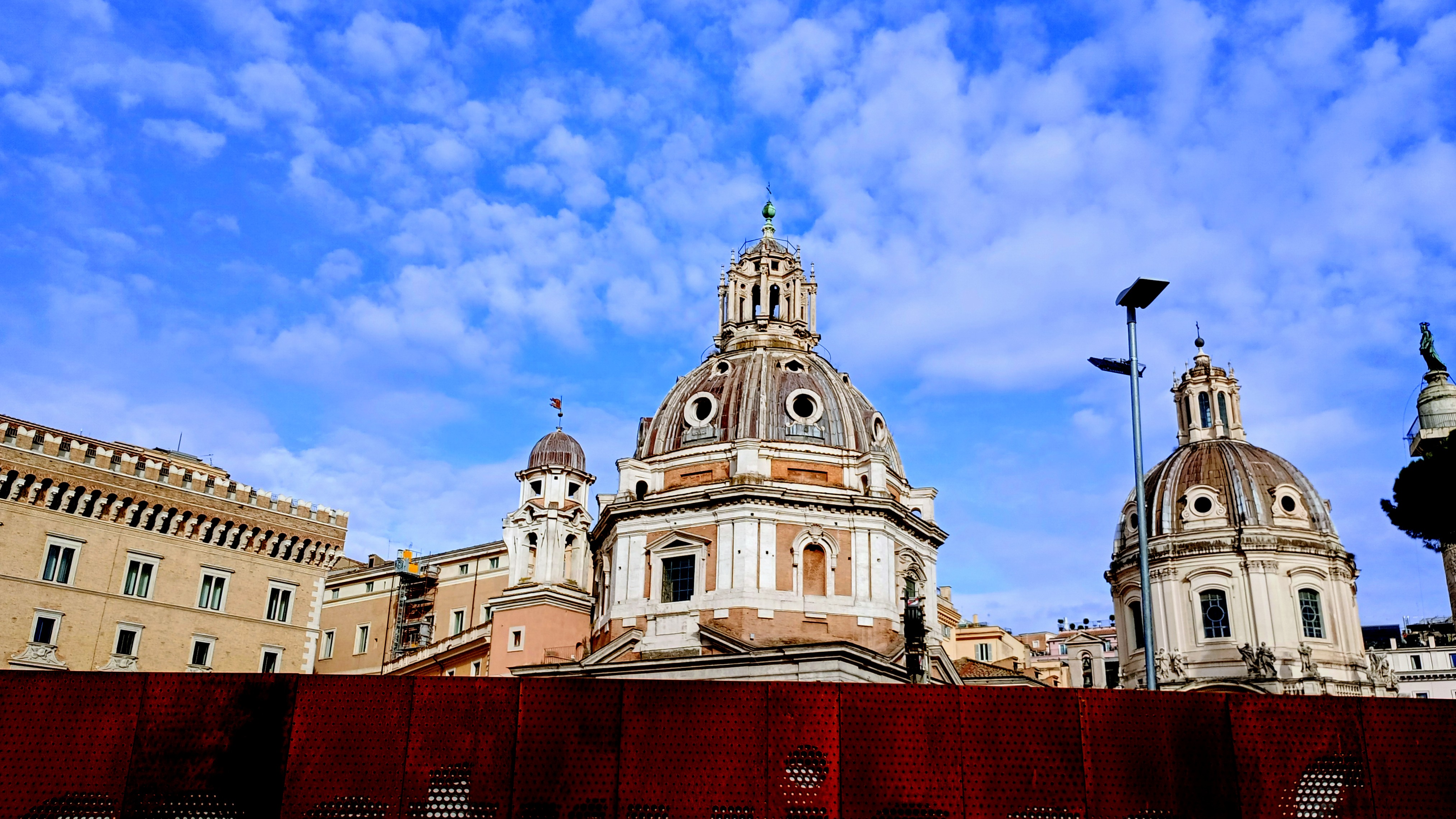
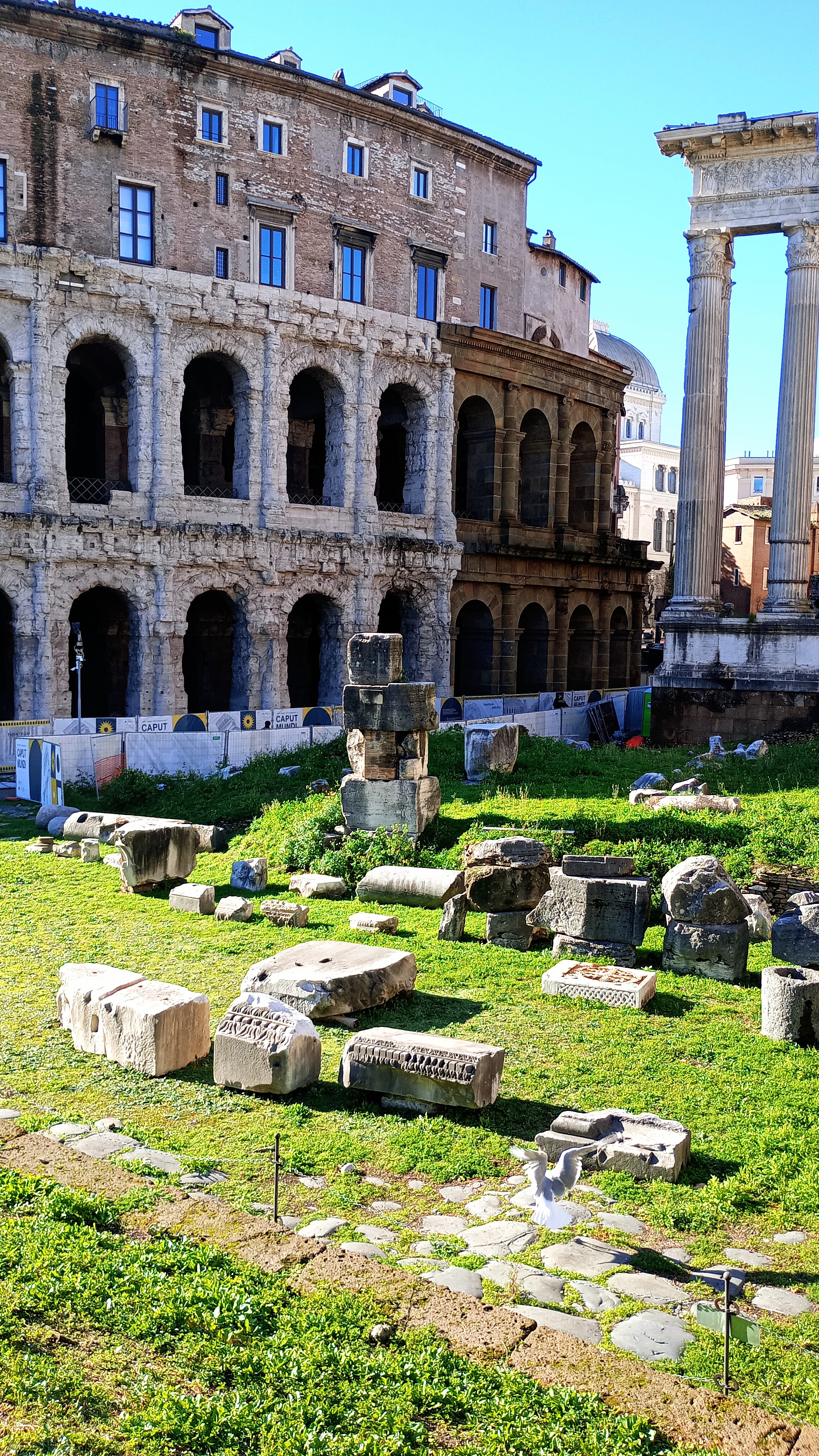
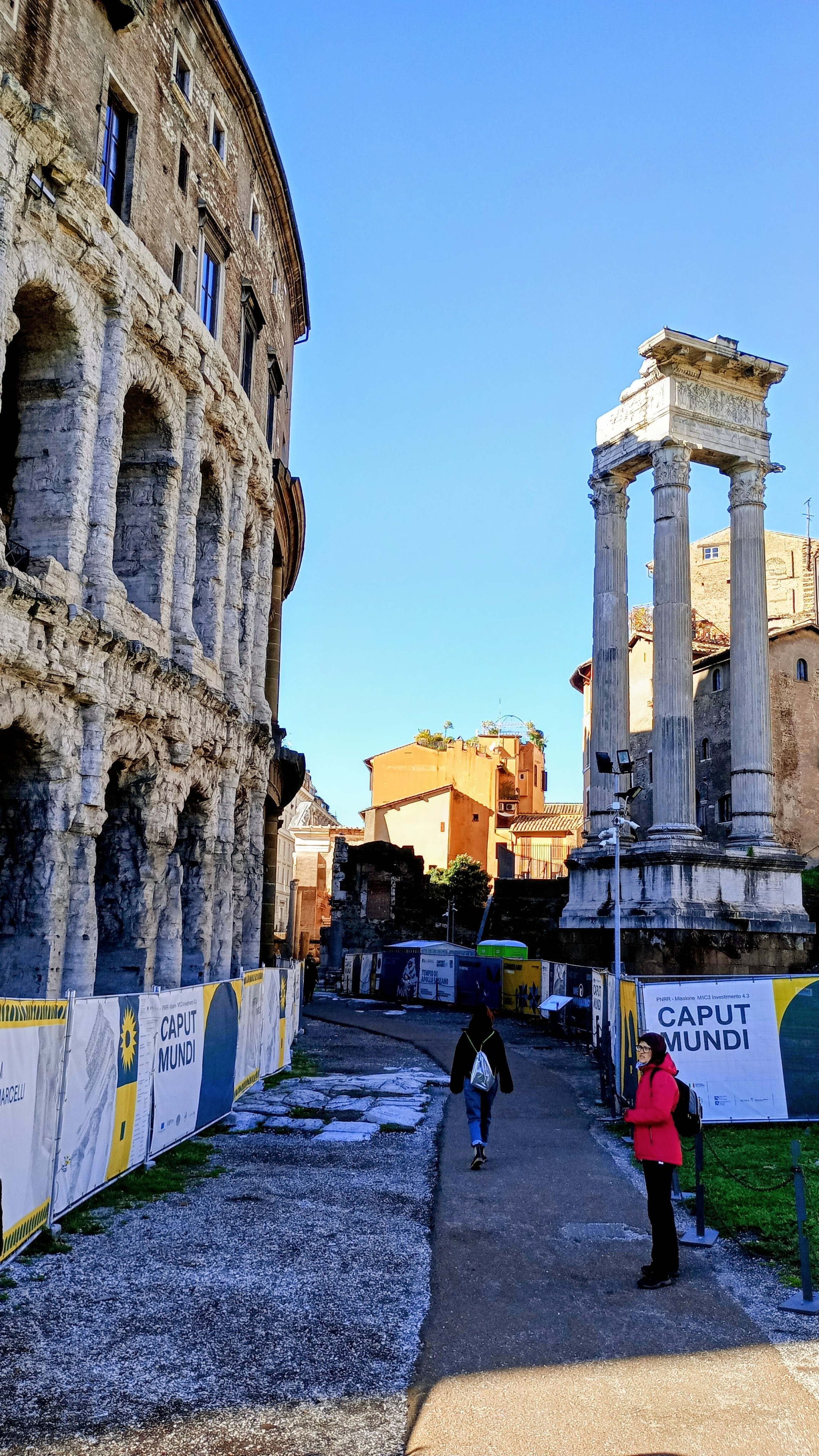
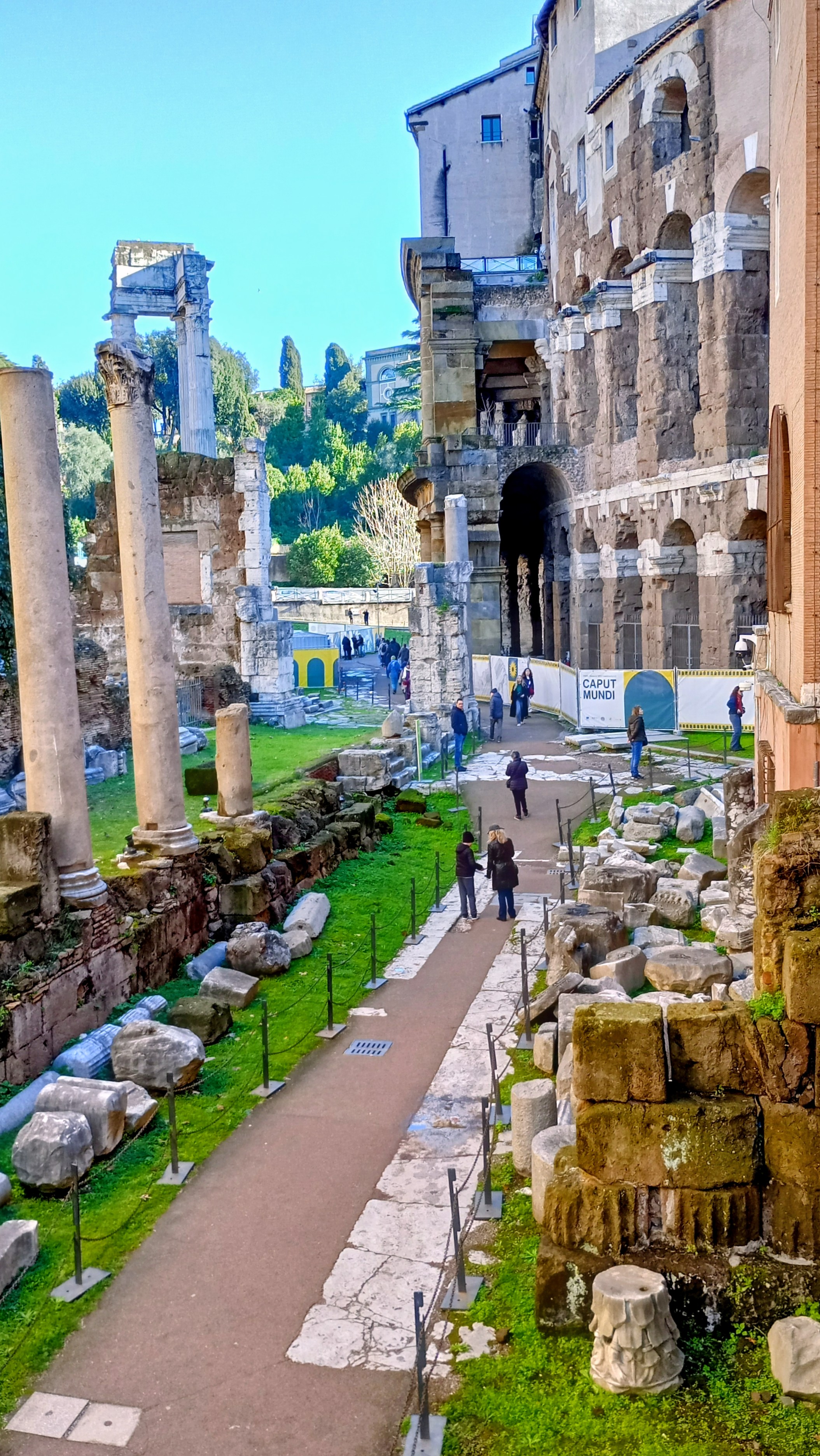
Here we see what’s left of the Theatre of Marcellus (Teatro di Marcello). The arcade walls of the theatre have their “caput mundi” protective covering, too.
Abundance
Roma Caput Mundi
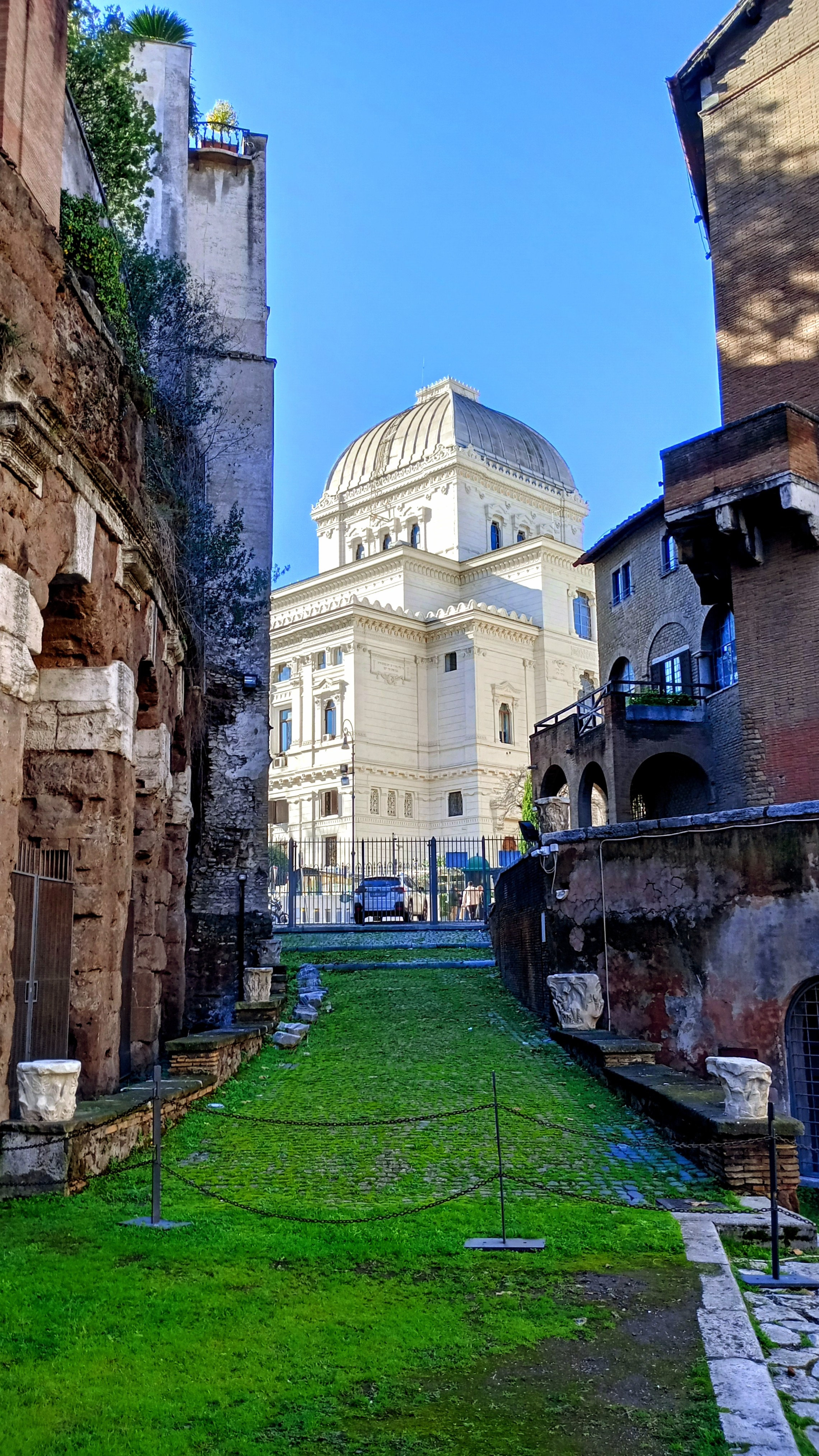
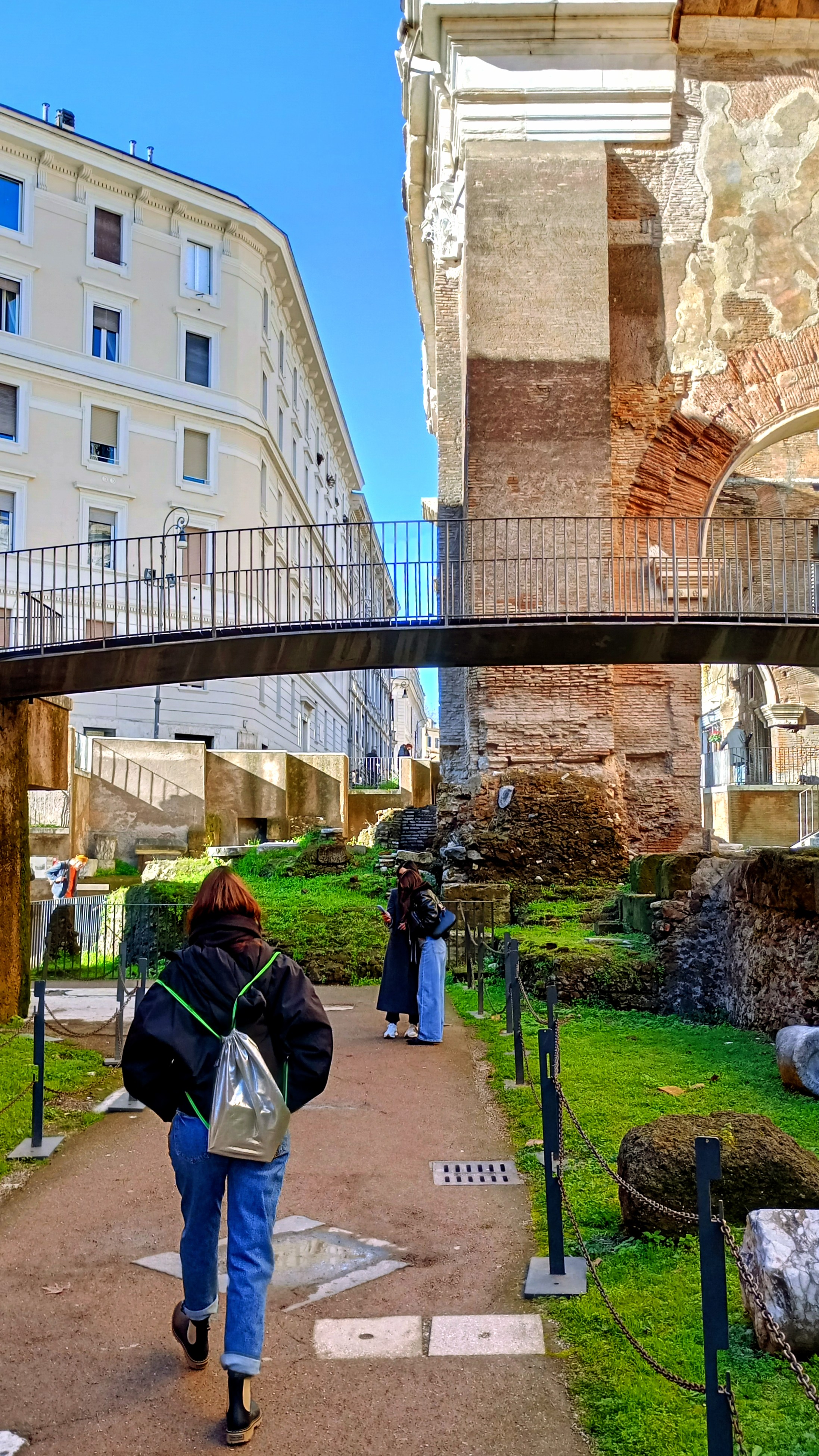
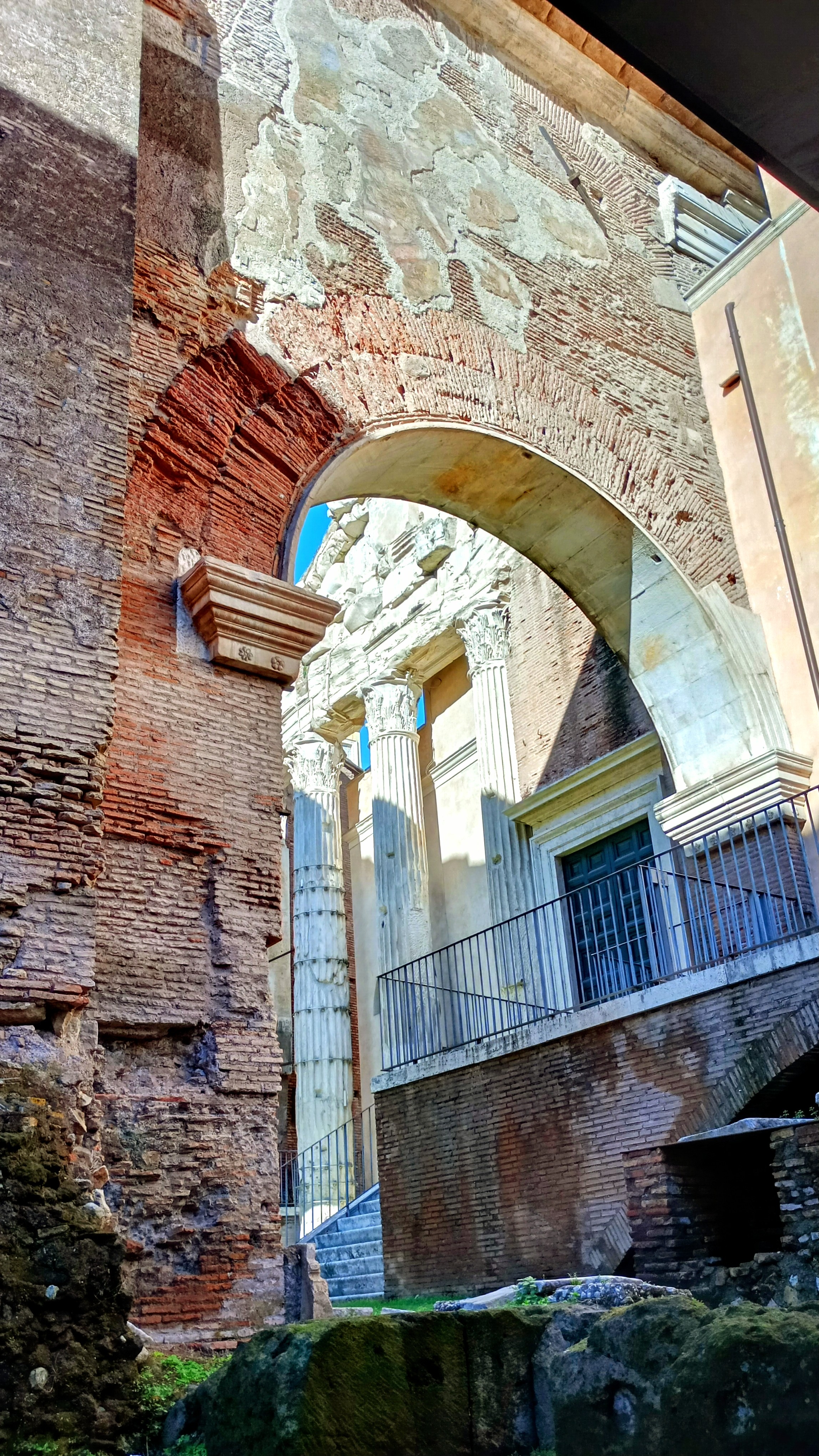
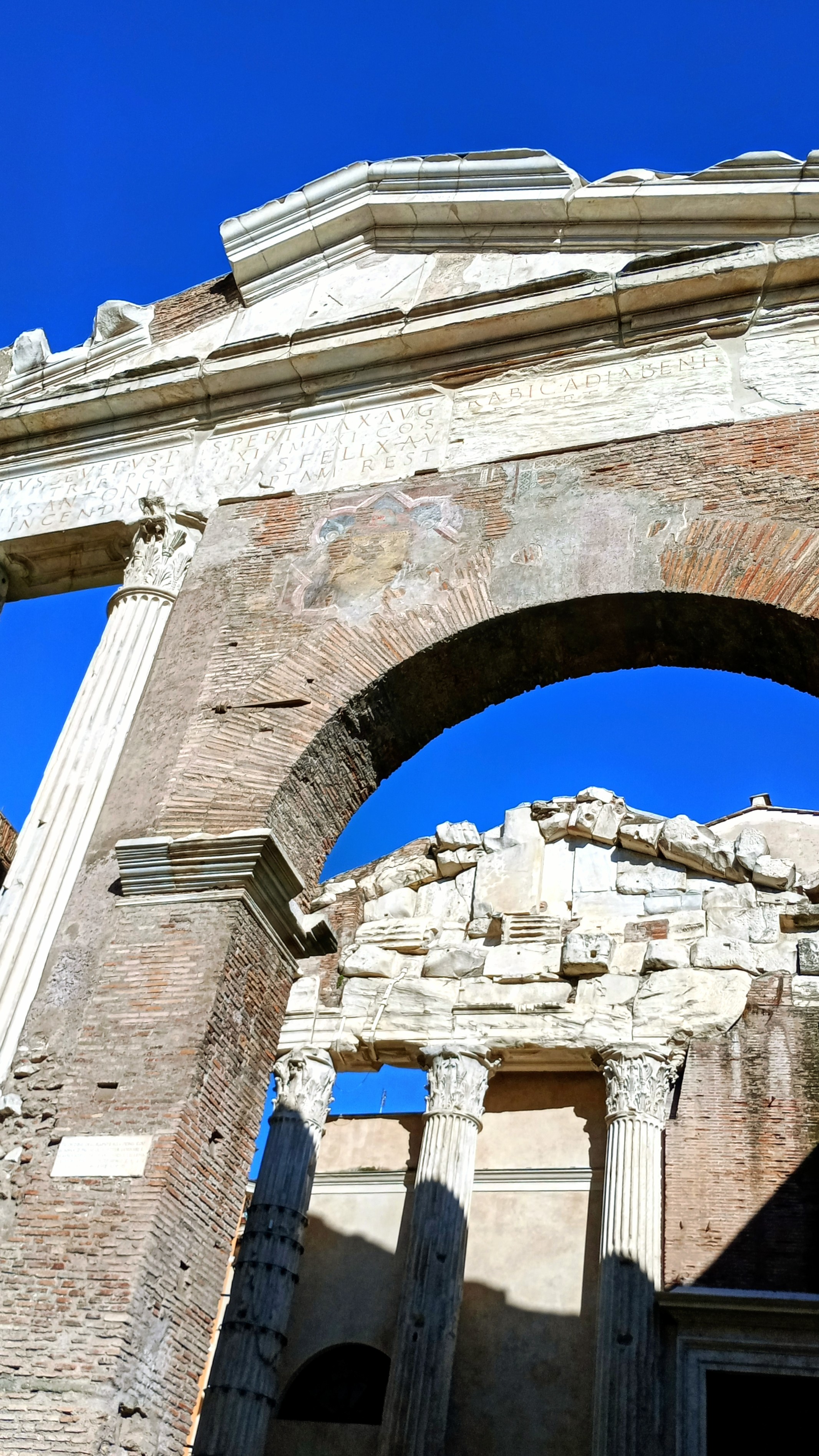
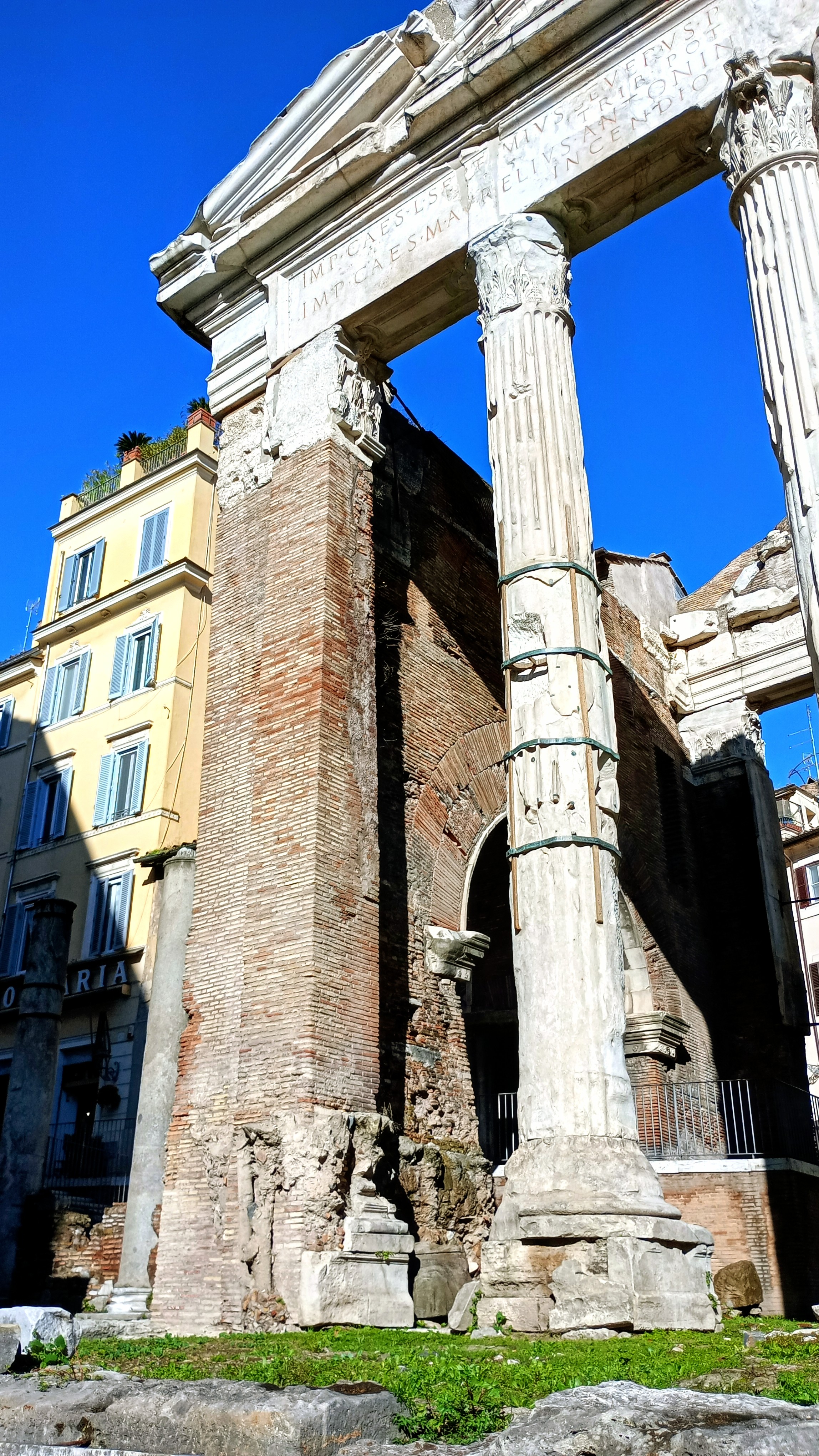
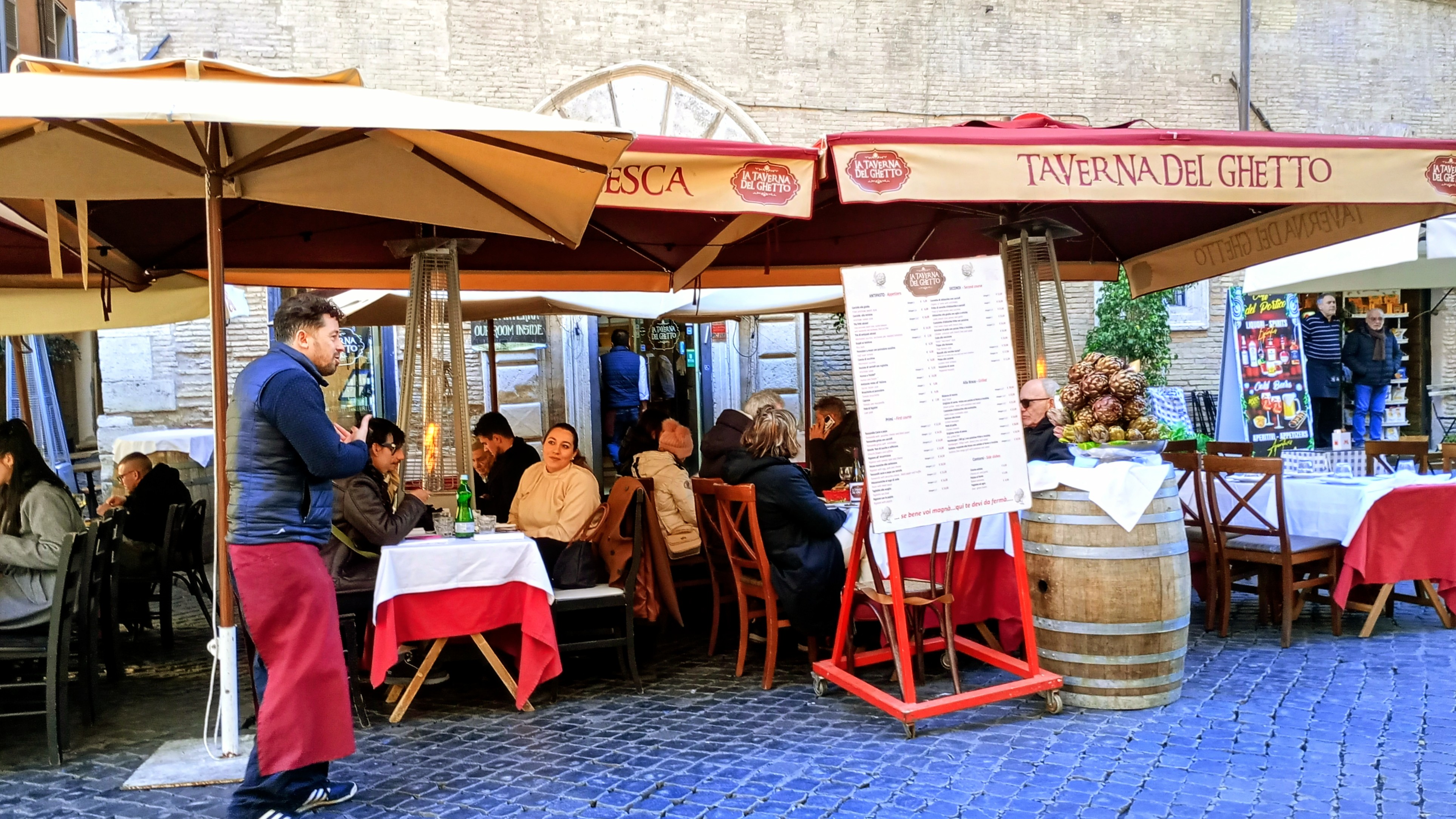
Our aim was to get to the bridge you see in the background. Behind the bridge is the main street of the ghetto, Via Portico d’Ottavia. The street is full of kosher restaurants with huge bowls of artichokes to lure you inside. But before ordering, it’s best to know the difference between Carciofi alla giudìa (fried) and Carciofi alla romana (braised).
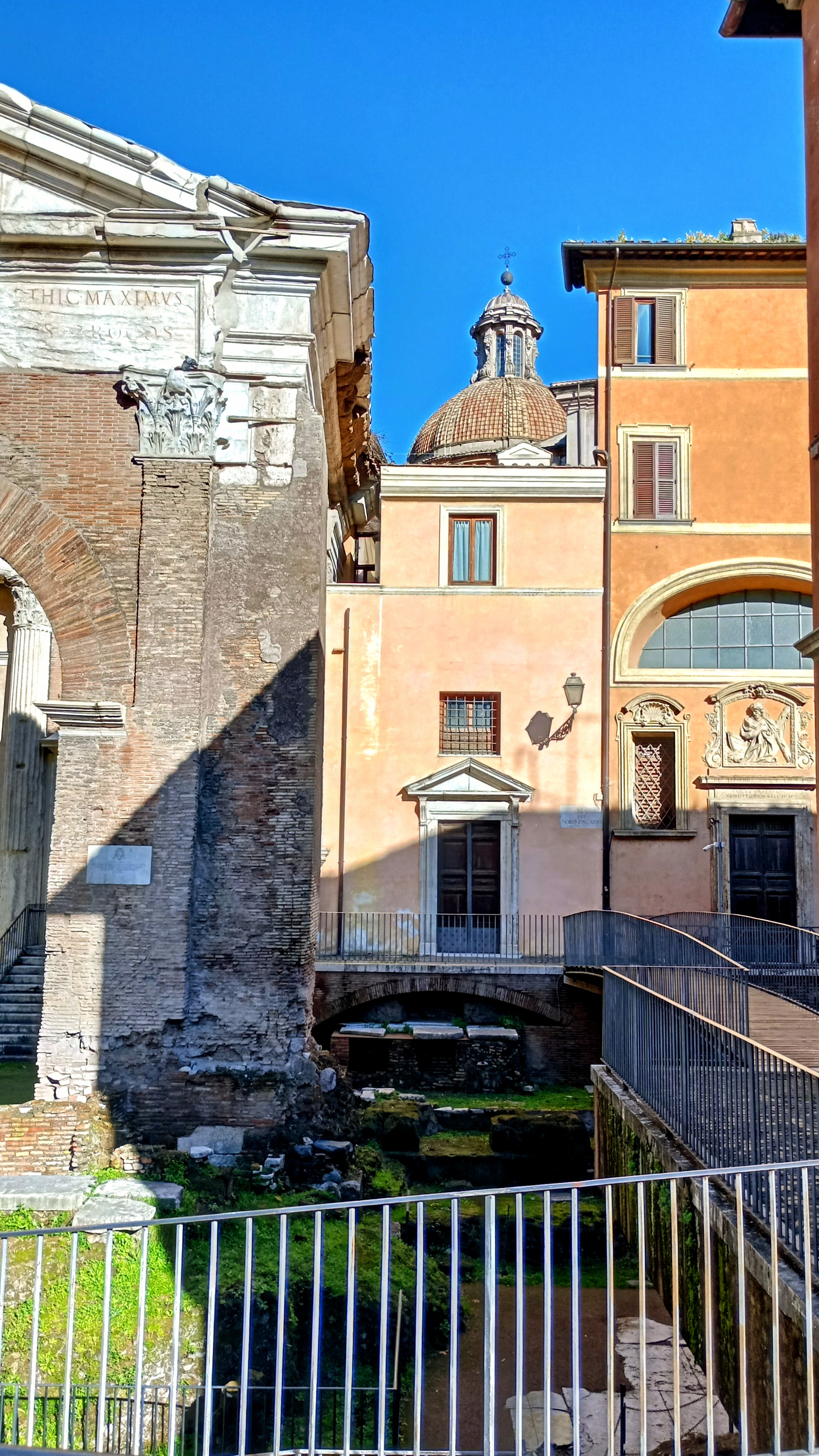
The Portico of Octavia was built by Emperor Augustus to commemorate his sister, Octavia Minor, between 27-23 B.C. It’s construction completely obliterated the Portico of Metellus. Destroy one person’s dream and rebuild yours on top has become a standard.
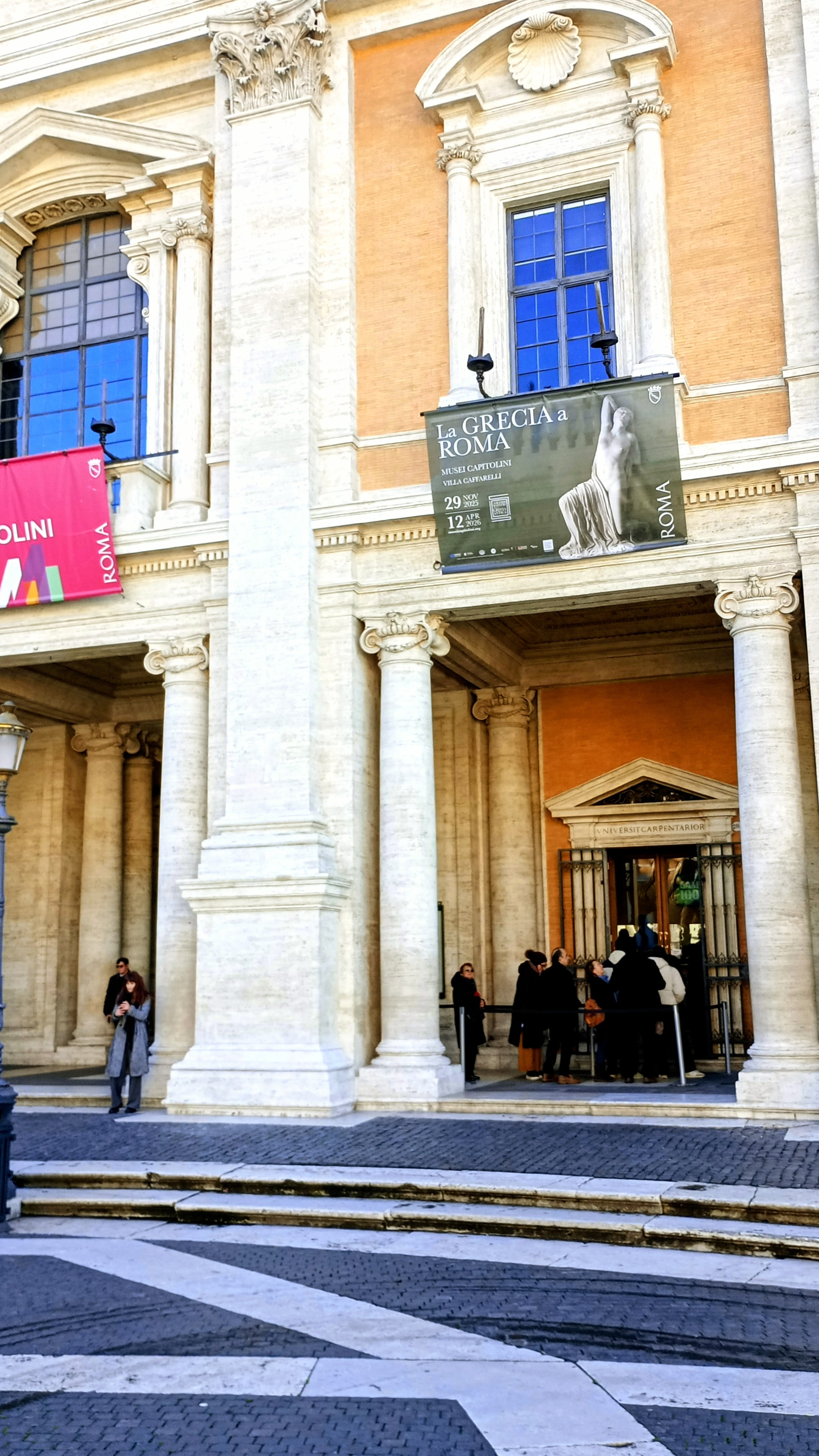
After days and days of rain, when the sun finally comes out again, it’s time to play. Our playground today was Villa Caffarelli and its current exhibition, “La Grecia a Roma” (Greece in Rome).
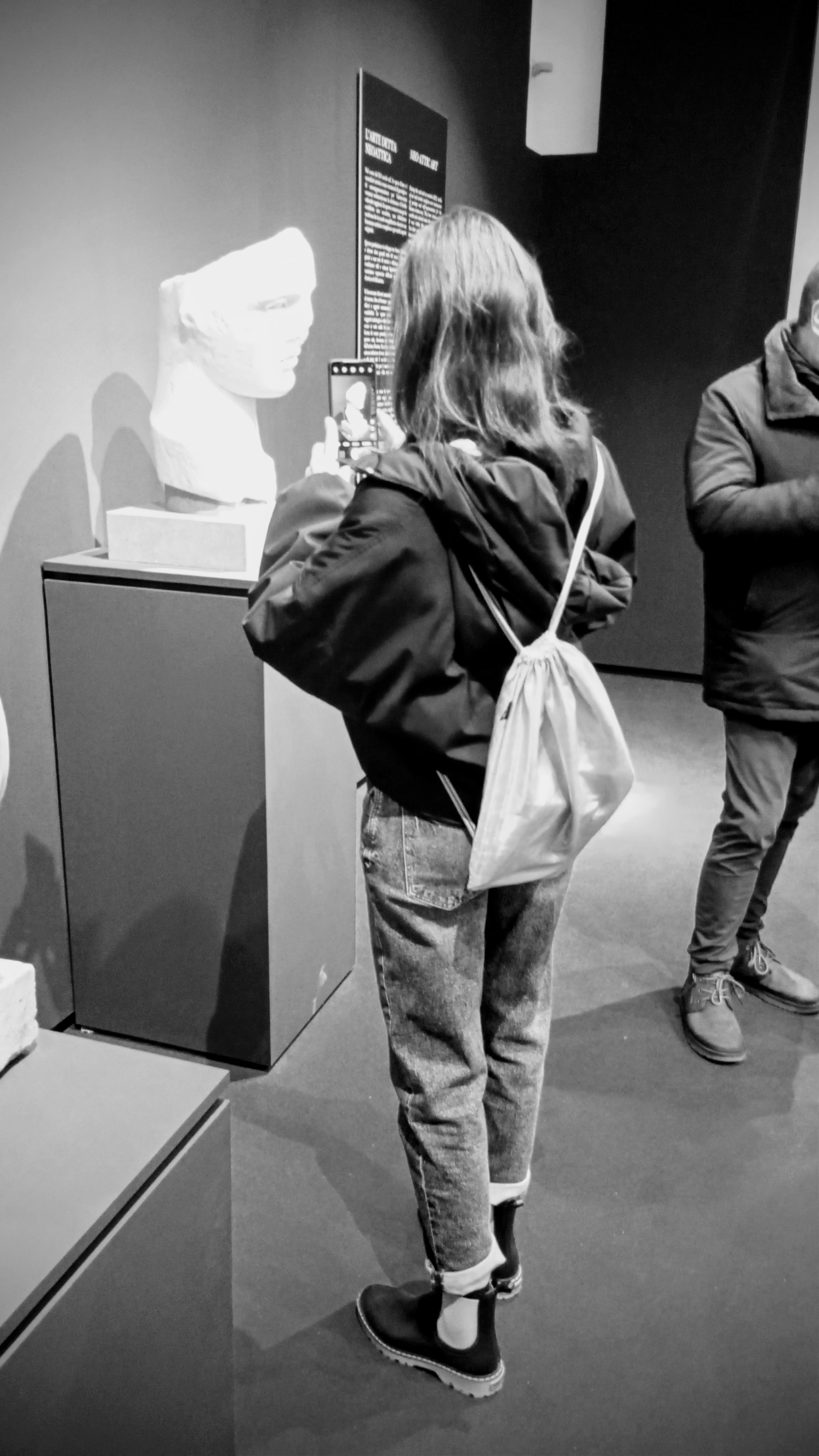
I got there early and when I’m early, I take pictures.
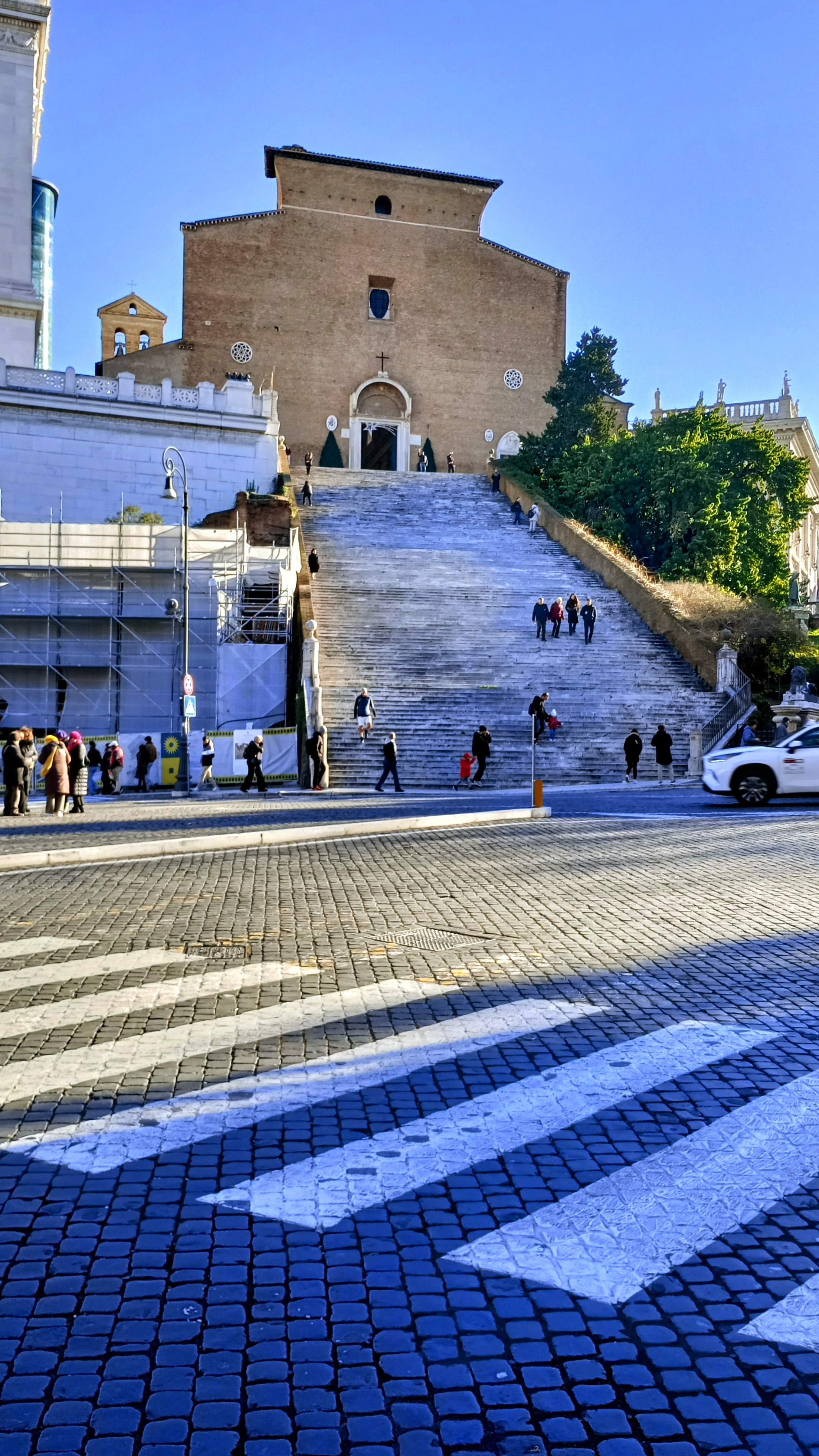
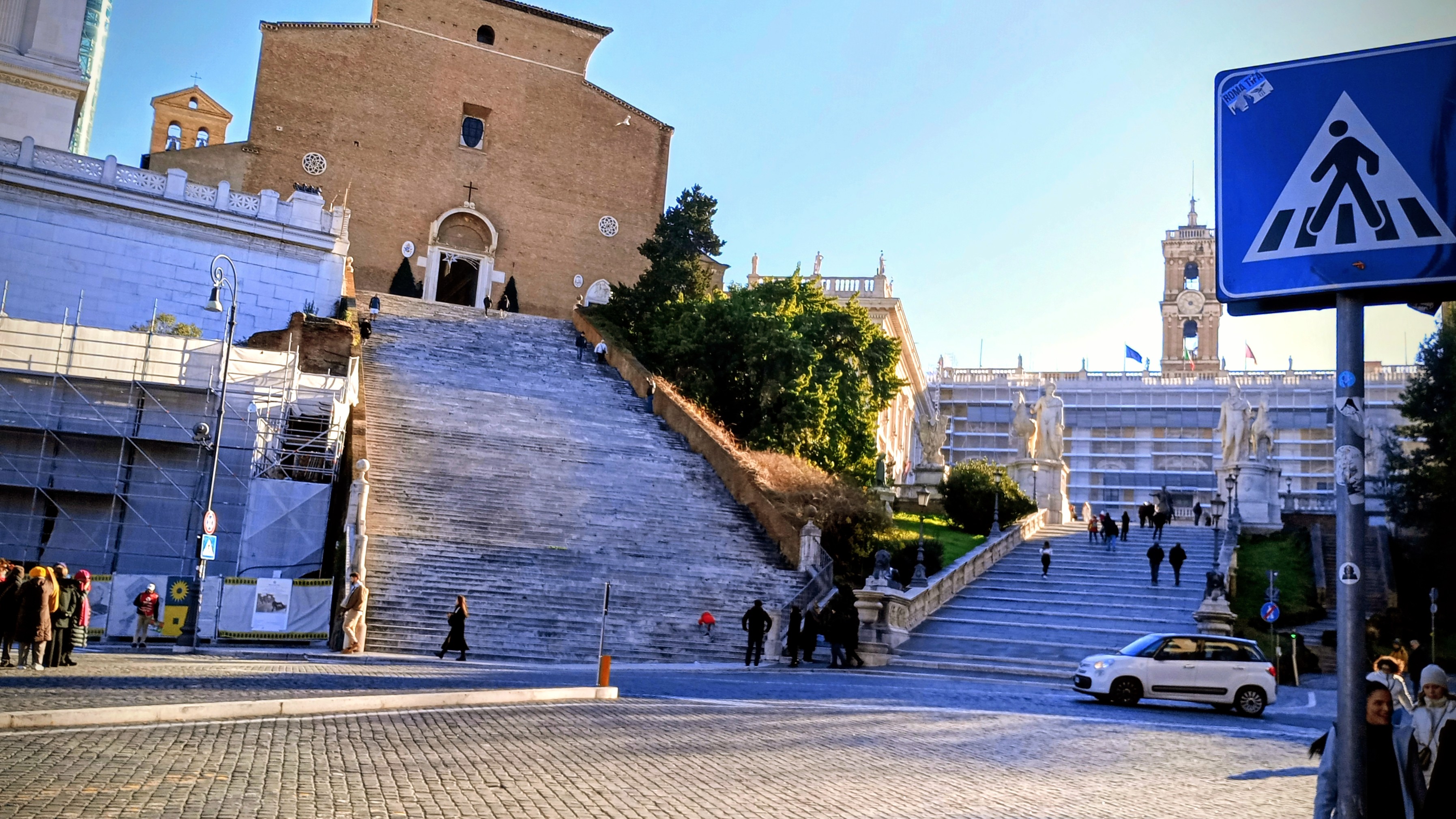
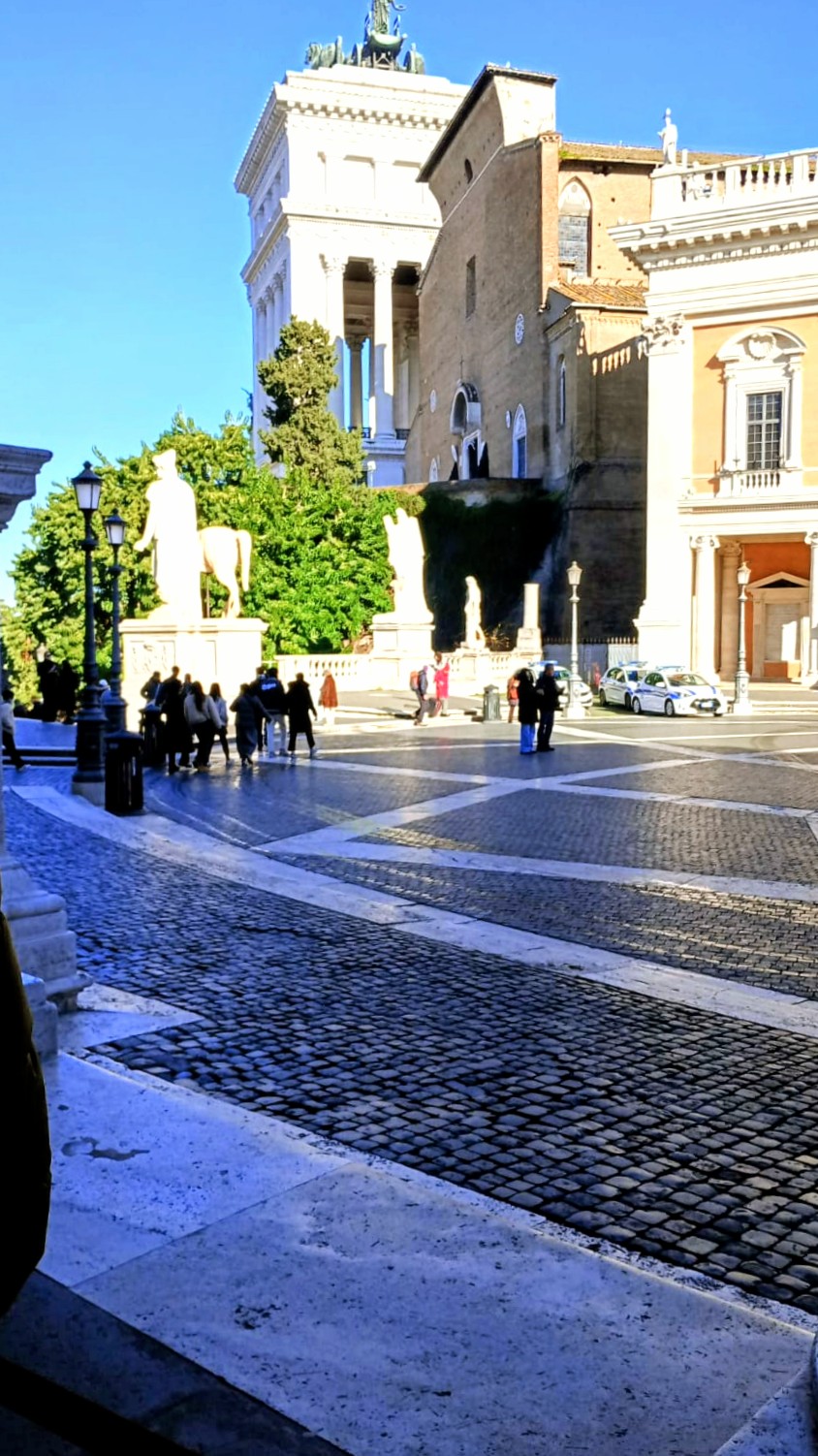
The church at the top of this demanding flight of stairs is Santa Maria in Aracoeli aka St. Mary of the Altar in Heaven. It’s a Franciscan church and sits on the highest part of the Capitoline Hill.
2025 was the year of the Jubilee. Also known as the Holy Year, it is celebrated every 25 years. As many tourists were expected to come, major maintenance projects were started. Some were completed on time, some were not.
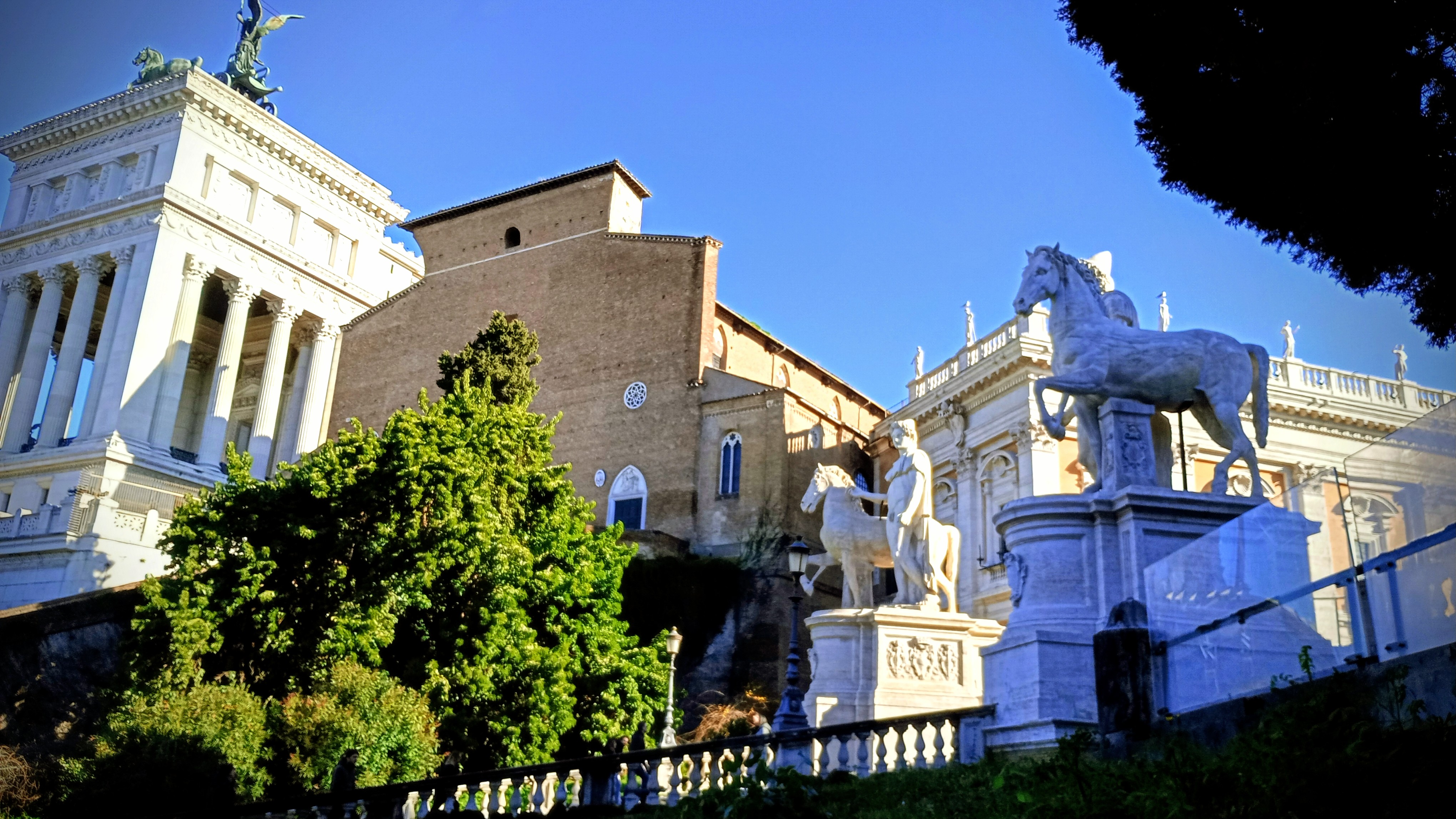
In the foto above, a bit of the Vittoriano (Altare della Patria) can be seen with the scaffolding still up.
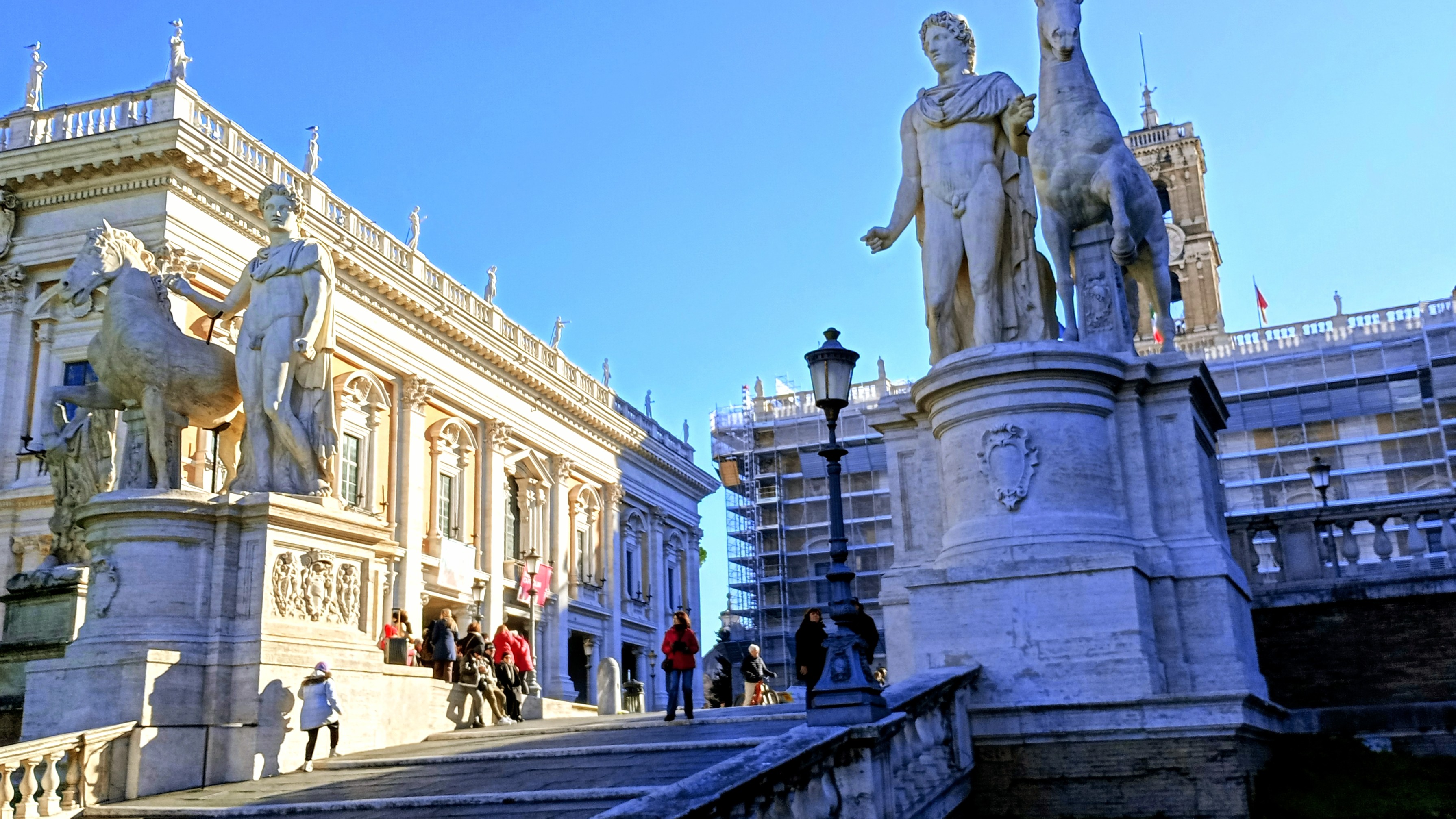
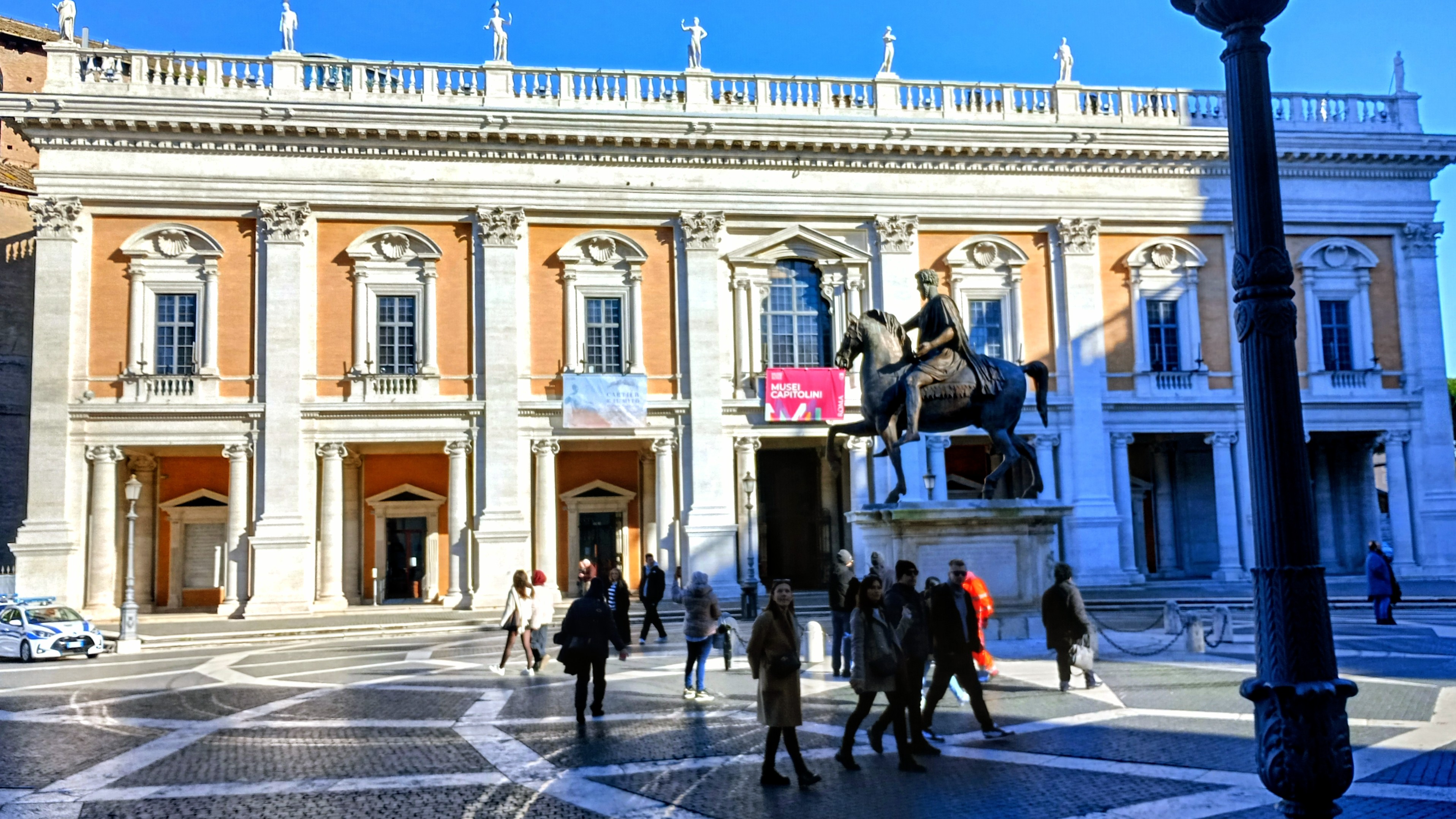
To the right is the ramp of stairs leading to Piazza del Campidoglio, a public square designed by Michelangelo. Facing the square are the Capitoline Museums founded by Pope Sixtus in 1471.
In the back is a building that looks like a Christo installation because it wears the protective covering used during remodeling. The building is the Palazzo Senatorio with its double stairway.
The monumental stairs leading up to the church and to the piazza are known as cordonata. A cordonata is a sloping road interrupted at regular distances by low steps in the form of transversal stripes made of stone or bricks.
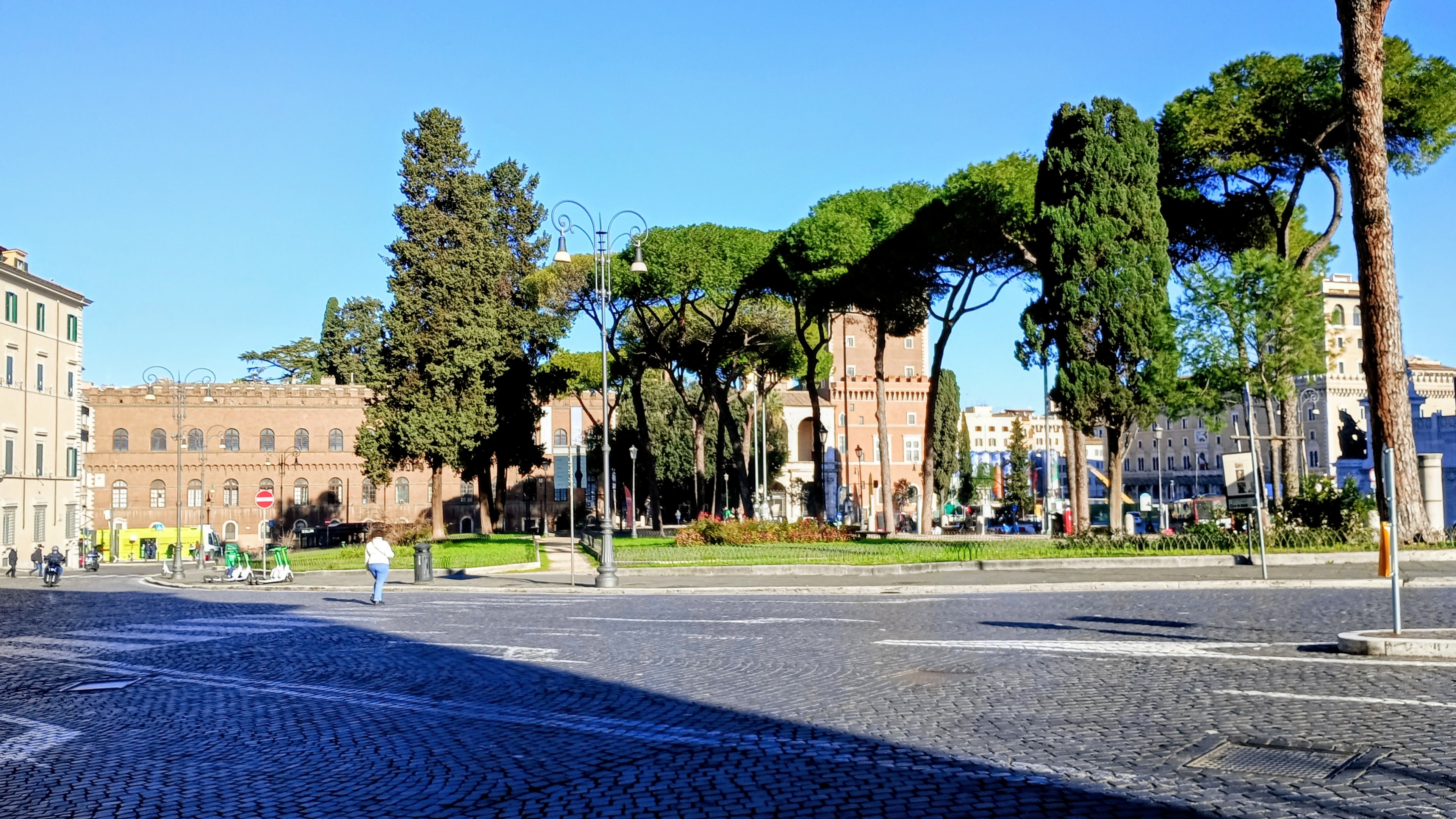
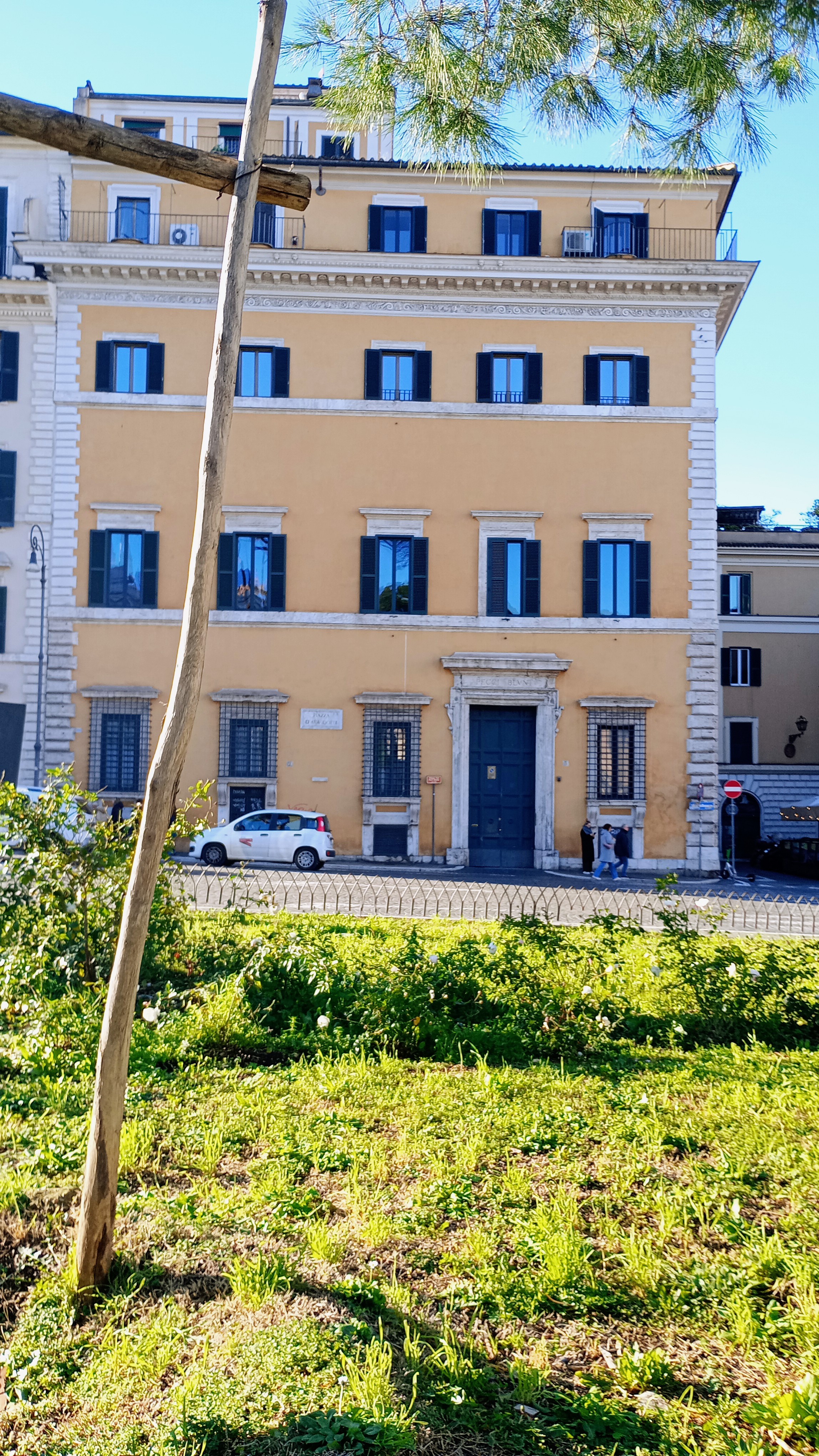
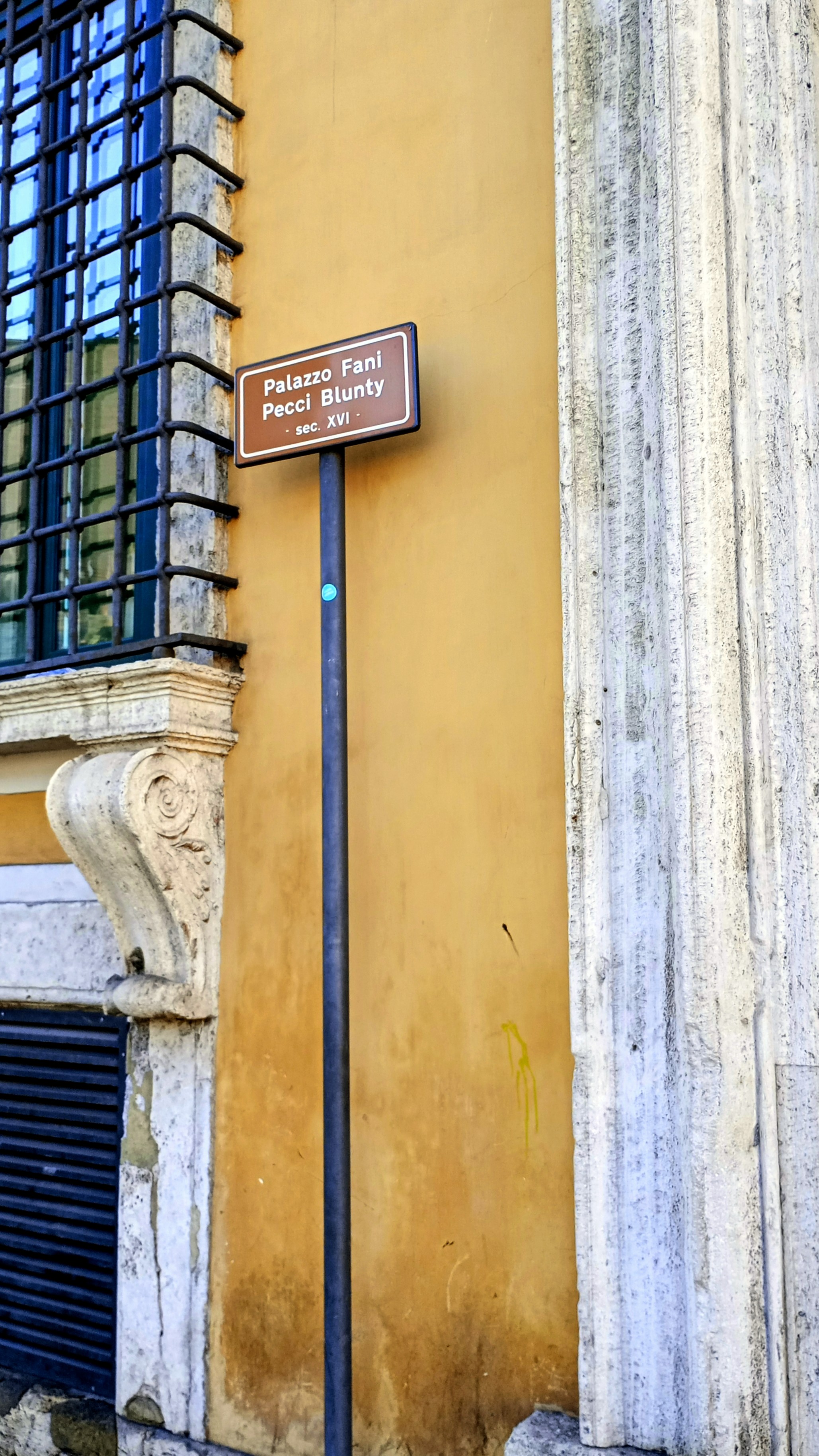
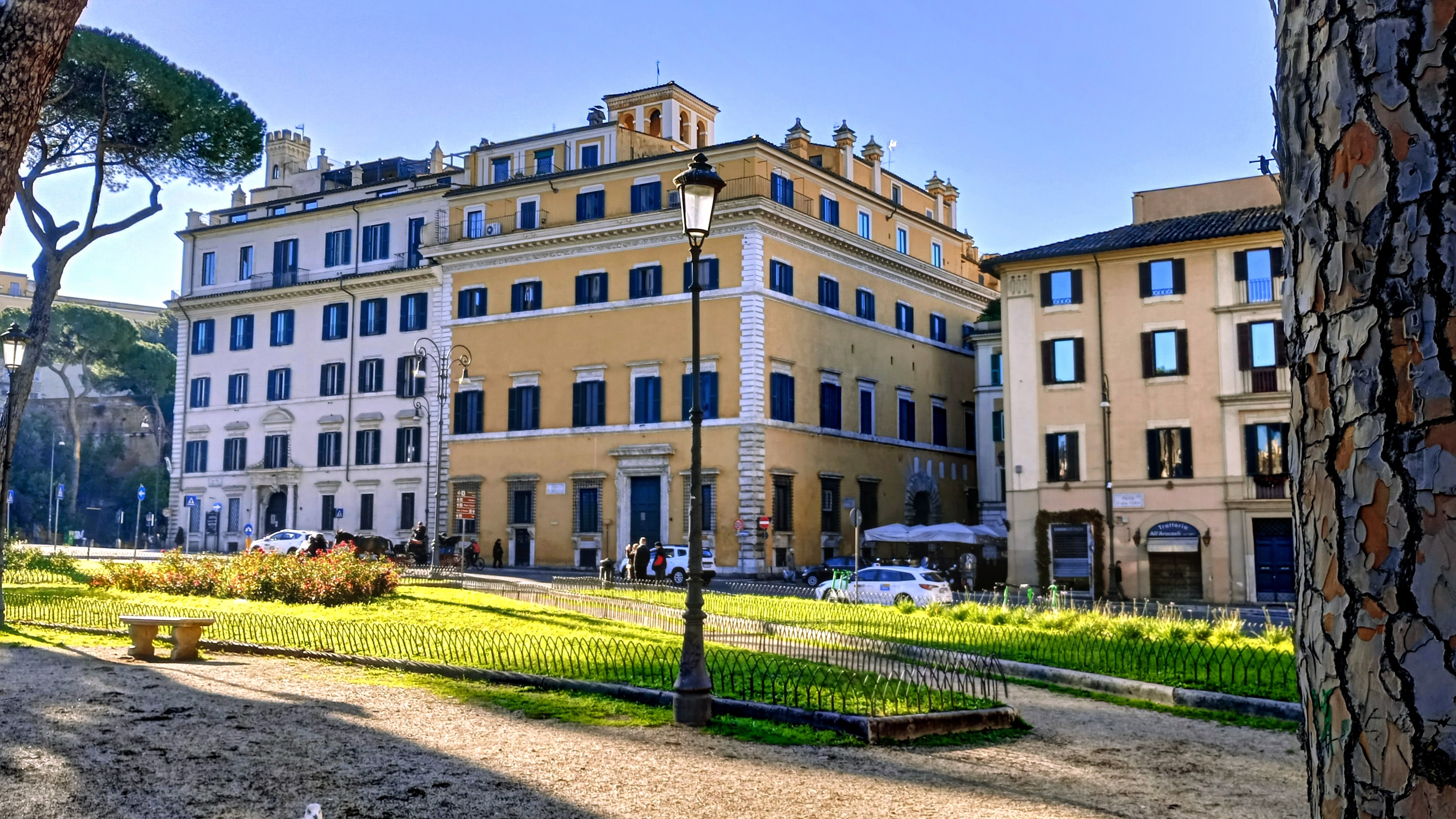
Here we are at Piazza d’Aracoeli. The building in the background was once the home of Contessa Anna Laetitia Pecci Blunt aka Mimì.
In 1929, the Pecci-Blunts decided to spend more time in Rome and bought the palazzo at Piazza Aracoeli 3. It became a cultural hub for intellectuals, musicians, and artists. Mimì also hosted a series of concerts inviting musicians such as Stravinsky and Rubinstein to perform.
Mimì was a major art patron in Rome. That is, until she and her family were forced into an awkward situation because of the racial laws imposed by the fascist regime.
Back in Rome in 1958, Mimì also initiated the Teatro della Cometa located nearby on via Teatro di Marcello. The theater has recently been resusitated by Maria Grazia Chiuri, ex creative designer for Dior.
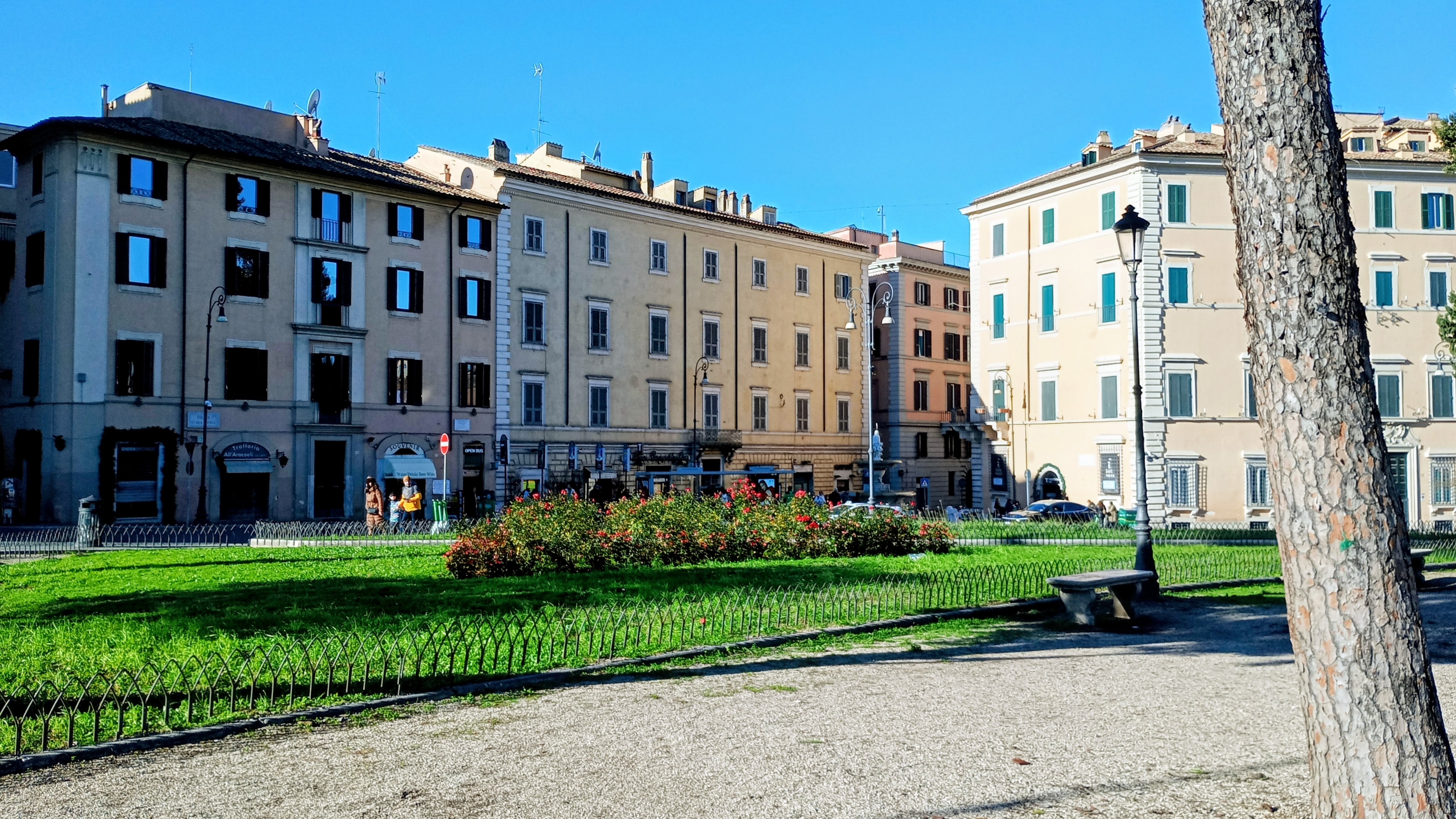
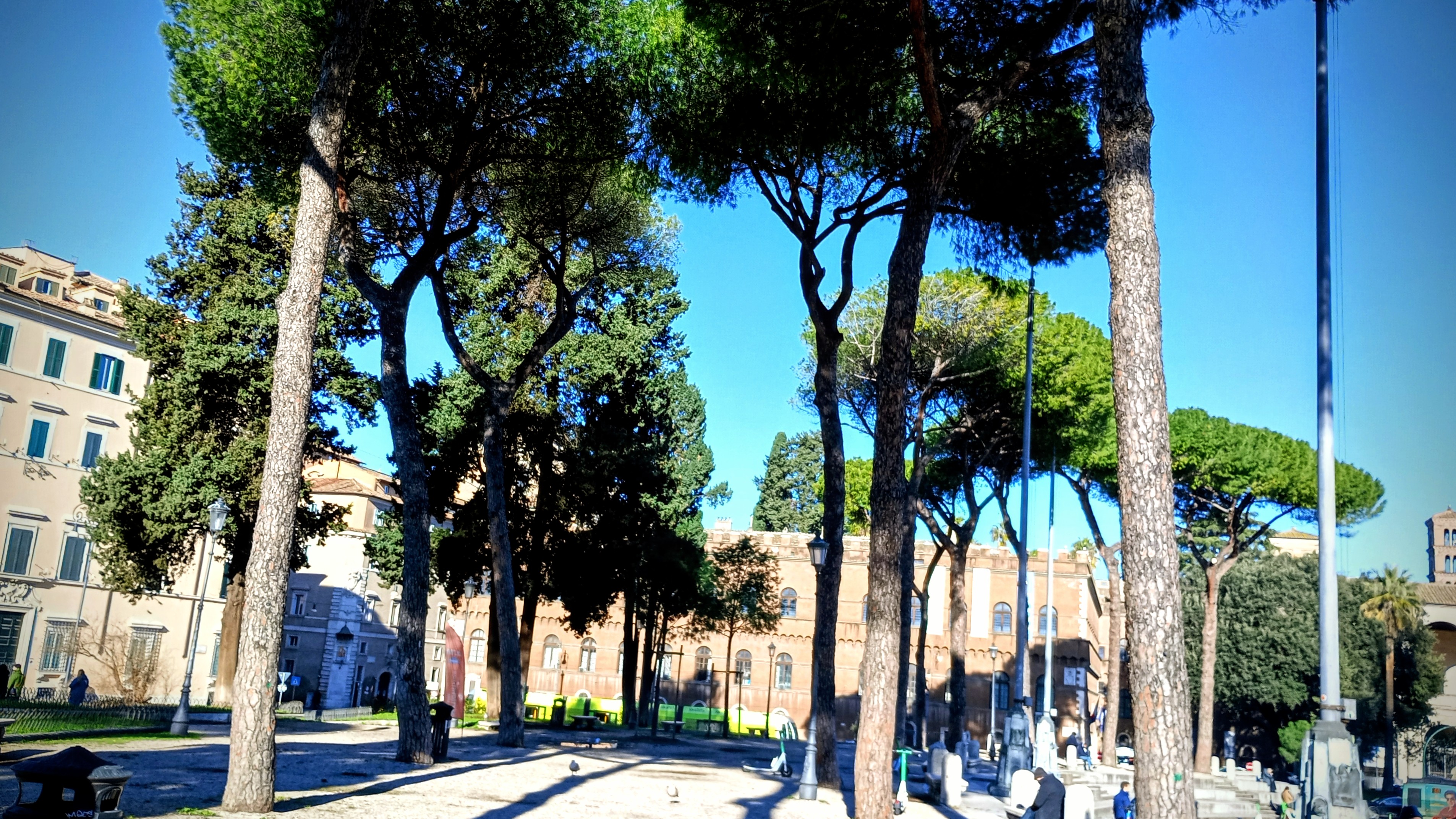
Piazza d’Aracoeli
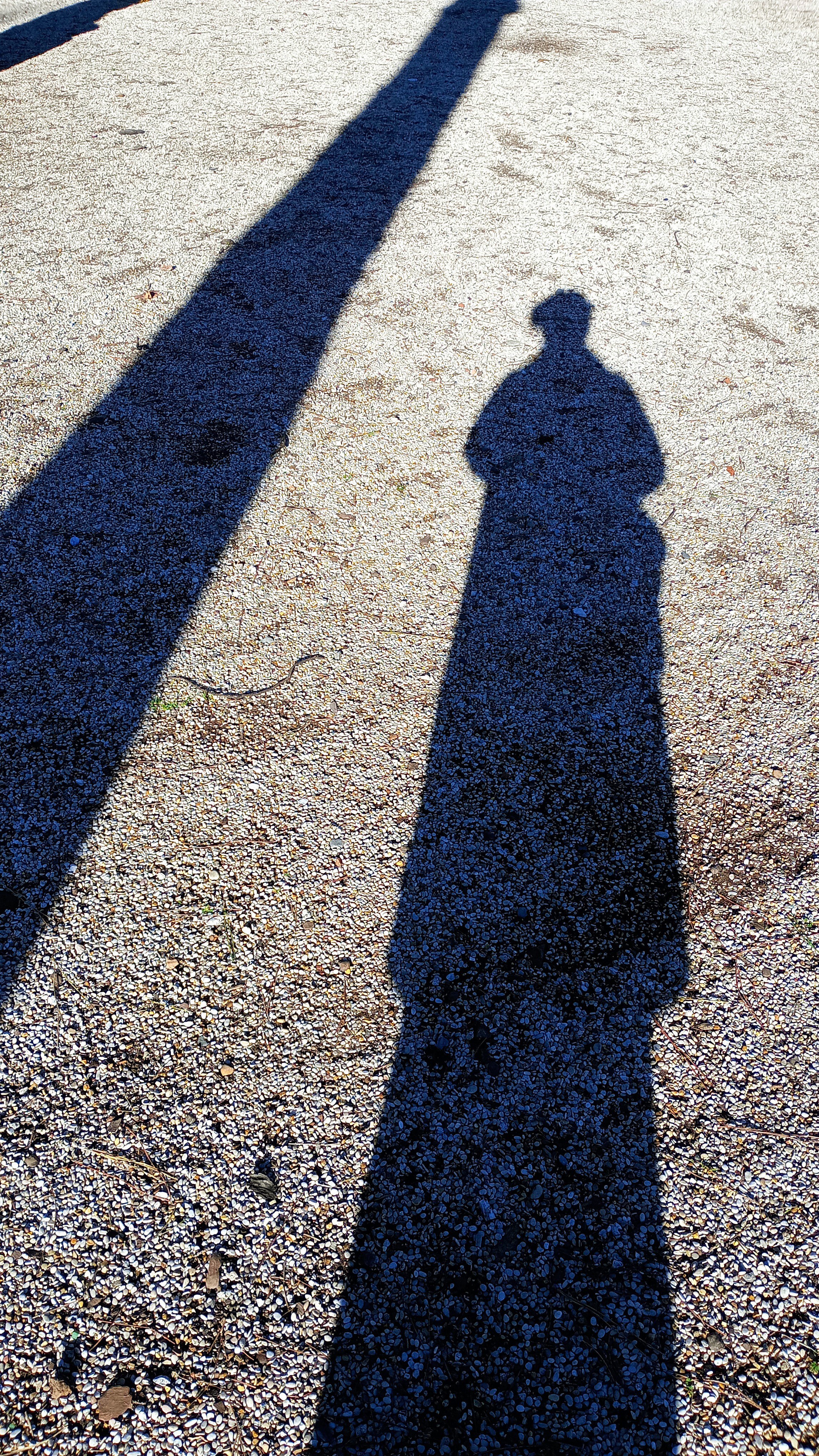
Shadow Selfie
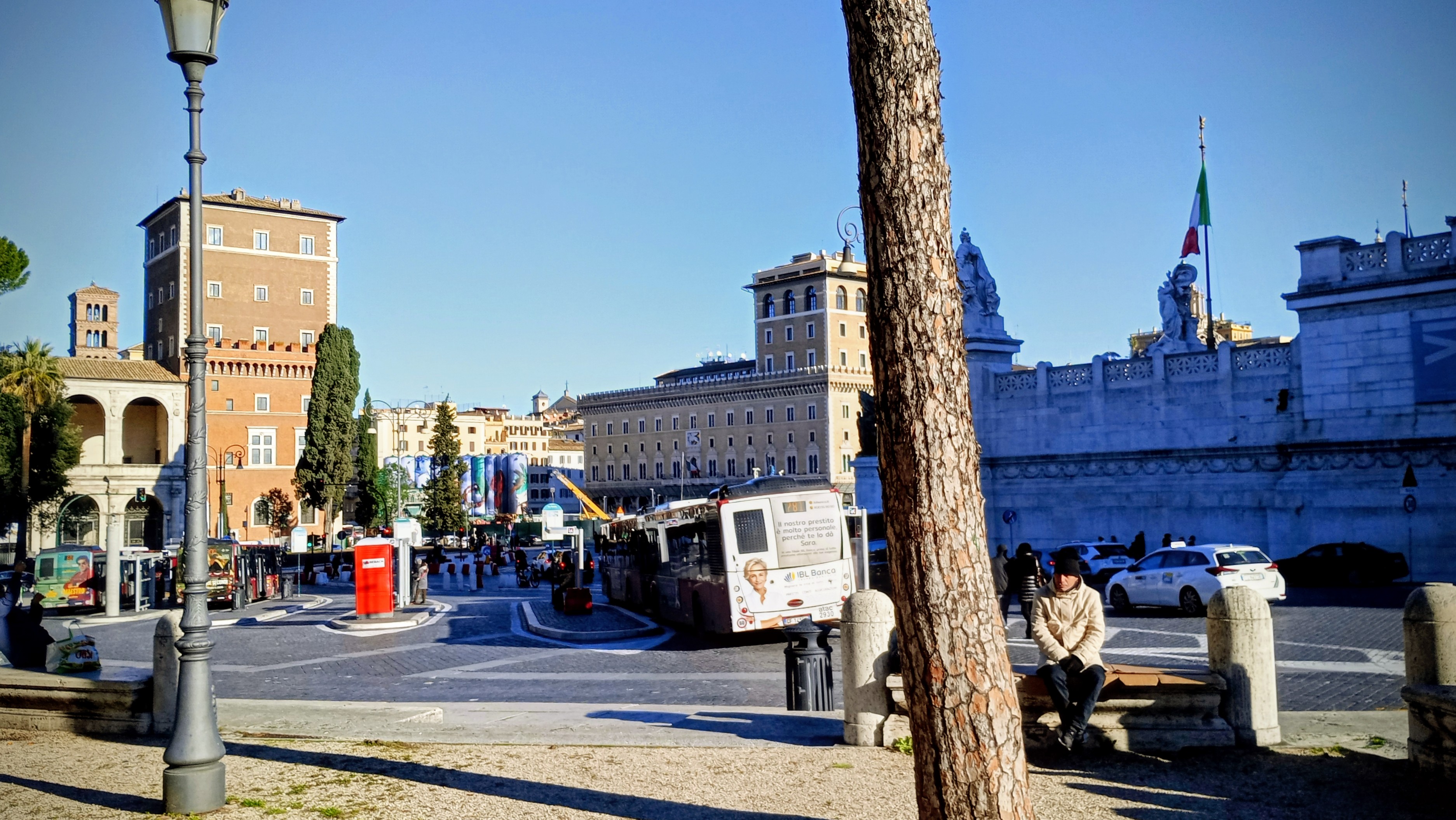
Piazza d’Aracoeli
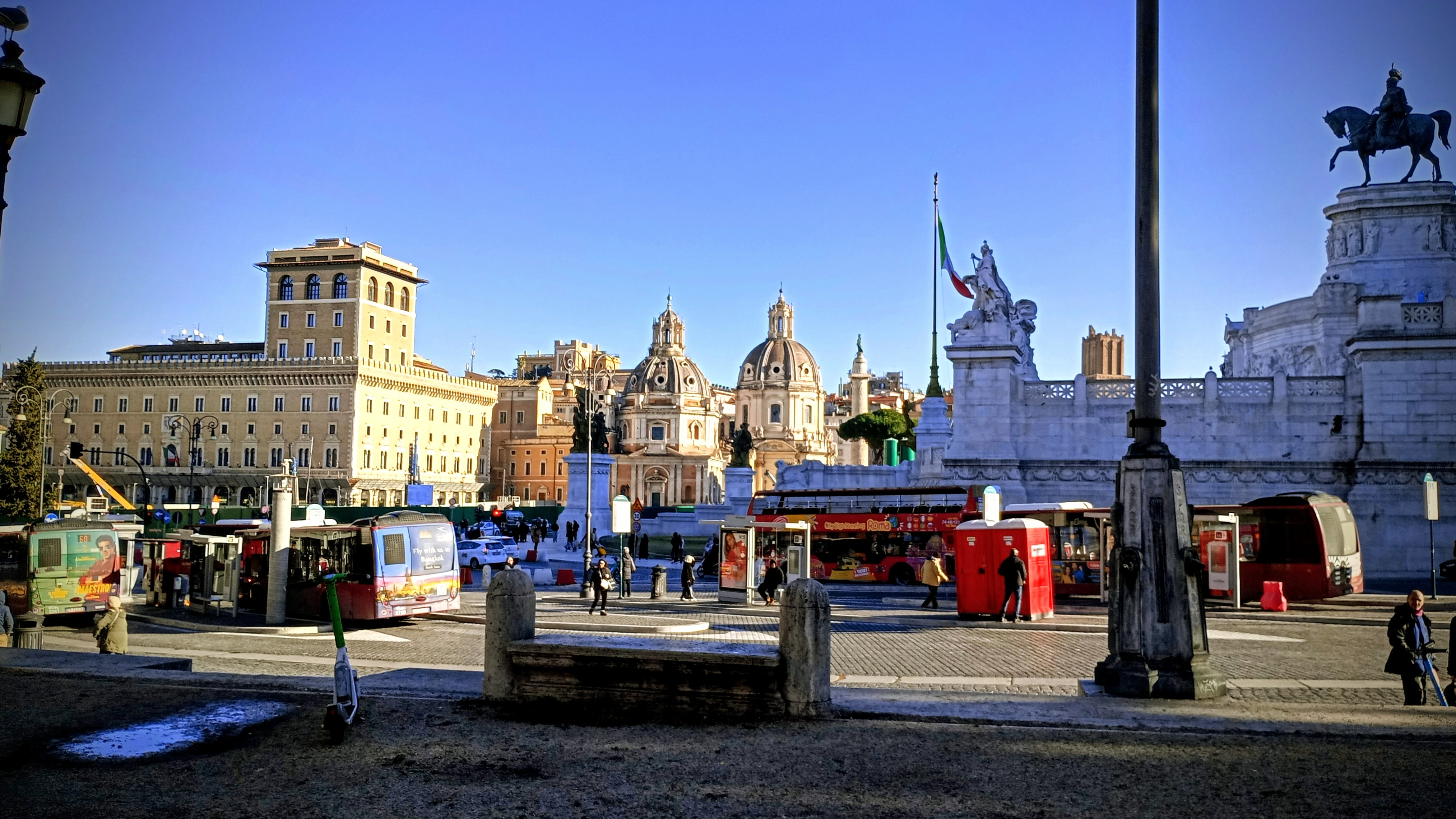
Piazza d’Aracoeli looking towards Piazza Venezia. Here is an important bus terminus aka capolinea. The new Metro line C is under construction with a stop here, Venezia.
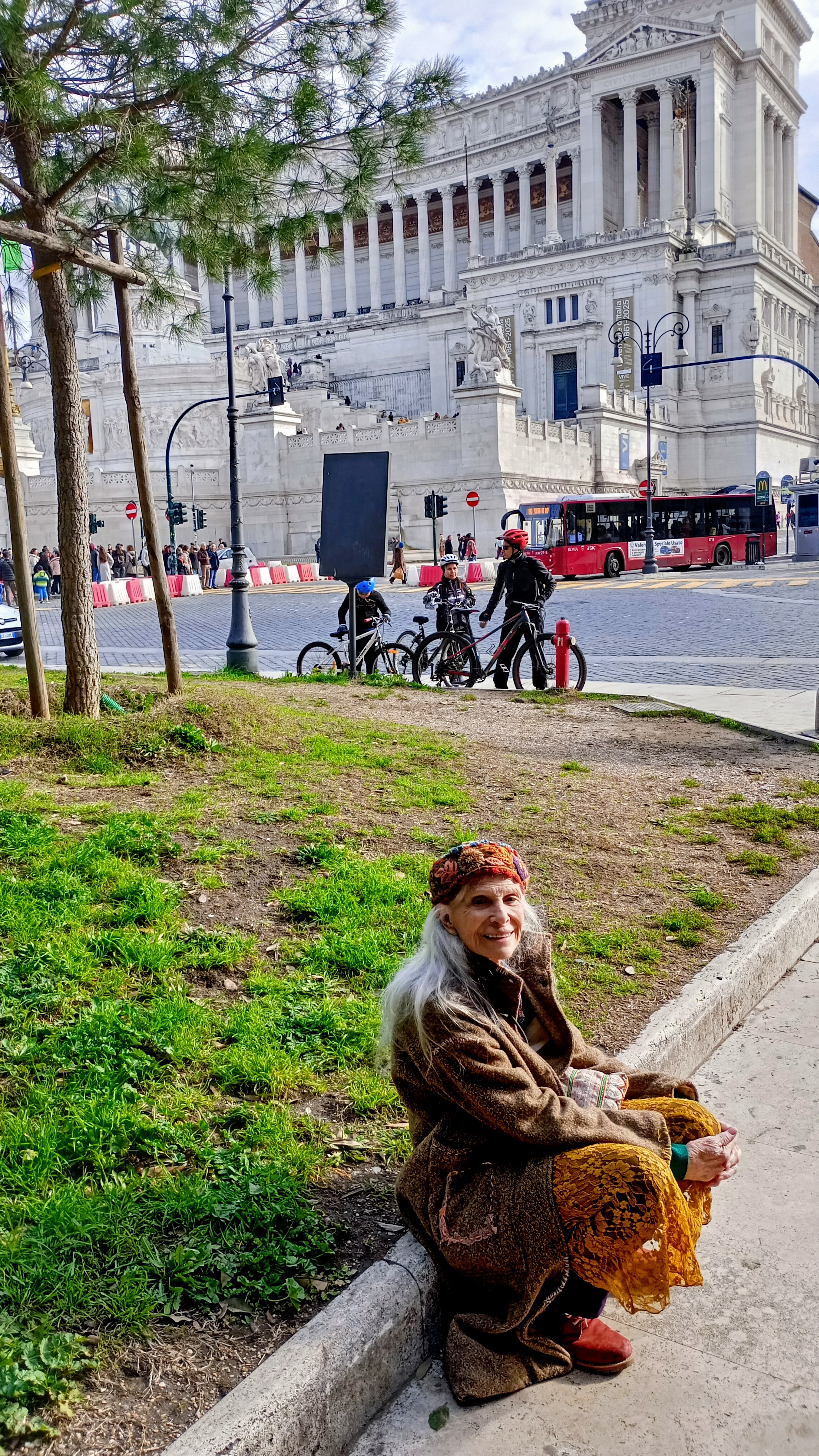
This building has various names. It’s known as the “Altare della Patria” (altar of the homeland), the monument to Victor Emmanuel II, and as the Vittoriano.
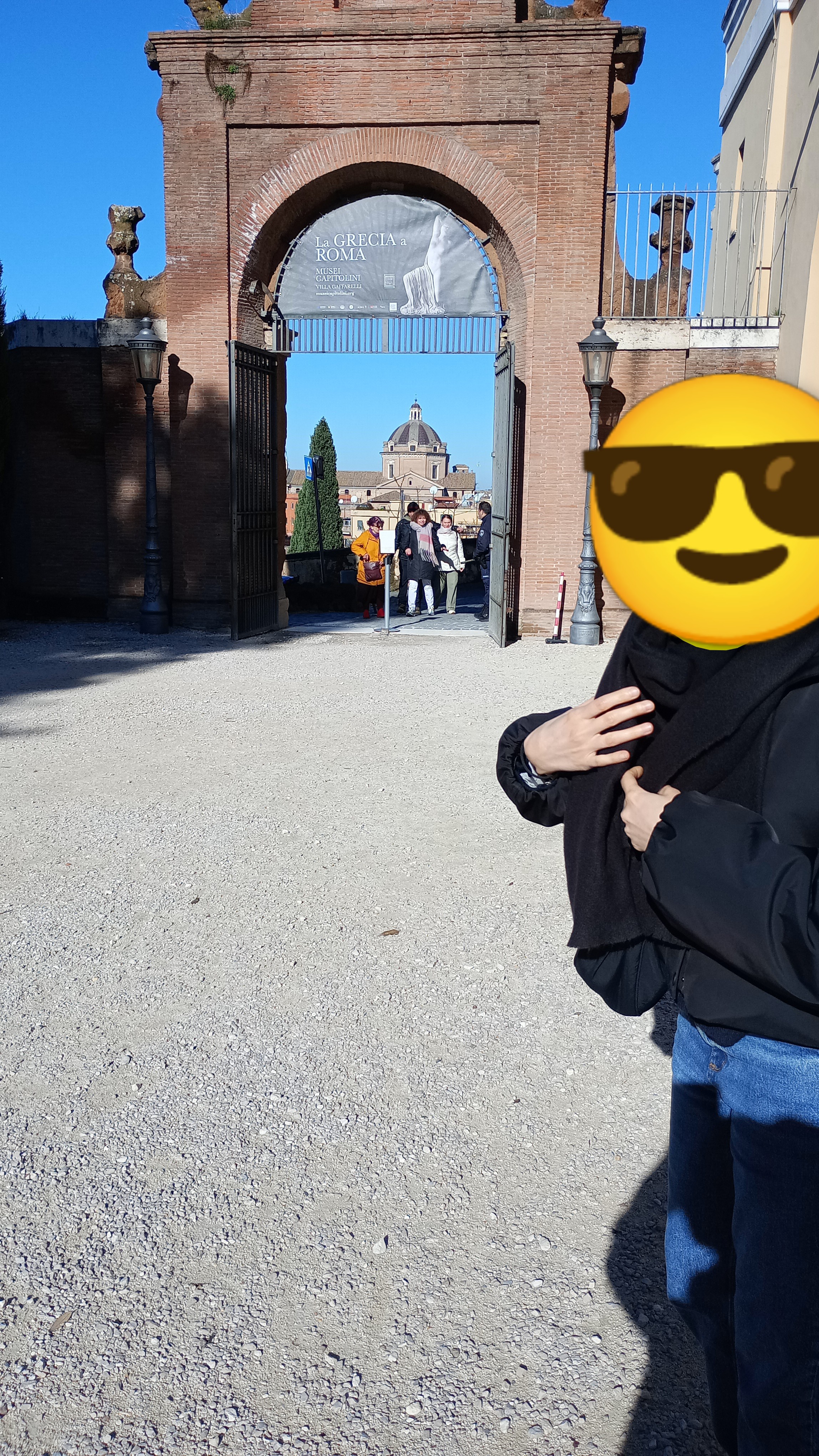
The arch indicates the entrance to Villa Caffarelli.
From the ramp there is so much to see. Like the cypress shadows on the wall. It was near noon and the shadows were aggressive.
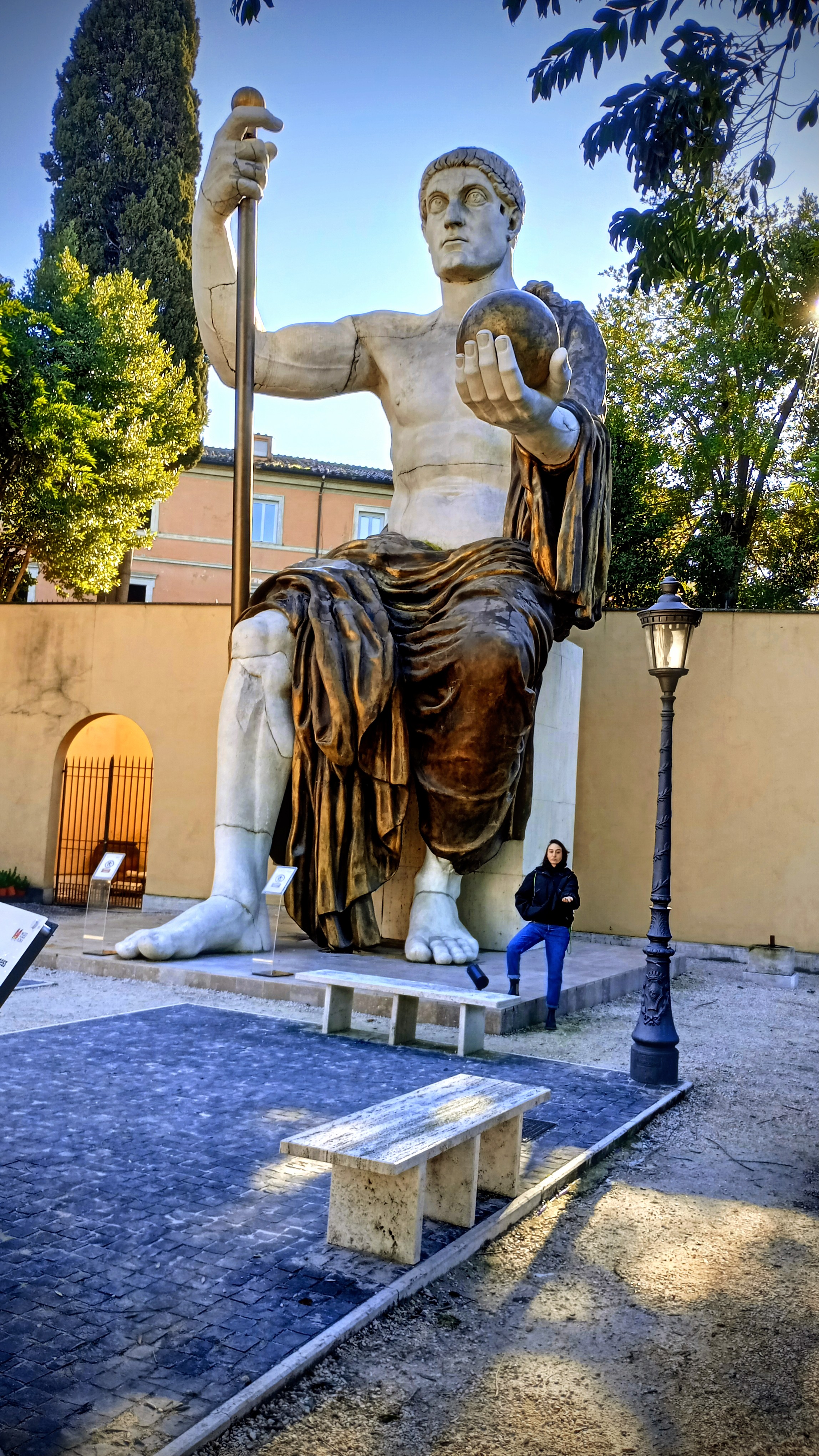
The Colosssus at Villa Caffarelli.
In the garden of Villa Caffarelli is a full-scale reconstruction of the Colossus of Constantine. The project was sponsored by the Prada Foundation.
info
Villa Caffarelli dates back to the 16th cen when the emperor gave Ascanio Caffarelli a piece of land on the Capitoline Hill. Here Caffarelli levelled the land so he could build a home.
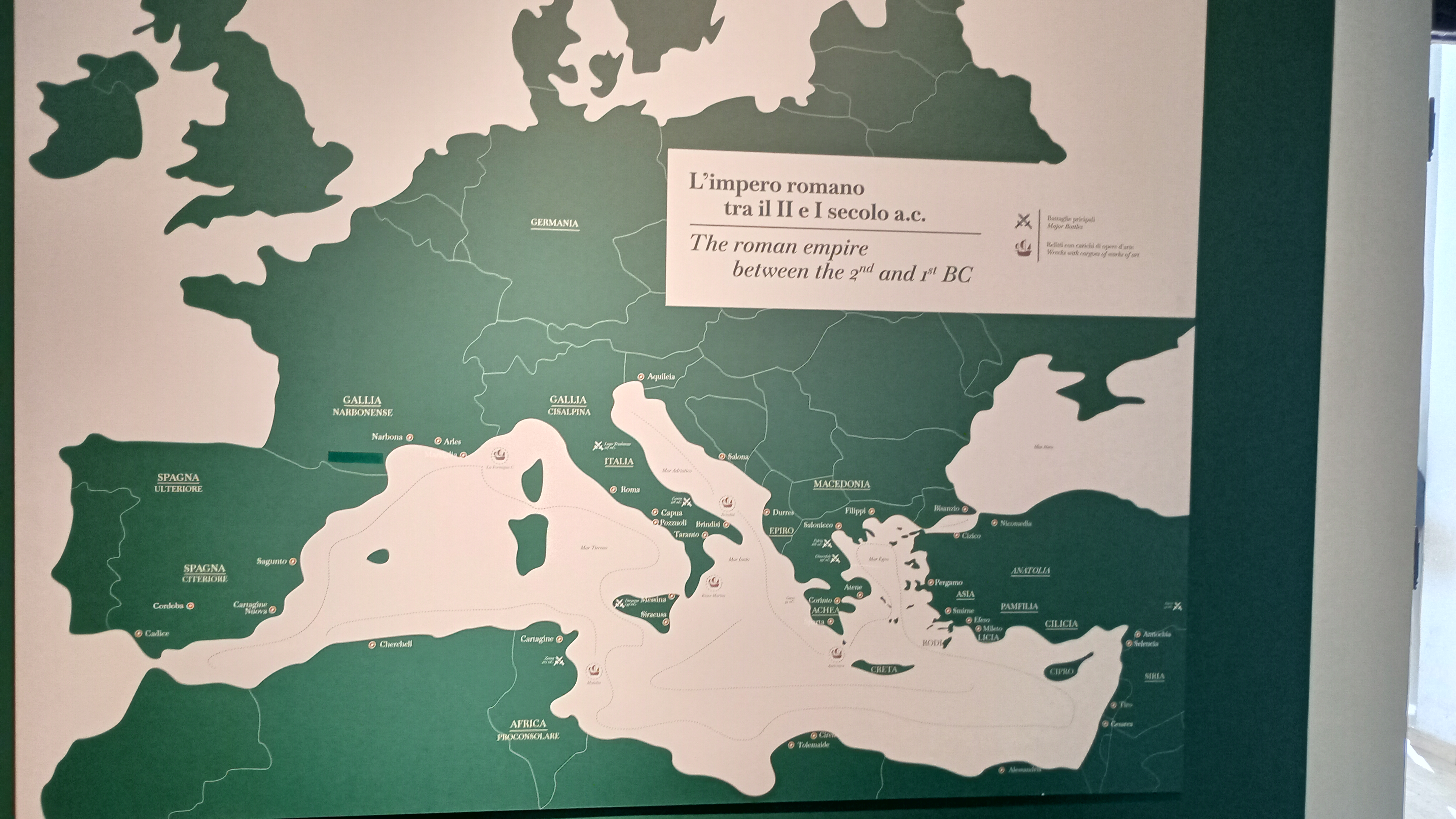
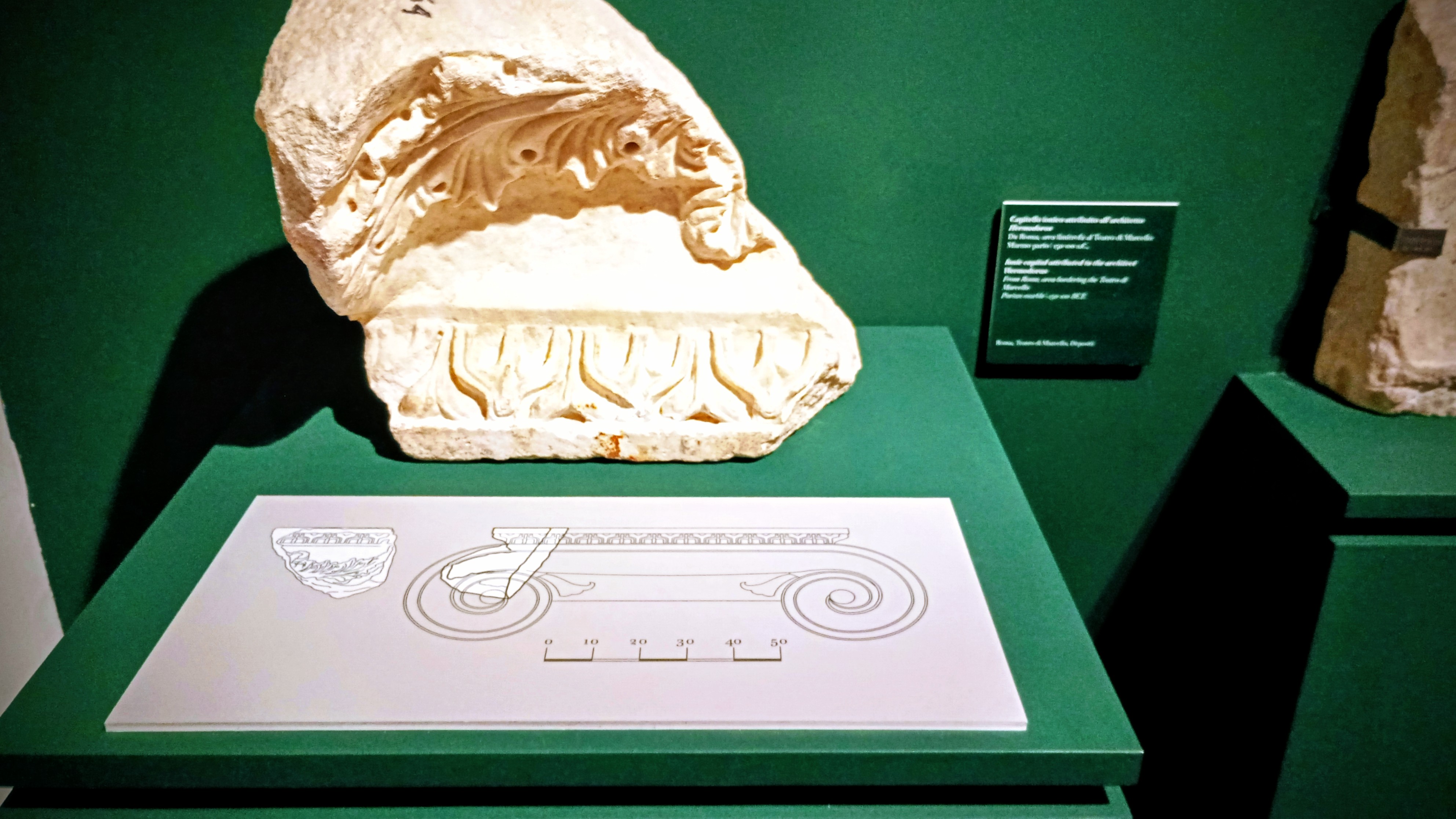
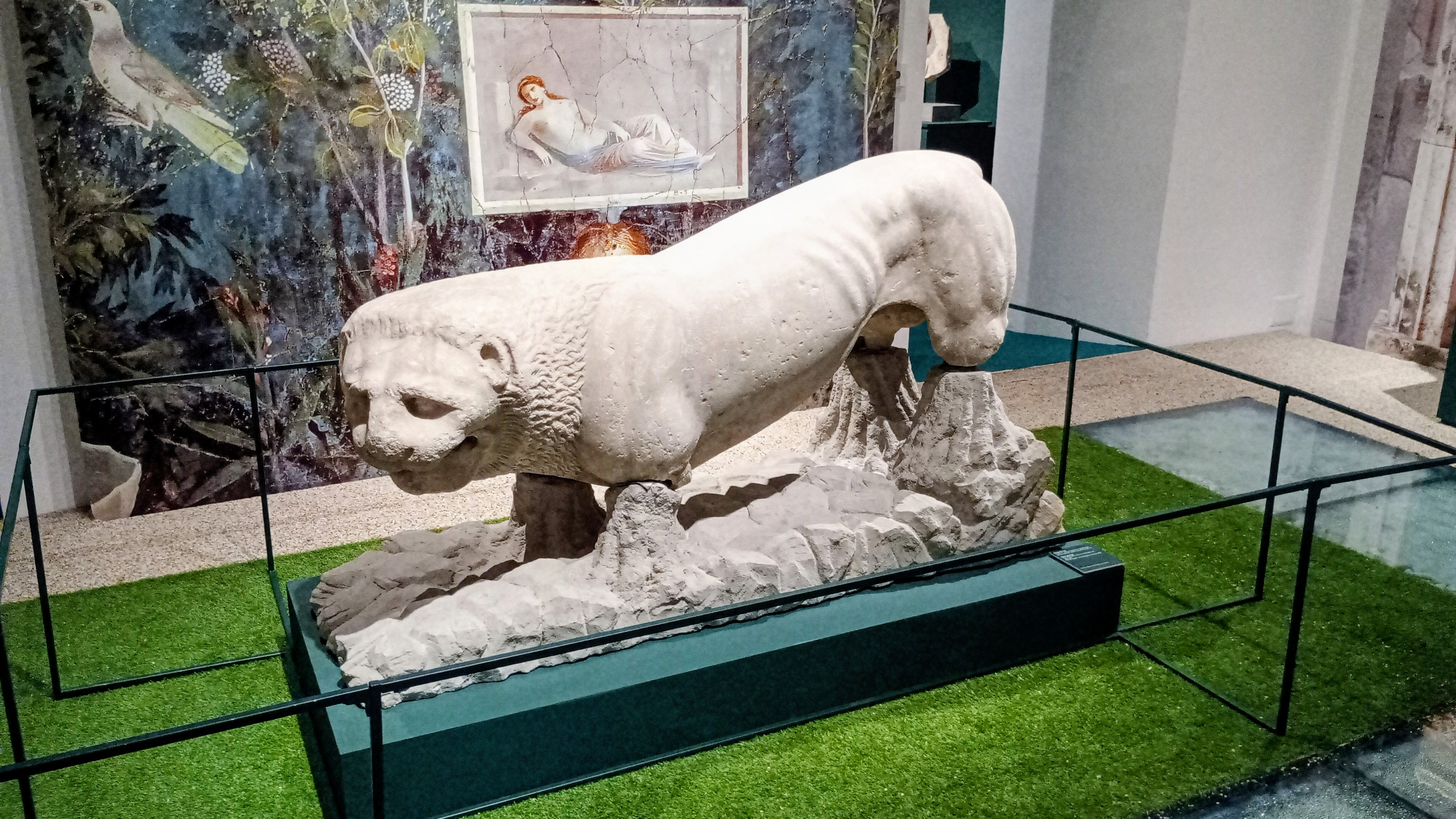
The exhibit “Greece in Rome” retraces the encounter between two major civilizations. This encountered helped shape Western tastes and aesthetics.
You enter here….
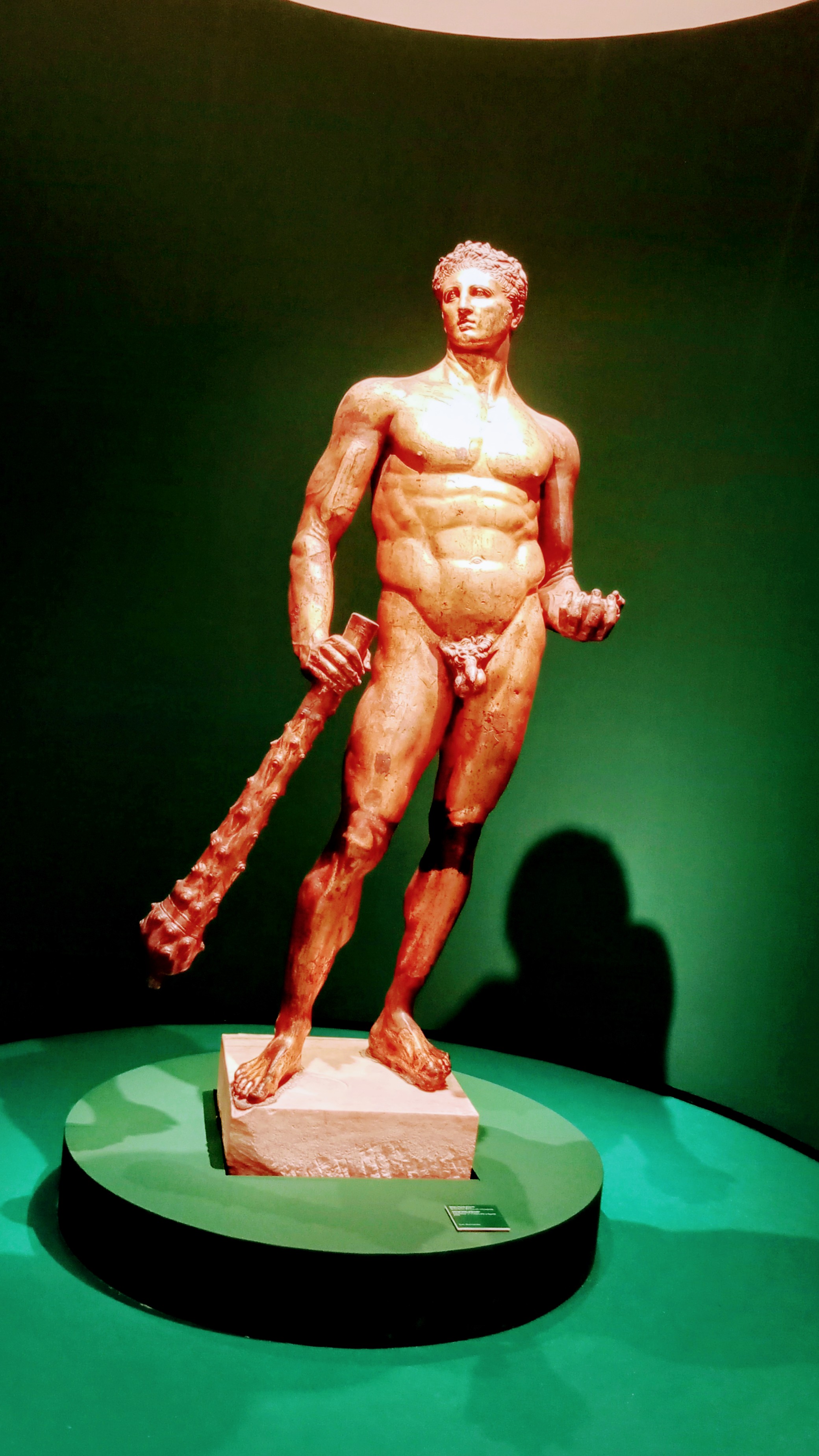
A statue of Hercules. It’s not difficult to recognize Hercules in art as he generally carries a club and wears a lion’s skin.
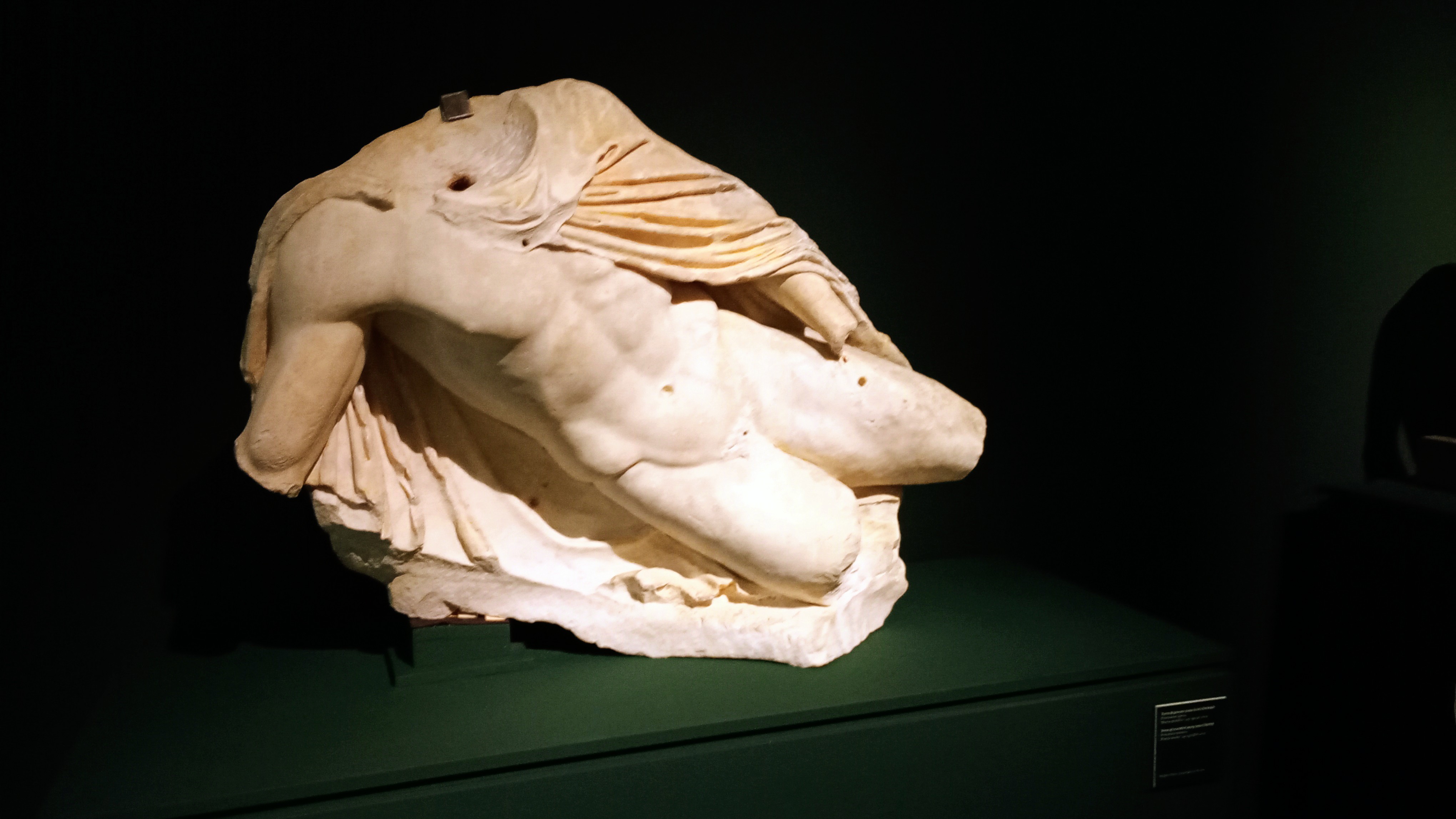
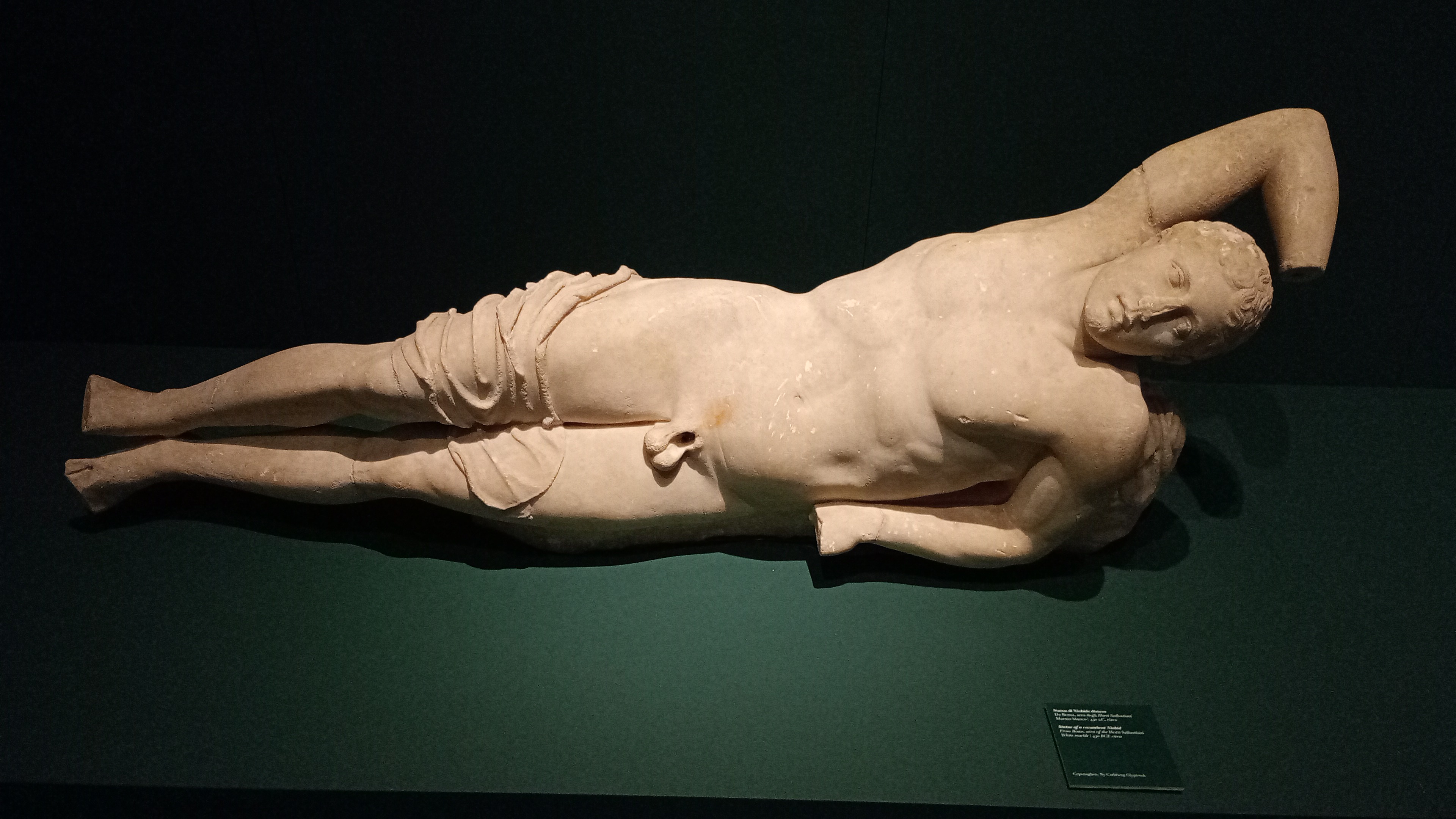
Niobids were Niobe’s children who were slain because Niobe had a big mouth and bragged about all the children she had compared to Leto. Leto’s sons, Apollo and Artemis, were not happy about Niobe dissing their mom. So, to punish her, they killed her kids. All 14 of them.
This is a story about hubris…Niobe’s because she felt the need to brag and Leto’s boys who felt they were so important that they had the right to kill someone simply for an unconsiderate thought.
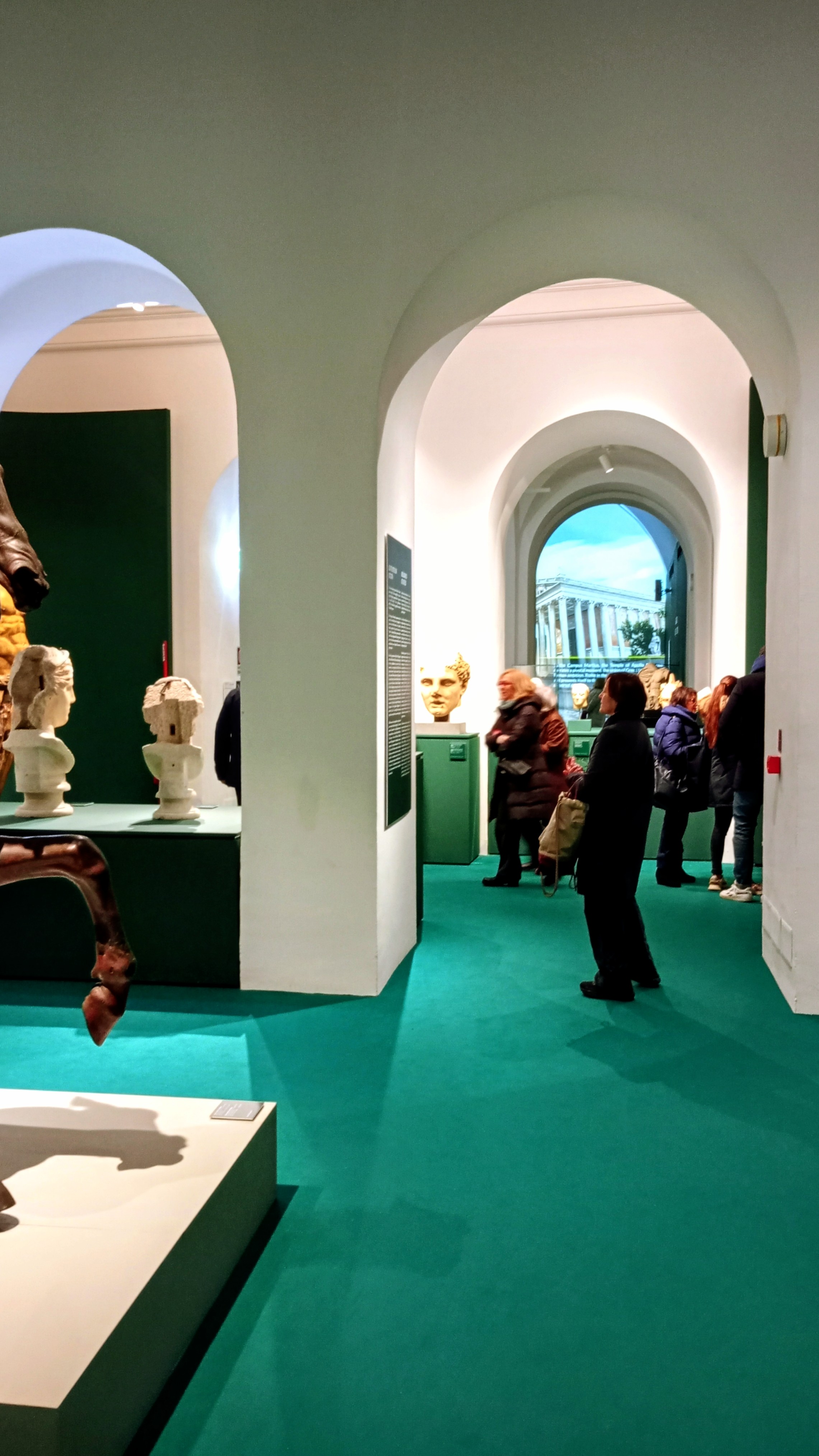
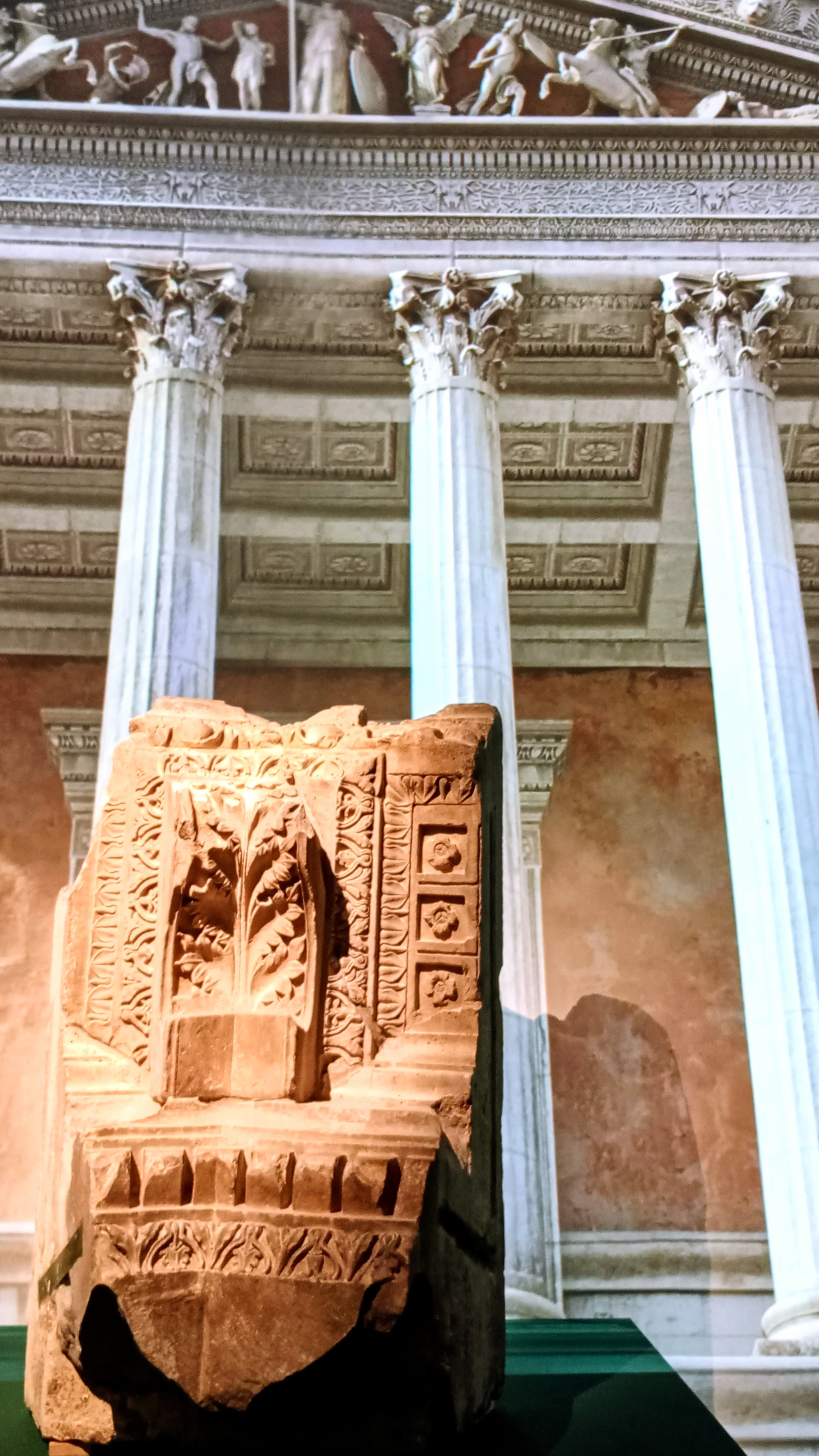
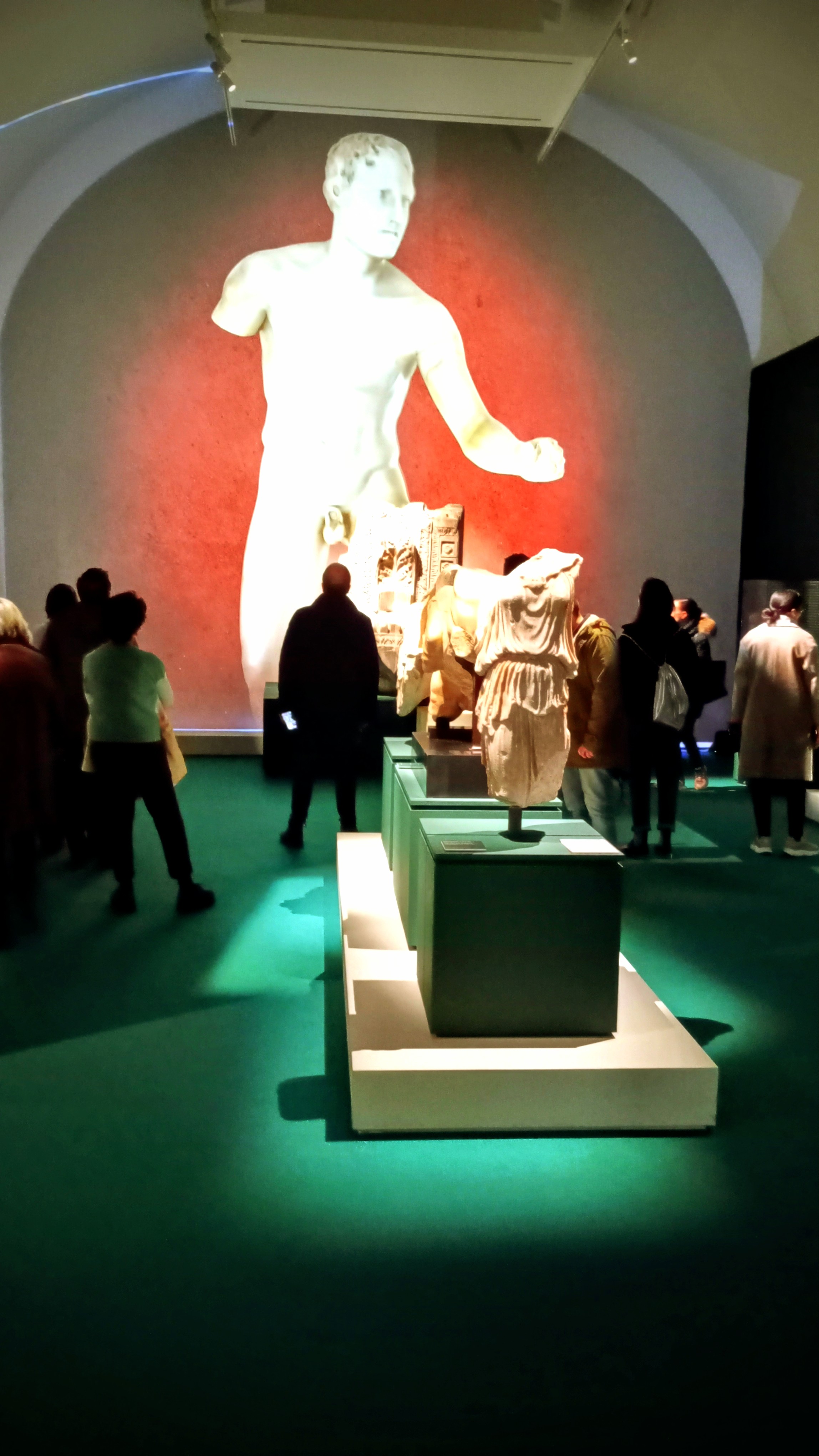
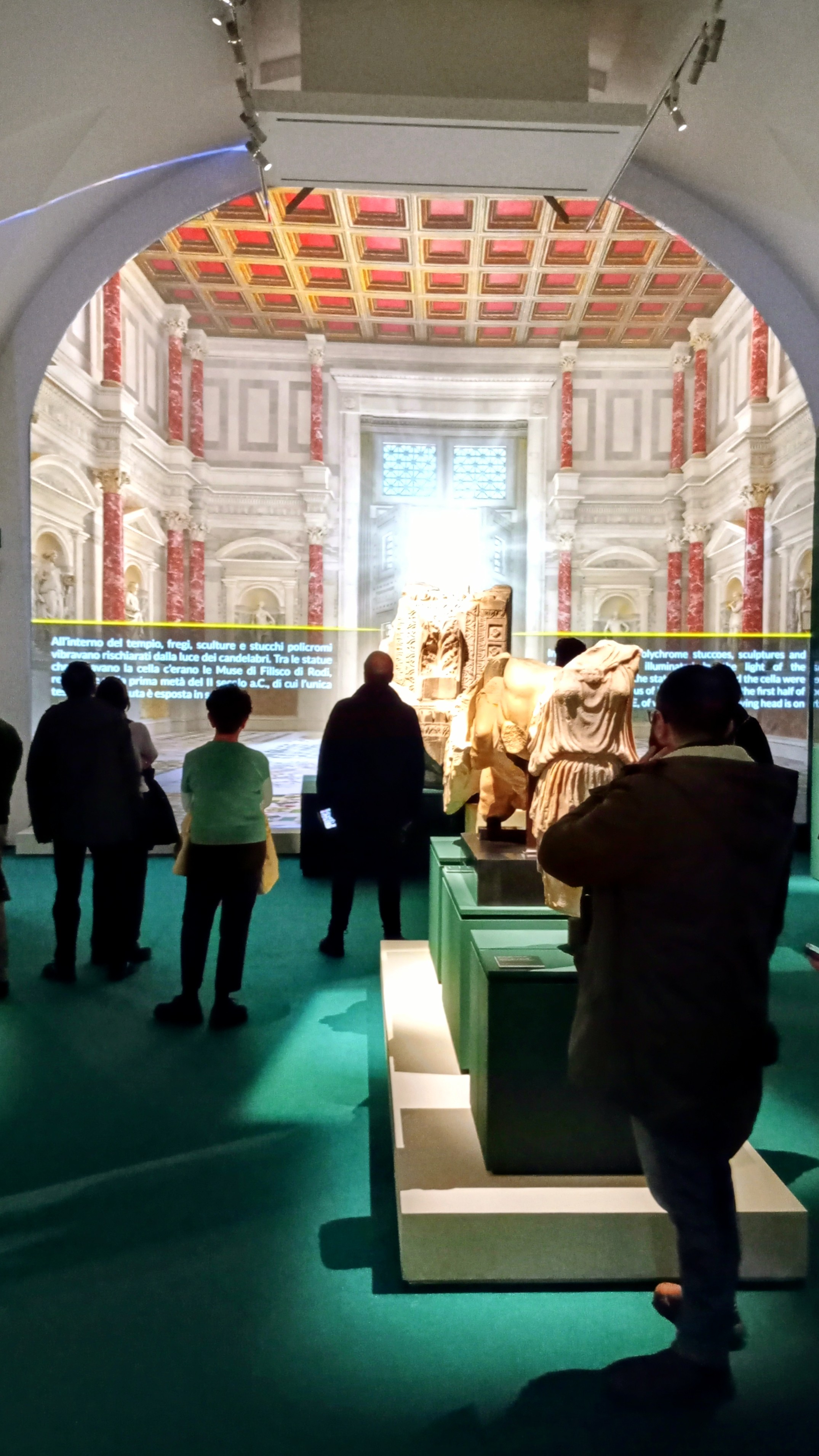
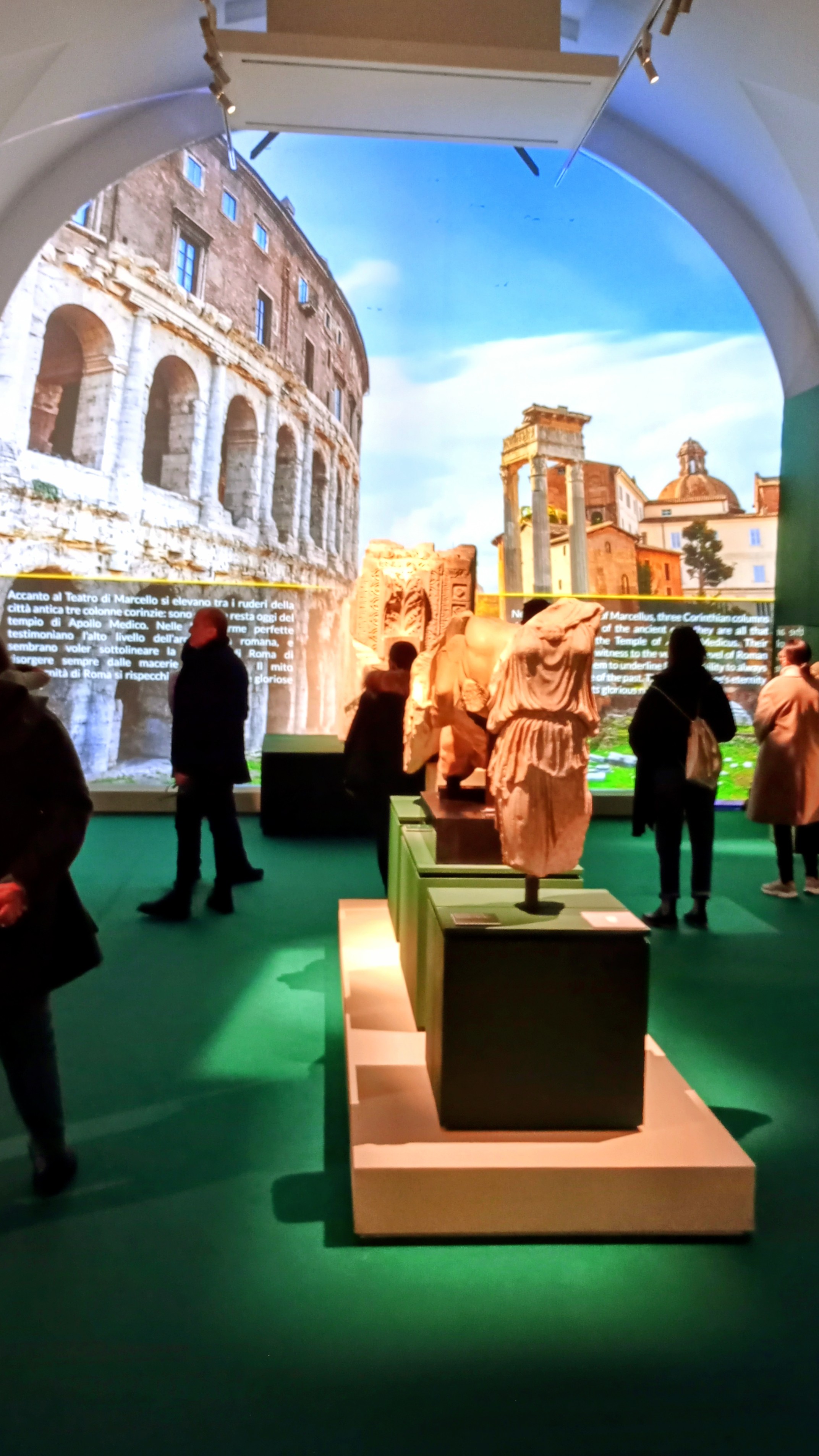
In the main room, there were various displays but they were embellished by a multimedia show projected on the back wall. The projection was big and animated and got people’s attention.
See how all the people seem interested? I get easily bored with multimedia projections mainly because I don’t like standing in one place for an extended period of time.
Notice the ceiling’s “soffitto a cassettoni” known as coffers in English.
The image projected represents Teatro Marcello and shows columns of the Porticato d’Ottaviana as well.
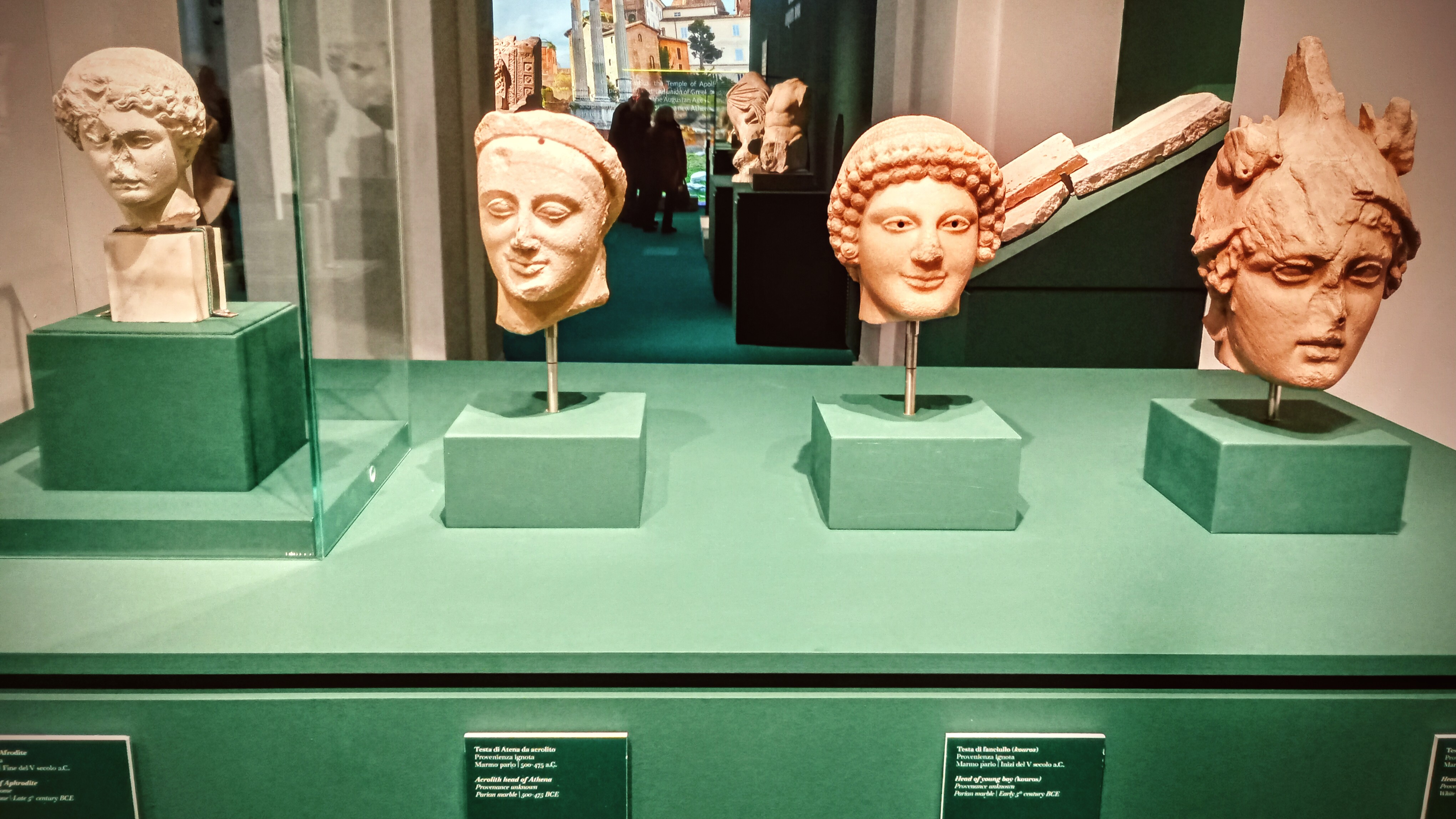
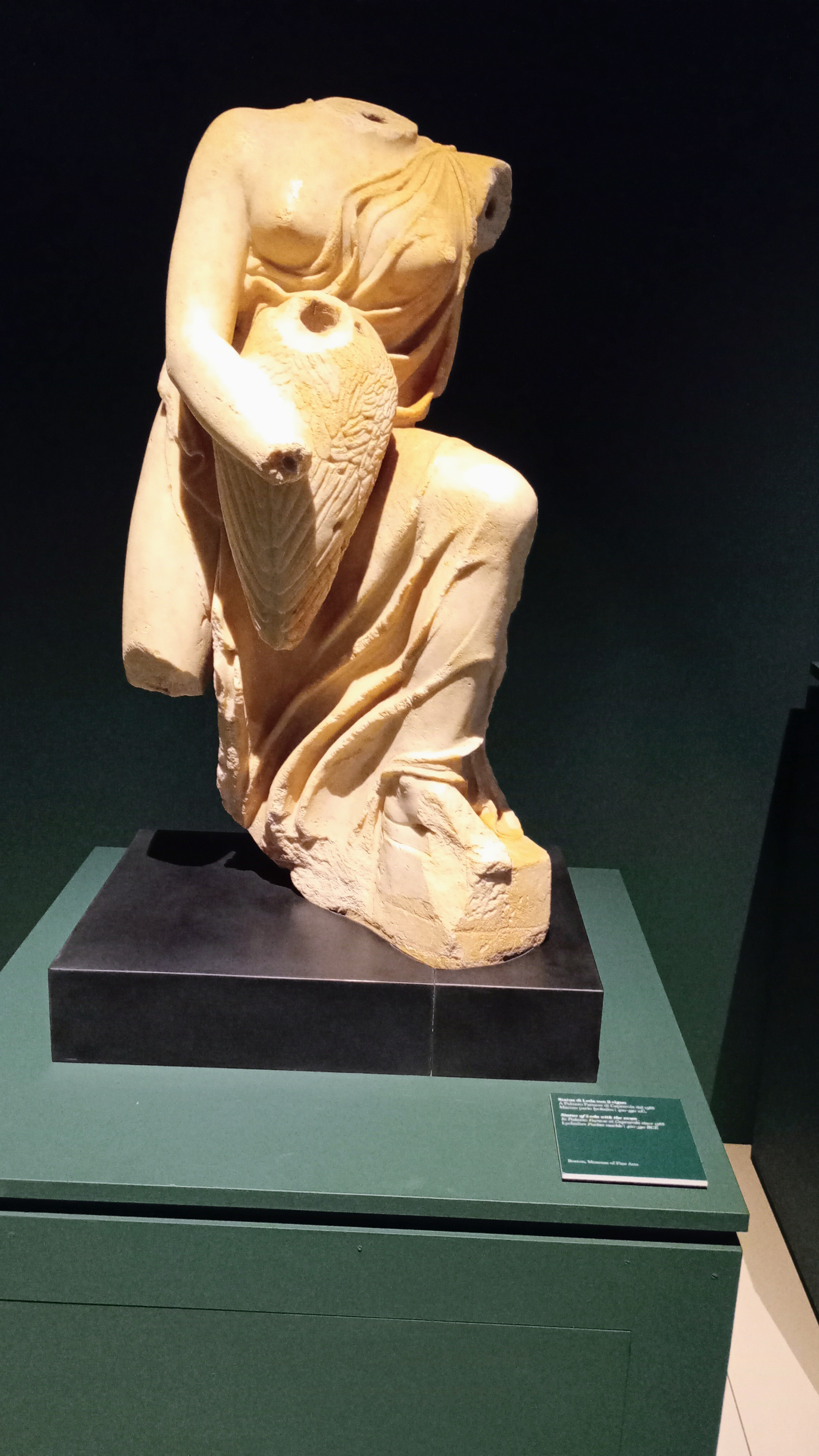
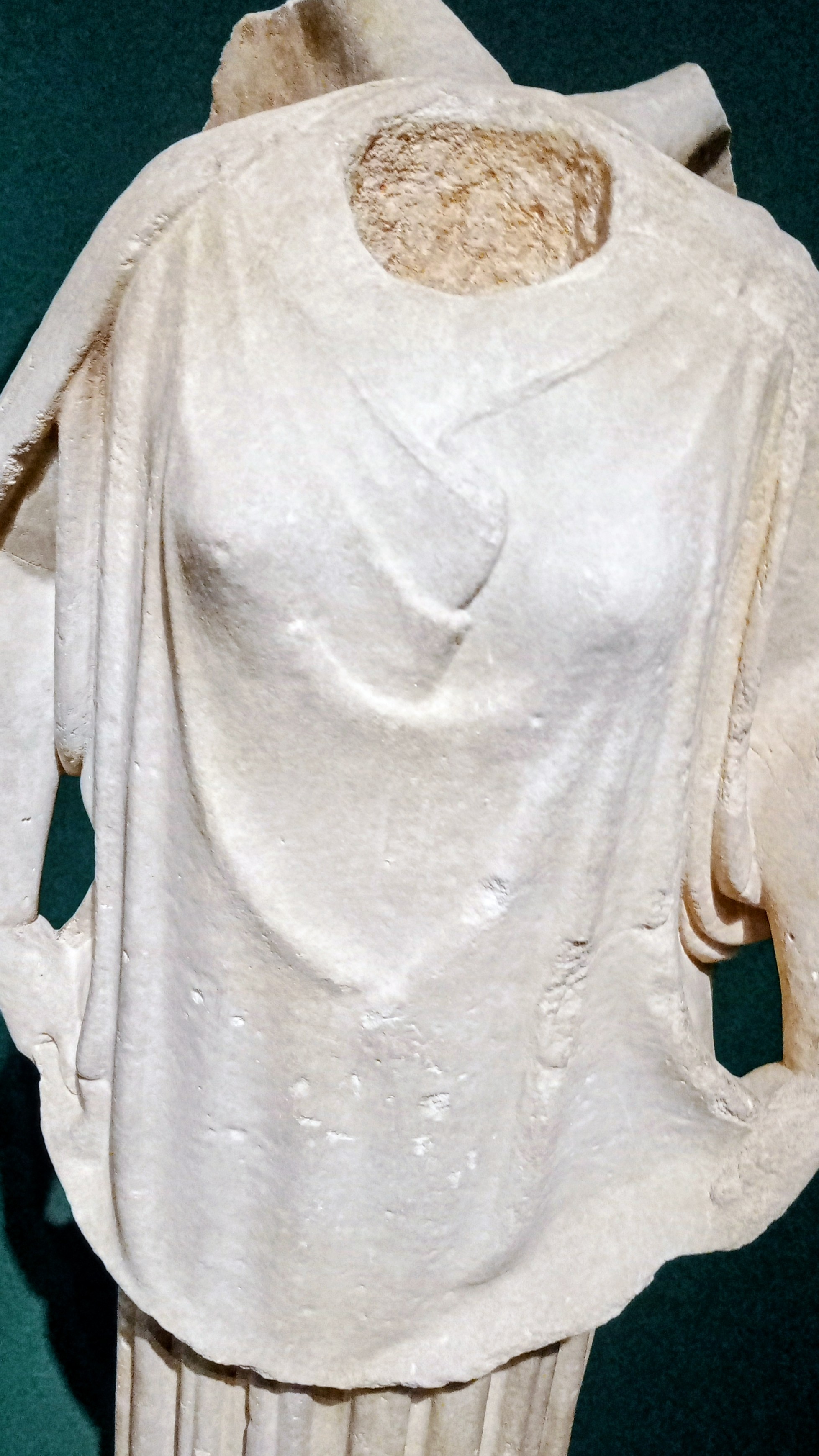
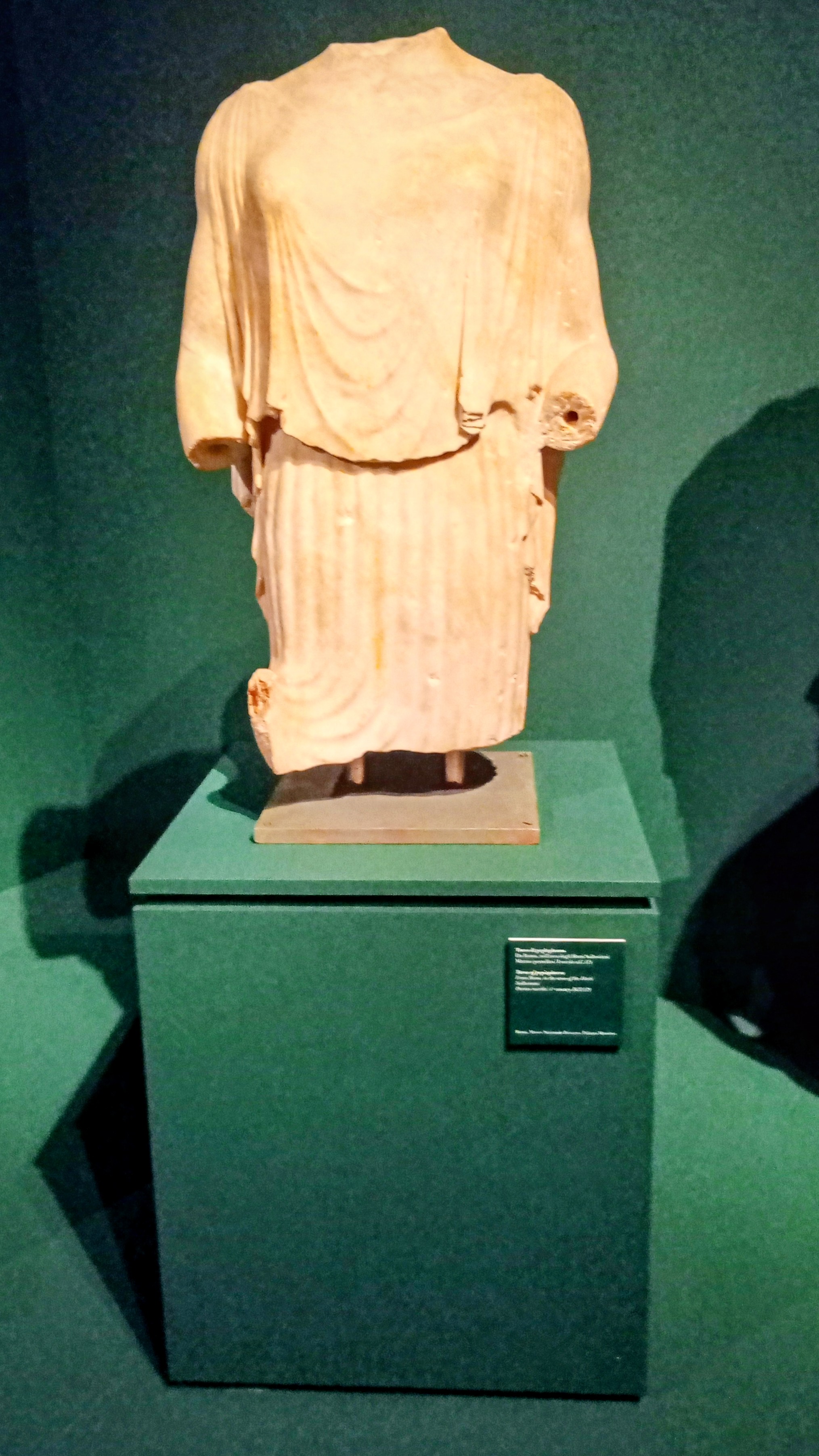
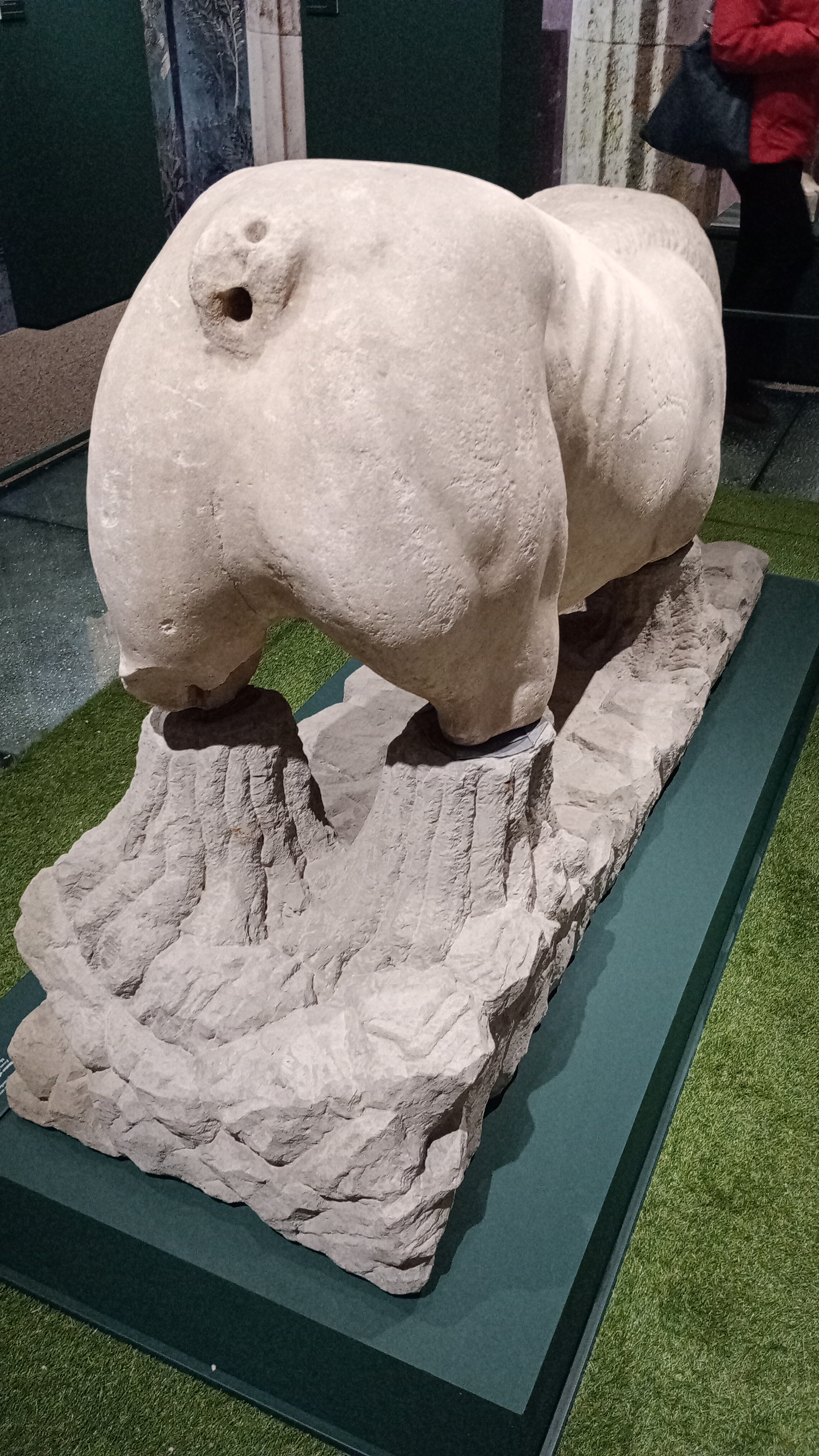
Holes.
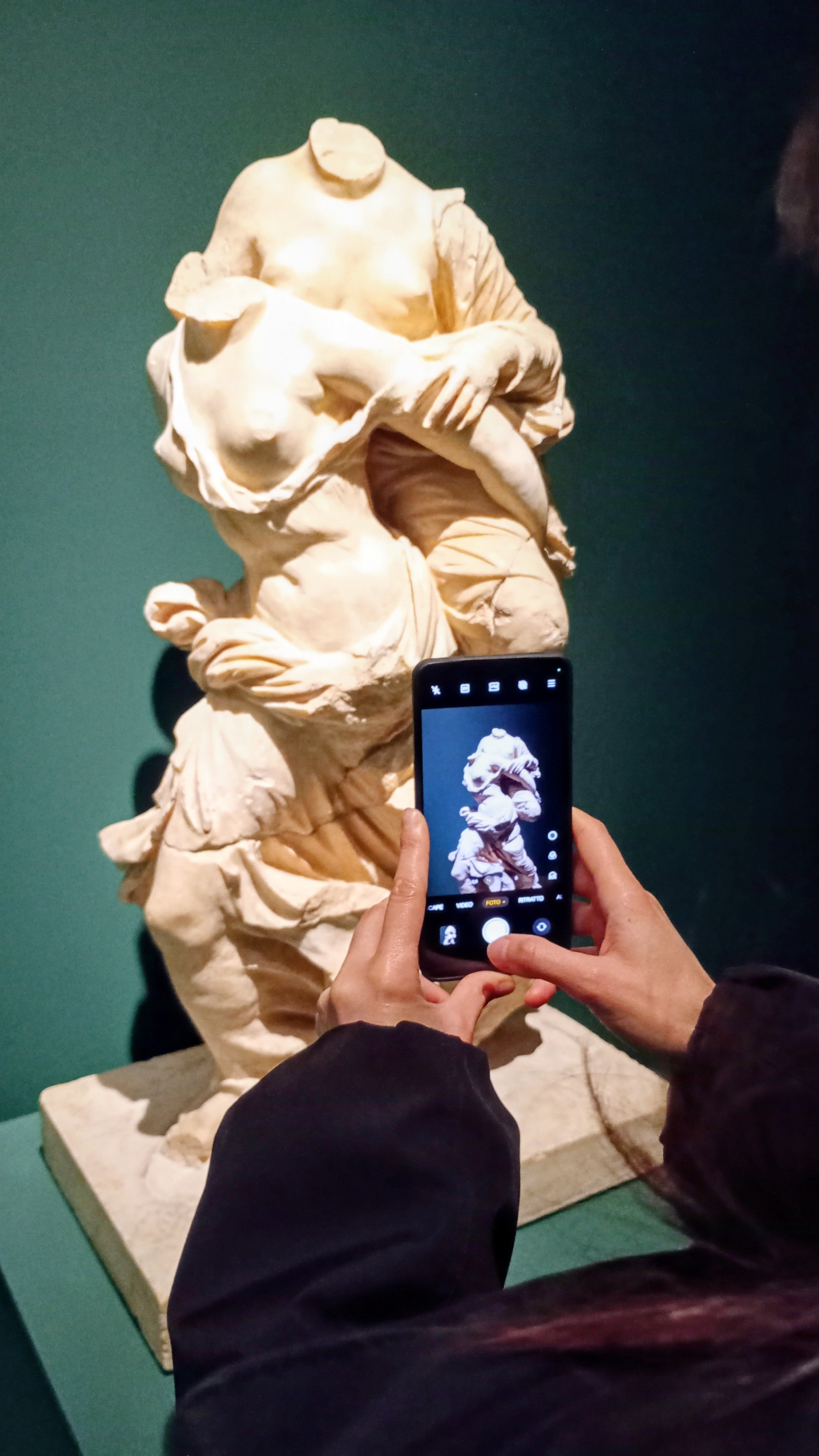
So why are there so many statues with holes?
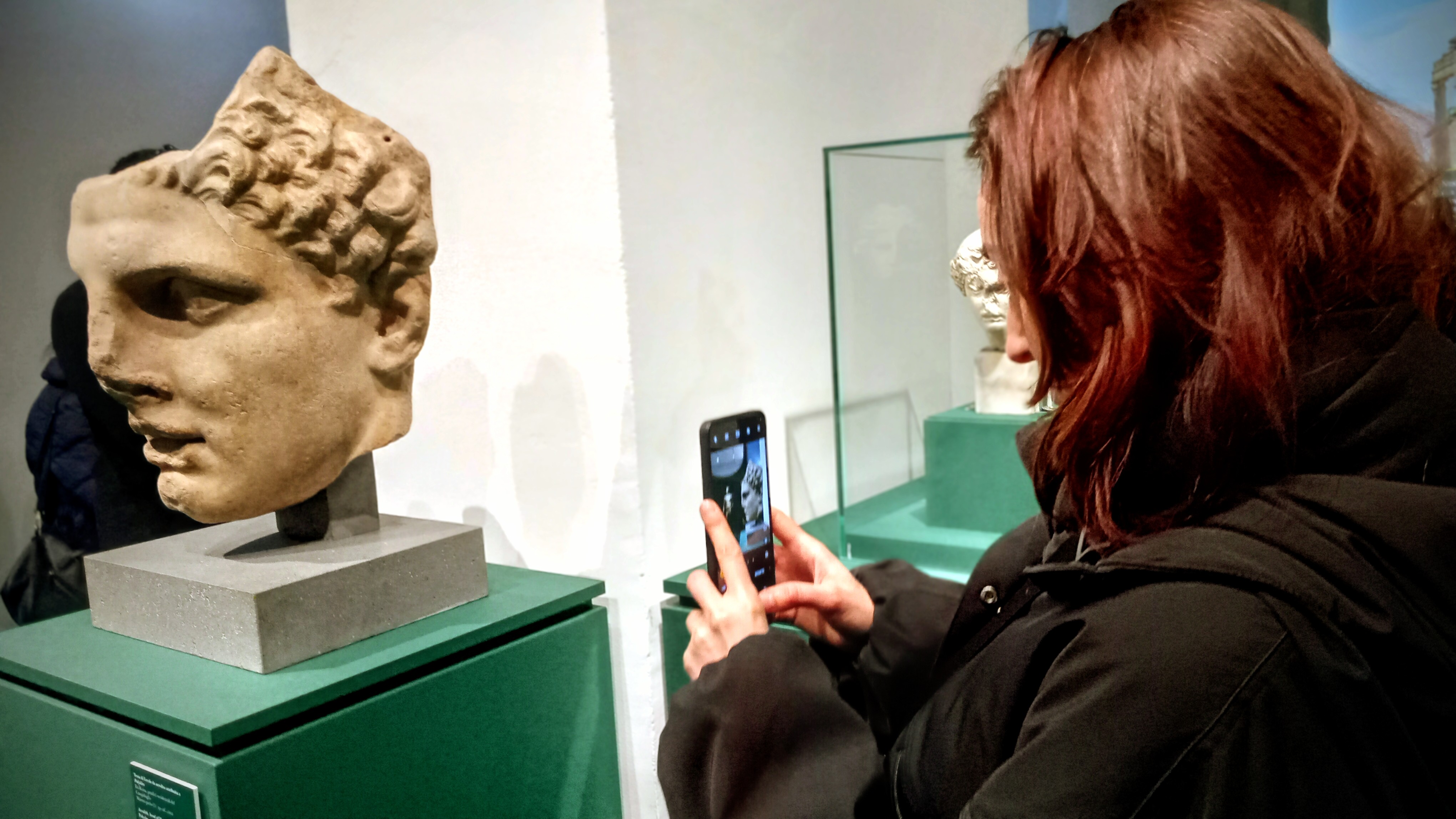
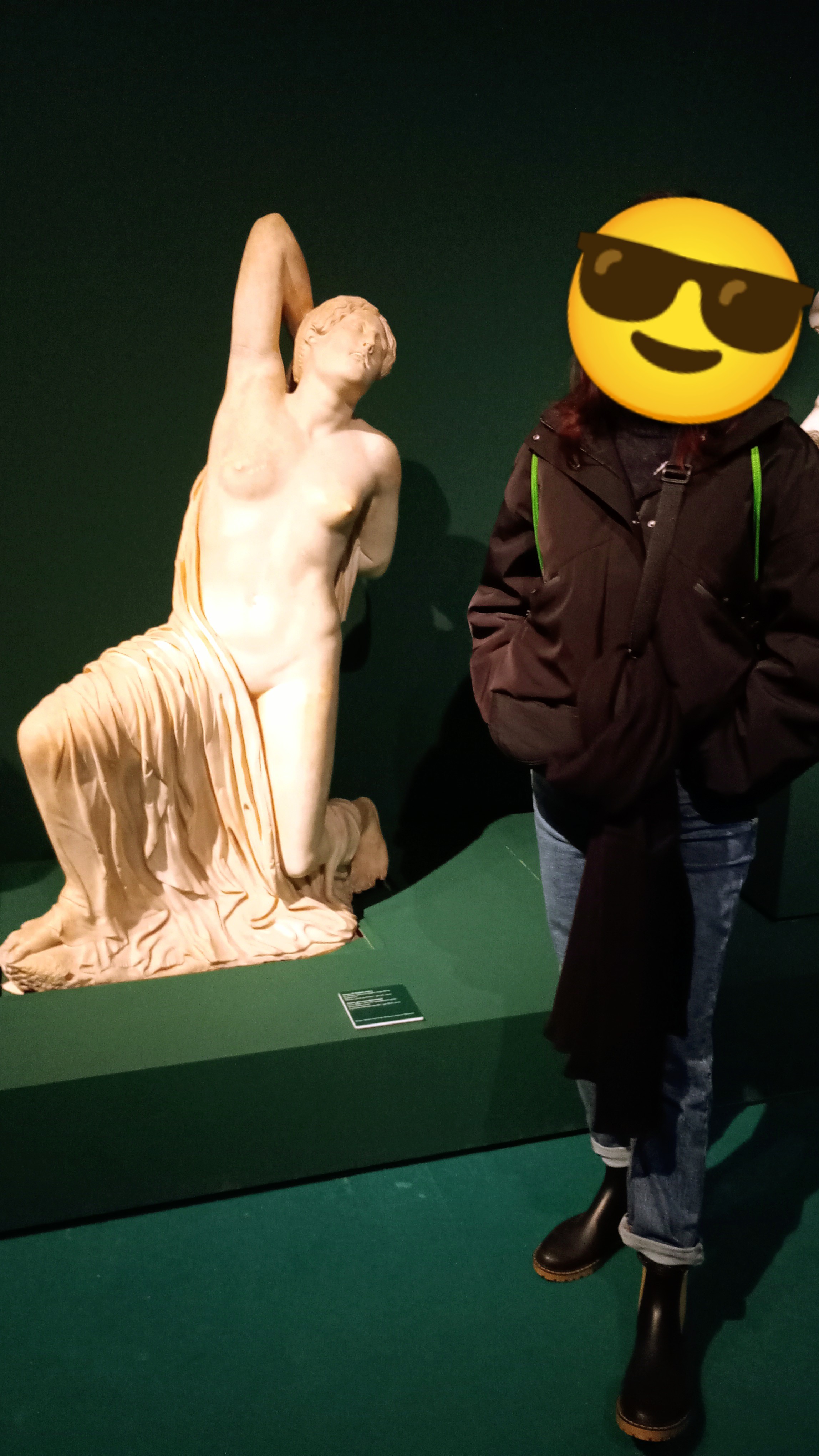
“Dying Niobe” statue and young woman hiding a smile
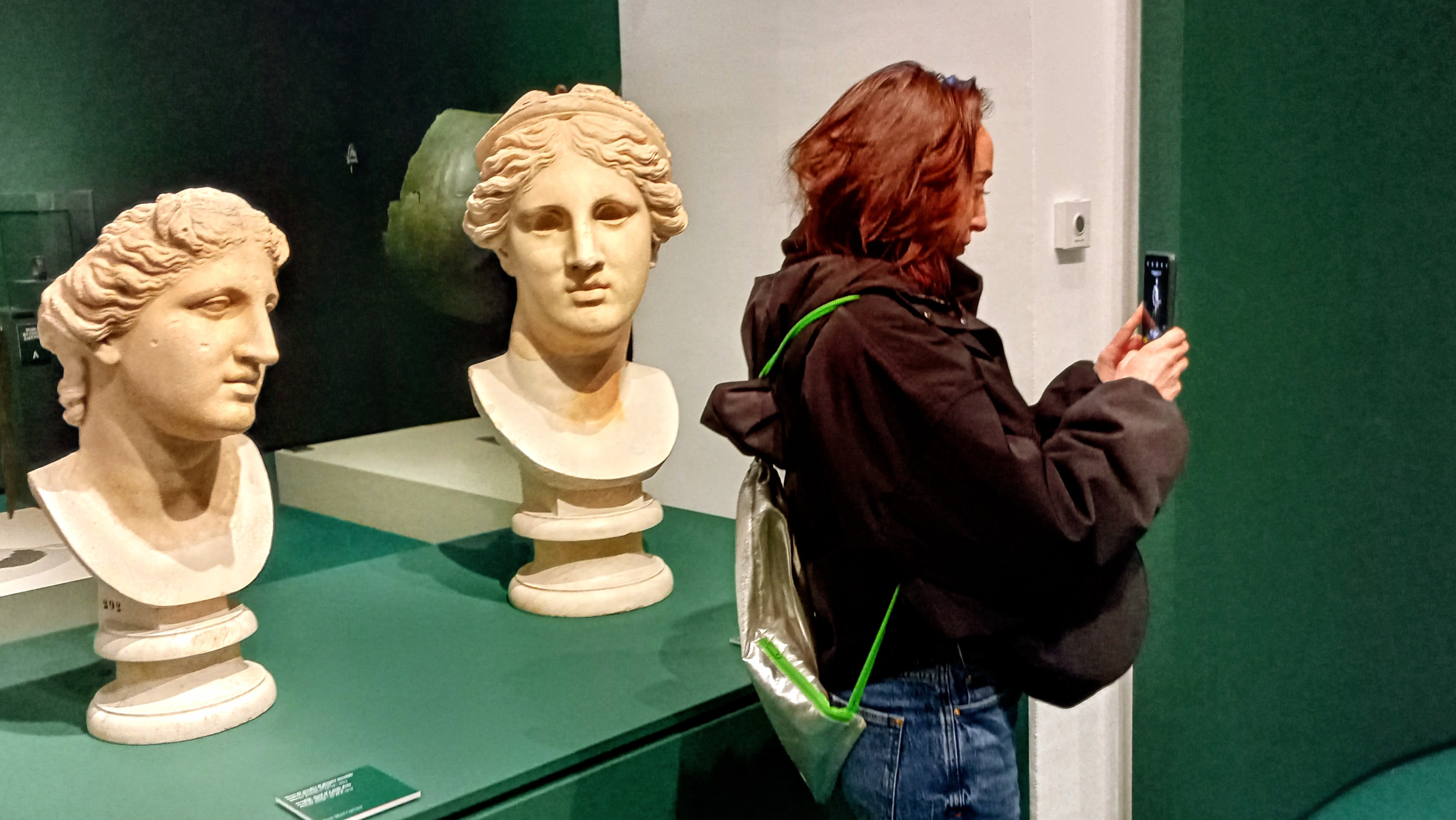
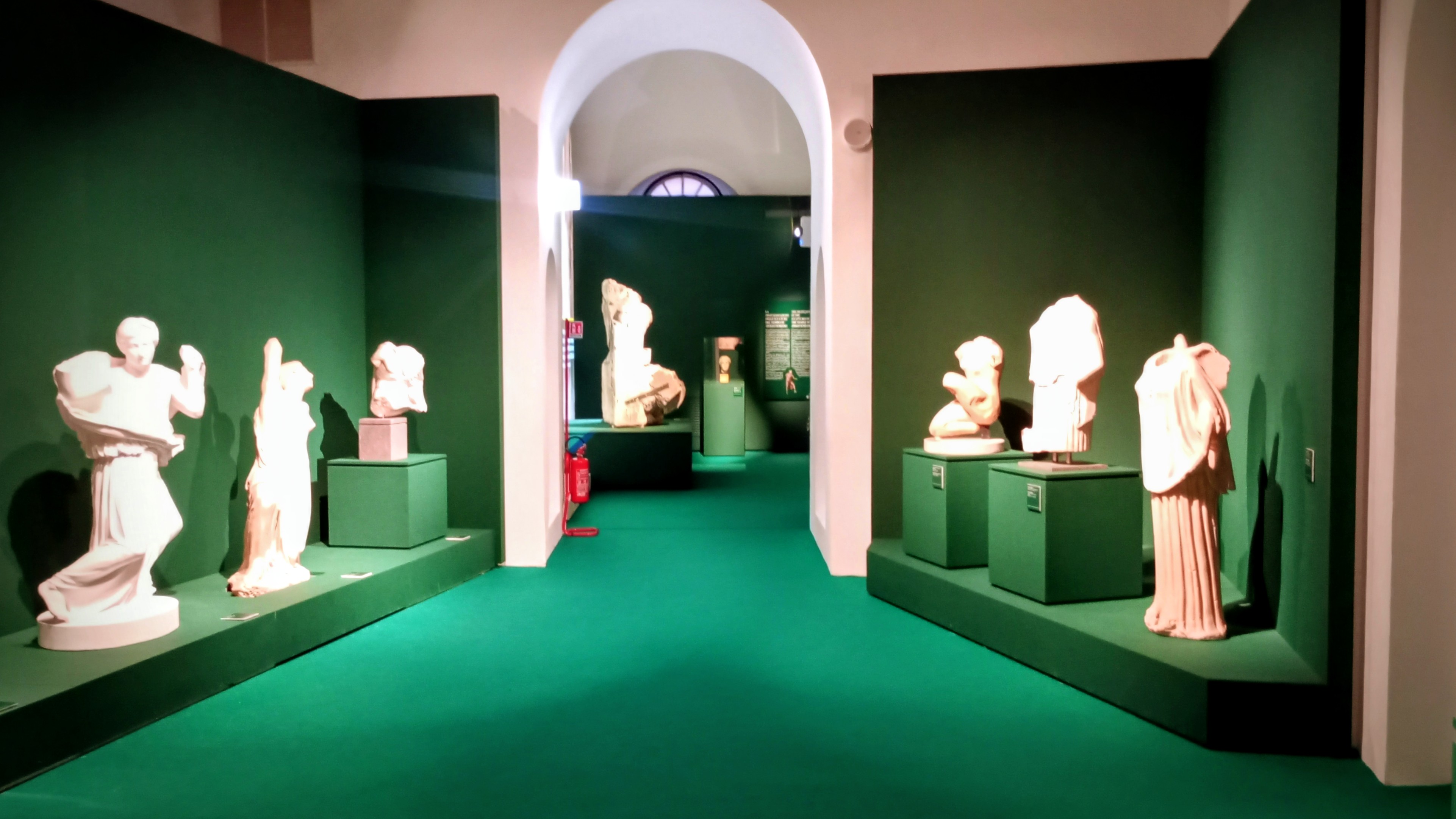
So many goddesses missing their heads.
Gioco dell Ephedrismos
The Game of Ephedrismos. An ancient Greek game, it had two parts. In the first, a stone was placed on the ground then players threw stones at it to see who get closer. Like darts with rocks. Who had more hits won. The loser had to have his eyes covered then piggy back the winner until they arrived at the original stone.
Romans Cleverly Used Interchangeable Heads on Their Statues…In ancient Rome, it was possible that a statue was deliberately defaced to obliterate that person’s presence. so some sculptors designed statues with interchangeable heads.
Handless
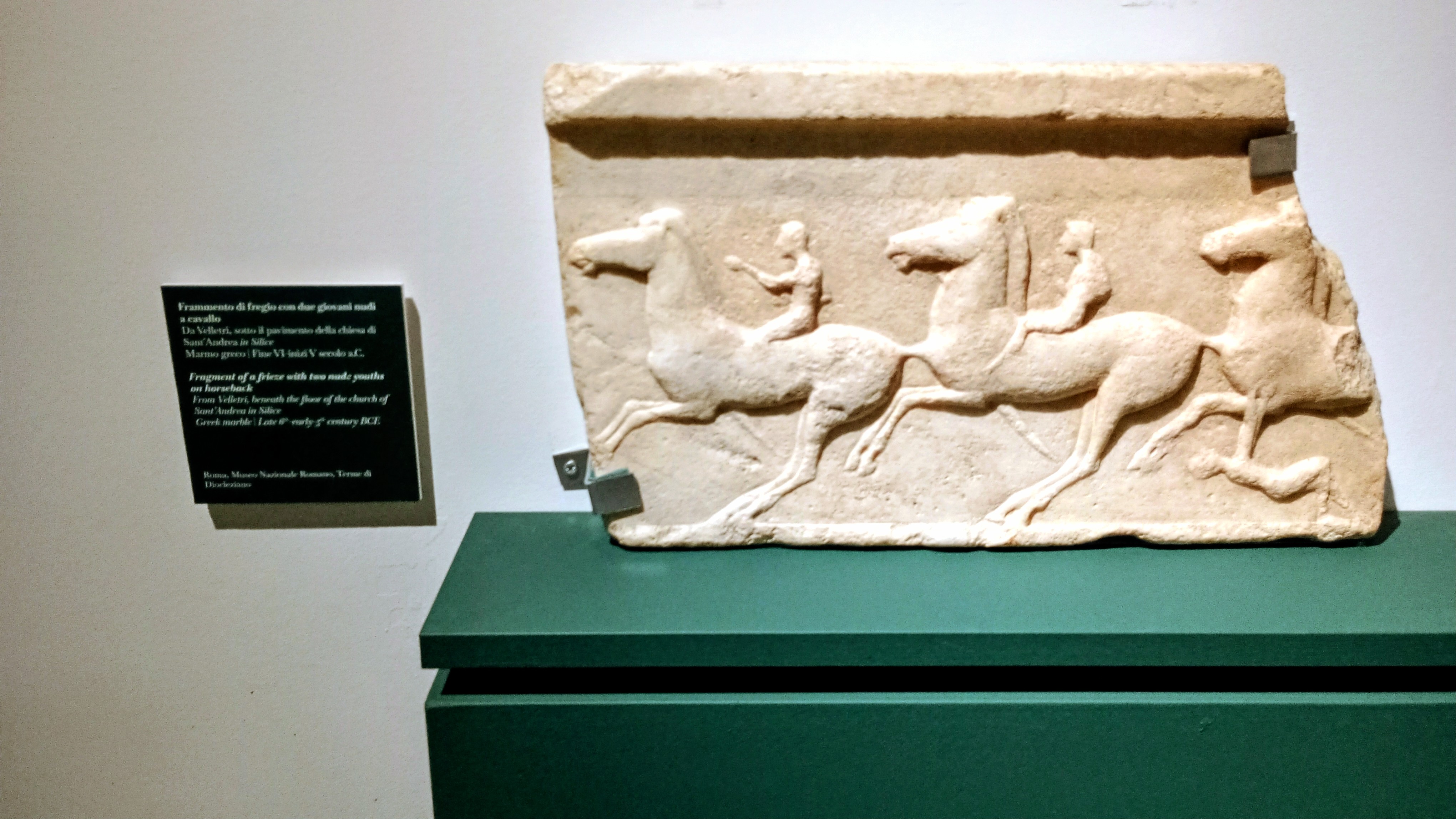
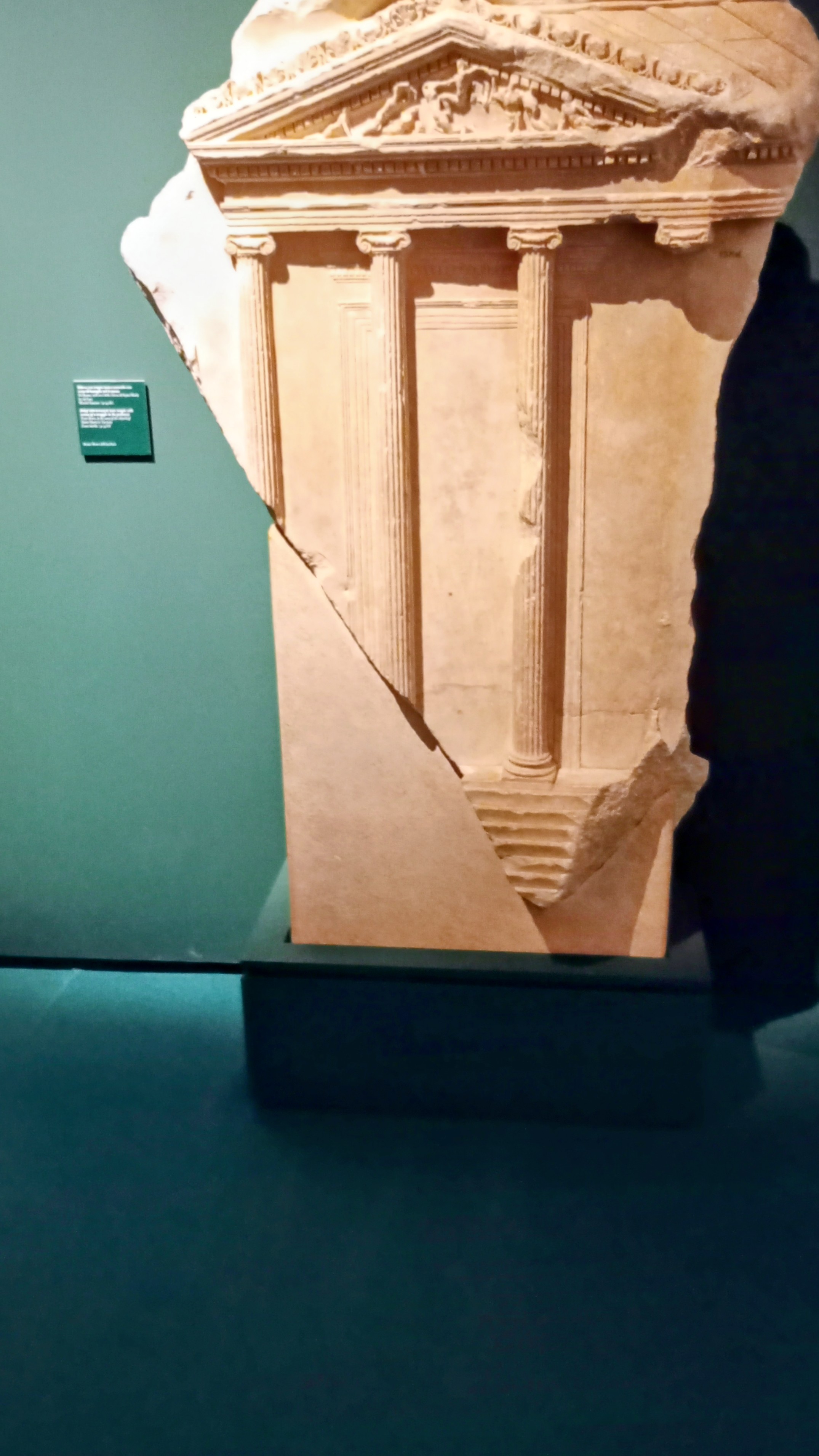
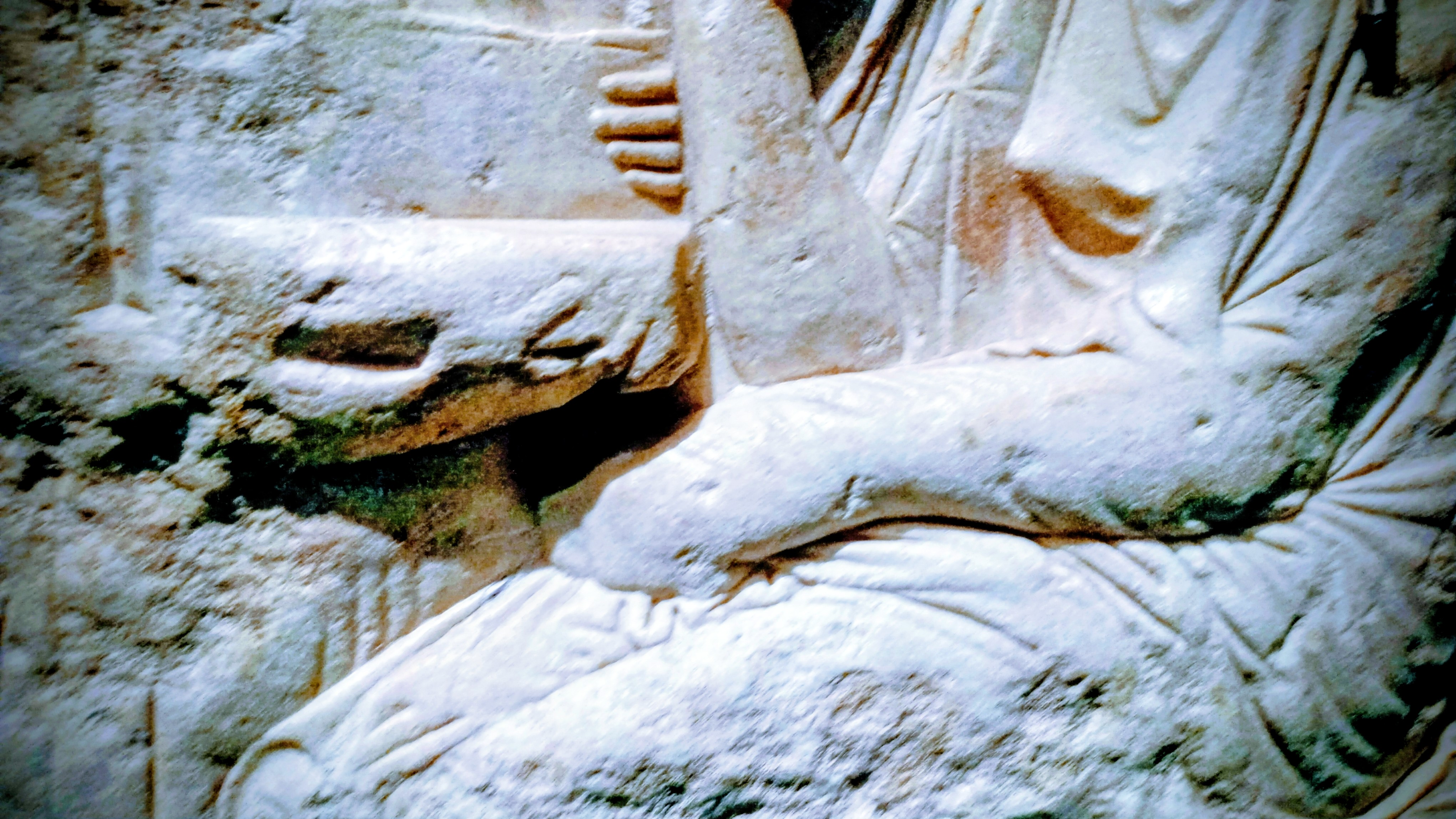
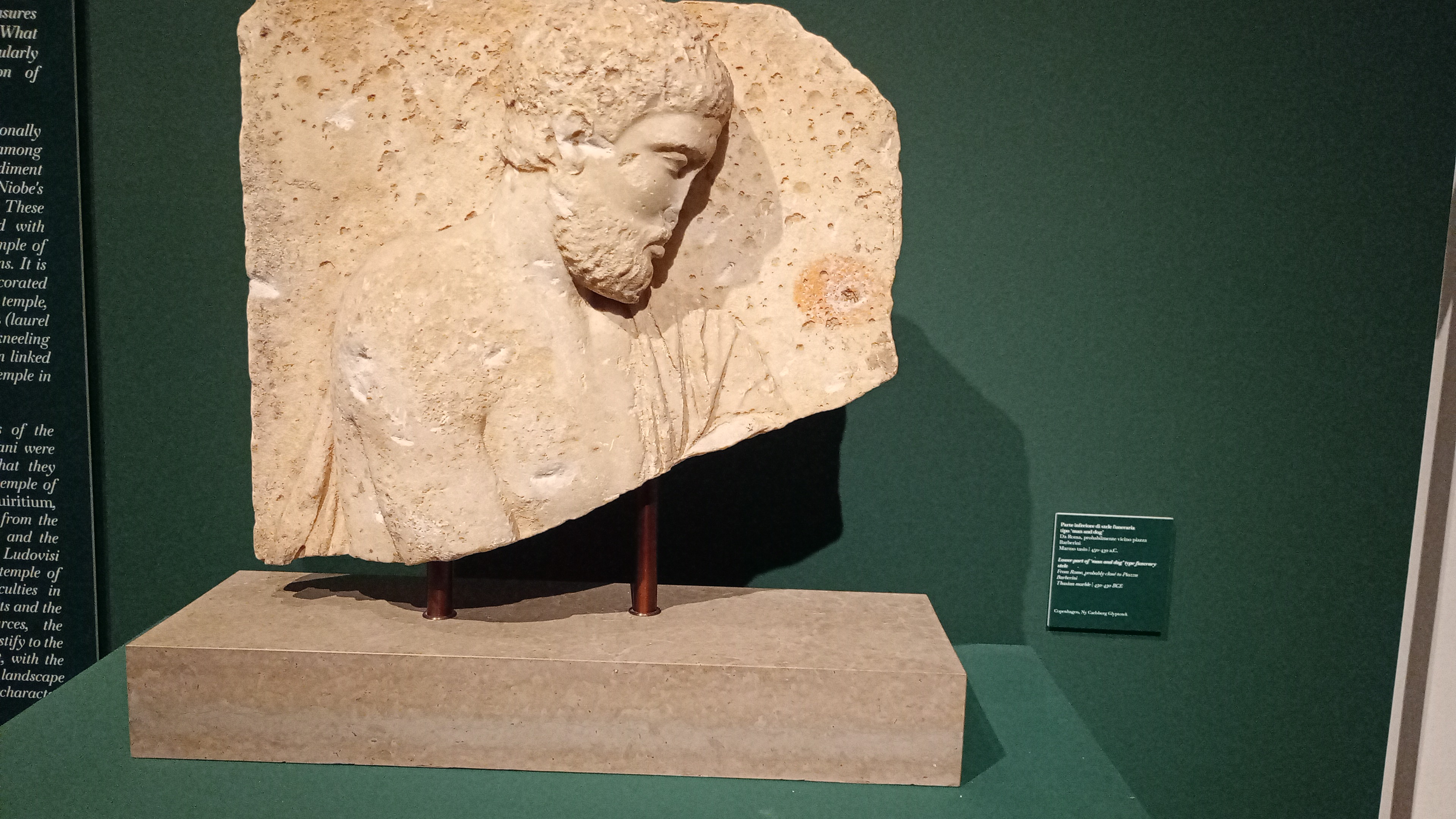
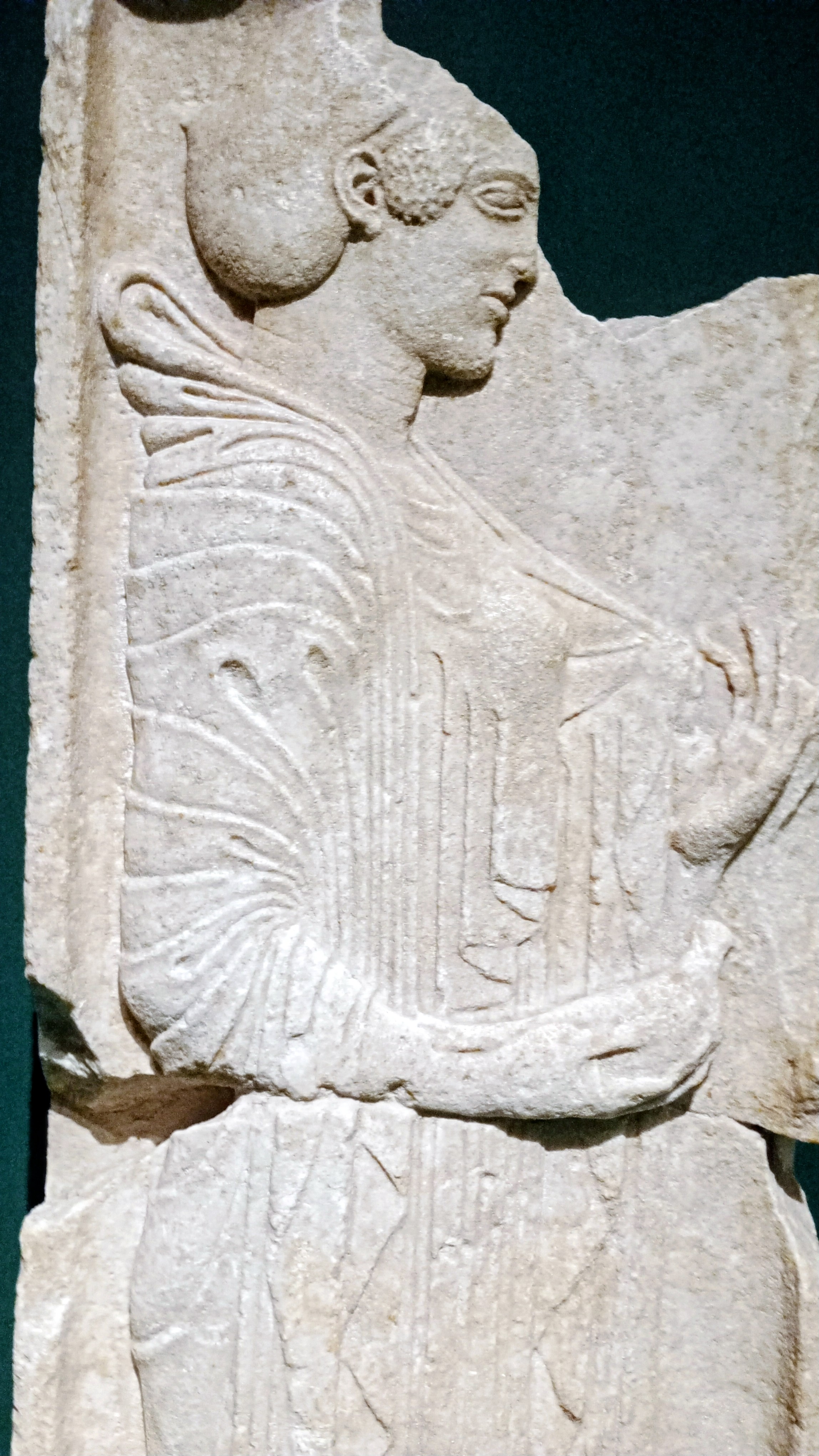
Fragment of a funerary stele found in the area of Piazza Barberini.
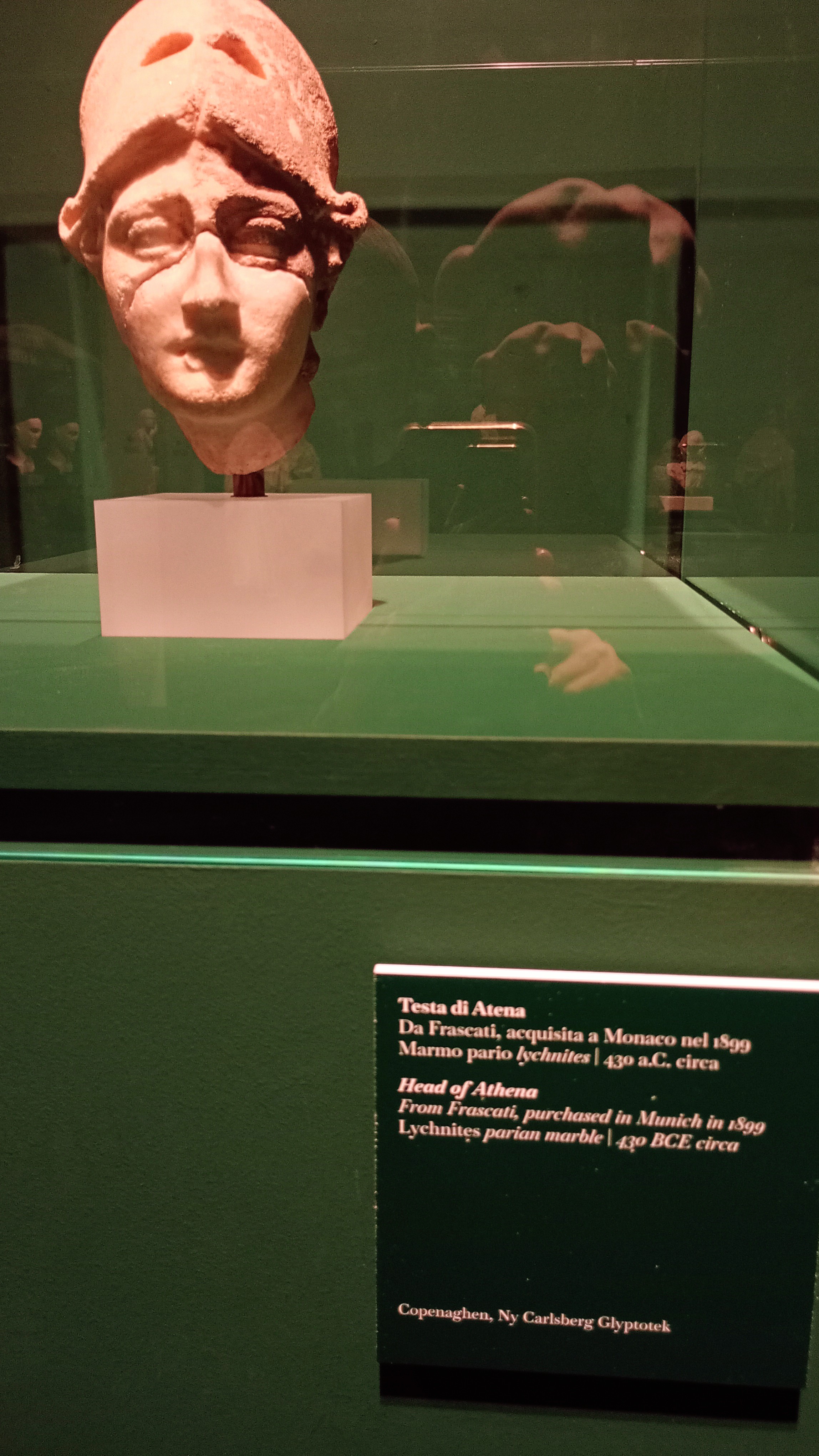
Athena’s head found at Frascati. It’s made from Parian marble.
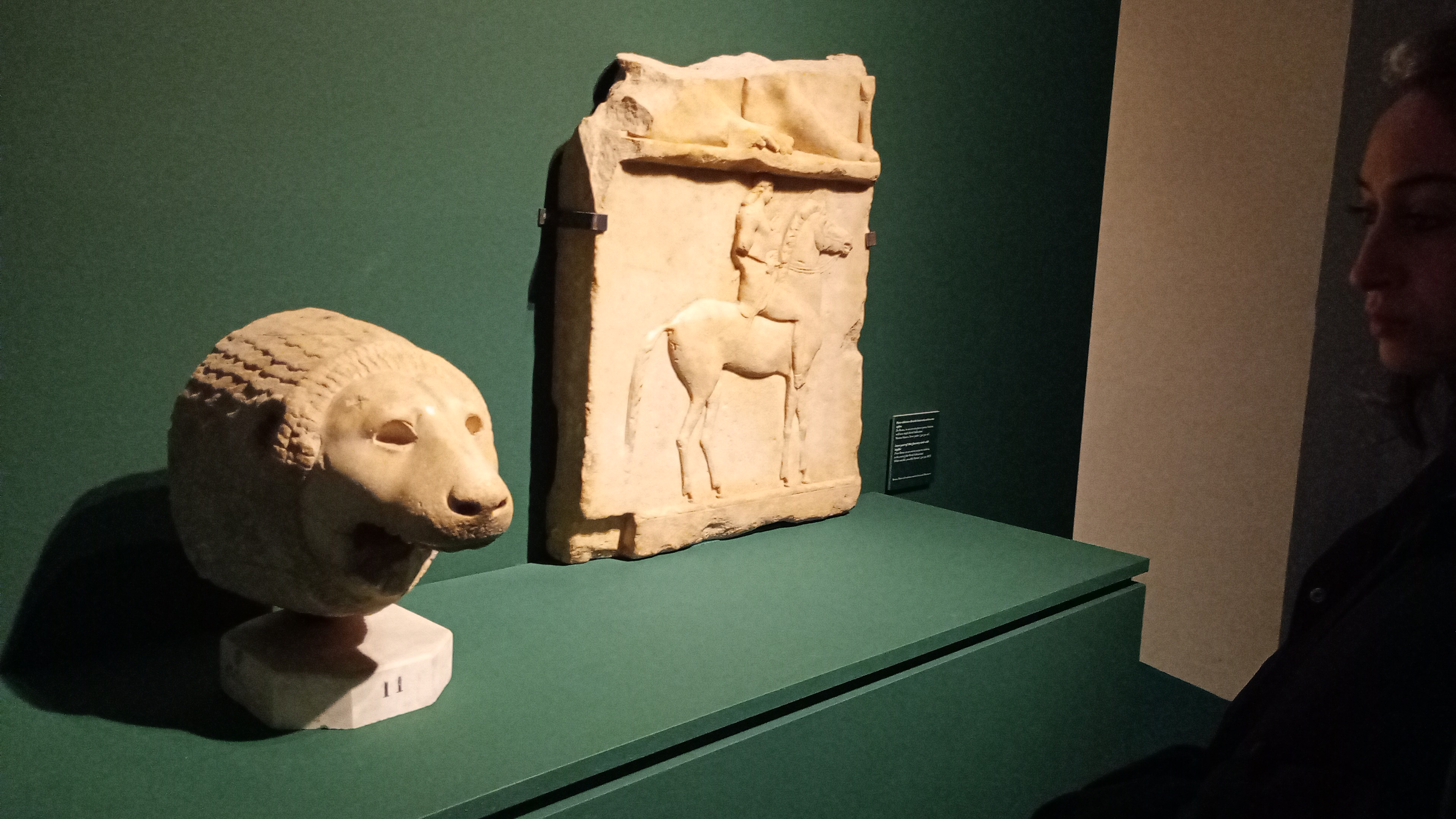
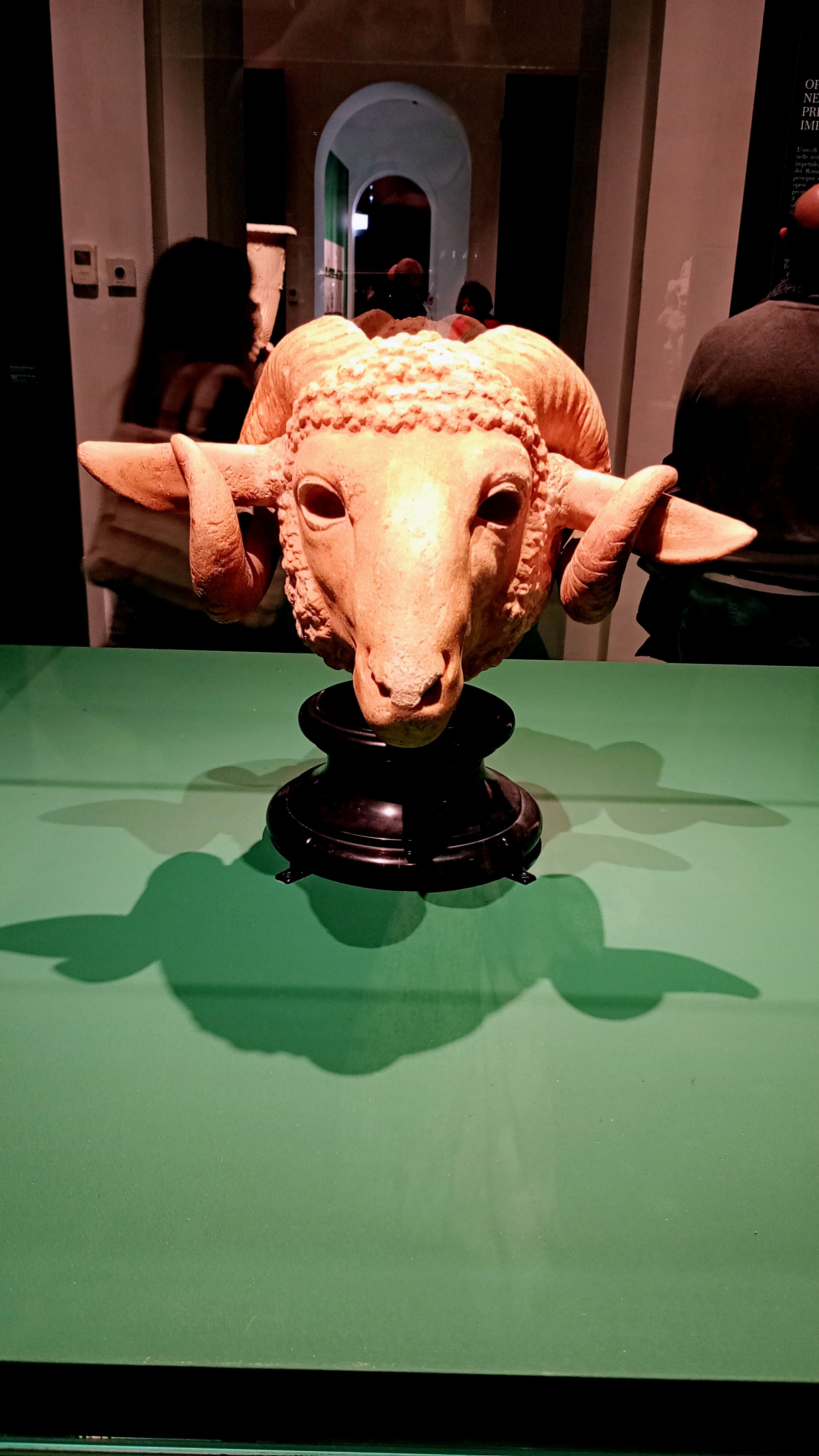
Ram’s head
The ram was a symbol of strength.
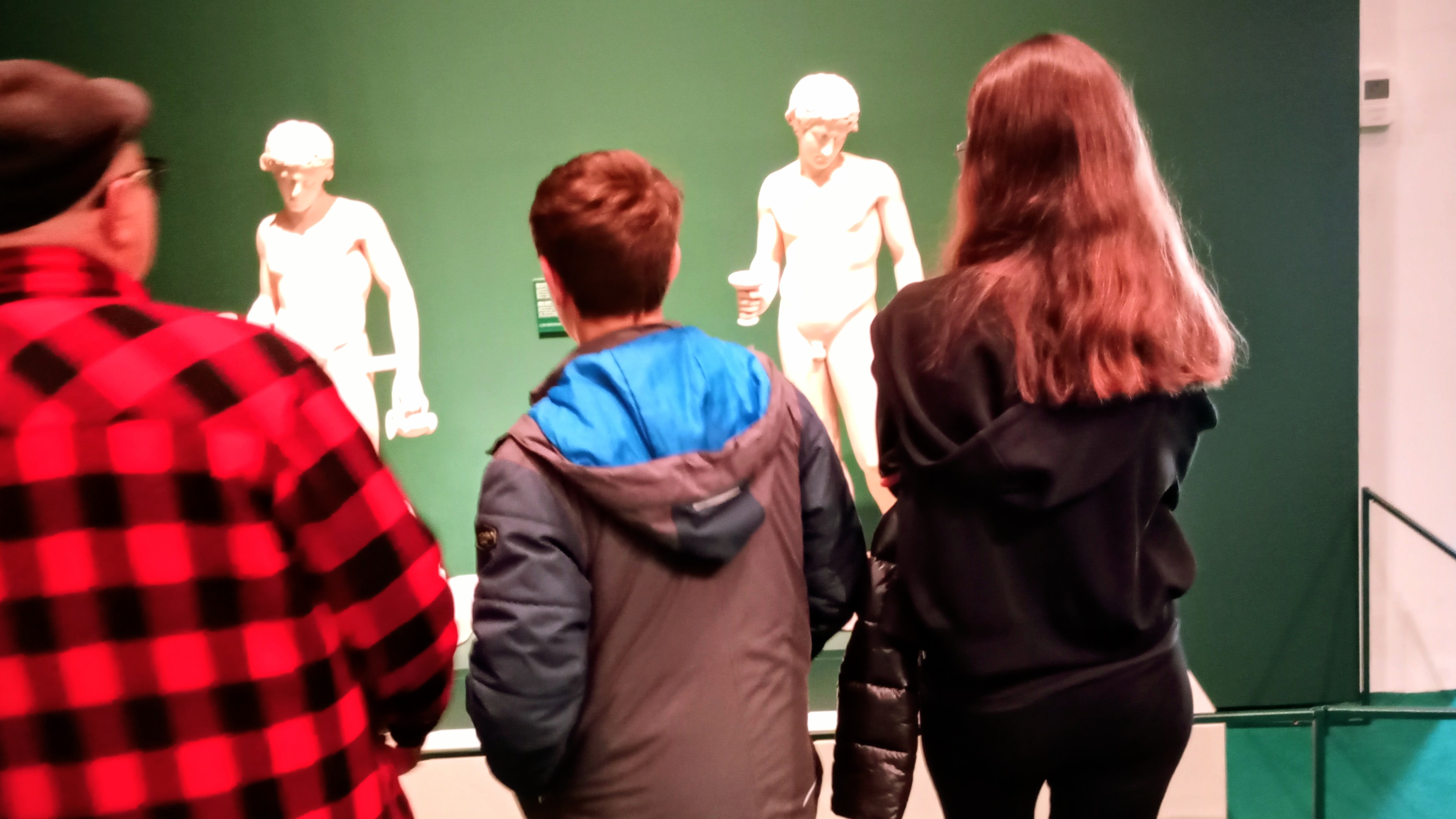
The observers.
Prohibited.
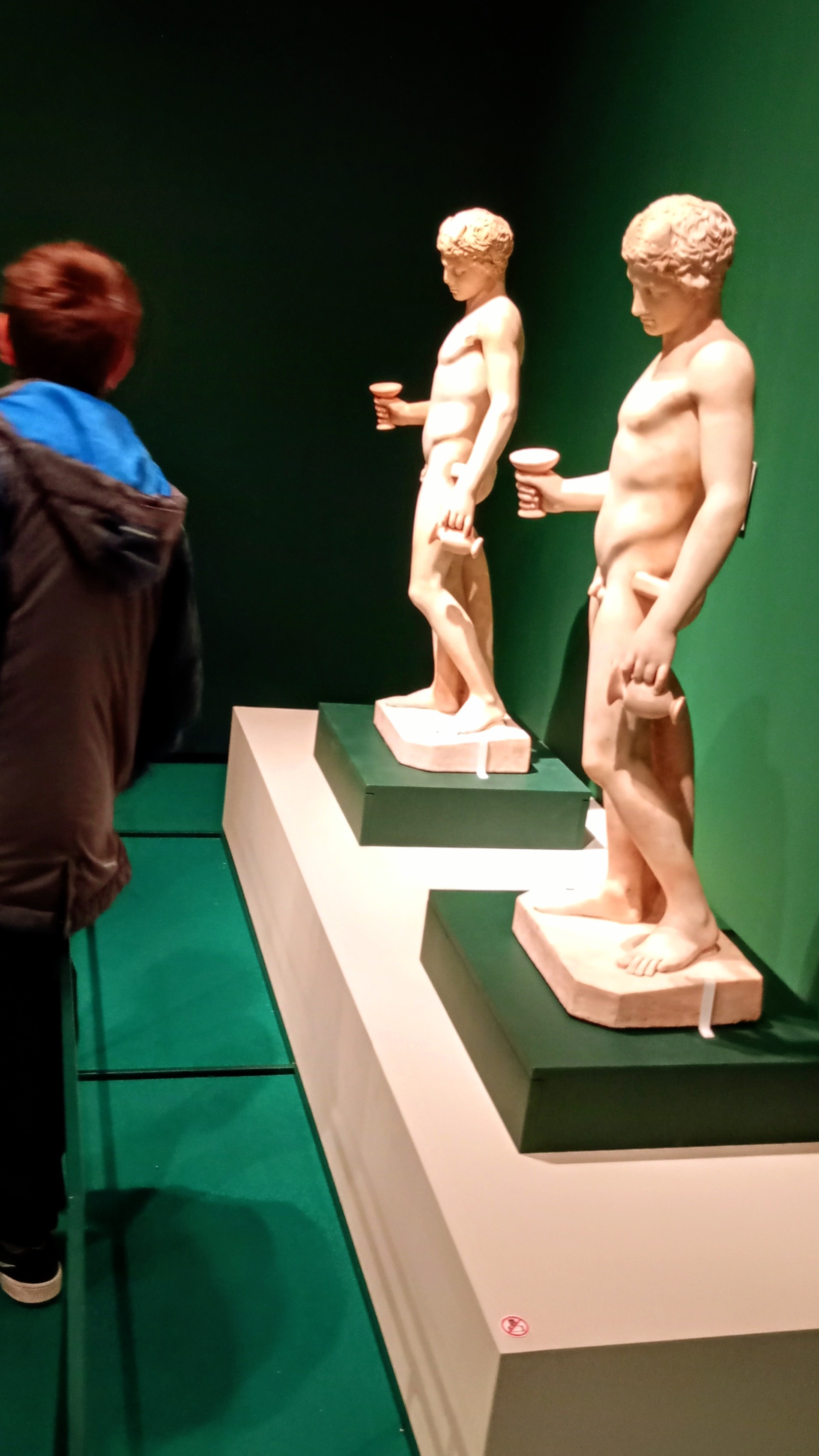
I was trying to take a foto of the two statues above when one of the guards came over to me and, in a very nice way, told me that it was prohibited to photograph those two statues. Why? I asked since there seemed no problem in photographing everything else. Because, he replied, they were on loan from a collector and the collector didn’t want their fotos to be taken.
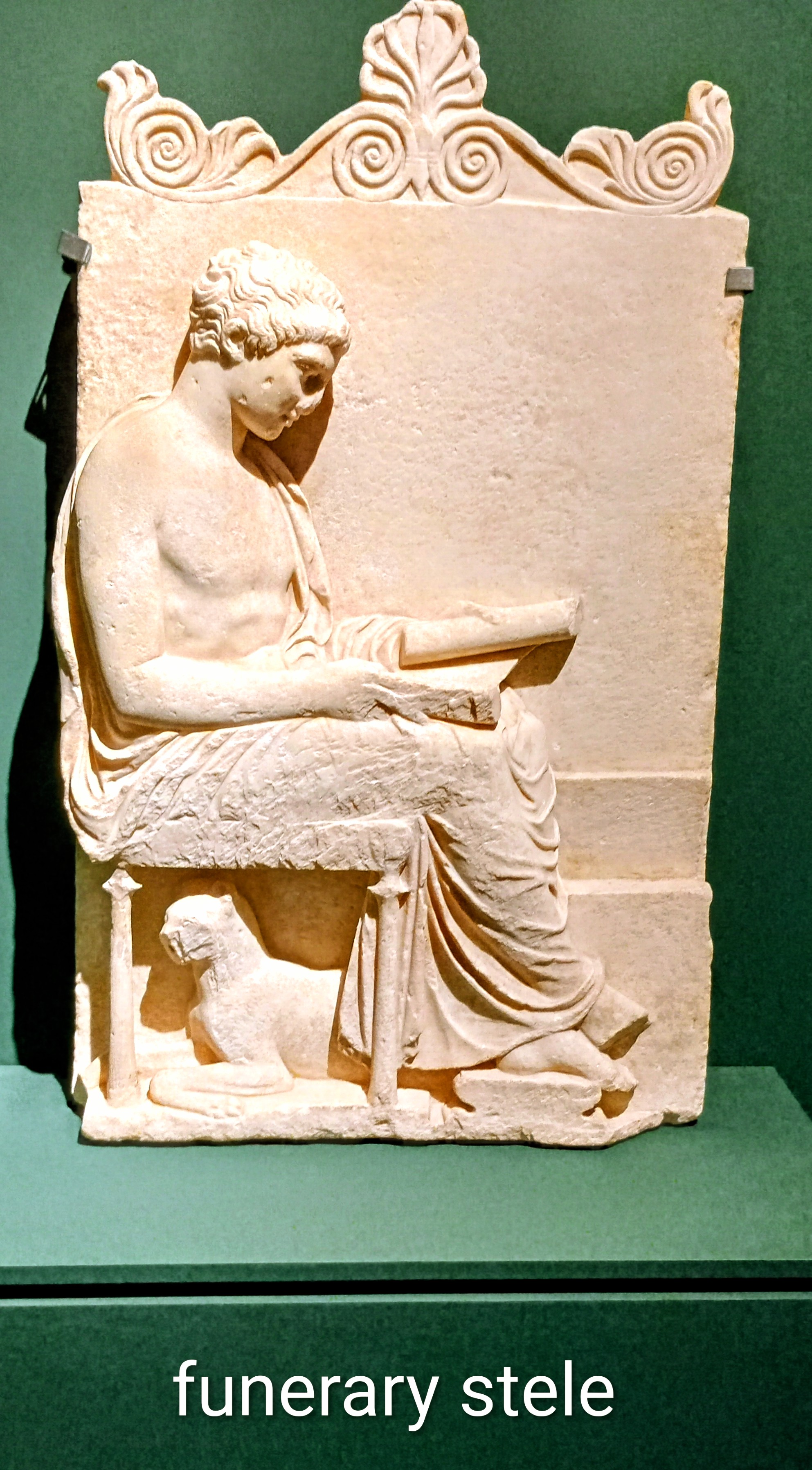
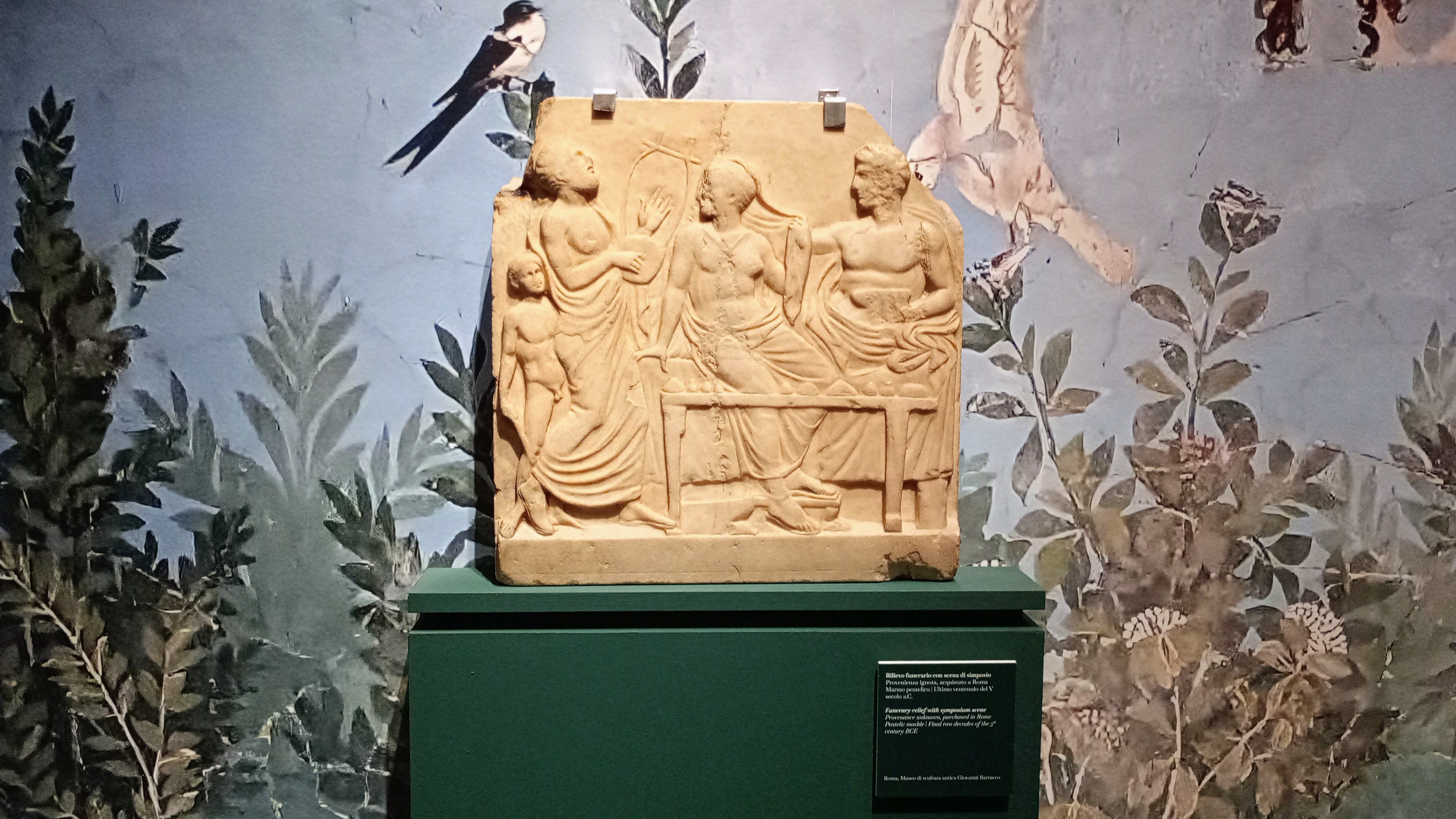
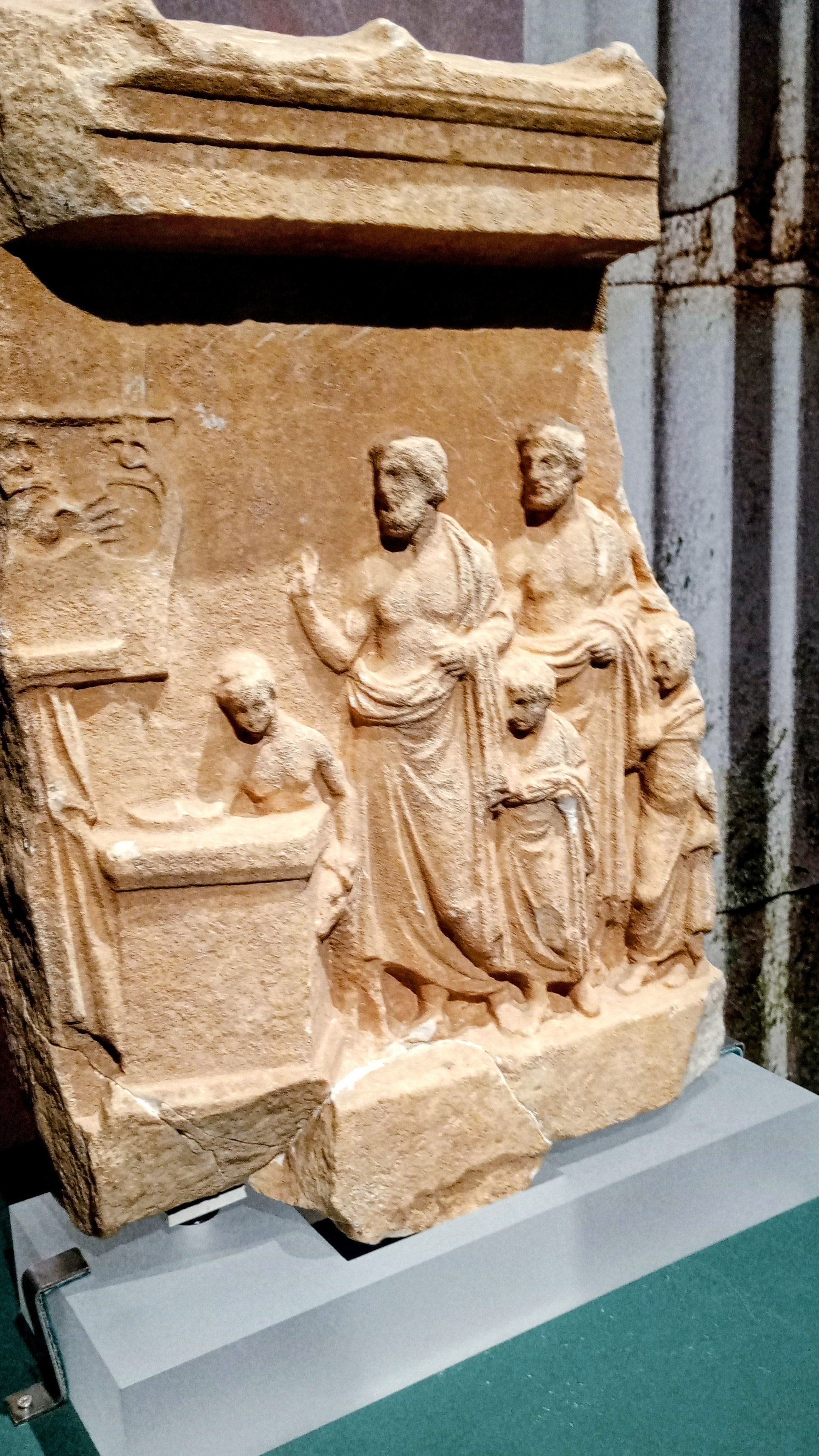
Another funerary stele…because, you know, everyone dies.
Effigy.
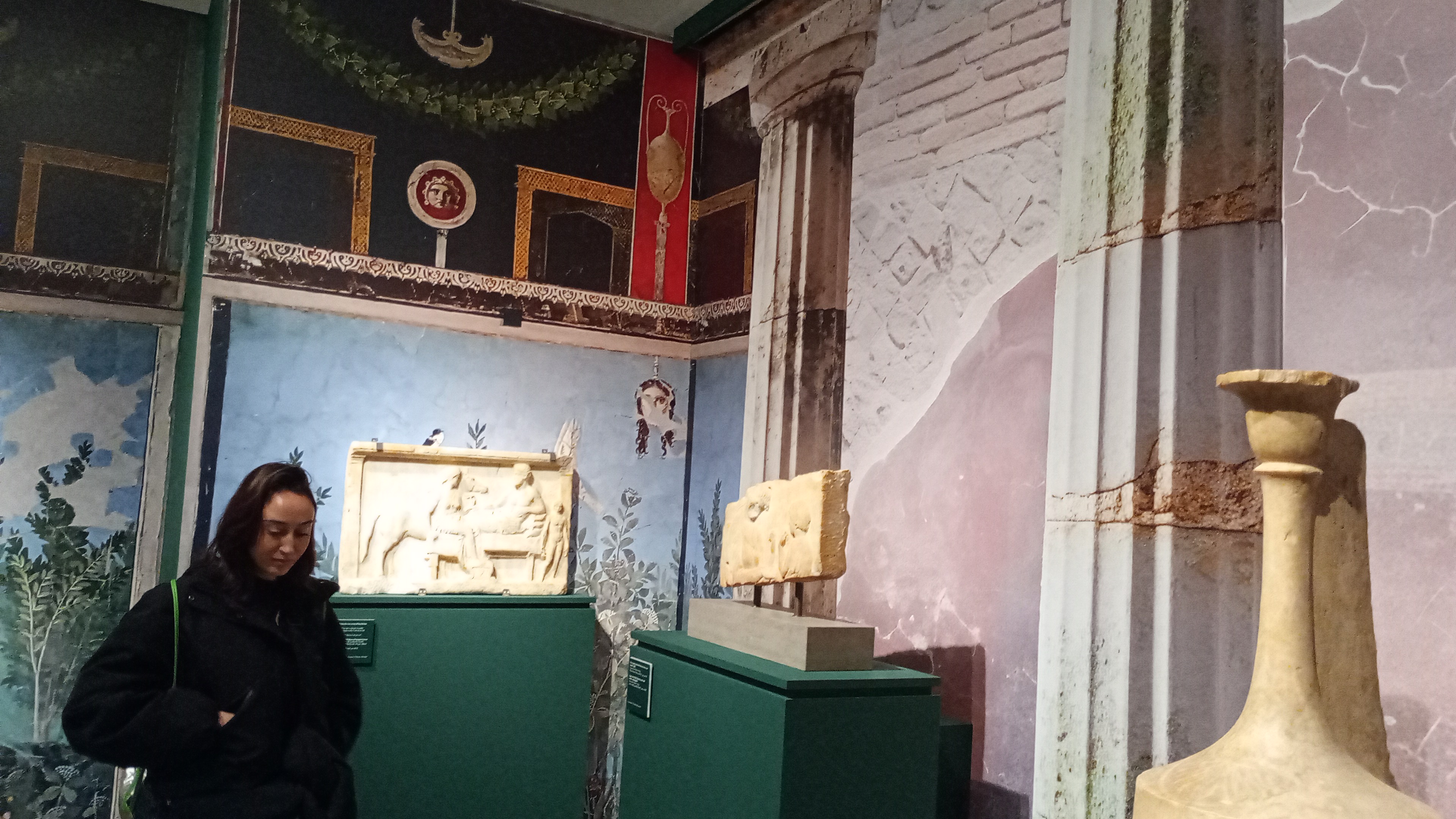
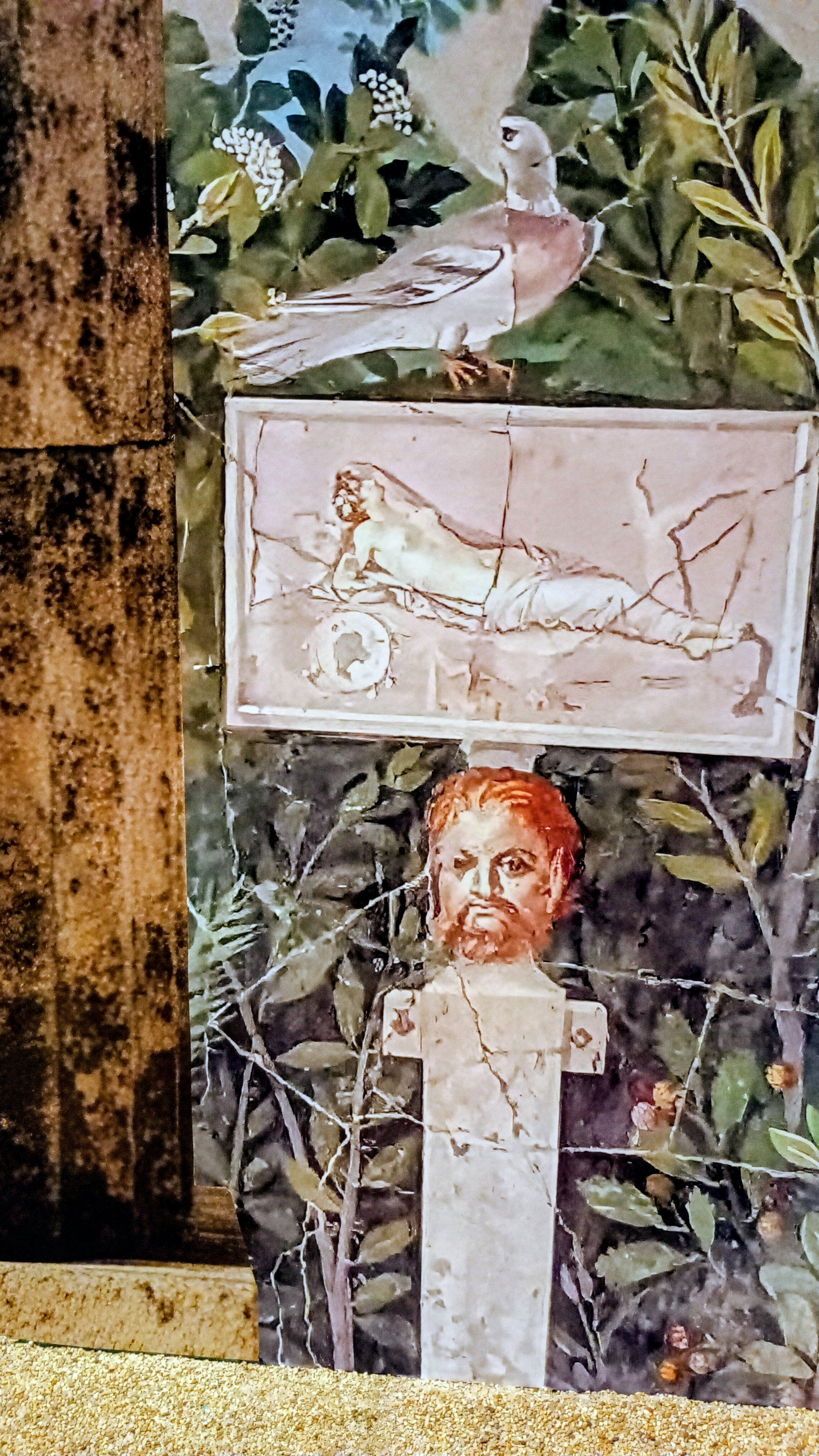
He was just part of the wallpaper.
I had to squat really low (risking not being able to come up again) to take this foto because it was at ground level. But it was just too curious to resist.
Funarary Stele
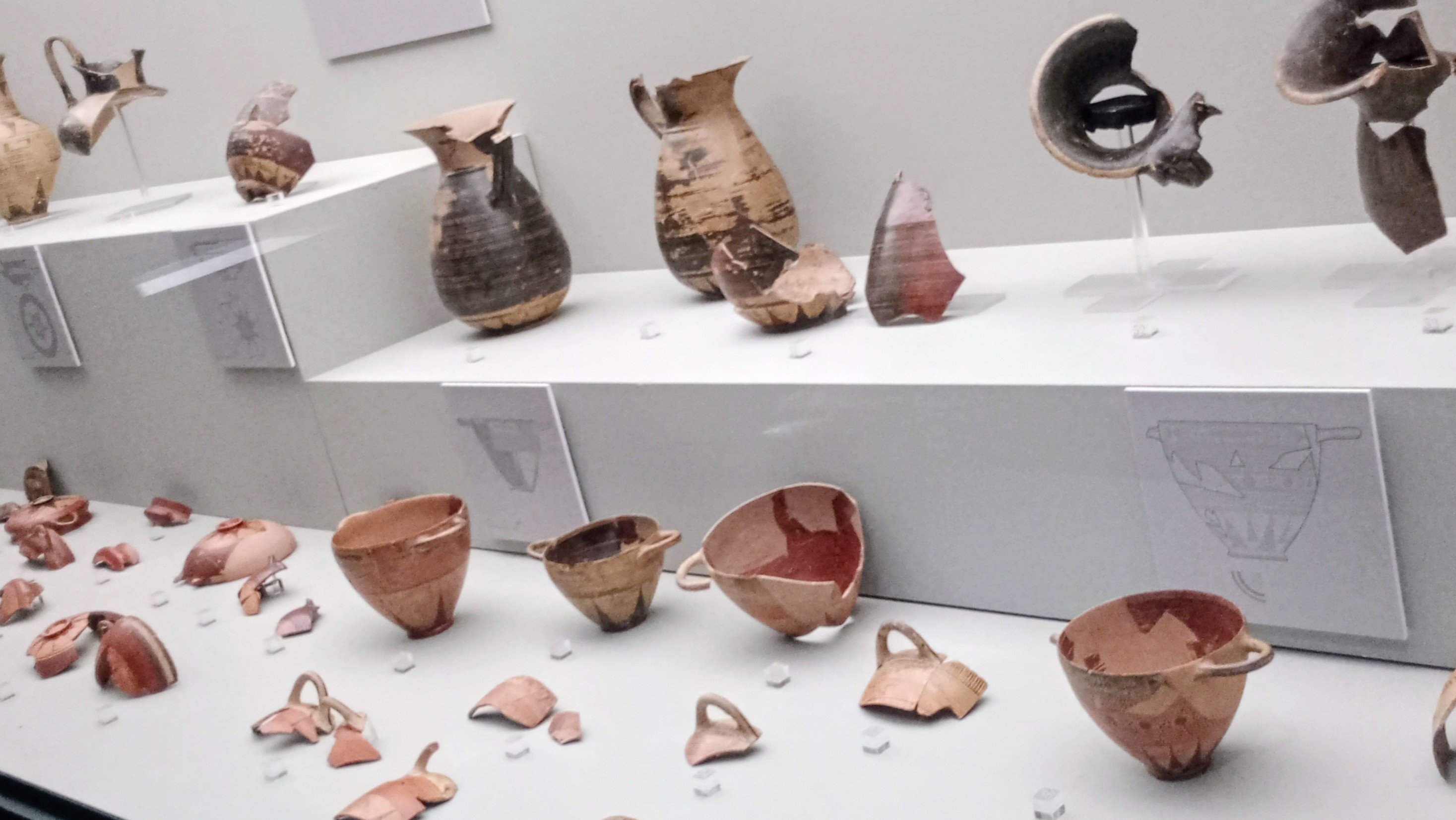
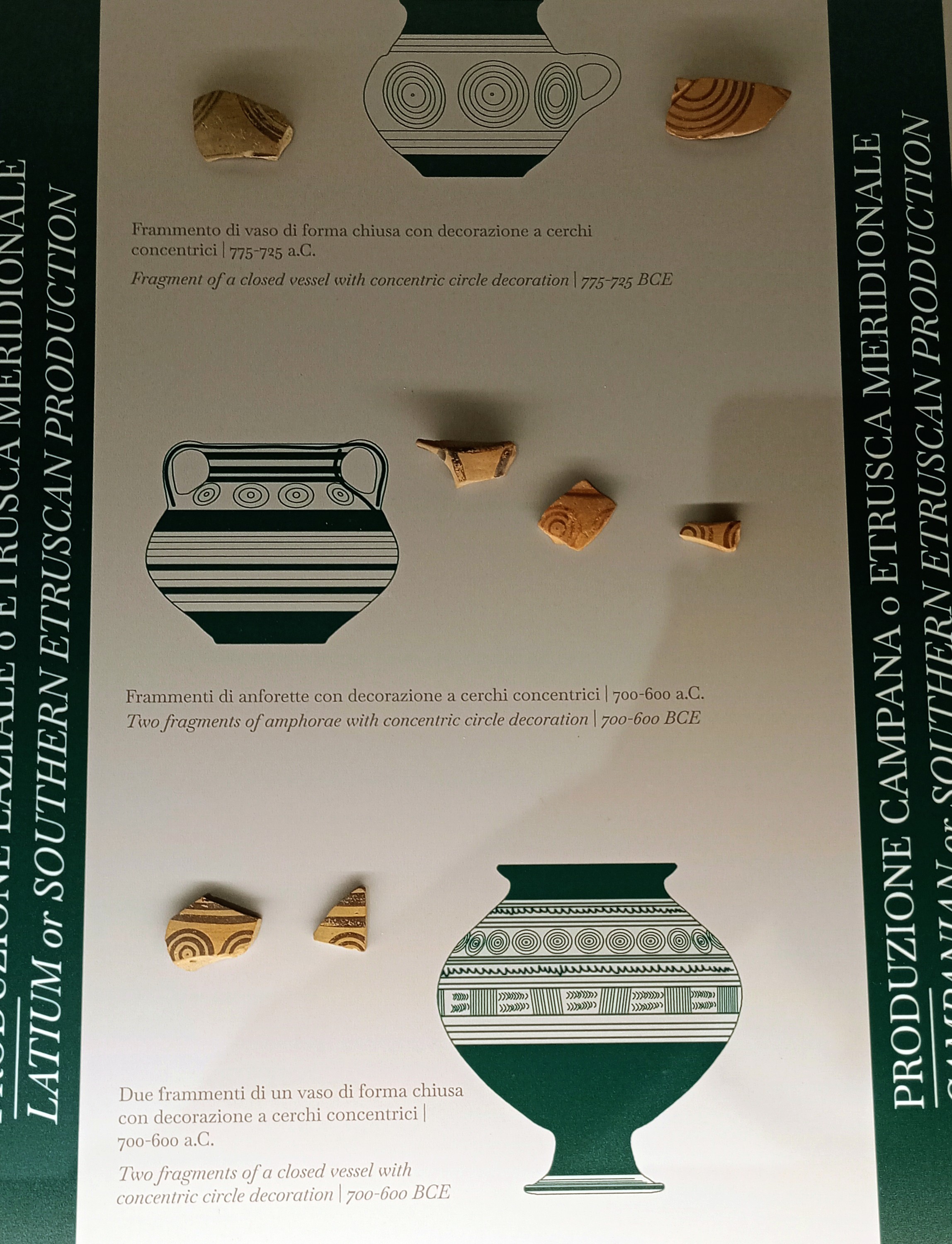
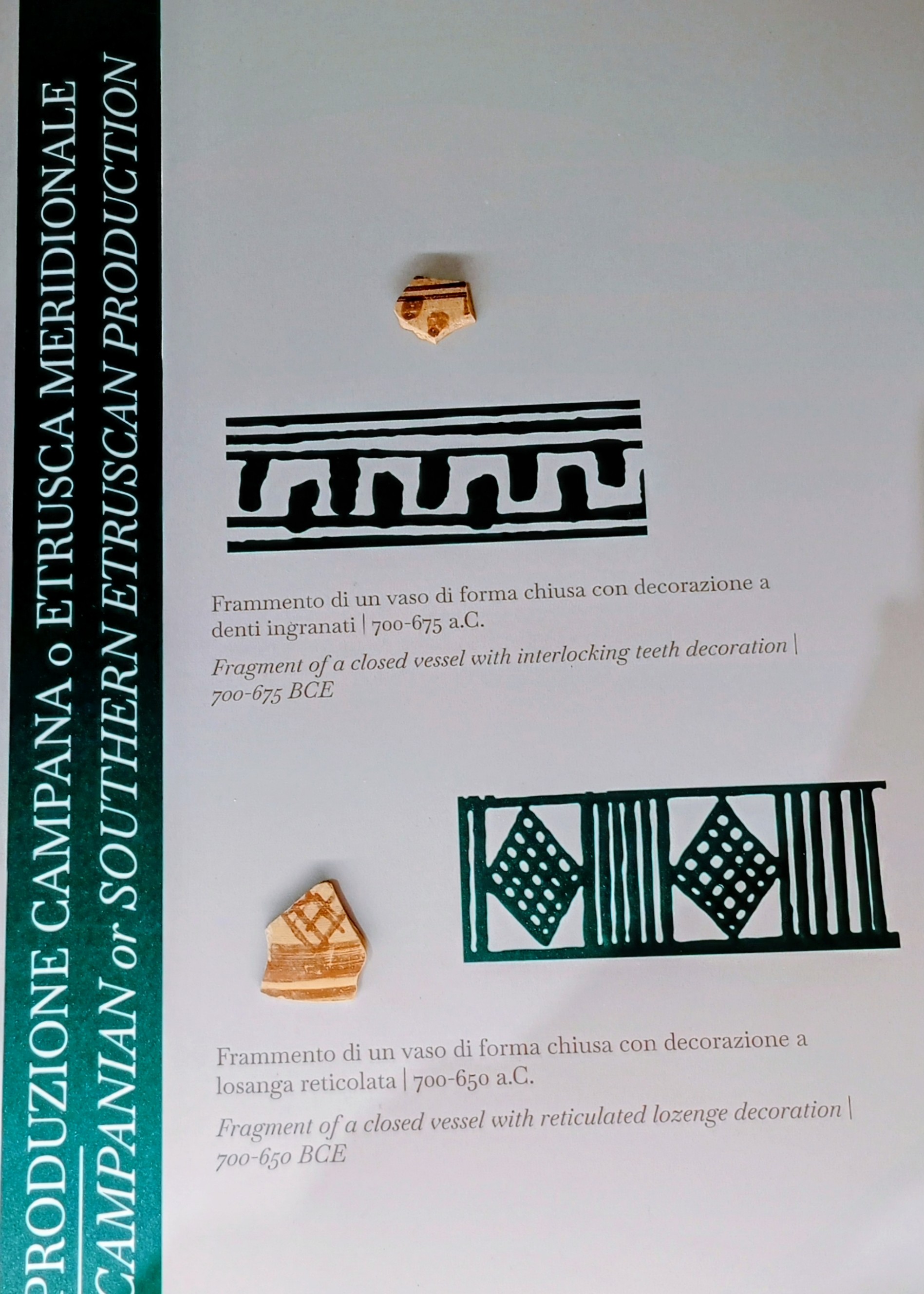
Broken pots and their pieces.
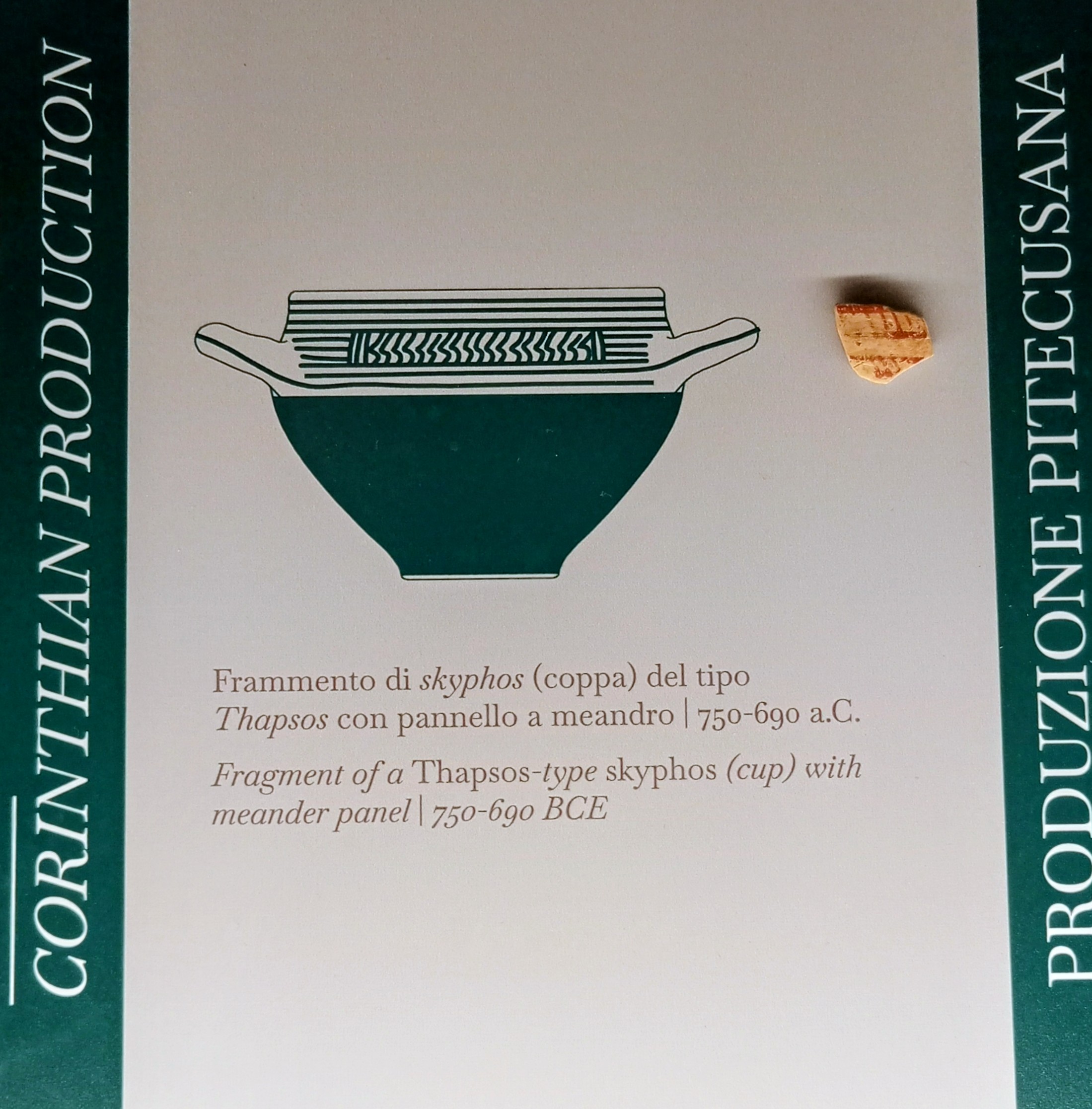
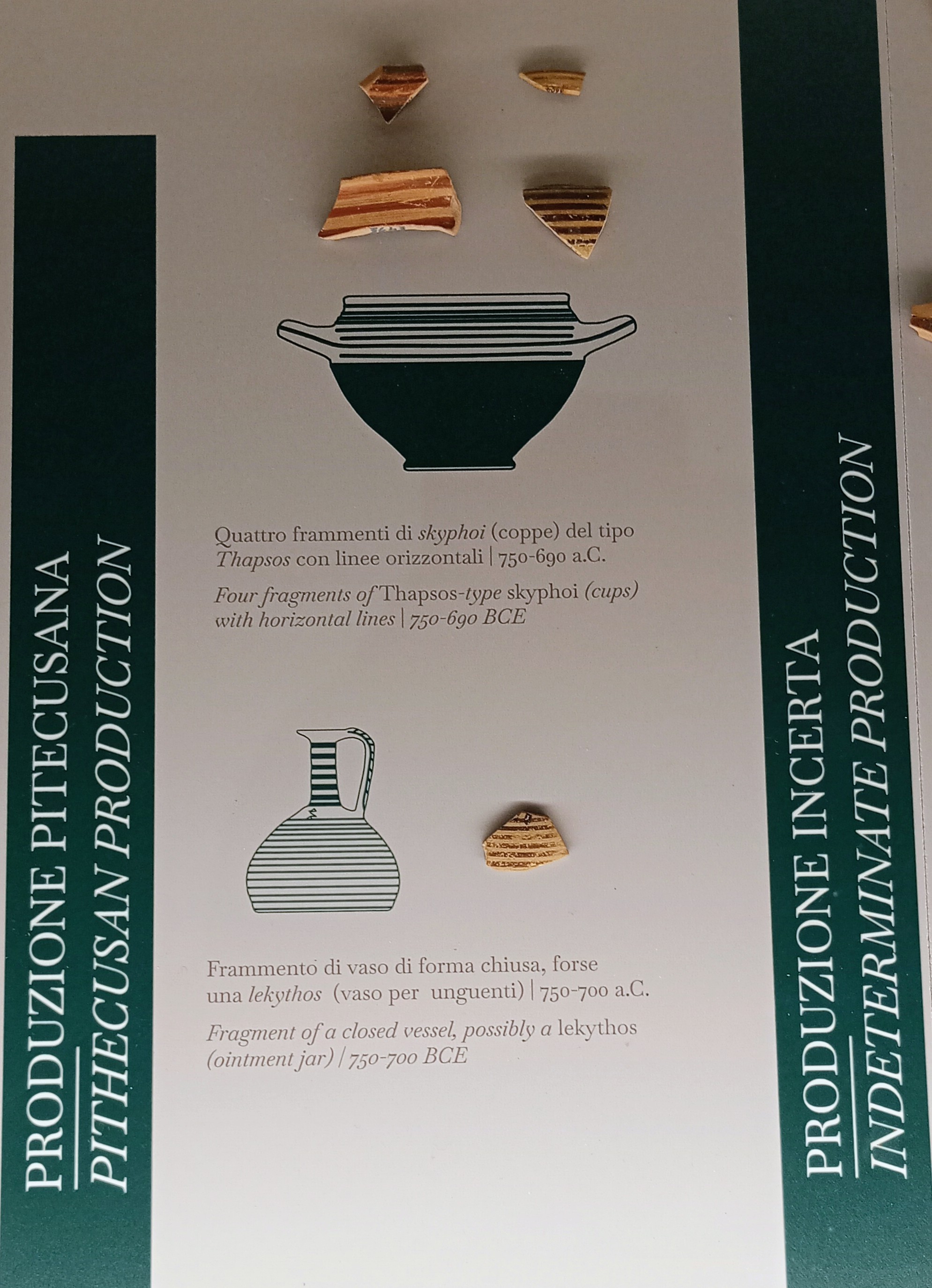
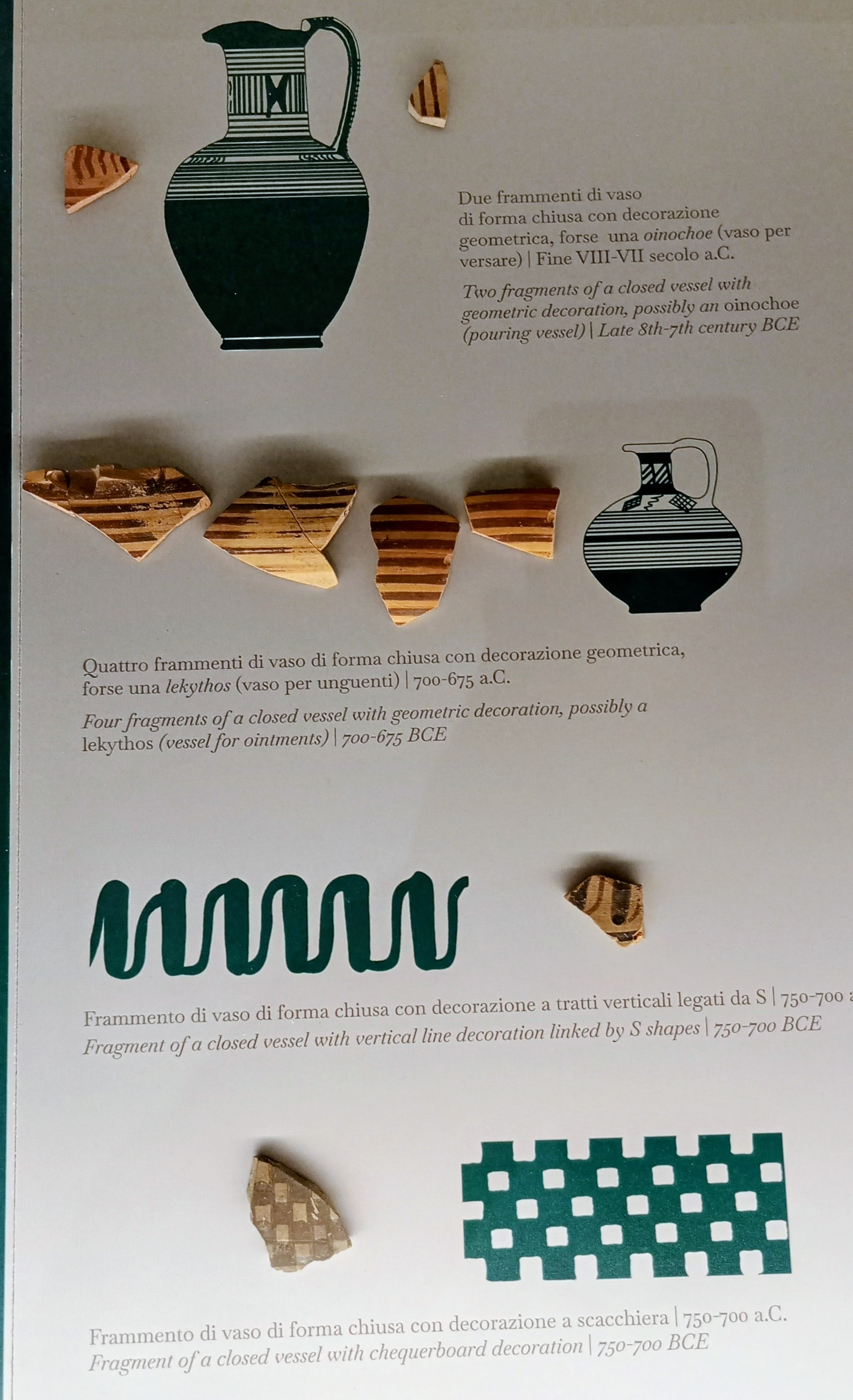
Also exhibited were pottery fragments coupled with drawings mimicking the pottery paintings. This made me think of Marija Gimbutas’ book “The Language of the Goddess: Unearthing the Hidden Symbols of Western Civilization”. Archive offers the possiblity of reading the book online HERE.
skyphos with meandro
lekythos with lines
more vase fragments with designs such as the chequeboard motif
When a friend you haven’t seen in years is in town and wants to meet you at Piazza Barberini, you say “Of course!”
It was a cold but sunny day and I took Bus 63 that went directly to the piazza. In my anxiety to arrive on time, I got there 30 minutes “in anticipo”. But that was great as there were things in the neighborhood I needed to see.
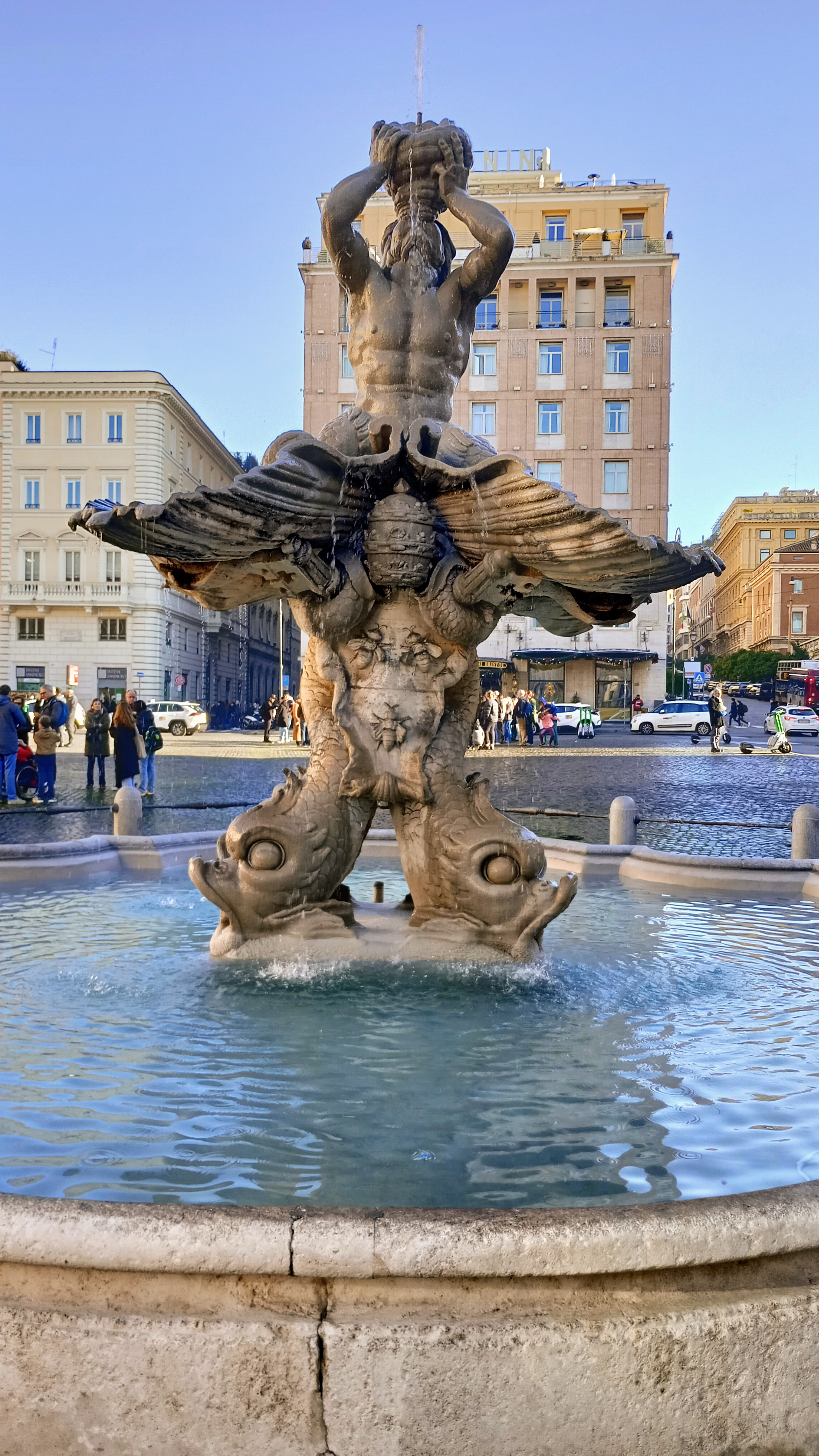
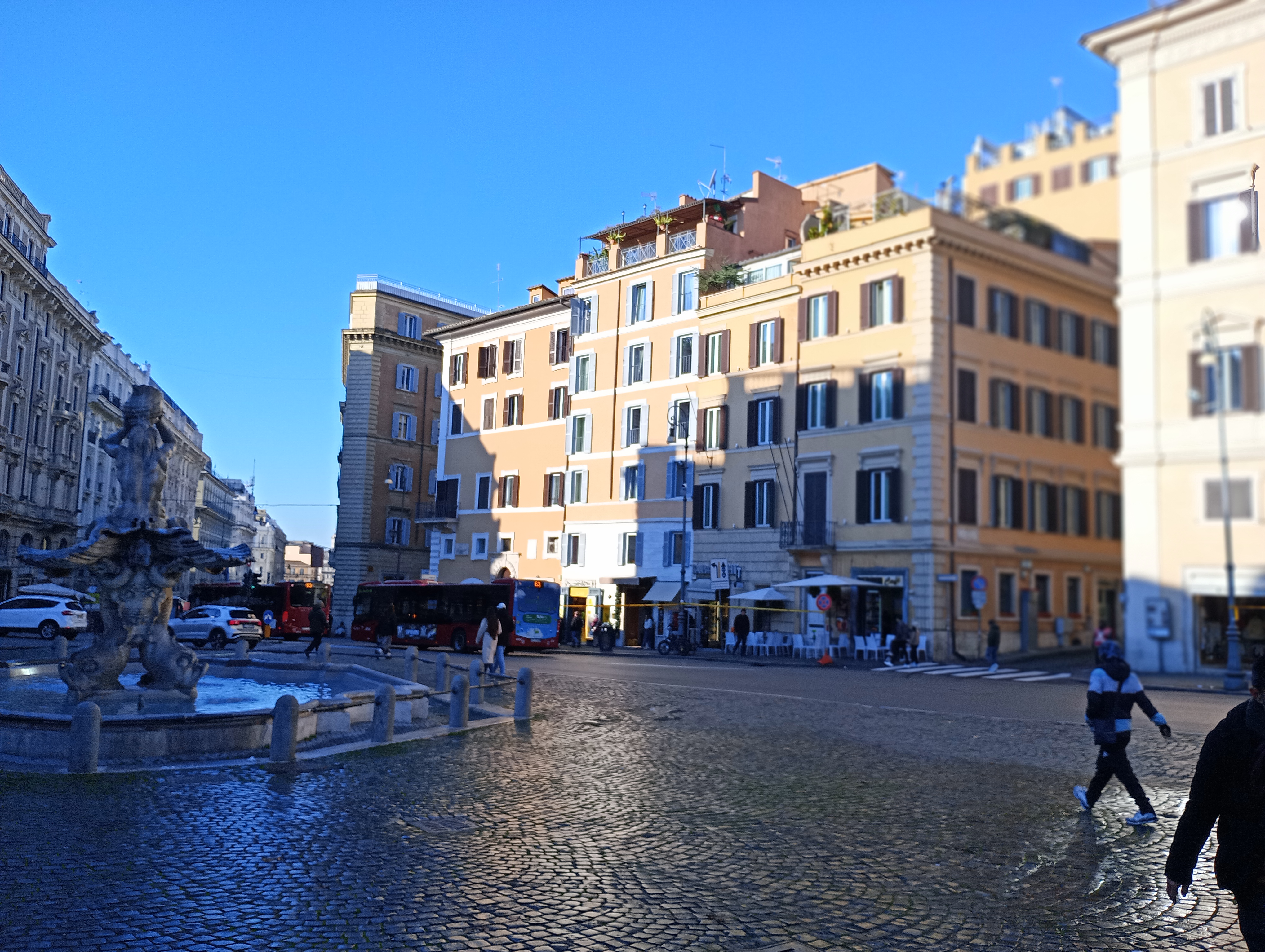
The focal point of Piazza Barberini is the Triton Fountain aka Fontana del Tritone. Commissioned by Pope Urban VII, the fountain was designed by Bernini.
In the center of the fountain is a statue of Triton, a minor sea god. He is presented as a merman kneeling on a huge shell. The Triton’s head is thrown back so he can drink water from a conch and then spit it out creating squirts of water shooting towards the sky.
The Triton and his shell are sustained by four dolphins’ tails. Created in travertine around 1642, the statue includes the classic heraldic three bees of the Barberini family. All over Rome, these bees can be seen indicating just how powerful the Barberini family was.
Pope Urban, who commissioned the fountain, was from the Barberini family, Rome’s nobility that gained much power in the 17th century. The Barberini, originally from Tuscany, were patrons of the arts and commissioned much to ensure that their presence was felt. They understood the importance of cultural hegemony.
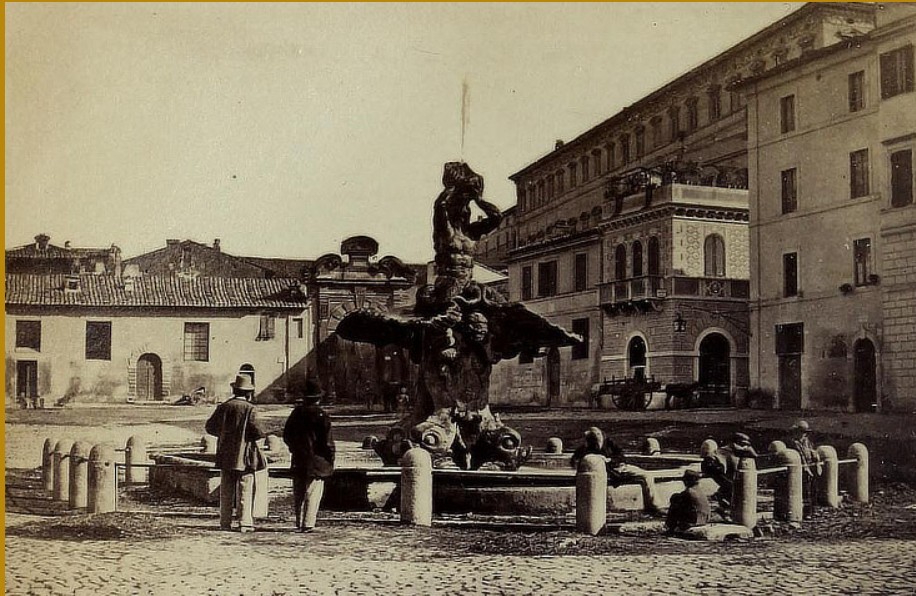
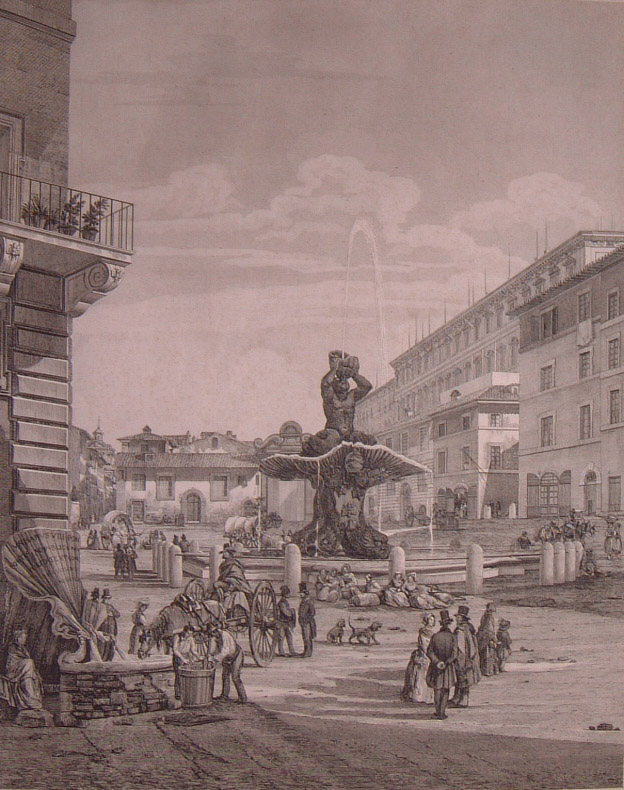
A photo of the Fontana dei Tritone at Piazza Barberini in the 1800s —source—
Hans Christian Andersen lived right around the corner from the fountain (at via Sistina 104). Andersen was from Sweden where folklore was full of mermen, dangerous creatures that abducted women and forced them into marriage. Andersen walked passed this kneeling merman daily. He was very intrigued by it and, once back in Sweden, wrote “The Little Mermaid” (1837), a story about a mermaid princess who sacrificed her voice and legs for love.
Piazza Barberini looking towards via Tritone
A rear view of the fountain that faces via Tritoni, an important street in the center of Rome that connects via del Corso to Piazza Barberini. Past the piazza, the street seems to morph into via Barberini whereas via Sistina past the piazza is via delle Quattro Fontane. At no. 13 is Palazzo Barberini.
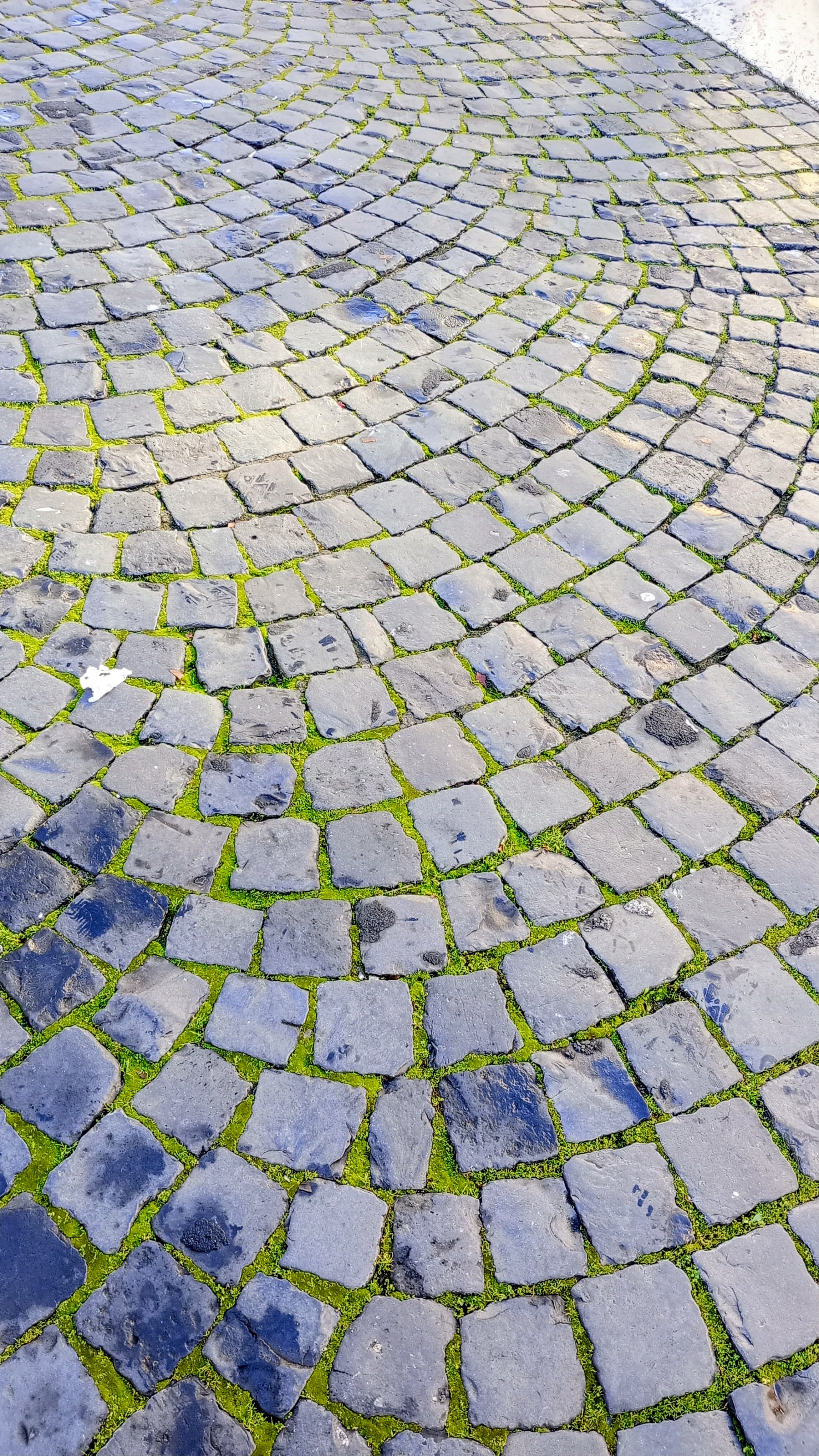
Sampietrini is the name given for Rome’s cobblestone pavements. Here they completely cover the piazza.
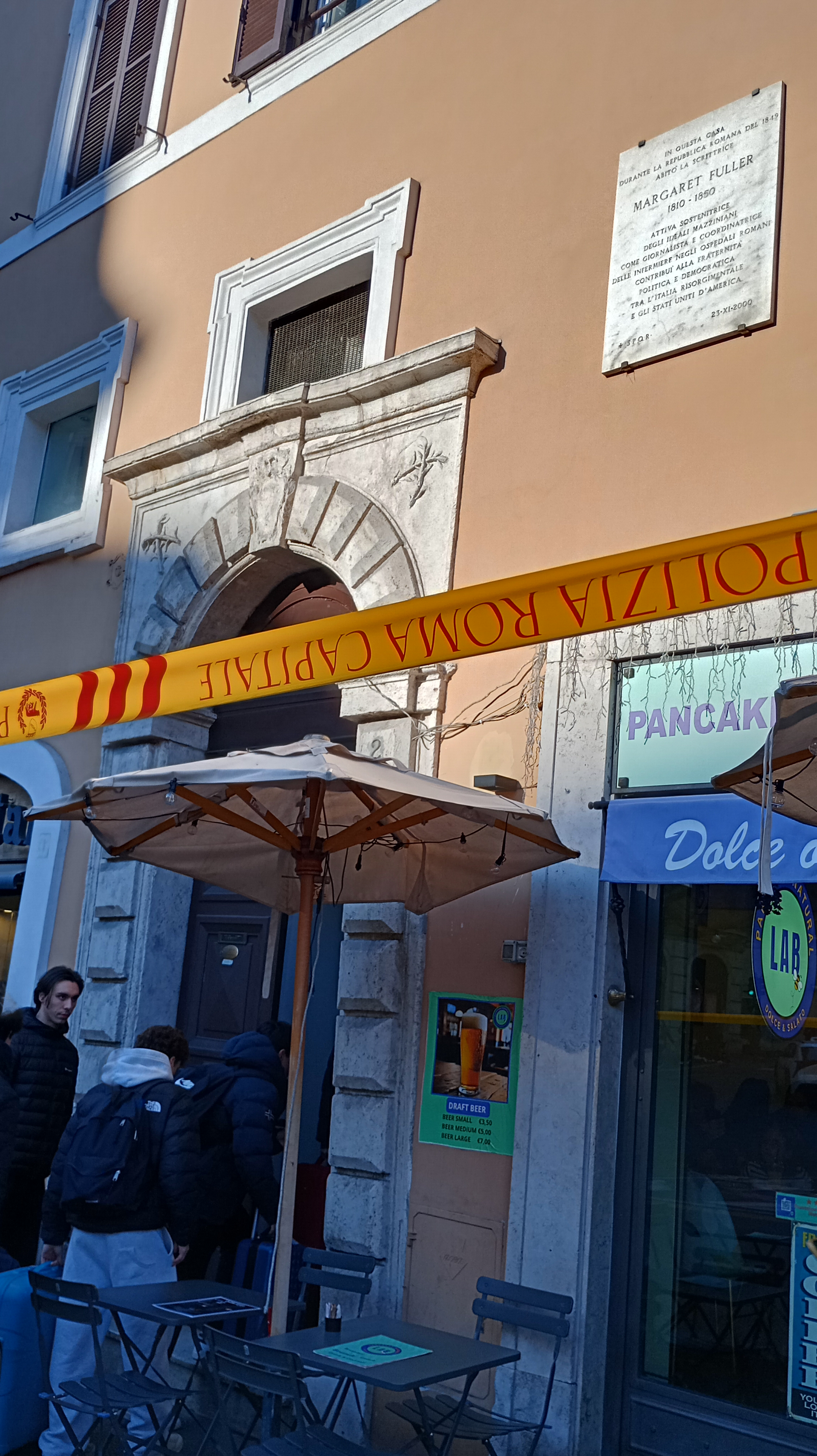
Margaret Fuller (1810-1850) was the first American female war correspondent. She was sent to Italy to report on the progress of the unification of Italy. Before Europe, Margaret was heavily involved with the American transcendentalism movement.
While in Italy, Margaret, as a journalist, moved around a lot. But for awhile she was based in Rome. One address for her was Piazza Barberini 2.
Piazza Barberini 2
In this photo, the commemorative plaque for Margaret Fuller is easier to see. Margaret collaborated with Cristina di Belgioso, a woman active in the move towards the Risorgimento, the unification of Italy. Margaret was also friends with Florence Nightingale who, at the age of 28, was in Rome accompanying Mr and Mrs Bracebridge.
Years later, in 1871, Louisa May Alcott and her sister, May, lived in this same building. In “Little Women”, Louisa writes “Rome took all the vanity out of me, for after seeing the sonders there, I felt too insignificant to live, and gave up all my foolish hopes and despair.”
No doubt the young men entering the building (probably going to a RB&B) have no idea as to its history. It was here that Alcott wrote “Little Men”.
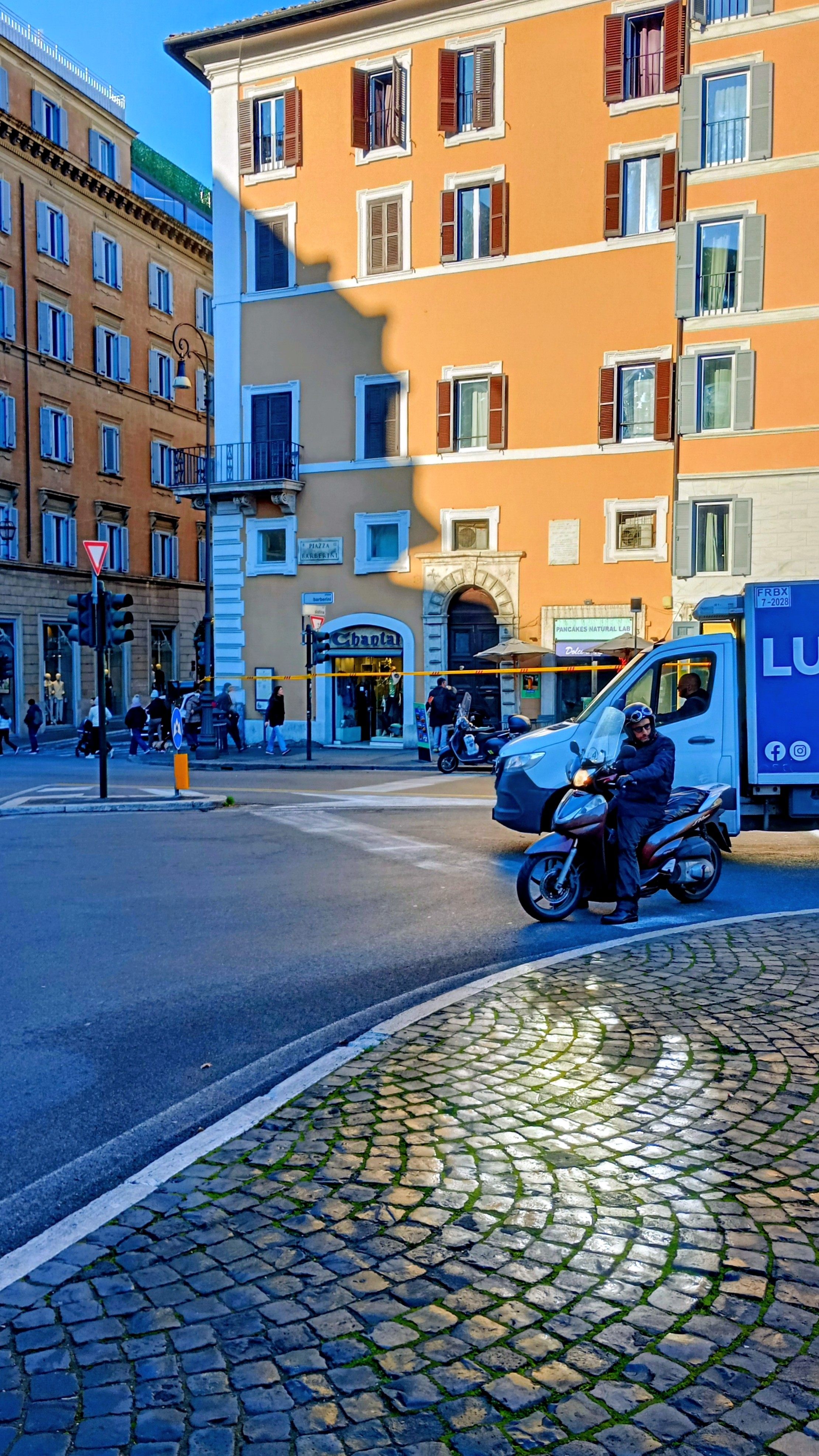
The red arrow indicates Margaret Fuller’s building. And, turning right on the corner, you immediately find yourself on via Sistina, once called via Felice (Happy Street). Via Sistina, tahat goes from the Spanish Steps to Piazza Baberini, was a popular street and many foreign artists and writers lived there.
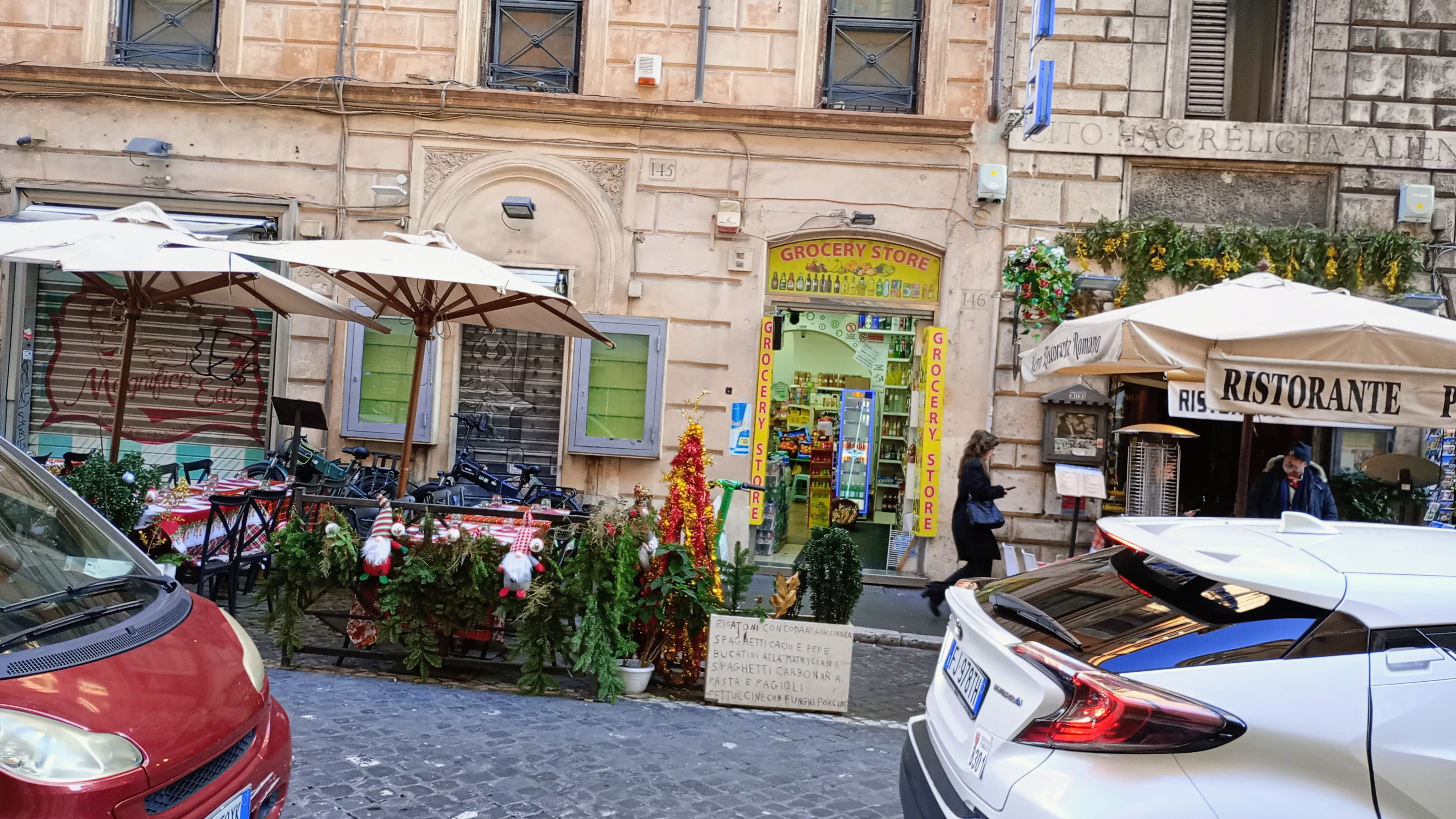
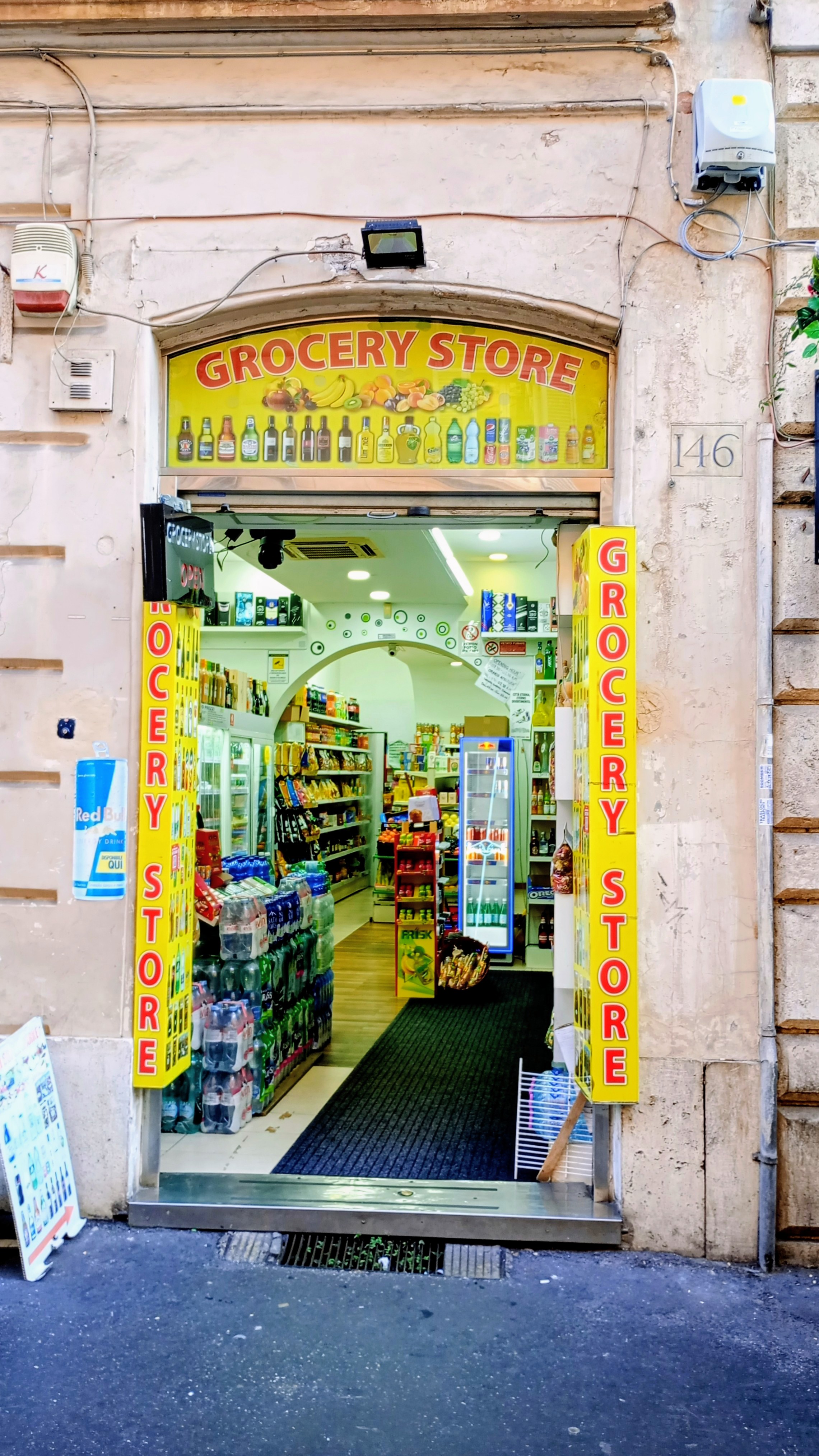
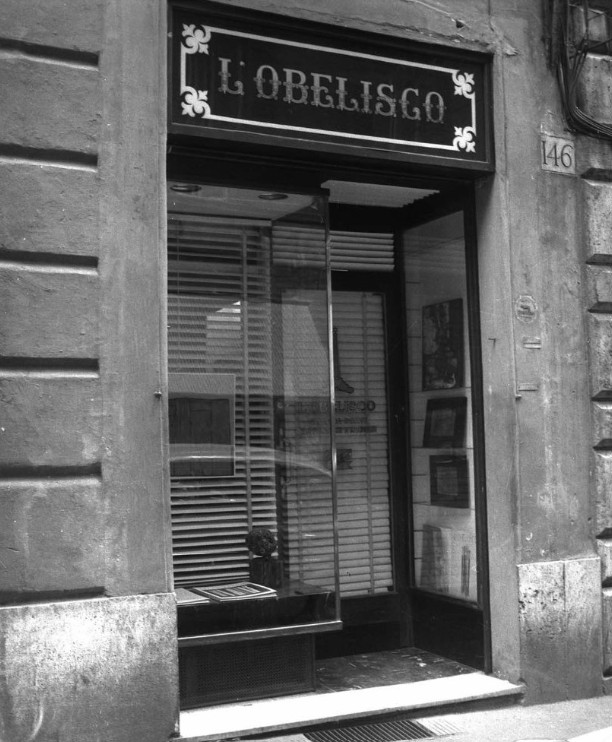
This is via Sistina 146 where the gallery L’Obelisco once existed. It’s difficult for me to understand how such an important gallery has been so easily forgotten. At least a commemorative plaque could be placed on the building.
This is how the space that was home to L’Obelisco gallery looks today with its Andy Warhol vibe. However, L’Obelisco, established in 1946 was an important trendsetter for modern art and for promoting contemporary artistic activity. It helped in the much needed modernization of Italy after the war.
The above photo of the gallery facade was taken in the mid40s or 50s and is in the collection of GNAM. Source: Irene Brin, Gaspero del Corso e la Galleria L’Obelisco, Drago, Roma 2018, pp. 204 – 2015 found HERE.
The quantity and quality of artists who exhibited at L’Obelisco is astounding. Giuseppe Capogrossi, Alberto Burri, Giorgio de Chirico, Afro, Salvador Dalí, Wassily Kandinski, René Magritte, Alexander Calder, Mario Sironi, Giacomo Balla, and Gino Severini are just some of the artists who exhibited at the Obelisco during its beginning years.
Furthermore, owner Irene Brin was good friends with Palma Bucarelli, directore of GNAM for 30 years. Bucarelli aquired various paintings from L’Obelisco for the Galleria Nazional di Arte Moderna.
Above is a photo of the artist Alexander Calder in 1956 at L’Obelisco where he had a personal exhibition. (foto via Instituto Luce)
Rome is like a giant Matryoshka doll with one discovery hidden inside another.
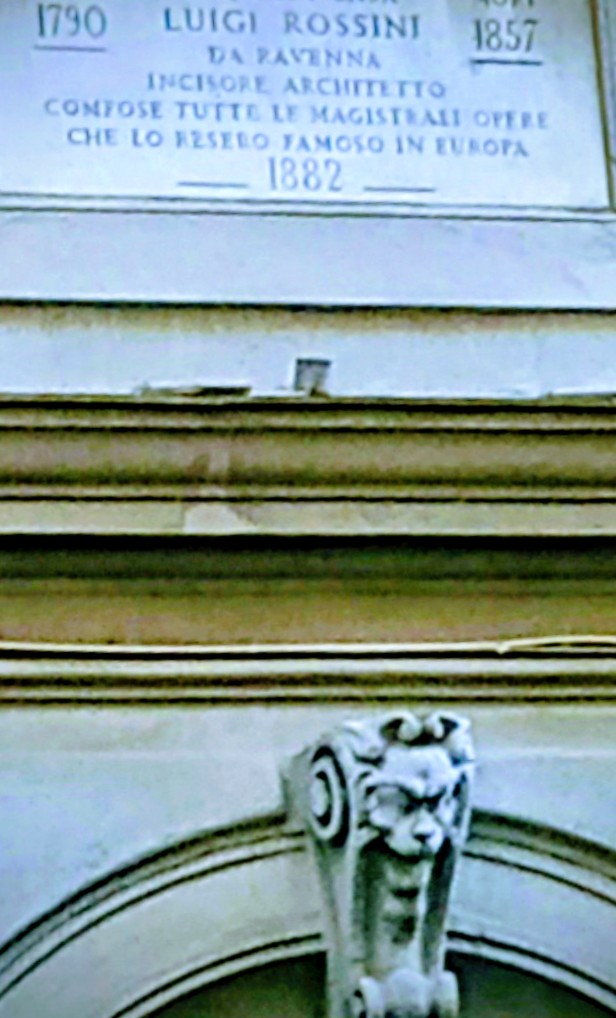
At via Sistina 138, there is a commemorative plaque for Luigi Rossini (1790-1857), an architect known for his etchings of ancient Roman architecture. He began his antiquities series in 1819.
Above is the plaque commemorating Luigi Rossini .
Luigi Rossini’s etching of the Tritone Fountain dated 1848. Foto from Wikipedia
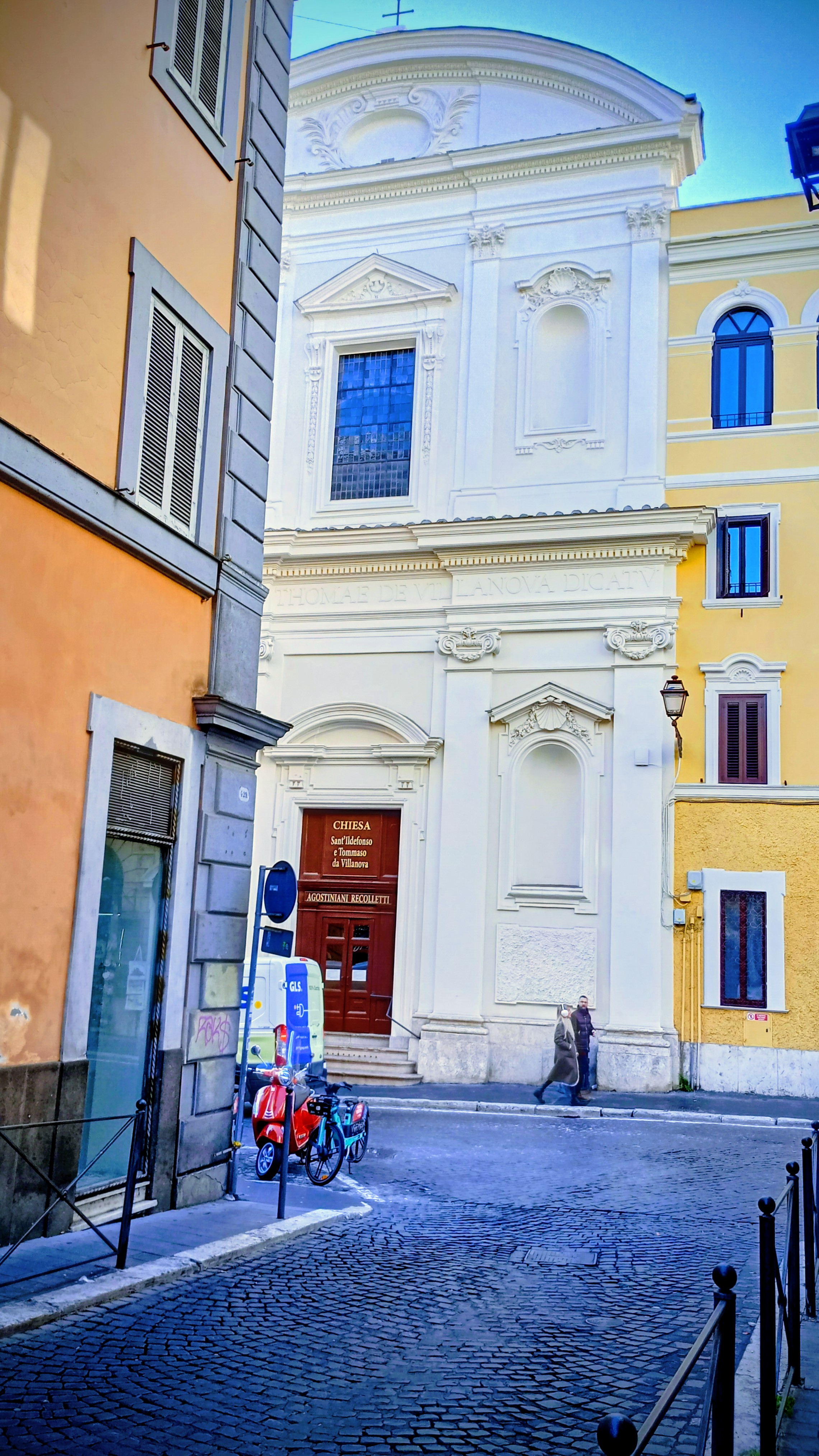
Chiesa Sant’Ildefonso e Tommaso da Villanova, via Sistina 11. More Baroque. The church was constructed in the 1600s under the supervision of the Order of Augustinian Recollects, the mendicant friars. What’s incredible for me, having grown up surrounded by the Mexican culture, was that the oldest image of the Virgin of Guadalupe arrived in Rome some 350 years ago. It was painted in 1667 in Mexico by Juan de Murcia.
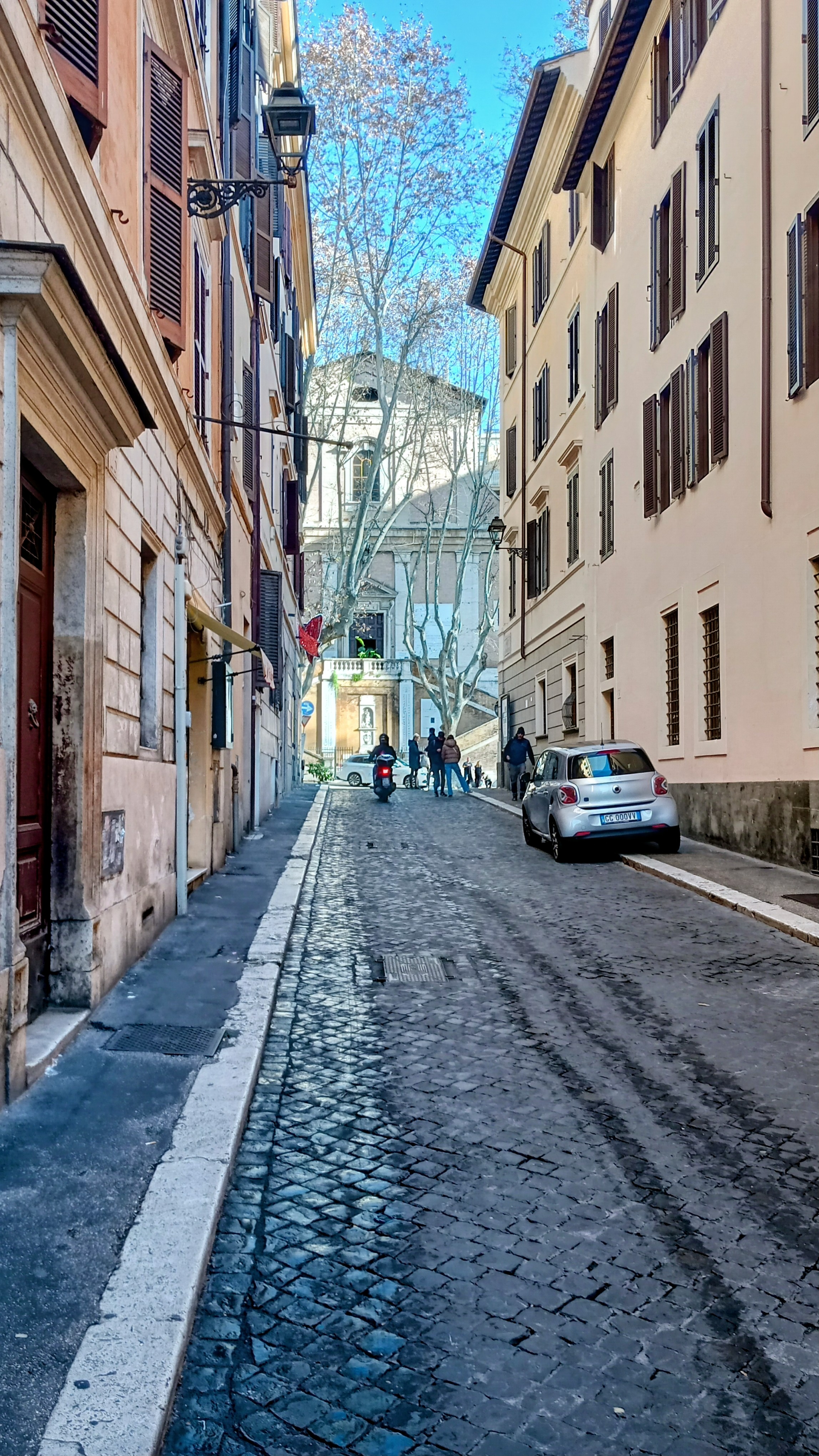
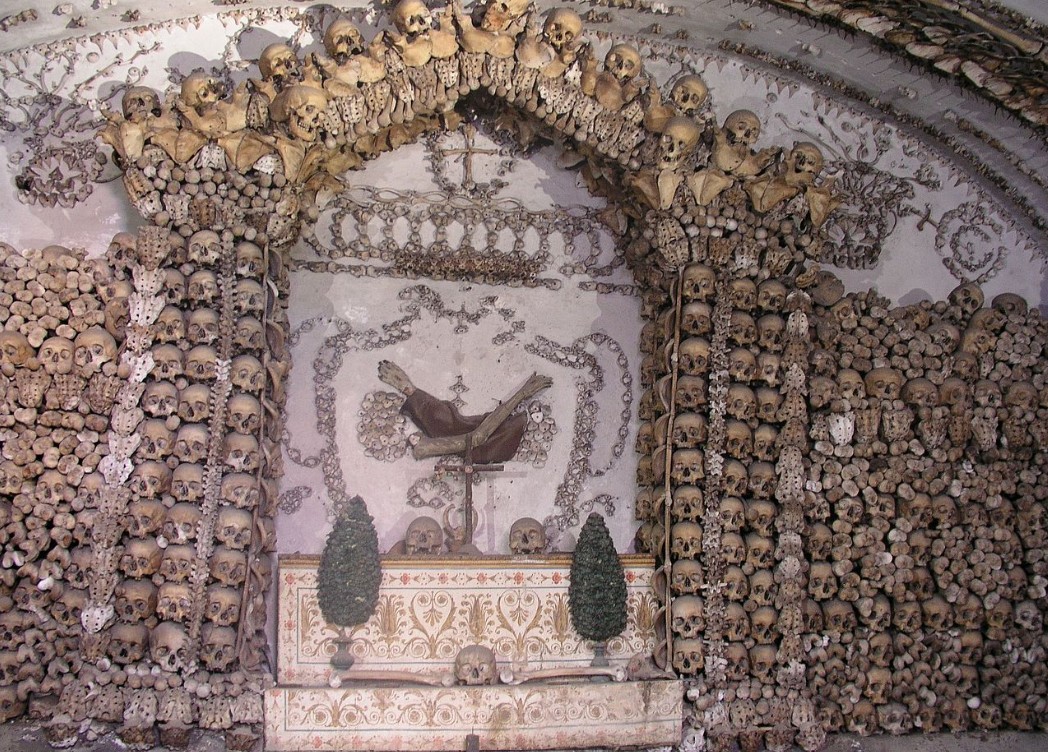
The street leads to Santa Maria della Concezione dei Cappuccini church and its Capuchin Crypt at via Veneto 27.
When, in the 1600s, the friars had to move from their old monastery, they brought along the remains of their deceased friars as well. Three hundred cartloads of bones were then arranged on the walls in a decorative fashion.
Bones arranged in a decorative fashion at the crypta. Image via Wiki
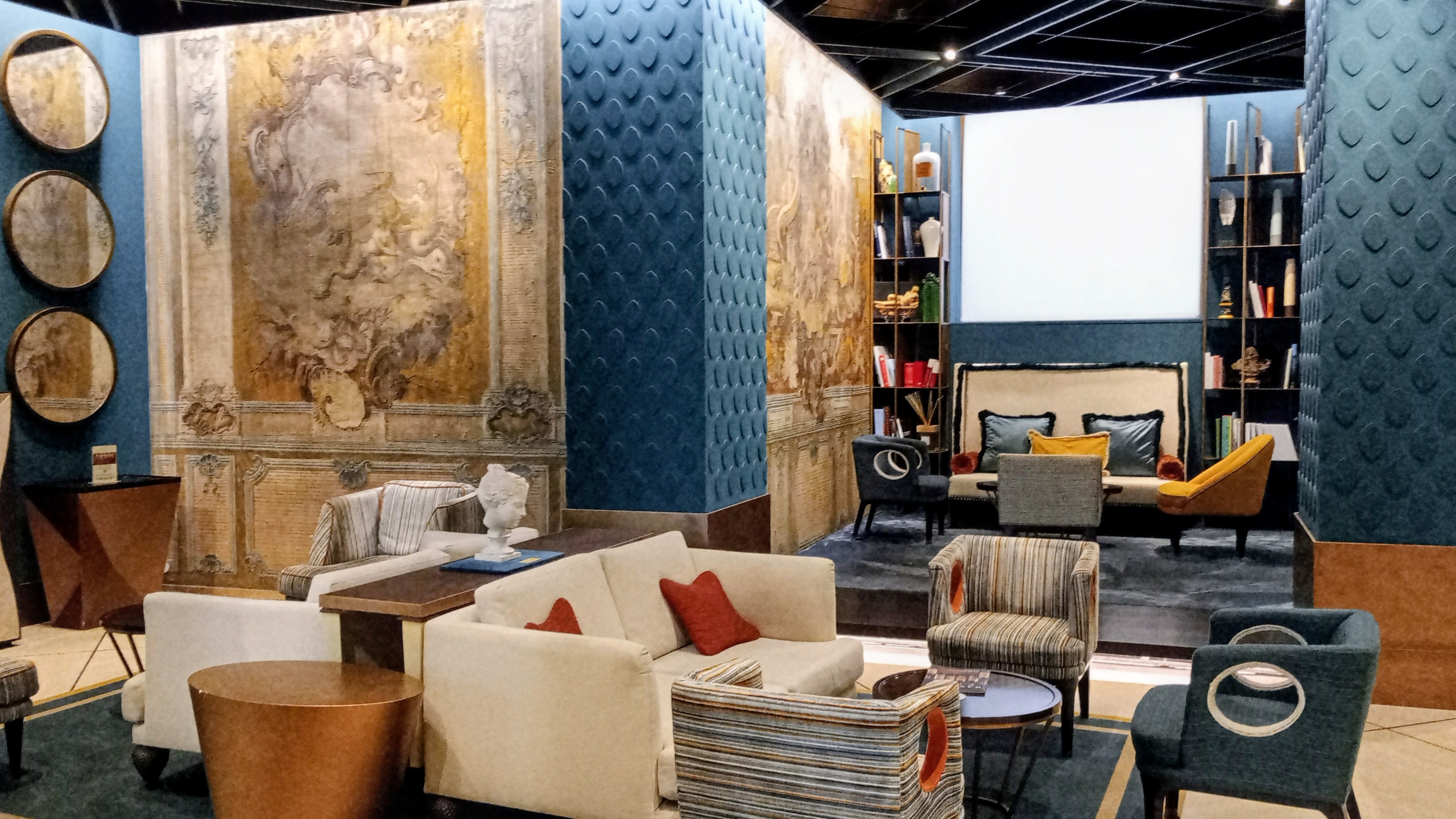
This is the interior of Hotel Bernini where we had coffee. The hotel faces Piazza Barberini and their coffee shop is a nice change from the sidewalk cafes full of tourists. The decor is great but the cappucino is not.
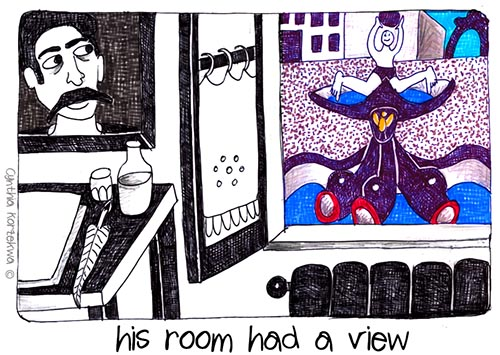
Nietzche, Paul Rée, and Lou Andres-Salomè began an “intellectual” ménage à trois. But, after the initial thrill, Nietzche wanted Lou all for himself and proposed marriage. She said No Way. Crushed, Nietzche locked himself in his room facing Piazza Barberini. Here, with a full view of Bernini’s fountain, Nietzsche began writing “Thus Spoke Zarathustra”. via Freud’s Cat
Roman Plaques “Roman emperors and popes had a fancy for celebrating their achievements by placing lengthy inscriptions on the monuments of Rome. The longest one was dictated by Emperor Augustus to detail with the preciseness of an accountant his many achievements. The Italian government which took control of Rome in 1870 introduced the first plaques; they were placed on the walls of buildings where eminent citizens were born or had lived.” +
















 The Narrative Within