So, when did it become fashionable to insult someone by referring to female genitalia? And when did calling men “bitches” instead of “bastards” start happening?
I’ve witnessed even women using “c*nt” as an insult. What’s wrong with them? Why are they degrading their own sex? Why are they promoting a negative image of women? Because if you use this word to insult someone, you send a subliminal message that women are bad.
We are living in a patriarchal society that already treats women as second-class beings. Women need to promote their womanhood, not belittle it especially since there’s an obvious war on women going on. Look at Incels, the involuntary celibates, for example. Rejection has made them angry. But hey, it’s not our fault if these boys are too weird to be wanted. They’re just WhiWis (pronounced weewees), Whimpering Wimps, who will never be men because they are not willing to assume responsibility for their own actions.
We are in an era of transition that promises much difficulty and drama. The struggle will not be easy. That’s why women need to unite and, together, promote and protect their womanhood.
Once upon a time there were both gods and goddesses. But somewhere on the timeline of evolution, the equilibriums were disrupted and hierarchies evolved.
In “Our Fragile Intellect” published in 2012, American biochemist, Gerald Crabtree, claims that the human intelligence peaked sometime between 2,000 and 6,000 years ago. However, since the arrival of agriculture and major urbanization, Crabtree says humans have been losing their intellectual and emotional abilities. Crabtree claims this is a result of “accumulating gene mutations that are not being selected against as they once were in our hunter-gatherer past.”
Well, this loss of intellectual and emotional ability could explain a few things.
In 2023, the Heritage Foundation, ultra conservative think tank, published “Project 2025”. Project 2025 defines its goal as that of assembling “an army of aligned, vetted, trained, and prepared conservatives to go to work on Day One to deconstruct the Administrative State.”
Although the project claims that it wants to return the government to the people, what the representatives of the project really want to do is to consolidate executive powers in the hands of selected rich, white supremacists who have zero empathy for their fellowman.
The project further heightens misogynist fantasies of men becoming even more macho by stepping on women. Aside from the rigid abortion laws criminalizing women (as if a woman got pregnant by herself), Project 2025 also states that it wants to “refocus on gender equality” by reviving the traditional patriarchal aka biblical marriage with the male as the boss. The project also puts down single parents and promotes cutting any kind of social support to single parents and children living in single parent families. In other words, as 80% of all single parents in the USA are moms, this is an obvious jab at women.
The two sexes should not be seen as competitive but as complementary. We were meant to enhance and complete one another and not to rip the other into shreds. Unfortunately, the patriarchal society does not promote equality or diversity or compassion for those less fortunate. And this lack of solidarity will dismantle our chances for survival.
Influencers use social media to promote the self, collect followers and, once collected, try to influence the purchasing choices of these followers.
A post on Wikipedia referred to Eleanor Roosevelt as the “original media influencer” and content creator mainly because of her popular newspaper column “My Day”.
Eleanor was very shy and, in her autobiography, she describes her shyness as borderline pathological. Her mom was a well-known beauty who never hesitated to tell her daughter how dreadfully plain she was. And after Eleanor married FDR, she found herself living with a mother-in-law who was more critical and domineering than her own mother. Eleanor felt that she only disappointed her family.
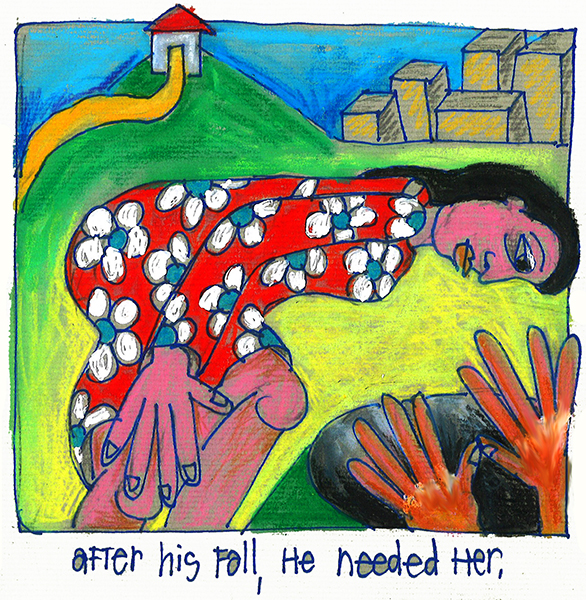
But politics helped emancipate Eleanor. FDR, confined to a wheelchair, could not properly campaign for himself and expected his wife to help him out. So Eleanor had to overcome her shyness and drive across the country campaigning for her unfaithful husband. That’s how she learned to express herself in public and to get people’s attention. She was very successful in her efforts and her success helped build her confidence.
In 1936, Eleanor had a daily newspaper column called “My Day” that, in some ways, put her in the role of an influencer. “My Day” was published six days a week until 1962. FDR encouraged the column as he saw it as a political asset for him and a means of testing out ideas on the public. For example, “My Day” was used to promote WWII before the war had been declared.
As Eleanor built her self-esteem, as her condition of possibility changed, she became the heroine of progressive causes. She wrote: “Of one thing I am sure, in order to be useful we must stand for the things we feel are right, and we must work for those things wherever we find ourselves. It does very little good to believe in something unless you tell your friends and associates of your beliefs.”. Via
Maybe what distinguishes Eleanor from today’s influencers is intention. She was not into promoting products but ideas and values.
Eleanor practiced self-cultivation as a means of becoming a better person. During Victorian times, self-cultivation was a goal for many women. Also called “Bildung“, self-cultivation was practiced as a form of self-improvement and moral development. More importantly, self-cultivation was not just about individual benefit. It was also seen as contributing to society’s overall well-being. And the biggest difference between influencing and self-cultivationing is not only the intention but the difference in the places where they can take you.
Abraham Maslow saw Eleanor as an excellent example of how a person can actualize themselves via self-cultivation. After studying certain historical figures, Maslow believed that “self-actualizers were creative, spontaneous, and able to tolerate uncertainty. Other common qualities included a good sense of humor, concern for the welfare of humanity, deep appreciation of the basic experiences of life, and a tendency to establish close personal relationships with a few people. Maslow also formulated a list of behaviors that he believed could lead to self-actualization. These included such directives as: experience life with the full absorption and concentration of a child; try something new; listen to your own feelings rather than the voices of others; be honest; be willing to risk unpopularity by disagreeing with others; assume responsibility; work hard at whatever you do; and identify and be willing to give up your defenses.” via Self-Actualization
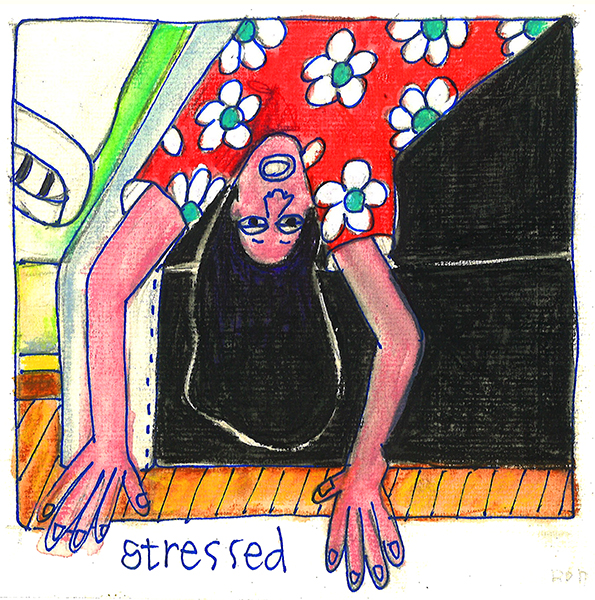
Transitions tend to be stressful. But the geo-political changes going on right now are extreme, heartbreaking, and overwhelming. And very, very spooky.
Today is International Women’s Day. Here in Italy, it’s customary to give a sprig of mimosa to female friends and family as a sign of solidarity.
The mimosa is self-pollinating and can fertilize its own flowers without the need for other pollinators. Maybe that’s why Teresa Mattei, Italian partisan, parliamentarian, and part of the committee to write Italy’s Constitution, declared, in 1946, the mimosa as the symbol of Women’s Day.
Unfortunately, the mood now is different. Years ago, street vendors all over the country sold cellophane packed mimosas. But now these itinerant florists selling sprigs representing female Synergy & Solidarity are no longer present in large numbers as before. It would appear that celebrating women’s independence is presently démodé, unprofitable, and/or undesirable.






 The Narrative Within