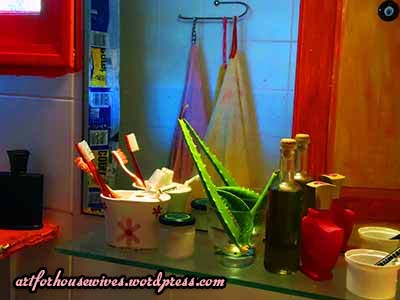
How to make your own flouride free toothpaste

 Καλό μήνα!

Homemade flouride free toothpaste two
Natural cosmetics and home remedies have become very fashionable on internet. I’m a believer (see for example my post on aloe vera) and try many of them. So when recipes for homemade toothpaste started surfacing, I checked them out. Unfortunately, many had ingredients I had never heard of and/or were difficult to find esp here on Paros. And one basic rule I have is: Keep it simple.
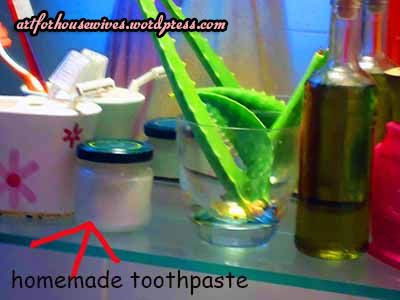
Homemade flouride free toothpaste one
The simplest solution for me has been more or less this: 6 T baking soda, 1 t coconut oil, 2 drops tea tree oil. While looking for bicarbonate of soda at the supermarket in Livadia, I came across these little packets of ammonium bicarbonate. Not knowing exactly what they were and since they cost less than an euro, I decided to buy one to check it out. Thank goodness for internet because that’s how I got this info: it’s a leavening agent once made from grounded reindeer antlers and today often used to make gingerbread cookies. So, since it wasn’t poisonous, I decided to add some to my homemade toothpaste and am quite happy I did so. It has a slight ammoniac flavour to it that makes the mouth tingle. But it’s this tingle that really makes the mouth feel clean.

Now aside from the ecological and economical aspects of making my own toothpaste, the real reason I do so is because it’s impossibile to buy a flouride free toothpaste. And flouride is dangerous.

Flouride accumulates in the pineal gland eventually calcifying it. The pineal gland is important for many reasons. For one, it is responsible for the secretion of melatonin, the hormone that regulates our sleep-wake cycle.
But the pineal gland is important for another reason. Shaped like a pine cone sitting in the middle of the brain, the pineal gland was called the “third eye” by ancient people because it provided inner vision and a higher consciousness. Descartes called it “the seat of the soul” but, for me, the pineal gland is the home of Common Sense.
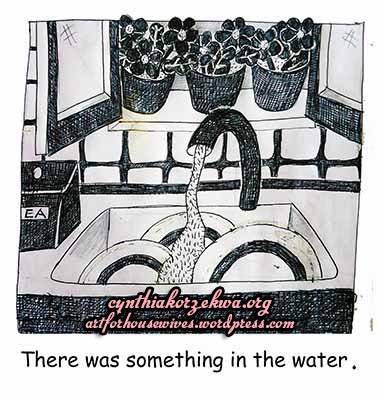
Something in the water by Cynthia Korzekwa
Why are people so stupid today when, with scientific evolution, public education and technological know-how we should be smarter? It is, in part, because of the water. The flouride in water is turning people into zombies and it is not just my opinion. Harvard studies showed that flouride causes neurotoxicity and that «children in high-fluoride areas had significantly lower IQ scores than those who lived in low-fluoride areas».

pineal gland

The eye of horus and its relationship to the pineal gland
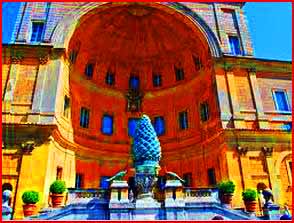
Vatican Pinecone

The pineal gland pinecone at the Vatican
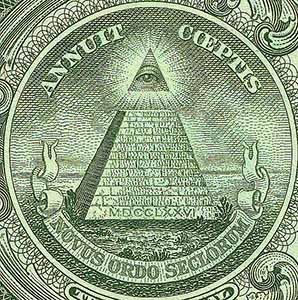
pineal gland

Third eye on dollar bill

For more related links, go HERE.

drawing

Posted in Health & Healing | Tagged , , , , | 2 Comments

Umwelt and Ecofeminism

Umwelt” in German means “environment”. It is a word and a theory.

Umwelt bougainvillea one

Jakob von Uexküll (1864-1944) was a German biologist who believed that even though we share the same space, we do not share it in the same way. He referred to this theory as Umwelt. To explain it, he used this example: «Every object becomes something completely different on entering a different Umwelt. A flower stem that in our Umwelt is a support for the flower, becomes a pipe full of liquid for the meadow spittlebug who sucks out the liquid to build its foamy nest».

Umwelt bougainvillea two

We are the epicenter of our personal world. But our world is not limited to ourselves. Just as an earthquake can be felt far away from its center, our center, too, can be felt from a distance. So if you quake, then I quake. In other words, we are in this world together even though we are not together.

Umwelt bougainvillea three

In the garden, lettuce needs shade whereas tomatoes need full sun. But this does not mean that the gardener has to choose between one or the other. It simply means that the gardener must learn how to arrange his garden in such a way that the needs of all can be met.

We create and modify our “umwelt” by interacting with our surroundings. That which surrounds you affects your behaviour. And your behaviour affects me (just try riding Bus 492 in Rome at 8 a.m. if you don’t believe me). The quality of our interaction will determine the quality of our life.

Umwelt bougainvillea four

Ecofeminism is about umwelt, reciprocity and a mutual respect for one another’s needs. And, above all, ecofeminsim is about learning The Art of Interacting.

Umwelt bougainvillea five

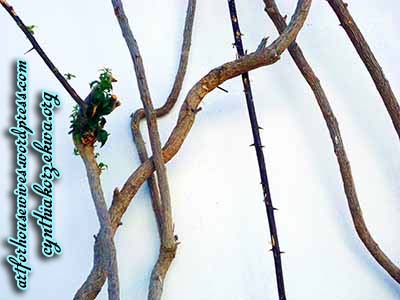
Fotos of our bougainvillea as an example of Umwelt — I pruned the plant, he painted the wall.

drawing

Posted in Ecofeminism | Tagged , , | Leave a comment

My home starts with my body

The first home is the womb. It’s where our life begins. Ancient cultures had a respect for it that, unfortunately, is now obsolete.

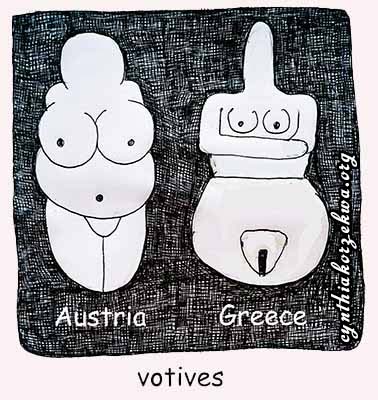
Prehistoric human figurines have been found throughout Europe dating from c.25,000 BC to c.2,000 BC which means they’ve been around much longer than written history (which has been around for about 5,000 years).

These figurines are small generally 4 – 22 cm in height making them portable. The majority are of women and have a tendency to emphasize breasts and hips.  Facial features are not taken into consideration.

Votives by Cynthia Korzekwa

Many such figurines have been found in the Cyclades. Those representing women are stylized and static. Whereas figures representing animals or men are often shown engaged in some kind of activity such as that of the famous harp player.

On Market St. here in Parikia, there’s a shop selling souvenir Cycladic figurines. Most of these little white statues are similar in that they have arms folded under the breasts and triangular incisions indicating female genitals.

Like a statue she waited by Cynthia Korzekwa

Archeologists still have not been able to come up with an explaination for the existential purpose of these little statues. But, because sexual characteristics were exaggerated, it’s logical to assume that the concept of fertility was involved.

The Cycladic civilization flourished in the Aegean from about 3300 – 2000 BC. Much of what is known regarding Neolithic Cycladic art comes from excavations at Saliagos off Antiparos, Paros’ “little sister” island. Figurines from this area were found mainly at grave sites.

The Cyclades are a group of about 30 islands. They were called kyklades by the ancient Greeks who imagined they formed a circle, kyklos, around the island of Delos. Delos was a sanctuary dedicated to Apollo. But it also hosted the Shrine of Dionysus with its many gigantic phallus sculptures and related reliefs.

yria ceramics

Cycladic salt shaker from Yria

Life begins in a woman’s body post male orgasm. A woman takes a man’s pleasure and turns it into life. Certainly, if pregnancy were based on female and not male orgasms, the world population would be a fraction of what it is today. But instead of receiving gratitude, women have been minimized and stripped of their sacredness. The aims that today’s patriarchal societies have for us are no longer spiritual but, instead, political. So ladies, isn’t it time to stand your ground when it comes to defending your first home, that of your body?

Body types figurines front by Cynthia Korzekwa Body types figurines back by Cynthia Korzekwa

Figurines made from dish detergent bottles

For more related links, go HERE.
drawing

Posted in Ecofeminism | Tagged , , | 8 Comments

Spirals

A spiral is a curved line that starts from within then moves out. It is one of the oldest symbols dating back as far as the Neolithic period.

This ancient symbol can be found all over the world. The Minoans of Knossos saw it as a symbol of infinity. The Celts saw it as a symbol of birth, growth and expansion.  In essence, the spiral represents the cycles of nature, the spiral of life. Cycles indicate change — the old leaves making room for the new.

The spiral, associated with the life force, is often considered a female symbol reflecting the womb and fertility.

Coiled snakes are spirals, too, and thus often related to goddess cults.

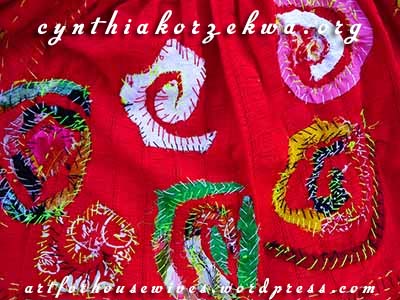
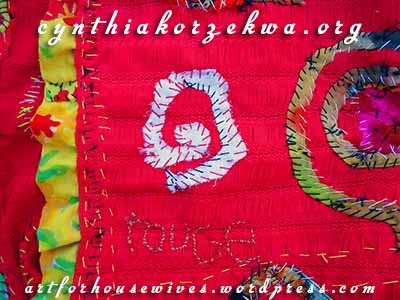
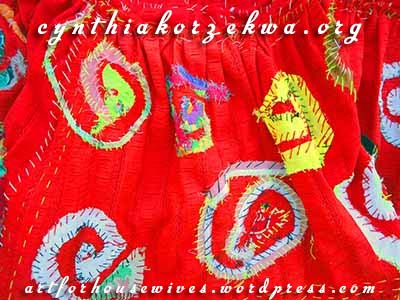
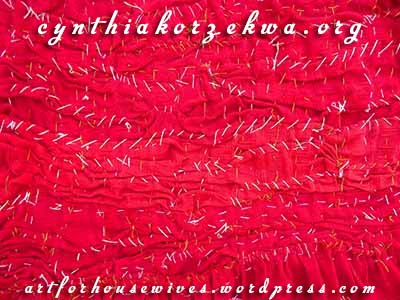
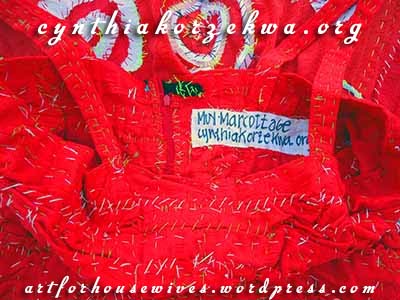
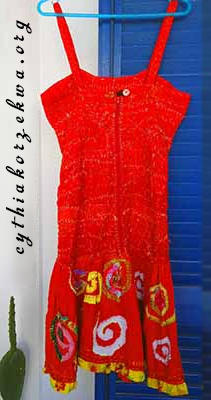
Muy Marcottage dress spirals by Cynthia Korzekwa Muy Marcottage Rouge detail by Cynthia Korzekwa Muy Marcottage Rouge spirals by Cynthia Korzekwa Muy Marcottage coiled spirals by Cynthia Korzekwa Muy Marcottage stitching spirals by Cynthia Korzekwa Muy Marcottage spirals Rouge by Cynthia Korzekwa Muy Marcottage Rouge stitching by Cynthia Korzekwa Muy Marcottage Rouge dress by Cynthia Korzekwa Muy Marcottage Rouge button by Cynthia Korzekwa Muy Marcottage Riuge label by Cynthia Korzekwa

Muy Marcottage Rouge front by Cynthia KorzekwaFront

Muy Marcottage Rouge back by Cynthia KorzekwaBack

The above Muy Marcottage dress is named “Rouge” because it was made from a red fabric (probably once curtains) that looks like sangallo (eyelet). It has thin straps and is body hugging until the buttocks where it then is attached to a gathered skirt of the same fabric.  It is completely handsewn into place with white thread and has a zipper in the back. The skirt, trimmed  with a yellow print, is covered with spirals made from fabric scraps.

For more Muy Marcottage, go HERE.

For more links regarding spirals, go HERE.

drawing
p.s. My friend, Franca, sent me this message:   Baudelaire… «Il disegno arabesco è il più spiritualista (spirituale) dei disegni…». Tante spirali insieme... «Le dessin arabesque est le plus spiritualiste des dessins» = «The arabesque design is the most spiritual drawings». Arabesque art is, in fact, full of spirals.

Posted in Muy Marcottage | Tagged , , , | Leave a comment

Talking Dresses

Cows with names produce more milk. Why is that? Researchers believe that being treated as an individual makes the difference.

So I’ve given all of my Muy Marcottage dresses names — words or phrases to make them dialectical. In other words, Talking Dresses.

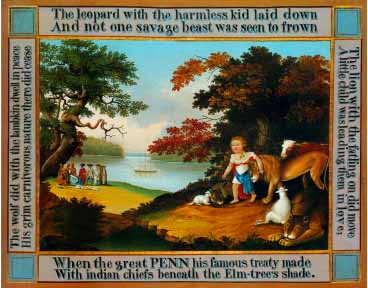
I’ve always enjoyed combining the written with the visual. Years and years ago when I was still living in Texas and making huge paintings, I always “framed” the image with phrases Edward Hicks style.

Edward Hicks

Peaceable Kingdom

And when I started focusing more on drawing be it using a pencil or using a mouse, I incorporated the written word even more.

dialectical2

 “Surrender” computer drawing (using mouse)

The Catholic Church has such a huge artistic patrimoney due, in part, to the fact that the image was used to propagate their teachings. Just think of Giotto’s affrescoes in Assisi or Michelangelo’s Sistine Chapel. The Protestants, aided by Gutenburg, relied, instead, on the written word of the Bible. Eventually, when the emphasis was selling a product and not a religion, image and word were mated. Commerce has done more to create change than we often realize.

The combination of word with image really took off in the 1800’s with the beginning of advertising. Newspapers began using drawings to make their message more immediate.

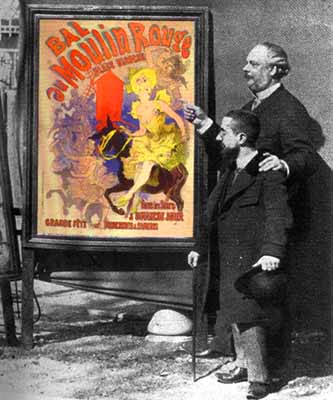
The affiché is where the profane goes sacred the most blatant example being that of Toulouse-Lautrec.

dialectical3

Toulouse-Lautrec , Jules Chéret & affiché via

dialectical4

Toulouse-Lautrec, while living in Paris, hung-out in the Montmarte area and was frequently at the Moulin Rouge. Intrigued by the dancers, he began drawing them and these drawings eventually led to publicity posters. Thanks to the technology of lithography, these posters were made in huge quantities and then splattered around town. And, violà, the introduction of a new art form.

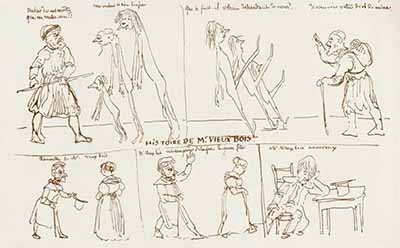
The Paris-educated teacher, Rudolph Töpffer, is generally credited with creating the first graphic novel. Born in Geneva in 1799, Töpffer liked to entertain his students by drawing caricatures. He made so many of them that he decided  to make complete narratives by adding words to the images.

dialetical5

Rudolph Töpffer’s “Histoire de Mr. Vieux Bois

There are many WAYS OF SEEING therefore, there can be no standardization of perception.

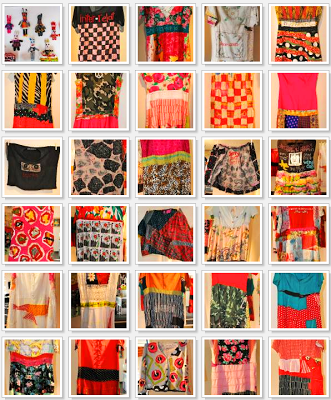
This said, I would like to go back now to my Muy Marcottage dresses. These dresses are not just objects, they are also ideas.

They hope to be dialectical in that, via the words or phrases sewn onto them, an exchange is provoked. Muy Marcottage dresses want to interrelate with who wears them, with who sees them.

dialectical6Muy Marcottage

MUY MARCOTTAGE MOSTRA

Marcottage is a French term used for plant propagation — taking one plant to make another. Rodin’s “The Fallen Angel” is an example of marcottage in that Rodin took pieces from one sculpture to make another sculpture. And, since I take existing clothes to make others, I decided to call my reconstructed clothes “Marcottage”. But one day, while listing to The Kumbia Kings, I decided to add the “muy” meaning “a lot”. Thus Muy Marcottage.

Muy Marcottage

To see some Muy Marcottage dresses go HERE.

For other related links, go HERE.

drawing

Posted in Muy Marcottage | Tagged , , | Leave a comment