Habits and routines can be very helpful. They can make us more efficient and thus save much stress. But life is not static. Certain changes in life can make our habits not only obsolete but counterproductive.
Habitual thought patterns can get us stuck in a rut. We move and wear ourselves out but without going anywhere.
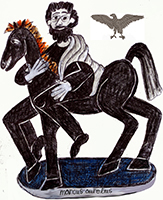
Marcus Aurelius writes: “that all is as thinking makes it so” (Meditations, Book 12:22). In other words, we are our thoughts and these thoughts construct the world we live in.
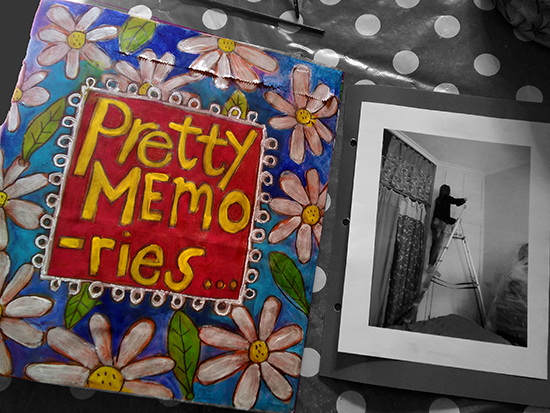
News of world events as well as personal situations can make it easy get stuck in a negative mental loop. That’s why I’ve started Pretty Memories, a catalogue of photos representing special moments to help remind me that my life is full of wonderful things and that’s where my thoughts should be focused.
“Your mind will take on the character of your most frequent thoughts; souls are dyed by thought.” (Book 5:16)
Marcus Aurelius became emperor in 161 AD. Right after he started his reign, Rome was plagued with natural disasters: a pandemic, flooding of the Tiber, and scarcity of food. There was also the problem of conflicts with the Christians and of invasions from northern tribes. It kept Marcus’ heart uneasy and shackled with anxiety.
But with time, experience, and his Stoic training, Marcus began responding to his problems in a different way. When anxious, instead of freaking out he’d ask himself “Why am I troubled?”
“You have power over your mind—not outside events. Realize this and you will find strength.”
This strength has a home Marcus calls the fortress within. He also refers to it as the soul. And it is here one must go when troubled because “Nowhere you can go is more peaceful—freer of interruptions—than your own soul.”
To relax, we often feel the need to get away so we run off somewhere like to the countryside, to the sea, or to the hills. But why go through all that trouble when there’s no place that can give you the calm and relaxation than that of the fortress within. All we need to do when feel ill at ease and want to renew ourselves is retreat to our soul. (Meditations 4:3)
To relax, we often feel the need to get away so we run off somewhere like to the countryside, to the sea, or to the hills. But why go through all that trouble when there’s no place that can give you the calm and relaxation than that of the fortress within. All we need to do when feel ill at ease and want to renew ourselves is retreat to our soul. (Meditations 4:3)
So how can we create this inner citadel? How do we fortify our soul?
Inscribed on Delphi’s Temple to Apollo is the maxim “Know Thyself” and that’s a good place to start as it’s important to know what kind of terrain you’re constructing on before you get started.
How much of what you think you know about yourself is actually true? Have you constructed your own personal philosophy or have you let someone else do it for you (ex. tradition, religion, political party). Who is in command of your soul?
I don’t know if the concept of a fortress within is the same for women as it is for men. But I’m going to start my construction in front of the sea. Maybe with an aperitif.
Marcus Aurelius writes to himself that “no one loses any life other than the one he lives, or lives any life other than the one he loses.” (Meditations, Book 2:14)
A long life and a short life both end in the same way.
The past is dead and the future doesn’t exist. Therefore, the only thing you can be deprived of is the present and “the present moment is equal for all.”
Sitting at our favorite tavern in Aliki, I feel the surrounding beauty penetrate my skin. It is a soothing sensation because beauty has healing powers. Despite a momentary urge to take a photograph, I don’t. It would be like trying to physically possess what I see. Instead I want to absorb the moment until we become entangled. I want to be a part of that photograph not taken.
Today is my blog’s 20th birthday. I started it after reading the Scientific Warning of 1992. It begins like this:
Human beings and the natural world are on a collision course. Human activities inflict harsh and often irreversible damage on the environment and on critical resources. If not checked, many of our current practices put at serious risk the future that we wish for human society and the plant and animal kingdoms, and may so alter the living world that it will be unable to sustain life in the manner that we know.
After reading it, I felt nauseated and very concerned about my children’s future. It was this concern that gave rise to “Art for Housewives”. The intention was to encourage the use of household trash to make beautiful and practical objects thus the blog’s motto “Make Art, Not Trash”. Initially, the response to the blog was very positive. However, after a few years, the platform I was using bit the dust and from one day to the next my blog was left homeless. My son suggested I try WordPress so I did. Nevertheless, the abrupt loss had changed the blog’s dynamics.
Seedlings from my Neighbor
In terms of ecology, has anything changed in these past 20 years? Yes, we are worse off than before. The irresponsible attitude of the western world simultaneously frightens and disgusts me. But to keep from feeling overwhelmed, I search for equilibrium. And hope.
In a few months I will be 70 years old. Life expectancy for women living in Italy is 84. Which means, based on this average, if all goes well, I can count on maybe another 10 productive years. And I intend to make these years the best years of my life.
Aloe Maculata in Bloom
The Greek slave Epictetus had his owner’s permission to study and, once a free man, Epictetus left for Rome where he taught philosophy. One of his students was Marcus Aurelius. In “Meditations”, Marcus praises his teacher who had taught him that: If you want to be beautiful, you must make beautiful choices.
Beauty is not an object. It’s a perception waiting for a beholder. And here I am, waiting to behold.
Lace Curtain and Grape Vine
Aging is an unpleasant but mandatory experience if you want to stay alive. Moms can help give much useful advice. But with their demise, we lose our most important ally and some of us are left to wander alone. Books can never take a mom’s place but they can be practical guides.
In the moment that Roman emperor and Stoic philosopher, Marcus Aurelius, began feeling that age was becoming his most loyal companion, he began writing to himself. In Book One of his “Meditations”, Marcus thanks those who had had a positive influence on his life. He expresses this gratitude to remind himself that no one is entirely self-sufficient, that we are all part of the Whole. The Whole is that unity which makes our existence possible. It is the interconnection of all things. And gratitude is a kind of glue that helps keep us connected.
Curtain with Shadows
“Meditations” is, for the most part, an anthology of the lessons Marcus Aurelius had learned in his life. It was written not for others but for himself. A personal patrimony to keep him on the right track.
If I were to copy Marcus’ example, what would I write to myself? What lessons has life taught me that would be useful at this time?
Parian Sunset
If I were to write a book, it would be called “Daily Aesthetics” and would focus on searching for beauty in everyday life. Because perceiving beauty is a form of consciousness and consciousness transforms us. Because aesthetics are ideals that give us a direction. Because beauty is a form of hope because it reminds us that not everything in the world is ugly.
But instead of writing a book, I will continue writing posts for this blog. Because, after 20 years, it has become a part of me.








 The Narrative Within