Our House

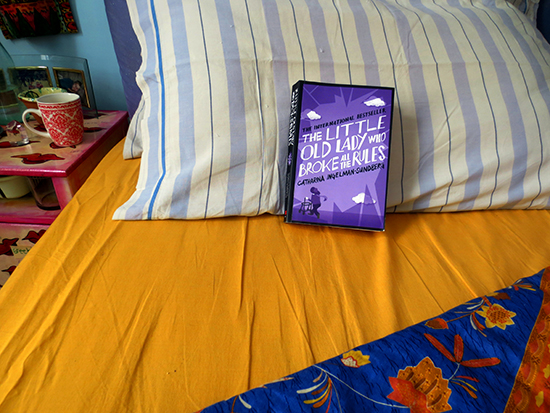
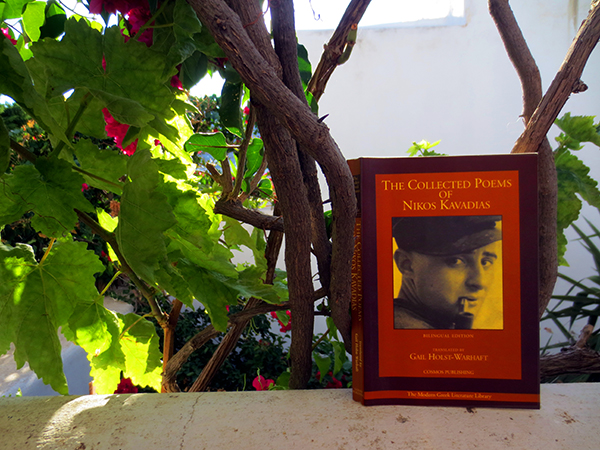
Last night I woke up hearing noises. Were they real or just residues of a dream? Not knowing, I decided to read and pulled out a book of short stories by Maeve Brennan that I hadn’t finished reading. And after a few pages I understood why I’d left it unfinished. The book, The Springs of Affection, includes stories about the married life of Hubert and Rose Derdon. They live in Dublin and have a son, John. Hubert works as a salesclerk in a store of men’s clothing. Rose is a housewife. The couple has a little house in the suburbs with a bow window and a small garden. Aside from the house, there seems to be little else that unites them. Their marriage makes me think of a loaf of bread that winds up as a pile of crumbs.

One story is “Family Walls”. Since it hadn’t rained in several days, Hubert had considered walking home instead of taking the tram. But as he was thinking about it, he walked closer and closer towards the tram. Once at the tram, he took his usual seat and thought about how just thinking about doing all that walking had made him feel good. He was still feeling good when he got home. But as he was hanging his raincoat on the rack, he saw his wife closing the kitchen door. Had his wife seen him and intentionally closed the door in his face? Hubert began staring at the kitchen doorway not knowing what to do. And the less he knew what to do, the angrier he got.

A short time later Rose appeared in the doorway and told him his dinner was ready. Hubert said he didn’t want it and that the next time she shut the door in his face, he’d leave and never come back. Furthermore, he wanted her out of the room so he could be left alone. So Rose left.

Hubert wished he’d never seen the door close. It made him think about things that he didn’t want to think about. But it was, in part, the fault of living in such a small house. “There wasn’t a corner in it where you could hide without causing questions—those silent questions that were not questions but reproaches.” But then again, even if the house was small, he had nowhere else to go. Rose didn’t have anywhere else to go either.  After many years of marriage, the only thing Rose and Hubert seemed to have in common was their address and a collection of petty hatreds.

Most mornings I drink my coffee on the terrace with Volver who’s usually stretched out on one of the sofas. There’s something about a sleeping cat that gives me a feeling of peace and joy. It makes me think of the song Our House: “Our house is a very, very fine house, with two cats in the yard. Life used to be so hard. Now everything is easy ‘cause of you.”

This song was written by Graham Nash. Nash, shortly after meeting Joni Mitchell, went to live with her in her Laurel Canyon home. One morning while hanging out on Ventura Blvd, Joni saw a vase that she liked a lot. She bought it and, when the couple got home, Joni started putting flowers in it. As Nash watched her, he felt something magical. An ordinary experience suddenly became so extraordinary that Nash wanted to immortalize it and, within an hour, had written “Our House”.

Although Nash and Joni broke up a couple of years later, a moment of domestic bliss that they shared together will remain forever thanks to a song. And a beautiful song at that.

But whatever happened to the cats?

-30-

Related: MAEVE BRENNAN: THE SPRINGS OF AFFECTION + Graham Nash Has ‘Wild Tales’ To Spare +

Posted in Art Narratives, Books, Volver the cat | Tagged , , , , , , , , , , , , | Leave a comment

Prediction or Prevention

When the notorious Calabrian criminal Giuseppe Villella died, Cesare Lombroso, Italian criminologist and physician, performed a post mortem on him. Lombroso discovered that Villella had an indentation at the back of his skull similar to those found in apes. Like an epiphany that takes your life in a new direction, Lombroso wrote: “At the sight of that skull, I seemed to see all of a sudden, lighted up as a vast plain under a flaming sky, the problem of the nature of the criminal – an atavistic being who reproduces in his person the ferocious instincts of primitive humanity and the inferior animals.” And with one skull, Lombroso concluded that some people were born with an inclination towards crime as they were savage throwbacks to early man.

Lombroso, today known as the father of modern criminology, began making a list of those characteristics he felt were typical of born criminals such as an asymmetrical face, drooping eyes, excessively long arms, big ears, large jaws, and protruding chins. The painter Edgar Degas was fascinated by Lombroso’s theories and found them a stimulus for his artwork.

Criminal Physiognomies by Edward Degas

Degas was fixated with young ballerinas. And looking at the paintings he made of them, one initially gets the impression that their lives were full of grace and glamour. On stage they were magnifique but once the curtain came down, these young girls returned to their life of poverty, exploitation, and hazardous working conditions.

The younger dancers were often known as “petits rats” and often expected to offer themselves sexually to the wealthy male subscribers of the Paris Opera. One of these dancers was Marie van Goethem. History might have totally forgotten her had it not been for Degas. Degas often used her as a model but it is the sculpture he made of her that’s most remembered.

Degas’ Little Dancer

The title of the sculpture is La Petite Danseuse de Quatorze Ans (Little Dancer of Fourteen Years). Time has mellowed out its impact but when it was first exhibited, it shocked the public. Her protruding chin was, according to Lombrosian Theory, a clear indication of depravity. Furthermore, the statue had been placed under glass as if a medical specimen.

Poor little Marie, once she lost her little girl look, patrons of the Paris Opera were no longer interested in her and, more than likely, she finished her life as a prostitute.

In the late 1970s, about a hundred years later after Lombroso’s “epiphany”, the FBI’s Behavioral Science Unit began studying psychopaths and serial killers. John Edward Douglas, Robert K. Ressler, and Ann W. Burgess were part of the original team. The intent was to find out what common characteristics criminals had in order to predict their next move. And to do so, they interviewed criminals and invented a method of documenting those personal characteristics that probably led them towards crime. The childhood of these criminals shared many common denominators: trauma, abuse, dysfunctional families, poverty and the humiliation it produced. In other words, emotional malnourishment seemed to be the leading factor in creating a criminal.

The Child’s Bath by Mary Cassatt

Whereas Degas was painting young girls with creepy undertones, his friend and fellow painter, Mary Cassatt, was celebrating mothers and children. Cassatt’s paintings are about capturing everyday moments full of tenderness and love. In the painting above, a mother lovingly bathes her child permitting them to share an intimate moment of mutual nourishment. Isn’t this what childhood should be about?

Instead of fixating on predicting criminal behaviour, wouldn’t it be better to focus on preventing it? If we know that a dysfunctional childhood can provoke criminal behaviour, shouldn’t we as a society try to ensure that all our children have the same condition of possibility to lead a healthy life both physically and psychologically? Instead of investing in prisons, shouldn’t we be investing in our schools where qualified professionals are present to be on the lookout for children at risk? And knowing that a child’s home life plays a major role in his psychological development, shouldn’t we try to help those parents drowning in their own psychological despair and inadequacy that they are unable to help their own children because they can’t even help themselves?

We should be less concerned with punishment and more with prevention. And the best way to do this is by providing care for a wounded psyche before a scar is formed.

An adult can never escape his childhood because your childhood follows you wherever you go.

-30-

Related: The Story Behind Degas’ ‘Little Dancer’ Is Disturbing, But Not In the Way You Expect + A short history of the modern western jaw: from Aristotle’s physiognomy to facial biometrics + The ‘born criminal’? Lombroso and the origins of modern criminology + CESARE LOMBROSO: THEORY OF CRIME, CRIMINAL MAN, AND ATAVISM + The Impact of Criminal Anthropology in Britain (1880-1918) + What Type of Criminal Are You? 19th-Century Doctors Claimed to Know by Your Face + Criminal Physiognomies by Edward Degas reproduction found HERE + Ballerina: Sex, Scandal and Suffering Behind the Symbol of Perfection book review + Degas’s dancers are studies in cruel reality. But don’t go thinking he felt compassion for them + Iconographic Interpretations +

Mindhunter: Inside the FBI’s Elite Serial Crime Unit + Crazy, Not Insane, movie book, Dorothy Otnow Lewis + ‘They were not born evil’: inside a troubling film on why people kill + criminologist Dr Adrian Raine, From Abused Child to Serial Killer + Jim Fallon, Life as a Nonviolent Psychopath + The criminal gene: the link between MAOA and aggression

Almost Three Quarters of US States Have More Prisons and Jails than Degree-Granting Colleges + The US has more jails than colleges (WAPO) + incarceration is not proving to be the solution, Arrests for Low-Level Crimes Climb Under NYC Mayor Eric Adams

Posted in Art Narratives, Conditions of Possibility, female consciousness | Tagged , , , , , , , , , | 2 Comments

Centered

Ο Ομφαλός

Many years ago I participated in a Parian exhibition based on mythology. Using recycled materials, I made the above painting about Omphale and Hercules. The text is rewritten below:

Ομφαλός.

Hercules’ first home was his mother’s body. But once the cord was cut, he strayed and lost his way. The gods sent him to Omphale for the cure. Omphale made Hercules dress like a woman (because wisdom is in her body she said). And Hercules laboured to learn how to hear the Oracle within. Because Delphi lives inside us all. So learn to be a god: keep yourself centered.

Omphale, Queen of Lydia, although not recognized as a goddess, has an undisputed connection with the omphalos.

Omphlos, which in Greek means “navel”, refers to the center of the world. In Greece, the center was in Delphi.

But not everyone has the center in the same place.

Connie is my friend and part-time neighbour. Every year our friendship renews itself towards the end of spring and mid-summer when we are neighbors again. She is funny, wise, an avid reader, and a generous book lender. Naturally, when together, we often talk about books.

This year Connie was particularly hyped-up about Joan Didion. A few years ago I’d tried reading Didion but found her froideur too uninviting. But Connie, who likes science fiction, gothic and most anything dark in literature, didn’t have any problems with Didion. To the contrary.

One day, while talking about current events (we both share American roots) and how helter-skelter the world’s become, Connie brought up Didion. She insisted that I read Didion’s “Slouching towards Bethlehem” regarding how “The center was not holding”.

Although inspired by W. B. Yeats’ “The Second Coming”, whereas Yeats had written about the aftermath of WWI Didion, who’d recently moved to California, had written about the Haight-Ashbury of 1967.

Didion writes of her new surroundings:

It was a country of bankruptcy notices and public-auction announcements and commonplace reports of casual killings and misplaced children and abandoned homes and vandals who misplaced even the four-letter words they scrawled. It was a country in which families routinely disappeared, trailing bad checks and repossession papers. Adolescents drifted from city to torn city, sloughing off both the past and the future as snakes shed their skins, children who were never taught and would never now learn the games that had held the society together. People were missing. Children were missing. Parents were missing. Those left behind filed desultory missing persons’ reports, then moved on themselves.

Yeats, too, had worried how when “Things fall apart; the centre cannot hold; Mere anarchy is loosed upon the world.”

And here, in 2022, we find that our center, which acts like gravity to keep us anchored, is once again shrinking away. Chaos is in command and those forces that should keep us centered are failing to do so.

The center has become the periphery and we are falling apart.

The Omphalos of Delphi

Rhea was the daughter of the earth and of the sky. Her husband and King of the Underworld, Cronus, had been warned by his mother that he would be overthrown by one of his sons. So, every time Rhea and Cronus had a son, Cronus would gobble him up. Rhea couldn’t bear seeing her sons annihilated. After giving birth to Zeus, she hid him in a cave. When Cronus showed up demanding his son, Rhea gave him a stone wrapped in a blanket pretending it was their baby. This stone came to be identified as the Omphalos at Delphi.

All of us, male and female, have their own omphalos, their own navel that is a constant reminder that, via an umbilical cord, we were once attached to our mothers to keep us alive. Although the cord may have been cut, its memory will always remain.

-30-

Related: Slouching toward Bethlehem + William Butler Yeats “The Second Coming” +

Posted in Art Narratives, Books, People | Tagged , , , , , , , , | Leave a comment

Sacred Threshold     

(photo by Don Hitchcock)

Although it may appear just as a circle with a line cutting through it, the above is an abstract representation of the vulva. It’s made from the molar of a mammoth and found in a shaman’s tomb in Moravia

The vulva was a highly common image found in Palaeolithic art. Examples of it as a conceptualized symbol can be found all over Europe.

(photo by A. Radoman)

Another prehistoric vulva representation, pictured above, is made of quartz sandstone. It was found at a Lepenski vir archaeological site in Serbia.

(image via Wikipedia)

The Vulva petroglyph La Ferrassie pictured above is from Savignac-de-Miremont, Dordogne, France and was carved onto an existing rock wall.

These are just three examples of an indefinite number discovered and still yet to be discovered vulva icons.

The female body in ancient times was perceived, says archaeologist and anthropologist Marija Gimbutas, as “parthenogenetic, that is, creating life out of itself.” And the icon of the vulva symbolizes this life–the basis of civilization. The womb was a mysterious cave where somehow life was created by the mother-magician. But to exist in the outside world, life had to cross that sacred threshold, the vulva.

And just as today the cross is a sacred symbol for Christians, the vulva was a sacred symbol for life.

But that all ended with patriarchy. And with time, the vulva lost its sacredness. Even its name was spit upon and transformed into “c*nt”.

Recently I saw an internet video of a group of people, male and female, singing “Donald Trump is a Fucking C*nt” and I cringed. How can you criticize Trump for saying “Grab ’em by the pussy” and then sing something like this?  And, unfortunately I see it everywhere—to insult someone you called them a c*nt or bitch or pussy instead of a dick or a bastard or a scrotum.

And that’s possible simply because that’s the way the patriarchal mind sees women. As c*nts. Women no longer have authority over their own bodies (overturning of Wade vs. Roe) even if she needs an abortion to save her own life such as the woman carrying a fetus with no skull. And what about the 10 year old rape victim whose home state refused her the possibility of a safe and legal abortion? And so fixated with controlling a woman’s body that Texas has $10,000 for its Bounty Hunter Abortion Ban but whines about bailing out student loans of the same amount.

It’s estimated that, in the US alone, every day three women are murdered by a man who once told them “I love you”. But no one seems to be making a big deal about that. After all, apparently we women are just c*unts and deserve whatever the dudes do to us.

Please ladies, let’s not enslaves ourselves to patriarchal standards and accept the names for female genitals as insults. If men want to insult someone, they can use their own genitals to do so.

Respect that sacred threshold that’s a basic part of our being. To be complacent with the use of c*nt as an insult is a lack of self-worth and perpetuates misogynist norms.

-30-

Related: Marija and the Goddesses + My home starts with my body + World’s Oldest Venus? + Venus figurine + Censored! + Louise Bourgeois and the Venus of Lespugue + The Vulva in Stone Age Art + Resources for the study of Palaeolithic / Paleolithic European, Russian and Australian Archaeology / Archeology by Dan Hitchcock + The Underwater Civilization That Changed History Books Forever + “The Icon of the Vulva, A Basis of Civilization” by Starr Goode pdf +

Misogyny is fueling the country’s gun violence epidemic, experts say + Misogyny, Extremism, and Gun Violence

Beware of microphallic monsters…they are cacafuegos and dangerous!

“May Your Genitals Sprout Wings and Fly Away” Terry Pratchett

Posted in art, Beauty, female consciousness, politics | Tagged , , , , , , | 12 Comments

Ways of Knowing

Leonard Shlain’s The Alphabet Versus the Goddess: The Conflict between Word and Image is a fascinating read about how writing reconfigured the human brain. Shlain says that preliterate agricultural cultures venerating female values used mainly the right half of the hemisphere thus tended to be holistic. But once writing was introduced, there was a shift towards linear left brain thinking. This shift introduced a patriarchal society with all its misogynist evils.

Virginia Woolf also writes of the brain’s duality. While recognizing that the one side is male whereas the other female, she says that “If one is a man, still the woman part of the brain must have effect and a woman must also have intercourse with the man in her. Coleridge perhaps meant this when he said that a great mind is androgynous. It is when this fusion takes place that the mind is fully fertilized and uses all its faculties.”

Ζωοδόχου Πηγής church from the sea

It is the right side of the brain that develops first. Older thus wiser than the left, it is better at negotiating. The right side, says Shlain, “contributes a field-awareness to consciousness, synthesizing multiple converging determinants so that the mind can grasp the senses’ input all-at-once.”

Being non-verbal, the right hemisphere is not an orator. But that doesn’t keep it from expressing the notion of being.

Says Shlain: “The right brain perceives the world concretely” as it absorbs what is there without trying to translate it into words. Thus right brains (women) are more concrete than the abstract left brains (men).

Ζωοδόχου Πηγής church from the beach

The earliest known writing is that of the Sumerians invented c. 3400 BC.*  The alphabet had not yet been created so pictographs were drawn onto clay tablets with a pointed object. The writing was not intended for poetry or for expressing feelings. It was meant for bureaucratic accounting such as documenting personal property and business agreements. It was meant for the material world and very left brain oriented.

The right hemisphere, quoting Shlain, is “the portal leading to the world of the invisible. It is the realm of altered states of consciousness where faith and mystery rule over logic. There is compelling evidence that dreaming occurs primarily in the right brain.”

The main difference between the two hemispheres is that the right side is concerned with being whereas the left side is concerned with doing.

The side of the brain we use the most will influence our ways of knowing what we know.

Ζωοδόχου Πηγής from the piazza

Most mornings we go to the beach near our house for a quick swim. It is not unusual to see a group of elderly Parian women in the water together talking away.  Most of them wear hats for protection so, being several meters away from the shore, you can only see their hats bobbing around as they talk. These ladies are Olympic champions when it comes to treading water because they can be out there tranquilly talking for a very long time.

This morning I was alone in the water when one of my neighbors who was paddling around alone came quite close to me. Being polite, we said Hello and started a typical conventional conversation. Soon we were talking about a bunch of stuff including mutual health concerns.

There are many ways to know about things such as the use of the senses, of reasoning, of imagination, etc. And books of course. But some of the best knowledge I’ve acquired has come from talking with others. Some examples: after my son was born, my girlfriends who were already mothers gave me the best practical advice. And when we came to Paros, girlfriends once again were the ones telling me how to deal with local bureaucracy. And when my mom had to go to the hospital, once again my girlfriends were telling me how to deal with the insurance companies. They were all sharing their own experiences with me to make my life easier.

Everyone we know has something to teach us. We just need to observe and listen.

-30-

*The oldest known Chinese writing dates to 3600 years ago. The writing was found on animal bones known as oracle bones.

Related: 5,000-year-old primitive writing generates debate in China

Posted in Books, female consciousness, Paros | Tagged , , , , , , , , | 2 Comments