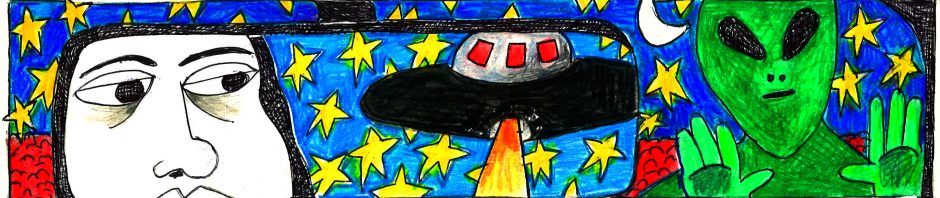
Mr. Wolf calls me a magical thinker. Because magical thinkers believe that thoughts can influence external events. But maybe I’m really a stoic like Marcus Aurelius who said that you are your thoughts. And this I truly believe. I also believe that memories can also be magical depending on how they’re remembered. Because the way something is remembered is what that something will become.
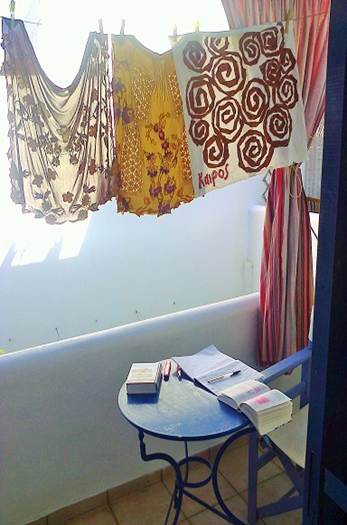
“Balcony Curtains” Via making huipiles on Paros
Many years ago, I put up balcony curtains to create intimacy and protection from curious neighbors. They were not particularly pretty—orange, brown, and beige stripes—but they did their job. Eventually we replaced the curtains with a trellis. The curtains were then recycled as part of the awning for the terrace pergola. But then the pergola came down and so did the awning. And the curtains became part of my fabric stash. A couple of years ago I came across the old curtains. I remembered how they looked hanging on the balcony and the vision filled me with a pleasant sensation. So, I thought, why not repurpose them and keep that pleasant sensation alive. Magical thinking?
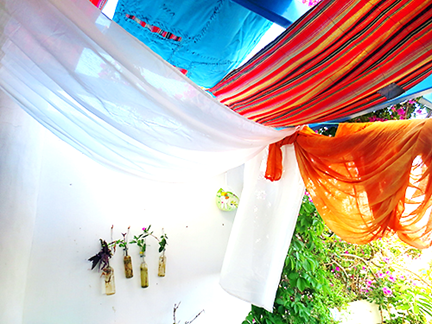
“Terrace Awning” Via The Aesthetics of Transformation
Magical implies a relationship with magic which, according to the dictionary, is “the use of supernatural powers over natural forces”. And that’s what hand sewing is for me. Because, when I start working with my hands, the repetition of movement changes the rhythm of my heartbeat and the frequency of my brainwaves. And I start to flow. Focusing my attention on stitching helps distance me from the world around me. Sewing is magical as it gives me the power to reconnect with myself.
Current events have thrown my biorhythms out of whack and are imposing themselves on my psyche. It can be very debilitating. To return to my core, I sew.
Right before the Civil War, captives from Africa were brought to Alabama despite the ban on trans-Atlantic slave trade. These Africans were not only brutally deprived of their home and of their freedom, but their culture and traditions were mutilated by colonization and enslavement as well.
Southwest of Selma, Alabama, there’s an African-American community known as Gee’s Bend where, following the Civil War and emancipation, sharecropping was initiated. Landowners allowed previously enslaved farmers to continue to cultivate the land but the farmers only received a portion of the crops they harvested. This arrangement was disadvantageous for the farmers but they really had no other options.
Gee’s Bend was in Wilcox County that was c. 80% African American and c. 60% of these citizens were living below the poverty level. Although Gee’s Bend was isolated and economically depressed, there was a very strong community sustained by the local Baptist church. The church provided the opportunity to gather together and unite in spirit. Making music and singing was important for these gatherings as it’s a form of self-affirmation.
Quilt making is also a form of self-affirmation. And African-American women had a tradition of quilt making. But in the 1960s, quilt making had another importance for Gee’s Bend. In 1966, the ladies of Gee’s Bend created the “Freedom Quilting Bee” intended to help sustain local blacks who’d lost their jobs simply because they’d registered to vote during the 1960s civil rights struggle.
In 1967, Lee Krasner, abstract artist and wife of Jackson Pollock, was visiting Alabama where she was told about the magnificent quilts of Gee’s Bend that were part of the Freedom Quilting Bee. After seeing them, Lee was amazed by their beauty and their simple sophistication. Not only did she buy a few quilts, but, once back in NYC, she actively promoted them. Diana Vreeland was enthusiastic as well and saw them as high art as did designer Ray Eames.
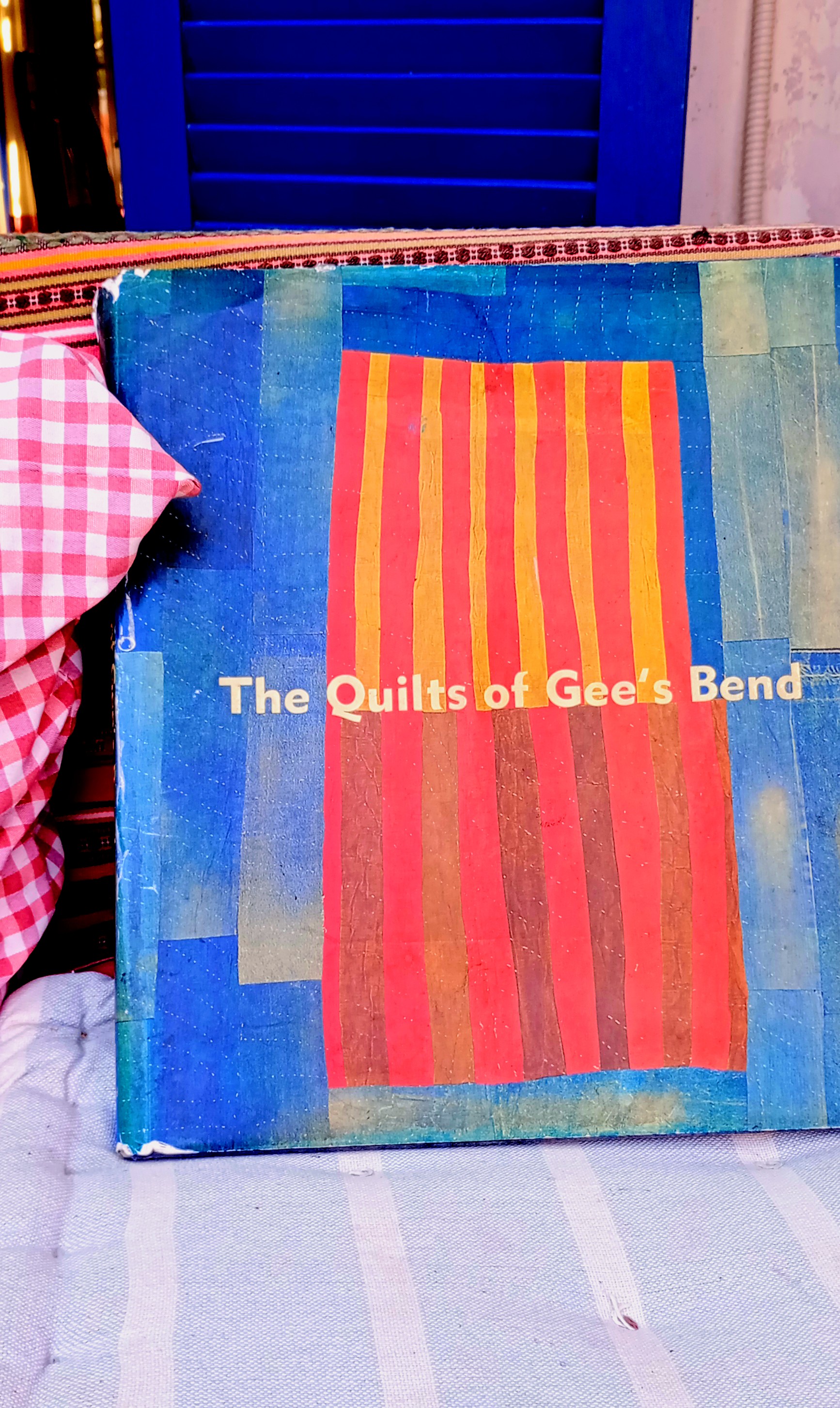
For the ladies of Gee’s Bend, making quilts was a means of keeping their family warm at night and of earning an income. But, by working with their hands, making quilts was also a means of creating an inner sanctuary.
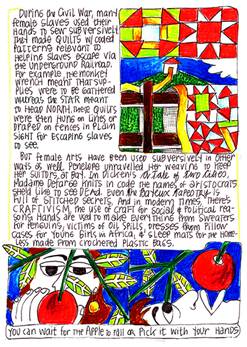
“When humans began walking upright, everything changed. It freed the hands so humans could now reach out and grab something and hold it. The capacity to pick something up increased our ability to closely observe the world around us. Hands helped the brain to evolve.
Hands permitted humans to touch one another and create intimacy. This helped emotions to evolve.
Hands help us accomplish things. They can help create new mental pathways because making things requires sequential thought and logic. Thus, hands help connect the mind with the body.
Making is a form of meditation because focused attention and repeated motion send our brainwave frequencies into theta, just like meditation. So why not make something?” Via In Praise of Hands
Creating something from nothing is the world’s primary survival strategy. “Learning to make a quilt for a girl meant becoming a woman as the quilt symbolized practicality and survival, an acquirred knowledge of recycling and reuse.”
The ladies of Gee’s Bend created in isolation and were not worried about an outsider’s opinion. Maybe that’s why their quilts are so beautiful and audacious. In an oppressive society, these women found freedom in their quilt making.
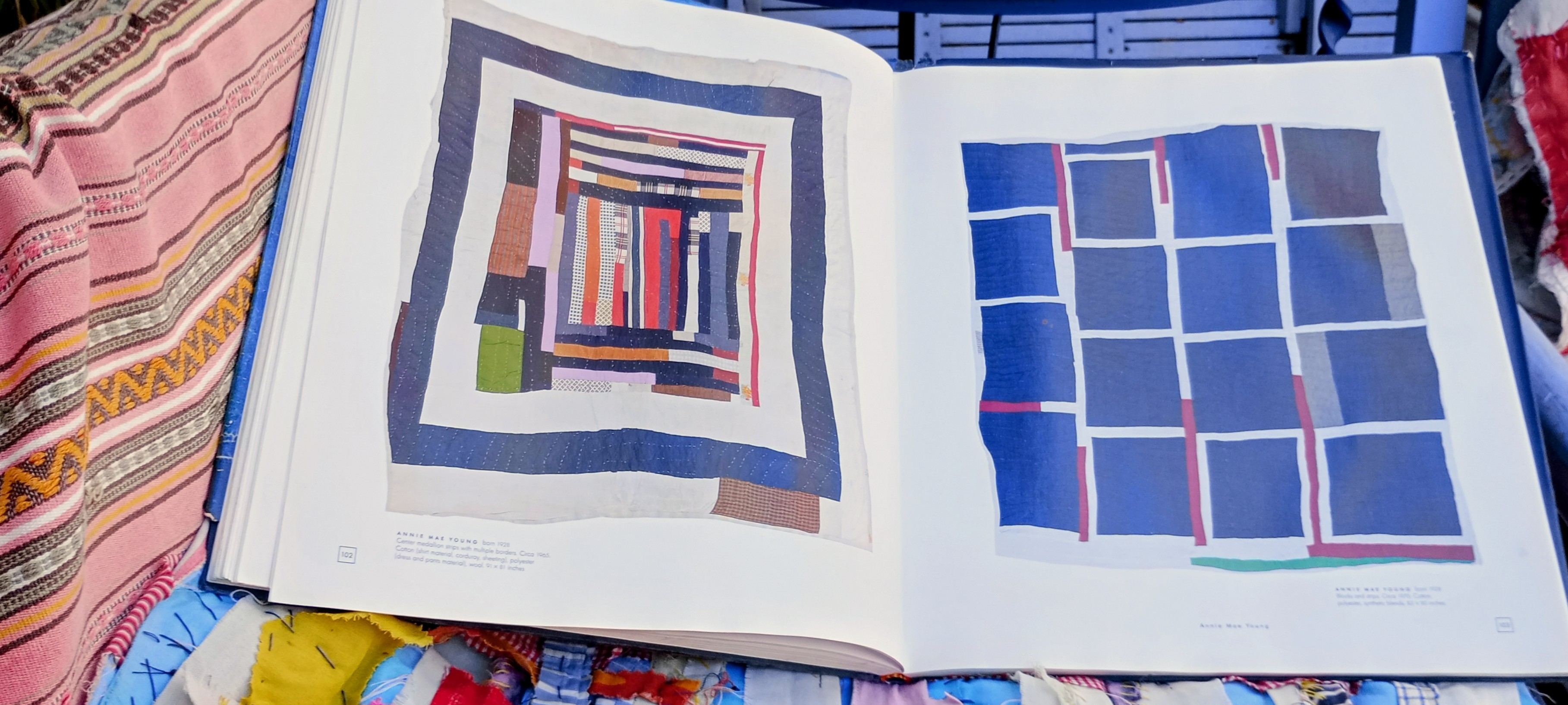
These photos are from the book “The Quilts of Gee’s Bend” listed in the bibliography below.
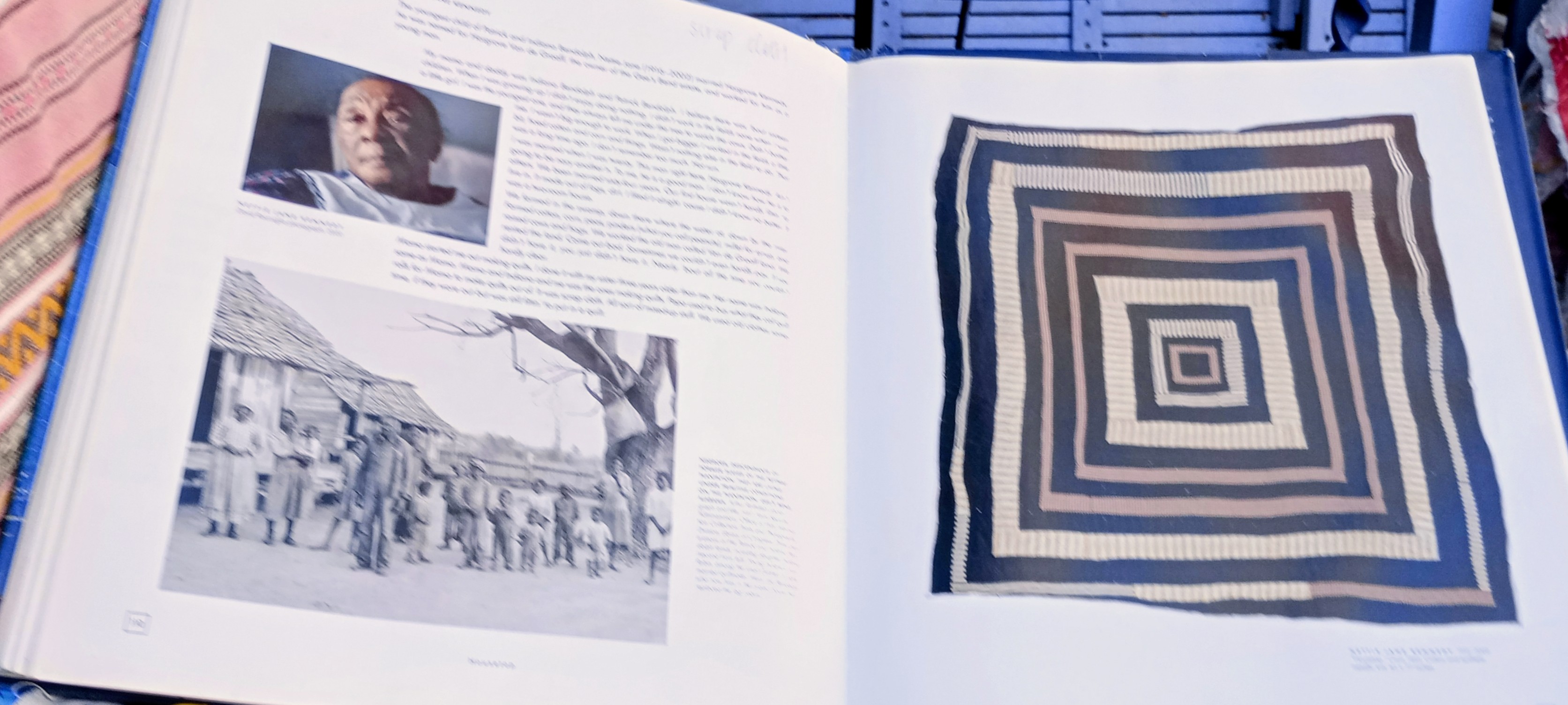
Within us all is the need for individual expression. We need it for our spiritual survival. Piecing the quilt was a quiltmaker’s only private time. One quilter said, “sewing at home gave me peace of mind and a challenge”. Another quilter said that sewing was a means of keeping the mind together. Many of the quilters worked in the fields and were worn out at the end of the day. But on the walk home, they had something to give them energy—thinking about new patterns for their quilts.
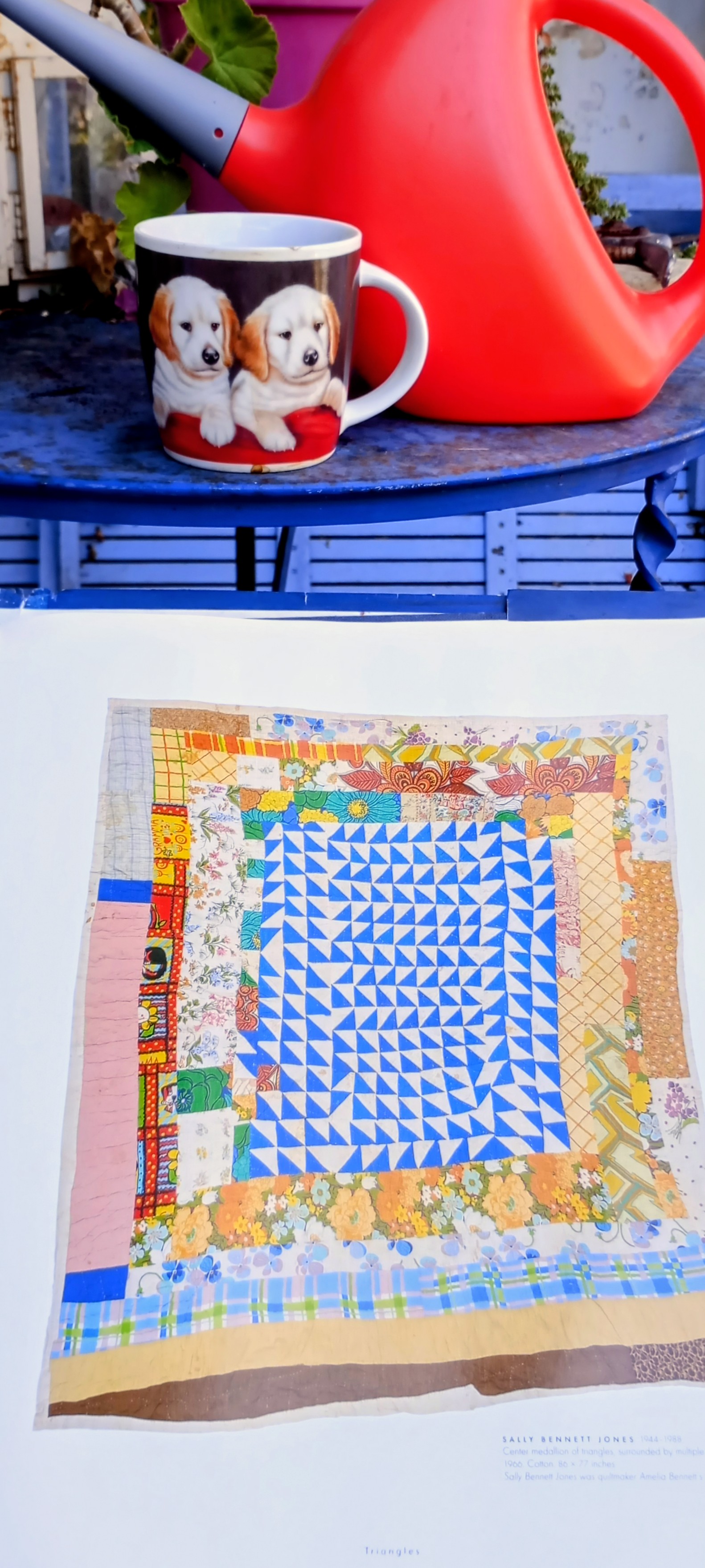
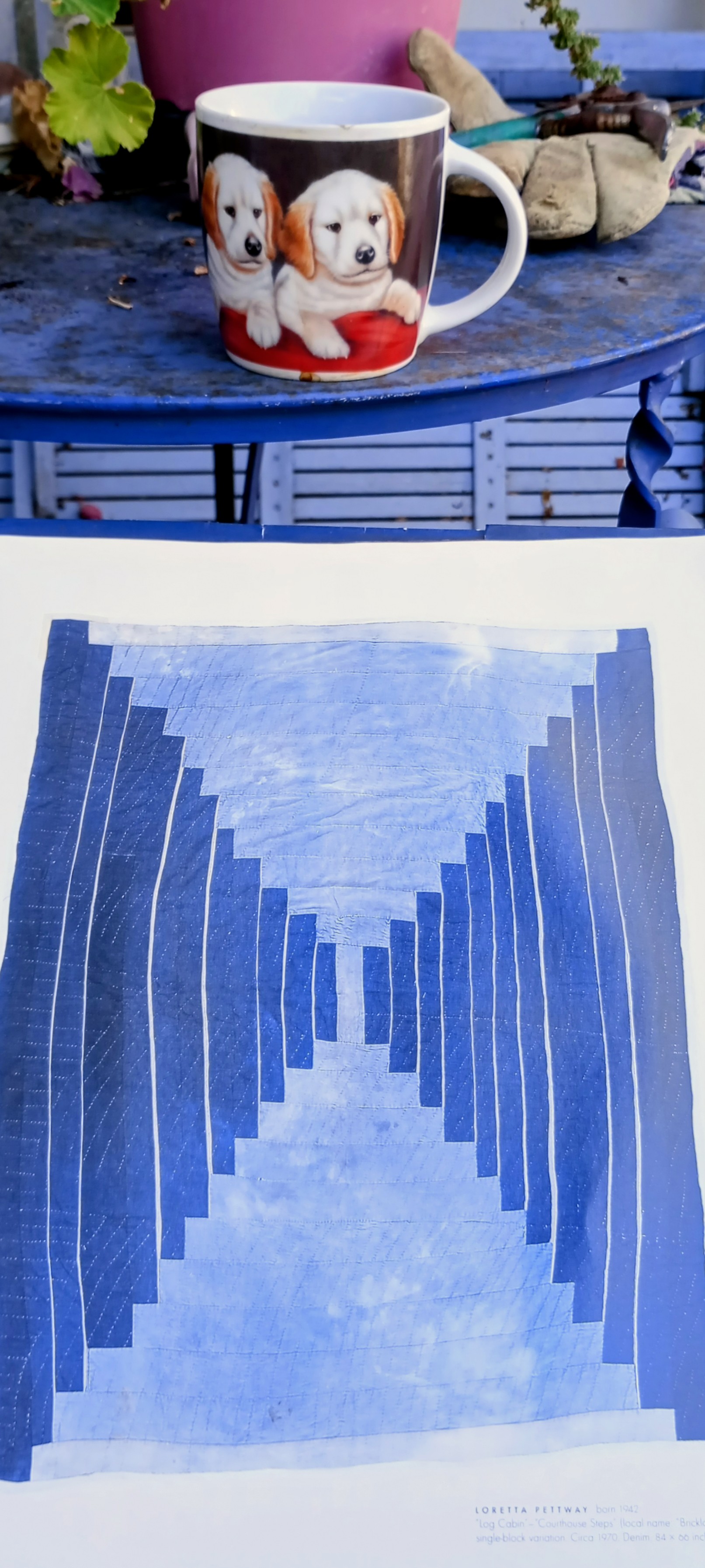
The trading and sharing of fabrics and patterns created even more synergy between the women. But the need to maintain a sense of self was important. The motto was “Piece by yourself. Quilt together.”
”In the quilting bee time, I started using patterns but I shouldn’t have. It broke the ideas I had in my head. I should have stayed with my own ideas.” Nettie Young
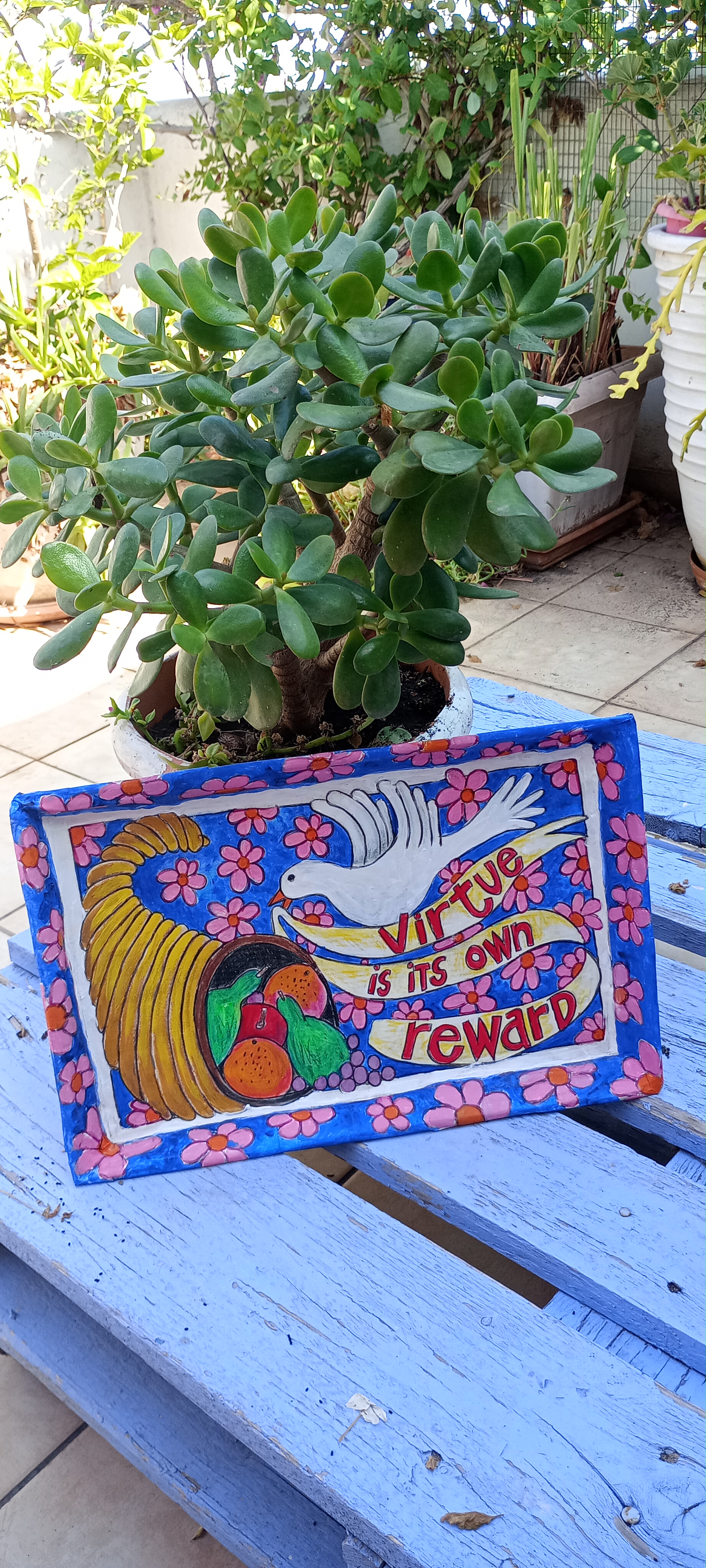
In my mom’s cluttered kitchen, was a decorative sign she probably got with S&H Green Stamps. It showed a cornucopia with fruit and a dove overhead with a ribbon in its mouth. Written on this ribbon was the phrase “Virtue is its own reward.” Although the sign had been hanging for several years, I didn’t take much notice of it. I understood the words but didn’t have a real grasp on their meaning. One day, many years later while I was living on the other side of the Atlantic, out of the blue I started thinking about this sign. Suddenly, it had a significance for me it hadn’t had before.
The quote has been attributed to Cicero (106 BC-43 BC), Roman statesman and orator. With this Cicero wanted to say that the value of virtuous behavior exists within the act itself. Because righteousness carries its own intrinsic satisfaction, you shouldn’t expect a reward for it.
After the assassination of Julius Caesar in 44 BC, Cicero led an attack against Mark Antony. Unfortunately, this led to Cicero’s execution. His hands and head were severed and then displayed to show everyone what the consequences were for going against Mark Antony. Nevertheless, Cicero’s body may have been destroyed but his ideas survived via his writings.
Not only is virtue its own reward but so is artmaking. As stated previously, the true value of Gee’s Bend quilts was the feeling the ladies had while making them. Although the quilts helped keep the family warm and their sales put food on the table, the real value of these quilts was how they helped their makers stay close to their core by giving them that private space they needed.
So inspired by these ladies, I tried transforming my old balcony curtain into what I will call A Memory Cloth as each scrap of cloth has its own story to tell.
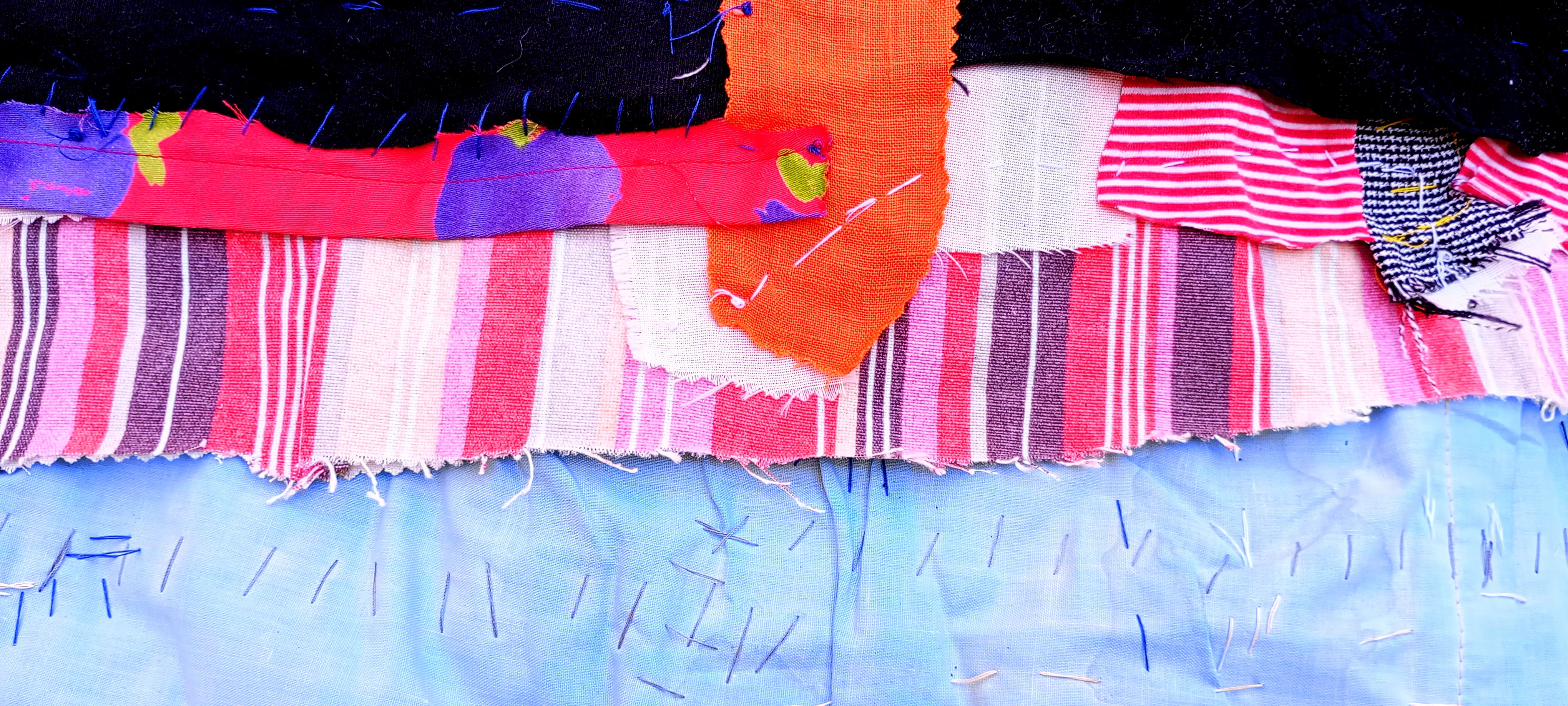
view of balcony curtain leftover
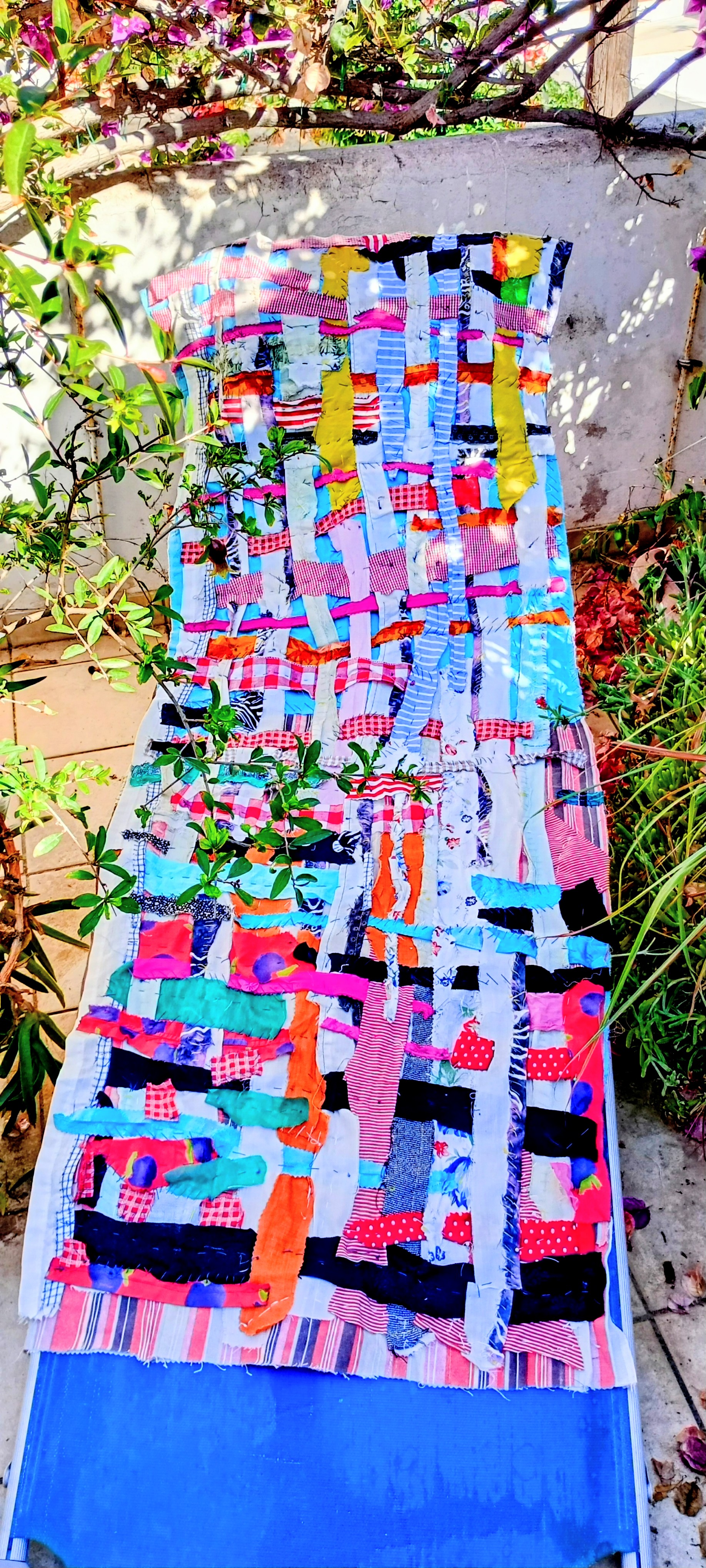
Memory Cloth made from woven scraps pieced on an old curtain

Bibliography: Beardsley, John; Arnett, William; Arnett, Paul; Livingston, Jane; “The Quilt’s of Gee’s Bend”; Tinwood Books, Atlanta; 2002.
Related:
The Aesthetics of Transformation +
Pettway Family Quilters + 7 fascinating facts about the Gee’s Bend quilters + the 2026 Airing of the Quilts Festival +
“When It Was So Rough that You Couldn’t Make It”: Voting Rights in the Early 1960s + The Case For Working With Your Hands +
Japanese Boro + What is Boro? The Complete Guide to Japan’s Sustainable Textile Art +
Cornucopia wiki +


Condy, this is such a wonderful writing! I
Thanks Laura. How wonderful to be complimented by my very first friend!
Sorry about the “Condy” vs “Cindy”♥️.Too often I forget to review my texts and emails! Always
I thought you’d meant to write Candy because I’m so sweet hahahaha
You are sweet and very very special to me:).We need to plan a trip to see each otherâ¦either you here or me there.We have plenty of room for all of you. I think you would love it
Wonderful piece! Just perfect. Times have definitely thrown all kinds of my biorhythms out of whack. Sewing, crocheting, and rug hooking help ME return to calm and order.
Something else we have in common! I’d love to see some of your projects…Do you have a making preference?
No preference really. It depends
So on time. Particularly virtue is its own reward. Loved the story of the quilters and love your memory cloth.
And I still wish for one of your videos…that little lady talking about her life periodically shows up in my head!
Pingback: Dolly’s Fortress | The Narrative Within