Rope Story No. 3

How the Futurist used his Rope:

Giacomo Balla (1871-1958) was only nine years old when his dad died. His mom now had to fight to survive. Nevertheless, she made her son’s education a priority.

Monuments should be made world wide dedicated to Single Moms. Just think about all the men (and women) who became successful thanks to their mom’s sacrifices.

Once out of secondary school, Balla attended the Albertina, the Academy of Fine Arts in Turin. Here Balla was bombarded with new ideas that gave his mind a new direction. And another new direction presented itself when, in 1895, Balla moved to Rome with his mom. Here he worked for several years as an illustrator, caricaturist, and portrait painter.

In 1909, artist Fillipo Tommaso Marinetti wrote “Manifesto of Futurism” which, he stated, was “aimed to liberate Italy from the weight of its past.” The Futurist movement glorified modernity with an emphasis on dynamism, speed, and technology. Balla became a part of this movement.

In 1904, Balla married Elisa Marcucci. The couple had two daughters: Luce (Light) and Elica (Propeller).

Dynamism of a Dog on a Leash by Giacomo Balla (1912)

Balla, intrigued by Etienne-Jules Marey’s chronophotographs that showed the body in motion, wanted to depict light, movement, and speed in his paintings. In 1912, Balla used his rope for “Dynamism of a Dog on a Leash.” His intention was to show that the world is in constant motion even if we don’t perceive it.

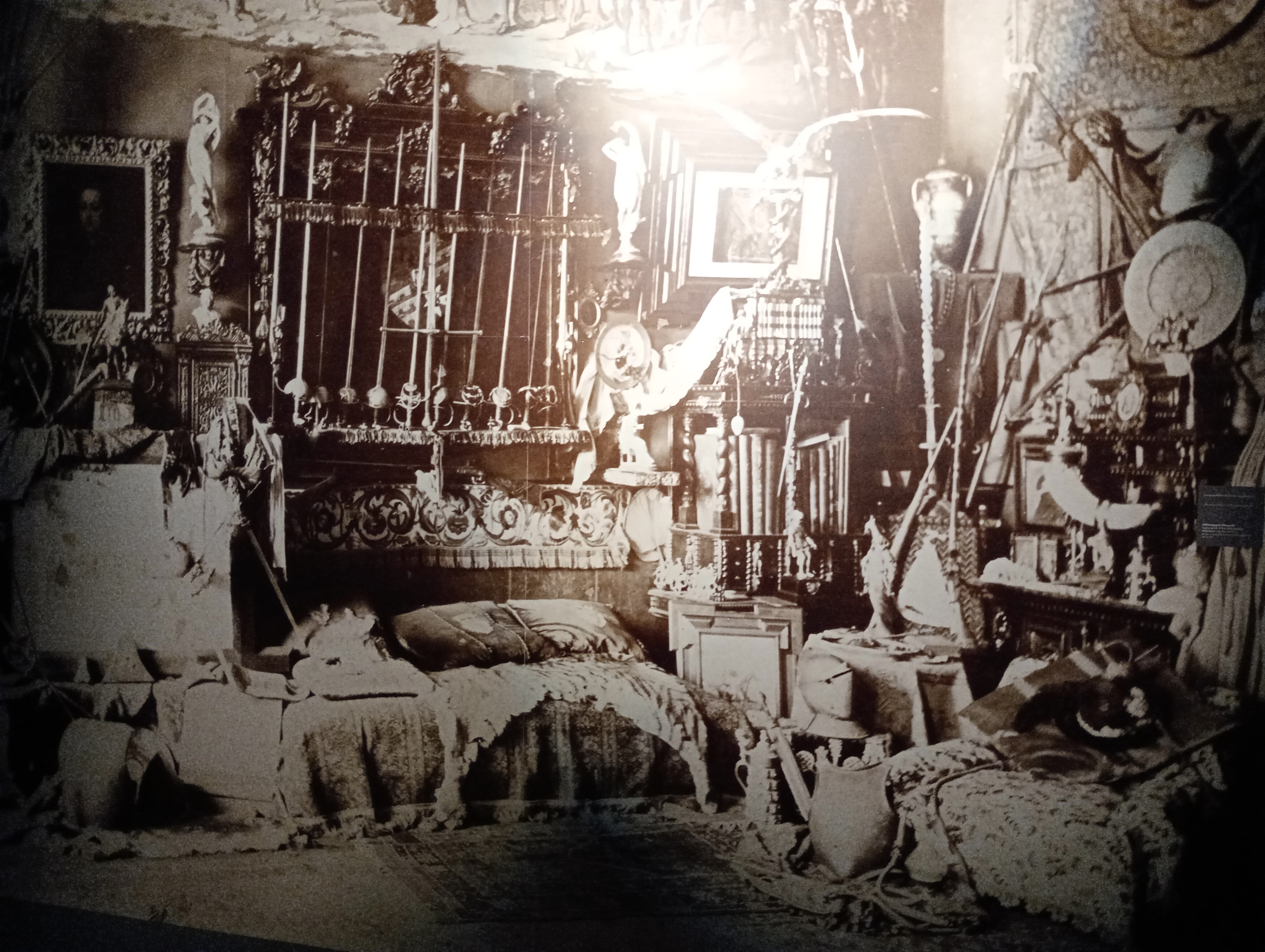
The Futurist movement, identified with Fascism, began to make Balla feel claustophobic. He felt the need to detach himself from it and to return to figurative painting. In Rome, Balla prefered staying at home and creating art with his daughters. See photos of their home here: Motionless Futurists.

How Rope was used for the Thief:

Some dudes are into bondage. Don’t understand it. If you want to tie someone up, tie up a crook. That’s what Jane says.

Holding On

-30-

(“Jane’s Rope” to be continued ⓒ 2024)

Posted in art, Art Narratives, Daily Aesthetics, Rome/Italy | Tagged , , , , | 1 Comment

Janes’s Rope No. 2

The Climber

After her mother’s death, Dorothy was separated from her siblings and sent to live with a second cousin. She was only seven years old. At 16, she was sent off to her grandparents where, for the first time in nine years, she reestablished contact with her siblings.

Dorothy Wordsworth was the sister of William Wordsworth, the poet. In 1797 the two moved to Somerset. Samuel Taylor Coleridge was their neighbor and the three became a trio. A year later, Wordsworth and Coleridge, with input from Dorothy, were publishing poetry as well as hiking together. Wordsworth’s “Tintern Abbey” was inspired by these walks.

In 1802, Wordsworth married but that didn’t keep him from hiking with Dorothy. Or with Coleridge. In Coleridge’s words, together they were ‘Three people, but one soul’. Maybe he shouldn’t have said that as Dorothy had a crush on him. For a while, Coleridge was part of the Wordsworth household. But all that opium had exasperated the negative aspect of his personality. He was picky about everything including his food. And it was Dorothy who was doing all the cooking and cleaning.

Dorothy enjoyed climbing. In 1818, she climbed Scafell, England’s highest peak. It was a daring thing for a woman to do at the time. She was even more daring by writing about it. Because climbing a peak was a form of rebellion. And women who wanted to be emancipated were frowned upon.

Dorothy’s advice for lady climbers: make sure to look closely at what’s around you when climbing. If you start to fall, you may need something to hold on to.

The Drifter

In 1816, the Medusa wrecked off the coast of Senegal. After the wreck, about 147 survivors were set adrift on a hastily constructed raft. There were elements of scandal in this survival  and the people wanted to know more. A few years later, 23-year-old Theodore Géricault painted The Raft of the Medusa representing the wreck and its survivors.

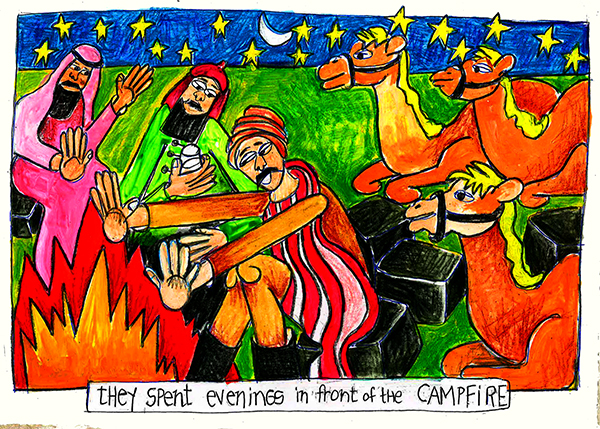
One survivor was Charlotte Picard, an 18-year-old woman travelling with her family. Of her nine family members on board, only four survived. After adrift on the raft for ever so long, she woke up next to her mom on the ground being stared at by dark skinned bearded men sitting on camels. The ladies immediately fainted. When they came to, one of the men explained that they were really Irishmen disguised as Arabs.

Charlotte and her group were forced to live in Senegal for the next two years. But, once back in France, Charlotte published her memoirs describing what it was to survive a shipwreck.

Jane read Charlotte’s book. It inspired her to write, in a life coach style, a book about drifting. Some drift with a purpose, some do not. Some drift intentionally, others are simply lost. But if you must drift, this is Jane’s advice: It’s ok to drift but only if you have a rope long enough to keep you tied to something stable.

No matter how big of a boat, you still need an anchor.

Holding On

-30-

(“Jane’s Rope” to be continued ⓒ 2024)

30-

Related:

Did Wordsworth really betray Coleridge?: The strange events of 27th December 1806 +

Coleridge and Wordsworth debate poetry with Dorothy video clip +

The Romantic Poets documentary +

Utsuro Bune + Water: The Drifting Boat (Ukifune), circa 1851 – 1852 +

Women and Shipwrecks: Surviving ‘The Medusa’ +

Charlotte-Adélaïde Dard +

Posted in Art Narratives | Tagged , , , , , , , , , | Leave a comment

Jane’s Rope

Every day is a short story. You just need to get it down on paper.

Katherine Anne Porter (1890-1980) was born in Indian Creek, Texas. Her mother died when she was two. Her father felt he had better things to do than raising kids. So he dumped Katherine and her siblings on his own mom and left. Then grandma died and Katherine was bounced around from one temporary situation to another.

A motherless childhood and a life dominated by poverty can create cravings that are difficult to obliterate. Hungry for a home, at age 16, Katherine married a rich drunk who was physically abusive. After she was diagnosed with TB and had to go stay in a sanatorium, Katherine knew that it was time to dump Rambo and move on. In 1919 Katherine moved to New York City and there earned a living as a ghost writer.

The following year a magazine publisher sent her to Mexico to cover the aftermath of the Mexican Revolution. Here Katherine met many revolutionaries and protagonists of the new left. This included Diego Rivera before he was Frida Kahlo’s husband. Initially, Katherine was intrigued by the revolutionaries and their lifestyle. But when she started smelling their patriarchal macho stench, Katherine, once again, decided to move on. However, the stench had inspired a number of short stories that were eventually published collectively as Flowering Judas and Other Stories.

Included in the collection is “Rope” (1928), the story of a quarrel between a wife and her husband. Hubby goes to buy groceries but, instead of coming back with the coffee that his wife wants, he comes back with a coil of rope. The wife gets angry and says a few abrasive things. The husband then has his say, too. As if playing ping pong, the couple bounces unpleasant comments back and forth. What started out as an insignificant conflict is blown out of proportion, typical of marital squabbles. The couple nitpicks at one another until they are bored and decide to do something else. The only problem is: what to do with the rope?

Not wanting the rope to go to waste, I’ve asked my imaginary friend, Jane, for some suggestions:

A Jump Rope

Jane said that the easiest way to transform the rope was to use it as a jump rope. Rope jumping is a recreational activity that also works well as exercise. Obviously, when rope jumping became popular in Europe, only the boys were allowed to do it. You know, girls’ ankles were meant to be fantasized, not seen. Girls had to wait until the next century before they were permitted to jump, too. But once they started jumping, no one could stop them. They even made-up skipping chants to give their jumps more pizazz. One favorite went like this: Not last night but the night before, 24 robbers came knocking on my door. As I ran out, they ran in….”

Jane liked jumping but found the chants too folkloristic. For her creative writing course, she wrote some new chants with a feminist vibe. One chant made it to the radio and became a top tune for jumpers.

A Tight Rope

On July 8, 1876, the Italian funambulist, Maria Spelterini, crossed the Niagara Falls gorge on a tightrope. It was the first time a woman had tried to do so. People from all over had come for the event and had even paid to see it. With their necks stretch out like giraffes, the audience oohed and aahed. Maria had enjoyed herself so much that she crossed the gorge again. But after her last performance, the beautiful 23-year-old Maria disappeared. No one has since heard from her causing much unpleasant speculation.

Jane has no desire to be a daredevil, but she would like a funambulist thrill. She tried walking on a rope tied to the trees in her backyard. It was going quite well until the birds felt the need to protect their territorial domain and made her fall off the rope. Jane intends on trying again but this time some place where birds are prohibited.

Holding On

-30-

(“Jane’s Rope” to be continued ⓒ 2024)

Related:

Katherine Anne Porter + Martha and Katherine + Eudora Welty (1909-2001)

Analysis of Katherine Anne Porter’s The Jilting of Granny Weatherall + THE JILTING OF GRANNY WEATHERALL, A Short Story by Katherine Anne Porter audio book + The secret self : a century of short stories by women anthology by Hermione Lee on archive HERE (includes Katherine Anne Porter’s story “Rope”) +

Hop to It: 6 Benefits of Jumping Rope +

Maria Spelterini fotos +

Posted in Art Narratives | Tagged , , , , , , , , | Leave a comment

Women & Condition of Possibility

Life is about interrelating and how we interrelate determines the quality of our daily life.

Sometimes the presence of a force outside of us provokes not only a psychological response but a physiological one as well.

Imagine living like a plant fighting for nourishment and sunlight every day.

Plants are stuck in place. So, to survive, they must adapt. Like trees, for example. When and where a tree shoot grows will determine the basic form it will grow into.

The interplay between physiological and external forces can easily be seen in trees sculpted by the wind. As the tree grows, it is continually moved by the wind.

Whatever you do continually becomes you.  A tree that’s bent regularly by, for example, the sirocco wind blowing northwest from the Sahara, will grow bent towards the north.

In 1977, when the Woman’s Movement was full of energy, art critic Linda Nochlin published an essay “Why Have There Been No Great Women Artists?”  The answer is simple. There have been no “great” women artists because we live in a patriarchal society.

Linda refers to John Stuart Mill who wrote that we tend to accept whatever is as natural. And since women have always lived in a world dominated by white male subjectivity, we see this as natural. But, continues Mill, male domination is just one more social injustice to eradicate if a true and just social order is to be created.

Men have failed society. There have been no “great” female artists because women have been excluded from the possibility of becoming great. Not only were women kept out of the academies, they were and continue to be restricted socially and economically as well.

Women have also been accused by men of being “incapable of greatness”. But what is “greatness”? What’s great for you is not necessarily great for me.

Aesthetic canons have been created by the boys who focus on their own capabilities to determine what the standards for others are.

Women are “potentially” great, but our potential is restricted by our condition of possibility. A condition of possibility, says Immanuel Kant, is a necessary framework for the possible appearance of a given list of entities. Easy example: if I am tall, I have more of a chance of playing on a basketball team than does someone who is short. And another example: if my dad has a bunch of money, I have a better chance of getting a good education than does someone without funds. And the better the education, the better chance of getting a good job.

The 19th Amendment gave American women the right to vote in 1920. However, that was for white women. Many minorities were unable to vote until President Lyndon Johnson signed the Voting Rights Act into law in 1965.

A patriarchal society deprives women of their potential. A patriarchal society deprives itself of its own potential, too. Because men’s and women’s roles were meant to be complementary not competitive. To deprive a woman of her potential is to create a society that limps because it has created one leg longer than the other.

When Michele Obama spoke recently at the Democratic convention, she said that most people “will never benefit from the affirmative action of generational wealth.” In other words, the condition of possiblity favors the wealthy.

So ladies, it’s time to harness the wind.

-30-

(“Women and Condition of Possibility” ⓒ 2024)

Related:

The Lace Collar +

Bent into shape: The rules of tree form + 9 Treescapes Dramatically Shaped by Wind + Krummholz, crooked wood +

John Stuart Mill (1806-1873) + The Subjection of Women by John Stuart Mill + Condition of Possibility + When Did Women Get the Right to Vote? A Look Back at U.S. History +

Read Linda Nochlin’s “Why Have There Been No Great Women Artists?” HERE + The great women artists that history forgot + Why Have There Been No Great Women Artists? wikipedia +

The UN’s FAQs: Types of violence against women and girls (VAW)+

Voting rights for Black women +

Posted in Art Narratives | Tagged , , , , , , , , , , , , | 1 Comment

Gaze Detection

Have you ever felt as if someone were watching you? Why is that?

The feeling of being looked at, known as scopaesthesia, is a phenomenon that, although it exists, lacks adequate empirical investigation.

Rupert Sheldrake, biologist and parapsychologist, took an interest in this phenomenon. He decided that people were able to consciously detect the unseen staring.

Although it would be easy to describe this sensation of been stared at as a form of telepathy, Sheldrake concluded that it was not a paranormal phenomenon but rather a normal part of our biological being. Because of his laidback experimentation methods, Sheldrake has been much criticized.

Many ridicule the idea of telepathy. I am not one of them.

Once, when people lived with clans or in small communities, non-verbal communication was easier. Vibes were more often used than words to communicate. But with the increase in demographics that changed as a standardized form of communication was needed. Vibes were thus replaced with words.

Before the evolution of language, these telepathic skills were once fundamental for survival.

If you don’t use it, you lose it. When we stopped using our telepathic skills, we lost them. Fortunately, many people still maintain traces of their telepathic skills.

I have no particular interest in parapsychology. Nevertheless, I don’t discredit it. The problem is that there are many charlatans out there in parapsychology just as there are in any other field. Like politics, for example.

Several years ago, I was alone on Paros. My daughter was supposed to arrive the next day so I was busy preparing for her arrival. Her bedroom was downstairs adjacent to a veranda. Normally, because the summer is so hot, people generally sleep with the windows opened but the shutters closed.

In all the years that I have been coming to Paros, I’ve never felt afraid. But for some reason, that evening I felt extremely anxious. I kept asking myself whether or not I should shut the glass doors as well—something I have never done before. Finally, I convinced myself to go close the doors.

There was a bright moon that illuminated the veranda. And from the shutter’s slats, I could see the form of a man right outside the door. He had a tool in his hand made specifically to lift the shutter’s inside latch so he could enter.

For 30 seconds I froze. Had I arrived a few minutes later, I would have found myself face to face with a thief. Then I felt the fear transform into rage and started yelling “Thief! Thief!”. The guy then, obviously, ran off.

The sensation I felt that provoked me into checking the doors was a telepathic experience.

hypnotized

-30-

Posted in Art Narratives | Tagged , , , , | 9 Comments