For Rose!

Muy Marcottage "Mottainai" kimono tailleur

My friend Rose is a video maker.  For many years she worked in Japan.  While there, she bought an embroidered kimono that, once back in the States,  was out of place for her new lifestyle. Luckily for me, Rose sent me this wonderful kimono for my Muy Marcottage.

I enjoy using other women’s handiwork to make clothes.

Intimidated by the original embroidery, it’s not always easy  to come up with a way of reutilizing such a garment without fear of ruining it. But, by the same token, it’s also useless to hoard things in a box. Finally, I came up with the idea of cutting the kimono in half and transforming it into a tailleur.

Naturally, I tried to respect the embroidery but, influenced by boro, my main concern was that of making something wearable.

Thanks to Linda Schailon of ECOPINK, I’ve been invited to participate in the Mostra Articiclo at the Fiera di Roma 13-16 December where “Mottainai,”  the name I’ve given this kimono tailleur, will be exhibited.

Muy Marcottage "Mottainai" kimono tailleur 02

The Japanese have a unique sense of aesthetics. Just think about pillow books, ikebana, haiku, wabi sabi.

And then there’s MOTTAINAI, a sense of regret for that which is wasted.  Mottai = diginity or sacredness of an object and Nai = absence or lack.

Muy Marcottage "Mottainai" kimono tailleur embroidery

Invisible threads bind so many women together without their knowledge…

Muy Marcottage "Mottainai" kimono tailleur embroidery 02

Sashiko (刺し子?, literally “little stabs”) is a form of decorative reinforcement stitching (or functional embroidery) from Japan. Traditionally used to reinforce points of wear, or to repair worn places or tears with patches, this running stitch technique is often used for purely decorative purposes in quilting and embroidery. The white cotton thread on the traditional indigo blue cloth gives sashiko its distinctive appearance, though decorative items sometimes use red thread. Many Sashiko patterns were derived from Chinese designs, but just as many were developed by the Japanese themselves. The artist Katsushika Hokusai (1760–1849) published the book New Forms for Design in 1824, and these designs have inspired many Sashiko patterns.

Muy Marcottage "Mottainai" kimono tailleur 03

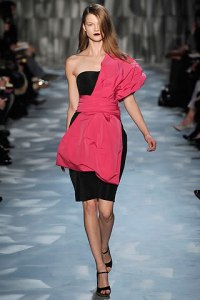
MoschinoCheapChicKimona Style Dress, Moschino Cheap & Chic, Fall 2009, Milan

BORO, MANY EXAMPLES ON THIS WONDERFUL BLOG + Tenderly mended, on pinterest, things that have been mended.

The fisherman collection was inspired by 1800s Japanese fishermen and the distress and repair of that era. Kimono-inspired jackets and pants were transformed with Boro repair work and sashiko stitch to turn the garments into museum pieces.

Japanese modern design kimono, Welcome to my page which is introducing the Japanese modern design kimono from my collection. You will be surprised to see how they look modern or contemporary in spite they were made about between 1930s and 1950s.

19TH CENTURY ITALIAN CHAIRS, These outstanding hand carved gilded Italian chairs, circa 1890, were originally covered in a fine aubusson. Now they have found a new life reupholstered in Japanese boro. Boro means rags in Japanese.

Muy Marcottage "Mottainai" kimono tailleur 04

Hiromi Saito Brings Age-Old Kimonos into Your Daily Life + Mamechiyo describes her kimonos as modern landscapes, where the Eastern and Western worlds collide.

Ann Asakura with a kimono she pieced together to tell a story of Japanese-American history in the islands.

Contemporary Beautiful Women who Like Kimono + Prada kimono + Gabriele Colangelo kimono + Recline in Green Kimono + Sashiko western shirt + Fusion kimono.

Muy Marcottage "Mottainai" kimono tailleur 05

Linda SchailonLinda Schailon of EcoPink modelling “Mottainai” at the Mostra Articiclo at the Fiera di Roma

p.s.: Kimono Reconstruction + Ki-mono Reconstruction Facebook +See.

Posted on by Art for Housewives | 9 Comments

How to make coiled fabric baskets and rope bracelets

Why not coil a little?

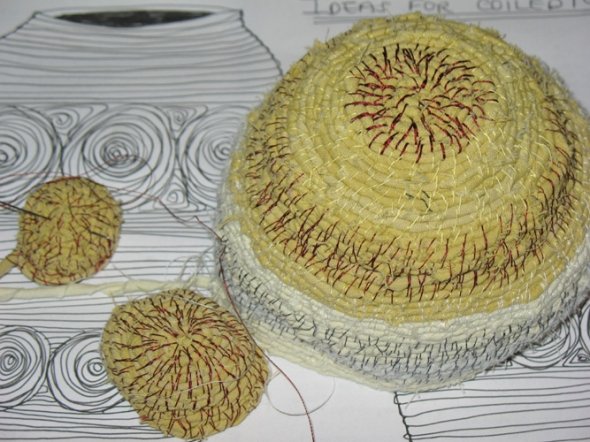
Coiled Fabric Basket by AbbysSewAwesome

How to make a coiled fabric basket using clothesline and strips of fabric + Coiled Fabric Bowls! (tons of photos) + How to Make a Coiled Fabric Bowl + Previous ART FOR HOUSEWIVES post + Child print deep coiled fabric basket + COILED FABRIC BASKET+ Coiled fabric baskets.

Coiled fabric purse tutorial

Coiled Rope Tote.

How to make a rope bracelet

How to make a rope bracelet + Yarn or Fabric Wrapped Clothesline Rope Bangle Bracelet Tutorial + Fabric Bracelet Tutorial + Diy {dressed up target sailor bracelet} + DIY Braided Rope Bracelet.

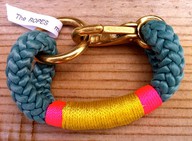
Rope bracelet

How to Make Coiled Fabric

Posted in Crafts | Tagged , , , , , | 15 Comments

Thinking about India and drapage…

Drapage/draping is one of the most basic techniques in clothing design. Before zippers and sewing machines, draping a piece of cloth around the body was an obvious solution to covering oneself. Think of the toga. And the sari.

Drapage at Epidavros Museum + Draping. Art and Craftsmanship in Fashion Design, the book.

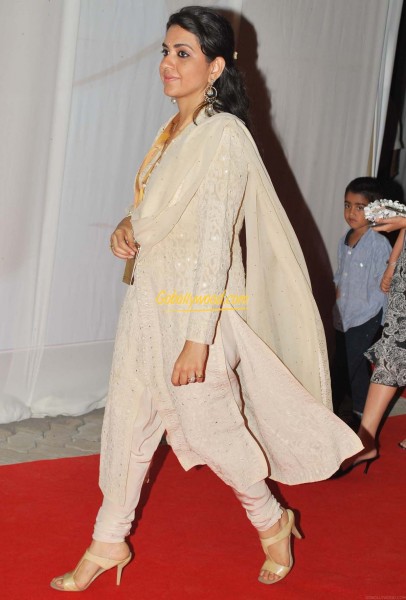
A sari is a long piece of unstitched fabric that Indian women drape over their bodies.  The way these sarees are draped often depends upon the region where they’re worn but the most common way is that of wrapping the sari around the waist with one end and using the other end to drape the shoulder.

There are over 80 ways to drape a sari. Mumbai-based fashion designer, Shaina NC, holds a record in Guinness Book of World Records for draping fastest saree. Her 55 innovative ways of draping saree has brought glory to her fashion designing career, thus earning her the title of “Queen of Drapes”.

Designer Shaina Nc wearing pantsuit version with sari

History of the sari + History of Saree and Types of Saris From Different Regions in India + Indian Clothing.

Mumtaz style drap: This is very innovative drap. here saree is rounded twice around to give a slim effect. It’s hard to walk in this drap. This drap is good for saree with heavy or embroidered borders.

Draping a saree + More.

EastWestLifestyle BLOG.

Revolutionary Rugs at ABC Carpet & Home: Indian women spinning recycled sari silk yarn to make rugs.

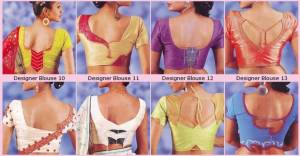
Saree blouse designs

Recycled Sari eco handbag + 20 WAYS TO RECYCLE SARIS + 7 Ways to Upcycle Sari Fabric + Recycled sari sundress + Sarees + My Indian Sarees Design Collection.

Posted in Fashion | Tagged , , , | 1 Comment

Not all buttons need holes

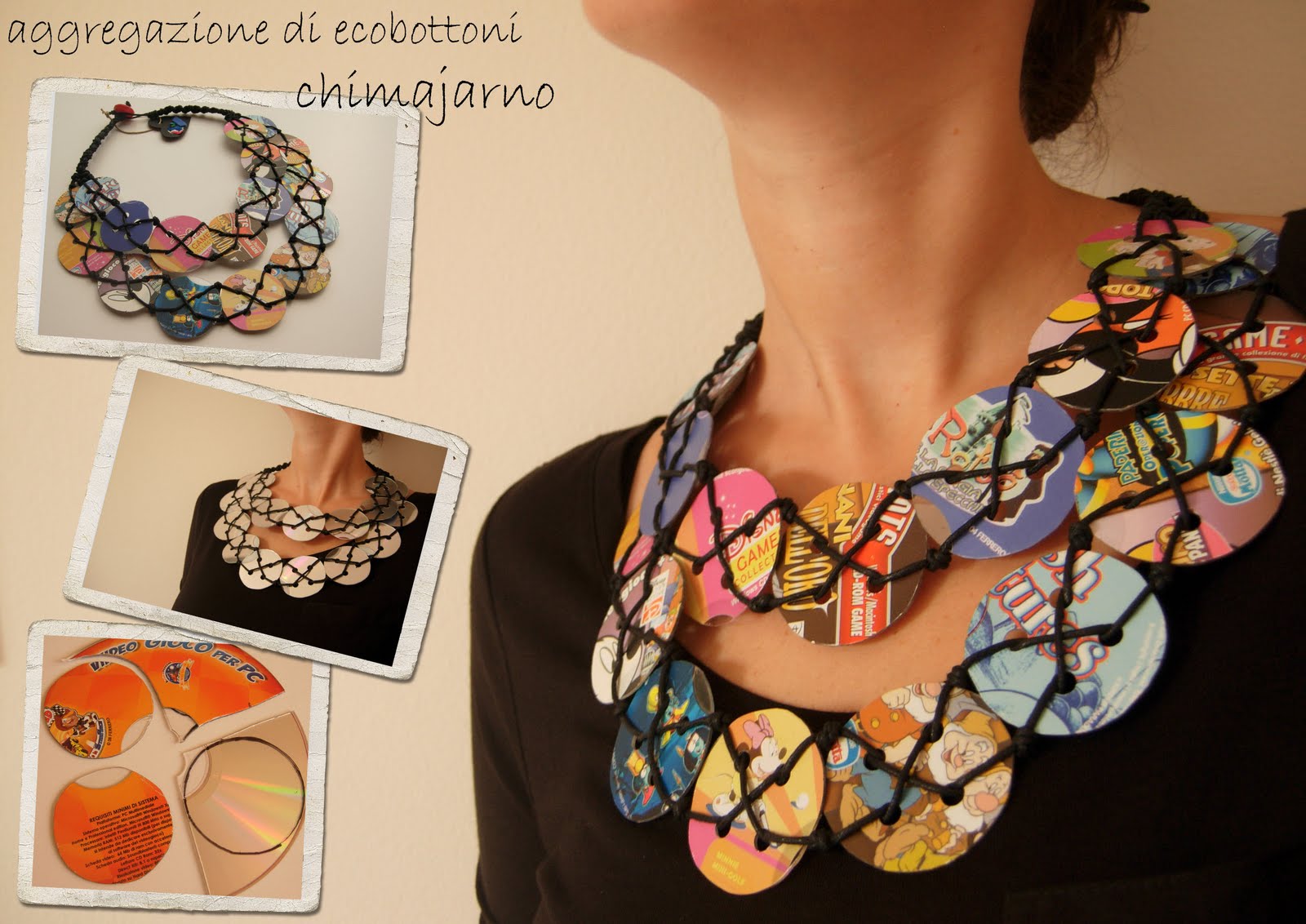
My blog has permitted to come in contact with a lot of interesting women dedicated to making things. One such woman is Chiara Trentin of Chimajarno.


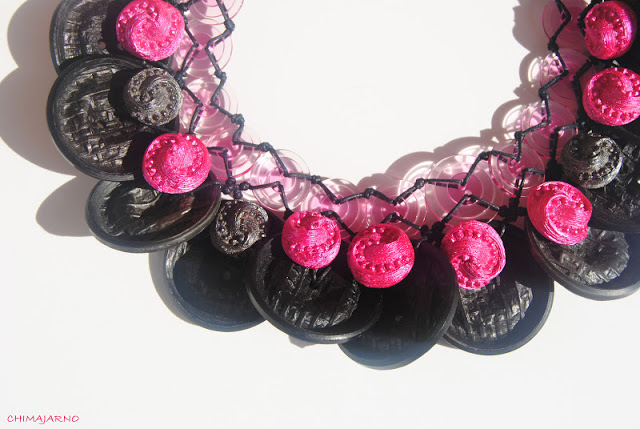
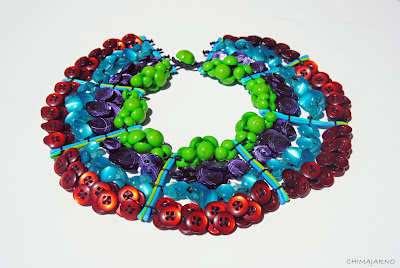
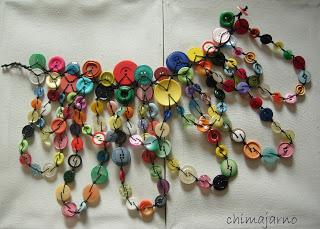
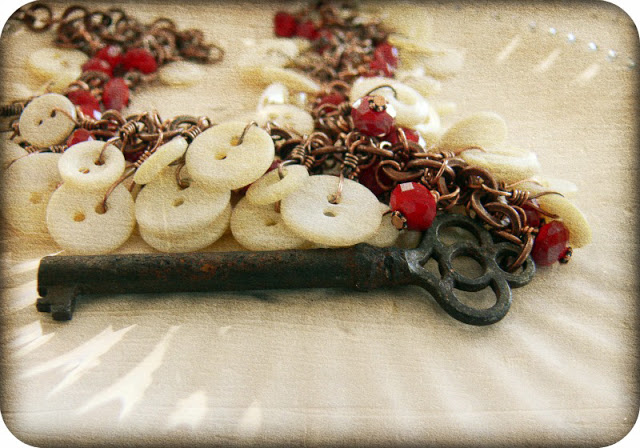
Chiara is a young woman who lives near Venice.  Years ago she was given a tin can full of her grandmother’s buttons. Initially she enjoyed playing with them, grouping them together according to size and color. This interest for her grandmother’s buttons led her to various experimentations.  And that’s how she began making button necklaces.

Necklaces have been around for a long time. In South Africa, archeologists discovered a cave with necklaces made from shells that were strung nearly 75,000 years ago!

Chiara’s passion for making button necklaces became so great that she abandoned her office job to dedicate herself full time to her craft.  She successfully participates in many exhibitions and markets.

Here’s a sampling of Chiara’s delightful necklaces:

Power is pink by Chimajarno

button necklacePigmenti d’angelo” per il concorso “Bijoux d’Autore 2012”.

Aggregazione di bottoni” esposta a Riearteco 2010 Biblioteca delle Oblate Firenze

Necklace made from CDs (Chiara uses the same technique to make necklace from bottle caps!)

Check out Chiara’s Facebook page, Chimajarno to see more!

Directly from Chiara (in Italian!):  «Ciao sono Chiara (Chimajarno) e da un po’ di anni i bottoni sono entrati davvero con gioia nella mia vita, un po’ per scherzo, un po’ per necessità di sfogo ho iniziato a unire con dei fili i bottoni che stavano dentro una scatola di latta ereditata da mia nonna. Ora un po’ di tempo è passato da quei primi esperimenti e posso dire che la mia vita è cambiata moltissimo, dalle 8 ore chiusa in ufficio mi ritrovo adesso dentro in esperienze che mai avrei potuto nemmeno sognare, e oggi mi sembra in effetti di vivere ancora in un sogno. La mia passione si è trasformata in un’attività con soddisfazioni enormi ed inimmaginabili. Da qualche anno partecipo a tanti eventi, i quali mi regalano molto spesso grandi emozioni. Gli incontri con le persone, sia il pubblico sia gli altri artisti che gli organizzatori, sono uno degli aspetti più piacevoli, ho provato sensazioni che mai avevo incontrato nella mia vita “normale” di prima e sinceramente tutte queste belle positività mi danno una bella forza in questo mio percorso. Quando ad un certo punto della mia vita mi sono ritrovata praticamente ad un bivio a dover affrontare scelte non proprio facili e sicuramente decisive per me (ritornare o non ritornare in ufficio? il mio era solo un hobby o no?) molto ha influito in me la voglia di crederci a pieno in ciò che avevo intrapreso, testardaggine e gran impegno hanno poi fatto il resto. Quando ho iniziato ad aggregare i miei bottoni ho scoperto qualcosa che può capire solo chi usa le mani, testa e cuore. Consiglio sempre di crederci veramente in ciò che si sta facendo e si vuole fare, il vedere le cose in positivo (ed essere positivi) aiuta davvero tantissimo …e i risultati un po’ alla volta arriveranno».

Related links:  Prehistoric Jewelry Dates Back 82,000 Years + Vintage button jewelry on pINTEREST + MORE BUTTON JEWELRY HERE + Button Necklaces + Retro Button Necklace Tutorial + Vintage Jewel Full Collar Button necklace + Bread Dough Rose and Vintage Look ButtonNecklace + Bird cage and button necklaces.

Lori Anderson’s button necklace

Posted in People | Tagged , , , , | 3 Comments

Feminists and Huipiles

HAPPY BIRTHDAY MOMMA!

hupil "feminist"

This is a hupil I made from an old pair of sweat pants and lace remnants given to me, in part, by my mom. The red stitching running across the front diagonally reads “feminist“.

Not long ago, while discussing animatedly,  a male friend of mine  called me a feminist as if being a feminist was something bad. Initially, I reacted defensively but then thought “Who is this dude to talk to me about feminists”? A feminist is simply a woman who tries to protect her rights and the rights of other women. So why do so many men have a problem with this?

We live in a world excessively masculinized and, for the past 5,000 years, women have been treated as inferiors. It was not always this way. Once, when life was considered sacred, women were revered for their major contribution to the life cycle.

Once upon a time, the many cultures of this world were all part of the gynocratic age. Paternity had not yet been discovered, and it was thought … that women bore fruit like trees—when they were ripe. Childbirth was mysterious. It was vital. And it was envied. Women were worshipped because of it, were considered superior because of it…. Men were on the periphery—an interchangeable body of workers for, and worshippers of, the female center, the principle of life.

The discovery of paternity, of sexual cause and childbirth effect, was as cataclysmic for society as, say, the discovery of fire or the shattering of the atom. Gradually, the idea of male ownership of children took hold….

Gynocracy also suffered from the periodic invasions of nomadic tribes…. The conflict between the hunters and the growers was really the conflict between male-dominated and female-dominated cultures.

… women gradually lost their freedom, mystery, and superior position. For five thousand years or more, the gynocratic age had flowered in peace and productivity. Slowly, in varying stages and in different parts of the world, the social order was painfully reversed. Women became the underclass, marked by their visible differences.

from Gloria Steinem’s “Wonder Woman

The concept of democracy has been around for c 2,500 years but women have been voting only for the past 100. This means that for 2,400 years society has evolved dominated by male and not female values.  And we see where that has taken us!

HUIPILES:

Huipiles and Mayans

Huipil and Snakes Chalk Drawing + Huipil from Patzun, Guatemala + Huipil skEtch + Details of “huipil” + Interesting huipiles + And more huipiles.

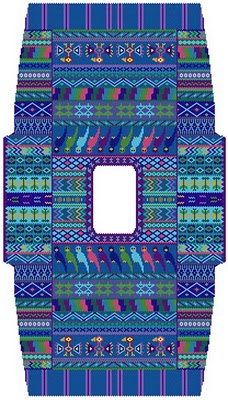
Sig Wynne-Evans‘ huipil design

huipilMaya Heritage: The Textiles Around Lake Atitlan

Tejuana huipil via maison celeste

The Dancing Chicken, huipil collar

Huipil style shoesColours to boot + Chinantec Huipil Oaxaca + Huipil inspiredrug + Mexican huipil, paper huipiles made by children + Take me with you: Huipil Weekenders.

Inside out hupil coin purse by Grain Design found here

If you are in Rome, please check out by Muy Marcottage dresses, ponchos and huipiles at Mercatino Monti next Sunday, November 18.

Posted in Ecofeminism | Tagged , , , , , , , | 1 Comment