Dancing in Finland

Knowing how to interact with the world around you is essential for one’s well-being. It is a knowledge of particular importance when dealing with conflict. Unfortunately, it seems many people are addicted to conflict and feel that the only way to resolve this conflict is with aggressive, violent behaviour. Violence breeds violence so the conflict becomes never-ending.

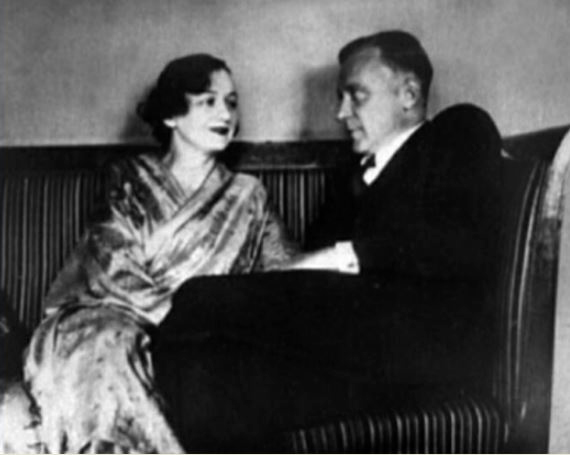
To get out of this loop, I decided to experiment using Twitter comments. When something controversial is posted, I try to comment in an alternative way. For example: recently the Finnish Prime Minister, Sanna Marin, was at a party and, while dancing she was filmed and the footage posted on social media. The world went crazy. One morning every other post on Twitter was about her. So, in reply to a post related to Marin’s dancing, I wrote: “Is dancing illegal in Finland?” Immediately I started getting one like after another for this comment (much to my surprise) then someone responded “Not since 1945” and that response got even more likes than my initial reply. Wondering why there was so much enthusiasm for this comment, I did a quick search and discovered that dancing had actually been banned in Finland during WWII. Police went around to control and anyone caught dancing was punished. Of course the majority of the people caught dancing were women.

Why would anyone want to ban dancing? The Finnish logic was that dancing often meant touching your dance partner and such contact could provoke excitement leading to immoral behaviour. And of course, since the beginnings of patriarchal societies, women were always to blame whenever morality was the problem.

So, taking all of this into consideration, Marin’s dance video has other implications. And no wonder, in response to the controversy, Finnish women began posting videos of themselves dancing. Not just in support of Marin but also a reminder than women were free and independent and no longer subjected to patriarchal standards.

If Marin should be criticized for something, it shouldn’t be for dancing but for the actions taken as a Prime Minister. For example, the Finnish betrayal of the Kurds who moved to Finland hoping to find a safe place to live as it was considered to be a neutral country. But now, feeling the need to join NATO, Marin has agreed to the extradition of the Kurds as requested by Erdogan who told the Finns he would vote against their acceptance into NATO otherwise. And what do you think will happen to these Kurds once sent back to Turkey?

But let’s get back to dance.

Dancing has been around for a very long time. Some scholar say as far back as 1.5 million years ago. So we can easily conclude that dancing is a basic need. In my publication “Bebina Bunny’s Cabinet of Curiosities” I wrote about dance and will reprint that excerpt here:

Movement is medicine.

If you don’t move, you become stagnant and lose your flow.

Music can help because it gives your body a rhythm and changes your brainwave frequencies. And changing your frequencies means changing your mood.  But, more importantly, when your body responds to music, you don’t have any other choice than to get up and move.  And we call this movement dance.

Dance synchronizes mind with body and maybe it’s why it helps prevent Alzheimer’s. 

Dancing makes you shift your weight. Weight-shift, an important element in Classical Greek art, is also known as “contrapposto”.  A figure twists on its own vertical axis permitting the weight of one part of the body to counterbalance the other.

Often you lose your symmetry just to keep your balance.

Weight-shifting helps you flow.  Stand up and shift your weight from one side to the next and feel yourself sway.

When one side gets tired, we shift our weight and let the other side take its turn. Maybe it’s a technique we should use mentally as well.

Dancing has been around for a long time.  In ancient times, dancing ceremonies were a means of worshipping Mother Earth as well as a means of bonding members of the community.

The circle is the oldest known dance formation and many ancient depictions show women dancing alone or in circles.  The circle symbolizes infinity, unity and wholeness.  It also symbolizes Mother Earth, the womb and the seasons.

Dancing in a circle was popular even in Jesus’ time.  In the Acts of John, mention is made of Jesus’ participating in a circle dance before his arrest. And, in Ecclesiastes 3, we’re told there’s a time for dancing:   “For everything there is a season, and a time for every matter under heaven ….a time to weep, and a time to laugh; a time to mourn, and a time to dance.”

Just rock it out.

There is something magical and calming about the rocking motion.  Just think of babies who are rocked to sleep. The rocking recreates the rhythm of the womb.

Studies show that rocking is good for the elderly, too, especially those suffering from dementia and Alzheimer’s disease.

President JFK suffered from chronic back pain.  So his doctor told him to sit and rock out the pain.  Since a spinal cord can work in only one direction at a time, if you rock in a chair, your brain, because you’re using your legs, sends impulses to the spinal cord thus blocking impulses to the back muscles.  Your back, not incited, can thus relax.

Sometimes all it takes is just shaking your head. Like a bottle of salad dressing, you need motion to get the ingredients interrelating again.

Rock ‘n Roll.

The term “rock and roll” was originally a nautical term with “rock” indicating fore & aft motion and “roll” indicating sideway motion.  The term was also used during WII by aircraft mechanics to indicate an engine in good condition.  These mechanics liked the term so much that, when on leave having a good time, they said they were “rocking and rolling.”

About this time, black spiritual singers developed a music called “rhythm and blues” but whites were prohibited from listening to black music.  So DJ Alan Freed, in order to play “rhythm and blues” on his radio show, simply called it “rock and roll.” 

Dancing can put you in a trance.  Take, for example, the Whirling Dance of the Sufi.  The dancers spin around so much that they hyperventilate and enter into a state of altered consciousness. The body is meant to act as a spinning wheel because spinning is a fundamental condition for existence—just think of atoms and chakras.

Dating back 40,000 years, trance dancing was considered a spiritual practice because it gave the body and soul a chance to reunite.

The use of the body as a means of altering reality was also noticed by psychological anthropologist, Felicitas Goodman.  She discovered that certain prehistoric statues seemed to be in yoga positions.  After much research, she came to the conclusion that certain body postures caused one to experience trance inducing physiological changes…

So, in the words of singer Vivien Green, “Life isn’t about waiting for the storm to pass. It’s about learning to dance in the rain.” 

-30-

Related: The dancing ban in Finland during World War II + After a 1948 agreement with the Soviet Union, Finland officially became neutral + Erdogan launches new ethnic cleansing campaign against the Kurds + Why Do Humans Dance? + Get Right Back to My Baby line dance video +

Posted in Bebina Bunny, Daily Aesthetics, female consciousness, Sound & Music | Tagged , , , , , , , | 2 Comments

Ways of Being

Our world is crumbling around us. Decadence and Dissonance are in command. I no longer feel compatible with the world around me. Nevertheless, the world belongs to me as much as it does to anyone else and I have no intention of being exiled from my own home.

So, for some time now, I’ve been asking myself why all this craziness is happening. And, after much research and reflection, I’ve come to the conclusion that it’s simply because we’ve let our brains go in the wrong direction. We’ve taken one road when we should have taken another.

details

For reasons of efficiency, our brains are divided into two hemispheres. The right side gives us a panoramic view of what’s going on. The left side then moves in to focus on details. In other words, the right is a scout and the left a technician. But the development of a patriarchal society provoked a mutiny in the brain obliterating the hemispheres’ once complementary rapport.

The left brain is the Fort Knox of the masculine force. Obviously, a shift from a right brain dominated society to that of a left brain dominated society totally annihilated the reverence once given to women. Furthermore, if you are always focusing on details without having an all-encompassing view of what’s going on, you are going to create chaos, you are going to get lost.

We, as a society, have lost our context.

context

My main concern at the moment is not that of changing the world but rather that of finding My Way of Being in a world that is hostile towards my personal beliefs.

Recently this book was suggested to me: The Master and His Emissary. The Divided Brain and the Making of the Western World by Iain McGilchrist. The text is dense, challenging, overwhelming, and very informative.

McGilchrist stresses the importance of knowing where to place our attention. Because attention is like a magnet. Where we focus our attention changes the nature of our world. It shapes the way we see things thus actively helps to create the world we live in.

Since our attention affects our ability to perceive and what we perceive, the question I now ask myself: Where should I focus my attention if I want to improve my way of being?

One thing I know is that I need to be more selective and focus less on what’s negative and more on what’s positive. Example: less time on internet following depressing news and more time looking at animal videos–it seems animals have a sense of solidarity that humans have lost. They make me feel good about life.

Obviously, my research on Ways of Being does not stop here. But, in the meantime, I would like to thank Anton for the books he’s suggested including that of McGilchrist.

-30-

Related: The Silence of Angels (ref. to Julian Jaynes) + The Master and His Emissary: The Divided Brain and The Making of The Western World can be read online HERE + The Master and His Emissary: Conversation with Dr. Iain McGilchrist youtube video

Posted in Books, Daily Aesthetics | Tagged , , , , , , | 2 Comments

Warp and Weft            

Storytellers have power. They’re like mapmakers who help your mind go to places you’ve never been to before. Historical fiction has a magic of its own. Like a time machine, it can turn the past into the present. And I’ve just returned from the Middle Ages.

“The Lady and the Unicorn” by Tracy Chevalier is about the tapestries of the same name. In 1841, the tapestries, in terrible condition, were found in a decaying chateau in central France. Gnawed by rats, eaten by mould, and mutilated by destructive people, the once magnificent tapestries were on the road to a terminal experience. Luckily, they were saved and restored. The tapesteries, now hanging in the Parisian Cluny Museum, have a somewhat mysterious past. So Chevalier attempts to clarify that mystery by writing a biography for them.  

Commissioned in c. 1490 by the wannabe aristocrat from Lyon, Jean Le Viste, the tapestries exist only thanks to the existence of others—the man who commissioned them, his emissary in having them actualized, the artist who designed them, the weavers who wove them and so on and so on. They represent, above all, the warp and weft of everyday life. As many people are needed to make a tapestry, the stories of many lives must be told.

“The Lady and the Unicorn” is mix of fiction and fact.

Mon seul désir (La Dame à la licorne) – Musée de Cluny Paris…note the millefiore background

There are six huge tapestries five of which represent each one of the senses. The sixth and most enigmatic represents “À mon seul désir”, that is, My Only Desire. The meaning behind these tapestries has been debated since their discovery. But, no doubt, it is a mediation on earthly pleasures hence the reference to the senses. In each tapestry, there is a lady and a unicorn.  Although a unicorn is considered to exist only in legend, he appears in art even in 2000 B.C. The Greeks believed that they actually existed and gave them the name μονόκερος (monokeros) meaning “only one horn”. But it was a magical horn and had much power. For example, if you were to stick a unicorn’s horn into a glass of water laced with poison, the poison would disappear making the water potable once again.

At the time of the tapestries’ making, knights who professed courtly love were often metaphorically represented as unicorns. To catch a unicorn, you needed a virgin because only a fair maiden could distract the unicorn from its ferocious instinct. So all a damsel had to do was sit and wait until a unicorn showed up and, Voila! Once he appeared, he was compelled to put his head on her lap totally abandoning himself to her.

Domenichino’s Lady and Unicorn at Palazzo Farnese in Rome

But the French were not the only ones mesmerized by a virgin’s hold over a unicorn. The Italian painter, Domenichino, also painted the unicorn but in a completely different context as those of the French tapestries. Domenichino’s virgin is placed in a pastoral landscape. She is simply dressed and barefoot.

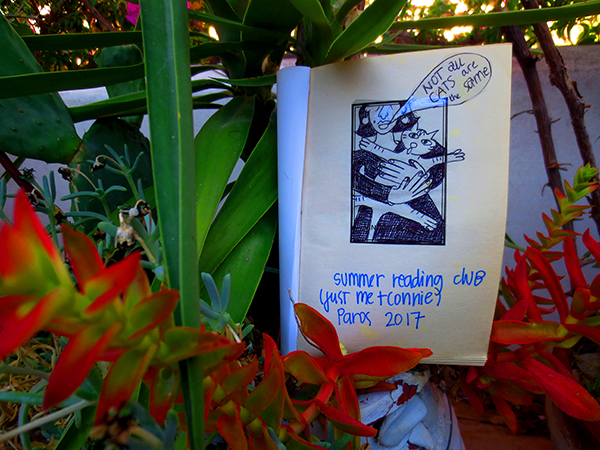
Not all virgins are the same. But all unicorns are—they all need a lap to lay on.

Related: Lady and the Unicorn: Mona Lisa of the middle ages weaves a new spell + Lady and the Unicorn tapestry brought back to life + Re’em, the unicorn in the Bible + Courtly Love + The Lady and the Unicorn tapestries bring mystery to the Art Gallery of NSW + Images of tapestries from Wikipedia

Posted in art, Books | Tagged , , , , , , | 2 Comments

Chiara’s Tiara

Chiara was born wearing a tiara. The tiara made her feel special because no one else had one like hers. Chiara was convinced that the tiara gave her special powers. But then one day the wind blew so hard that it blew her tiara away. Without her tiara, Chiara no longer felt special. And not feeling special made her lose all her magic. That’s why one day she fell down and afterwards was forced to walk with crutches. The crutches made it difficult to play with her friends so she was often home alone. It made her terribly sad. So sad that sometimes she felt like she was fading away.

But then one day at a Chinese restaurant, she got a fortune cookie with this message: “Good luck is coming your way.” And, after having been gloomy for so long, it was such wonderful news that Chiara couldn’t help but smile. And her mom, seeing Chiara smile, started smiling, too. Her mom’s smile made the person sitting next to her smile whose smile made another person smile whose smile made another person smile—well, you know, one smile leads to another so soon everyone in the restaurant was smiling. The energy from the smiles began to resonate and you could feel the Good Vibrations in the air. The vibrations were so wild and wonderful that Chiara, for the first time in a long time, felt happy.

Feeling good, Chiara gleefully left the restaurant. But once out the door, her mood change. “Oh no,” she said, “the wind’s blowing and you know how wicked it can be.” But when the wind stopped blowing, she felt a slight weight on her head. So she touched her head to see what was there. It was her tiara! And with her tiara back on her head, Chiara began to feel special again. And soon all her luck started to change, just like her fortune cookie had said.

Chiara believed that things were getting better because she had her tiara with its magical powers again. Chiara became so busy doing the things that she liked to do that one morning she rushed out of the house and forgot to put on her tiara. When she realized it, she started to have a panic attack. But then a soft breeze came and whispered in her ear: “Chiara, it’s not the tiara that has magical powers, it’s your smile that does.”

Slightly taken back by a talking breeze, she hesitated to keep on walking. At that particular moment, Chiara was in front of a pastry shop. She couldn’t help but to look at the display window.  Seeing all those beautiful cakes made her smile. When she saw her smile reflected on the window, Chiara thought about what the breeze had said and tried smiling in different ways. It made her feel silly so she started to laugh. She enjoyed herself so much that, from that day on, to keep her own magic flowing, Chiara made sure to smile whenever she could.

-30-

Posted in Art Narratives | Tagged , | Leave a comment

Heroes

When the beautiful Helen became of marital age, all the royal blooded bachelors raced to Sparta loaded with gifts and clever things to say. The line of suitors was long, the adrenaline of competition high. Odysseus, having a talent for oratory, liked to provoke situations that would give him a chance to talk. So he told Helen’s father, King Tyndareus, that having too many roosters and only one hen could only lead to conflict. Odysseus’ advice: First of all, let Helen choose her future husband so, if a wrong choice was made, she would be blamed. Secondly, before Helen decided, every suitor there must take an oath to sustain her choice and to defend the chosen husband against anyone who tried taking Helen away from him. Not wanting to appear as anti-conformist cowards, the men present had no choice but to agree.

Helen chose Menelaus but apparently the marriage lacked pazazz so she ran off with Paris of Troy forcing all of her ex-suitors, because of the oath, to go to war. Homer’s epic narrative, The Iliad, is a story based on this war.

The Iliad begins with Homer letting us know that Achilles is pissed off. Achilles, a mythical warrior who fights under the command of Agamemnon, is enraged because Agamemnon robbed him of Briseis, a Trojan princess given to Achilles as a war prize. So in retaliation, Achilles refuses to fight. And, without his presence, the Greek soldiers are discouraged and begin losing one battle after another.

But The Iliad is also a love story. In Madeline Miller’s The Song of Achilles, the focus is on Patroclus, a young prince who, exiled to the court of King Peleus, meets and falls in love with Achilles, the king’s son. Eventually Achilles notices Patroclus and the two become comrades. The Song of Achilles is their story told from the point of view of Patroclus.

There’s much scholarly debate as to whether or not Patroclus and Achilles were homosexual lovers. But really, who cares, love is love. Perhaps, in term of relationships, the focus should be on whether or not the relationship is complementary. In other words, can two people combined together enhance the qualities of the other? At first glance, it would seem as if Achilles and Patroclus didn’t have much in common. Achilles was a proud, handsome, and skilful warrior whereas Patroclus was scrawny and, because of his low self-esteem, easy to ignore. But they were like a pair of hands. One may dominate like the right over the left. Yet the right hand alone cannot use a bow and arrow, swing a baseball bat, knit, or hang laundry on a line. So, although Patroclus was not the dominate figure, his presence helped Achilles become a hero and fulfil his destiny.

Diversity is needed in a relationship because you cannot create a melody with just one musical note.

So back to Achilles’ rage and the Trojan War. When he stopped fighting, the Greeks lost their hype and began going downhill. To win the war, they thought, they needed Achilles. But Achilles’ had no intention of giving in to Agamemnon. Patroclus was dedicated to Achilles. But he also had his own code of honor. To encourage the Greek soldiers, Patroclus borrowed Achilles’ armor and entered the battlefield. The soldiers, seeing Achilles’ armor, thought their hero had come back to fight and, thus encouraged, started ripping the Trojans to shreds. Unfortunately, Patroclus could disguise himself as Achilles but couldn’t be Achilles. Even though Patroclus had fought valiantly, he was wounded by Hector and died.

Achilles fought for glory but Petroclus fought for his fellow man.

Maybe it is not Achilles but Petroclus the real hero.

-30-

Related: The Ancient Greek Hero, Patroklos as the other self of Achilles + The Song of Achilles: Virtual Book Club with Madeline Miller +

Posted in Books | Tagged , , , , , , | Leave a comment