Squatters and Spotters

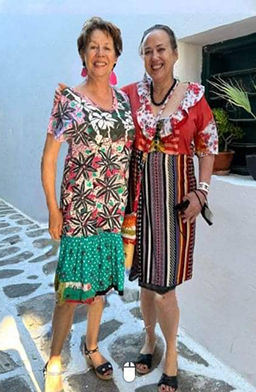
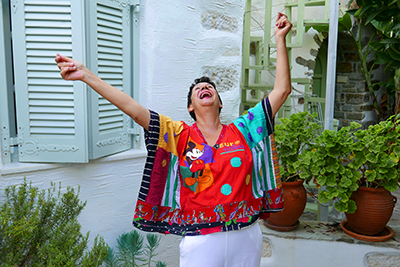
In this phase of my reconfiguration, I’ve become a professional cake jumper. That is, I’m paid for jumping out of giant cardboard cakes covered with icing. As strange as it may seem, there are many still willing to pay quite exorbitant prices just to see a scantily clad female jump out of a fake cake.

You may think but politely not ask: Aren’t you a bit dated to be jumping out of cakes? Well of course I am especially if it’s at some kind of wild and crazy bachelor party. But experience has taught me to choose my venues with care. Most of my gigs are at homes for senior citizens where, after I jump out of a fake cake, real cake is served. So I’m just an appetizer for the actual thing.

Aside from the cake, my seniors enjoy the festive atmosphere, the sing-alongs, and the pinning of tails on papier-mâché donkeys. Nevertheless, the cake jumping is such a favourite that many of the ladies at the home have decided to learn how to jump out of cakes, too. Initially, while the ladies were practicing their jumping, the men were trying to design a reusable cardboard cake. But after a few days of frustrated efforts, the men decided that it would be easier if they all chipped in for an inflatable rubber cake instead. Only the men hadn’t considered the problem of inflating it. So, once the cake arrived, it was so big that the men had to take turns blowing it up.

As for the ladies, they daily do squat exercises to reinforce their knees. Believe me, climbing in and out of cakes is not as easy as it may seem. But, as exercising can be boring, to spice it up a bit, I have the men come in to act as spotters telling them it’s up to them to keep the ladies from falling on the ground. Of course this makes the ladies giggle and the men puff up like roosters. Vintage hormones are the best.

So after my seniors have giggled and puffed for a while, I turn down the lights and turn on the music. Because there’s nothing better for your health than dancing cheek to check.

-30-

Reconfiguration Stories 2022 ©
Posted in Reconfiguration Stories, Stories for Vintage Minds | Tagged , , , | 2 Comments

Retouching Memories

Nostalgia is not a sensation that I enjoy as it’s a longing for something that can never be had again. Therefore, if some memory from the past creeps into my thoughts, I immediately redirect my attention elsewhere.

But today there was an exception. I have many photos that are not stored the Marie Kondo way. More than stored, they are stashed using a Here and There method. This can make finding a particular photo rather complicated. But the plus side is that when you least expect it, some long forgotten photo suddenly resurfaces. Like today. While looking for something in my overdosed archive cabinet, I came across a little box of photos. They were mainly of the family and thus taken for sentimental reasons. But then there were four small black and white photos that I’d hand-painted more than 40 years ago while in San Antonio, my hometown. At the time, I enjoyed photographing the city especially areas of historical charm—not the monuments but places on the edge of time that were slowly slipping away.

Hearne House, work in progress (the house is located at 300 W. French Place)

Monte Vista is a historic neighbourhood in midtown San Antonio. Development began in 1890 and was completed in the 1930s. Influenced by the Gilded Age, the homes were big and majestic. But not all the houses in the area were designed by important architects such as Atlee B. Ayres or Frost W. Carvel. On the periphery of Monte Vista are numerous homes that, despite fine architectural elements, suffer in grandeur and often are in a state of decadence. But decadence, for an inquisitive mind, can be intriguing—it’s like a whodunit. Because you wonder what brought on the decline.

Art House, work in progress

So impressed by the allure of decadence, I spent the morning driving around the neighbourhood taking photos of lonely buildings thinking I could “resuscitate” them by taking their picture then painting it.

Double Dormers, work in progress

Although I took the photos more than 40 years ago, I can still see that morning in my mind and remember my enthusiasm because I was curious and ready to make new discoveries. It is undoubtedly a memory worth remembering. So it’s the right time to take these photos out of their box, put them on the wall, and let the reminder remain.

Corinthian Columns House

For frames I will use old books (mainly outdated manuals) whose pages have been glued together with watery glue. Once the glue is dried, a niche the size of the photo is carved out with a sharp blade then all recovered with a light layer of papier-mâché to finish it off (a great way to get rid of old love letters). Once dry, the frame can be painted before affixing the photo.

making frames from books

-30-

Related: the Roy and Madge Hearne House + All about Dormers and Their Architecture + 25 of the oldest structures in San Antonio + Sidewalk Storytelling: A Guide to San Antonio’s Historic Neighborhoods + Kelso House restoration Foundation

Related: HOW TO MAKE CARDBOARD FRAMES– How to create beautiful photo frame only using cardboard video + How to make photo frame at home with waste materials video + Make Picture Frames Out of Cereal (free) Box Cardboard! + DIY Old Book Photo Frame

Posted in PRETTY MEMORIES, Stories for Vintage Minds | Tagged , , , , , , , , , , , , , , | Leave a comment

In Praise of Hands

Luckily the tea was strong and helped keep me focused. I was at the table picking the raisins out from my scone not because I didn’t like raisins but simply to have an excuse to keep my head down so no one could see my facial expressions. I was visiting my friend Elizabeth Gaskell and she was telling me the most outrageous things about Charlotte Bronte. Elizabeth was working on Charlotte’s biography and described the difficulties of telling a true story without the truth.

Everyone knew that Elizabeth had a tendency towards hyperbolic storytelling (hadn’t Dickens even called her Scheherazade?) but she was either telling me the truth or someone had spiked her tea.

Most of us believed that Charlotte had been a drab and lonely woman who used writing to give her life some pAzAzZ. Elizabeth had described Charlotte as a short, red faced Plain Jane with a semi-toothless big mouth. But now Elizabeth was zapping me with another Charlotte, a school teacher who hated kids, a middle aged woman who craved a man, and a writer who didn’t hesitate to use her talents to write naughty letters. Simply put, Charlotte had had firecrackers inside of her just looking for a match.

Having picked all the raisins from my scone, I was forced to look up. My eyes fell on a spill vase sitting on the mantel. Anxious to change the subject, I asked Elizabeth if she, like her Miss Matty in Cranford, had made the spills herself. Spills are tightly rolled papers kept on the mantelpiece in tall vases. They’re used to transfer the fire from the fireplace to candles or cigars or lamps.  Making them was Miss Matty’s passion.

During Victorian times, domestic handicraft somehow reflected middle class female individuality. Especially popular were parlor crafts that permitted women to sit around together sipping tea while working on a craft project . Hair braiding, scrapbooking, paper cutting, collage, beading and bead making were just a few of the choices. Women’s craft no longer had to be just useful.  Now it could be decorative and fun to make as well. Recycled materials from old clothing to pieces of candles to old receipts were used. But hands were used not just for social activities. They were used for subversive activities, too.

She was born and raised a slave. And as a slave Harriet Powers learned to sew and made quilts for her owners with the light of the day and for her family with the light of a candle. Harriet used an appliqué style similar to that used by the African Fon people. And with this technique, Harriet told stories. Her most famous surviving quilt is “Bible Stories” depicting eleven stories from the Bible.

During the Civil War, many female slaves used their hands to sew subversively. They made quilts with coded patterns relevant to helping slaves escape via the Underground Railroad. For example, the monkey wrench met that supplies were to be gathered whereas the star meant to head north. These quilts were then hung on lines or draped on fence in plain sight for escaping slaves to see.

But female arts have been used subversively in other ways as well. Penelope unraveled her weaving to keep her suitors at bay. In Dickens’ Tale of Two Cities, Madame Defarge knits in code the names of the aristocrats she’d like to see dead. Even the Bayeux Tapestry is full of stitched secrets. And in modern times, there’s craftivism, the use of craft for social and political reasons. Hands are used to make everything from sweaters for penguins, victims of oil spills, dresses from pillow cases for young girls in Africa, and sleeping mats made from crocheted plastic bags for the homeless.

When humans began walking upright, everything changed. It freed the hand so humans could now reach out and grab something and hold it.  The capacity to pick something up increased our ability to closely observe the world around us. Hands helped the brain to evolve.

Hands permitted humans to touch one another and create intimacy. This helped emotions to evolve.

Hands help us accomplish things.  They can help create new mental pathways because making things requires sequential thought and logic. Thus hands help connect the mind with the body.

Making is a form of meditation.  Because focused attention and repeated motion sends our brainwave frequencies into theta, just like meditation.  So why not make something?

Handwriting traces the motion of your hand. It’s a ménage à trois relationship between hand, paper, and pen. Hand written words connect mind and body. Writing by hand is an intimate experience.

Handwriting also helps to develop manual dexterity, hand-eye coordination, and visual motor skills.

Here are some useful hand stretches useful if you spend a lot of time at the computer or are a passionate crafter.

Your hands can also be used to make mudras aka finger yoga. There are many nerve endings in our fingers then, when pressed in a certain way, can channelize the flow of energy. Here are a few:

SHUNI MUDRA: The mudra is made by touching the tip of the middle finger to the tip of the thumb. This mudra encourages patience and the obliteration of negative emotions. When I go to the dentist, I always make this mudra then rotate the thumb and finger tips in circular motion to help keep me calm.

Mudras have often been depicted in art.

Prithvi Mudra: the thumb holds the ring finger down.  It activates the root chakra thus promotes a feeling of stability. This mudra is most often represented in Byzantine icons.

Dhyana Mudra: facing upwards, the right palm rests on the left palm. Buddha is often portrayed with his hands in this position as it’s the mudra for concentration that leads to inner peace.

Anjali Mudra: the palms of both hands face one another and mate thus uniting the left and right hemispheres of the brain. When you are connected, you feel less stress and anxiety. Praying hands use this Namaste gesture. The Virgin of Guadalupe is represented making this gesture.

Ardharataka Mudra: the index and middle fingers are erect whereas the thumb, ring, and little finger are bent. This mudra helps free one of negative energy. Its most famous representation is that of Leonardo’s Salvator Mundi.

You can also use your hands to collect your Qi, vital life force, by making a Power Ball. It’s somewhat like recharging a battery and helps to build healing energy.

It takes motion to activate motion. So get that stagnant energy flowing by swaying arms and shifting weight. Then rub palms together until you feel the heat.  Cup the hands and, with one hand facing the other, move them towards and away from one another. Slowly the qi begins to form a ball.

Now you have some balls to throw around!

-30-

(from Cool Breeze, aka The Age of Reconfiguration ©)

Bibliography:

Schaffer, Talia. “Craft, Authorial Anxiety, and ‘The Cranford Papers’”. Victorian Periodicals Review, Vol. 38, No. 2, Interdisciplinary Work and Periodical Connections: An Issue in Honor of Sally H. Mitchell (Summer, 2005), pp. 221-239. Published by: The Johns Hopkins University Press on behalf of the Research Society for Victorian Periodicals, Retrieved Sept 5, 2018 HERE

Schaffer, Talia. Novel Craft: Victorian Domestic Handicraft and Nineteenth-Century Fiction.

Gaskell, Elizabeth. The Life of Charlotte Bronte. Everyman’s Library. London. 1997.

Dobard, Raymond jr and Tobin, Jacqueline. Hidden in Plain View. 1999

Fry, Gladys-Marie. Stitched from the Soul (1990) on archive.org HERE

Parker, Rozsika. The Subversive Stitch. On archive.org HERE

Korzekwa, Cynthia. Bebina Bunny’s Cabinet of Curiosities. On archive.org HERE

Paz, Octavio. In Praise of Hands. On archive.org HERE

Yoga Mudras in Orthodox Christian Art: Does it indicate a Hindu-Buddhist Influence? Retrieved October 28, 2018 HERE

The Underground Railroad: A Code of Secrecy, Part II by Fannette Davis. Retrieved October 28, 2018 HERE.

Related: Ancient Women Artists May Be Responsible for Most Cave Art + Spills: Let There Be Light + The Project Gutenberg eBook, Cranford, by Elizabeth Cleghorn Gaskell, Illustrated by Hugh Thomson, read online + Parlor Crafts and the Age of Refinement By Erica Lome + The Curious Victorian Tradition of Making Art from Human Hair + Mary Georgina Filmer + Cassell’s Household Guide

Posted in Age of Reconfiguration, Art Narratives, Crafts, Daily Aesthetics, Lifestyle, storytelling | Tagged , , , , , , , , , , , , | 3 Comments

Giacometti’s Pietà

After following the Seine all day long, we were tired and had to tug ourselves up and away from the quais. At the first little bistrot we past, Chloe suggested omelets and wine. A young woman drinking pastis sat next to us. And you know how alcohol is.  It makes you talk whether or not anyone wants to listen. We paid little attention until she said that she’d been Giacometti’s model and lover and, j’étais sa frénésie! (I was his frenzy!)

Caroline, like many young women living in the French province, had come to Paris looking for a glamorous life. Instead, she wound up as a hooker hanging out in bars. That’s how she’d met Giacometti. He was 58 and she was only 21. Although intrigued, Chloe and I were not convinced of the veracity of her story so we offered her another pastis then left.

Many years later, Chloe was in Nice on a fashion shoot. The idea was to photograph expensive dresses worn in sleazy parts of town. Some kind of trendy yin yang thing. I rode the train from Paris so we could have lunch together. Sitting next to us in a petite bistrot sordide was this old woman drinking pastis. Déjà vu swallowed me up when the woman looked me in the eye and said her name was Caroline, Giacometti’s frénésie. Incroyable! This was the same woman we’d met in Paris years ago! There had to be a reason for this cosmic coincidence. Maybe she was an oracle disguised as a drunk. I had no choice but to hear her out.

Giacometti, ranted Caroline, was a vampire who needed women to survive. Even his female statues looked like anorexic votives exhausted by the demands he’d made on them. And those Etruscan shadow statues that Giacometti copied had convinced the Existentialists that he was one of them–always in the dark as to the meaning of life. I was beginning to think that Caroline had had too much pastis and was getting ready to go when something she said caught my attention.

Not long before his death, Giacometti had spent hours looking at the Pietà Rondanini. Whereas many had interpreted Michelangelo’s last statue as the sculptor’s end, Giacometti, instead, saw it as a new beginning. Had Michelangelo continued to make one Pietà after another for 1000 years, said Giacometti, they would all be unique simply because Michelangelo  was too busy moving ahead to fall backwards.

The word of the oracle had finally arrived!

Michelangelo was only 24 when he completed the Vatican Pietà and 89 when he last worked on the Pietà Rondanini. The sculptor said that once he’d seen an angel in a block of marble and carved until he set the angel free. It was the same approach Michelangelo had used with the Pietà Rondanini. Finally Jesus had been liberated from conventional aesthetics.

That night I struggled to fall asleep. In my mind’s eye I kept seeing the two statues side by side. The marble of the Vatican Pietà is slick and smooth and animated. The statue’s mass is a pyramid in a desert of space. Jesus, draped on his mother’s lap, is deposed from life. There’s nothing left but resignation.

But with the Pietà Rondanini, I almost see defiance. The chisel marks are distinct and, like wrinkled skin, indicate the motion of time.  Jesus is no longer distended but, with his mother’s help, erect. And ready for the ascension.

Life is initially Baroque, said the oracle, until it becomes something Minimalistic. Because perception changes with age, there’s no way the you of today can be the same as the you of yesterday. And with that thought in mind, I turned over and tranquilly fell asleep.

-30-

(from Cool Breeze, aka The Age of Reconfiguration ©)

Bibliography:

Carrillo De Albornoz, Cristina. “Giacometti enabled me to know myself better”. The Art Newspaper, issue 223, April 2010. Retrieved October 18, 2018 HERE.

Lord, James. Giacometti. A Biography. Farrar, Straus and Giroux. New York. 1997.

Related: Alberto Giacometti’s studio comes to life in Paris…..Sitting on rue Victor Schoelcher, just 1km from Alberto Giacometti’s original studio on rue Hippolyte-Maindron, the Institute’s new home features a faithful reimagining of the artist’s chaotic atelier  + Fondation Giacometti-Studio + Yvonne Marguerite Poiraudeau book in French + Giacometti’s final frenzy: the paintings of Caroline + when Caroline met Giacometti, she was living at the Hotel de Sevres in Montparnasse +

For a while Caroline disappeared and the desperate Giacometti went looking for her.  She was in prison (Petite Roquette) for petty theft. Giacometti bought her an apartment making his wife Annette even more jealous of the young model. Caroline continued to be a prostitute and Giacometti enjoyed listening about her sexual encounters.  SOURCE

Posted in Age of Reconfiguration, Art Narratives | Tagged , , , , , | Leave a comment

Dusting the Stars

Once upon a time (about 13.8 billion years ago), only a tiny speck existed. That speck, although small, was loaded with energy. And when the speck could no longer contain itself, it exploded. Bang!  The insides came out but there was no place for this matter to go so space was created.

As the universe expanded, it lost much of its density (just like a flabby muscle) and started cooling off. The speck’s particles, once united, were now left alone to drift in space. Tired of the loneliness, the particles began seeking the company of other particles. Together they created atoms. And the atoms, that also liked to group together, created clans we now call stars and galaxies.

For billions of years the universe constructed its identity with these Lego-like atoms. Now the universe was full of brightly burning stars that, once formed, also expanded. Nuclear energy within the star kept it shining. But when the energy ran out, the supernova star collapsed on itself and exploded spreading its dust around the universe.

Space is such a lonely place. The homeless supernova dust, tired of being alone, looked around for new contacts and friends. Slowly the dust coalesced to create a new solar system that included Earth, the planet we now call home.

Thus the Earth is made from old supernova stardust. And since man was created on Earth, this means we, too, are made of stardust.

On the seventh day of his artistic creating, as mentioned in Genesis 2:7, God grabbed some dust from the ground and, like a sculptor, began to create man. What is this dust if not stardust? Otherwise, why would Joni Mitchell sing “We are stardust, we are golden and we’ve got to get ourselves back to the garden” if we’re not a product of this supernova debris. The atoms in our body were created during the Big Bang which means our bodies are made up of 13.7 billion year old atoms (which could explain why I’m often tired).

Now there are those scientists who’ve taken the Bang out of our creation insisting that the tiny speck referred to above did not explode but simply started stretching itself out more and more. Unable to stop itself, more than a Big Bang, it was a Big Blob that just kept/keeps expanding pushing other galaxies further away from the Earth. But be it a Big Bang or a Big Blob, the power of stardust remains as my friend, Luz, knows well.

On the Night of San Lorenzo in 1954, Luz caught a falling star and took it home. Here, using a coffee grinder, she pulverized the star then added to it a few of drops of frankincense oil to it.

Now there are seed bombers who like to throw around little mud balls full of seeds as a means of introducing vegetation where there’s none. Luz like the idea very much. But instead of seeds for her balls, she decided to use stardust. And, whenever Luz came across barren land, she’d hold up a handful of dust and blow it into the air. She was amazed at the result.

-30-

(from“Dusted Stars” 2022)

Related: The Overview Effect + READING LIST–The stardust revolution: the new story of our origin in the stars by Berkowitz, Jacob on archive.org HERE + We Are Made of Stardust from Old Supernovas + How 40,000 Tons of Cosmic Dust Falling to Earth Affects You and Me +

Posted in art | Tagged , , , | Leave a comment