Verano Monumental Cemetery

One Sunday morning, Ute and I finally got together for a coffee at Marani’s. We mentioned our need for more physical exercise.  She does yoga and I walk. Ute, unlike a flâneur,  said she didn’t like to walk unless she had a destination. That word “destination” started buzzing around in my head. And I wondered if having a point of arrival would make a difference for me when taking my daily walk.  So I decided to give my walks a direction.

Not far from my studio is the Verano Monumental Cemetery that I’d never explored before and , after my talk with Ute, decided to do so.

Coffee at Mariani's

Roman Emperor Valerian, descendent from a distinguished Etruscan family, had to overthrow an emperor to become one himself. Believing that the Christians were subversive and threatened his power, around 257 AD he declared the Church a criminal enterprise and persecuted all of the Christians he could.  There were so many executions that the widow Ciriaca donated land for a Christian necropolis.  Initially the land was just a field of grass outside of Rome owned by her family and known as Campo Verani because Verani was the family name.

Valerian and Kinng Shapur

The Law of Retribution caught up with Valerian and he was captured and abused by the Persians.   Before executing him (260 AD), King Shapur I used the emperor to mount his horse.

Today the remains of the martyred Ciriaca and St. Lawrence are buried in what is known as the catacombs of St. Ciriaca.   During the Middle Ages, a basilica ( Basilica of Saint Lawrence outside the Walls) dedicated to St. Lawrence was built on the spot. Inside there’s an entrance to the catacombs whereas the outside façade is decorated with faded frescoes that includes a scene representing St. Lawrence’s martyrdom.

Valerian Had Lawrence Whipped

Adjacent to the Basilica is the Verano Monumental Cemetery. But first a little bit about the Napoleonic rule of Rome.

After the fall of the Roman Empire, the Papal States were founded in 754 AD. They monopolized all of central Italy and, in an attempt to ensure their power, prohibited the development of literacy and culture. Furthermore, they claimed that the desire for independent thought was a form of vanity.

Napoleon Liked To Make Changes

In 1793, Marie Antoinette was beheaded.  Napoleon was 24 years old at the time and very ambitious.  Five years later, Napoleon’s troops occupied Rome disrupting the equilibrium of the Papal States.

Marie Antoniette Had Finished Her Cake

The French thus imposed many of their norms on Rome including that of the Edict of St. Cloud, a law stating that all urban cemeteries, for health reasons, were to be placed outside the city walls. And thus the birth of the Verano Monumental Cemetery. However, what we see today is mainly the plans of the architect Virginio Vespigani who completed the cemetery in 1871.

Verano Cemetery

The Verano entrance has three arched doorways flanked by statues representing Meditation, Hope, Charity, and Silence. Because people keep dying, the cemetery has gotten bigger and bigger and now covers more territory than does the nearby Sapienza University.

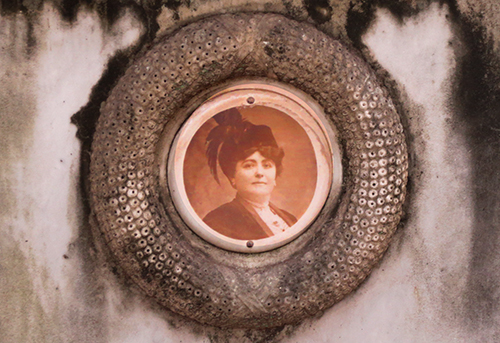
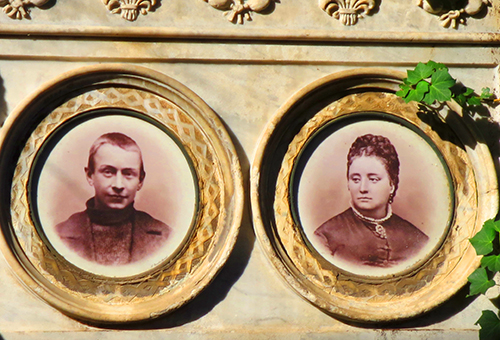
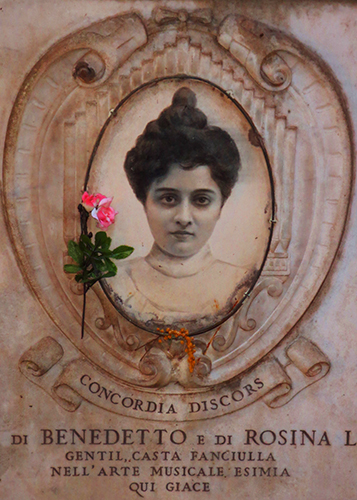
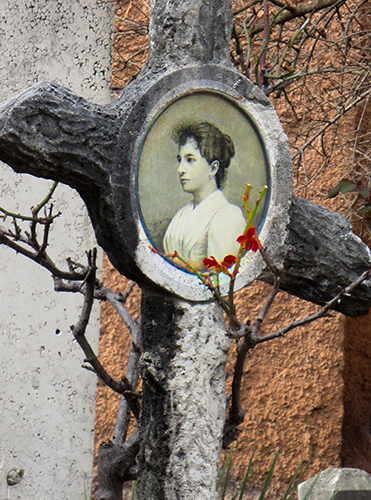
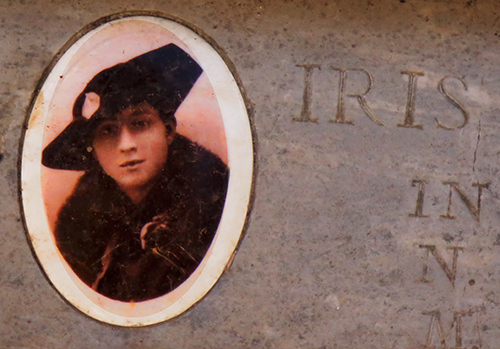
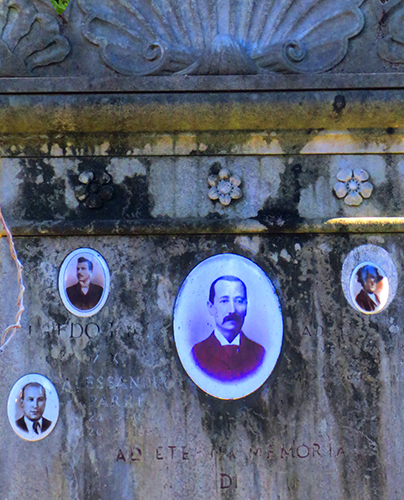
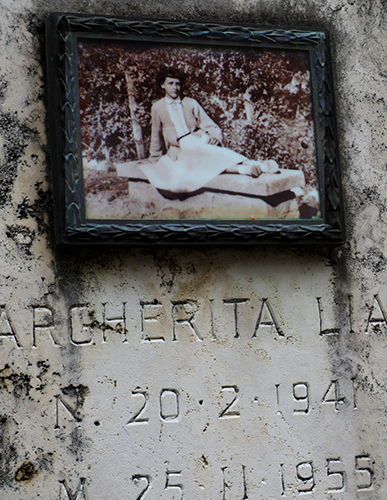
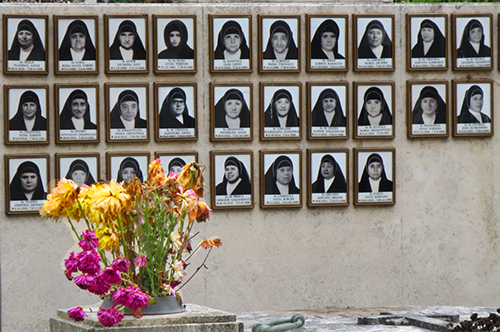
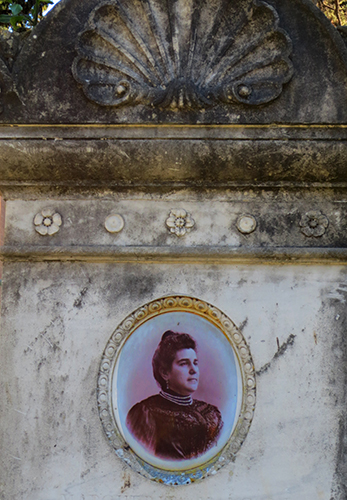
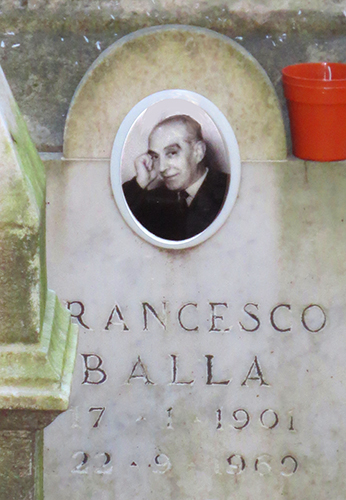
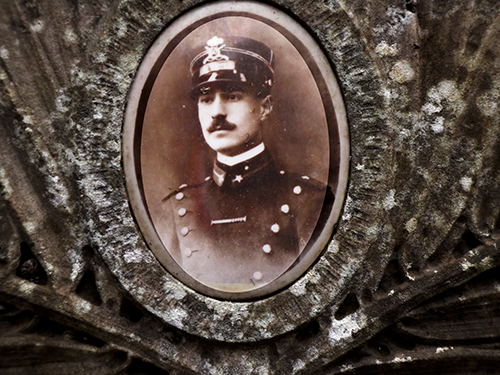
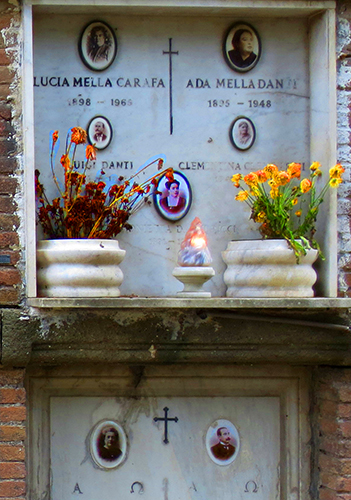
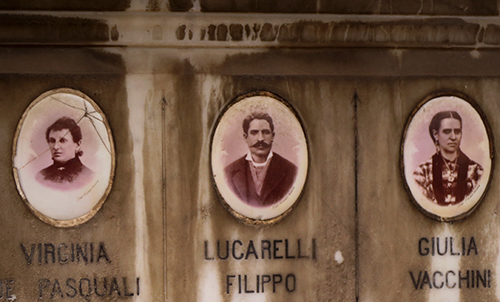
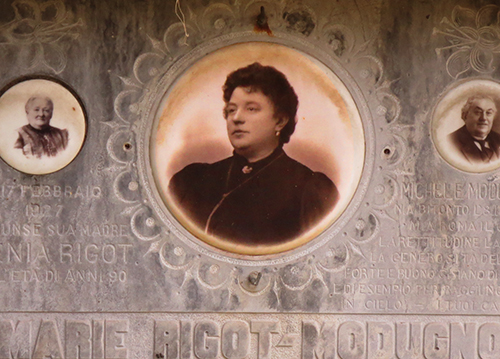
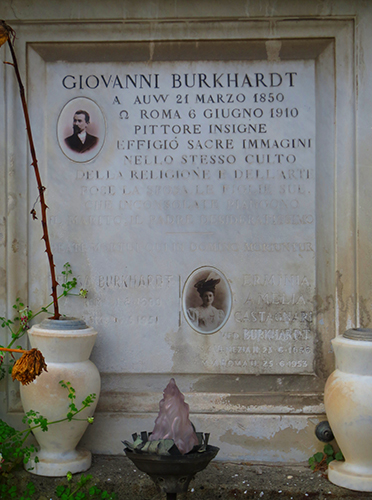
Walking inside the Verano,  the atmosphere is soft, silent and potentially melancholic.  There is nothing more present than the past.  After walking and looking and sighing for a couple of hours, I realized  every tombstone has a story to tell.

The stories are of an Italy that no longer exists, of people who are remembered and forgotten, and of lives that have changed because of a life that‘s been lost.

So I plan incorporating the Verano into my Photogenic Lifestyle. First of all, it gives me a great place for a walk—it’s quite, full of cypress trees, and has incredible art to look at.  In fact, it has been called a “ museo all’aperto”, an outdoor museum, because of the sculptures and paintings made for the tombs.

Secondly, the Verano Monumental Cemetery  tells the history of Italy from the early 1800s to the present. It’s  intrigued me so much that  I’ve decided to use it as a point of departure for me to rediscover the country I’ve been living in for the past 35 years.

To be continued.

.

entrance verano.

Related: Monumenti al Verano. Un museo all’aperto. (scroll down for brochure in English) + Basilica of Saint Lawrence outside the Walls + the catacombs of Rome

Posted in Drawings & Paintings, Rome/Italy | Tagged , , , , , , | 8 Comments

Droit d’image

The French have a not so photogenic privacy law that prohibits you from photographing anyone, even in a public place, without their written permission.  Had the law been activated before 1970, we would not have had the pleasure of seeing many of the poetic works by street photographers such as Eugène Atget, Brassai, Henri Cartier-Bresson and Robert Doisneau.

”Le baiser de l’hôtel de ville”

In the 1950s, Doisneau photographed a couple kissing in front of the Hotel de Ville in Paris. The photograph, extremely popular, was transformed into millions of postcards. Jean and Denise Lavergne claimed they were the couple and wanted to be compensated. They filed a suit against Doisneau who,  to avoid legal penalties, had to confess that there was nothing spontaneous about the photo — the couple immortalized was that of Françoise Delbart and  Jacques Carteaud, two unemployed actors.

So aren’t security cameras an invasion of privacy?

.

.

Posted in Drawings & Paintings | Tagged , , , , , | 1 Comment

Feeling like part of the wallpaper?

Bebina Bunny Blending In

Charlotte Perkins Gilman was born in 1860.  She was so lonely she had only her diary to keep her company. So she started freaking out.  Because loneliness can make us crazy.

If you want to read more about Charlotte and others with stories to tell, why not take a look at Bebina Bunny’s Cabinet of Curiosities?

.

.

Posted in Books | Tagged , , | Leave a comment

Exercises in Style

He had a degree in  philosophy.  However, Raymond Queneau is known as a writer.  For awhile, he hung out with the Surrealists but questioned their fixation with the subconscious since he preferred mathematics and rational reasoning.

Queneau’s best known work is “Exercises in Style” which is simply the same story told in 99 different ways. The story is this: One day in Paris, the narrator gets on a bus and looks on as two men fight over space.  The narrator later encounters one of these men at the train station getting advice as to how to sew a button onto his coat.

Queneau On The Bus

The beauty of Queneau’s Exercises is that he shows us that there are limitless possibilities to affront the same situation.

Style is a means of making something common uncommon. Style is a means of transforming the mundane into something special.   Style is a means of distinguishing ourselves from others.

Life is photogenic if it has style.

.

.


Posted in Drawings & Paintings | Tagged , , , , | 1 Comment

Coco Chanel

Coco Chanel, Dressmaker

Undoubtedly, Coco Chanel is known for her elegance, personal mystique and glamorous lifestyle. But, as with Dorian Gray, just how photogenic is a hedonist?

Gabrielle Chanel’s mother died when she was twelve. Her father abandoned her and her sisters at a Catholic convent in central France.  Here the nuns taught her how to sew.  After leaving the convent, she earned her living as a seamstress but also as a cabaret singer earning the nickname “Coco”.

Coco was not talented enough to sing professionally.  At the age of 23, she became the mistress of Etienne Balsan, a wealthy textile heir who provided her with a life of wealth and leisure.  And much partying.  Coco began an affair with one of Balsan’s friends, Capt. “Boy” Capel.  Capel got Coco an apartment in Paris where Coco began experimenting with hat making.  It was a hobby that turned into a profession when Capel gave her the money to open her own shop (31 rue Cambon).  But Capel gave her something even more important—a sense of style. In fact, it’s said that Chanel’s double C logo represents a ”C” for Chanel and a ”C” for Capel.

At the beginning of the 1900s, fashion for women was not made for movement.  What Chanel did, basically, was transform male clothing into female fashion.  She claimed that “luxury must be comfortable, otherwise it’s not luxury”. So the first thing she did was liberate women from corsets.  Then she introduced jersey fabric, traditionally used for undergarments and sports clothing, to high fashion.

Coco Wore Pants

The idea was to be simple but elegant.  Chanel also introduced the collarless cardigan, black sweater with pearls, female trousers, the little black dress, costume jewelry and the shoulder bag.  And of course, there was her perfume Chanel No. 5.

Coco liberated women from corsets and motion prohibiting garments with her designs initially inspired by male clothing.  Her contribution was that of changing the way women and their bodies were perceived.  Women were no longer still-lives but action movies.

During WWII, despite the difficulties for her fellow Frenchmen, Coco continued to live a life of luxury at the Ritz Hotel surrounded by Nazi officers. Not only did she party with them, she took them on as lovers, too. There is no doubt that Coco was an opportunist and tried to make the best out of a bad situation.  Unfortunately, post-war France did not guaranteed that same privilege to all women.

Jeering and Shearing

Tondeurs and tondues.

At the end of WWII, over 20,000 French women were accused of having had “horizontal collaborations” with the Germans.  Even prostitutes, who sold their bodies to the Germans in the same way bistrot owners had sold their wines, were singled out and publicly humiliated by having their hair shaved off then paraded in public semi-naked often with swastikas painted on their foreheads.  This punishment was obviously misogynistic as it was restricted to women.  Furthermore, because of a war instigated by men, many French mothers of young children had husbands in German prisoner-of-war camps. Without pleasure, they slept with German soldiers simply to feed their children.

Tondeurs and Tondues

Coco was not subjected to this shame.  Instead, she went off to Switzerland with her German boyfriend.  Here they lived in style for many years until Coco decided to return to Paris to save the fashion industry as, in her opinion, it had become too male dominated.  Upon her return, she was asked about her Nazi boyfriends to which she replied “I don’t ask my lovers for their passports”.

Nazi documents confiscated by the Soviets indicate that Coco had been a German spy with the code name “Westminster”.  Maybe it’s this that caused Coco to be a morphine addict for the rest of her life. Survival is not always easy.

.

.

.

Posted in Drawings & Paintings, Fashion, People | Tagged , , , , | 1 Comment