Women & Condition of Possibility

Life is about interrelating and how we interrelate determines the quality of our daily life.

Sometimes the presence of a force outside of us provokes not only a psychological response but a physiological one as well.

Imagine living like a plant fighting for nourishment and sunlight every day.

Plants are stuck in place. So, to survive, they must adapt. Like trees, for example. When and where a tree shoot grows will determine the basic form it will grow into.

The interplay between physiological and external forces can easily be seen in trees sculpted by the wind. As the tree grows, it is continually moved by the wind.

Whatever you do continually becomes you.  A tree that’s bent regularly by, for example, the sirocco wind blowing northwest from the Sahara, will grow bent towards the north.

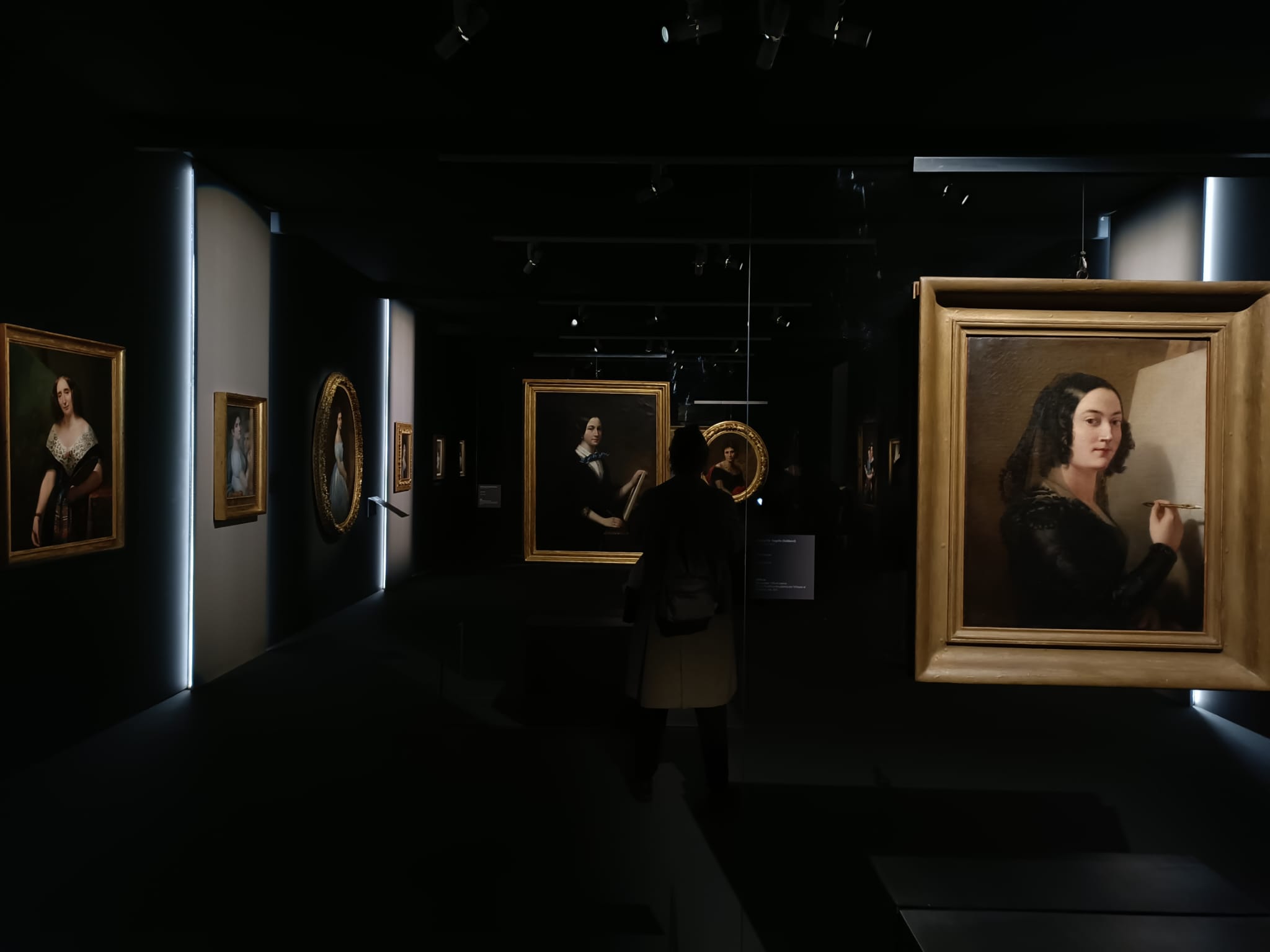
In 1977, when the Woman’s Movement was full of energy, art critic Linda Nochlin published an essay “Why Have There Been No Great Women Artists?”  The answer is simple. There have been no “great” women artists because we live in a patriarchal society.

Linda refers to John Stuart Mill who wrote that we tend to accept whatever is as natural. And since women have always lived in a world dominated by white male subjectivity, we see this as natural. But, continues Mill, male domination is just one more social injustice to eradicate if a true and just social order is to be created.

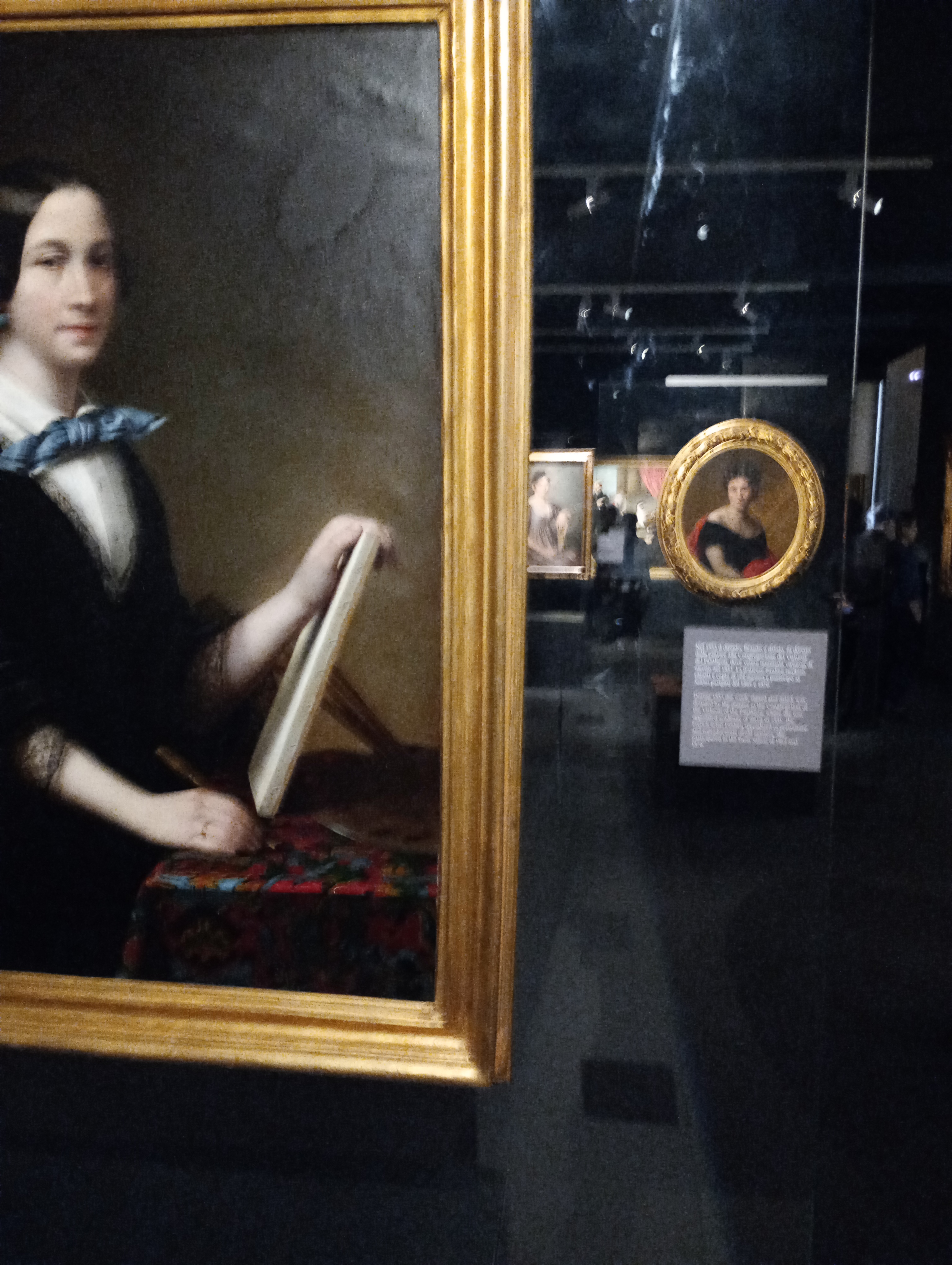
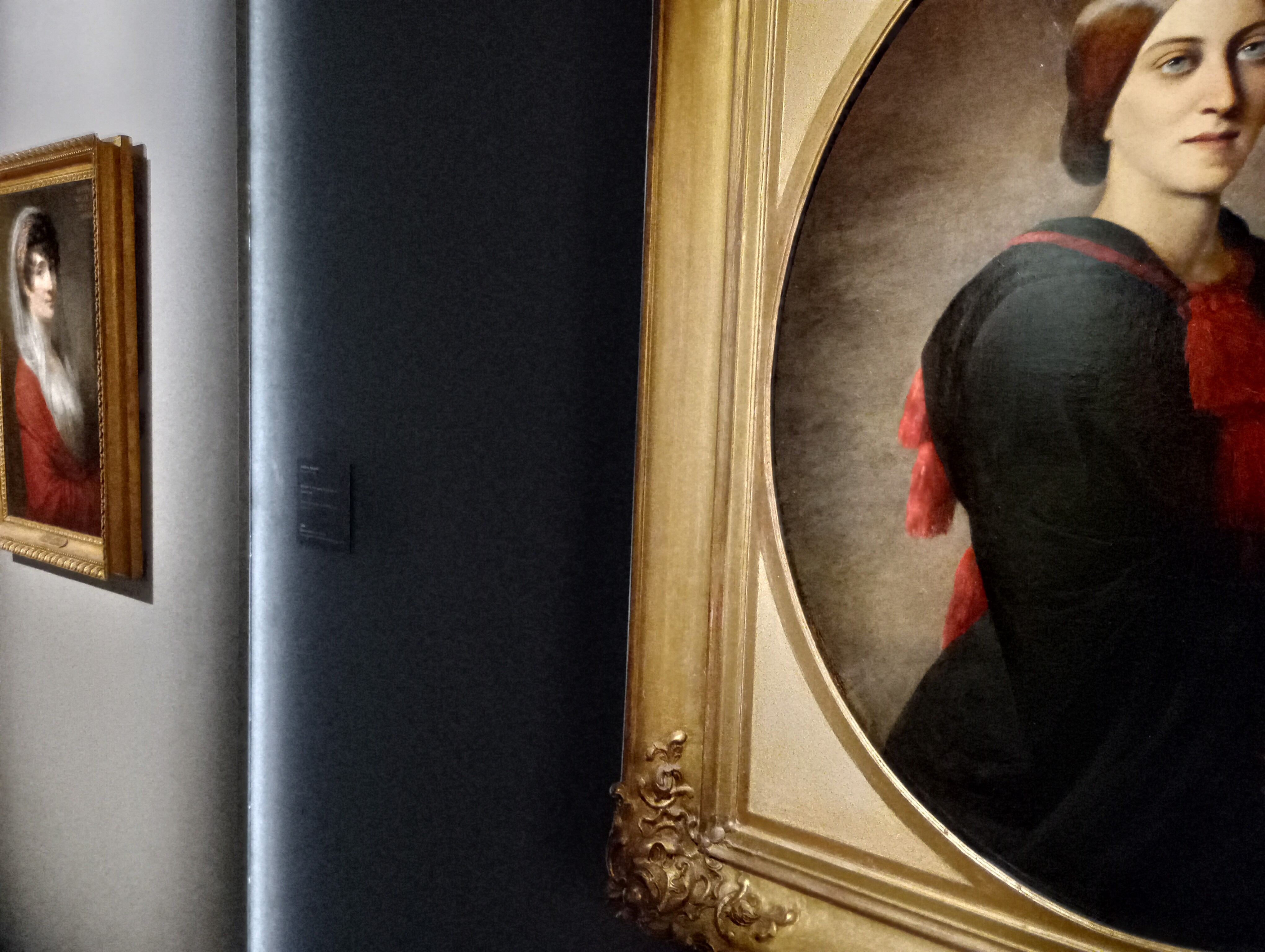
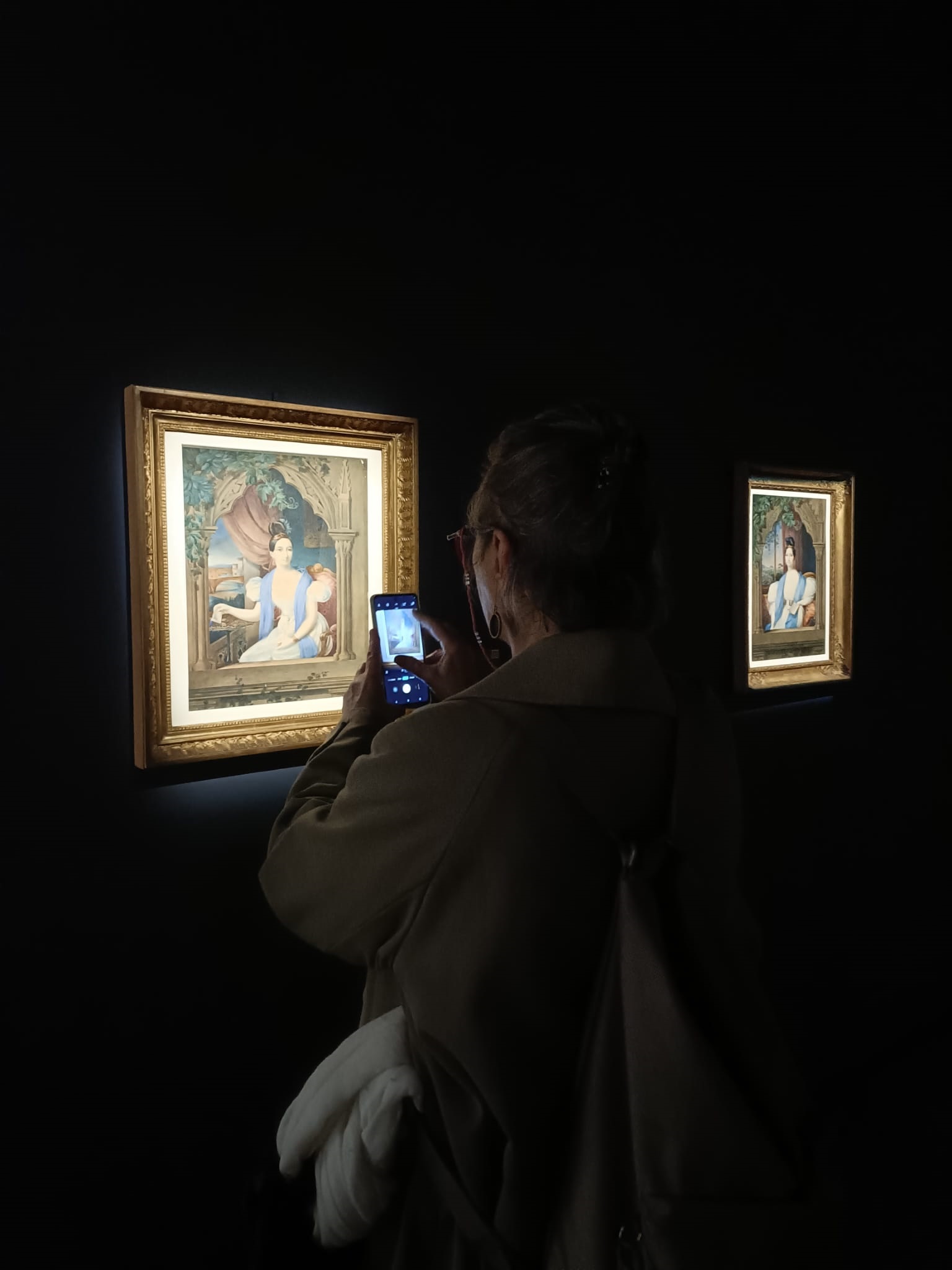
Men have failed society. There have been no “great” female artists because women have been excluded from the possibility of becoming great. Not only were women kept out of the academies, they were and continue to be restricted socially and economically as well.

Women have also been accused by men of being “incapable of greatness”. But what is “greatness”? What’s great for you is not necessarily great for me.

Aesthetic canons have been created by the boys who focus on their own capabilities to determine what the standards for others are.

Women are “potentially” great, but our potential is restricted by our condition of possibility. A condition of possibility, says Immanuel Kant, is a necessary framework for the possible appearance of a given list of entities. Easy example: if I am tall, I have more of a chance of playing on a basketball team than does someone who is short. And another example: if my dad has a bunch of money, I have a better chance of getting a good education than does someone without funds. And the better the education, the better chance of getting a good job.

The 19th Amendment gave American women the right to vote in 1920. However, that was for white women. Many minorities were unable to vote until President Lyndon Johnson signed the Voting Rights Act into law in 1965.

A patriarchal society deprives women of their potential. A patriarchal society deprives itself of its own potential, too. Because men’s and women’s roles were meant to be complementary not competitive. To deprive a woman of her potential is to create a society that limps because it has created one leg longer than the other.

When Michele Obama spoke recently at the Democratic convention, she said that most people “will never benefit from the affirmative action of generational wealth.” In other words, the condition of possiblity favors the wealthy.

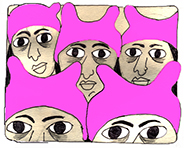
So ladies, it’s time to harness the wind.

-30-

(“Women and Condition of Possibility” ⓒ 2024)

Related:

The Lace Collar +

Bent into shape: The rules of tree form + 9 Treescapes Dramatically Shaped by Wind + Krummholz, crooked wood +

John Stuart Mill (1806-1873) + The Subjection of Women by John Stuart Mill + Condition of Possibility + When Did Women Get the Right to Vote? A Look Back at U.S. History +

Read Linda Nochlin’s “Why Have There Been No Great Women Artists?” HERE + The great women artists that history forgot + Why Have There Been No Great Women Artists? wikipedia +

The UN’s FAQs: Types of violence against women and girls (VAW)+

Voting rights for Black women +

Posted in Art Narratives | Tagged , , , , , , , , , , , , | 1 Comment

Gaze Detection

Have you ever felt as if someone were watching you? Why is that?

The feeling of being looked at, known as scopaesthesia, is a phenomenon that, although it exists, lacks adequate empirical investigation.

Rupert Sheldrake, biologist and parapsychologist, took an interest in this phenomenon. He decided that people were able to consciously detect the unseen staring.

Although it would be easy to describe this sensation of been stared at as a form of telepathy, Sheldrake concluded that it was not a paranormal phenomenon but rather a normal part of our biological being. Because of his laidback experimentation methods, Sheldrake has been much criticized.

Many ridicule the idea of telepathy. I am not one of them.

Once, when people lived with clans or in small communities, non-verbal communication was easier. Vibes were more often used than words to communicate. But with the increase in demographics that changed as a standardized form of communication was needed. Vibes were thus replaced with words.

Before the evolution of language, these telepathic skills were once fundamental for survival.

If you don’t use it, you lose it. When we stopped using our telepathic skills, we lost them. Fortunately, many people still maintain traces of their telepathic skills.

I have no particular interest in parapsychology. Nevertheless, I don’t discredit it. The problem is that there are many charlatans out there in parapsychology just as there are in any other field. Like politics, for example.

Several years ago, I was alone on Paros. My daughter was supposed to arrive the next day so I was busy preparing for her arrival. Her bedroom was downstairs adjacent to a veranda. Normally, because the summer is so hot, people generally sleep with the windows opened but the shutters closed.

In all the years that I have been coming to Paros, I’ve never felt afraid. But for some reason, that evening I felt extremely anxious. I kept asking myself whether or not I should shut the glass doors as well—something I have never done before. Finally, I convinced myself to go close the doors.

There was a bright moon that illuminated the veranda. And from the shutter’s slats, I could see the form of a man right outside the door. He had a tool in his hand made specifically to lift the shutter’s inside latch so he could enter.

For 30 seconds I froze. Had I arrived a few minutes later, I would have found myself face to face with a thief. Then I felt the fear transform into rage and started yelling “Thief! Thief!”. The guy then, obviously, ran off.

The sensation I felt that provoked me into checking the doors was a telepathic experience.

hypnotized

-30-

Posted in Art Narratives | Tagged , , , , | 9 Comments

Bebina’s Moominvalley Summer

for Connie who, one morning drinking coffee in front of the sea, told me about the Moomins

Your childhood follows you wherever you go.

That morning Bebina Bunny sat on her terrace writing in her diary. A lot was going on in her life and she wanted to remember all of it. She was fully immersed in her writing when a breeze packed with smells hit her face. Bebina stopped writing and started sniffing.

The air was full of memories. Because a smell can transport you to a different place and time. And that day the smells transported Bebina back to Moominvalley.

Two elementary school teachers, Luz and Laura, had been penpals since they were young girls. Being pen pals had been a rewarding experience for them both. First of all, by writing letters to one another, over the years they’d polished their communication skills. These letters had been full of so many curiosities that they traded between themselves. And most importantly, Luz and Laura had built a loving and solid friendship. So why not encourage their students to have pen pals? And that’s how Bebina and Moomintroll had become pen pals, too.

For many years now, Bebina and Moomintroll had been exchanging letters. Charming and childlike, they enjoyed sending one another handwritten notes along with little souvenirs such as pressed flowers, used postage stamps, ticket stubs from movies, and clippings from manga magazines.

Moomintroll lived with his parents, Moominmamma and Moominpapa, in Moominvalley. Now that school was out for summer, Moomintroll thought it would be wonderful if Bebina could come to Moominvalley to visit him and his family. Bebina, who’d never been to Finland before, thought it a great idea mainly because she wanted to see reindeers. Moomintroll told Bebina she could even bring her cat, Puffy, so Puffy wouldn’t have to be alone. With joy and enthusiasm, Bebina and Puffy packed their knapsacks and headed north.

That year it was very hot in Moominvalley. The water in the river had started to dry up. So Moomintroll suggested they all go for a swim before all the water evaporated. There was Bebina and Puffy, of course, but there was also Little My, Snorkmaiden, and Snufkin. They were happily splashing around in the water when Little My saw a wooden crate floating around. She called the others to come and help her take it to shore where they could see what was inside.

The crate was full of tropical fruit seeds. Although doubtful that anything tropical could grow in their valley, the group excitedly planted the seeds anyway. That night there was a huge tropical storm, and it rained all night. But the next morning, they woke up and found themselves in the middle of a lush forest full of tropical fruits. There were mangos and bananas and limes and papaya growing everywhere.

It was wonderful to be surrounded by so much good fruit.  And everyone joyfully ate as much of it as possible. That is, until they found out about the carnivores. Thanks to the seeds, there were bananas, limes, mango, and papaya but there was now an army of man-eating plants ready to devour them, too.

To calm the hungry plants, Snufkin played his harmonica. The plants, mesmerized by the vibes, began to sway back and forth back and forth. Like a Pied Pipper, Snufkin played as the plants followed him around. Snufkin led them to the basement where, once the plants were all inside, Snufkin quickly left closing the door behind him. Left in the dark, the poor plants died.

Moomintroll walked through the tropical forest. There were vines hanging everywhere just waiting to give someone a ride. Seduced, Moomintroll felt the need to swing. Feeling very savage, he changed into an eco-tiger print salopettes. Bebina also changed as she wanted to swing, too. Once she started swinging, she felt just like Jane. Whereas Moomintroll complained to Stinky that it was difficult pretending to be Tarzan when there were no wild animals around. Oh, how lovely it would be to be surrounded by monkeys and chimps, he said. Stinky told him not to worry because he could get some animals to jazz up the jungle. Moomintroll was so excited about the idea of swinging with a Cheetah that he didn’t bother to ask where the animals would come from.

That night Stinky broke into the local zoo and opened all the cages. The animals were elated to get out and immediately started roaming around. But they had nowhere to go. And, having lived in cages for so long, they’d forgotten how to naturally be themselves.

For some reason, the animals thought they were supposed to behave like savages. That’s why the tigers, for example, started chasing the Moomins hoping to eat them. But before Mr. Tiger could even get his jaws opened, Moominpappa pushed him into the river. The tiger couldn’t swim. The Moomins didn’t want to harm anyone, they just didn’t want to be harmed themselves.  So Moominpappa dived into the water and saved the tiger from drowning. Then Moominpappa took his family home.

Mr. and Mrs. Tiger looked at one another and sighed.  Not having been able to freely be themselves for so long, they no longer knew who they were or how they were supposed to act. “I’m just not the tiger I used to be,” said Mr. Tiger.

Once back at the Moominhouse, Bebina reflected on the events of the day. Swaying in her hammock, she lulled her thoughts into place. It seemed to her more and more that people really had no clue as to who they really were. It was, as if from the catalogue of “Who I Wanna Be”, people made choices without really understanding who they were. More than being themselves, thought Bebina, people preferred inventing themselves.

Often, our life evolves but our dreams do not. We insist on keeping obsolete and unrealistic dreams then become frustrated when we can’t actualize them.

And what about those animals living in cages. Whose idea was it that these magnificent creatures should be deprived of a normal life just so some dude could go point his finger at them and say “Look at those beasts!” But who are the real beasts?

The real beasts are those who deprive others of their freedom.

For years the animals had been locked in cages. They’d been deprived of being their real selves. But now, once freed, they no longer knew who their “real” self was. They no longer knew what to do.

Once freed, the animals could never go back to who they once were. Time and their condition of possibility had eternally transformed them. And the realization of this was overwhelming. Seeing their bewilderment, Moominmamma instinctively knew what to do. She gave them all a cup of tea and made them feel as if they belonged. As if they were part of the family.

A sense of belonging is important even for animals. And once the wild animals freed from the zoo were made to feel as if they belonged, they stopped being aggressive. Talk at the table let them better understand one another. By simply sitting down together and talking, they realized that they had more things in common than not.

This post is an ekphrastic celebration of Tove Jansson (1914-2001) and the Moomins she created. Tove, a Swedish speaking Finnish writer and artist, began drawing the Moomins as early as 1935 although the first Moomin book would not be published until 10 years later.

Moomin children’s books brought Tove fame and fortune. But it also brought much stress. Her originally intention had been to be a painter, not a cartoonist. But the Moomins had given her the possibility of reliving certain sensations she’d so enjoyed during her childhood. The Moomins also provided her with economic security. So Tove continued to write Moomin books until the death of her mom. And after her mom’s death, Tove had the Moomin sails into the sunset never to return again.

-30-

(“Bebina’s Moominvalley Summer”  ⓒ 2024)

Related: Watch These Animals Being Freed For The First Time video +

Moominvalley is a British Finnish animated family drama television series. An adaptation of the Moomin books and comics by writer-illustrator Tove Jansson and her brother Lars Jansson, it is created using new techniques in 3D CGI.

This post was inspired by the Moominvalley episode The Wooden Crate & Buried in a Jungle on Moomin Official

Posted in Art Narratives, Bebina Bunny | Tagged , , , , , , , , , , , , , | Leave a comment

Solitude is Frugal

Tenby is a quiet seaside town in Wales, land of bards. It was here that, as a child, the artist Gwen John (1876-1939) combed the beaches looking for seashells to paint.

Gwen’s mother died when Gwen was only eight. The absence of a parent always has consequences on a child. Unfortunately, sometimes those consequences only seem to grow.

Both Gwen and her younger brother, Augustus, wanted to become artists. So when Gwen was 19, the siblings travelled together to London to attend the Slade School of Art, the only art school that admitted women. Once there, Gwen, already shy by nature, became better known as her brother’s sister than as an artist in her own right.

Augustus was a good draftsman, charming, and a major womanizer. Within a few years, he became a well-known society painter. Gwen and one of her brother’s friends, Ambrose McEvoy, began an intimate relationship. Gwen was head over heels whereas Ambrose was just a heel. With no warning, he dumped Gwen and then married an older unattractive woman. Gwen was crushed.

In 1903 Gwen and a friend decided to walk to Rome. They sailed from Liverpool to Bordeaux where they began walking. They walked carrying their art equipment, slept in fields, and tried exchanging sketches for food. However, once they had arrived in Toulouse, the thrill of On the Road was way gone and they headed towards Paris. It was 1904 and Gwen had begun modeling to maintain herself. Her brother Augustus suggested that she seek employment as a model for Rodin, the most well-known artist at the time. Rodin preferred British and American models. He quite liked Gwen’s physical presence and decided to use her as a model for his monument to Whistler (with whom Gwen had studied for a short time). But the statue was never finished.

Despite the 35 year age difference, Gwen and Rodin became lovers. Rodin was a serial seducer with years of experience. Gwen was inexperienced and needy. She began writing him obsessively sending him up to three letters a day for the next ten years. Gwen was in love but Rodin was not. Eventually he tried keeping her at a distance.  

Gwen had now been dumped by the only two men she had ever loved. Like Dora Maar after Picasso, Gwen sought solace in Catholicism. So Rodin was replaced by God and Gwen’s only desire was to become “God’s little artist.”

Gwen practiced extreme frugality. Frugality, a form of restraint, is necessary when you don’t have much money to survive on. But frugality is often considered a form of spiritual discipline. Catholics believe in forms of self-denial such as fasting, penances, and giving your money to the church instead of using it for some personal pleasure. Deprivation is, for many, a religious experience.

The external world had been too aggressive for her. It was best, she thought, to focus even more on her interior self. So for the rest of her life she lived in Meudon alone with her cats (Camille Claudel style). Gwen John died of starvation on a street in Dieppe in 1939.

There is much mythology about Gwen’s reclusiveness. Although she never completely retired from life, solitude was the essence of her being. She even saw solitude as a form of self-preservation.  In 1912 Gwen began a notebook entitled “Rules to keep the world away”.

“I don’t pretend to know anybody well. People are like shadows to me and I am like a shadow” she wrote.

The desire for solitude radically affected her art. She preferred painting women all alone. Some of her models commented that Gwen often pulled their hair back maybe to look a bit more like Gwen herself.

Gwen John, Self-Portrait (1902) Source

Gwen John, The Student (c. 1903) SOURCE


Gwen John, The Artist in her Room (c. 1907) SOURCE

Gwen John, Self-Portrait with Letter (1907) SOURCE

There are currently more than one thoushand letters by Gwen to Rodin in the archives of the Rodin Museum in Paris.

Gwen John, Young Woman Holding a Black Cat (c. 1920) SOURCE

Gwen was a cat lover .

Crop

Related:

Camille Claudel and Touch +

Gwen John + THE PORTRAITURE OF GWEN JOHN + Gwen John: student and master + A Muse For Rodin, The Welsh Painter Gwen John + Did Auguste Rodin Steal From Camille Claudel? +

Gwen John | Motifs

Bibliography:

Taubman, Mary. Gwen John. James Price Publishing. London. 1985. (available of archive HERE)

Chitty, Susan, Lady. Gwen John, 1876-1939. F. Watts. NYC. 1987. (available on archive HERE)

Posted in Art Narratives, Conditions of Possibility, Paris | Tagged , , , , , | 1 Comment

St. Martin’s Cloak

One extremely cold winter’s day in the year 335, Marin was doing his duty as a young soldier in the Roman army when he saw a beggar freezing from the cold. Without hesitation, Martin took his sword and with a big SWHISH sliced his cloak in half. He kept one half for himself and gave the other half to the beggar. Instead of using the sword to destroy a life, Martin had used it to save a life.

That night Jesus came to Martin wearing the cloak and said: “What you did for that poor man, you did for me as well.” And thanks to his generosity to someone less fortunate than himself, Martin became a saint.

St. Martin’s cloak became a popular theme in religious art.

After the conversion of Emperor Constantine, Romans were more or less forced to convert to Christianity, too.

Martin, born in what is now Hungary, was forced to join the calvary at the age of 15 and served for nearly two years after his baptism.

-30-

Related: St. Martin, Bishop of Tours (c.315-379) + + Constantine the Great and Christianity

Posted in Art Narratives, Conditions of Possibility, Daily Aesthetics | Tagged , | 3 Comments