Suntans and Sandcastles

HAPPY BIRTHDAY CHIARA!

Day 27
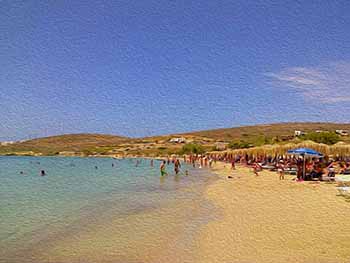
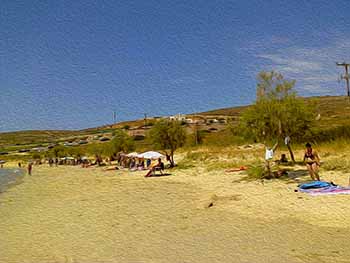
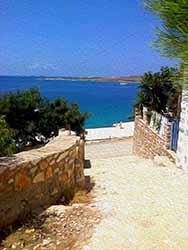
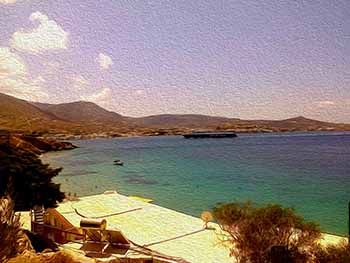
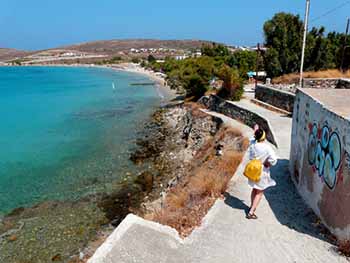
Krios beach

Krios beach, Paros

Krios beach, Paros

The beach means different things to  different people.  For me, it’s the sand beneath my feet, the sound of the waves and the smell of sea air.  However, for others it means dedicating one’s time to ephemeral activities such as sunbathing and building sandcastles.
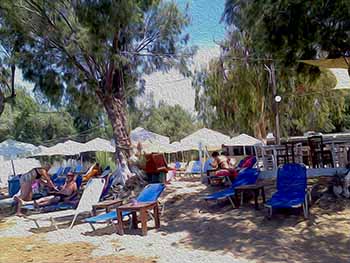
Camping at Krios beach

Camping at Krios beach

I consider sunbathing an ephemeral activity in that, despite all the time and effort you dedicate towards getting a tan and all of the hours spent imitating souvlaki on a grill, it rapidly fades away.
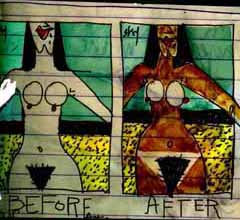
suntan drawing by cynthia korzekwa

sandcastles on Paros

Dad helping his little girl build sandcastle

sandcastles on Paros

little boy building alone

There’s a tenderness in seeing young children building sandcastles. They are so focused on making something that will be washed away by the waves. Like sand mandalas that are painstakingly made and then destroyed, sandcastle construction is an example of BE HERE NOW and that it is the process and not the product that gives satisfaction.

I’ve noticed that fathers more so than mothers enjoy participating in the making of sandcastles.

sandcastles on Paros

two friends building together

sandcastles on Paros

the beginning or the end of a castle?

Miltos Pantelias

from Miltos Pantelias’ palimpsest series

Yesterday Pierluigi and I had the great pleasure of meeting with the artists Irini Gonou and Miltos Pantelias at their incredible summer home on Naxos. I have already written about Irini HERE but will do so again this winter as there are some aspects of her work too enchanting to resist. But today I want to mention Miltos’ work.

We get the word “ephemeral” from the Greek “εφήμερος” (ephemeros) which means “lasting only one day”. Miltos’ work hints at fragility yet it transforms the ephemeral into something eternal. His palimpsest series is mesmerizing. A palimpsest is a manuscript page that’s been scraped or washed with milk so it can be used again for something else (ancient recycling). But sometimes, after years of hiding, like a ghost the original writing (scriptio inferior) resurfaces. Miltos’ palimpsests magically seduce the Only One Day and he resuscitates the past to create a new life. Πολύ όμορφη!

Today’s mantra comes from “To Tango tis Nefelis” by Haris Alexiou & Loreena McKennett. It’s the story of Nefeli and two little angels who tried to feed her  pomegranates so she’d forget what she wanted. But Zeus intervened by turning Nefeli into a cloud making it impossible for the angels to find her.

Eating pomegranates caused Persephone a lot of problems. Hades kidnapped her and took her to his underground home. Persephone knew that if she ate or drank anything in the underground world, she would be forced to stay there forever. But after a week of not eating, she lost her willpower and ate a pomegranate. 

Desires are ephemeral. And so is life.


Like a cloud. OM. Like a cloud.

Related links:  Exploring Ephemeral Practices pinterest + The Archimedes Palimpsest pdf + Secrets of the Page: Palimpsests

Posted in Health & Healing, Paros | Tagged , , , , , , , | 5 Comments

Grounding at the water’s edge

Day 26

Ειρήνη και Μίλτος, σας ευχαριστώ πάρα πολύ για μια υπέροχη μέρα!

When I arrive on the beach at Krios, the first thing I do is take off my shoes.  Since I have to  take my shoes on & off a couple of times during the walk, a big thanks to the inventor of Velcro strap sandals that make this process much easier.

Velcro sandals on Paros

Velcro is a great example of bio-mimicry.  It’s man imitating nature and, in this case, imitating burrs.  If you’re from Texas and walked around barefooted as a child, you know exactly what burrs are!

In 1941, Swiss engineer George de Mestral was taking burrs out of his dog’s hair.  The burrs and the hair were attached so well that Mestral was inspired to use the same technique for something pragmatic and thus invented Velcro.

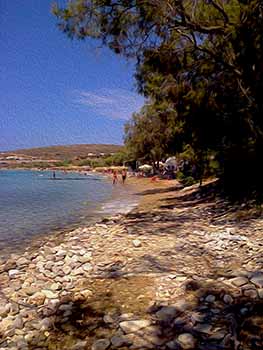
Krios Beach, Paros

Anyway, back to the beach. Walking barefoot outdoors, known as “grounding”, apparently is very good for us.  Via the soles of our feet, we absorb the earth’s free electrons which are beneficial to our health.  Grounding relieves chronic pain, improves sleep, reduces inflammation, thins the blood and much more.  In other words, the body needs to be connected to the earth.

Krios Beach, Paros

A big problem today is that we are constantly subjected to radiation via our cell phones, computers and Wi-Fi.  Grounding can help counter-attack this electromagnetic field bombardment.

Krios Beach, Paros

Walking on the beach is especially beneficial.  Because the sand provides resistance, you work your foot and leg muscles more.  And because the sand is an uneven surface, your body must react to the constantly changing surface which is good for balance and agility.

Walking on the sand also massages the soles of your feet which activates blood and lymphatic circulation.  Furthermore, walking barefoot on the beach is like taking sandpaper to your feet because the friction of the sand acts as a exfoliate.  Results: soft and smooth feet!

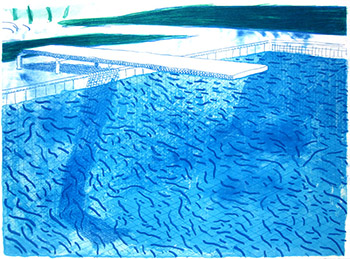
I like walking near the water’s edge and am fascinated by the way the sun reflects on the sea. David Hockney has done many wonderful interpretations the sun reflecting on the water.

David Hockney:

David Hockey

Picture of a Hollywood Swimming Pool,  1964

David Hockney

California, 1965 via

David Hockney

Vintage: A 1980s lithograph by David Hockney in his California years via

Today’s mantra is “the tide is high but I’m moving on” taken from Blondie’s “The Tide Is High”.


Related links: David Hockney: Early Reflections at the Walker

Posted in Drawings & Paintings, Health & Healing, Paros | Tagged , , , , , | Leave a comment

Arrival

Day 25

Krios Arrival

Krios Arrival

 Most every day, Pierluigi accompanies me on my walk up to Livadia.  Generally, I have an idea as to what topic to use for my daily posts regarding these walks.  Pierluigi is a true scholar and like a walking Wikipedia–he knows something just about everything.  So today the topic was “arrival” in reference to the part of my walk when I finally arrive at Krios and I asked Pier if he could tell me anything of a philosophical nature regarding the concept of arrival. So, BOOM, he hits me with Aristole’s  telos (“end”),  the telos being the goal or purpose of  a thing, the final cause. Because an arrival implies an end.

Krios Arrival

Well, it wasn’t exactly what I was looking for as the final cause of my walk is not arriving at Krios but what happens in my head while I’m getting there.  The arrival is just a form of measurement—the time it takes for the round-trip of getting there and getting back is the time span I allow myself for thinking and meditating.

Krios, Paros

I would like to be able to BE HERE NOW more often, to live the moment without anticipation.  But it seems that, like most of us, I often live my life here while wanting to be there.

Krios Arrival

Nikos Kazantzakis, known mainly for “Zorba The Greek”, said:

I felt once more how simple a thing is happiness: a glass of wine, a roasted chestnut, a wretched little brazier, the sound of the sea. Nothing else. And all that is required to feel that here and now is happiness in a simple, frugal heart.

 Krios Arrival

now

 Krios Arrival

then

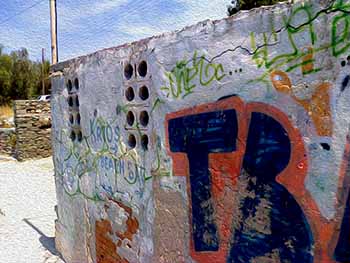
The above foto is of me taken a few years ago.  I still use the same dress, bandana, knapsack and shoes!  Look at the difference in the wall graffiti from then and now.

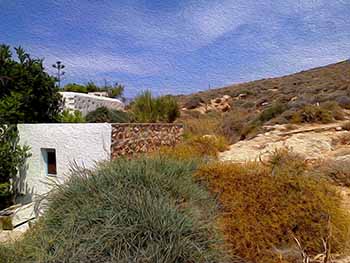
Arrival at Krios is marked by a house that sits next  to the steps going down towards the beach. There’s a carob tree that doubles as an auditorium for singing cicadas.  Cicadas live about 17 years underground sucking tree sap for their survival.  Then, in a kind of rapture, they all come out in hoards and, from larvae, turn into winged insects.  The males immediately start singing looking for a mate.  The hotter the weather, the louder they sing. After mating, the females deposit their eggs in the tree.  This goes on for about 2-4 weeks and then telos, it’s all over and the cicadas die because they’ve arrived at the final cause.

Krios Arrival, Carob Tree

 the carob tree

There is a well-known mariachi song about the cicada, “La Cigarra” and is the source of today’s mantra.

 I sing happily, sing, sing, happily sing sing.

Related links:  La cigarra Lyrics +Amazing Cicada life cycle video + How To Meditate While You’re Doing Housework
Posted in Health & Healing, Paros | Tagged , , , , , | 1 Comment

Ruins and walks

Day 24

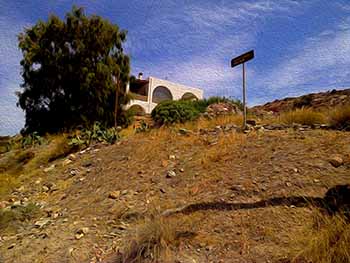
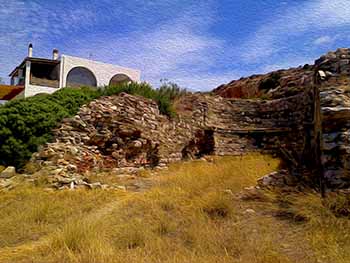
Right past the path that goes down towards Krios beach is an archeological ruin.  The sign in front of it says “ αψιδωτο οικοδομημα” (domed building) as well as “édifice absidal” (apsidal building) and nothing else. 

archeology on Paros

Excavations on the nearby island of Saliagos indicate that Paros has been inhabited since 3200 BC. Then around 1200 BC, King Alkeos of Crete sent a group of Minoans to Paros.  The island was named Minoa and, because of its strategic position, was used as a naval station.

Around 1000 BC, the Arcadians arrived and took over the island.  Since they were led by Parios, the island then became known as Paros.

So Paros has a long and animated history. And, for this reason, is archeologically rich.

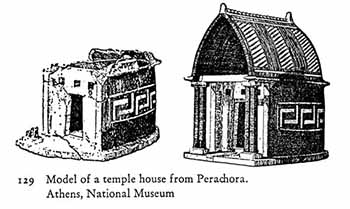
Probably the earliest cult sanctuaries in Greece were little more than huts.  But these huts eventually evolved into apsidal temples.

archeology on Paros

apsidal temple

I have no knowledge of apsidal temples other than they were constructed by Hindus as well.  Above is a drawing of an apsidal temple at Perachora (Corinth).  It’s possible that the ruins I pass by on my way to Krios  originally looked like something similar.  And with a view of the sea.  image via

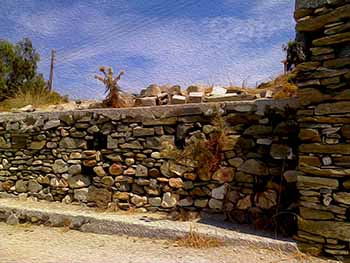
wall near Krios

wall at Krios

I’m not sure, but I believe many of the stone walls on Paros use the dry stone method. Dry stone is a form of construction where you  try to interlock stones together like Legos so you don’t need mortar. Apparently, masonry techniques differ from one culture to the next.  A few years ago, there were many Albanians on the island working in construction and their way of setting stones was not the same as that of the Greeks. A hundred years from now, when archeologists will be studying the architecture of today, will this be taken into consideration?

So, with that in mind, today’s mantra comes from Pink Floyd’s “Just Another Brick in The Wall”.

The lyrics are full of “don’t”s which I would like to avoid. However, “We don’t need no thought control”  makes me think of the need to nourish our thoughts.


Nourish my thoughts. OM. Nourish my thoughts.

related links:  About the history of Paros + Another Brick in the Wall meaning + Parios, the singer, who lives on Paros

Posted in Health & Healing, Paros, Uncategorized | Tagged , , , , | Leave a comment

Crisscrossing it

Day 23

Promontory, Paros

Promontory, Paros

Much has been written about the Left-Right Brain Theory. The brain is divided into two hemispheres which are connected by the corpus collosum, a bundle of neural fibers. In general, the left deals with the verbal whereas the right with the visual. Obviously,  these two hemispheres are complementary and therefore must communicate with one another.

Promontory, Paros

Promontory, Paros

In the very entertaining book, Why Men Don’t Listen and Women Can’t Read Maps, authors Barbara and Allan Pease explain how men’s brains are wired differently that women’s brains.  These differences are a result of roles established during prehistoric times.  For example, since men were hunters, they developed a kind of tunnel vision because they had to  focus on the prey. Whereas women, who stayed at home and had do chores while simultaneously keeping an eye on the children, developed a broad peripheral vision.

Another interesting observation they make is that women’s brain’s hemispheres, via the corpus collosum, more readily communicate one with the other than do men’s.

Promontory, Paros

Promontory, Paros

Some research has indicated that people suffering from dyslexia did little or no crawling at all as babies and thus didn’t develop a certain kind of brain coordination.  Because the crisscross motion of crawling forces one part of the brain to communicate with the other part.

Promontory, Paros

Promontory, Paros

Skipping is a great brain exercise because it requires the two hemispheres of the brain to work together.  Since the left brain controls the right foot and vice versa, the hemispheres are forced to collaborate.

But walking can also help the hemispheres communicate.  When, in opposing directions, you swing your arms back and forth, you make a crisscross motion that’s good for brain coordination.

Towards Livadia, Paros

The samba has some good criss cross action.  So today’s mantra comes from Sergio Mendes’ “Magalenha” and comes from the phrase “Hoje é um dia de sol, alegria de xodó, meu dever de verão” which translates as “Today is a day of sun, happiness of xodó, my task for the summer”.Xodò is difficult to translate but basically refers to something that you really care about. And it’s pronounced sho’-doh-ah.


Alegria de xodó, xodó, xodó. Om. Xodó.

Posted in Health & Healing, Paros | Tagged , , , , | Leave a comment