Mercatino Usato, second hand market in Rome

mercatino usato

with Frida at the Mercatino

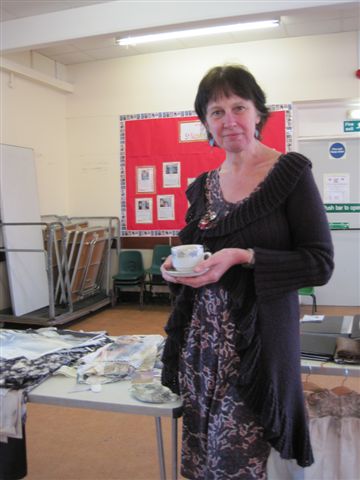
This weekend, while taking a walk after A Heavy Duty lunch, we came across a second hand market near San Giovanni.  It’s called Mercantino Usato Porta Maggiore and was full of EVERYTHING including books, furniture, clothing and collectibles!

mercatino usato

In the past few years, “mercatini” have become very trendy here in Rome. Once, in Italy, buying something second hand made people feel uncomfortable because it seemed to indicate that one didn’t have enough money to buy the same item new thus something to be ashamed of. And Italians need to feel they can make a “bella figura“.  But the economic crisis has changed all that.

Having an economic structure based on consumerism has excessively robbed the environment of natural resources.  So there’s at least one thing good about people not having money in that there is now a willingness to recycle and reuse.  With all of the stuff that already exists out there, why do we need to make even more?

So if you have any plans to come to Rome, why not check out one of their flea markets?

In the meantime, here are a few fotos of the Porta Maggiore Mercatino:

mercatino usato

many “vintage” objects on display

mercatino usato

alot of interesting furniture with interesting prices

Mercantino Usato

many people looking for a bargain

Mercantino Usato

used clothing–vintage and even some designer dresses

Mercantino Usato

accessories (even some entertaining costume jewellery!)

Mercantino Usato

garden  furniture

Mercantino Usato

cacti

Mercantino Usato

plants and plant holders

Mercantino Usato

in the foreground, an old saddle!

Mercantino Usato

Mercatino di ROMA PORTA MAGGIORE is opened everyday from 9.30 until 20.00. Limited parking is available. It’s also easy to get to via tram.  If  you live in Rome and need to sell something, this place is worth a try.

Mercantino Usato

The Mercatino is not far from the  Basilica of the Holy Cross in Jerusalem (Santa Croce in Gerusalemme) with, it’s said, relics of the cross. It’s also one of the seven pilgrimage churches.  Go HERE for an interesting post about the church.  And also within walking distance is San Giovanni in Laterano, a basilica dedicated to John the Baptist and John the Evangelist.

And many thanks to Sir Joe Works for help with the fotos!

Posted in Living With Less, Rome/Italy | Tagged , , , | Leave a comment

Arthur Bispo do Rosário

arthur do rosario

Arthur Bispo do Rosário was a Brazilian artist who spent fifty years confined to the attic of a psychiatric institution.

It is assumed that Arthur Bispo do Rosario lived for about 80 years – no one knows the exact year of his birth. He spent 50 of these years as an intern at an old mental hospital in Rio de Janeiro called Juliano Moreira, being 25 continuous years until his death in 1989.

Latinos in London l www.LatinosInLondon.com's avatarWWW.LATINOSINLONDON.COM

This display at London’s Victoria & Albert Museum brings together over 80 artworks ranging from sculptures, hand-embroidered banners and garments, showcasing the variety and creativity of Arthur Bispo do Rosario (1909-1989), one of Brazil’s most recognised artists.

View original post 97 more words

Posted in People | Tagged , | Leave a comment

Today I stole Frida’s flowers

Frida's Flowers

 Today I stole Frida’s flowers…

My friend, Franca, and I recently went to see the Frida Kahlo exhibition at the Scuderie del Quirinale.  I have a passion for huipiles and since Frida wore them all the time, the exhibit demanded my attention.   But this post is not about the exhibition itself. It’s about the Scuderie.  “Scuderie” means “stables” and this space, built in the 1700s, originally housed the Pope’s horses. But in the 1990s it was remodeled by the architect Gae Aulenti and transformed into an important exhibition center.

frida kahlo exhibit

 Waiting in line to see the exhibition…

frida kahlo exhibit

After  Frida, there was something else to see at the Scuderie–a panoramic view!

Scuderie del Quirinale

In the background, l’ Altare della Patria, a monument built in honour of Victor Emmanuel, the first king of a unified Italy.

L’ Altare della Patria has created much controversy for two reasons:  not many believe Victor Emmanuel deserved a monument and not many like its excessive presence (often  comparing it to a giant wedding cake).  But it has a rooftop bar with a great view!

Scuderie del Quirinale

Scuderie del Quirinale

franca

Franca

 Quirinale

entrance to the Quirinale

The Scuderie is next to the Quirinal Palace commonly known as the Quirinale. It’s thus named because it sits on  the Quirinal Hill, the highest of the seven hills of Rome. Since it’s where the President of the Italian Republic lives, it’s a kind of Italian White House although popes and kings have also lived here. In the middle of this piazza is an obelisk taken from the Mausoleum of Augustus. It’s flanked by the statues of Dioscuri with the horse tamers, Castor and Pollux.

Quirinale

Quirinale

And thanks to Franca for the photos of the Quirinal Piazza and of me with Frida!

Posted in People | Tagged , , , | 2 Comments

Rebozo for Labor

rebozo-negro

Rebozo con figuras y aroma

“Rebozos can be used as wraps and shawls to keep you warm in cooler weather, as pregnancy and labor tools for midwives and doulas and as baby slings.”

Katie's avatarHarmony Doulas

What is a Rebozo?

The rebozo is a traditional Mexican shawl that is long enough to wrap around a woman’s body, with a little extra (about 4-5 feet). A large scarf or piece of fabric can also be used as a rebozo.

How can a Rebozo be used?

Rebozos can be used as wraps and shawls to keep you warm in cooler weather, as pregnancy and labor tools for midwives and doulas and as baby slings.

How is a rebozo used during labor?

When used by a labor coach, the rebozo acts like an extension of your arms. It allows you to help support the laboring mother’s weight so she doesn’t have to. It can also be used to help with fetal positioning. It can help to successfully turn a baby from a posterior position (baby’s back to mothers back) to an anterior one (baby’s back to the front).

Rebozo Techniques

View original post 188 more words

Posted in Crafts | Tagged , | 7 Comments

THE REBOZO – Mexican’s most important wardrobe piece

women wearing rebozos

Women wearing rebozos

(see also babies being carried using rebozos HERE)

The making of a rebozo:

www.silviagattin.com's avatarsilvia gattin's behind the scenes blog

My last inspiring journey earlier this year brought me to fantastic Mexico (see previous posts), where I came across the country’s most important piece in every woman’s wardrobe and an unique and essential piece for their look: THE REBOZO. It is an attractive, various and elegant cloth and can be carried to protect oneself from the sun, the cold, for mourning and carrying goods and even childern.

As this beautiful piece of history and indigenous roots stands for high quality Mexican handcrafting and ancient waving techniques www.silviagattin.com decided it to be the next focus of her new collection, the REBOZO BAGS.

See here the age-old traditional process of making a rebozo:

STEP 1: Devanando el Hílo – the thread is placed on a reel in order to start the threading process

STEP 2: Urdido de Tela: This step defines the length and width of the fabric

STEP 3: El pepenado: The threads are…

View original post 254 more words

Posted in Crafts | Tagged , , | Leave a comment