The Twisted Tignon

Between the 1620s and the 1840s, more than one million Africans were trafficked from Africa to the Caribbean to be used as slaves in American colonies. The Portuguese, the Brits, and the French were the largest slave traders.

how Africans were shipped as cargo aboard ships

Africans were forced to cross the Atlantic packed into the ship as if sardines in a tin. Their travelling conditions were so bad that many died at sea. Although most of the French slaves were sent to the Caribbean, many were sent to the port city of New Orleans. Here the French adapted Code Noir which provided the slaves with some protection. But that radically changed in 1763 when the French were forced to sign over their control of Louisiana to Spain.

The Spaniards obliterated the Code Noir. They wanted to make sure that the Blacks knew their place and had no possibility of social mobility even those who’d obtained their freedom. Plus these hot blooded Spaniards were afraid that Black women were too beautiful and beauty gives a woman power. So in 1786 the governor of Louisiana passed the Tignon Law prohibiting Black women from exposing their hair in public. A tignon (TEEN-yon) is a cloth that’s wrapped in such a way as to cover the hair completely. The word “tignon” appropriates from the French “chignon” (hair bun).

And, as most slaves wore scarves to keep their hair up while working, wearing a scarf was an indication of social inferiority. But it was also meant to distinguish light skinned Blacks from white women.

But these Black women turned an oppressive law into a celebration by transforming the tignon into a crown of glory. They used fabulous fabrics tied with ornamental knots to create their tignons that were further personalized with charms, feathers, brooches, etc. In this way, fashion was used to make a statement: these women had no intention of being obliterated by an insidious colonial government.

Portrait of Dido Elizabeth Belle Lindsay and Lady Elizabeth Murray

Royal Navy officer John Lindsay was a real playboy type. After capturing a Spanish ship, Lindsay discovered a beautiful slave girl kept in chains. He freed her and took her as his concubine. The young woman’s name was Maria Belle. She gave birth to John’s child, Dido Elizabeth Belle, Dido after the mythic African Queen.  Eventually Lindsay married a sociably acceptable white wife. It was awkward having Dido around so she was sent to live with Lindsay’s wealthy uncle, William Murray, living in Kenwood. Here Dido grew up with an orphaned cousin, Lady Elizabeth Murray. The two young ladies enjoyed being together in their luxurious setting although the race distinction had clearly been made. Dido, for example, was not allowed to dine with the rest of the family. Nevertheless, Murray must have loved them both for he was the one who commissioned their portrait together.

For over 100 years the painting was not only wrongly interpreted, it was attributed to the wrong artist. Its true origins finally came out thanks to BBC’s “Fake of Fortune” research team.

-30-

Related: The Tignon Law + AFRICANS IN FRENCH AMERICA + The Tignon Law: How Black Women Formed Decor Out of Oppression + Tignon Law: The Attempted Oppression of African Beauty + Tignon Headwrap Tutorial video + Turbans, Voodoo, & Tignon Laws in Louisiana + The Black Woman’s Forgotten Fight against the Laws that Banned her Hair + French Slave Trade + Slavery in France +

The history of British slave ownership has been buried: now its scale can be revealed + 1778 – DAVID MARTIN, PORTRAIT OF DIDO ELIZABETH BELLE LINDSAY AND LADY ELIZABETH MURRAY + Lady Elizabeth Finch-Hatton + Dido Elizabeth Belle + Dido, African Queen +

My ancestors profited from slavery. Here’s how I am starting to atone for that + Direct ancestors of King Charles owned slave plantations, documents reveal +

Armaments for the Daughters of Zion: The Puritan Woman and Her Spiritual Authority over the Physical World  PDF +

Tignon Tutorial: 4 Quick & EASY Headwrap/Turban Styles +


‘Highly unusual’: lost 17th-century portrait of black and white women as equals saved for US

Degrees of separation between Jane Austen and Dido Elizabeth Belle

Posted in art, Beauty, Fashion, female consciousness, politics | Tagged , , , , , , , | 1 Comment

The White Doll

Ladies, what the hell is going on in the U.S.A.?

Although I’ve lived most of my life in Italy, I was born and raised in the U.S. where I was taught how lucky one was to be an American because the U.S.A. was the best place in the world. And the symbol of this greatness was the Statue of Liberty.

The French gave the U.S. the statue partly as a sign of the friendship between the two countries (France went bankrupt not because of Marie-Antoinette but because it helped subsidize the American Revolution just to get back at the Brits). However, the main objective of the statue’s creation was to celebrate the end of the Civil War and of slavery. The Statue, therefore, is a monument to Liberty and Democracy. A monument to the Blacks, to their struggle towards freedom, and to their emancipation. And this is another reason why the extreme-white wants to obliterate the study of history and culture in the U.S.—they want to literally whitewash history and believing that “life liberty and the pursuit of happiness” is for Whites Only. They are so culturally illiterate that they probably don’t know that the Statue of Liberty celebrates black emancipation. And looking at what happens to beer cans with rainbows, it’s best they don’t know if we don’t want them shooting at the Statue with their AR 15s, too.

In a post from a few years ago, Storytellers, I wrote about “three different women from three different places [who] turned their insides out to write about themselves. Maybe it’s something more women should try to do. Because autobiography is a form of identity negotiation. A form of affirmation. By knowing who you are, it’s easier to be yourself.” One of the women referred to was Gwendolyn Brooks.

Gwendolyn (1917-2000) was an African poet who turned to prose to write about young Black women growing up in Chicago during segregation. In her novel Maude Martha, Gwendolyn created a fictitious character to illustrate the racism she herself had to endure while growing up. The humiliation left her (and other Black children) with indelible psychic scars.

Our sense of self, our semi-self-imposed identity, much determines how we live our lives, of what choices we make, of how we inter-relate with others. Gwendolyn understood this and felt the need to recreate her identity according to her own standards and not those of some white-washed patriarchal racist. And with reason.

In the 1940s, psychologist Mamie Phipps Clark and her husband conducted a series of experiments known as the “doll tests”. The intent was to see the psychological effects of segregation on Black children.

Science, Civil Rights, and the Doll Test (source)

Black children (ages 3-7) were presented with a white doll and a black doll then asked which doll was beautiful, which doll was good, which doll was ugly, and which doll was bad. The majority of the children indicated the white doll as good and beautiful whereas the black doll as bad and ugly. The psychologists concluded that discrimination and segregation had caused these children to feel inferior thus mutilating the perception they had of themselves.

Segregation subjected Blacks to a collective solitary confinement. Deprived interaction with the mainstream world, Black children grew up feeling isolated and inadequate. They considered themselves losers even before the game got started.

The results were so concrete and devastating that they were used in the case of Brown v. Board of Education, the 1954 landmark Supreme Court case in which the justices ruled unanimously that racial segregation of children in public schools was unconstitutional.

One of the greatest gifts you can give another is to make them feel better about themselves. Pro-life is helping those in difficulty to embrace life and not fear it.

So why not make the world a better place and make someone feel beautiful today!

For You From Me

-30-

Related: Lynching Postcards + Eudora Welty (1909-2001)  and the death of Medgar Evers + The Bluest Eye

lynching postcards 1908

the Statue of Liberty background + Statue of Liberty Meaning: What She Stands For + French Ask for Return of Statue of Liberty (parody) + BROWN V. BOARD AND “THE DOLL TEST” +

Posted in Beauty, Books, Conditions of Possibility, female consciousness, politics | Tagged , , , , , , , , , , , | 5 Comments

Dorothy Parker’s Cup of Tea   

During the spring, when sitting outside, I like to watch the bees buzz from one flower to another. Everything is calm and silent save for their humming. So I watch them flit from one flower to another until I’m dizzy and have to look away.

Sometimes my mind acts like a bee. It jumps from one flowered thought to another just buzzing around without a destination. Motion without purpose can be fatiguing so, to convince my wandering mind to stop and focus, I read a short story. It forces me to regroup scattered thoughts and focus on one thing.

“Reading is socially accepted dissociation. You flip a switch and you’re not there anymore. It’s better than heroin.”  Mary Karr

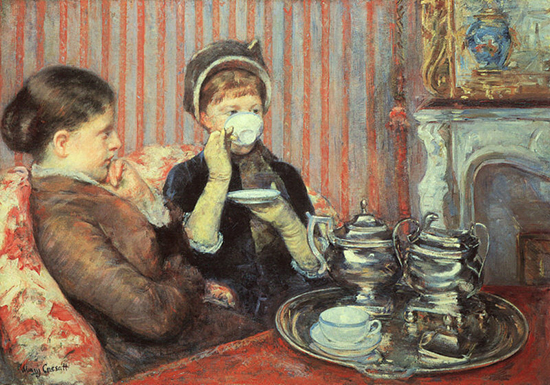
Dorothy Parker, because of her sharp wit, was known as a wisecracker. Her childhood had left her permanently jaded. You can feel her disappointment and chagrin in the stories that she writes. Take, for example, “The Last Tea.”

For 45 minutes a young woman wearing an artificial camellia sits in a tearoom waiting for her date to show up. When he finally arrives, she pretends that she just arrived, too. This Little Lie is the first indication that an emotional and psychological inequality exists between the two.

Initially the man suggests that he’s late due to an indisposition bringing out the material instinct in the woman until she learns that this indisposition has a name: Carol McCall. Humiliated, the woman then proceeds to save face via Wally Dillon, an imaginary suitor invented ad hoc. The man and the woman now initiate a kind of ping pong where they both serve the other with exaggerated compliments about their newly found prospects. The rally comes to a halt when the man tells the woman he needs to call Carol immediately. Hurt, the woman recovers by saying she’s got to run as she’s late for her appointment with Wally. Unfortunately, she then makes the mistake of asking “when will I see you again?” to which the man basically replies “Don’t call me, I’ll call you.”

Why, why, why do women let themselves be humilitated like this?

Dorothy Parker was not only a talented writer, she was a highly vocal advocate of civil liberties and civil rights. The writer collaborated on various screenplays for films that were nominated for an Academy Award (ex. A Star Is Born). But her political beliefs led to her being blacklisted by Sen. Joseph McCarthy & Co. putting an end to her rising career.

Worn out and disappointment, Dorothy began to drink heavily. In 1967, she died of a heart attack at the age of 73. She’d left her entire estate to Martin Luther King Jr. that, upon King’s death, went to the NAACP.

Dorothy was cremated but no one ever came to collect her ashes. So the crematorium eventually sent her urn to her lawyer who simply put the urn in a filing cabinet where it remained for almost 20 years. When the story of Dorothy’s abandoned ashes became public, not only did the NAACP immediately claim them but designed a special memorial garden in their honor. But when the NAACP headquarters moved, the ashes were transferred to a family plot in the Bronx.

So, some 53 years after her death, Dorothy’s ashes finally found a home. No wonder Dorothy suggested as her epitaph “Excuse my dust.”

Here are some Dorothy Parker quotes worth remembering:

“Beauty is only skin deep, but ugly goes clean to the bone.”

“If you want to know what God thinks of money, just look at the people he gave it to.”

“The first thing I do in the morning is brush my teeth and sharpen my tongue.”

“Heterosexuality is not normal, it’s just common.”

“Don’t look at me in that tone of voice.”

“Tell him I was too fucking busy– or vice versa.”

“If you wear a short enough skirt, the party will come to you.”

-30-

Related: Dorothy Parker, An Unwavering Legacy (NAACP) + Dorothy Parker: ‘She was a star, but a dark star’ + Poet-screenwriter Dorothy Parker Was Wisecracking Feminist Accused of Communism + Before Pop Culture Feminism +

Posted in Books, Ecofeminism, female consciousness, politics | Tagged , , , , , , , , , , | Leave a comment

More Recycled Frames

Not too long ago I posted about making frames from old books. But, if you give yourself some time to play, you can make frames from just about anything.

It’s lovely to receive postcards but often they get tossed away or abandoned in a drawer. So I made frames for postcards where the corners are inserted into slits securing the card in place but not compromising the writing on the back. And they would make great frames for kids’ school drawings, too.

Above are frames made using newspaper strips, plastic detergent bottles, egg cartons, cardboard, and shoe box lids.

The above is made from a piece of styrofoam packaging,

These frames were made simply to experiment with different materials. The craftsmanship is therefore “expressionistic” and lacks precision.

-30-

Posted in art, Crafts | Tagged , , , , | Leave a comment

Changes.

My left shoulder is blocked. Maybe I would have continued to ignore it had it not been for the pain. So my doctor sent me to a physiatrist who said heavy duty physical therapy was needed unless I preferred an operation. And that’s how I met Marco the Physical Therapist. At our first encounter we barked at one another. No big deal just establishing territorial domain as most animals do.

Περνούσε τις Τρίτες και τις Πέμπτες με τον Φυσικοθεραπευτή της

My mom told me that when you grow old, no one pays attention to you. So to make sure that I got the attention that I needed, I’d always wear a bright violet gym suit.

Marco and I soon became a team and after a few weeks of therapy, I regained much mobility and felt less pain. When I was finally able to touch my head again with my left hand, I cried—it was the first time I’d been able to do so in months and the joy was immense.

Sometimes you don’t know what you’ve got until you lose it.

Unexpected Change

Last December the British writer Hanif Kureishi and his wife were vacationing in Rome. On the day after Christmas, the couple took a walk around Piazza del Popolo and Villa Borghese. It was a fabulously beautiful day but Kureishi was feeling dizzy so they went home. Here Kureishi blacked out and fell down with a thump. When he came to, Kureishi found himself in a pool of blood, his neck grotesquely twisted and his wife kneeling next to him.

Kureishi was taken to Rome’s Gemelli Hospital where he learned that he couldn’t use his arms and legs. Despite spinal surgery, the British writer was no longer autonomous.

Kureishi was born in London. His dad was Pakistani and his mom English. In his early twenties, he earned a living as a pornography writer (using pseudonyms of course) before writing screenplays. I learned about Kureishi from my friend, Mona who spent much time in London.

The only Kureishi book I’ve read is The Buddha of Suburbia. As with other Kureishi stories, the book focuses on the experience of being Pakistani in London. Constantly dealing with racial discrimination and cultural confusion can make life fatiguing. So “we must find an entirely new way of being alive” writes the author.

Now, despite being unable to physically write on his own, Kureishi uses a dictation machine that allows him to post on Twitter. Here he documents his entirely new way of living. Despite the tragedy, the author writes that he hasn’t “lost the one thing that was most valuable to me, that is my ability to express myself.”

Kureishi is not the first to practice Twitterature using tweets as a literary devise. I follow the author c.c. o’hanlon, an Australian writer married to an American. Using the minimalism of Twitter’s limit of 140 characters, O’Hanlon describes the odyssey he must endure searching for a new home.

Related: A Writer Collapses. As He Recovers, His Dispatches Captivate Readers + Death was chattering to me, says writer Hanif Kureishi + He’s Tweeting for His Life + Hanif Kureishi’s TWITTER + Nurse! My pen! Hanif Kureishi’s hospital musings and the art of sickbed writing + My friend David Bowie by Hanif Kureishi +

Hanif Kureishi: “Che umiliazione dipendere dagli altri. Sogno di andare a comprare dolci a mia moglie e di diventare italiano” + THE KUREISHI CHRONICLES +

Posted in Art Narratives, Books, Health & Healing | Leave a comment